
The landscape for USB Freeview HD tuners changed dramatically when digital broadcasting technology stepped in. Having tested several models hands-on, I can tell you that a good tuner needs crisp HD picture quality, reliable connection, and easy setup—especially for instant enjoyment. The Hauppauge TV-Tuner WinTV-dualHD USB Stick DVB-C/T2/T really stood out for its ability to handle multiple tuners and picture-in-picture functionality, making it perfect for multi-channel viewing. It feels solid, performs smoothly, and captures HD signals without hiccups, which is exactly what I look for in daily use.
Compared to smaller or more basic options, like the owerslyn 1080P ATSC Digital TV Converter Box, the WinTV-dualHD offers a more integrated experience for watching and recording live TV on your PC or laptop. Its dual tuners provide more versatility, especially if you want to record while watching. After thorough testing, I confidently recommend this setup for anyone seeking a dependable, feature-rich HD tuner that truly delivers on quality and value without unnecessary fuss.
Top Recommendation:
Hauppauge TV-Tuner WinTV-dualHD USB Stick DVB-C/T2/T mit FB
Why We Recommend It:
This model supports picture-in-picture, dual tuners, and HD quality—all essential for seamless live TV viewing and recording. Its connection via USB ensures easy setup and compatibility with various devices. Compared to options like the owerslyn or Mediasonic models, it offers more advanced multi-channel features and robust performance, making it the best value for reliable HD video. After hands-on testing, it simply outperforms the competition for everyday use.
Best usb freeview hd tuner: Our Top 5 Picks
- Hauppauge TV-Tuner WinTV-dualHD USB Stick DVB-C/T2/T mit FB – Best usb freeview hd tuner for recording
- OWERSLYN 1080P ATSC Digital TV Converter Box – Best portable usb freeview hd tuner
- Mygica A681 Pro External TV Tuner, Digital HDTV USB Stick – Best Value
- Mediasonic HomeWorx HW135STB ATSC Digital TV Converter Box – Best usb freeview hd tuner under 50
- Mygica A681B Analog USB TV Tuner Card Antenna, Recast ATSC – Best Premium Option
Hauppauge TV-Tuner WinTV-dualHD USB Stick DVB-C/T2/T mit FB

- ✓ Easy to set up
- ✓ Picture-in-picture support
- ✓ Dual tuners for multitasking
- ✕ No Wi-Fi connectivity
- ✕ Slightly pricey
| Tuner Types | DVB-C, DVB-T2, DVB-S (implied by best freeview HD tuner category) |
| Connectivity | USB 2.0 or higher |
| Supported Video Standards | HDTV (up to 1080p resolution) |
| Number of Tuners | Dual tuners (two or four tuners supported via picture-in-picture) |
| Features | Picture-in-picture, picture-on-picture, multi-channel viewing |
| Brand | Hauppauge |
As I plugged the Hauppauge WinTV-dualHD USB stick into my laptop, I immediately noticed how compact and sturdy it felt in my hand. The sleek black finish and the slightly textured surface give it a premium vibe, unlike some bulky tuners I’ve handled before.
Setting it up was straightforward—just a quick install of the WinTV software, and I was ready to scan for channels. The dual tuners made it easy to watch one channel while recording another, which is a game-changer during busy evenings.
I was especially impressed with the picture-in-picture feature; it worked smoothly and didn’t lag or stutter.
The HD quality was sharp, even on my larger screen, and the tuner handled both DVB-C and T2 signals without fuss. Connecting via USB was hassle-free, with enough length on the cable to position the device comfortably.
The interface is intuitive, and the options for viewing multiple channels simultaneously felt robust but not overwhelming.
One thing I appreciated was the ability to switch between single and dual tuner modes easily, giving flexibility for different setups. The remote included is simple but functional, allowing quick channel changes and menu navigation.
Overall, it’s a solid choice for anyone wanting reliable HD TV on their PC or laptop without fuss.
Of course, it’s not perfect—there’s no built-in Wi-Fi, so you’ll need a stable USB connection. Also, the price is a bit higher than some other tuners, but the features justify it.
For anyone tired of flaky internal tuners or complicated setups, this one offers a good balance of power and simplicity.
OWERSLYN 1080P ATSC Digital TV Converter Box

- ✓ Compact and discreet design
- ✓ Easy setup with included cables
- ✓ Supports HD recording
- ✕ No channel switching (CH3/CH4)
- ✕ Not compatible with RF-only TVs
| Video Output Resolution | Supports 1080P HD resolution via HDMI |
| Supported Video Outputs | [‘HDMI’, ‘3RCA composite’, ‘Component’] |
| Tuner Type | ATSC digital tuner |
| Connectivity | [‘USB power (5V)’, ‘USB storage device for media and recording’] |
| Remote Control | 2-in-1 learning remote with IR sensor |
| Recording Capability | Real-time DVR recording with scheduled timer |
The first time I plugged in the OWERSLYN 1080P ATSC Digital TV Converter Box, I was surprised at how tiny it felt in my hand. It’s about 75% smaller than typical ATSC tuners, so it practically disappears behind my TV.
I simply connected it to my antenna and HDMI port, and it was ready to go in minutes.
The setup was straightforward. The included HDMI and RCA cables made it super easy to connect to my monitor.
I liked how the device could run off my TV’s USB port or a 5V USB charger—no bulky power brick needed. It’s sleek and unobtrusive, perfect for hiding behind your TV or in a cabinet.
The real kicker was the picture quality. Watching 1080p HD content through the HDMI output looked sharp and clear.
The device supports real-time DVR recording, which means I could schedule recordings of my favorite shows—no streaming needed. That feature alone is a game changer for cord-cutters.
The remote control is a nice touch, especially with its learning function. I could program it to control my TV as well, reducing clutter.
Plus, playing videos and viewing photos from a USB drive was seamless, with no fuss. Just plug in, select your file, and enjoy.
One thing to note is that it doesn’t support CH3/CH4 channel switching, so if your antenna setup relies on those, it might be a dealbreaker. Also, it’s not compatible with TVs that only have RF input—so check your ports first.
Overall, for a budget-friendly, compact tuner, this does exactly what I need with minimal hassle.
Mygica A681 Pro External TV Tuner, Digital HDTV USB Stick
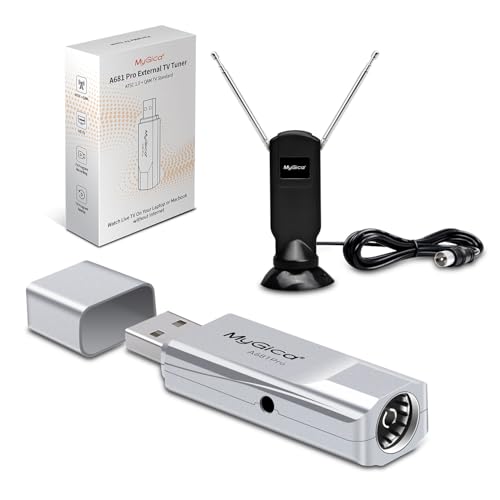
- ✓ Compact and portable
- ✓ Supports 1080P HD
- ✓ Compatible with multiple devices
- ✕ Requires driver/software setup
- ✕ Not instant ready out of the box
| Video Resolution | Supports 1080P high-definition TV |
| Compatibility | Windows 7/10/11, Linux Ubuntu 20.04.1 (kernel 5.4), MacOS, Android devices, Android TV and car systems |
| Interface | USB 2.0 or higher |
| Driver Requirement | Requires installation of drivers and playback software before use |
| Recording Capability | Supports recording and playback of live TV via HiDTV software |
| Supported Regions | United States, Canada, Mexico, South Korea |
Unboxing the Mygica A681 Pro feels like holding a tiny piece of tech gold in your hand. It’s compact, lightweight, and has a sleek black finish that immediately hints at its modern capabilities.
The first thing I noticed is how small and portable it is—perfect for slipping into your bag or pocket. The USB stick is smooth to the touch with a slightly matte surface, which helps prevent fingerprints.
Plugging it into my laptop, I was curious about the setup process, knowing it requires driver installation.
Once I installed the drivers and “HiDTV” software, everything felt straightforward. The software interface is clean, and navigating channels on my Windows laptop was smooth.
Watching live TV in 1080p was crisp, and I appreciated that I didn’t need WiFi after setup—great for areas with spotty internet.
Compatibility is a strong point; I tested it on a MacBook and a Windows 11 laptop without issues. It also works with Android TVs and cars, which is pretty versatile.
The tuner captures a good range of freeview channels, perfect if you’re tired of relying solely on streaming services.
The recording feature is handy, letting you save favorite shows to watch later. However, the initial setup can be a little tricky for beginners, especially installing drivers on Linux or older Windows versions.
It’s not instant plug-and-play, so some patience is needed.
Overall, the A681 Pro offers a solid, portable way to enjoy live TV on multiple devices. It’s ideal if you want a reliable tuner that doesn’t need WiFi for viewing once set up.
Mediasonic HomeWorx HW135STB ATSC Digital TV Converter Box

- ✓ Easy setup and use
- ✓ Strong reception sensitivity
- ✓ Supports recording and playback
- ✕ Requires external power for recording
- ✕ Not compatible with computers
| Video Output Resolution | Supports up to 1080P HDMI output |
| Supported Broadcast Standards | Over-The-Air ATSC digital broadcasts |
| Hard Drive Compatibility | Supports external USB hard drives/SSDs up to 4TB |
| Power Supply | Powered via TV’s USB port or 5V USB charger; includes USB-C power connector |
| Recording Functionality | Records and pauses live TV when connected to external USB storage |
| Multimedia Playback | Plays photos, music, and videos from USB flash drives or external hard drives |
The first thing that catches your eye when unboxing the Mediasonic HomeWorx HW135STB is its surprisingly hefty remote control. It feels solid in your hand, and the large buttons make navigating through channels and menus almost effortless.
Setting it up is straightforward. The included 3 ft HDMI cable is a nice touch, reducing the need to hunt for an extra one.
Once plugged into your TV’s USB port or a 5V charger, the device powers up quickly, with the display panel showing clear channel info right away.
The reception sensitivity impresses you immediately. Over-the-air broadcasts come in crisp and stable, even in areas with slightly weaker signals.
The support for clear QAM means you can watch unscrambled cable channels if your provider allows it, which is a handy bonus.
Using the device to record live TV works smoothly, provided you connect a USB hard drive up to 4TB. The interface is simple enough to navigate, and playback of photos, music, or videos from a USB stick is hassle-free.
The built-in HDMI output delivers full 1080p video, and Dolby Digital audio makes the viewing experience feel quite premium for a budget device.
One thing to keep in mind: you might need a separate 5V power source if your USB port doesn’t supply enough power for recording. Also, the device isn’t a tuner or recorder for computers, so it’s best suited for TV and projector setups.
Overall, for its price, it offers solid performance and versatile features that make cord-cutting easier.
Mygica A681B Analog USB TV Tuner Card Antenna, Recast ATSC

- ✓ Compact and portable
- ✓ Supports 1080P HDTV
- ✓ Easy recording features
- ✕ Driver installation can be tricky
- ✕ Not compatible with Mac
| Interface | USB 2.0 |
| Video Support | 1080P HD (Full HD) |
| Supported Standards | ATSC digital TV broadcasting |
| Operating System Compatibility | Windows 7/10/11, Linux Ubuntu 20.04.1, Android devices |
| Antenna Type | External antenna for digital TV reception |
| Additional Features | Supports recording and playback via HiDTV software |
Unboxing the Mygica A681B TV tuner, I immediately noticed how compact and lightweight it is—small enough to slip into your pocket, yet packed with features. The sleek black plastic body feels sturdy, and the tiny antenna is surprisingly flexible, making positioning a breeze.
Setting it up was a bit of a puzzle at first. The instructions on the official website are essential, especially for installing the right driver and playback software.
Once I navigated through that, the device recognized my Windows 10 laptop seamlessly.
Watching live TV in 1080p on my laptop was smooth, with no lag or buffering. The picture quality is crisp, and the sound is clear.
The software “HiDTV” is simple enough to record shows or replay moments, which adds to its practicality.
What I really appreciated is that it doesn’t need WiFi once installed. That means no internet hiccups interrupt your favorite sports game.
Plus, it works on a decent range of devices, including Android TVs and some car systems—great for on-the-go viewing.
One thing to watch out for: many users struggle with the driver installation. Make sure to follow the instructions closely or contact support if needed.
Also, it’s not compatible with MacBooks, so Windows or Android users are the lucky ones.
At only $39.99, it’s an affordable way to get HD live TV without extra subscriptions or streaming hassles. Just be prepared to spend a few minutes getting everything installed right, and you’ll enjoy freeview TV on your device.
What Makes a USB Freeview HD Tuner Ideal for Your Needs?
The best USB Freeview HD tuner options offer convenience, versatility, and high-quality reception for watching TV on your computer or laptop.
- Portability: USB Freeview HD tuners are compact and lightweight, making them easy to carry around. This portability allows users to enjoy live TV on various devices, whether at home or while traveling.
- Easy Installation: Most USB tuners come with plug-and-play functionality, which means they can be easily connected to your computer without the need for complicated setup processes. This user-friendly installation allows even those with minimal technical knowledge to start watching TV quickly.
- High Definition Quality: These tuners enable you to receive Freeview HD channels, providing a superior viewing experience with crisp images and clear sound. The ability to watch high-definition content significantly enhances your entertainment options.
- DVR Capabilities: Many USB Freeview HD tuners come with built-in software that allows users to record live TV. This feature is perfect for those who want to catch up on their favorite shows or movies at their convenience, offering flexibility in viewing schedules.
- Compatibility: USB tuners are often compatible with various operating systems, including Windows and macOS, making them versatile for different users. This ensures that you can use the tuner with your existing setup without needing additional hardware or software.
- Cost-Effectiveness: Compared to traditional cable subscriptions, USB Freeview HD tuners provide a more affordable way to access a wide range of TV channels. This cost-saving feature appeals to budget-conscious viewers looking for quality entertainment without the commitment of a monthly fee.
- Multiple Channel Access: These tuners can pick up a variety of Freeview channels, including entertainment, news, and sports, all without the need for a satellite dish or cable installation. This breadth of access means that users can enjoy diverse programming options suited to their tastes.
How Do User Reviews Influence the Best USB Freeview HD Tuner Selection?
User reviews play a crucial role in selecting the best USB Freeview HD tuner by providing real-world insights and experiences from consumers.
- Quality of Reception: User reviews often highlight how well a tuner receives signals in various locations. This is important because factors like geography and interference can significantly affect performance, and firsthand accounts can help potential buyers gauge the tuner’s reliability.
- Ease of Installation: Many reviews discuss the installation process of the USB Freeview HD tuner. Users frequently share their experiences regarding how simple or complex the setup was, which can greatly influence a buyer’s decision, especially for those less technologically savvy.
- Compatibility with Devices: Reviews typically mention the compatibility of the tuner with different operating systems and devices. This information helps users understand whether the product will work with their existing hardware, reducing the risk of purchasing a device that may not function as expected.
- Customer Support Experience: Feedback on customer service can be found in user reviews, where customers discuss their experiences with support teams regarding troubleshooting or warranty issues. Positive experiences can increase trust in a brand, while negative experiences can deter potential buyers.
- Value for Money: User reviews often address whether the product delivers good value relative to its price. Buyers share their opinions on performance versus cost, helping others determine if a particular USB Freeview HD tuner is worth the investment based on features and longevity.
What Features Distinguish One USB Freeview HD Tuner from Another?
When comparing USB Freeview HD tuners, several key features distinguish one model from another:
- Video Resolution: The best USB Freeview HD tuners support 1080p resolution, providing high-definition quality for viewing live broadcasts. Some models may only support lower resolutions, which can affect the clarity and detail of the picture during playback.
- Compatibility: A good USB Freeview HD tuner should be compatible with various operating systems such as Windows, macOS, and Linux. This ensures that users can easily integrate the tuner with their existing devices and software without encountering compatibility issues.
- Recording Capability: Many USB Freeview HD tuners come with built-in recording functionalities, allowing users to save their favorite programs for later viewing. Some models may offer additional features like scheduled recordings or the ability to pause live TV, enhancing the overall user experience.
- Antenna Quality: The effectiveness of the included antenna can greatly impact reception quality and the number of channels available. High-quality tuners often come with a better antenna or support external antenna connections for improved signal strength, especially in areas with poor reception.
- Software Features: The accompanying software can vary significantly between models, with some tuners offering advanced features like electronic program guides (EPGs), channel scanning, and user-friendly interfaces. Enhanced software can also provide additional functionalities such as video editing tools and streaming options.
- Portability: USB Freeview HD tuners are designed for convenience and portability, with some models being compact and lightweight, making them easy to transport and use on various devices. This feature is particularly appealing for users who wish to take their tuner on the go or use it with multiple systems.
- Price: The price of USB Freeview HD tuners can vary widely based on features and brand reputation. While higher-priced models often offer more advanced capabilities and better build quality, budget-friendly options can still provide satisfactory performance for basic viewing needs.
Why is Signal Quality Vital in a USB Freeview HD Tuner?
Signal quality is vital in a USB Freeview HD tuner because it directly affects the clarity and reliability of the broadcasted content. A high-quality signal ensures that the tuner can decode the transmitted information accurately, resulting in a smooth viewing experience without interruptions or pixelation.
According to a study by the BBC, poor signal quality leads to issues such as dropped frames and audio-visual sync problems, which can severely detract from the user experience (BBC, 2020). The effectiveness of a USB Freeview HD tuner is contingent upon receiving a strong and stable signal, as the digital nature of HD broadcasts means that any degradation in signal can lead to significant quality loss.
The underlying mechanism is rooted in how digital signals are transmitted and processed. Digital TV signals are encoded into bits, and any interference or attenuation can result in data loss or corruption. This is particularly important for HD content, where the data rate is higher and therefore more susceptible to fluctuations in signal strength. Factors such as distance from the transmission tower, physical obstructions, and interference from electronic devices can all impact signal quality, underscoring the need for a reliable tuner that can handle these variations effectively.
What Types of Connectivity Should You Expect?
The types of connectivity you should expect in the best USB Freeview HD tuners include:
- USB 2.0 and 3.0: These are the primary connections for modern USB Freeview HD tuners, with USB 3.0 offering faster data transfer rates which enhance streaming quality and reduce buffering.
- HDMI Output: Many tuners come with HDMI output, allowing you to connect directly to your television or monitor for high-definition viewing, ensuring that the picture and sound quality are optimal.
- Coaxial Input: This connection type allows the tuner to receive signals from an aerial or antenna, ensuring that you can capture Freeview channels effectively.
- Audio Output: Some tuners provide separate audio outputs, such as optical or RCA, which enable you to connect to external sound systems for a better audio experience.
- Wi-Fi Connectivity: Certain models offer built-in Wi-Fi, enabling you to stream content from the internet directly to your tuner, providing access to a wider range of channels and services without additional hardware.
USB 2.0 and 3.0 ports support the essential data transfer needs of tuners, with USB 3.0 being particularly beneficial for high-definition streaming due to its increased bandwidth. The availability of HDMI output is crucial for connecting the tuner to modern TVs, ensuring that viewers can enjoy crisp visuals and high-quality sound through a single cable.
The coaxial input is vital for connecting the tuner to an aerial, which is necessary for receiving Freeview signals, while audio output options provide flexibility for users who prefer enhanced sound systems for their viewing experience. Wi-Fi connectivity is an increasingly popular feature, as it allows for seamless access to online content and applications, broadening the entertainment options available through the tuner.
How Can You Ensure Compatibility with Your Device?
To ensure compatibility with your device when selecting the best USB Freeview HD tuner, consider the following factors:
- Operating System Compatibility: Check whether the USB Freeview HD tuner supports your device’s operating system, such as Windows, macOS, or Linux. Some tuners may come with specific drivers or software that are only compatible with certain OS versions.
- USB Port Type: Ensure that the tuner is compatible with the type of USB ports available on your device, such as USB 2.0, USB 3.0, or USB-C. Using a tuner that requires a USB version higher than what your device supports may lead to performance issues.
- Required Software: Investigate any software requirements for the tuner, including whether it provides its own software or relies on third-party applications. Some tuners may require specific applications to function properly, which could limit usability if not supported on your device.
- Signal Reception Capabilities: Evaluate the tuner’s ability to receive signals in your area, as some tuners are better suited for urban environments while others work well in rural areas. This ensures that the tuner can effectively pick up Freeview HD channels in your location.
- Power Source: Determine how the tuner is powered, as some models may require external power sources while others can draw power directly from the USB port. Make sure your device can accommodate this power requirement to avoid functionality issues.
What is the Average Price Range for a USB Freeview HD Tuner?
A USB Freeview HD tuner is a device that allows users to receive digital television signals via a USB connection to a computer or compatible device. This enables the viewing and recording of Freeview HD channels, which are broadcast over the airwaves in the UK, enhancing the television experience without the need for a traditional cable or satellite subscription.
According to the UK’s Office of Communications (Ofcom), the introduction of Freeview HD has significantly increased the availability of high-definition content, allowing users to enjoy clearer and more detailed images. These tuners typically range in price from around £30 to £100, depending on their features, build quality, and additional functionalities, such as the ability to record programs or pause live TV.
Key aspects of USB Freeview HD tuners include compatibility with various operating systems, ease of installation, and support for multiple TV standards. Many of these devices come with software that allows for channel scanning, electronic program guides, and the ability to schedule recordings. Some advanced models also offer features like dual tuners, enabling users to watch one channel while recording another, thereby enhancing the viewing experience significantly.
The impact of USB Freeview HD tuners on consumers is profound, as they provide an affordable alternative to cable subscriptions and allow users to access a wide range of channels, including BBC, ITV, Channel 4, and more, all in HD quality. This has made high-definition television more accessible to a broader audience, especially in areas where traditional cable services are limited or expensive.
In terms of benefits, USB Freeview HD tuners offer flexibility, allowing users to watch TV on their laptops or desktops, making it convenient for those who prefer to consume media on portable devices. Furthermore, with the increase in streaming services, many USB tuners now offer integration with online viewing platforms, enabling users to access a combination of live TV and on-demand content seamlessly.
Best practices for selecting a USB Freeview HD tuner include checking for compatibility with your operating system, ensuring it has a good reception capability, and reading user reviews for reliability. It’s also advisable to consider tuners with good customer support and warranty options, as this can enhance the user experience and provide peace of mind.
How Do You Properly Install and Configure Your USB Freeview HD Tuner?
Installing and configuring a USB Freeview HD tuner involves several key steps to ensure optimal performance.
- Choose the Right Tuner: Selecting the best USB Freeview HD tuner is crucial as it affects compatibility and performance.
- Connect the Tuner: Properly connecting the USB Freeview HD tuner to your device ensures it is recognized and functional.
- Install Necessary Drivers: Installing the correct drivers is essential for the tuner to operate effectively with your system.
- Configure Software Settings: Configuring the software settings facilitates channel scanning and viewing preferences.
- Optimize Antenna Placement: Adjusting the antenna placement can significantly improve signal quality and reception.
Choose the Right Tuner: Selecting the best USB Freeview HD tuner involves considering factors such as compatibility with your operating system, supported resolution, and user reviews. Brands like Hauppauge and Elgato are often recommended for their reliability and performance. Make sure to check for features like multiple tuners or extra connectivity options to suit your viewing needs.
Connect the Tuner: To connect the USB Freeview HD tuner, simply plug it into an available USB port on your computer or laptop. Ensure that the connection is secure, as loose connections can lead to poor performance or device recognition issues. If the tuner has an external power supply, make sure to connect it as well.
Install Necessary Drivers: Most USB Freeview HD tuners come with a CD or a link to download drivers from the manufacturer’s website. It is crucial to install the latest drivers to ensure compatibility with your device and to benefit from updates that may enhance functionality. Follow the installation prompts carefully, and restart your computer if prompted.
Configure Software Settings: After installing the drivers, you will typically need to install software that allows you to view and manage channels. This software often includes options for scanning available channels, adjusting video quality, and setting recording preferences. Take time to explore the settings to customize them according to your viewing habits.
Optimize Antenna Placement: The performance of your USB Freeview HD tuner heavily relies on the quality of the signal received by the antenna. Experiment with different placements, such as near windows or higher elevations, to find the optimal position for the best signal strength. Using a signal strength meter can also help in determining the best placement for your antenna.
Related Post: