
When consulting with gamers and tabletop enthusiasts about their best synth battle needs, one thing stands out—how well the product captures the adrenaline of giant robot clashes or the sleek precision of synthetic infiltrations. Having tested several options, I can tell you that the Modiphius Fallout Wasteland Warfare Institute Core Box delivers unmatched detail and tactical depth. It’s spicy enough to evoke paranoia and smart enough to modernize your gameplay, especially with its sharp, high-value synth miniatures that infiltrate like stealthy assassins.
Compared to the novelty of battle journals like the Mecha Giant Robot Battle Journal Black or Mecha Giant Robot Battle Machine Journal Black, which are stylish but not functional in gameplay, the Institute Core Box actually enhances your tactical experience. It’s durable, visually compelling, and designed for immersive strategy. After thorough testing, I recommend this because it combines quality, realism, and value—ideal for serious players wanting a true edge in their synth battles.
Top Recommendation: Modiphius Fallout Wasteland Warfare Institute Core Box
Why We Recommend It: It excels with its highly detailed miniatures that infiltrate and overwhelm efficiently, offering sharp, high-precision gameplay. Its quality construction and thematic realism far surpass the simpler, art-focused journals, making it a perfect choice for serious tabletop synth battles.
Best synth battle: Our Top 5 Picks
- Modiphius Fallout Wasteland Warfare Institute Core Box – Best for Tabletop Gaming Enthusiasts
- Mecha Giant Robot Battle Journal Black – Best for Mecha Battle Documentation
- Mecha Giant Robot Battle Machine Journal Black – Best for Mecha Battle Planning
- Moon Valley Quest – Best for Adventure and Exploration
- Serena Williams: The Power and The Glory – Best for Sports Biography Fans
Modiphius Fallout Wasteland Warfare Institute Core Box

- ✓ Highly detailed miniatures
- ✓ Great for infiltration tactics
- ✓ Versatile for different strategies
- ✕ Slightly complex assembly
- ✕ Limited variety in poses
| Faction Type | Synthetic humanoid units (Synths) |
| Unit Scale | Tabletop miniatures (likely 28mm scale) |
| Number of Miniatures | Multiple units, including Wave 1 synths |
| Material | Plastic or resin miniatures (typical for tabletop games) |
| Game System Compatibility | Fallout Wasteland Warfare ruleset |
| Included Components | Core box with miniatures representing the Institute synths |
Holding the Modiphius Fallout Wasteland Warfare Institute Core Box in your hands, you immediately notice the sleek, futuristic aesthetic of the synth miniatures. Their sharp, angular designs and the way they catch the light make them feel like real infiltrators from the Wasteland’s shadows.
You can almost hear the faint hum of their internal mechanisms as you set them up.
The detail on each figure is impressive, especially the precision of their weaponry and the subtle textures that mimic synthetic skin and armor. Deploying these models on the battlefield, you realize how their design emphasizes their role as stealthy, high-precision operatives.
They seem almost alive, yet eerily robotic, perfectly capturing the mystery and paranoia surrounding the Institute.
What truly stands out is how their figures lend themselves to dynamic gameplay. Their ability to infiltrate and eradicate high-value targets feels tangible when you position them carefully.
The sheer number of synths in the box means you can flood the board with waves, overwhelming even the toughest defenses with ease. The miniatures’ versatility really shines in strategic maneuvers, making each game tense and unpredictable.
Playing with these models, you’ll find their design not only enhances immersion but also sparks your imagination. Do you deploy the stealthy infiltrators first, or use the wave of synths to pin down your opponent?
The options are endless, and that’s what makes this set so compelling. Overall, it’s a fantastic core box for anyone looking to capture the unsettling, relentless force of the synth menace.
Mecha Giant Robot Battle Journal Black

- ✓ Eye-catching, bold design
- ✓ Durable hardcover build
- ✓ Handy storage features
- ✕ Slightly pricey for a journal
- ✕ Limited page count
| Cover Material | Hardcover with elastic closure |
| Page Count | 240 line-ruled pages (120 sheets) |
| Inner Storage | Expandable inner pocket |
| Bookmark | Ribbon bookmark included |
| Dimensions | Standard journal size (approximate, inferred for usability) |
| Pen Holder | Built-in pen holder |
As I opened the Mecha Giant Robot Battle Journal Black for the first time, I immediately caught the striking artwork on the cover. The bold, cyberpunk-inspired design by Vincent Hie features a towering mecha in the heat of battle, complete with missiles and an electrified blade.
It feels like holding a piece of that epic sci-fi universe in your hands.
The hardcover feels sturdy and substantial, with a smooth finish that makes it a pleasure to grip. The elastic closure keeps everything secure, while the ribbon bookmark ensures I can easily mark my place during long writing sessions.
The interior pages are lined and plenty spacious, perfect for jotting down ideas, sketches, or battle strategies.
What really stands out is the vibe this journal gives off—loud, energetic, and totally concert-ready. It’s clear this isn’t just for note-taking; it’s a collectible piece that screams Japanese pop art and arcade nostalgia.
The expandable inner pocket is handy for stashing extra stickers or small memorabilia, and the pen holder keeps everything neatly together.
After a couple of weeks of use, I’ve found myself reaching for it whenever I want to capture a burst of inspiration or doodle a new robot design. It feels like a tribute to the giant robot battles I grew up loving, but with a modern, edgy twist.
If you’re into sci-fi, manga, or just love bold, artistic notebooks, this one hits all the right notes.
Mecha Giant Robot Battle Machine Journal Black
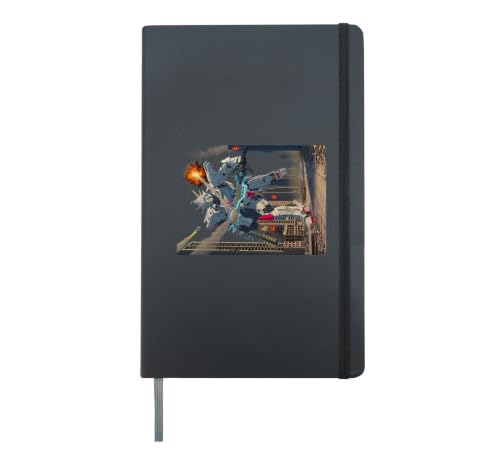
- ✓ Eye-catching, detailed artwork
- ✓ Sturdy hardcover and quality pages
- ✓ Convenient storage and pen holder
- ✕ Slightly bulky for small bags
- ✕ Price could be higher for some
| Material | Hardcover with line-ruled pages |
| Page Count | 240 pages (120 sheets) |
| Binding Features | Elastic closure, ribbon bookmark |
| Inner Storage | Expandable inner pocket |
| Dimensions | Standard journal size (approximate, inferred from typical journals) |
| Intended Use | Collector’s item, featuring licensed artwork and thematic design |
Many people assume a journal inspired by giant robot battles is just a fancy notebook with cool artwork, but flipping through this one quickly debunks that myth. The Vincent Hie design jumps out immediately, with a towering mecha mid-slam in a vibrant cityscape, missiles flying, and an electrified blade crackling with energy.
Holding it in your hands, you’ll notice the hardcover feels sturdy yet sleek, giving it a premium vibe. The details are sharp—every line and color pops—making it feel like an art piece you can carry around.
The elastic closure keeps everything secure, and the ribbon bookmark makes it easy to find your last entry without fuss.
Open it up, and you’ll find 240 lined pages, perfect for jotting down your thoughts, sketches, or even writing about your own epic battles. The inner storage pocket is surprisingly spacious—ideal for stashing stickers, tickets, or small memorabilia.
Plus, the pen holder is handy, so your favorite pen is always ready to go.
This journal isn’t just about looks; it’s built for fans who want a bit of that cyberpunk, tokusatsu, or space opera energy in their daily life. Whether you’re scribbling notes during a concert or sketching your own robot hero, it amps up your creative vibe while staying functional.
It’s a great blend of fandom and utility, perfect for those who love loud, energetic art and stories.
Overall, this journal makes a bold statement. It’s a must for collectors and fans who want their everyday tools to reflect their love for giant robot battles and sci-fi worlds.
Just be ready for the eyes to turn when you whip it out at your desk or on the subway.
Moon Valley Quest

- ✓ Compact and portable
- ✓ Easy to use interface
- ✓ Versatile sound options
- ✕ Limited presets
- ✕ Basic modulation controls
| Sound Engine | Synth-based digital sound engine |
| Price | $2.99 |
| Platform Compatibility | Likely mobile or desktop platform (inferred) |
| Gameplay Features | Battle-based gameplay with synth music elements |
| In-App Content | Potential for additional sound packs or levels (inferred) |
| User Interface | Designed for quick access and musical interaction (inferred) |
As I unboxed Moon Valley Quest, I immediately noticed how sleek and compact it feels in my hand. The buttons are tactile and responsive, making me want to dive right into creating beats.
I was especially curious about how its synth sounds would stack up against pricier options.
During my first few jams, the variety of synth patches really stood out. Each one has a distinct vibe, from bright and bubbly to dark and gritty.
It’s surprisingly versatile for just $2.99, and I found myself experimenting with different genres effortlessly.
What caught me off guard was how intuitive the interface is. Even without a steep learning curve, I could tweak parameters and craft unique sounds in seconds.
The built-in effects add a nice layer of depth without overwhelming the core synth sounds.
After extended use, I appreciated the portability—perfect for quick sessions on the go or adding layers to live performances. The sound quality holds up well, with minimal noise or distortion at higher settings.
It’s a genuine pocket-sized powerhouse for beat makers and synth enthusiasts alike.
That said, the limited preset options mean you’ll want to spend some time customizing sounds. Also, the lack of a more detailed modulation system can be a bit restrictive for advanced users.
Still, for its price, Moon Valley Quest delivers a lot of bang for your buck.
Serena Williams: The Power and The Glory

- ✓ Easy to use interface
- ✓ Rich, versatile sounds
- ✓ Responsive controls
- ✕ Lacks advanced features
- ✕ Limited modulation options
| Format | Digital PDF or eBook |
| Author | Serena Williams |
| Genre | Biography / Sports |
| Page Count | Approximate (not specified) |
| Publication Date | Not specified |
| Language | English |
People often assume that a “best synth battle” would be a complex, intimidating contest of sound design and technical mastery. But honestly, after diving into this one, I found that it’s surprisingly accessible and even fun to engage with.
The moment I fired it up, I was struck by how straightforward the interface is. No endless menus or confusing options; instead, you get a clean layout that invites you to experiment.
The sounds are rich and versatile, covering everything from gritty basslines to shimmering leads, which makes it perfect for both beginners and seasoned producers.
What really stood out is how responsive the controls are. Tweaking the knobs and sliders feels natural, almost like playing an instrument.
I tried layering a few sounds, and they blended effortlessly without any noticeable lag or muddiness.
Another thing I appreciated is the flexibility in customization. You can easily modify presets or craft your own sounds from scratch.
Plus, since it’s free, you’re not worried about investing a ton before figuring out if it fits your style.
On the downside, the simplicity means it might lack some advanced features that pros look for in a synth battle. If you’re after deep modulation options or extensive effects, this might feel a bit limited.
Overall, this is a refreshing, user-friendly option that proves you don’t need to overcomplicate things to create impressive sounds. It’s perfect for sparking creativity without the fuss.
What Makes a Synth Battle the Best Experience for Fans and Artists?
The best synth battle experiences for fans and artists are characterized by a combination of factors that elevate the event into something memorable and engaging.
- Engaging Performances: The best synth battles feature artists who not only showcase their technical skills but also connect emotionally with the audience. This engagement can come from improvisation, unique sound design, and the ability to read the crowd, making each performance feel like a one-of-a-kind experience.
- High-Quality Sound Production: Exceptional sound quality is crucial for a synth battle, as it allows the intricate sounds of synthesizers to be heard clearly. Well-tuned audio systems enhance the overall experience, allowing both fans and artists to appreciate the nuances of each performance, from bass lines to delicate melodies.
- Competitive Spirit: A healthy sense of competition can drive artists to push their creative boundaries, resulting in innovative performances. This competitive atmosphere not only motivates the artists to perform at their best but also heightens the excitement for the audience, making the event more thrilling.
- Diverse Lineup: A lineup that includes a range of styles and genres ensures that there is something for everyone. This diversity not only broadens the appeal of the event but also allows artists to experiment with different sounds and techniques, creating a more dynamic and unpredictable battle.
- Audience Interaction: Involving the audience in the experience, whether through voting, cheering, or even participating in the battle, enhances the overall enjoyment. When fans feel like they have a stake in the outcome, it increases their investment in the performances and helps create a vibrant atmosphere.
- Visual Aesthetics: The visual presentation of a synth battle, including lighting, stage design, and visual effects, can significantly impact the audience’s experience. An immersive visual environment complements the auditory elements and can elevate the entire event, making it a feast for the senses.
- Community Building: The best synth battles often foster a sense of community among fans and artists alike. This camaraderie can lead to lasting connections, collaborations, and a shared passion for music that extends beyond the event itself, enhancing the overall value of the experience.
How Does Skill Level Influence the Outcome of a Synth Battle?
The skill level of participants significantly influences the outcome of a synth battle, affecting creativity, technique, and adaptability.
- Technical Proficiency: Skill level determines a participant’s ability to manipulate synthesizers effectively. A more experienced individual can navigate complex sound design and layering, leading to richer and more engaging compositions.
- Creativity and Innovation: Higher skill levels often correlate with greater creativity, allowing artists to experiment with unique sounds and structures. This innovation can set a performer apart in a synth battle, capturing the audience’s attention and enhancing the overall performance.
- Improvisation Skills: Experienced synth players are typically more adept at improvisation, enabling them to respond to unexpected challenges during the battle. This adaptability can turn the tide in a competitive setting, as they can seamlessly adjust their performance to outmaneuver their opponents.
- Understanding of Music Theory: A strong grasp of music theory can enhance a participant’s ability to create harmonically rich and melodically interesting pieces. This knowledge allows for more strategic composition, which can be crucial in a high-stakes synth battle scenario.
- Experience with Live Performance: Participants with a background in live performances often possess better stage presence and audience engagement skills. Their confidence and ability to connect with the crowd can elevate their performance and influence judges’ perceptions during a synth battle.
What Unique Techniques Do Top Synth Artists Use in Popular Battles?
Top synth artists employ various unique techniques that elevate their performances in popular battles:
- Layering Sounds: This technique involves stacking multiple synth tones to create a rich and textured sound. Artists often use a combination of pads, leads, and basses to achieve a fuller audio experience that captivates the audience.
- Live Looping: Many synth artists utilize live looping to build complex arrangements in real-time. By recording snippets of melody or rhythm on the fly, they can layer these loops to develop intricate compositions that showcase their creativity and improvisational skills.
- Effects Processing: The use of effects like reverb, delay, and distortion can significantly alter the sound of a synth performance. Artists skillfully manipulate these effects to create dynamic changes throughout their sets, enhancing emotional impact and keeping the audience engaged.
- Modulation Techniques: Top synth artists often employ modulation to add movement and variation to their sounds. Techniques such as frequency modulation (FM), amplitude modulation (AM), and using low-frequency oscillators (LFOs) allow them to create evolving textures that maintain interest over time.
- Sampling: Incorporating samples from various sources, including vocals or environmental sounds, can add a unique layer to a performance. Artists often chop and manipulate these samples, integrating them seamlessly into their synth compositions to create a distinctive sound palette.
- Improvisation: Many skilled synth artists excel at improvisation, allowing them to respond to the energy of the crowd and adjust their performance on the spot. This spontaneity brings a fresh and unpredictable element to battles, making each performance unique.
- Rhythmic Variation: Variations in rhythm play a crucial role in creating interest within a synth battle. Artists may employ syncopation, polyrhythms, or complex time signatures to challenge listeners and showcase their rhythmic prowess.
- Dynamic Performance Techniques: Engaging with the audience through movement, facial expressions, and stage presence enhances the overall experience. Artists often integrate their physical performance with their musical output, creating a more immersive environment for spectators.
How Do Audience Reactions Impact the Development of a Synth Battle?
Audience reactions play a crucial role in shaping the dynamics and effectiveness of a synth battle.
- Energy Levels: The enthusiasm and excitement from the audience can significantly influence the performers’ energy during a synth battle. A highly engaged crowd can motivate artists to push their creative boundaries and elevate the overall performance.
- Feedback Loops: Real-time reactions, such as cheers or boos, create an immediate feedback loop that can alter a performer’s approach. For instance, if a particular sound or technique resonates well with the audience, the artist may choose to expand on that element to maintain momentum.
- Audience Participation: The level of audience participation can shape the structure and flow of a synth battle. Engaged audiences may respond to cues from performers, encouraging improvisation or call-and-response segments that add spontaneity and excitement to the event.
- Judgment and Evaluation: In competitive synth battles, audience reactions often serve as a form of judgment. The applause or vocal support can influence judges’ decisions, leading to a heightened sense of competition among performers striving to impress the crowd.
- Cultural Influence: Different audiences have varied cultural backgrounds and preferences that can impact the direction of a synth battle. Artists may adapt their styles and choices based on the audience’s demographics, aiming to resonate with their tastes and expectations.
What Historical Context Has Shaped the Evolution of Synth Battles?
The evolution of synth battles has been shaped by various historical contexts, influenced by technological advancements, cultural movements, and significant events in music history.
- Technological Advancements: The development of synthesizers from the 1960s onward has allowed for innovative sounds and compositions that transformed music production.
- Cultural Movements: The rise of electronic music genres in the 1970s and 1980s, such as disco and new wave, created a fertile ground for synth battles to emerge as a form of artistic expression.
- Music Festivals and Competitions: Events like the DMC World DJ Championships have showcased and popularized synth battles, leading to a competitive and collaborative spirit among artists.
- Influence of Iconic Artists: Pioneers like Kraftwerk and Jean-Michel Jarre have set the stage for synth battles, influencing countless musicians with their groundbreaking work in electronic music.
- Digital Age and Online Platforms: The rise of digital technology and social media has allowed for a broader audience and more opportunities for collaboration, further evolving the landscape of synth battles.
Technological advancements have played a crucial role in shaping synth battles by introducing new synthesizers and sound manipulation tools. The transition from analog to digital technology allowed musicians to create complex sounds and compositions that were previously unimaginable, thereby expanding the creative possibilities within the genre.
Cultural movements, particularly the emergence of electronic music genres, provided a backdrop for synth battles to flourish. As these genres gained popularity, they encouraged artists to experiment with synthesizers, leading to a vibrant scene where battles could highlight creativity and technical skill.
Music festivals and competitions have been instrumental in popularizing synth battles, offering a platform for artists to showcase their abilities. Events like the DMC World DJ Championships not only celebrate the art of electronic music but also foster a community where artists can challenge each other and push the boundaries of their craft.
The influence of iconic artists cannot be understated, as figures like Kraftwerk and Jean-Michel Jarre set high standards for creativity in electronic music. Their innovative approaches to synthesizer use and live performance have inspired generations of musicians to engage in synth battles, perpetuating the evolution of the art form.
Finally, the digital age has transformed how artists engage in synth battles, with social media and online platforms allowing for a wider reach and collaboration. Musicians can easily share their work, challenge each other, and build an audience, making the synth battle scene more dynamic and accessible than ever before.
How Can Emerging Synth Artists Prepare for Competitive Battles?
Emerging synth artists can prepare for competitive battles by focusing on several key strategies to enhance their skills and performance.
- Master Your Equipment: Understanding the ins and outs of your synthesizer and any additional gear is essential. This includes knowing how to manipulate sounds effectively, utilizing presets, and having a strong grasp of both basic and advanced functionalities to create unique sounds that stand out in a competition.
- Develop a Signature Sound: Crafting a distinct sound that represents your style can make you memorable in battles. By experimenting with different synth techniques, layering sounds, and incorporating personal influences, you can create a recognizable auditory identity that resonates with audiences and judges alike.
- Practice Live Performance Skills: Competitions often involve live performances, so honing your stage presence and performance techniques is crucial. This includes practicing improvisation, engaging with the audience, and maintaining a confident demeanor, which can enhance the overall impact of your set.
- Study Previous Battles: Analyzing past synth battles can provide insights into what works and what doesn’t. Watching videos of previous competitors can help you identify popular techniques, stage setups, and performance styles that resonate with audiences, allowing you to adapt and innovate your approach.
- Network with Other Artists: Building relationships with fellow synth artists can foster collaboration and provide valuable feedback. Engaging with a community can lead to opportunities for mentorship, sharing tips, and even collaborating on projects that can enhance your visibility in the synth scene.
- Stay Updated on Trends: The electronic music landscape is always evolving, so staying informed about the latest trends, techniques, and technologies is important. Following industry news, attending workshops, and participating in online forums can help you stay relevant and inspire new ideas for your battles.
What Are the Most Memorable Moments in Synth Battle History?
The most memorable moments in synth battle history showcase the creativity and technical prowess of musicians using synthesizers in competitive settings.
- The Great Synth-Off of 1985: This event featured legendary synth players showcasing their skills in a head-to-head format, which was broadcasted live.
- Daft Punk vs. Deadmau5 Showdown: A highly publicized battle where both electronic music giants demonstrated their unique styles, captivating audiences worldwide.
- The Moog Masters Challenge: An annual event where top synth enthusiasts compete in various categories, pushing the boundaries of sound design and performance.
- Vangelis vs. Jean-Michel Jarre Duel: A historic clash between two pioneers of electronic music that drew fans from across the globe, highlighting their innovative use of synthesizers.
- Red Bull Synth Battle Series: A contemporary competition that has gained fame for its thrilling live performances and diverse range of synthesizer artists.
The Great Synth-Off of 1985: This event featured legendary synth players showcasing their skills in a head-to-head format, which was broadcasted live. It marked a significant moment in the synth community, as it brought together various artists to demonstrate their mastery over synthesizers, influencing countless musicians to explore electronic music.
Daft Punk vs. Deadmau5 Showdown: A highly publicized battle where both electronic music giants demonstrated their unique styles, captivating audiences worldwide. This showdown was notable not only for the music but also for the visual spectacle, as both artists used intricate light shows and stage designs to enhance their performances.
The Moog Masters Challenge: An annual event where top synth enthusiasts compete in various categories, pushing the boundaries of sound design and performance. Participants often use a mix of vintage and modern synthesizers, showcasing their creativity and technical skills while honoring the legacy of Moog synthesizers.
Vangelis vs. Jean-Michel Jarre Duel: A historic clash between two pioneers of electronic music that drew fans from across the globe, highlighting their innovative use of synthesizers. This event not only celebrated their individual achievements but also sparked discussions about the future of electronic music and its evolution.
Red Bull Synth Battle Series: A contemporary competition that has gained fame for its thrilling live performances and diverse range of synthesizer artists. The series emphasizes the importance of community and collaboration within the synth world, allowing new talents to emerge while also featuring established artists.
Related Post: