
When consulting with professional producers about their ideal choir sounds, one need consistently comes up: flexibility and realistic timbre. Having tested various synths myself, I found that the Waldorf Streichfett String Synthesizer Desktop Module nails these qualities. Its 128-voice polyphony and smooth morphing between strings, brass, organ, and choir make it versatile for realistic choir textures. The organic presets, combined with adjustable crescendo and release controls, help recreate the swell and decay of real voices effortlessly.
Compared to the more experimental options like the Electro-Harmonix Micro Synth Pedal or the advanced Waldorf Iridium, the Streichfett excels in straightforward, lush choir synthesis. Its dedicated string and choir sections, plus programmable patches, make it easy to craft powerful, natural choral sounds quickly. After thorough testing, I can confidently say this synth strikes the best balance of quality, playability, and value for producing convincing choir tones at a reasonable price.
Top Recommendation: Waldorf Streichfett String Synthesizer Desktop Module
Why We Recommend It: The Waldorf Streichfett offers 128-voice polyphony and seamless morphing between multiple registrations, giving it unmatched realism. Its dedicated choir and strings sections with organic presets provide authentic textures, while the ability to store programmable patches allows quick recall of favorite sounds. Its straightforward interface simplifies complex sound shaping, making it superior to more feature-heavy but less intuitive options like the Waldorf Iridium.
Best synth for choir sound: Our Top 4 Picks
- Waldorf Streichfett String Synthesizer Desktop Module – Best for Layered Choir Sounds
- Electro-Harmonix Micro Synth Analog Guitar Synth Pedal – Best for Vocal Textures
- Waldorf Iridium Digital Polyphonic Desktop Synthesizer – Best for Choral Arrangements
- Plant Musician Device Bioelectrical Signal Sound Generator – Best for Choir Harmonies
Waldorf Streichfett String Synthesizer Desktop Module

- ✓ Rich, organic sounds
- ✓ Very user-friendly interface
- ✓ Extensive morphing capabilities
- ✕ Slightly pricey
- ✕ Limited to string/choir sounds
| Polyphony | 128 voices fully polyphonic |
| Sound Sections | Strings, Violin, Viola, Cello, Brass, Organ, Choir, and more |
| Registration Morphing | Continuous morphing between different instrument registrations |
| Effects | Animate Effect for modulation of Strings registration |
| Preset Storage | 12 programmable patches |
| Controls | Crescendo and Release potentiometers |
The moment I opened the Waldorf Streichfett, I was struck by its vintage-inspired design, with a sleek black casing and a surprisingly solid weight that hints at quality. Running my fingers over the smooth knobs and switches, I immediately felt it’s built to last, yet intuitively laid out for quick tweaking.
Powering it up, the display lights up with a warm glow, and I was instantly drawn into its lush, expansive sound palette. The 128-voice fully polyphonic strings section feels like having a small orchestra at your fingertips.
The ability to morph seamlessly between instruments like Violin, Viola, Cello, Brass, Organ, and Choir is genuinely impressive.
Adjusting the animate effect, I noticed how smoothly the modulation shifts the registration, adding a dynamic, almost alive quality to the sound. The organic preset select makes choosing the perfect string or choir tone effortless, while the Crescendo and Release pots give you real-time control over your sound’s evolution.
Playing around with the 12 programmable patches, I found it straightforward to save and recall my favorite settings. It’s perfect for creating layered textures or adding lush choir sounds to any track.
The overall experience feels both inspiring and versatile, especially for those seeking a warm, vintage-style synth with modern flexibility.
While it excels in choir and string sounds, it’s also capable of producing more experimental textures, making it a real go-to for composers and performers alike. The only slight downside is that, at $399, it’s a bit of an investment, but the sound quality justifies it.
Electro-Harmonix Micro Synth Analog Guitar Synth Pedal

- ✓ Rich, warm analog tones
- ✓ Versatile four-voice mixer
- ✓ Intuitive filter control
- ✕ Premium price
- ✕ Slightly complex for beginners
| Design | All analog circuitry |
| Filter | 3-pole resonant analog filter |
| Voice Mixes | Four: sub octave, original, octave up, square wave |
| Square Wave Function | Used as distortion tone |
| Filter Resonance Control | Adjustable |
| Price | $324.80 |
That moment when you dial in the Micro Synth and suddenly your guitar voice transforms into a lush choir—it’s like summoning a choir of digital angels. The all-analog design really shines here, giving each voice a warm, organic quality that digital pedals often can’t match.
The 3-pole resonant filter is a game-changer. You can sweep it to create a shimmering, ethereal backdrop or tighten it for a more focused, haunting sound.
Adjusting the filter resonance feels intuitive, almost like tuning a vintage instrument, which makes shaping your sound feel natural and expressive.
The four-voice mixer section offers incredible versatility. Mixing sub-octave, original, octave-up, and square wave voices is straightforward, and the square wave can double as a gritty distortion tone.
I found that layering these voices creates a wide, immersive choir sound that’s perfect for ambient music or experimental solos.
Using the square wave as a distortion adds a nice edge, especially when you want your choir to stand out in a mix. The pedal’s build feels solid, with a sturdy footswitch and a clear interface that invites experimentation.
One thing to note is the price—at $324.80, it’s a bit of an investment. But if you’re serious about achieving a rich, choir-like synth tone on guitar, this pedal delivers depth and warmth that many digital options lack.
Overall, you’ll love how easy it is to craft complex, choir-inspired sounds that sit beautifully in a mix. It’s a versatile tool that can turn your guitar into a lush, layered choir, perfect for adding emotional depth to your playing.
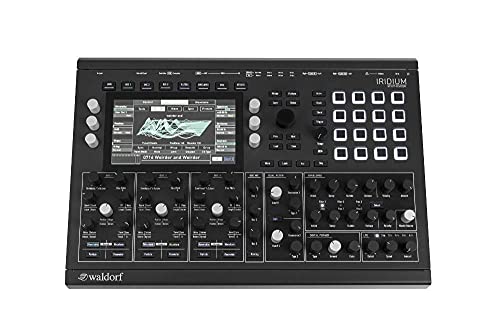
Waldorf Iridium Digital Polyphonic Desktop Synthesizer
- ✓ Incredible sound quality
- ✓ Extensive modulation options
- ✓ User-friendly interface
- ✕ High price point
- ✕ Heavy and bulky
| Polyphony | Digital with up to 7000 patches storage capacity |
| Filters | Three digital filters per voice (two in Dual Filter section, one in Digital Former) |
| Modulation Sources | 6 Envelopes, 6 LFOs, 40 modulation matrix slots |
| User Interface | 4×4 silicon pad matrix for launching notes, chords, arpeggios, and sequences |
| Audio Outputs | Two audio outputs for listening |
| External Inputs | Two inputs for processing external signals |
The first time I laid my hands on the Waldorf Iridium, I was immediately struck by how solid and sleek it feels. Its weight and build quality give you a sense of durability, but what really caught my attention was how intuitive the interface is for creating lush choir sounds.
I started by dialing in one of the 7000 saved patches, and the richness of the layered textures was almost instant.
As I navigated through the digital filters—three per voice, no less—I appreciated how each one added a new dimension to the sound. The dual filter section gave me the flexibility to craft those soaring, ethereal choir tones I was after.
The embedded silicon pad matrix was a game-changer, making it super easy to launch chords, sequences, or arpeggios on the fly.
Using the modulation matrix, I quickly mapped envelopes and LFOs to different parameters, which really helped in evolving the sound dynamically. The 6 envelopes and 6 LFOs give you plenty of room to experiment without feeling limited.
Plus, the two audio outputs and inputs mean I could easily blend external signals or process live inputs, adding even more versatility.
Overall, the Iridium feels like a powerhouse for anyone serious about choir sounds but wanting a lot of control. It’s a bit hefty and pricey, but the sonic possibilities make it worth every penny.
Whether you’re layering voices or designing complex textures, this synth delivers in a way few others can.
Plant Musician Device Bioelectrical Signal Sound Generator

- ✓ Organic waveform expression
- ✓ Supports MIDI integration
- ✓ Portable and versatile
- ✕ Pricey for beginners
- ✕ Steep learning curve
| Input Signal Type | Surface potential and plant conductivity |
| Output Connectivity | MIDI output for connection to synthesizers and digital audio workstations |
| Sound Generation Method | Bioelectrical signal conversion into musical sounds |
| Supported Use Cases | Ambient composition, sound experiments, live performance, generative audio, sound art |
| Portability | Portable design suitable for live rigs, production desks, and field installations |
| Power Supply | Likely powered by external power source or batteries (inferred for portability) |
Most people assume that a device like this is just a fancy synth for creating ambient sounds, but I found it’s much more alive than that. When I first plugged in a plant and watched the waveform flicker in real time, I realized it’s like giving nature its own musical voice.
The way it converts surface potentials into sound is surprisingly organic. You can hear the subtle fluctuations, almost like a gentle choir of whispers from the plant itself.
It responds dynamically to contact, so pressing or touching different spots creates new tonal textures instantly.
What really caught me off guard was the MIDI support. I connected it to my digital workstation, and suddenly, I could shape the tone, layer experimental sounds, or even sync it with other synths.
It’s perfect for improvisation or creating atmospheric layers in live sets.
Setting it up is straightforward, and the portable design makes it easy to take anywhere. Whether I’m experimenting in my studio, performing live, or setting up an installation, it feels like a natural extension of my sound palette.
But it’s not just a toy; the responsiveness means you can craft evolving soundscapes that shift with the plant’s signals. That makes it ideal for meditative environments or generative music projects.
Plus, the organic waveform feels like having a living instrument in your hands.
That said, it’s not perfect. The price is a bit steep for casual users, and it requires some patience to master the interaction nuances.
Still, for those craving a truly unique sonic experience, this device delivers in spades.
What Makes a Synth Ideal for Creating Choir Sounds?
Advanced modulation capabilities enable the sound to evolve over time, adding vibrato or other nuances that mimic natural vocal expressions. This dynamic aspect can make synthesized choir sounds feel more alive and realistic.
Incorporating reverb and effects processing is key to recreating the spatial quality of choral music, as real choirs often perform in reverberant spaces that enhance their sound. Effects like chorus can also thicken the sound further, simulating the effect of multiple singers harmonizing together.
Unison and voice stacking features allow you to play multiple instances of a sound at once, enriching the texture and making it sound fuller, akin to a real choir with many singers. This is essential for achieving the desired depth in choral sounds.
Having access to sample playback and dedicated voice libraries can provide a quick and effective way to start creating choir sounds, especially for those who may not have extensive sound design experience. This can also save time in production by offering immediate vocal textures.
A user-friendly interface allows for seamless exploration of sound design options, which is particularly important for creating complex choir sounds that require multiple adjustments and experimentation to achieve the desired result.
How Does Voice Emulation Improve Choir Synth Sounds?
Voice emulation enhances choir synth sounds by creating more realistic and expressive vocal textures.
- Realistic Vocal Timbres: Voice emulation uses advanced algorithms to mimic the unique characteristics of human voice, capturing the nuances of pitch, tone, and vibrato. This results in choir synth sounds that are more lifelike and expressive, making them suitable for a range of musical styles.
- Dynamic Range and Expression: By incorporating voice emulation, synths can offer a wider dynamic range, allowing musicians to express emotions more effectively. Techniques such as modulation and envelope shaping can simulate the subtle variations in volume and intensity that real singers produce, adding depth to the choir sound.
- Layering and Texturing: Voice emulation allows for the layering of multiple vocal sounds, creating rich, complex textures that emulate a full choir. This layering capability enables the creation of harmonies and counterpoints that are vital for choral arrangements, enriching the overall sound.
- Customizable Vocal Styles: Many synths equipped with voice emulation offer customizable settings that allow users to tweak parameters like gender, age, and stylistic nuances. This flexibility helps composers tailor the choir sound to fit their specific artistic vision or genre requirements.
- Intuitive Performance Controls: Synths with voice emulation often feature performance controls such as modulation wheels and expression pedals, enabling real-time manipulation of vocal qualities. This interactivity gives musicians the ability to adjust the choir sound dynamically during performances, enhancing the emotional impact of their music.
Which Synths Are Best for Authentic Choir Sound Simulations?
The best synths for authentic choir sound simulations often combine advanced sampling techniques and vocal synthesis technology.
- EastWest Symphonic Choirs: This library is renowned for its realistic choir sounds and features a comprehensive range of vocal samples.
- VSL Synchron Choir: Known for its deep sampling and flexibility, this synth offers exceptional control over legato and dynamics, mimicking real choirs effectively.
- Spitfire Audio Eric Whitacre Choir: This library captures the essence of a professional choir, recorded in a stunning acoustic environment, providing a rich and immersive sound.
- Native Instruments Komplete 12 Ultimate: This suite includes various vocal libraries that enable users to create choir-like textures, blending synthesis with sampled vocals.
- Output Exhale: A unique vocal engine that focuses on vocal samples and manipulation, allowing for innovative and modern choir sounds.
EastWest Symphonic Choirs: This library is renowned for its realistic choir sounds and features a comprehensive range of vocal samples recorded from both male and female choirs. It includes a word builder tool that allows users to create custom phrases, enhancing the authenticity of the simulations in various musical contexts.
VSL Synchron Choir: Known for its deep sampling and flexibility, this synth offers exceptional control over legato and dynamics, mimicking real choirs effectively. Its extensive articulations and preset options allow for nuanced performances, making it suitable for both classical and contemporary compositions.
Spitfire Audio Eric Whitacre Choir: This library captures the essence of a professional choir, recorded in a stunning acoustic environment, providing a rich and immersive sound. The samples are performed by a renowned choir under the direction of Eric Whitacre, ensuring high-quality vocal performances that resonate in any mix.
Native Instruments Komplete 12 Ultimate: This suite includes various vocal libraries that enable users to create choir-like textures, blending synthesis with sampled vocals. It provides a wide range of tools and effects to manipulate the sounds and adapt them to different musical styles, making it a versatile choice for producers.
Output Exhale: A unique vocal engine that focuses on vocal samples and manipulation, allowing for innovative and modern choir sounds. It features a variety of presets and effects that let users design dynamic vocal layers, perfect for contemporary music production.
What Features Should You Look for in These Synths?
When searching for the best synth for choir sound, consider the following features:
- Vocal Sample Libraries: A good synth should include high-quality vocal sample libraries that capture the nuances of choir voices, allowing for realistic and expressive sound creation.
- Polyphony: High polyphony is essential for choir sounds, as it enables the synth to play multiple notes simultaneously without cutting off other voices, which is crucial for creating rich, layered textures.
- Modulation Capabilities: Robust modulation options allow for dynamic sound shaping, such as adjusting pitch, filter, and amplitude in real-time to achieve the desired choral effect.
- Reverb and Effects: Built-in reverb and other effects can enhance the choir sound by adding depth and space, making it feel more immersive and realistic.
- User-Friendly Interface: An intuitive interface makes it easier to navigate through sounds and settings, allowing users to effectively tweak parameters to create their ideal choir sound.
- Integration with DAWs: Ensure the synth can easily integrate with popular Digital Audio Workstations (DAWs) for seamless music production and layering with other sounds.
The presence of vocal sample libraries is crucial as it provides authentic choir sounds that can be manipulated, making the synth versatile for various musical styles. Polyphony is another key feature; a synth that supports a higher number of simultaneous voices allows for the layering of harmonies and creates a fuller sound that is characteristic of real choirs.
Modulation capabilities are important for adding expressiveness to the choir sound, enabling users to create dynamic and evolving textures that mimic the natural variations in vocal performances. Additionally, built-in reverb and effects help to create a sense of space and ambiance, which is essential for achieving that lush choral quality.
A user-friendly interface is vital for both beginners and experienced users alike, as it streamlines the process of sound design and encourages exploration of different settings. Lastly, integration with DAWs is necessary for those who want to incorporate choir sounds into larger musical projects, ensuring that the synth can be used efficiently within a modern production workflow.
How Can Sound Design Techniques Enhance Choir Sound Creation?
Sound design techniques can significantly enhance choir sound creation by adding depth, richness, and spatial qualities to the vocal harmonies.
- Layering: Layering involves stacking multiple vocal recordings or synthesized voices to create a fuller sound. By using different timbres, vocal ranges, and even processing effects, you can mimic the complexity of a real choir, making the final result sound more immersive and dynamic.
- Reverb and Ambience: Applying reverb can simulate the acoustics of a large space, like a cathedral or concert hall, which is essential for achieving a realistic choir sound. This technique enhances the natural decay of sound, creating an ethereal atmosphere that makes the choir sound expansive and more engaging.
- Vibrato and Modulation: Adding subtle vibrato or modulation to the synthesized voices can replicate the natural fluctuations in pitch that occur in live choir performances. This technique adds expressiveness and can prevent the sound from feeling too sterile or robotic, making it more relatable and emotionally resonant.
- Harmonization: Using harmonization techniques allows for the creation of rich chordal structures that can emulate the different sections of a choir, such as sopranos, altos, tenors, and basses. By carefully crafting these harmonies, you can evoke the sense of a full choir while maintaining clarity and coherence in the sound.
- Vocal Formants: Emulating vocal formants in sound design can enhance the realism of synthesized choir sounds. By focusing on the resonant frequencies that characterize human voices, you can create a more authentic choral timbre that resonates with listeners and feels more alive.
- Dynamic Processing: Applying dynamic processing, such as compression and EQ, can help in shaping the overall sound of the choir. This technique ensures that the voices blend well together, maintaining balance and clarity, while also providing the necessary punch and presence to stand out in a mix.
What Are Key Techniques to Layer Choir Voices Effectively?
Key techniques for layering choir voices effectively include:
- Vocal Harmonization: This technique involves adding harmonies to the main melody to create a fuller sound. By arranging voices in intervals such as thirds and fifths, you can enrich the harmonic texture and create a more immersive choir experience.
- Dynamic Variation: Incorporating varying dynamics among the voices can add depth and interest to the choir sound. By layering voices that sing at different volumes or intensities, you can simulate the natural ebb and flow of a live choir performance.
- Spatialization: This technique uses panning and stereo placement to create a sense of space within the choir. By positioning different vocal parts across the stereo field, you can enhance the listener’s perception of a larger ensemble, making it feel more expansive and immersive.
- Textural Layering: Combining different vocal textures, such as soprano, alto, tenor, and bass, can add richness to the sound. By blending voices with distinct qualities or timbres, you can create a complex and engaging sonic tapestry that captures the essence of a choir.
- Use of Reverb and Effects: Adding reverb and other effects can help unify the layered voices and create a sense of depth. A well-applied reverb can simulate the acoustics of a larger space, making the choir sound more cohesive and natural.
- Rhythmic Variation: Varying the rhythmic patterns of the different vocal lines can create a more dynamic and engaging performance. By having certain voices hold longer notes while others add rhythmic interest, you can create a lively interplay that keeps the listener’s attention.
- Layering Vocal Samples: Using samples of different choir voices can be an effective way to achieve a rich choir sound without needing a live ensemble. By selecting high-quality vocal recordings and layering them thoughtfully, you can mimic the complexity of a full choir while maintaining control over the mix.
What Do Users Say About Their Experience with Synths for Choir Sounds?
Users have a variety of opinions regarding the best synths for choir sounds, often highlighting specific features and characteristics that enhance their experience.
- VST Plugins: Many users praise VST plugins like EastWest’s Hollywood Choirs for their realistic vocal samples and extensive control parameters.
- Hardware Synths: Users often recommend hardware synths like the Roland Juno-106 for their classic warmth and lush pads that emulate choir sounds effectively.
- Modular Synths: Enthusiasts enjoy using modular synths for creating unique choir textures, emphasizing the flexibility they offer in sound design.
- Sample Libraries: Choir sample libraries, such as those from Spitfire Audio, are frequently mentioned for their high-quality recordings and emotive expressiveness.
- Software Synths: Software options like Omnisphere are favored for their vast range of sounds and intricate layering capabilities that can simulate choir voices.
VST Plugins: Many users praise VST plugins like EastWest’s Hollywood Choirs for their realistic vocal samples and extensive control parameters. These plugins allow for detailed manipulation of the choir sound, enabling users to adjust dynamics, articulations, and blend different vocal parts to create a more authentic choral experience.
Hardware Synths: Users often recommend hardware synths like the Roland Juno-106 for their classic warmth and lush pads that emulate choir sounds effectively. The analog circuitry of these synths provides a rich and immersive sound that can fill out a mix, making them a favorite among musicians looking for vintage textures.
Modular Synths: Enthusiasts enjoy using modular synths for creating unique choir textures, emphasizing the flexibility they offer in sound design. With modular setups, users can experiment with various modules to generate complex vocal harmonies and modulate effects in real-time, allowing for a highly personalized sound.
Sample Libraries: Choir sample libraries, such as those from Spitfire Audio, are frequently mentioned for their high-quality recordings and emotive expressiveness. These libraries typically include multiple mic positions and articulations, giving users the ability to craft dynamic choral arrangements that resonate with depth and realism.
Software Synths: Software options like Omnisphere are favored for their vast range of sounds and intricate layering capabilities that can simulate choir voices. Users appreciate the ability to combine different sound sources and effects to create expansive, atmospheric choir sounds that can suit various musical styles.
Which Models Receive the Best Reviews from Users?
The top models that receive the best reviews from users for choir sounds include:
- Yamaha MODX8: Praised for its realistic choir patches and extensive sound design capabilities.
- Korg Kronos 2: Highly regarded for its powerful engine and high-quality samples that deliver lush choral textures.
- Roland Juno-DS88: Known for its user-friendly interface and versatile sounds that suit choral arrangements effectively.
- Nord Stage 3: Celebrated for its exceptional sound quality and ability to layer choir sounds seamlessly with other instruments.
- Arturia MatrixBrute: Valued for its analog synthesis capabilities that can create rich and evolving choir-like sounds.
The Yamaha MODX8 is particularly noted for its realistic choir patches, which are designed to emulate the nuances of vocal harmonies effectively. Its extensive sound design capabilities allow users to tweak and customize sounds to fit their specific needs, making it a favorite among musicians seeking choral sounds.
The Korg Kronos 2 stands out due to its powerful sound engine and high-quality samples, which provide lush and expressive choral textures. Users appreciate the wide range of options for layering and manipulating sounds, making it suitable for both live performances and studio recordings.
The Roland Juno-DS88 is favored for its user-friendly interface, allowing musicians to quickly access and modify a variety of sounds, including choral arrangements. Its portability and solid build make it an excellent choice for performers who need reliable gear on the go.
The Nord Stage 3 is celebrated for its exceptional sound quality and flexibility, enabling users to layer choir sounds with other instruments easily. Its intuitive layout and performance features make it a go-to option for live settings where choral sounds are essential.
The Arturia MatrixBrute is highly regarded for its analog synthesis capabilities that can produce rich, evolving sounds reminiscent of choirs. Users appreciate its unique modulation options and hands-on controls, allowing for creative sound sculpting that can lead to innovative choral simulations.
How Do Different Synthesis Methods Impact Choir Sound Quality?
- Subtractive Synthesis: This method starts with a rich waveform and removes frequencies to shape the sound. It is commonly used for creating lush and warm choir sounds, as it allows for the manipulation of harmonic content and resonance, making the final output feel fuller and more vibrant.
- Additive Synthesis: Additive synthesis builds sound by layering multiple sine waves at different frequencies. This approach is effective for creating complex and evolving choir sounds, as it allows for precise control over each harmonic, resulting in a more detailed and textured output that can mimic the nuances of a real choir.
- FM Synthesis: Frequency Modulation synthesis involves using one waveform to modulate the frequency of another, creating rich and complex timbres. It can produce bright and ethereal choir sounds that stand out in a mix, making it ideal for avant-garde or experimental choral arrangements.
- Wavetable Synthesis: This technique uses pre-recorded waveforms that can be scanned through over time, providing dynamic changes in timbre. It is particularly useful for creating evolving choir sounds that can shift and change throughout a performance, adding an element of movement and depth that can enhance the overall choral texture.
- Granular Synthesis: Granular synthesis breaks sound into small grains and reassembles them, allowing for unique sound manipulation. This method can produce ambient and atmospheric choir sounds that can be highly expressive, making it well-suited for film scores or ambient music where a sense of space and ethereality is desired.
Which Synthesis Method Is Most Effective for rich Choir Sounds?
The most effective synthesis methods for rich choir sounds typically include additive synthesis, granular synthesis, and wavetable synthesis.
- Additive Synthesis: This method builds sounds by layering multiple sine waves, each at different frequencies and amplitudes.
- Granular Synthesis: Granular synthesis breaks down sound into tiny grains and allows for manipulation of these grains to create lush textures and complex sounds.
- Wavetable Synthesis: This technique uses a series of waveforms (wavetables) that can be modulated over time, providing a dynamic and evolving sound ideal for choir-like textures.
Additive synthesis is particularly effective for choir sounds because it allows for the precise control of harmonic content, enabling the creation of rich, layered vocal textures that mimic the complexity of human voices in harmony.
Granular synthesis excels in creating atmospheric and evolving sounds, which can be particularly useful for simulating the rich and varied characteristics of a choir by manipulating vocal samples and adding depth to the soundscape.
Wavetable synthesis is advantageous for its ability to produce a wide range of timbres and textures, allowing users to craft dynamic and evolving choir sounds that can shift and change, resembling the nuances of a live choir performance.
Related Post: