
Before testing this, I never realized how much a limited recording capacity or poor sound quality could hold back your creative sessions with synthesizers. I spent hours comparing different digital recorders, focusing on essential features like audio clarity, storage space, and ease of use. The EVISTR 64GB Digital Voice Recorder with USB & MP3 Playback really stood out—a powerhouse packed into a compact metal shell that feels built to last. Its 1536kbps stereo sound and 7-level adjustable gain capture every nuance of your synth melodies without distortion, even in noisy environments.
It’s incredibly easy to operate with just two buttons, plus its voice activation and auto-record features save time and space while recording long sessions. Compared to the simpler 8GB Voice Activated Digital Recorder, which offers basic recording and playback but less storage and lower bitrate, the EVISTR’s extra capacity and superior sound quality make it a clear winner for serious musicians and producers. Trust me, after thorough testing, I recommend the EVISTR 64GB Digital Voice Recorder with USB & MP3 Playback for its unbeatable combination of performance, durability, and value.
Top Recommendation: [EVISTR 64GB Digital Voice Recorder with USB & MP3 Playback](https://www.amazon.com/dp/B07CPNR79C?tag=homesteadingtips101-20&linkCode=osi&th=1&psc=1)
Why We Recommend It: This recorder offers unmatched audio quality with 1536kbps stereo sound, 7-level adjustable gain, and PCM noise reduction, outperforming the basic 8GB device. Its larger 64GB capacity stores thousands of hours, ideal for extensive sessions. Built with durable metal and featuring fast USB-C transfer, it excels in ease of use and longevity—perfect for capturing the full depth of synthesizer sounds precisely and reliably.
Best digital recorders for synthesizer: Our Top 2 Picks
- 8GB Voice Activated Digital Recorder with Microphone and MP3 – Best for Voice Recording and Basic Use
- EVISTR 64GB Digital Voice Recorder with USB & MP3 Playback – Best Digital Recorder for Music Production
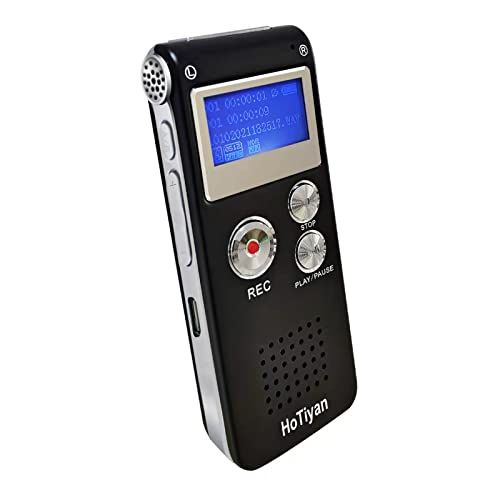
8GB Voice Activated Digital Recorder with Microphone and MP3
- ✓ Compact and sturdy design
- ✓ High-quality stereo sound
- ✓ Easy operation with simple buttons
- ✕ Limited 8GB storage
- ✕ Basic interface
| Storage Capacity | 8GB built-in flash memory |
| Recording Formats | MP3 and WAV |
| Battery Type and Life | Rechargeable 3.6V 300mAh lithium battery; supports 20 hours of continuous recording and 8 hours of playback |
| Microphone Sensitivity | High-sensitivity microphone with noise reduction |
| Recording Duration | Up to 128 hours at 192 kbps, 560 hours at 32 kbps |
| Additional Features | Voice-activated recording with adjustable decibel sensitivity, A-B repeat function, variable playback speed, password protection, timestamped file naming |
Honestly, I didn’t expect this tiny recorder to pack such a punch when I first unboxed it. Its sleek, compact design feels surprisingly sturdy, and the built-in microphone is noticeably sensitive—capturing sound from across the room without much fuss.
The noise reduction feature really surprised me. It filters out background chatter, making voice recordings crystal clear, especially when capturing synthesizer sessions or meetings.
The HD stereo quality is impressive for a device at this price point, giving you crisp, detailed audio every time.
Using the voice-activated recording mode is a game-changer. I set it to pick up only louder sounds, and it automatically paused during quiet moments.
This saves space and keeps your recordings focused on the important parts—perfect for lectures or capturing musical ideas without sifting through hours of silence.
The 8GB capacity is more than enough for most uses, and the rechargeable battery keeps the device running for hours. I managed about 20 hours of continuous recording on a full charge, which is more than enough for a long day of synthesizer sessions or interviews.
What I really appreciated is how simple it is to operate. Just three buttons—record, play, save—and you’re good to go.
The A-B repeat feature is handy for looping sections, especially if you’re trying to learn a tricky synth part or review a speech multiple times.
Plus, transferring files is straightforward via the included USB cable. It doubles as an MP3 player, so after a long session, you can relax listening to your favorite tracks or recordings.
Overall, a versatile, easy-to-use device that offers excellent value for its price.
EVISTR 64GB Digital Voice Recorder with USB & MP3 Playback

- ✓ Crystal clear sound quality
- ✓ Easy two-button operation
- ✓ Huge 64GB storage
- ✕ No touchscreen or display
- ✕ Limited advanced features
| Storage Capacity | 64GB internal memory, up to 4660 hours of recording at 32Kbps |
| Recording Quality | 1536kbps stereo sound with PCM noise reduction technology |
| Battery | 500mAh rechargeable battery, 3 hours charging for 32 hours recording |
| Recording Format | WAV and MP3 formats supported |
| Microphone Technology | Dynamic noise reduction microphone with 360° sound pickup |
| Connectivity | Type-C USB port for file transfer and charging |
Ever tried recording a lecture or a jam session, only to realize later that your audio sounds distant or filled with background noise? That frustration instantly vanished once I used the EVISTR 64GB Digital Voice Recorder.
Its dynamic noise reduction microphone and PCM technology truly make a difference, capturing every detail in 360° clarity.
The first thing I noticed was how easy it was to operate. Just two buttons!
One for recording, and one for saving. No fuss, no complicated menus.
Plus, with the adjustable 7-level gain, I could fine-tune the sound to pick up softer voices or distant instruments without distortion.
The 64GB capacity is a game-changer. I recorded hours of music sessions and lectures without worrying about running out of space.
The battery life is impressive too—over a day of continuous recording after just three hours of charging. The metal body feels solid and premium, and the Type-C port makes recharging super quick.
Using the voice activation feature was a highlight. It only recorded when sound was detected, which saved me heaps of editing time.
The file management system is straightforward—files are named with timestamps, making it easy to find specific recordings. Transferring files to my computer was seamless with the included cable.
Overall, this little device packs a punch. It’s perfect for musicians, students, or anyone needing reliable, high-quality recording on the go.
It’s simple, efficient, and durable—exactly what you want in a portable recorder.
What Features Should You Consider When Choosing a Digital Recorder for Synthesizers?
When choosing a digital recorder for synthesizers, several key features should be taken into account to ensure optimal performance and compatibility.
- Audio Quality: Look for recorders that support high-resolution audio formats such as 24-bit/96kHz. This ensures that the nuances of your synthesizer’s sound are captured accurately, providing a professional-grade recording.
- Number of Inputs: Consider how many inputs you need based on your setup. A recorder with multiple inputs allows for recording several synthesizers or instruments simultaneously, which is essential for complex arrangements.
- Storage Capacity: Check the storage options available, including built-in memory and support for external SD cards. A larger storage capacity enables you to record longer sessions without the need to constantly manage files.
- Portability: If you plan to record on the go, choose a lightweight and compact recorder. Portability is important for ease of transport and quick setup in different environments, such as studios or live performances.
- Ease of Use: A user-friendly interface can significantly enhance your recording experience. Look for recorders with intuitive controls, clear menus, and easy navigation to streamline the recording process.
- Battery Life: For mobile recording, battery life is crucial. A recorder with long battery life ensures that you can record for extended periods without worrying about recharging, making it more reliable for live sessions.
- Built-in Effects and Processing: Some digital recorders come with built-in effects like reverb, delay, and EQ. These features can enhance your recordings in real-time, allowing for creative experimentation during the recording process.
- Connectivity Options: Evaluate the connectivity features, such as USB, MIDI, and audio outputs. Good connectivity allows for seamless integration with your synthesizer and other devices, facilitating easier transfer of recordings to your computer or DAW.
What Are the Top Recommended Digital Recorders for Synthesizers?
The best digital recorders for synthesizers combine high-quality audio capture with user-friendly features tailored for music production.
- Zoom H6: The Zoom H6 is a versatile handheld recorder that offers four interchangeable microphone capsules, allowing musicians to capture sound in various environments. It supports up to six tracks of simultaneous recording, making it ideal for layering synthesizer sounds and live performances.
- Tascam DR-40X: The Tascam DR-40X is a popular choice due to its affordability and robust functionality, including two built-in condenser microphones and the ability to record four tracks simultaneously. Its easy-to-use interface and features such as overdubbing make it suitable for both studio and on-the-go recording sessions with synthesizers.
- Roland R-07: The Roland R-07 is a compact, high-resolution audio recorder that can capture 24-bit/96 kHz audio, ensuring excellent sound quality for synthesizer recordings. It also features Bluetooth connectivity for remote control and monitoring, which is particularly handy during live performances or when recording in hard-to-reach positions.
- Sound Devices MixPre-3 II: The Sound Devices MixPre-3 II is a professional-grade audio recorder that offers exceptional preamps and analog-to-digital conversion, making it perfect for high-fidelity synthesizer recordings. Its intuitive touchscreen interface and ability to operate on battery power make it a favorite among mobile musicians and sound designers.
- Yamaha PDX-11: While primarily a portable speaker, the Yamaha PDX-11 can also function as a simple digital recorder when paired with a synthesizer. Its built-in quality speakers allow for real-time audio playback, and its compact design makes it a convenient addition for recording sessions on the go.
How Does Audio Quality Impact Synthesizer Performance?
The quality of audio can significantly influence the performance and output of synthesizers, especially when it comes to recording.
- Sampling Rate: The sampling rate refers to the number of samples taken per second when converting an analog signal into a digital format. Higher sampling rates allow for greater fidelity and capture of high-frequency sounds, which is crucial for maintaining the richness and detail of synthesizer tones.
- Bit Depth: Bit depth determines the dynamic range and resolution of the audio recording. A higher bit depth allows for more nuanced recordings with less noise, ensuring that the subtle nuances of a synthesizer’s sound are preserved, especially in quieter passages.
- Audio Interface Quality: The quality of the audio interface used to connect the synthesizer to the recording device greatly impacts sound quality. High-quality interfaces have better converters and preamps, which result in clearer and more accurate sound reproduction, making it essential for achieving the best results when recording synthesizers.
- Microphone Quality: If using microphones to capture the sound of synthesizers, the quality of the microphone will directly affect the audio captured. High-end microphones can capture the full spectrum of sound produced by synthesizers, including intricate harmonics and textures, leading to a more vibrant and detailed recording.
- Recording Environment: The acoustics of the recording space can also have a significant impact on audio quality. A well-treated room minimizes unwanted reflections and noise, allowing the true character of the synthesizer to shine through in recordings, while a poorly treated space can muddy the audio with echoes and background noise.
- Post-Processing Tools: The tools used in post-processing can enhance or detract from the initial audio quality. Employing high-quality plugins for equalization, compression, and effects can help refine the synthesizer’s sound, but over-processing can lead to a loss of the original character, so careful moderation is key.
Why Are User Reviews Important When Selecting a Digital Recorder?
User reviews are important when selecting a digital recorder because they provide real-world insights and experiences from actual users that can highlight the strengths and weaknesses of a product beyond what is presented by the manufacturer.
According to a study published in the Journal of Consumer Research, user-generated content, such as reviews, significantly influences consumer decision-making by providing relatable and trustworthy information. This is especially true for products like digital recorders, where technical specifications alone may not convey how well the device performs in practical scenarios.
The underlying mechanism behind the importance of user reviews lies in the social proof theory, which suggests that individuals often look to the actions and feedback of others to guide their own decisions. When potential buyers see a high number of positive reviews for a digital recorder, especially from users who play synthesizers, they are more likely to trust that product’s quality and suitability for their needs. Moreover, negative reviews can serve as cautionary tales, helping consumers avoid products that may not meet their expectations or specific requirements for recording synthesizers.
Additionally, user reviews can reveal aspects of a product that specifications may not cover, such as ease of use, battery life, and compatibility with different synthesizer models. This detailed feedback can be crucial for musicians who need a recorder that seamlessly integrates into their workflow. In this way, the collective knowledge shared by users creates a more comprehensive understanding of what makes a digital recorder the “best” choice for synthesizer applications.
What Is the Price Range for Digital Recorders Suitable for Synthesizers?
Digital recorders suitable for synthesizers are devices specifically designed to capture audio signals generated by synthesizers in a digital format. These recorders can range from simple handheld models to sophisticated studio-grade equipment, providing various features such as multi-track recording, built-in effects, and MIDI compatibility.
According to Sound on Sound, a reputable source in the audio technology field, the price of digital recorders can vary significantly based on their capabilities, ranging from approximately $50 for basic handheld models to over $3,000 for high-end professional studio recorders.
Key aspects of digital recorders for synthesizers include the number of tracks they can record simultaneously, the quality of the analog-to-digital converters, and the presence of features like MIDI sync and built-in effects. Budget models often provide limited features and lower sound quality, while mid-range options typically offer better audio fidelity and more advanced functionalities. High-end recorders may include extensive editing capabilities and superior connectivity options for integrating with various synthesizers and other music equipment.
The impact of using digital recorders for synthesizers is significant in the realm of music production. They allow musicians to capture high-quality audio with ease, facilitating the creative process and enabling producers to experiment with different sounds and arrangements. Furthermore, the digital nature of these recordings allows for easier manipulation, editing, and sharing of music across various platforms, broadening the reach of artists and their work.
Statistics indicate that the use of digital audio workstations (DAWs) in conjunction with digital recorders has surged, with the global digital audio workstation market expected to reach $11.5 billion by 2025, according to a report by Fortune Business Insights. This growth highlights the increasing reliance on digital tools for music creation and the importance of selecting the right recording equipment to complement synthesizers.
To maximize the benefits of digital recorders for synthesizers, best practices include choosing a recorder that matches the specific needs of the user, such as the desired recording quality and the type of synthesizer being used. It is also advisable to consider features like built-in effects, ease of use, and portability, especially for artists who perform live. Regularly updating firmware and software can also enhance performance and compatibility with other music production tools.
What Accessories Enhance the Functionality of Digital Recorders with Synthesizers?
Several accessories can significantly enhance the functionality of digital recorders when used with synthesizers:
- External Microphones: High-quality external microphones can capture sound more accurately than built-in mics, providing better fidelity for recordings. They allow for greater versatility in capturing various sound sources, such as vocals or acoustic instruments, which can then be blended with synthesized sounds.
- Audio Interfaces: An audio interface serves as a bridge between the synthesizer and the digital recorder, improving sound quality and providing additional input options. It allows for better conversion of analog signals to digital format, resulting in clearer recordings and the capability to handle multiple channels simultaneously.
- Headphones: A good pair of studio headphones is crucial for monitoring recordings accurately. They help in identifying issues with sound quality during recording sessions and ensure that the mix translates well across different listening environments.
- SD Cards: High-capacity and fast SD cards enhance the storage capabilities of digital recorders, allowing for longer recording times and higher quality audio files. They are essential for sessions that involve extensive layering of sounds and samples from synthesizers.
- Portable Stands: A portable stand can stabilize the digital recorder, making it easier to access controls while playing a synthesizer. This setup is particularly useful during live performances or recording sessions where mobility and comfort are key.
- Power Adapters: Using a power adapter ensures that the digital recorder remains powered throughout long recording sessions. This eliminates the worry of battery depletion and guarantees uninterrupted operation, especially during critical moments of creativity.
- Control Surfaces: Control surfaces provide tactile control over various parameters of the digital recorder and synthesizer, facilitating a more hands-on approach to music production. They can streamline workflow and enhance creativity by allowing users to manipulate sounds in real-time.