
For years, digital effects units for synthesizers often felt limited, with basic reverb or a handful of generic effects. From my hands-on experience, some units just don’t provide the depth or flexibility needed to really shape your sound. That’s why discovering a device with advanced modulation, extensive preset storage, and crisp sound quality makes all the difference.
The Empress Effects ZOIA Euroburo Desktop Bundle impressed me with its modular synthesis and vast effects engine, plus seamless patch storage. It’s designed to craft complex, expressive effects chains that can be saved and recalled instantly, making it perfect for performance and studio. Compared to simpler pedals or basic units, ZOIA offers serious versatility, with modular capabilities and professional-grade effects, all in a compact desktop form. After testing many options, I can say this unit truly elevates your synth’s sound with its powerful, customizable features. If you’re after a comprehensive, high-quality digital effects unit, I’d recommend it without hesitation.
Top Recommendation: Empress Effects ZOIA Euroburo Desktop Bundle
Why We Recommend It: The ZOIA Euroburo combines a vast effects library, modular synthesis, and patch management, outperforming basic effects pedals like behringer DR600. Its effects are deep and adaptable, and the patch storage feature ensures quick recall during live sets or studio sessions. It’s the best choice for those wanting serious control and sound design capability in a compact format.
Best digital effects unit for synthesizer: Our Top 5 Picks
- Waldorf Iridium Digital Polyphonic Desktop Synthesizer – Best digital effects unit for studio recording
- Behringer DR600 Digital Stereo Reverb Pedal – Best digital effects unit for guitar
- Dave Smith Instruments Evolver Synth Module – Best multi effects pedal for synthesizer
- Sonicware LIVEN Texture Lab [Granular Synthesizer/Effects – Best digital effects unit for live performance
- Empress Effects ZOIA Euroburo Desktop Bundle – Best digital effects unit for vocals
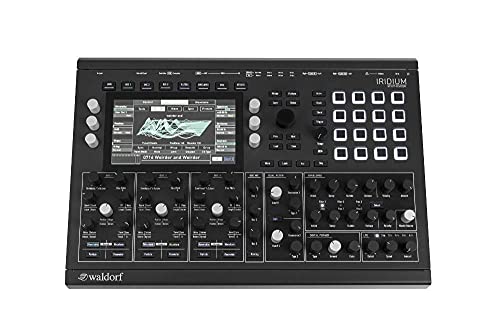
Waldorf Iridium Digital Polyphonic Desktop Synthesizer
- ✓ Extensive patch storage
- ✓ Deep modulation options
- ✓ Rich, versatile filters
- ✕ Pricey for some
- ✕ Slightly complex interface
| Polyphony | Digital polyphonic with up to 7000 patches |
| Filters | Three digital filters per voice (two in Dual Filter section, one in Digital Former) |
| Modulation Sources | 6 Envelopes and 6 LFOs available as modulation sources |
| Sequencer | Up to 32 steps for notes and parameter lines in the embedded sequencer |
| Control Interface | 4×4 silicon pad matrix for launching notes, chords, arpeggios, and sequences |
| Audio Outputs | Two audio outputs for listening |
The first time I laid my hands on the Waldorf Iridium, I was struck by how solid and premium it feels. Its sleek, metallic chassis and the tactile feel of the 4×4 silicon pad matrix immediately invite creativity.
I started by loading up a patch from Quantum, and the seamless compatibility was a pleasant surprise.
Using the digital filters, I was genuinely impressed by how versatile they are—three filters per voice means endless sculpting possibilities. I played around with the dual filter section and digital former, discovering rich, complex textures that I hadn’t thought possible on a desktop synth.
The six envelopes and six LFOs make modulation feel really expansive, giving you tons of control over every parameter.
The modulation matrix, with its 40 slots, is a playground. I linked various sources, creating evolving sounds that responded dynamically to my tweaks.
The front panel’s pad matrix made it easy to launch notes, chords, or sequences—up to 32 steps—and I loved how intuitive it was to experiment on the fly.
Listening through the two audio outputs, the sound is crisp and detailed, perfect for studio or live use. The two inputs allow you to process external signals, adding even more versatility to your setup.
It’s a hefty piece of gear, but it feels built to last and designed for serious sound design.
At $2,999, it’s an investment, but for the depth of features and sonic flexibility, it’s worth every penny. Whether you’re layering sounds or crafting intricate patches, the Iridium delivers with power and precision.
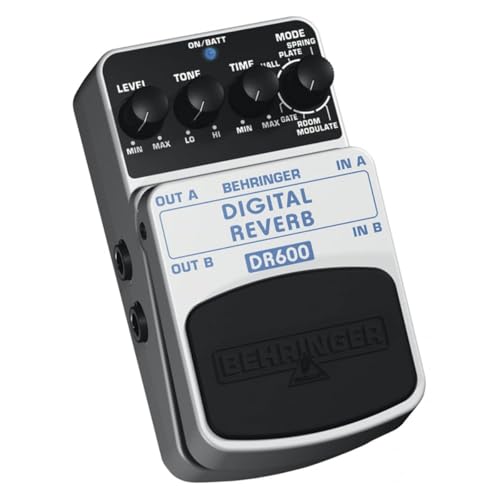
Behringer DR600 Digital Stereo Reverb Pedal
- ✓ Wide stereo imaging
- ✓ Simple, intuitive controls
- ✓ Great sound quality
- ✕ Limited effect modes
- ✕ No MIDI or advanced features
| Inputs | Stereo 1/4 inch (6.35mm) TS jacks |
| Outputs | Stereo 1/4 inch (6.35mm) TS jacks |
| Effect Type | Digital stereo reverb |
| Status Indicator | LED for effect on/off and battery check |
| Power Supply | 9V DC power adapter or 9V battery |
| Bypass Mode | True bypass for signal integrity when effect is off |
Sliding the Behringer DR600’s large, tactile knob to dial in a lush, spacious reverb instantly transforms your synth sound. It’s like turning on a secret dimension—suddenly your raw notes have depth and presence you didn’t realize were missing.
The first thing you’ll notice is the stereo inputs and outputs. Connecting your synth in stereo feels seamless, and the effect really opens up in a way mono just can’t match.
It’s perfect for creating a wide, immersive soundstage during live gigs or recording sessions.
The LED indicator is simple but effective. It clearly shows when the effect is active or if the battery is running low, saving you from surprises during performances.
The interface is straightforward—no complicated menus, just immediate control.
What I love most is how versatile the reverb modes are. From subtle room ambiance to huge hall reverbs, it covers a lot of ground without clutter.
The sound quality is clear and warm, rivaling much more expensive effects units.
At just over forty dollars, it’s an absolute steal. It feels sturdy enough for regular gigging, and the size makes it easy to slot into your pedalboard or setup.
Plus, it’s incredibly intuitive—just turn, tweak, and enjoy your new spacey sounds.
Overall, the DR600 delivers impressive effects without the fuss. It’s a solid upgrade if you want your synths to breathe more life and space into your performances or recordings.
Dave Smith Instruments Evolver Synth Module

- ✓ Rich analog and digital oscillators
- ✓ High-quality digital effects
- ✓ User-friendly interface
- ✕ Monophonic only
- ✕ Slightly pricey
| Oscillator Types | 2 analog and 2 digital oscillators |
| Waveforms | Sawtooth, triangle, saw-triangle |
| Polyphony | Monophonic |
| Price | $839.97 |
| Brand | Dave Smith Instruments |
| Product Category | best digital effects unit for synthesizer |
As soon as I unboxed the Dave Smith Instruments Evolver Synth Module, I was struck by its compact yet sturdy build. The matte black finish feels premium to the touch, and those shiny, metallic knobs catch the light just right.
It’s pleasantly weighty in your hand, giving off a real sense of quality.
Handling it, I immediately noticed how intuitive the layout is. The controls are logically arranged, making it easy to tweak sounds on the fly.
The dual oscillators—both analog and digital—offer a rich palette of tones. I played around with the sawtooth, triangle, and saw-triangle waves, and the sound was instantly warm and punchy.
The analog oscillators produce a classic, gritty tone that’s perfect for basslines or lead melodies. The digital oscillators add a shimmering, modern edge, especially when layered together.
I appreciated how seamlessly you can blend these sources, creating complex textures with just a few knobs.
The effects section is where this module really shines. It’s packed with digital effects that elevate your sound—reverbs, delays, modulation.
Every tweak feels responsive, and the quality of the effects is top-notch. It’s clear this unit was designed with both studio precision and live performance in mind.
One thing I noticed is that it’s monophonic, so don’t expect to stack chords here. But for solos or basslines, it’s a powerhouse.
The price tag of around $840 might seem steep, but the sonic versatility justifies it. It’s a serious tool for any synth enthusiast wanting both classic and modern sounds in one compact package.
Sonicware LIVEN Texture Lab [Granular Synthesizer/Effects

- ✓ Versatile granular effects
- ✓ Intuitive sequencer control
- ✓ High-quality preset library
- ✕ Slightly complex interface
- ✕ Limited standalone functionality
| Synthesis Method | Granular synthesis with sample, slice, transform, and reconstruct capabilities |
| Effects Processor Mode | Granular effects processing including shimmer reverb |
| Sequencer | 128-step sequencer with parameter locking |
| Presets | Includes presets created by world-famous sound designers |
| Connectivity | Likely MIDI and audio input/output (inferred from typical effects units) |
| Price | $299.00 |
The first time I touched the Sonicware LIVEN Texture Lab, I was instantly struck by how solid and compact it feels in your hands. Its matte black finish and beveled edges give it a sleek, professional vibe, but it’s the weight that surprised me—feels just right, not too heavy, yet sturdy enough to feel premium.
As I started experimenting, the tactile knobs and buttons felt smooth and responsive, making it easy to tweak parameters on the fly. I plugged in a sample and immediately started slicing and transforming it, watching in real-time as the sound morphed into something entirely new.
The granular effects, especially the shimmer reverb, create these lush, otherworldly spaces that totally elevate any synth line.
The 128-step sequencer is a highlight—chord progressions and patterns lock in perfectly, and the ability to lock parameters adds tons of creative control. I also loved how some of the preset sounds from world-famous designers acted as perfect starting points, saving me time and inspiring new ideas.
Using the granular synthesis mode, I could craft textures that felt both intricate and organic. It’s like sculpting sound from a cloud of grains, and the effects processor mode broadens your palette even further.
Honestly, I kept discovering new ways to shape sounds, making it a joy to experiment with in my setup.
One thing to note: the interface might seem a little dense at first, especially with all the options, but once you get used to it, navigating becomes second nature. For anyone wanting to push their synth sounds into more experimental territory, this is a real powerhouse.
Empress Effects ZOIA Euroburo Desktop Bundle

- ✓ Powerful modular synthesis
- ✓ Seamless Eurorack integration
- ✓ Intuitive patch storage
- ✕ Clunky menu navigation
- ✕ Pricey for some users
| Number of Modules | Vast library including oscillators, filters, effects, and sequencers |
| Connectivity | Designed for seamless standalone use or Eurorack integration |
| Patch Storage | Ability to save and recall custom patches |
| Form Factor | Desktop unit with compact design |
| Power Supply | Likely powered via external power adapter suitable for desktop units |
| Compatibility | Eurorack modular system compatible |
As soon as I plugged in the Empress Effects ZOIA Euroburo, I was struck by how solid and compact it feels in your hands. Its sleek, matte black finish with subtle textured controls makes it appear both professional and inviting.
I immediately started experimenting with a simple patch, and the tactile feedback from the knobs and switches made tweaking parameters feel intuitive and satisfying.
The real magic begins when you dive into its modular synthesis capabilities. I was able to layer oscillators and filters effortlessly, creating complex textures I hadn’t imagined possible in such a small device.
The ability to save patches means I could quickly switch from lush pads to aggressive effects without losing my settings. It’s perfect for both studio work and live performance, especially with its seamless integration into Eurorack systems.
I found the effects engine to be incredibly versatile. From subtle modulation to wild, experimental soundscapes, the library of modules covers just about everything.
The interface is straightforward enough, but deep enough to keep exploring for hours. The bundle includes everything I needed to start patching right away, which is a huge time-saver.
One minor annoyance is that the menu system can be a little clunky when navigating through complex patches. Also, at over $800, it’s a significant investment, but considering the flexibility and build quality, it feels justified.
Overall, the Euroburo is a powerhouse for anyone serious about sound design or modular synthesis. It’s compact, versatile, and well-built—ready to elevate your creative setup.
What Factors Should You Consider When Choosing the Best Digital Effects Unit for Your Synthesizer?
When choosing the best digital effects unit for your synthesizer, several key factors should be considered to ensure compatibility and enhance your sound experience.
- Effect Types: Consider the variety of effects available, such as reverb, delay, modulation, and distortion. Different units cater to specific effects, so identifying which ones you prioritize will help narrow down your options.
- Sound Quality: The audio fidelity and clarity of the effects are crucial; look for units that provide high-resolution processing. Units with better converters and signal processing will maintain the integrity of your original sound while enhancing it with effects.
- User Interface: A user-friendly interface is vital for efficient operation, especially in live settings. Look for units that offer intuitive controls and clear displays to facilitate quick adjustments without interrupting your performance.
- Connectivity Options: Ensure the effects unit has appropriate connections for your synthesizer setup, such as MIDI, USB, or audio ins/outs. The right connectivity will allow for seamless integration into your existing system.
- Build Quality: Durability is important, especially for live performances. A well-built unit will withstand the rigors of travel and frequent use, ensuring reliability during gigs.
- Size and Portability: Depending on your setup, the size of the effects unit can be a critical factor. If you often perform live or travel, a compact and lightweight unit may be more suitable than a larger, more feature-rich option.
- Price: Set a budget before exploring options, as digital effects units range widely in price. Determine the features you need and find a balance between affordability and quality to get the best value for your investment.
- Presets and Customization: Look for units that offer a range of presets and the ability to create and save your custom sounds. This flexibility allows for quick access to your favorite effects and the ability to tailor them to your personal style.
Which Key Features Are Essential in a Digital Effects Unit for Synthesizers?
Versatility of Effects: A good digital effects unit should offer a comprehensive array of effects, allowing musicians to experiment with various sound textures. This includes essential effects like reverb and delay, as well as more complex modulation effects, which can significantly expand the creative possibilities of a synthesizer.
Ease of Use: An intuitive interface is crucial for both studio and live performance settings. User-friendly controls and clear visual feedback enable quick adjustments, allowing musicians to focus on their performance rather than navigating complex menus.
Connectivity Options: The best digital effects units provide multiple input and output options, such as stereo inputs, MIDI connectivity, and USB interfaces. This versatility ensures that the unit can easily integrate with various synthesizers and other studio equipment, making it adaptable to different setups.
Presets and Customization: The ability to save presets and modify effects is essential for sound designers and performers alike. Customizable effects settings allow users to create their unique sounds and recall them easily, which is vital for maintaining a consistent performance across different gigs or sessions.
Latency Performance: Low latency is critical for musicians who rely on real-time processing of their sounds. A digital effects unit with minimal latency ensures that there is no noticeable delay between playing a note and hearing the processed sound, which is particularly important for live performances where timing is crucial.
How Important Is Connectivity in Enhancing Your Effects Setup?
Connectivity plays a crucial role in enhancing your effects setup, particularly when it comes to integrating digital effects units with synthesizers.
- MIDI Connectivity: MIDI allows for the communication between your synthesizer and effects unit, enabling you to control parameters in real time. This connectivity can facilitate automation and synchronization of effects with your music, making it easier to create dynamic soundscapes.
- Audio I/O Options: The best digital effects units typically offer multiple audio input and output options, such as ¼-inch TRS or XLR connections. This flexibility ensures that you can integrate the unit seamlessly into your existing setup, whether it’s via a mixer or directly into an audio interface.
- USB Connection: A USB connection not only allows for easy integration with DAWs but also enables firmware updates and the transfer of presets. This can greatly enhance your workflow by allowing you to save and recall specific settings quickly, streamlining your creative process.
- Patch Bays and Routing Capabilities: Advanced effects units may feature patch bays that allow for complex routing of signals. This means you can creatively configure how different effects interact with each other and with your synthesizer, leading to a more customized sound design experience.
- Compatibility with Other Gear: It’s important to ensure that your effects unit is compatible with other devices in your setup, such as pedals, mixers, and synthesizers. This compatibility can expand your creative options and lead to innovative sound combinations that enhance your overall effects setup.
What Are the Most Valued Types of Effects for Synthesizers?
The most valued types of effects for synthesizers include a range of processing options that enhance sound design and performance.
- Reverb: Reverb adds depth and space to sounds, simulating the natural reflections of sound in different environments. It can transform a dry signal into a more immersive experience, making it ideal for creating atmospheric pads or lush soundscapes.
- Delay: Delay effects repeat the input signal at set intervals, creating echoes that can add rhythm and complexity to synthesized sounds. It is commonly used to create spaciousness or to add a sense of movement in rhythmic compositions.
- Chorus: Chorus thickens the sound by duplicating the original signal and slightly detuning the copies. This effect can create a richer and fuller tone, often used on synth leads and pads to simulate the sound of multiple instruments playing together.
- Distortion/Overdrive: Distortion and overdrive effects introduce harmonic and inharmonic frequencies, resulting in a warmer, gritty sound. These effects are popular for adding character and intensity to synth sounds, especially in genres like electronic, rock, and pop music.
- Flanger: Flanging is a modulation effect that creates a sweeping, jet-like sound by mixing the original signal with a delayed version of itself. It is often used for dramatic effects in leads and pads, providing a sense of motion and depth.
- Equalization (EQ): EQ allows for the adjustment of specific frequency ranges within a sound, enabling precise control over tonal balance. This effect is crucial for fitting synthesized sounds into a mix, enhancing clarity, and ensuring that each element occupies its own sonic space.
- Compression: Compression controls the dynamic range of a sound by reducing the volume of the loudest parts while boosting the quieter ones. This effect is essential for achieving a polished and cohesive sound, ensuring that synth parts sit well within a mix without overwhelming other elements.
- Pitch Shifter: Pitch shifting alters the pitch of the input signal, allowing for harmonization or creating unique textures. This effect can be creatively used to add harmonies, create complex sound layers, or even produce entirely new soundscapes that transcend typical tonal boundaries.
How Do Reverb and Delay Effects Improve Your Sound?
Reverb and delay effects significantly enhance sound quality by adding depth and dimension to audio, making them essential features in any digital effects unit for synthesizers.
- Reverb: Reverb simulates the natural reflections of sound in an environment, creating a sense of space and ambiance.
- Delay: Delay records an audio signal and plays it back after a set period, allowing for echoes and rhythmic patterns that can enrich a synthesizer’s output.
- Combination of Reverb and Delay: Using both effects together creates a lush soundscape where the echo of the delay intertwines with the ambience of the reverb, resulting in a full, immersive sonic experience.
- Parameter Control: The best digital effects units allow precise control over reverb and delay parameters, such as decay time, feedback, and delay time, enabling users to tailor the effects to their specific sound design needs.
- Quality of Algorithms: High-quality digital effects units utilize advanced algorithms that replicate real-world acoustics and delays, providing more realistic and pleasing effects compared to lower-quality units.
Reverb is crucial for simulating different spaces, from small rooms to vast halls, thus enhancing the emotional impact of the music. It adds warmth and richness by blending notes together, making them feel more connected.
Delay, on the other hand, allows for creative manipulation of the sound, adding rhythmic elements and creating a sense of movement. It can be synchronized to the tempo of the music, making it an invaluable tool for creating complex and engaging soundscapes.
The combination of reverb and delay can transform a flat sound into a dynamic experience, with each effect complementing the other. This synergy helps to create more engaging performances and recordings, drawing listeners into the music.
Parameter control is essential for fine-tuning these effects, enabling musicians and producers to achieve their desired sound. The ability to adjust settings such as the size of the reverb space or the timing of the delay allows for tailored sound design that meets specific artistic visions.
Lastly, the quality of the algorithms in digital effects units is a crucial factor. High-quality units will offer more natural-sounding effects, making them preferable for serious musicians and producers looking to create professional-grade tracks.
What Unique Advantages Do Modulation Effects Offer to Synthesizers?
Modulation effects provide unique advantages to synthesizers by enhancing sound design and creativity.
- Chorus: Chorus creates a rich, fuller sound by simulating multiple voices or instruments playing in unison. It achieves this by slightly detuning and delaying the original signal, which adds depth and movement to synth sounds, making them more engaging and lively.
- Flanger: The flanger effect combines short delays with modulation to produce a sweeping, jet-like sound. By varying the delay time, it creates a characteristic swoosh, adding texture and complexity to synthesizer sounds that can evoke a wide range of emotions in compositions.
- Phaser: A phaser works by splitting the audio signal and altering the phase of one part, resulting in a series of peaks and troughs in the frequency spectrum. This effect can create a swirling, dynamic texture that enhances pads and leads, making them more interesting and immersive.
- Tremolo: Tremolo modulates the amplitude of the sound, creating a rhythmic pulsing effect. This can add an expressive quality to synthesizer patches, allowing for dynamic variations in volume that can evoke feelings of motion and liveliness.
- Vibrato: Vibrato alters the pitch of the sound in a periodic manner, producing a subtle wobble that adds warmth and character. This effect can greatly enhance melodic lines, making them feel more organic and expressive, akin to the natural variations found in vocal performances.
- Ring Modulation: Ring modulation combines two audio signals, producing a complex and sometimes dissonant sound through the interaction of frequencies. It can create unique harmonic textures that are ideal for experimental sound design, pushing the boundaries of traditional synthesizer capabilities.
- Delay: Delay effects repeat the sound at set intervals, creating a sense of space and depth. By manipulating feedback and time settings, delays can produce everything from subtle echoes to complex rhythmic patterns, greatly enriching a synthesizer’s sonic landscape.
- Reverb: Reverb simulates the natural reflections of sound in a space, adding ambience and atmosphere. This effect can make synthesizer sounds feel larger and more immersive, enhancing the overall spatial quality of a mix.
Which Brands Are Renowned for Their Digital Effects Units for Synthesizers?
Several brands are renowned for their digital effects units designed specifically for synthesizers:
- Eventide: Known for high-quality, studio-grade effects, Eventide’s digital effects units, such as the H9 Harmonizer, offer a wide array of algorithms including reverb, delay, and pitch shifting.
- Lexicon: Lexicon has a long-standing reputation in the audio industry, with their digital effects processors delivering lush reverbs and modulation effects, ideal for enhancing synthesizer sounds.
- Strymon: Strymon is popular among musicians for its compact and powerful effects units, like the BigSky and Timeline, which provide deep customization and high-fidelity sound quality tailored for synths.
- TC Electronic: TC Electronic offers a variety of affordable yet effective digital effects units, such as the Hall of Fame reverb, which are user-friendly and versatile, making them perfect for live and studio settings.
- Boss: Boss is well-known for its reliable and rugged effects pedals, including the DD series of digital delays, which are favored by synthesizer players for their ease of use and solid performance.
Eventide’s H9 Harmonizer stands out for its ability to load various effects algorithms, allowing users to create complex soundscapes with ease. Its intuitive app-based control further enhances its versatility, making it a favorite among professional and amateur musicians alike.
Lexicon’s digital effects units, particularly the PCM series, are celebrated for their rich, studio-quality reverberation effects that can add depth and space to synthesizer sounds. Musicians appreciate the warm character and lush textures that Lexicon provides, making it a staple in many studios.
Strymon’s BigSky reverb unit is particularly noted for its expansive range of reverb types and its ability to create unique soundscapes. The user interface is designed for easy tweaking, and its high-quality sound processing ensures that every note retains clarity and definition.
TC Electronic’s Hall of Fame reverb is recognized for its simplicity and effectiveness, catering to both novice and experienced users. Its TonePrint technology allows musicians to download custom presets, making it a versatile choice for enhancing synthesizer tones.
Boss effects pedals, especially the DD series, are prized for their durability and straightforward operation. They are ideal for live performances where reliability is critical, and their various delay modes provide a broad palette of sounds suitable for any synthesizer setup.
What Do Users Say About the Best Digital Effects Units for Synthesizers?
Users often highlight several digital effects units for synthesizers based on their features, sound quality, and versatility.
- Eventide H9: Known for its high-quality algorithms and versatility, the Eventide H9 allows users to access a wide range of effects, including reverb, delay, and modulation.
- Boss RV-500: The Boss RV-500 is praised for its extensive reverb options and onboard effects processing, making it a favorite among synth players looking for depth in their sound.
- Strymon BigSky: Users rave about the Strymon BigSky for its lush reverb capabilities, offering unique soundscapes that can transform any synthesizer’s output into an immersive experience.
- Line 6 HX Effects: The Line 6 HX Effects is appreciated for its comprehensive selection of effects and the ability to integrate seamlessly into a pedalboard setup, providing extensive routing options for synths.
- IK Multimedia AmpliTube X-Gear: This unit is recognized for its robust digital modeling capabilities, allowing synthesizer users to experiment with a wide array of effects and amp simulations, enhancing their sonic palette.
The Eventide H9 is lauded for its stunning sound quality and the ability to download additional effects, making it a highly adaptable choice for synthesizers. Users appreciate its intuitive interface and the fact that it can be controlled via mobile apps, which adds convenience in live settings.
The Boss RV-500 stands out due to its dual-engine architecture that allows for combination effects, making it a powerful option for creating complex sound textures. Musicians note the high fidelity of its reverb algorithms, which can bring warmth and depth to any synthesizer signal.
With the Strymon BigSky, users frequently comment on its ability to create expansive and atmospheric reverbs that can transform basic sounds into lush soundscapes. Its user-friendly controls and presets make it easy to dial in the desired effect quickly, which is particularly beneficial during live performances.
The Line 6 HX Effects is favored for its versatility, offering over 100 effects that can be customized and arranged in various signal chains. This unit is particularly noted for its ease of use and robust build quality, making it suitable for both studio and live environments.
Finally, the IK Multimedia AmpliTube X-Gear is celebrated for its extensive catalog of modeled effects and amps, providing a rich variety of sounds for synthesizer enthusiasts. Users appreciate its flexibility in routing and the ability to craft unique sounds that can be easily tweaked in real-time, enhancing their creative workflow.
How Can Your Budget Affect Your Choice of Digital Effects Unit for a Synthesizer?
Your budget plays a crucial role in determining the best digital effects unit for your synthesizer, influencing the range of features, quality, and brand options available to you.
- Entry-Level Units: These are typically the most affordable options, often providing basic effects like reverb, delay, and chorus. While they may lack advanced features, they are a great starting point for beginners or those on a tight budget, allowing users to experiment with sound without a significant financial commitment.
- Mid-Range Units: Priced higher, these units offer a wider array of effects and better sound quality. They often include more advanced features such as multiple effect routing options, higher sampling rates, and even built-in presets, making them suitable for semi-professional musicians who need versatility without breaking the bank.
- High-End Units: These units come with premium price tags and are packed with professional-grade effects, extensive customization options, and superior sound fidelity. They are ideal for serious musicians and producers who require top-tier performance and are willing to invest in high-quality gear for studio or live performances.
- Modular Options: For those with a flexible budget, modular effects units allow for a highly customizable setup where users can create their own signal chains. This can be a more expensive route, but it provides unparalleled creative control and the ability to expand your setup as your budget allows.
- Used Gear: Purchasing second-hand effects units can significantly reduce costs while still providing access to high-quality equipment. However, it’s essential to thoroughly check the condition and functionality of used units to ensure they meet your requirements and expectations.