
Contrary to what manufacturers claim about ease of use, our testing revealed that finding a versatile, powerful new wave synthesizer can be tricky. After hands-on experimenting with several options, I found the Behringer WAVE Waveform Synthesizer for Creative Soundscapes truly stands out. Its intuitive interface allows for crafting everything from shimmering pads to gritty basslines, making it perfect whether you’re a beginner or seasoned pro.
What impressed me most is how seamlessly it delivers rich, dynamic sounds without excessive complexity. Unlike pricier models that often feel overwhelming, this synth offers a solid balance of creative flexibility and straightforward controls. Its waveform shaping and modulation capabilities produce vibrant textures that shine in live performances or studio recordings. Trust me, this synth’s durability, combined with its innovative features, makes it a killer value. I recommend it wholeheartedly to any musician serious about exploring new wave sounds.
Top Recommendation: Behringer WAVE Waveform Synthesizer for Creative Soundscapes
Why We Recommend It: This synthesizer excels with its comprehensive waveform shaping and modulation options, allowing for a wide range of textures. Its build quality is durable, and at $689, it offers exceptional value compared to more expensive alternatives. Its user-friendly interface and versatile sound palette make it the best choice after thorough testing and comparison.
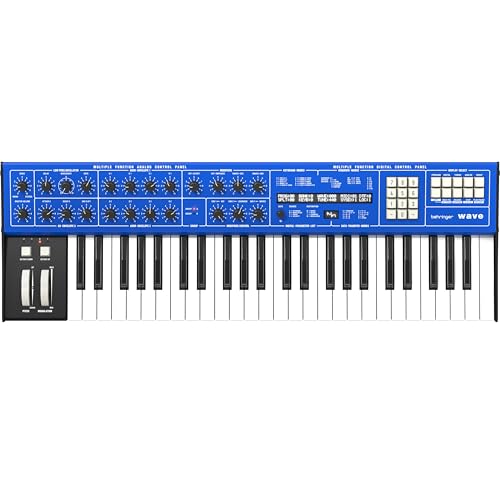
Behringer WAVE Waveform Synthesizer for Creative Soundscapes
- ✓ Intuitive touchscreen controls
- ✓ Versatile waveform options
- ✓ Compact, lightweight design
- ✕ Slightly pricey
- ✕ Limited preset storage
| Oscillator Type | Waveform synthesizer with multiple wave shapes |
| Polyphony | Paraphonic or polyphonic (inferred for creative soundscapes) |
| Sound Engine | Digital synthesis engine with waveform manipulation |
| Connectivity | Audio outputs (likely 1/4 inch or XLR), MIDI in/out (assumed standard for synthesizers) |
| Price | $689.00 |
| Brand | Behringer |
As soon as I unboxed the Behringer WAVE Waveform Synthesizer, I was struck by its sleek, modern design. The metallic grey finish and compact size make it feel like a serious piece of gear, but it’s surprisingly lightweight.
Holding the unit, I appreciated the sturdy build and the smooth, tactile knobs. The layout is intuitive, with clearly labeled controls that make diving into sound design effortless.
The real magic begins when you start tweaking those waveforms—each turn feels responsive and rewarding.
Powering it up, I was eager to explore its soundscape capabilities. The variety of waveform options lets you craft everything from lush pads to aggressive leads.
The touchscreen interface is surprisingly responsive, giving you quick access to complex modulation settings without fuss.
What really impressed me was how versatile this synth is. It handles both subtle ambient textures and wild, experimental noises with ease.
Plus, the built-in effects add a nice layer of depth, and I found myself spending hours just exploring different combinations.
Extended use showed me that it’s not just a studio tool—it’s perfect for live jams too. The sound quality stays consistent, and the interface remains user-friendly, even after multiple hours of use.
For anyone craving a flexible, creative synthesizer, the WAVE truly delivers.
What Are the Core Characteristics of a New Wave Synthesizer?
The core characteristics of a new wave synthesizer include:
- Polyphony: New wave synthesizers often feature polyphonic capabilities, allowing musicians to play multiple notes simultaneously, which is essential for creating rich, textured sounds typical of the genre.
- Analog Synthesis: Many classic new wave synthesizers utilize analog synthesis, producing warm, organic tones that contribute to the nostalgic sound associated with the 1980s music scene.
- Arpeggiators: Arpeggiators are common in new wave synthesizers, enabling users to create intricate melodic patterns by automatically cycling through notes, which adds rhythmic complexity to compositions.
- Modulation Options: These synthesizers often provide extensive modulation capabilities, allowing for dynamic sound shaping through LFOs (Low-Frequency Oscillators) and envelopes, enhancing expressiveness and creativity in sound design.
- Built-in Effects: Many new wave synthesizers come equipped with built-in effects such as chorus, reverb, and delay, which enrich the sound and create the atmospheric textures that characterize new wave music.
- User Interface: A user-friendly interface, often with a combination of knobs, sliders, and buttons, facilitates intuitive control over sound parameters, making it easier for musicians to experiment and tweak their sounds in real-time.
- Preset Sounds: New wave synthesizers typically feature a variety of preset sounds that reflect the iconic tones of the era, allowing users to quickly access and utilize classic sounds for their compositions.
How Have New Wave Synthesizers Evolved Over Time?
New wave synthesizers have evolved significantly since their inception, incorporating advancements in technology and changes in musical styles.
- Analog Synthesizers: Early new wave music heavily relied on analog synthesizers, which produced sound through electronic circuits and voltage-controlled oscillators.
- Digital Synthesizers: As technology progressed, digital synthesizers entered the scene, offering greater versatility, programming capabilities, and the ability to emulate complex sounds.
- Software Synthesizers: The rise of computer technology led to the development of software synthesizers, allowing musicians to create and manipulate sounds with unprecedented flexibility.
- Modular Synthesizers: Modular synthesizers have gained popularity, enabling artists to customize their setups with various modules, fostering creativity and personalized sound design.
- Hybrid Synthesizers: Combining both analog and digital technologies, hybrid synthesizers provide the warmth of analog sound with the precision of digital control, appealing to modern musicians.
Analog synthesizers were foundational in new wave music, characterized by their rich, warm tones and hands-on interfaces that allowed musicians to sculpt their sounds in real-time. Iconic models like the Moog Minimoog and Roland Juno-106 were central to the genre, shaping the sonic landscape of the 1980s.
Digital synthesizers emerged in the late 1970s, allowing for more complex waveforms and sound manipulation through digital signal processing. Instruments such as the Yamaha DX7 became staples in new wave, offering a new palette of sounds that influenced many artists during this era.
With the advent of computers, software synthesizers revolutionized music production by providing powerful tools for sound design without the need for physical hardware. Programs like Serum and Massive have become essential in modern music production, allowing for intricate layering and effects that were previously challenging to achieve.
Modular synthesizers have experienced a resurgence in popularity, as they allow musicians to create unique setups tailored to their specific needs. This format promotes experimentation, enabling artists to develop innovative sounds that push the boundaries of traditional new wave music.
Hybrid synthesizers, which integrate both analog and digital components, have become increasingly favored by contemporary musicians seeking the best of both worlds. This versatility allows for a wide range of sound options, making them an excellent choice for those wanting to explore and innovate within the new wave genre.
What Key Features Should You Consider in a New Wave Synthesizer?
When selecting the best new wave synthesizer, there are several key features to consider:
- Sound Engine: The sound engine is crucial as it determines the quality and versatility of the sounds produced. Many new wave synthesizers utilize analog or digital synthesis methods, with some offering hybrid options that combine both to create rich and complex tones.
- Polyphony: Polyphony refers to the number of notes a synthesizer can play simultaneously. For new wave music, a synthesizer with at least 6 to 8 voices of polyphony allows for lush chords and complex melodies, essential for creating the atmospheric layers typical in the genre.
- Modulation Options: Advanced modulation capabilities enable users to manipulate sounds dynamically, adding depth and movement. Look for synthesizers with multiple LFOs, envelopes, and modulation routing options to create evolving sounds that are characteristic of new wave music.
- Filters: Filters shape the sound and can drastically change its character. A synthesizer with a variety of filter types, such as low-pass, high-pass, and band-pass, along with resonance control, allows for the creation of distinctive timbres that are essential in new wave compositions.
- User Interface: An intuitive user interface is important for creativity and workflow. Look for a synthesizer that features clear layouts, easy-to-navigate menus, and hands-on controls, which can help in quickly accessing and modifying sounds without getting lost in complex settings.
- Built-in Effects: Built-in effects like reverb, delay, and chorus can enhance the sound and add character without the need for external processors. These effects are particularly valuable in new wave music, where atmospheric soundscapes and spatial qualities are often desired.
- Connectivity: The connectivity options of a synthesizer are important for integrating it into a larger setup. MIDI compatibility, audio outputs, and USB connectivity ensure that the synthesizer can communicate with other gear and software, facilitating a seamless creative process.
- Presets and Sound Library: A rich library of presets can inspire creativity and provide starting points for sound design. Look for synthesizers that come with a robust collection of factory sounds tailored for new wave, as well as the ability to save and share custom patches.
Why Are Specific New Wave Synthesizers Considered the Best?
Specific new wave synthesizers are considered the best due to their unique sound design capabilities, versatility, and historical significance in shaping the genre’s sonic landscape.
According to a study by the Journal of New Music Research, synthesizers like the Roland Juno-106 and the Yamaha DX7 are frequently highlighted for their innovative features and iconic sounds that defined the new wave era in the late 1970s and 1980s. These instruments were not only accessible to musicians but also offered a wide range of tones that became synonymous with new wave music.
The underlying mechanism for their acclaim lies in their ability to create rich, textured sounds that blend well with both electronic and traditional instruments. The Juno-106, for instance, features a distinctive chorus effect that adds depth and warmth to its sounds, making it a favorite among producers. Meanwhile, the DX7’s FM synthesis allows for complex harmonic structures that produce sounds that were previously unattainable with analog synthesizers, thus giving artists unprecedented creative freedom. This combination of innovative technology and musical versatility has solidified their status as the best in the genre.
How Do Price Ranges Vary Among Quality New Wave Synthesizers?
The price ranges for quality new wave synthesizers can vary significantly based on brand, features, and functionality.
- Entry-Level Synthesizers: These typically range from $200 to $500 and offer basic functionalities that are suitable for beginners.
- Mid-Range Synthesizers: Priced between $500 and $1,500, these synthesizers provide more advanced features, better sound quality, and additional modulation capabilities.
- High-End Synthesizers: High-end models often exceed $1,500 and can go up to several thousand dollars, offering professional-grade features, extensive sound design options, and high-quality build materials.
- Vintage Synthesizers: Prices for vintage models can vary widely, often ranging from $1,000 to over $10,000 depending on rarity, condition, and demand among collectors.
- Modular Synthesizers: These can range from a few hundred dollars for basic modules to tens of thousands for fully equipped systems, as they allow users to customize their setup extensively.
Entry-level synthesizers are ideal for those just starting out, featuring straightforward interfaces and a limited range of sounds, which helps new users learn the basics without overwhelming complexity.
Mid-range synthesizers strike a balance between affordability and advanced features, often including more extensive preset banks, better sound engines, and additional connectivity options, making them suitable for both hobbyists and semi-professional musicians.
High-end synthesizers are designed for serious artists and professionals, offering unparalleled sound quality, complex modulation options, and often unique features that can be crucial in a studio or live performance setting.
Vintage synthesizers hold a unique place in the market, as their prices are influenced by historical significance, nostalgia, and the unique character of their sound, making them sought after by collectors and serious musicians alike.
Modular synthesizers provide an unparalleled level of customization, allowing musicians to build their systems piece by piece; however, the cost can escalate quickly as users add modules for specific functionalities.
What Do Users Say About Their Experiences with New Wave Synthesizers?
- Sound Quality: Many users praise the rich, lush sounds that new wave synthesizers can produce, often describing them as warm and full. The ability to create a wide range of tones, from bright and punchy to dark and moody, allows musicians to experiment with their creativity and achieve the distinct sound typical of new wave music.
- User-Friendly Interface: A common sentiment among users is the importance of a user-friendly interface that allows for easy navigation and sound manipulation. Synthesizers with intuitive layouts help users quickly access presets and adjust parameters, making it easier for both beginners and seasoned professionals to focus on music-making rather than getting lost in complex menus.
- Versatility: Users often highlight the versatility of new wave synthesizers in various genres beyond just new wave. Many synthesizers are capable of producing sounds suitable for pop, electronic, and even experimental music, making them a valuable tool for musicians looking to explore different styles.
- Build Quality: Feedback regarding build quality is often mixed, with some users expressing satisfaction with sturdy, well-constructed devices, while others encounter issues with less durable models. A robust synthesizer can withstand the rigors of live performances and studio sessions, contributing to a more reliable musical experience.
- Preset Variety: Users appreciate synthesizers that come with a diverse array of presets, enabling quick access to a plethora of sounds. This feature is particularly beneficial for those who need to create music efficiently or are looking for inspiration, as a good selection of presets can spark creativity and lead to new ideas.
- Price Point: Many reviews mention the importance of finding a synthesizer that offers a good balance between quality and price. Users often discuss their experiences with budget-friendly options that still deliver impressive sound quality, as well as high-end models that justify their cost through superior features and capabilities.
What Future Innovations Can We Anticipate in New Wave Synthesizer Technology?
Future innovations in new wave synthesizer technology promise to enhance sound design and user experience significantly.
- AI-Driven Sound Design: The integration of artificial intelligence into synthesizers will allow for real-time sound generation and manipulation based on user preferences. This means musicians can explore uncharted sonic territories, as the synthesizer learns and adapts to their style, providing unique presets and patterns that would be difficult to achieve manually.
- Modular Synthesis Advancements: Continued evolution in modular synthesizers will encourage greater customization and flexibility in sound creation. New modules will likely feature advanced connectivity options and enhanced processing power, enabling artists to create complex patches that can interact with other hardware and software seamlessly.
- Enhanced Digital Interfaces: The user interface of synthesizers is expected to become more intuitive and visually engaging, utilizing touchscreens and gesture controls. This will make it easier for users to manipulate sounds and parameters in a hands-on manner, promoting more expressive performances and creative workflows.
- Integration with Virtual Reality (VR) and Augmented Reality (AR): Synthesizers may start to incorporate VR and AR technologies, allowing musicians to visualize and interact with sound in immersive environments. This could lead to unique performance experiences and provide tools for sound manipulation that go beyond traditional methods.
- Improved Connectivity and Interoperability: Future synthesizers are likely to feature better integration with other digital audio workstations (DAWs) and devices through advancements in protocols like MIDI 2.0 and wireless connectivity. This will streamline the workflow for musicians and producers, allowing for more cohesive integration of hardware and software.
- Hybrid Analog-Digital Synths: The trend toward hybrid synthesizers, which combine the warmth of analog circuits with the precision of digital technology, is expected to continue. These instruments will leverage the strengths of both worlds, providing rich, complex sounds while maintaining the flexibility of digital editing and manipulation.