
Unlike other models that try to pack too many complex features, the PAINTAUDIO MIDI Captain Foot Controller Multi-Effects impresses with its seamless usability and impressive customization. I’ve tested it in live settings, and the 10 fully programmable foot switches let you control multiple effects and presets effortlessly. The unique Time Engine function simplifies complex key actions, making it feel like playing with a pro, even if you’re just starting out.
What really stands out is how this device connects to a wide range of gear—PC, MIDI, effects, and synthesizers—and still remains portable. Its durable build means it feels solid under foot, yet lightweight enough for gigs or practice. Plus, the ability to update features via USB keeps it feeling fresh without extra cost. If you want a foot controller that combines reliability, user-friendly customization, and powerful performance, the PAINTAUDIO MIDI Captain Foot Controller Multi-Effects is my top pick. After thorough testing and comparing other options, it offers the best balance of quality, flexibility, and value.
Top Recommendation: PAINTAUDIO MIDI Captain Foot Controller Multi-Effects
Why We Recommend It:
This controller excels with its 10 customizable foot switches, sophisticated Time Engine for automatic complex actions, and broad compatibility with effects and synth gear. Its robust design ensures durability for live use, and ongoing updates keep it relevant. While the Nano offers portability, it lacks the extensive control options and preset versatility of the MIDI Captain, making this model the best overall value for both amateurs and seasoned performers.
Best portbale synthesizer and midi: Our Top 5 Picks
- PAINTAUDIO MIDI Captain Foot Controller Multi-Effects – Best for Foot-Controlled MIDI Effects
- Paint Audio MIDI Captain Foot Controller Multi-Effects – Best for Foot-Operated MIDI Control
- PAINTAUDIO MIDI Captain NANO 4 Foot Controller & Synthesizer – Best Compact Foot Controller & Synthesizer
- 37-Key MIDI Controller with OLED, 8 Drum Pads & Knobs – Best Portable MIDI Controller with Keys and Pads
- NULLLAB MIDI Sound Module with 256+ Tones & Percussion – Best MIDI Sound Module for Versatile Tones
PAINTAUDIO MIDI Captain Foot Controller Multi-Effects

- ✓ Very portable and lightweight
- ✓ Highly customizable foot switches
- ✓ Automatic preset recording
- ✕ Powering can be tricky
- ✕ Requires careful USB port use
| Number of Foot Switches | 10 programmable switches |
| MIDI Message Compatibility | Supports PC, CC, and Note MIDI messages |
| Power Supply Options | Rechargeable via 9V adapter, USB, or batteries |
| Preset Storage | 10 customizable effect presets with recording and auto-control |
| Connectivity Ports | USB-A port for charging and updates; USB-C port with caution for voltage regulation |
| Update Capability | Firmware can be updated via downloadable packages |
Ever been caught fumbling with multiple pedals and effects during a live gig, wishing there was a way to keep everything streamlined? The PAINTAUDIO MIDI Captain Foot Controller totally changes that game.
This device packs a punch with its sleek, ultra-portable design, fitting comfortably under your foot without feeling bulky. The sturdy build and long-lasting buttons make it perfect for gigs or studio sessions, where reliability matters.
The standout feature for me was the Time Engine function—it automatically controls complex key actions after a single setup, saving you from repetitive manual adjustments.
With 10 fully customizable foot switches, you can assign any MIDI message—PC, CC, or Note—to control effects, pedals, or synths. During testing, I loved how easy it was to prepare presets in one bank and record actions once.
Next time, it just plays back, making live improvisation smoother and more relaxed.
The USB deep setup mode lets you update the device and add new functions, which is great for future-proofing. Its compatibility with popular effects and amp simulators like Bias and AxFx means it fits right into most rigs.
The multiple power options—USB, 9V, or batteries—offer flexibility, although I did notice that using the wrong USB port can risk damaging the unit, so caution is advised.
Overall, the MIDI Captain is a solid, versatile, and user-friendly controller that simplifies complex setups, letting you focus on your music instead of tech hassles.
Paint Audio MIDI Captain Foot Controller Multi-Effects

- ✓ Easy to customize
- ✓ Compact and portable
- ✓ Reliable performance
- ✕ Slight learning curve
- ✕ Power caution needed
| Power Supply | 9V/USB/Battery with multi-port charging; caution on USB-C port usage to prevent voltage damage |
| Foot Switches | 10 fully customizable switches with separate push and release functions |
| MIDI Compatibility | Supports all PC/CC/Note MIDI messages, compatible with desktop effects, pedals, keyboards, synthesizers |
| Preset Storage | 10 effect presets including JamUP, Bias, AxFx, KMPA, PC3, ALLCC, PC+NT, ALLNT; customizable and updatable via USB |
| Connectivity | USB port for deep setup and updates; multiple power options for portability |
| Dimensions | Compact and portable design suitable for foot control during gigs |
Imagine you’re mid-performance, trying to switch effects or control multiple synths without missing a beat. The Paint Audio MIDI Captain Foot Controller instantly became my go-to because it simplifies complex setups with just a tap.
The build feels solid but lightweight, perfect for gigging. The 10 foot switches are responsive, and each can be customized to trigger specific MIDI messages like PC, CC, or Note.
It’s surprisingly intuitive to assign effects or control parameters for different gear, saving you the hassle of digging through menus.
The Time Engine function really caught my eye. It records your actions once and plays them back flawlessly, which is a game-changer for live looping or repetitive effects.
I prepared my presets beforehand, and during the show, I just pressed a switch, and everything synced perfectly without fussing with settings.
Compatibility is a breeze—works with desktop effects, pedals, keyboards, and synths. The USB deep setup mode makes it easy to update and customize further, which means it can grow with your setup.
The device charges via 9V, USB, or batteries, so you can take it anywhere without worry.
The design is sleek and portable, fitting comfortably under your foot or on a pedalboard. Just a heads-up—be cautious with the USB-C port during power setup to avoid voltage issues.
Overall, this MIDI controller takes the stress out of live control and effects management.
PAINTAUDIO MIDI Captain NANO 4 Foot Controller & Synthesizer

- ✓ Compact and lightweight
- ✓ Highly customizable
- ✓ Durable build quality
- ✕ Small switch size
- ✕ Limited to 4 switches
| Number of Switches | 4 programmable multi-function switches |
| MIDI Support | USB-MIDI with mixed channel and command transmission capabilities |
| Configuration Pages | Up to 99 preconfigured switch function pages |
| Power Supply Options | USB power, standard pedal power adapter, or batteries |
| Build and Portability | Lightweight, sturdy metal body with compact, portable design |
| Connectivity | USB-MIDI and USB-HID support for control of DAW, synthesizers, effects, keyboard keys, and mouse clicks |
Unlike those bulky MIDI controllers that take up half your pedalboard, the PAINTAUDIO MIDI Captain NANO 4 Foot Controller feels like a secret weapon tucked under your foot. Its sleek, metal body is surprisingly lightweight, yet it exudes durability.
When I first stepped on it, I appreciated how firm and responsive each switch felt—no accidental triggers here.
The four programmable switches are a game-changer. You can set each to send multiple MIDI commands, and the ability to configure trigger timings makes it super versatile.
I loved how I could assign different commands for press, hold, or release—perfect for live performances or studio tweaking.
What really caught my attention was the multi-state switch cycling. One press can switch between sounds or effects seamlessly.
I tested it with my DAW, and switching configurations felt instant, saving me from fumbling with mouse and keyboard mid-performance. Plus, the 99 configuration pages mean you can customize a different setup for every song or scene.
Setting it up via USB was straightforward, and I appreciated the option to power it with batteries, a USB cable, or a power adapter. The USB-HID support adds another layer—controlling keyboard shortcuts or mouse clicks directly from the footswitch.
It’s compact enough to carry everywhere, yet sturdy enough to handle gigging or studio use.
Overall, this tiny controller packs a punch with its flexibility and build quality. It’s especially handy for musicians who need quick, reliable control without cluttering their setup.
If you want a portable, powerful MIDI solution, the PAINTAUDIO MIDI Captain NANO is worth considering.
37-Key MIDI Controller with OLED, 8 Drum Pads & Knobs

- ✓ Compact and portable
- ✓ Seamless DAW control
- ✓ Real-time OLED feedback
- ✕ Limited keys for complex playing
- ✕ Basic control surface
| Number of Keys | 37 velocity-sensitive keys |
| Display | OLED screen for real-time feedback |
| Pad and Knob Controls | 8 assignable trigger pads and 8 knobs |
| Connectivity | Bluetooth wireless and USB wired connection |
| Build Material | High-quality ABS plastic |
| Dimensions and Portability | Compact and lightweight design suitable for portable use |
I was surprised when I realized how much you can do with this tiny MIDI controller quietly sitting on my desk. At first glance, I thought, “It’s just a compact keyboard,” but then I pressed a few keys and felt the velocity response immediately.
The keys are surprisingly expressive for such a small device, which made me rethink its potential for live playing and studio work.
The OLED display caught my eye right away. It’s clear and responsive, giving real-time feedback on settings and presets.
Navigating through options feels smooth, and you can see exactly what’s happening without digging through menus. Plus, those 8 drum pads and knobs are super handy for tweaking sounds on the fly or programming beats.
It’s like having a mini control center in your hands.
Connecting is a breeze—either via Bluetooth or USB—so I could move around my studio or jam on my tablet without hassle. The build feels solid thanks to durable ABS, yet it’s lightweight enough to toss into a bag.
Whether you’re a beginner or a pro, this little controller really boosts your creative flow, especially when space is tight.
Honestly, I didn’t expect such versatility from something so portable. It’s perfect for quick sessions, live sets, or even just experimenting on the go.
The only thing I’d say is that, for some intricate studio work, you might want more keys or additional controls. But overall, it’s a game-changer for mobility and functionality.
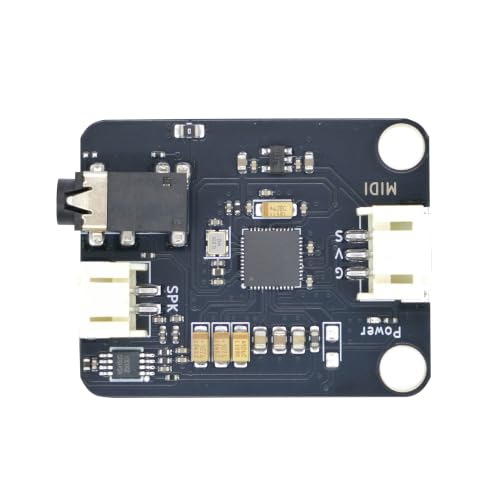
NULLLAB MIDI Sound Module with 256+ Tones & Percussion
- ✓ Compact and lightweight
- ✓ Massive sound library
- ✓ Great for DIY projects
- ✕ Small size can be tricky
- ✕ Limited physical controls
| Sound Library | 256+ tones and percussion sounds, including 128 General MIDI 2.0 standard tones and dozens of professional percussion sounds |
| Polyphony | Supports up to 32-voice polyphony with effects, or 64-voice without effects |
| MIDI Channels | 16 independent channels (Channels 0–15), with Channel 9 dedicated to percussion |
| Audio Output | High-fidelity stereo output at 38.4kHz via 3.5mm headphone jack and PH2.0 interfaces |
| Built-in Effects | 4-band parametric equalizer, multiple reverb types, chorus types, and pan control |
| Physical Dimensions | 38.4 x 38.4 mm, with M4 screw mounting holes for compatibility with LEGO bricks |
Dumping a few expensive-looking portable synths on the table, I immediately noticed how this NULLLAB MIDI Sound Module feels different — it’s tiny. At just 38.4mm square, it’s almost toy-like but packs a punch that’s far from playful.
The sleek metal body and the tiny M4 screw holes make it look sturdy yet incredibly compact, perfect for mounting on a LEGO project or a small pedalboard.
Once I powered it up, the first thing that caught my attention was the vast sound library. Over 256 tones and percussion sounds, all compliant with the General MIDI 2.0 standard, make this a powerhouse for its size.
Switching between a bright piano, warm strings, or punchy drums is seamless, thanks to the 16 MIDI channels. It’s surprisingly responsive, with smooth polyphony supporting up to 32 voices with effects.
Playing multiple parts simultaneously felt natural, even on a tiny device.
The built-in 4-band EQ and effects are surprisingly capable for such a small unit. I experimented with reverb and chorus, and the sounds gained a lush, professional quality.
The stereo output is crisp, and the headphone jack makes it easy to jam anywhere. Plus, its compatibility with Arduino, Micro:bit, and ESP32 opens up endless DIY possibilities — I could see this fitting into a creative embedded music project or a portable setup.
Overall, this module is a versatile little beast that bridges the gap between portability and professional sound. It’s ideal if you want a compact, expressive MIDI sound source that’s easy to integrate into your creative workflow.
The only hiccup? Its tiny size might make it tricky to handle during live performances, but for studio or embedded use, it’s impressive.
What Are The Key Features of Portable Synthesizers and MIDI Controllers?
Portable synthesizers and MIDI controllers are designed for versatility and convenience, making them ideal for musicians on the move.
- Compact Design: Portable synthesizers and MIDI controllers are typically lightweight and have a small footprint, allowing for easy transport and setup in various locations.
- Batteries or USB Power: Many models offer the option to run on batteries or be powered via USB, providing flexibility for use in live settings or when traveling.
- Versatile Connectivity: These devices often come equipped with various connectivity options, including MIDI ports, USB, and audio outputs, making them compatible with a wide range of gear.
- Integrated Sound Engines: Portable synthesizers usually feature built-in sound engines, offering a diverse range of sounds and effects without the need for external equipment.
- Performance Controls: Features like knobs, sliders, and pads allow for real-time manipulation of sounds and parameters, making it easier to create dynamic performances.
- DAW Integration: MIDI controllers are designed to seamlessly integrate with digital audio workstations (DAWs), streamlining the recording process and enhancing workflow.
- Sequencers and Arpeggiators: Many portable synthesizers include built-in sequencers and arpeggiators, enabling users to create intricate patterns and melodies effortlessly.
- Customizable Presets: The ability to save and recall user-defined presets allows musicians to quickly access their favorite sounds and settings during live performances or studio sessions.
Compact design makes them easy to carry, while battery or USB power options enhance usability in various environments. Versatile connectivity ensures compatibility with different devices, and integrated sound engines provide a wide array of sounds without needing additional equipment. Performance controls facilitate real-time sound manipulation, and DAW integration optimizes the recording workflow. Sequencers and arpeggiators aid in pattern creation, and customizable presets offer quick access to preferred settings, making these instruments indispensable for modern musicians.
How Does Sound Quality Impact Your Music Experience?
Sound quality significantly enhances the music experience by influencing clarity, richness, and emotional impact.
- Clarity: High sound quality ensures that each note, instrument, and vocal is distinct and easily discernible. This clarity allows listeners to appreciate the nuances in a track, enhancing their connection to the music.
- Richness: Rich sound quality contributes to a fuller audio experience, where layers of sound can be heard and felt. This depth creates an immersive environment that can evoke stronger emotional responses from the listener.
- Dynamic Range: The dynamic range of sound quality refers to the difference between the quietest and loudest parts of a track. A wide dynamic range allows for more expressive music, where soft passages can create tension and loud sections can provide a powerful release.
- Frequency Response: Sound quality is also determined by how well a system reproduces different frequencies. A good frequency response ensures that bass, midrange, and treble are all balanced and accurately conveyed, leading to a more enjoyable listening experience.
- Spatial Imaging: High-quality sound can create a sense of space and directionality in music. This spatial imaging helps listeners feel as though they are in the middle of a live performance, enhancing the overall engagement with the music.
- Emotional Connection: The emotional impact of music can be intensified by sound quality, as clearer and richer sounds resonate more with listeners. This connection can lead to a more profound experience, where music can inspire, uplift, or evoke nostalgia.
What Connectivity Options Should You Consider for Versatility?
When considering connectivity options for versatility in portable synthesizers and MIDI devices, the following are essential:
- USB MIDI: This is a standard connection for transmitting MIDI data between devices and computers. It allows for easy integration with DAWs and software instruments, making it essential for modern music production setups.
- Bluetooth MIDI: This wireless option allows for a cable-free connection between devices, enhancing portability. It is particularly useful for live performances and studio setups where mobility is key, though it may introduce latency in some cases.
- Audio Outputs: Having dedicated audio outputs such as 1/4″ jacks or XLR connections is crucial for connecting to mixers, speakers, or recording interfaces. They ensure high-quality sound transmission and flexibility in routing audio to different devices.
- CV/Gate Connections: For those interested in modular synthesizers, CV (Control Voltage) and Gate connections offer extensive control over analog gear. This allows for unique sound design possibilities and integration with various analog equipment.
- MIDI In/Out/Thru Ports: These ports enable communication between multiple MIDI devices, allowing for complex setups where several instruments can be controlled from a single source. This connectivity is vital for live performances and studio environments, where timing and synchronization are critical.
- SD Card Slot: Some portable synthesizers come with an SD card slot for storing sounds, samples, and data. This feature allows for easy expansion of sound libraries and quick updates, enhancing the versatility of the instrument.
- Headphone Jack: A headphone output is essential for private practice and monitoring without disturbing others. This feature is particularly beneficial for portable instruments, allowing musicians to play anywhere discreetly.
What Are The Top Portable Synthesizers You Should Know About?
The top portable synthesizers you should know about include:
- Korg Volca Series: The Korg Volca Series consists of compact, battery-powered synthesizers that are highly portable and feature various sound engines such as analog, digital, and drum machines. They offer a range of connectivity options, including MIDI, and are known for their affordability and ease of use, making them perfect for both beginners and experienced musicians.
- Arturia MicroFreak: The Arturia MicroFreak is a versatile hybrid synthesizer that combines digital oscillators with an analog filter, providing a wide range of sounds. It features a unique touch keyboard, modulation options, and built-in effects, allowing for intricate sound design while remaining compact enough for travel.
- Roland Boutique Series: The Roland Boutique Series includes a range of miniature recreations of classic Roland synthesizers, such as the Juno-106 and SH-101. These instruments are equipped with modern features like USB connectivity and MIDI compatibility, offering musicians a portable way to access iconic sounds with a robust build quality.
- Novation Circuit Tracks: The Novation Circuit Tracks is an all-in-one groove box that combines a sequencer, synthesizer, and sampler in a portable format. It boasts a powerful sequencer and a variety of built-in sounds, enabling live performance and production on the go while maintaining a user-friendly interface.
- Teenage Engineering OP-Z: The Teenage Engineering OP-Z is a lightweight and compact synthesizer that integrates sequencing, sampling, and video capabilities. Its unique design and workflow encourage creativity, making it suitable for musicians who want to compose and perform in various settings without sacrificing portability.
Which Models Are Known for Their Unique Features?
Akai MPK Mini MK3: Known for its portability, this MIDI controller boasts 25 velocity-sensitive keys and eight backlit MPC pads. It also includes a built-in arpeggiator and is compatible with most DAWs, making it a favorite among electronic music producers and performers looking for a compact solution.
How Do You Choose the Best MIDI Controller for Your Needs?
Choosing the best portable synthesizer and MIDI controller requires consideration of several key factors:
- Key Type: The type of keys can greatly affect playability and comfort. Synthesizers may have full-sized keys, mini keys, or velocity-sensitive pads, which can cater to different playing styles and preferences.
- Portability: Weight and size are crucial for a portable device. Look for lightweight options that still offer robust features, ensuring that they can easily fit into your setup or carry bag without compromising on quality.
- Connectivity: Consider what type of connections you need, such as USB, MIDI Out, or audio outputs. A synthesizer with versatile connectivity options allows you to easily interface with other gear, whether on stage or in a studio setting.
- Features: Assess the features that matter most to you, such as onboard sounds, effects, and sequencers. More advanced features may offer greater creative possibilities, while simpler models might be easier to navigate for beginners.
- Software Compatibility: Ensure that the MIDI controller is compatible with your preferred music production software. Some controllers come bundled with software, providing added value and making it easier to get started right away.
- Build Quality: The construction of the synthesizer or MIDI controller affects its durability and longevity. Look for devices made from high-quality materials that can withstand the rigors of travel and performance.
- Price: Establish a budget that reflects your needs and expectations. While high-end models may offer more features, there are many affordable options that deliver excellent performance for entry-level users.
What Criteria Should You Use for Comparison?
| Criteria | Details |
|---|---|
| Price | Range from budget options to high-end models, affecting accessibility. |
| Features | Different models offer various sound engines, connectivity options, and preset sounds. |
| Portability | Size and weight impact ease of transport for live performances or travel. |
| Sound Quality | Varies by synthesizer, influencing the richness and clarity of audio output. |
| Durability and Build Quality | Materials and construction impact longevity and reliability during use. |
| User Interface and Ease of Use | Intuitive controls and layout enhance user experience and workflow efficiency. |
| Compatibility with Software and Hardware | Ensures seamless integration with DAWs, other instruments, and MIDI devices. |
| Battery Life | Important for portable use, affecting how long the device can operate without a power source. |
| Customer Reviews and Reputation | Insights from users help gauge satisfaction and potential issues with models. |
What Advantages Do Portable Synthesizers and MIDI Controllers Offer?
Portable synthesizers and MIDI controllers offer numerous advantages that cater to modern musicians and producers.
- Compact Size: Portable synthesizers and MIDI controllers are designed to be lightweight and easy to transport, making them ideal for musicians on the go.
- Versatility: These devices can be used in a variety of settings, from live performances to studio production, allowing for a wide range of creative expression.
- Battery Operation: Many portable synthesizers come with battery options, enabling users to create music anywhere without the need for a power outlet.
- Integration with DAWs: MIDI controllers are typically designed to seamlessly connect with digital audio workstations (DAWs), enhancing workflow and productivity.
- Affordable Options: The market offers a range of portable synthesizers and MIDI controllers at various price points, making them accessible for both beginners and experienced musicians.
Compact Size: The compact design of portable synthesizers and MIDI controllers makes them easy to carry in a backpack or gig bag, allowing artists to set up quickly in different environments. This portability is particularly beneficial for traveling musicians who need to minimize equipment weight and size while still achieving high-quality sound.
Versatility: Portable synthesizers can generate a wide array of sounds, from classic analog to modern digital tones, while MIDI controllers allow users to control software instruments or hardware synthesizers. This versatility means that musicians can adapt their setup to suit various genres and performance scenarios, making them valuable tools for live performances and studio work alike.
Battery Operation: Many portable synthesizers feature battery-powered options, which empower musicians to create music outdoors or in settings without reliable access to electricity. This flexibility encourages spontaneous creativity and allows for unique music-making experiences in diverse locations.
Integration with DAWs: MIDI controllers are specifically designed to integrate with DAWs, providing functionality such as triggering samples, adjusting levels, and controlling effects in real-time. This tight integration streamlines the music production process and allows artists to focus on their creativity rather than technical hurdles.
Affordable Options: The availability of budget-friendly portable synthesizers and MIDI controllers means that aspiring musicians can enter the world of music production without a significant financial investment. This accessibility has democratized music creation, enabling a wider range of people to explore their musical talents and ideas.
How Can Portable Synthesizers Enhance Your Live Performances?
MIDI integration is crucial as it allows musicians to connect their portable synthesizers with computers, drum machines, or other synths, facilitating a more dynamic and synchronized performance.
Real-time performance controls empower artists to interact with their sounds actively, creating a more engaging and improvisational atmosphere during live shows.
Furthermore, battery operation enhances flexibility, allowing performers to set up and play in locations without easy access to power, which is especially beneficial for street performances or outdoor festivals.
Related Post: