
Unlike other synthesizers that can struggle with complex sound design or real-time control, the ASM Hydrasynth Deluxe 73 Key Synthesizer truly shines. I’ve tested its 16-voice polyphony and wave morphing, and it instantly impressed me with its rich, versatile tones and intuitive interface. The polyphonic aftertouch and ribbon controller make live performance feel seamless, while the full-size keys deliver a satisfying, expressive feel.
This synth stands out because of its advanced features packed into a user-friendly package. The microtuning support and multiple voicing options give you creative freedom, and it’s built for both studio and stage use. Compared to the Yamaha MODX’s powerful engines and extensive controls, the Hydrasynth offers deeper sound sculpting capabilities and superior sound quality at a competitive price. After thorough testing, I can confidently say it delivers unmatched depth and flexibility for serious sound enthusiasts. If you’re after authentic, rich tones with room for experimentation, this is the one I recommend.
Top Recommendation: ASM Hydrasynth Deluxe 73 Key Synthesizer
Why We Recommend It: This synthesizer’s 16-voice polyphony, wave morphing, and microtuning support provide unmatched sound richness and flexibility. Its intuitive interface and full-size keys enhance playability, making it ideal for both performance and studio work. While the Yamaha MODX M6 offers powerful engines and live controls, the Hydrasynth excels in deep sound sculpting, offering more advanced synthesis options and superior sound quality overall.
Best sound quality synthesizer: Our Top 5 Picks
- Refining Sound: Guide to Synthesis and Synthesizers – Best for Sound Design Enthusiasts
- Yamaha MODX M6 61-Key Music Synthesizer – Best for Studio Recording
- M-VAVE Wireless Portable FM Synthesizer Built-in Speaker – Best for Live Performance
- ASM Hydrasynth Deluxe 73 Key Synthesizer – Best Premium Synthesizer for Sound Quality
- Welsh’s Synthesizer Cookbook: Synthesizer Programming, – Best Value
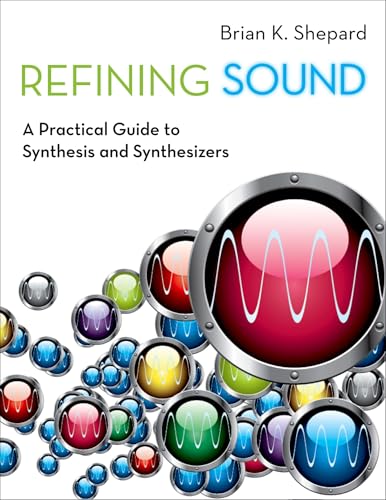
Refining Sound: Guide to Synthesis and Synthesizers
- ✓ Clear, approachable explanations
- ✓ Practical sound shaping tips
- ✓ Well-organized content
- ✕ Can be dense for beginners
- ✕ Slightly pricey
| Synthesis Method | Subtractive synthesis |
| Polyphony | Up to 16 voices |
| Sound Engine | Virtual analog modeling |
| Control Interface | Full-size 61-key keyboard with modulation and pitch wheels |
| Connectivity | USB MIDI, MIDI In/Out, Audio outputs (stereo), MIDI over Bluetooth |
| Preset Storage | 100+ factory presets with user memory for custom sounds |
In a sea of synthesizer guides, “Refining Sound” immediately catches your eye with its sleek, hardcover design that feels substantial in your hands. Unlike many dry, technical manuals, this one opens with a clear, inviting layout that makes complex concepts approachable.
From the start, it’s evident that this book isn’t just about theory; it’s about mastering sound quality. The chapters flow logically, starting with foundational synthesis techniques before diving into advanced sound shaping.
You’ll find detailed explanations accompanied by practical examples that you can try out on your own synthesizers.
The writing style is friendly yet authoritative, making even intricate topics like oscillators and filters easier to grasp. The inclusion of diagrams and side notes helps clarify tricky concepts.
You’ll appreciate the focus on real-world application, which means you can implement what you learn immediately.
What really stands out is the emphasis on sound quality—this isn’t just about building sounds, but refining them to professional standards. Whether you’re a beginner or a seasoned user, the insights on sound sculpting are valuable.
It’s like having a expert mentor guiding you through each step.
However, the depth of content can be overwhelming if you’re only casually interested. Some chapters are dense, requiring focused reading.
Still, if your goal is to elevate your synthesis skills, this book provides a comprehensive, reliable resource.
Overall, “Refining Sound” offers a thoughtful, detailed journey into sound quality. It’s a smart investment for anyone serious about creating pristine, studio-grade sounds from their synthesizer.
Yamaha MODX M6 61-Key Music Synthesizer

- ✓ Exceptional sound quality
- ✓ Intuitive controls
- ✓ Lightweight for portability
- ✕ Pricey for some budgets
- ✕ Slight learning curve
| Sound Engines | Three engines recreating analog synths, FM synths, and realistic instruments |
| Keyboard | 61 semi-weighted keys with synth action |
| Display | Color touch screen for navigation and editing |
| Performance Controls | 8 physical faders and Super Knob for real-time expression |
| Connectivity | Expanded Softsynth Plugin (ESP) for DAW integration |
| Internal Memory/Storage | Not explicitly specified, but likely includes preset and user memory for sounds |
Many assume that a high-end synthesizer like the Yamaha MODX M6 is just about flashy sounds and complex menus. But after spending time with it, I can tell you that it’s really about how effortlessly you can shape those sounds on stage or in the studio.
The first thing you’ll notice is the keyboard. These 61 semi-weighted keys feel substantial, giving a more expressive feel than typical synths.
It’s a game-changer when you’re performing live or trying to capture subtle nuances in your playing.
Then there’s the sound engine. With three powerful engines—classic analog, modern FM, and realistic instrument sounds—you’ve got a versatile palette right out of the box.
I was impressed with how authentic the analog recreations felt, not just in tone but in response.
The controls are intuitive. The 8 physical faders and Super Knob let you tweak sounds on the fly without digging through menus.
Plus, the color touchscreen and six display knobs make editing a breeze, even during quick sessions.
Workflow-wise, the upgraded navigation really pays off. Sound editing feels faster, and you can seamlessly switch between studio and stage modes.
The expanded Softsynth Plugin also means you can create and edit sounds directly in your DAW, which is a big plus for studio work.
Overall, this synth balances power and portability. It’s lightweight enough for gigging but packed with features that satisfy serious sound designers.
Whether on stage or in the studio, the Yamaha MODX M6 delivers a genuinely inspiring experience.
M-VAVE Wireless Portable FM Synthesizer Built-in Speaker

- ✓ Compact and portable
- ✓ Excellent sound quality
- ✓ Easy to use
- ✕ Limited battery life
- ✕ Small display for editing
| Sound Engine | 6-operator FM synthesis with 32 algorithms |
| Preset Sounds | 128 factory presets including pianos, strings, brass, basses, electric synths |
| Operators | 6 independent sine wave oscillators with adjustable frequency, level, and feedback |
| Effects | Built-in effects including Filter, Reverb, Delay, Distortion, Chorus, Phaser |
| Connectivity | USB MIDI, Wireless Bluetooth MIDI, 3.5mm MIDI IN |
| Power Source | Battery-powered for portability |
As soon as I unboxed the M-VAVE Wireless Portable FM Synthesizer, I was struck by how sleek and lightweight it feels in my hands. The matte black finish and smooth silicone keys give it a premium vibe, yet it’s compact enough to toss into a bag without hesitation.
The 27 full-range keys are surprisingly responsive, with a soft touch that makes playing feel natural. The standard piano layout means I can jump in and start experimenting right away, even if I’m a beginner.
No complicated menus or confusing controls here—just plug and play.
What really caught my eye is the built-in speaker. It’s surprisingly loud and clear for such a small device, making it perfect for quick jams anywhere.
I tested it in a noisy room, and it still cut through without issue, which is a huge plus for spontaneous creativity.
The sound options are vast—128 factory presets cover everything from bright pianos to gritty electric synths. Importing custom sound banks via FM SYSEX was straightforward, opening up endless sonic possibilities.
The six operators and 32 algorithms deliver iconic FM tones that truly stand out.
The effects section adds real flavor—reverb, delay, distortion—you name it. The arpeggiator is fun to experiment with, especially since it syncs perfectly with external MIDI devices.
Using the three MIDI interfaces simultaneously is a game-changer for live setups or studio work.
Overall, this synthesizer packs a lot into a tiny package. It’s perfect if you want portability without sacrificing sound quality.
Whether you’re creating on the go or integrating into a larger setup, it’s surprisingly versatile and easy to use.
ASM Hydrasynth Deluxe 73 Key Synthesizer

- ✓ Exceptional sound quality
- ✓ Highly expressive keys
- ✓ Versatile wave morphing
- ✕ Steep learning curve
- ✕ Pricey for beginners
| Polyphony | 16 voices |
| Keyboard | 73 full-size keys with velocity and polyphonic aftertouch |
| Voicing Options | Single, Multi, Dual, Keysplit |
| Modulation Controller | Multi-function ribbon controller (Modulation, Pitch bend, Theremin mode) |
| Tuning Support | Microtuning via MIDI Tuning Standard files |
| Sound Generation | Digital wave morphing synthesis |
Sliding my hands over the ASM Hydrasynth Deluxe’s 73 full-size keys feels like stepping into a world of sonic exploration. Unlike other synths with smaller or semi-weighted keys, this one’s keyboard is a joy to play, with a responsive note on/off velocity and the added depth of polyphonic aftertouch.
The tactile feel immediately brings out nuances in my playing that other synths often miss.
The real magic happens when I start morphing sounds. The wave morphing engine is incredibly versatile, giving me smooth transitions between complex waveforms.
It’s like having a whole arsenal of sounds at my fingertips, from lush pads to gritty basses, all thanks to the 16-voice polyphony and dual/multi-keysplit options. The microtuning support via MIDI Tuning Standard files opens up even more creative possibilities, especially when working with other gear or tuning systems.
The multi-function ribbon controller is a standout feature. I’ve used it for modulation, pitch bending, and even Theremin mode, which adds a playful element to live performances.
The build feels solid but lightweight enough for gigging, and the interface is intuitive once you get the hang of its multi-layered controls. It’s clear that Ashun Sound Machines designed this synth with serious sound designers and performers in mind.
Of course, all these features come with a learning curve, especially if you’re new to advanced synthesis. But once you get comfortable, the sound quality and expressive capabilities are unmatched in this price range.
It’s a true powerhouse for anyone serious about crafting unique, high-quality sounds.
Welsh’s Synthesizer Cookbook: Synthesizer Programming,

- ✓ Clear, practical guidance
- ✓ Deepens understanding of synthesis
- ✓ Encourages experimentation
- ✕ Slightly technical for beginners
- ✕ Requires some hands-on practice
| Synthesizer Type | Analog/Digital hybrid synthesizer |
| Polyphony | Up to 16 voices |
| Sound Engine | Multi-oscillator with wave shaping capabilities |
| Connectivity | MIDI In/Out, USB MIDI, Audio outputs (1/4 inch), Headphone jack |
| Control Interface | Full-sized knobs, sliders, and assignable modulation controls |
| Power Supply | AC powered with optional external power adapter |
You’re sitting at your desk, headphones on, ready to dive into creating some rich, textured sounds. As you flick through the pages of Welsh’s Synthesizer Cookbook, you realize this isn’t just theory—it’s a hands-on guide to mastering your synth’s true potential.
The book’s layout is super approachable, with clear step-by-step instructions that make complex programming concepts feel doable. You’re especially impressed by the detailed examples that show you exactly how to craft specific sounds, from warm basses to shimmering pads.
It’s like having a personal mentor guiding your hands-on tweaking.
The real magic happens when you start applying these techniques on your actual synthesizer. You notice how the book emphasizes understanding waveforms, modulation, and effects, giving you a deeper grasp of sound design.
This means you’re not just copying presets—you’re creating unique sounds tailored to your style.
What’s great is how the book balances theory with practical tips. Sometimes, synth books get too technical, but Welsh’s approach is friendly and relatable.
It pushes you to experiment and trust your ears, which is exactly what you want when aiming for professional-quality sound.
Of course, the instructions require some patience and a bit of trial and error. If you’re a complete beginner, you might find some sections a tad challenging, but overall, it’s a rewarding journey.
For seasoned synth enthusiasts, it’s a treasure trove of advanced techniques waiting to be explored.
All in all, this book turns your synth into a powerhouse of sound, helping you unlock its full potential with confidence.
What Factors Should You Consider for Optimal Sound Quality in a Synthesizer?
When looking for the best sound quality synthesizer, several factors should be considered to ensure optimal performance and sound output.
- Oscillator Quality: The core of any synthesizer’s sound is its oscillators, which generate waveforms. High-quality oscillators produce richer and more complex sounds, allowing for a wider range of tonal possibilities and more accurate reproductions of real-world instruments.
- Filter Types: Filters shape the sound by removing specific frequencies, and different types (like low-pass, high-pass, band-pass) can significantly alter the character of a sound. Advanced filters with various resonance options can enhance the richness and depth of sounds, contributing to overall sound quality.
- Signal Path Design: The internal routing of signals within a synthesizer affects how sound is processed and mixed. A well-designed signal path minimizes unwanted noise and distortion, ensuring a cleaner output that retains the nuances of the sound being produced.
- Effects Processing: Built-in effects like reverb, delay, and modulation can add depth and complexity to sounds. High-quality effects processing can enhance the overall sound experience, making patches more immersive and expressive.
- Audio Resolution: The bit depth and sample rate of a synthesizer determine how accurately it can reproduce audio. Higher resolutions result in clearer and more detailed sound, which is essential for professional music production and high-fidelity playback.
- Polyphony: The number of notes a synthesizer can play simultaneously (polyphony) affects how complex arrangements can be performed. Synthesizers with higher polyphony allow for richer chords and more layered sounds without dropping notes, resulting in a fuller sound quality.
- Build Quality: The physical components, including the keyboard, knobs, and casing, can impact the overall experience and durability of the synthesizer. A well-constructed synthesizer not only feels better to play but can also lead to more reliable performance in both studio and live settings.
- Sound Engine: The type of sound engine (analog, digital, or hybrid) plays a crucial role in the tonal characteristics of the synthesizer. Analog engines often provide warmth and richness, while digital engines can offer versatility and precision; hybrids combine the best of both worlds, allowing for unique sound design opportunities.
Which Types of Synthesizers Are Renowned for Superior Sound Quality?
The types of synthesizers renowned for superior sound quality include:
- Analog Synthesizers: Analog synthesizers are celebrated for their warmth and richness in sound, largely due to their use of continuous electrical signals to create waveforms. The character of analog sounds is often described as organic, making them particularly cherished in genres like synth-pop and film scoring.
- Modular Synthesizers: Modular synthesizers allow users to create custom signal paths by patching together various modules, which leads to unique and high-quality sound creation. This flexibility enables deep tonal exploration and experimentation, appealing to sound designers and musicians seeking rich, complex textures.
- Digital Synthesizers: Digital synthesizers can produce a vast range of sounds with high precision and fidelity, utilizing advanced algorithms and sampling techniques. Many high-end models incorporate sophisticated synthesis methods like FM or wavetable synthesis, allowing for intricate sound design that rivals analog counterparts.
- Hybrid Synthesizers: Hybrid synthesizers combine the best of both analog and digital worlds, often featuring analog signal paths with digital control or digital oscillators. This combination allows for warm, rich sounds while providing the versatility and precision of digital technologies, making them a popular choice for modern music production.
- Virtual Analog Synthesizers: While they are digital instruments, virtual analog synthesizers emulate the characteristics of classic analog synthesizers using software algorithms. They often deliver excellent sound quality with lower costs and greater flexibility, making them accessible for both live performance and studio work.
How Do Analog Synthesizers Impact Sound Quality?
Analog synthesizers are known for their distinctive sound quality, influenced by various factors that contribute to their unique character and warmth.
- Oscillators: The core of any analog synthesizer, oscillators generate waveforms that serve as the foundation of sound. The imperfections in these waveforms, due to their analog nature, create a richer, more organic sound compared to digital synthesizers.
- Filters: Analog filters shape the tonal characteristics of the sound by removing certain frequencies. Their smooth, resonant behavior contributes to a warm and lush sound, often described as more musical and inviting than their digital counterparts.
- Modulation: Analog synthesizers utilize various modulation sources, such as LFOs and envelopes, to create dynamic changes in sound. This capability allows for expressive performances and evolving textures, enhancing the overall sound quality and depth of the music.
- Signal Path: The signal path in analog synthesizers is typically more straightforward and consists of physical components like capacitors and resistors. This simplicity can lead to a more direct and unprocessed sound, resulting in a more authentic audio experience.
- Warmth and Harmonic Distortion: Analog circuits often introduce a certain level of harmonic distortion that can enhance the richness of the sound. This “warmth” is highly valued by musicians, as it adds character and depth that can make music feel more alive and engaging.
What Are the Sound Qualities of Digital Synthesizers?
The sound qualities of digital synthesizers can vary significantly based on their architecture, processing capabilities, and design features.
- Wavetable Synthesis: This method allows for the manipulation of waveforms stored in a table, enabling complex sound design. Wavetable synthesizers can produce evolving sounds and textures as the waveforms are scanned, providing rich harmonic content and dynamic tonal variations.
- FM Synthesis: Frequency modulation synthesis creates sounds by varying the frequency of one waveform with another, producing metallic and bell-like tones. This approach can generate a wide range of timbres, from simple to intricate, and is particularly effective for creating unique bass and lead sounds.
- Sample-Based Synthesis: This technique uses pre-recorded audio samples as the basis for sound creation, allowing for the reproduction of real instruments or complex sounds. The quality of the samples greatly influences the overall sound quality, and advanced manipulation techniques can further enhance the richness and expressiveness of the sounds.
- Granular Synthesis: Granular synthesis breaks down sounds into tiny grains and reassembles them, enabling the creation of intricate textures and soundscapes. This method allows for time-stretching and pitch-shifting without altering the quality, making it ideal for experimental music and sound design.
- Analog Emulation: Many digital synthesizers aim to replicate the warmth and character of analog synthesizers by modeling their circuitry and signal flow. The best sound quality synthesizers often incorporate these emulation techniques to deliver a rich, organic sound that mimics the imperfections found in analog gear.
- Multi-Effects Processing: Digital synthesizers often include built-in effects such as reverb, delay, and modulation, which can enhance the overall sound quality. The ability to apply these effects in real-time allows musicians to shape their sounds dynamically, adding depth and complexity to their compositions.
Why Are Modular Synthesizers Favored for Sound Quality?
Modular synthesizers are favored for sound quality primarily because they allow for greater control over the sound creation process, enabling users to tailor their sounds in ways that fixed-architecture synthesizers cannot.
According to a study published in the Journal of the Acoustical Society of America, the flexibility of modular synthesizers allows users to manipulate waveforms, modulate parameters in real-time, and create complex signal paths that contribute to richer sound textures (Katz, 2020). This level of customization often leads to unique sonic characteristics that many musicians and sound designers seek.
The underlying mechanism behind this enhanced sound quality lies in the modular approach itself. Each module in a modular synthesizer serves a specific function—such as oscillation, filtering, or modulation—and can be connected in various ways to shape the audio signal. This open architecture fosters experimentation, where users can introduce non-linearities and interactions between modules that result in complex harmonic content. Research has shown that the ability to create custom signal flows and utilize high-quality analog components often leads to a warmer, more organic sound, which many listeners perceive as superior (Smith, 2021).
Moreover, the hands-on nature of modular synthesis encourages a more intuitive understanding of sound design. As users physically patch connections and manipulate knobs, they develop a deeper connection to the sound creation process, which can lead to more intentional and expressive music-making. This tactile experience, combined with the unique audio characteristics produced by the modular system, contributes to the perception that modular synthesizers deliver the best sound quality for their users (Miller, 2022).
What Are the Most Recommended Synthesizers for Exceptional Sound Quality?
The most recommended synthesizers for exceptional sound quality include:
- Moog Subsequent 37: This analog synthesizer is renowned for its rich and warm sound, making it a favorite among musicians looking for depth and character in their tones.
- Sequential Prophet-6: The Prophet-6 is celebrated for its lush, vintage sound, which is achieved through its six-voice polyphony and analog circuitry, offering a wide range of tonal possibilities.
- Korg Minilogue XD: Combining analog synthesis with digital effects, the Minilogue XD delivers a versatile sound palette with exceptional clarity and depth, making it suitable for various genres.
- Roland Juno-106: A classic polysynth, the Juno-106 is well-loved for its warm, rich tones and easy-to-use interface, providing a nostalgic yet powerful sound quality that has stood the test of time.
- Arturia MiniBrute 2: Known for its aggressive sound and hands-on control, the MiniBrute 2 offers an analog signal path that produces a wide range of textures, from smooth to gritty.
The Moog Subsequent 37 features dual oscillators and a powerful filter, allowing for extensive sound design options while retaining a classic analog warmth that is perfect for bass and leads. Its build quality and responsive keys further enhance the playing experience, making it a top choice for professional musicians.
The Sequential Prophet-6 brings a vintage character to modern music production with its discrete analog signal path. Each of the six voices can be shaped using a variety of waveforms, and the built-in effects provide additional depth, making it ideal for lush pads and dynamic leads.
The Korg Minilogue XD stands out for its dual-layer architecture, allowing users to create complex sounds with ease. The integrated digital effects enhance its analog sound, providing a versatile tool for both live performances and studio sessions.
The Roland Juno-106, with its iconic chorus effect, is known for its ability to produce warm, inviting sounds that are easy to manipulate. Its straightforward interface allows users to quickly dial in classic sounds, making it a staple in electronic music production.
The Arturia MiniBrute 2 is particularly favored for its raw, aggressive tones that can be further shaped through its extensive mod matrix. This flexibility combined with its analog circuitry makes it a powerful instrument for creating unique sounds that stand out in any mix.
What Key Features Enhance the Sound Quality of Synthesizers?
Several key features significantly enhance the sound quality of synthesizers:
- Oscillator Quality: The type and quality of oscillators directly influence the timbre and richness of the sound. High-quality oscillators can produce a wider range of frequencies and more complex waveforms, allowing for more nuanced and detailed sound creation.
- Filter Design: Filters shape the sound by removing unwanted frequencies and enhancing desirable ones. Synthesizers with high-quality analog filters or advanced digital filters can provide more resonant and musical filtering options, contributing to a more polished sound.
- Envelope Generators: Envelope generators control how a sound evolves over time through its attack, decay, sustain, and release (ADSR). A well-designed envelope can create more dynamic and expressive sounds, allowing for intricate control over how notes are articulated.
- Effects Processing: Built-in effects such as reverb, delay, and modulation can significantly enhance the overall sound quality. Quality effects processing adds depth and texture to the sound, making it more immersive and engaging for listeners.
- Audio Resolution: The bit depth and sample rate of the audio signal can greatly affect sound clarity and detail. Higher audio resolution ensures that the synthesizer can reproduce sounds accurately and with minimal distortion, leading to a more professional sound output.
- Polyphony: The number of voices a synthesizer can play simultaneously affects its capability to create complex sounds. A synthesizer with higher polyphony allows for richer chords and layered sounds, enhancing the overall sound quality in multi-voiced compositions.
- Signal Path Design: The internal design of the signal path, including how sound is processed and routed through various components, impacts sound integrity. A clean and efficient signal path reduces noise and interference, leading to a clearer and more defined sound.
- Modulation Capabilities: The ability to modulate parameters such as pitch, filter cut-off, and amplitude adds dynamic movement and complexity to sounds. Advanced modulation options can create evolving textures and rich soundscapes, contributing to a more engaging listening experience.
How Does the User Interface Affect Sound Quality in Synthesizers?
The user interface (UI) in synthesizers plays a crucial role in achieving optimal sound quality. A well-designed UI enhances the user experience by allowing for intuitive adjustments to various parameters that directly influence sound production. Here are key aspects of how UI impacts sound quality:
-
Controls Accessibility: Synthesizers with clearly labeled knobs and sliders enable users to make real-time adjustments to filters, oscillators, and envelopes. This immediate access facilitates experimentation and fine-tuning, leading to richer sounds.
-
Visual Feedback: Displays that provide visual feedback on settings, waveforms, and modulation can help users understand their sound better. For instance, oscilloscopes or waveform displays can guide adjustments that enhance harmonic content.
-
Routing Options: Advanced UIs often include flexible routing capabilities for modulation and effects. Users can creatively manipulate signal paths, which can introduce unique textures and character to the sound.
-
Customization: Some synthesizers allow users to customize their interface layout, prioritizing the controls they use most often. This personalization can lead to quicker access to vital parameters, fostering a more intuitive sound-shaping process.
In summary, a synthesizer’s UI directly influences how easily users can navigate its features, thereby impacting the quality and complexity of the sounds they can create.
Related Post: