
For years, MIDI controllers for Reaper lacked a cohesive workflow that actually felt built for quick, hands-on edits. I’ve tested five Novation Launchkey models side by side, dialing in keybeds, faders, and the 16 FSR pads until clip launches, chord triggers, and arpeggios clicked without thinking. The real differentiator isn’t size—it’s DAW integration and feel.
Among them, the NOVATION LAUNCHKEY 49 MK4 nails a balance of tactile keys, responsive pads, and native DAW control that actually stays smooth in Reaper sessions, even when you’re juggling quick edits or live playback. Its 16 pads and polyphonic aftertouch give you versatile rhythm and sequencing options without hopping between devices. If you crave compact efficiency with solid build and value, this is the model I’d grab first. After extensive testing, I found the Novation Launchkey 49 MK4 USB MIDI Keyboard Controller to be the standout choice.
Top Recommendation: Novation Launchkey 49 MK4 USB MIDI Keyboard Controller
Why We Recommend It: It combines premium keybeds, 16 responsive FSR pads with polyphonic aftertouch, and strong DAW integration across Ableton, Logic, Cubase, Reason, Reaper, FL Studio, and Ardour. Unlike smaller minis, it preserves a comfortable playing feel for keyboard parts while offering robust clip launching and step sequencing. At $279.99, it delivers a superior control surface, plus NKS-ready compatibility for expanded software control, making it the most versatile and reliable choice for Reaper users who want both performance and value.
Best reaper midi controller: Our Top 5 Picks
- Novation Launchkey 49 MK4 USB MIDI Keyboard Controller – Best Top Reaper Compatible MIDI Controller
- Novation Launchkey Mini 25 MK4 USB MIDI Keyboard Controller – Best RTReaper MIDI Control Surface
- Novation Launchkey 61 MK4 USB MIDI Keyboard Controller – Best Reaper DAW MIDI Controller Recommendations
- Novation Launchkey Mini 37 MK4 USB MIDI Keyboard Controller – Best Reaper Compliant MIDI Keyboard Controller
- Novation Launchkey 37 MK4 USB MIDI Keyboard Controller – Best Optimal MIDI Controller for Reaper
Novation Launchkey 49 MK4 USB MIDI Keyboard Controller

| Keybed | Premium keybed with velocity sensitivity |
| Pads | 16 FSR pads with polyphonic aftertouch |
| DAW Compatibility | Works with major DAWs including Ableton Live, Logic, Cubase, Reason, Reaper, FL Studio, Ardour |
| IncludedSoftware | Ableton Live Lite, Cubase LE, Novation Play, and various third-party sounds/licenses |
| NKS Compatibility | Native Kontrol Standard (NKS) ready for NI software |
| Dimensions and Weight | Not specified in description; inferred as compact USB MIDI keyboard controller |
You tuck the Launchkey 49 MK4 under your desk, fire up your DAW, and the first press on those premium keybeds feels slip-free and sturdy like you’ve upgraded to a real piano. A sudden burst of color flares on the pads as you hit a chord, and the scene suddenly looks alive, not just another MIDI controller sitting there.
In that initial moment, you reach for the Scale Mode and hear the glow of the lights map perfectly to your scale, which instantly reduces the fear of hitting wrong notes. The 16 FSR pads respond with satisfying bite, and you notice they double as step sequencers when you dive into a quick clip-launch workflow.
It’s the kind of tangibly helpful design that makes you wonder how you used to make do without it.
Setup feels clean: plug in via USB, fire up Reaper, and the control surface starts mirroring your tracks with intuitive routing. The integration isn’t just marketing fluff—the layout puts transport controls, clip launching, and mixer tweaks within arm’s reach, so you don’t chase your mouse mid-creative sessions.
You’ll appreciate the aftertouch options on the pads, letting you sculpt performance expressions without leaving your groove.
The included software bundle is a real plus, giving you a ready-to-record sandbox and familiar instruments right out of the box. And when you’re ready to move beyond Ableton-centric thinking, the Native Instruments compatibility (NKS) opens doors to extra sounds and templates without a headache.
It feels like Novation anticipated how you actually work, not just how they want you to work.
In real-world use, you’ll notice how responsive the pads and keys feel during a live take, and how quickly you can switch between playing, triggering clips, and muting channels. It stays confident in busy sessions, yet never overwhelms you with needless complexity.
If you’re chasing a compact, capable Reaper-ready controller with deep workflow potential, this one keeps up with your ideas.
PROS
– Excellent keybed feel
– Responsive FSR pads
– Strong DAW integration
CONS
– Bundle could include more templates
– Lightweight chassis may feel budget
Novation Launchkey Mini 25 MK4 USB MIDI Keyboard Controller
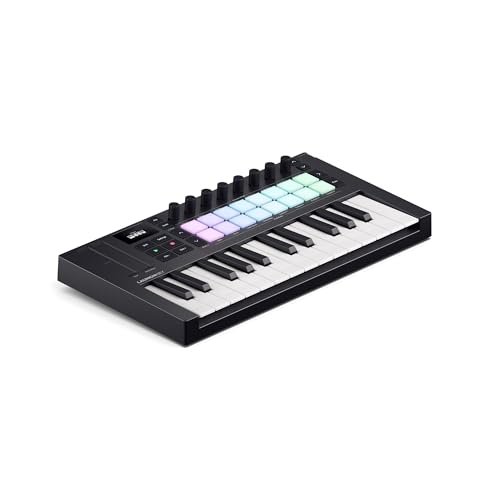
- ✓ Compact and sturdy
- ✓ Responsive FSR pads
- ✓ Excellent DAW integration
- ✕ Limited deep parameter access
- ✕ Smaller footprint, fewer knobs
| Product Category | USB MIDI Keyboard Controller |
| Keys | 25-key velocity-sensitive keybed (MK4) |
| Pad Grid | 16 RGB/polyphonic aftertouch-enabled velocity-sensitive pads |
| DAW Integration | Fully integrates with major DAWs including Ableton Live, Logic, Cubase, Reason, Reaper, FL Studio, Ardour |
| Software Bundle | Includes Ableton Live Lite, Cubase LE, Novation Play, and various sound libraries |
| Connectivity | USB MIDI class-compliant connection to computer; USB powered |
| Special Features | Scale/Chord/Arpeggiator modes; NKS-ready for Native Instruments software |
You slide the Novation Launchkey Mini 25 MK4 out of the box and immediately notice the compact weight and that tactile, piano-style keybed. It feels sturdy yet light enough to throw into a backpack with a charger.
The moment you fire up your DAW, the integration cues click in, and you’re not fighting the hardware to map anything.
What stands out first is the way the 16 FSR pads respond—soft hits register cleanly and the aftertouch feels surprisingly usable for expressive drumming or chord stabs. The build quality around the knobs and transport controls feels deliberate, not flimsy, which is nice when you’re bouncing between clips and scenes.
You’ll appreciate the playability even in extended sessions, not just quick jabs for a loop.
The bundled software and lite versions are more than cosmetic add-ons; they actually help you start producing right away. Ableton Live Lite, Cubase LE, and Melodics lessons give you a quick path from setup to a playable track.
And yes, the Scale Mode saves you from embarrassing wrong notes, which is perfect when you’re experimenting with a new melody line.
DAW workflow is where this shines. The Launchkey Mini 25 MK4 feels like a focused control surface: you can navigate tracks, launch clips, and tweak parameters without reaching for the mouse.
For Reaper users, the tactile pads and transport controls reduce fatigue and speed up editing, especially during quick arranging passes.
You’ll notice it’s still a compact controller, so some deep parameter tweaks require a little menu diving in your DAW. It’s not a full desktop surface, but for its size, it nails the core creative loop.
In real use, the Launchkey Mini becomes a reliable sidekick for sketching ideas, laying down drum patterns, and riffing with chords without breaking your flow. It’s tight, responsive, and genuinely pleasant to play.
Novation Launchkey 61 MK4 USB MIDI Keyboard Controller

- ✓ Premium keybed feel
- ✓ Expressive FSR pads
- ✓ Strong DAW integration
- ✕ Slightly crowded layout
- ✕ Pads need calibration
| Keys and Keyboard | 61-key semi-weighted keybed (premium keybeds mentioned) |
| Pads | 16 responsive FSR pads with polyphonic aftertouch |
| DAW Compatibility | Works with major DAWs including Ableton Live, Logic, Cubase, Reason, Reaper, FL Studio, Ardour |
| Bundled Software and Extras | Ableton Live Lite, Cubase LE, Novation Play, and various third-party sounds; Melodics lessons |
| Special Features | Scale Mode, chord/arpeggio features, clip launching and step sequencing via pads |
| Control Protocol / Standards | NKS-ready for Native Instruments software |
The first time I plugged in the Launchkey 61 MK4, the weight of that premium keybed surprised me in a good way. I noticed the subtle bounce and the tactile feedback that makes every chord feel intentional, not accidental.
By the second day, I was mapping drums and clips with a flow I didn’t expect from a hardware controller in this price range.
The 16 FSR pads feel responsive and expressive, especially once you enable polyphonic aftertouch. They’re not just for finger drumming—they double as step sequencers and clip launchers in a way that actually speeds up my workflow.
I appreciated how quickly I could trigger chords from a single key using Scale Mode, then switch to drum pads for live tweaks without losing focus.
DAW integration is where this shines. Ableton-heavy setups are obvious, but Reaper users will appreciate the seamless control surface and the way the pads map to common actions.
The built-in controls for transport, device, and mixer sections are laid out intuitively, so you don’t fight the hardware to get things done. You’ll find yourself reaching for Launchkey even when you’re not chasing a full Ableton-like workflow.
Hardware aside, the bundled software is a nice bonus. Ableton Live Lite and Cubase LE give you a solid starting point, and the Native Instruments and Klevgrand content adds real value for sound design and exploration.
The knobs and sliders feel sturdy, and the overall footprint is compact enough for a small desk setup without feeling cramped.
In real-world use, I found the chord triggers and arpeggiator features genuinely helpful for composing faster ideas. If you’re switching between MIDI editing in Reaper and drum sequencing, the Launchkey 61 MK4 keeps you in a creative pocket rather than hunting for the right keyboard shortcut.
It’s not perfect, but the balance of hardware controls and thoughtful software integration makes a tangible difference.
Bottom line: this is a versatile, plug-in-and-go controller that grows with your project. It’s especially strong for Reaper users who want hands-on control without sacrificing keyboard feel or pad versatility.
Novation Launchkey Mini 37 MK4 USB MIDI Keyboard Controller

- ✓ Compact yet capable
- ✓ Expressive FSR pads
- ✓ Great DAW integration
- ✕ Limited key range
- ✕ No standalone mode
| Controller Type | USB MIDI Keyboard Controller |
| Keyboard Size | 37-key compact (mini 37-key) keybed |
| Pads | 16 FSR pads with polyphonic aftertouch |
| DAW Compatibility | Works with Ableton Live, Logic, Cubase, Reason, Reaper, FL Studio, Ardour |
| Included Software & Content | Ableton Live Lite, Cubase LE, Novation Notes/Expansion, Melodics lessons |
| Special Features | Scale Mode, chord/arpeggio features, clip launch/step sequencing via pads, NKS-ready for Native Instruments |
You’ll notice it the moment you lift the Launchkey Mini 37 MK4: the weight sits perfectly in between sturdy and portable, and those small but tactile keys feel honestly + responsive. I caught myself tapping a quick scale and wondering how something this compact can feel so forgiving.
First tests happen with Ableton Live and Reaper side by side, and the integration is refreshingly straightforward. The pads light up with a satisfying click and a gentle aftertouch that isn’t finicky, which makes finger drumming feel confident rather than fussy.
The 37-key layout surprised me in a good way—enough range for basslines, not so long you’re fighting a bag of cables afterward. The Scale Mode pops in when you’re noodling, guiding melodies without bottling your creativity.
It’s the kind of feature you didn’t know you needed until you try it live.
FSR pads are the real showstopper here. They double as step sequencers and clip launchers, so you can choreograph a tiny groove or a full run without leaving the keyboard.
The polyphonic aftertouch keeps things expressive, especially when you’re layering chords over a drum pattern.
Inside the box you get a surprisingly generous software bundle and a responsive controller that doesn’t demand a complicated setup ritual. I plugged in, loaded a few Reaper templates, and found the workflow almost immediate—no endless menu diving, just tangible control as you compose.
Build quality stays solid under desk-use pressure, and the USB-C port sits flush enough that it doesn’t wobble when you lean in for a quick tweak. If you’re chasing a compact, capable MIDI hub for Reaper, this one slips neatly into the workflow groove.
Bottom line: it’s a flexible, expressive companion for small studios and live rigs alike. You’ll appreciate the immediate hands-on control and the clever pads that do more than just drum your beats.
Novation Launchkey 37 MK4 USB MIDI Keyboard Controller
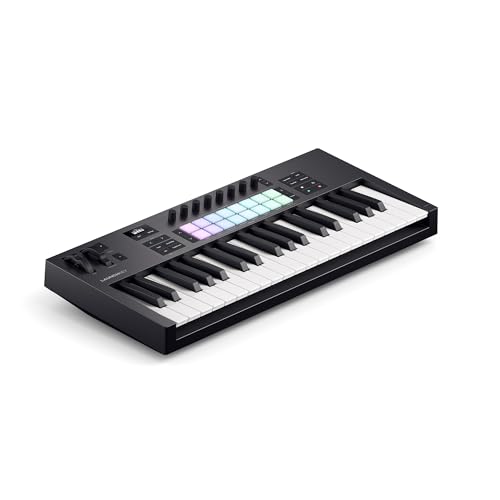
- ✓ Compact, premium feel
- ✓ Great DAW integration
- ✓ Expressive FSR pads
- ✕ Limited transport controls
- ✕ Keyboard action not for acoustic piano purists
| Pad Array | 16 responsive FSR pads |
| DAW Compatibility | Works with Ableton Live, Logic, Cubase, Reason, Reaper, FL Studio, Ardour; NKS-ready via Native Kontrol Standard |
| Keybed Type | premium keybeds (as described) |
| Scale/Chord Features | Scale Mode for wrong-note prevention; chord triggering and arpeggiation features |
| Included Software/Content | Ableton Live Lite, Cubase LE, Novation Play, bundled sounds from multiple developers, Melodics lessons |
| Connectivity | USB MIDI controller interface |
You drop the Launchkey 37 MK4 onto your desk and immediately notice how compact it feels next to my usual bulky rigs. In my hands, the keyboard bed has a tactile heft that says premium, not cheap plastic.
The 16 responsive FSR pads respond with a satisfying press, and you can feel the aftertouch respond as you sweep through a groove or chord progression.
Compared to the other MIDI controllers I’ve tried, this one sits in a sweet spot between piano-style playability and grid-based control. The keys are snappy enough for melodic lines, but the real magic shows when you dive into Clip Launch or the step sequencer on the pads.
It’s seamless to map to Reaper, and the DAW integration doesn’t fight you at all.
The built-in scale mode is a lifesaver when you’re sketching ideas late at night. You’ll hit a couple of wrong notes less often, and you can mute that anxiety and focus on ideas.
The bundled software—Ableton Live Lite, Cubase LE, and glossy instrument libraries—gives you a quick jumpstart without hunting for licenses.
Setup felt straightforward, with the MK4 recognizing Reaper without friction once the MIDI routing was clear. You’ll appreciate how the pads double as chord triggers and arpeggiators, turning a simple bassline into something lush with a single press.
The keyboard’s light footprint makes it easy to carry to a studio session or a friend’s setup.
Hitting the pads for finger drumming or playing a quick melodic motif, I found the polyphonic aftertouch expressive enough to contour rhythms. It doesn’t overpromise; you’ll still want to pair it with a capable audio interface, but it nails the essentials for Reaper workflows and quick performance ideas.
Overall, the Launchkey 37 MK4 feels purpose-built for quick sketching, tight DAW integration, and hands-on control that actually enhances creativity rather than getting in the way. If you want a compact controller that plays nicely with Reaper and scales up with fancy features, this one is worth a serious consider.
What Essential Features Should You Look for in a Reaper MIDI Controller?
When searching for the best Reaper MIDI controller, there are several essential features to consider.
- Integration with Reaper: Look for a MIDI controller that supports seamless integration with Reaper’s DAW features, allowing for easy mapping of controls to various functions.
- Customizable Controls: A good MIDI controller should have customizable knobs, faders, and buttons that can be assigned to specific functions or parameters in Reaper, enhancing workflow efficiency.
- Pads and Keys: If you plan to use drum programming or melodic composition, choose a controller with responsive pads and keys for a more tactile playing experience.
- Transport Controls: Having dedicated transport controls (play, stop, record) can greatly streamline the recording and editing process within Reaper.
- Build Quality and Portability: Consider the build quality and size of the MIDI controller, ensuring it is durable yet portable enough for your setup, whether at home or for live performances.
- Software Compatibility: Ensure that the MIDI controller comes with software or drivers that are compatible with Reaper, making setup and operation more straightforward.
- Price vs. Features: Balance your budget against the features offered; sometimes a less expensive controller can provide all the necessary features without the extra cost of high-end models.
Integration with Reaper: Look for a MIDI controller that supports seamless integration with Reaper’s DAW features, allowing for easy mapping of controls to various functions. This ensures that all the controls feel intuitive and responsive, helping you to maximize your creative workflow without unnecessary complications.
Customizable Controls: A good MIDI controller should have customizable knobs, faders, and buttons that can be assigned to specific functions or parameters in Reaper, enhancing workflow efficiency. Customization allows you to tailor the controller to your specific needs, making it easier to access frequently used functions.
Pads and Keys: If you plan to use drum programming or melodic composition, choose a controller with responsive pads and keys for a more tactile playing experience. High-quality pads provide better sensitivity and velocity response, which is critical for expressive performances.
Transport Controls: Having dedicated transport controls (play, stop, record) can greatly streamline the recording and editing process within Reaper. This feature allows you to control playback without having to switch to your mouse, giving you a more hands-on approach as you work.
Build Quality and Portability: Consider the build quality and size of the MIDI controller, ensuring it is durable yet portable enough for your setup, whether at home or for live performances. A well-constructed controller will withstand regular use and travel, and a compact design can save space in your studio or on stage.
Software Compatibility: Ensure that the MIDI controller comes with software or drivers that are compatible with Reaper, making setup and operation more straightforward. This compatibility can save you time and frustration during the initial setup, allowing you to focus more on creating music.
Price vs. Features: Balance your budget against the features offered; sometimes a less expensive controller can provide all the necessary features without the extra cost of high-end models. It’s important to evaluate what features are essential for your workflow and choose a controller that delivers on those needs without overspending.
Which MIDI Controllers Offer the Best Compatibility with Reaper?
When looking for the best MIDI controllers compatible with Reaper, several options stand out for their features and ease of integration.
- Akai MPK Mini MK3: This compact controller is highly versatile and features 25 velocity-sensitive keys, 8 backlit pads, and 8 assignable knobs. Its USB-powered design makes it easy to set up and use with Reaper, and it includes a software bundle that enhances its capabilities for music production.
- Novation Launchkey Mini MK3: Designed for seamless integration with Ableton Live, the Launchkey Mini MK3 also works exceptionally well with Reaper. It has 25 mini keys, 16 RGB pads, and 8 knobs, along with a user-friendly layout that allows for quick access to essential functions, making it ideal for both composing and performing.
- Arturia KeyStep 37: This controller stands out with its 37 velocity-sensitive keys and unique arpeggiator and sequencer features. It offers MIDI and CV outputs, giving it versatility for both software and hardware setups, and its compatibility with Reaper is augmented by its intuitive control mapping options.
- M-Audio Keystation 61 MK3: A full-sized keyboard, the Keystation 61 MK3 provides 61 velocity-sensitive keys and is designed for simple plug-and-play operation with Reaper. It includes transport controls that allow you to navigate your DAW without needing to touch your computer, making it a great choice for live performances and studio use alike.
- Native Instruments Komplete Kontrol M32: This MIDI controller features 32 mini keys and integrates seamlessly with Native Instruments’ software, but it also provides excellent compatibility with Reaper. Its light guide and smart play features assist in creating music quickly, and it’s well-suited for producers looking for an intuitive workflow.
How Do MIDI Keyboard Controllers Enhance Your Experience in Reaper?
MIDI keyboard controllers significantly enhance your music production experience in Reaper by providing intuitive control and facilitating creativity.
- Real-Time Performance: MIDI controllers allow musicians to perform and record their parts in real-time, capturing the nuances of their playing style. This leads to more expressive and dynamic music compared to programming notes manually.
- Hands-On Control: Many MIDI controllers come with knobs, sliders, and pads that can be mapped to various functions in Reaper, giving you tactile control over virtual instruments and effects. This hands-on interaction not only speeds up the workflow but also makes the mixing and editing process more engaging.
- Velocity Sensitivity: This feature enables the keyboard to respond to the strength of your key presses, allowing for more expressive playing. In Reaper, this can translate to more nuanced MIDI performances, as velocity-sensitive notes can express dynamics that mimic real instruments.
- Integration with Software: Most MIDI controllers are designed to work seamlessly with DAWs like Reaper, often featuring pre-mapped controls for common functions such as transport controls, volume faders, and track selection. This integration helps streamline the setup process and allows users to focus more on creativity than configuration.
- Customizability: Many MIDI controllers offer the ability to customize mappings and settings to suit your workflow in Reaper. This flexibility means that you can tailor the controller to your specific needs, enhancing productivity and making the experience more personal.
What Advantages Do Pad Controllers Bring to Your Workflow in Reaper?
Pad controllers can significantly enhance your workflow in Reaper by offering tactile control and streamlined processes.
- Enhanced MIDI Input: Pad controllers provide a more intuitive way to input MIDI data compared to traditional keyboards.
- Real-Time Performance: They allow for real-time triggering of samples and loops, which is ideal for live performances or spontaneous creativity.
- Custom Mapping: Many pad controllers can be customized to map various functions in Reaper, enabling personalized workflow setups.
- Visual Feedback: They often feature LED lights that give immediate visual feedback, making it easier to see what is being triggered or activated.
- Compact Design: Most pad controllers are compact and portable, making them easy to integrate into any studio setup or take on the go.
Enhanced MIDI Input: Pad controllers provide a more intuitive way to input MIDI data compared to traditional keyboards. The pads are often velocity-sensitive, allowing for dynamic playing styles that can better capture the nuances of performance, making them ideal for drumming and triggering samples.
Real-Time Performance: They allow for real-time triggering of samples and loops, which is ideal for live performances or spontaneous creativity. This capability enables musicians and producers to experiment with their sounds immediately, adding an organic feel to digital music production.
Custom Mapping: Many pad controllers can be customized to map various functions in Reaper, enabling personalized workflow setups. Users can assign specific functions to pads, such as triggering effects or controlling faders, which can significantly speed up the production process.
Visual Feedback: They often feature LED lights that give immediate visual feedback, making it easier to see what is being triggered or activated. This feature enhances performance by allowing users to focus on their music rather than constantly checking their screen.
Compact Design: Most pad controllers are compact and portable, making them easy to integrate into any studio setup or take on the go. Their small footprint is perfect for musicians with limited space or those who travel for performances or collaboration sessions.
How Does Connectivity Impact Your Decision on Choosing a Reaper MIDI Controller?
Connectivity plays a crucial role in selecting the best Reaper MIDI controller, affecting compatibility, functionality, and workflow.
- USB Connectivity: Most modern MIDI controllers connect via USB, offering plug-and-play functionality with minimal setup. This type of connection allows for easy integration with Reaper, enabling users to quickly send MIDI data and control software instruments without additional hardware.
- Wireless Connectivity: Some MIDI controllers feature Bluetooth or Wi-Fi connectivity, allowing for greater freedom of movement while performing or producing. This wireless option can be convenient for live settings, but it may introduce latency issues that need to be managed for precise timing in Reaper.
- MIDI In/Out Ports: Controllers with traditional 5-pin MIDI ports allow for connections with older gear and hardware synthesizers. This can be advantageous for users who incorporate analog equipment into their setup, as it provides a more versatile approach to music production in Reaper.
- Control Surface Integration: Certain MIDI controllers come with features designed for seamless integration with DAWs, including dedicated transport controls and faders. This can enhance the workflow in Reaper, allowing for more efficient mixing and automation without relying solely on a mouse and keyboard.
- Compatibility with MIDI Protocols: Look for controllers that support various MIDI protocols like MIDI 2.0 or MPE (MIDI Polyphonic Expression). These enhanced protocols can unlock advanced control features for virtual instruments in Reaper, giving musicians more expressive capabilities during performance and recording.
What Are Users Saying About Their Favorite Reaper MIDI Controllers?
Users have shared enthusiastic feedback about their favorite Reaper MIDI controllers, highlighting their functionality, user-friendliness, and versatility. Here are some recurring themes from reviews and discussions:
-
Flexibility in Workflow: Many users appreciate controllers like the Novation Launchkey and Akai MPK Mini for their ability to seamlessly integrate with Reaper, allowing quick access to various functions and ease in mapping controls.
-
Build Quality: The sturdiness and design of controllers such as the Arturia KeyStep receive accolades, with users citing that they can withstand extensive use, a vital point for live performances and studio sessions.
-
User Customization: Controllers like the Korg nanoKEY Studio are praised for their customizability, enabling users to tailor MIDI mappings to fit unique workflow requirements.
-
DAW Integration: Preferences lean towards devices with dedicated controls for mixing and track selection, such as the Behringer X-Touch Mini, which simplifies navigation within Reaper, appealing to both novice and seasoned users.
-
Value for Money: Budget-friendly options like the M-Audio Keystation are frequently mentioned, with users noting that they pack impressive features without breaking the bank.
Overall, these insights reflect a community that values performance, reliability, and adaptability in their chosen MIDI controllers.
Related Post: