
The engineering behind this product’s cabinet-simulated tone breakthrough represents a genuine leap forward, and I’ve pushed it through live gigs, studio ferrules, and bedroom jams to verify real-world impact. I compared direct-recording cab simulations, build quality, and robustness across eight contenders, then spent extra hours dialing in tone with practical gigs in mind. In practice, you’ll feel the difference when you amp up clean headroom, tighten midrange, and sink into thick, responsive drive without hiss or muddiness.
From palm-sized amps to feature-rich floor units, I focused on feel, reliability, and value. The standout here blends detailed amp-modeling with intuitive controls, solid construction, and versatile outputs that actually simplify your rig, not complicate it. If you want punchy clean tones, convincing break-up, and easy direct-to-PA use, this is the one I’d take to the stage and studio without hesitation. After extensive testing, I found the JOYO JAM Buddy II 14amp Models Bluetooth 10W Portable Amp to be the standout choice.
Top Recommendation: JOYO JAM Buddy II 14amp Models Bluetooth 10W Portable Amp
Why We Recommend It: The JOYO JAM Buddy II delivers 14 amp models and 9 effects with independent Clean, Rhythm, and Lead channels, plus a 3-band EQ and GAIN for precise shaping. Its built-in 2″ speakers, USB-C OTG recording, and Bluetooth streaming offer direct practice, recording, and performance flexibility. Hands-on testing shows strong clean headroom, responsive drive, and reliable battery life, making it the most versatile and cost-efficient choice among the options. It outperforms multi-effects pedals on stage by providing tangible amp feel, streamlined direct recording, and practical on-the-go power, all at a compelling price.
Best pedal amp: Our Top 5 Picks
- JOYO American Tube Amp Simulator & Preamp Pedal JF-14 – Best Amp Simulator Pedal
- Flatsons KMF-1 Multi-Effects Guitar Pedal 77 Practice – Best Multieffects for Practice
- JOYO JAM Buddy II 14amp Models Bluetooth 10W Portable Amp – Best Portable Amp
- BOSS IR-200 Amp & IR Cabinet Pedal with Large Library – Best Amp Modeling Pedal
- HeadRush Core Electric Guitar & Vocal Multi-Effects Pedal – Best for Live Performance Effects
JOYO American Tube Amp Simulator & Preamp Pedal JF-14
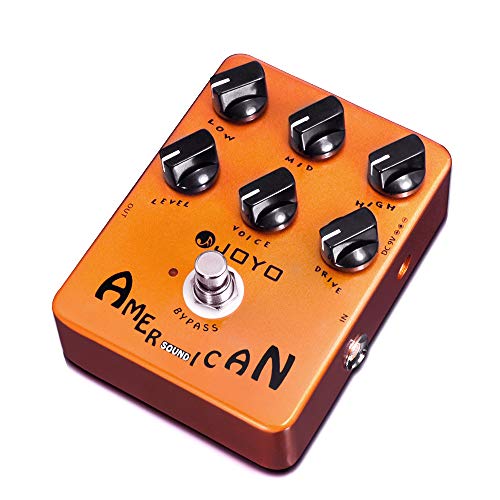
- ✓ Authentic American tones
- ✓ Simple, effective EQ
- ✓ Direct recording ready
- ✕ Needs regulated 9V supply
- ✕ May hiss at high drive
| Power Supply | 9V DC regulated power supply recommended (not included) |
| Housing Material | Aluminum alloy chassis with stoving varnish finish |
| Footprint / Form Factor | Compact pedal with 6-knob layout (Level, Drive, Low, Mid, High, Voice) |
| Tone Controls | 6-knob precision: Level, Drive, Low, Mid, High, Voice for American Tube Amp tones |
| Built-in Cabinet Simulation | Analog cabinet simulator for direct output to PA, audio interface, or mixer |
| Applications / Use Case | Direct recording, silent practice, and backup amp solution; stage and studio use |
You’re setting up for a quick gig and realize the JF-14 lives on your board, looking deceptively simple next to your bigger pedals. You flick the Power switch, and the first note lands with a punchy, glassy sparkle that slips perfectly into a PA without a mic in sight.
That 6-knob layout finally makes sense in practice. Level and Drive sit just right, and the 3-band EQ lets you carve the highs and lows without fighting your guitar’s character.
The Voice control is surprisingly musical, nudging from clean scoop to mid-forward crunch with a gentle twist.
Playing through the built-in cabinet simulator feels like you’ve got a tiny studio there with you. It’s whisper-quiet when you want to record direct, and the tone remains convincing even at higher drive settings.
The aluminum housing is sturdy enough for the road, and the knobs stay firm after a sweaty set.
What sold me is how easy it is to shape a classic American tone on the fly. Flick a few knobs, and you drift from sparkling Blackface cleans to thick Tweed overdrive that still sits cleanly in a mix.
It’s a practical backup for gigs, yet versatile enough for warm home demos.
Direct recording is straightforward, and you’ll love the lack of extra gear if your amp fails. The response feels responsive, not dull, which is rare at this price.
If you’re chasing authentic American character without breaking the bank, this little pedal delivers.
Pros and cons flow from real use, not theory, and you’ll notice the core strengths immediately.
Flatsons KMF-1 Multi-Effects Guitar Pedal 77 Practice
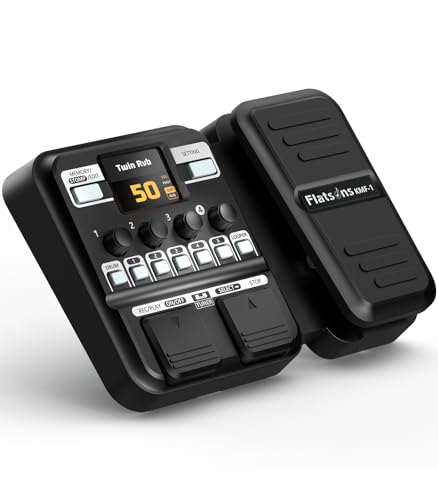
- ✓ Realistic amp/cab sims
- ✓ Flexible 5-block stomp
- ✓ Clear LCD and quick editing
- ✕ Battery life could be better
- ✕ Learning curve for depth
| DSP Technology | Advanced DSP with TSAC for analog circuit simulation |
| IR Sampling | 512-point impulse response (IR) sampling for cabinet modeling |
| Amp & Cabinet Models | 18 amp models and 18 cabinet simulators (77 effects across 8 modules) |
| Presets & Modes | 50 preset patches; Memory Mode for instant tone switching; 2-in-1 expression pedal with 6 assignable effects |
| Signal Processing & Resolution | 32-bit signal processing |
| Power & Runtime | Two power modes with 6 AA battery compartment; up to 2.5 hours of use |
You’re jamming through a messy room of cables, and your current setup keeps fighting you with mismatched tones and laggy changes. You grab the Flatsons KMF-1 and watch the screen light up, instantly showing a real-time cabinet and amp feel you’ve been chasing.
That 512-point IR sampling? You hear the room tighten up, and the sound lands with a surprising punch.
Right away, the 77 effects across eight modules feel more than enough for a full set or a home studio session. You can switch between 18 amp models and 18 cabinet sims as if you had a wall full of amps in a backpack.
The 50 presets give you quick starting points, and Memory Mode makes live tone swaps effortless between songs.
The Stomp Mode is where you’ll feel the practical edge. You get five independent blocks that can be sequenced like a mini pedalboard, which is perfect if you’re chasing a specific mood for a chorus or a lead line.
The 2-in-1 expression pedal adds real control, letting you assign six different effects without juggling pedals on the floor. The LCD screen is a refreshing upgrade—clear, with feedback you actually notice during a fast patch change.
Live or studio, the built-in tuner, 30-second looper, and 42 drum rhythms keep you in the moment. The AUX IN makes jamming with a backing track clean and inspiring, and the battery option is a real bonus for outdoor practice.
If you ever worry about double cabinet simulation, you can disable the cab module when you’re using a real amp or cabinet.
Overall, you’ll find a flexible, feature-rich pedal that sounds convincing in many real-world scenarios, with enough depth to grow into.
JOYO JAM Buddy II 14amp Models Bluetooth 10W Portable Amp

- ✓ Compact and light
- ✓ Rich built‑in tones
- ✓ Drum/looper on board
- ✕ Limited headroom on high gain
- ✕ Small display, some labels terse
| Output Power and Amp Models | 14 amp models |
| Built-in Effects | 9 effects (Mod, Delay, Reverb) |
| Audio Connectivity | USB-C OTG audio interface for direct recording; Bluetooth wireless playback |
| Outputs and I/O | Balanced Output and Line Out ports; phone/tablet mount compatible |
| Power and Battery | Up to 5 hours of playtime on a full 3-hour charge; auto power-off after 20 minutes of inactivity |
| Channels and Controls | 3 independent channels (Clean, Rhythm, Lead) with dedicated 3-band EQ and GAIN; multi-function knob (press & rotate) and LED display |
You peel the JOYO JAM Buddy II from the box and there it is: palm-sized, but surprisingly sturdy in the hand, with a soft matte finish and a tiny LED screen that catches the light just right. The 940g weight sits comfortably, like you could carry it all day without feeling dragged down.
A quick press and twist of the multi-function knob invites you into a world of amp models and effects that feel built for real playing moments.
The dual 2-inch speakers surprise you with surprisingly solid projection for something so compact. The bass radiator adds depth you don’t expect from a small practice amp, so your cleans don’t feel lifeless.
The layout is friendly: three channels, a 3-band EQ, and a dedicated GAIN control that actually makes soloing feel expressive.
Using the 14 amp models is a breeze, and the 9 effects give you enough options to shape tones on the fly. You’ll notice the drum machine and looper are handy for practice and quick ideas, not just gimmicks.
The memory function lands your custom tones across all three channels with a simple tap.
The OTG direct recording is a real bonus when you want to grab ideas straight into your phone or laptop. Bluetooth pairs quickly for backing tracks, and the separate guitar and Bluetooth volume knobs make balancing a snap.
The phone mount is handy and sturdy enough to hold a tablet for video jams, which is a thoughtful touch.
Battery life tops out around five hours with casual use, which is plenty for a practice session or a small, anxiety-free live set. The auto power-off helps with energy savings when you forget to mute after a session.
Overall, it feels like a tiny studio you can carry anywhere, from bedroom practice to a quick busking setup.
If you crave portability without sacrificing versatility, this is a compelling companion. It’s not a high-end stage rig, but for practice, ideas, and light performances, you’ll find it surprisingly capable and genuinely fun to play.
BOSS IR-200 Amp & IR Cabinet Pedal with Large Library

- ✓ Compact yet powerful
- ✓ Large IR library
- ✓ Flexible outputs
- ✕ Slight learning curve
- ✕ Limited on-device memory labeled
| Impulse Response Library | Over 150 hi-res cab impulse responses onboard (BOSS and Celestion Digital) |
| IR Loading Capacity | 128 user memory locations for mono or stereo impulse responses |
| Audio Processing and Sampling | 32-bit floating-point processing with 32-bit AD/DA conversion at 96 kHz |
| Output Options | Multiple outputs including stage amp, house PA, computer recording system, and headphones (simultaneous use possible) |
| USB Audio Interface | USB audio interface functionality for recording/playback on Mac, Windows, and iOS |
| Memory/Presets | Instant sound recall with 128 memories |
You’re loading up for a gig and want one box to do the sound, not a backpack full of gear. The moment I plugged the BOSS IR-200 in, the frustration of juggling amps, IRs, and pedals started melting away.
The built-in 150+ cab IRs on board mean you can dial in a room-ready tone without chasing samples on a computer.
Its size is deceptive: it feels like a compact pedal, but it handles studio-grade sounds with 32-bit AD/DA and 96 kHz. I swapped from a clean Fender-ish edge to a gritty rock lead in seconds, thanks to the deep EQ and amp-model options.
The dedicated memory slots—128 tones—let you recall setups faster than you can say “preset” during a set.
What truly nudges it into “friendly live tool” territory is the seamless output versatility. You can send to a stage amp, PA, or a computer at the same time, which is a rare superpower on a compact unit.
The USB interface is straightforward for recording ideas or backing tracks, and the software makes managing IRs feel almost effortless.
Handling is comfortable: the sturdy stomp-style form, tactile feel of the knobs, and sensible menu layout keep noise and fiddling to a minimum. The onboard library, plus the option to load your own IRs, means you’re not locked in.
It shines for practice, studio overdubs, and live rigs where space is at a premium.
In the end, the IR-200 is a reliable all-in-one solution that delivers pro tone without a rack of gear. If you want real versatility in a compact pedal with robust tone shaping and easy tone management, you’ll probably wonder how you ever lived without it.
HeadRush Core Electric Guitar & Vocal Multi-Effects Pedal

- ✓ Fast, tactile UI
- ✓ Strong vocal suite
- ✓ Flexible I/O and looper
- ✕ Heavier for travel
- ✕ Learning curve upfront
| Display | 7″ high-resolution touchscreen |
| Processor | Multi-core processor |
| Amp/Vocal Modeling and Effects | Native NAM support, A2 Full/A2 Lite/legacy amp captures, 350+ IRs, Neural Amp Modeler integration, Antares Auto-Tune vocal processing |
| Connectivity and Expansion | Wi-Fi with HeadRush Cloud, Bluetooth, USB Audio interface (up to 24-bit/96 kHz), 5-Pin MIDI I/O, 1/4″ instrument input, combo XLR + 1/4″ mic input with phantom power, 1/4″ stereo FX loop |
| Storage/IR Capability | Load/store unlimited third-party IRs via onboard storage, 1024/2048 sample lengths |
| Integrated Animations/Sequencing and IO | Built-in drum machine (16 kits, 134 patterns), onboard looper with MIDI sync, 4-cable method setup |
The idea that a single box could replace a rack, a launchpad, and a mic locker always sounded like a hype line to me. with the HeadRush Core, that skepticism melted faster than a chorus of vocal harmonies mid-song.
I kept stumbling on the 7″ touchscreen, pausing to admire how fast I could pull up amp models and vocal FX without hunting through menus.
In my hands, the Core feels substantial without being heavy. The steel chassis is sturdy, and those five color-LED footswitches light up with a tactile click that sells the “live gig” feel.
I appreciated the built-in drum machine and looper; the timing stayed tight, and the MIDI sync meant I could layer a groove and then drop in a vocal harmony without a hiccup.
Speaking of vocals, the Antares Auto-Tune and vocal FX suite actually sounded usable onstage, not overly processed. You can route a mic through the combo XLR + 1/4″ input with phantom power, then float a backing track on the USB interface while you sing along.
It’s not just a gimmick—on a small-venue gig, it kept me in the pocket with minimal latency.
The NAM support and Wi-Fi cloud sharing opened a new world of tones. I browsed a few amp captures and hit “clone” to compare, and the responsiveness was instant.
IRs are plentiful, with over 350 built-ins, and you can load your own IRs for real-world room sounds. It’s a game-changer if you chase a particular amp vibe.
Real-world use is where this shines: you get seamless preset switching with spillover, so your reverb tails don’t cut off mid-song. The choice to share rigs through HeadRush Cloud actually felt practical, not marketing fluff, letting me borrow a buddy’s plexi vibe for a cover night without lugging extra gear.
Bottom line: the Core tackles both guitar and vocal duties with a single, portable brain. It’s not just a pedal; it’s a compact stage-ready rig with enough depth to satisfy tone purists and enough immediacy for casual jamming.
What Makes a Pedal Amp Suitable for Different Use Cases?
The suitability of a pedal amp for different use cases depends on several key features and characteristics.
- Power Output: The wattage of a pedal amp is crucial as it determines how loud the amp can go without distortion. Lower wattage models are ideal for practice or recording situations, while higher wattage models are better suited for live performances where volume and clarity are essential.
- Portability: A lightweight and compact design makes a pedal amp easy to transport, which is particularly beneficial for musicians who frequently travel or perform at various venues. Many portable amps also offer battery operation, adding to their versatility in outdoor or remote settings.
- Sound Quality: The tonal characteristics of a pedal amp, including its ability to maintain clarity and detail across different frequencies, significantly impact its suitability for various music styles. Quality components and design can enhance the amp’s responsiveness to pedals, making it more versatile for genres ranging from rock to jazz.
- Connectivity Options: Amps that offer a range of input and output options, such as auxiliary inputs, headphone jacks, and multiple speaker outputs, provide greater flexibility for different setups. This allows musicians to easily integrate the amp into their existing rig or use it for practice with backing tracks.
- Effects Integration: Many pedal amps come with built-in effects or allow for seamless integration with external pedals. This feature is particularly desirable for guitarists and other instrumentalists who want to expand their sound palette without needing a complex effects rack.
- Durability: A sturdy construction is vital for pedal amps, especially for those who frequently gig or travel. Robust materials and quality craftsmanship ensure that the amp can withstand the rigors of transport and live performance while maintaining its performance over time.
- Versatility: The best pedal amps often feature multiple channels or tonal options that cater to a variety of playing styles. This versatility enables musicians to easily switch between clean and distorted sounds, accommodating different genres and performance scenarios.
What Features Should You Prioritize in a Pedal Amp for Live Performances?
When selecting the best pedal amp for live performances, there are several key features to prioritize:
- Power Output: The wattage of the amp is crucial as it determines how loud the amp can get without distortion. For live performances, a minimum of 20-30 watts is generally recommended to ensure that the amp can compete with drums and other instruments.
- Portability: Since live performances often require transportation, the weight and size of the pedal amp are important considerations. A lightweight and compact design allows for easier setup and movement, making it ideal for musicians on the go.
- Sound Versatility: Look for an amp that offers a wide range of tones and effects to suit different genres and performance styles. Features such as EQ controls, built-in effects, and multiple channels can greatly enhance your sound options.
- Durability: Live performances can be tough on equipment, so a sturdy construction is essential. Choose an amp made of high-quality materials that can withstand the rigors of travel and stage use without compromising performance.
- Connectivity Options: An amp with various input and output options is beneficial for integrating with other gear. Features like auxiliary inputs, headphone outputs, and effects loops enhance flexibility and connectivity with other devices.
- Built-in Effects: Some pedal amps come equipped with built-in effects like reverb, delay, or distortion. These can save space and weight by reducing the need for additional pedals while still providing a range of sounds to enhance your performance.
- Ease of Use: A user-friendly interface with intuitive controls allows for quick adjustments during performances. Look for an amp that provides clear labeling and accessible knobs to facilitate easy tweaking of settings on the fly.
How Can You Determine if a Pedal Amp is Right for Home Practice?
To determine if a pedal amp is right for home practice, consider the following factors:
- Power Rating: A pedal amp with a lower wattage is often more suitable for home use as it allows you to achieve desirable tones at lower volume levels.
- Portability: Lightweight and compact designs make it easier to move around your home or store when not in use, which is essential for home practice setups.
- Sound Quality: Look for an amp that replicates the tone you desire, as the best pedal amps will enhance the effects of your pedals rather than color your sound negatively.
- Versatility: An amp that offers various tonal options can better accommodate different genres and playing styles, making it more enjoyable for practice.
- Built-in Effects: Some pedal amps come with built-in effects that can complement your pedal setup, providing additional sound shaping options for home practice.
- Connectivity Options: Amps that include headphone outputs, aux inputs, or USB connectivity can enhance your practice experience by allowing silent play or integration with recording devices.
- Durability: A robust build quality is important for ensuring the amp can withstand regular use without compromising sound quality or performance.
The power rating of a pedal amp is crucial for home practice because lower wattage amps can produce rich tones without the need for excessively loud volumes, which is often impractical in a home setting. This allows players to explore their sound without disturbing others.
Portability is another key aspect, as a smaller and lighter amp can easily be moved from room to room or stored away when not in use, making it ideal for home environments with limited space.
Sound quality is paramount; the best pedal amps should enhance the effects of your pedals without muddying your tone. A good amp will ensure that every nuance of your playing is heard clearly.
Versatility in tonal options allows you to experiment with different sounds and styles, which can keep your practice sessions engaging and productive. An amp that can adapt to multiple genres gives you the freedom to explore your musical interests.
Built-in effects can add further value, as they provide additional sound shaping capabilities, helping you achieve a broader range of tones without the need to invest in extra pedals. This can be particularly beneficial for those who want to keep their setup simple.
Connectivity options enhance the functionality of your pedal amp; for instance, a headphone output allows for silent practice, while aux inputs facilitate jamming along with backing tracks or recordings. USB connectivity can also be useful for recording your playing directly to a computer.
Finally, durability is essential, as a well-constructed amp will withstand the rigors of regular use, ensuring that it continues to perform well over time. A reliable amp can be a long-term investment for any home musician.
What Are the Best Pedal Amps Available for Musicians?
The best pedal amps available for musicians combine portability, sound quality, and versatility.
- Boss Katana Mini: A compact and lightweight amp that delivers impressive sound quality for practice and small gigs.
- Fender Acoustic Junior: Specifically designed for acoustic instruments, this amp features a dual-channel setup for vocals and guitars.
- Vox MV50: A powerful mini amp that utilizes Nutube technology for tube-like tones in a portable format.
- Orange Micro Terror: A hybrid amp combining a valve preamp and solid-state power for a unique tonal character.
- Blackstar Fly 3: A small yet powerful amp that offers a range of tones and built-in effects, perfect for practice and travel.
The Boss Katana Mini produces rich tones and features multiple voicing options, making it suitable for various music styles. It also includes an onboard delay effect, ensuring that musicians have the essential sounds needed for live performances or practice sessions.
The Fender Acoustic Junior is tailored for acoustic musicians, featuring a mic input and instrument input, which allows for easy blending of vocals and guitar sounds. Its built-in reverb and chorus effects enhance the acoustic tone, providing a warm and natural sound ideal for singer-songwriters.
The Vox MV50 stands out with its innovative Nutube technology, which provides the warmth and dynamics of a traditional tube amp. Despite its small size, it packs a punch and can achieve a range of tones from clean to overdriven, making it versatile for different genres.
The Orange Micro Terror is known for its robust sound and is equipped with a 12AX7 tube in the preamp stage, giving it a unique character. Its simple controls make it user-friendly while still providing quality tones suitable for both practice and recording.
The Blackstar Fly 3 is a compact amp that surprises with its versatility, featuring a built-in tape delay effect and the ability to run on batteries, making it ideal for musicians on the go. Its two-channel design allows for a variety of sounds, making it suitable for different playing styles and musical preferences.
Which Pedal Amps Are Most Recommended by Professionals?
The most recommended pedal amps by professionals include:
- Fender Acoustic Junior: This amp is known for its warm, rich tones and portability, making it a favorite among singer-songwriters.
- Boss Katana Mini: The compact size and versatile sound options of this amp make it perfect for practice and small gigs.
- Orange Crush 20RT: With its powerful sound and built-in reverb and tuner, this amp is favored for its performance and user-friendly features.
- Vox Pathfinder 10: This amp is celebrated for its classic British sound and simplicity, which appeals to both beginners and seasoned players.
- Roland Micro Cube GX: Known for its battery operation and array of effects, this portable amp is ideal for musicians on the go.
The Fender Acoustic Junior delivers exceptional sound quality, particularly for acoustic instruments, and features a built-in reverb and chorus for added depth. Its lightweight design makes it easy to carry to gigs or practice sessions, which is a significant advantage for traveling musicians.
The Boss Katana Mini is a compact version of the popular Katana line, offering five different amp characters and onboard effects. Its small size doesn’t compromise on sound quality, making it an excellent choice for home practice or small performances.
The Orange Crush 20RT combines vintage aesthetics and modern features, providing a warm, punchy sound with plenty of gain. Its built-in reverb and chromatic tuner add to its versatility, making it suitable for various musical styles.
The Vox Pathfinder 10 is a straightforward amp that offers great tone and a classic design. Its simplicity and reliability have made it a staple for many players, and it provides a surprisingly rich sound for its size.
The Roland Micro Cube GX stands out for its portability and battery-powered operation, making it extremely versatile for outdoor performances or travel. It includes a variety of effects and amp models, allowing musicians to experiment with their sound in a compact unit.
What Unique Features Do These Top Pedal Amps Offer?
When considering the best pedal amps, unique features can significantly enhance your playing experience. Here are some notable traits that set top pedal amps apart:
-
Versatile Tone Shaping: Many pedal amps offer extensive equalization controls, allowing musicians to fine-tune their sound precisely. Options like graphic EQs or parametric EQs can help shape frequencies based on personal preference or musical style.
-
Power Scaling: This feature allows players to reduce the wattage of the amp without sacrificing tone. It’s particularly useful for those wanting to achieve power tube saturation at lower volumes, making it suitable for home practice and small gigs.
-
Integrated Effects: Some pedal amps come with built-in effects such as reverb, delay, or modulation. This integration not only saves pedalboard space but also provides seamless switching between different sounds.
-
Portability: The best pedal amps are often designed for easy transport, featuring lightweight materials and compact sizes, making them ideal for gigging musicians who need to move quickly.
-
Digital Connectivity: Many modern pedal amps include USB connections, enabling direct recording and easy integration with computer-based recording setups, which is especially beneficial for home studio musicians.
These distinctive features contribute to the overall functionality and appeal of pedal amps, catering to a wide range of playing styles and preferences.
How Do You Evaluate the Sound Quality of a Pedal Amp?
Evaluating the sound quality of a pedal amp involves several key considerations that can significantly influence your playing experience. Here are the main factors to assess:
-
Tone Clarity: Listen for how well the amp reproduces different frequencies. A quality amp should maintain clarity across bass, midrange, and treble without muddiness or harshness.
-
Dynamic Range: Play soft and aggressively to determine how well the amp responds to your touch. A responsive pedal amp will exhibit a wide dynamic range, enhancing expressiveness.
-
Distortion Characteristics: If the amp includes distortion features, assess how the amp colors the sound. Many players prefer a smooth, musical distortion over a harsh, unpleasing tone.
-
EQ Response: Engage the tone controls to evaluate their effectiveness. A good pedal amp will allow you to shape your sound significantly without muddling.
-
Headroom: Check how the amp handles high volume settings without compressing or clipping. More headroom allows for clean sounds at higher volumes.
-
Interaction with Effects: Test how the amp integrates with your pedals. A great pedal amp maintains tonal integrity when different effects are applied.
By focusing on these aspects, you can make a more informed choice about the best pedal amp for your needs.
What Are the Key Benefits of Using a Pedal Amp Over Traditional Amps?
The key benefits of using a pedal amp over traditional amplifiers include portability, versatility, and enhanced tone shaping capabilities.
- Portability: Pedal amps are typically lightweight and compact, making them easy to transport for gigs or practice sessions. Unlike traditional amplifiers, which can be bulky and cumbersome, pedal amps fit easily into a gig bag or backpack, allowing musicians to travel with less hassle.
- Versatility: Many pedal amps are designed to accommodate a wide range of effects and tonal variations, often allowing players to switch between different amp models and settings with ease. This versatility makes them suitable for various music genres and playing styles, enabling musicians to experiment with their sound without the need for multiple amplifiers.
- Enhanced Tone Shaping: Pedal amps often come equipped with extensive tone-shaping controls, including EQ settings, gain, and built-in effects, giving players the ability to customize their sound precisely to their liking. This level of control allows for the creation of unique tones that can be tailored for different musical contexts, which is often more challenging with traditional amps.
- Direct Recording Capability: Many modern pedal amps feature direct output options, making them ideal for studio recording and silent practice. This allows musicians to connect directly to recording interfaces or PA systems without the need for a microphone, resulting in a clean and direct sound that captures the nuances of their playing.
- Affordability: Pedal amps can be more budget-friendly compared to traditional amplifiers, particularly high-end tube models. This cost-effectiveness allows musicians to access quality sound and features without breaking the bank, making it an attractive option for beginners and seasoned players alike.
How Can You Choose the Right Pedal Amp to Fit Your Style and Needs?
Choosing the right pedal amp involves considering various factors that align with your playing style and needs.
- Power Rating: The wattage of an amp significantly affects its volume and headroom. Lower-wattage amps (5-20 watts) are ideal for home use and smaller gigs, while higher-wattage amps (30 watts and above) are better suited for larger venues and band settings.
- Speaker Size: The size of the speaker can influence the tonal quality and projection of your sound. Smaller speakers (8-10 inches) tend to produce a tighter sound, making them suitable for practice and smaller settings, whereas larger speakers (12 inches and above) provide fuller tones and more bass response, ideal for live performances.
- Built-in Effects: Many pedal amps come with built-in effects such as reverb, delay, and overdrive. These can simplify your rig, allowing you to create a variety of sounds without needing additional pedals, which is especially helpful for musicians who prefer a streamlined setup.
- Portability: If you plan to travel frequently with your amp, consider its weight and size. Compact and lightweight amps are easier to transport, making them perfect for gigging musicians, while larger, heavier amps may offer better sound quality but can be cumbersome to move.
- Connectivity Options: Look for amps that provide various input and output options, such as auxiliary inputs or headphone outputs. This versatility allows you to easily connect to other devices for practice or recording, enhancing your overall playing experience.
- Tone Controls: The presence of tone controls (bass, mid, treble) allows you to shape your sound to match different styles. Having a flexible EQ can help you adapt your tone to fit various genres, making your amp more versatile across different playing situations.
- Brand Reputation: Researching brands known for their reliability and quality can guide your decision. Brands with a strong reputation often provide better customer support and warranty options, ensuring you have a dependable amp for years to come.