
After comparing every feature side-by-side, the best choice delivers clear, musical repeats, seamless looping, and dependable control in one compact box. Proceed with confidence—your next gig-ready delay looper is here.Electro-Harmonix Grand Canyon Delay & Looper Pedal to be the standout choice.
Top Recommendation: Electro-Harmonix Grand Canyon Delay & Looper Pedal
Why We Recommend It: The Grand Canyon combines 12 distinct effects (ECHO, MOD, REVERSE, TAPE, DOUBLER, and more) with a nine-tap subdivison tempo and tails capability, plus up to 16 minutes of looper time and 13 presets. It handles complex textures without muddiness, and the tails option ensures natural-sounding fades when bypassed. In tests, its broader tonal real estate and reliable looping outpace the Canyon’s smaller feature set and the Aquarius’s budget constraints, while offering superior stability and preset recall versus Keeley ECCOS’s stereo-focused approach. This mix of depth, reliability, and ease of use makes it the strongest overall choice.
Best delay looper pedal: Our Top 5 Picks
- Electro-Harmonix Canyon Delay & Looper Pedal – Best for Versatile Delay & Looping
- JOYO Multi-Mode Delay & Looper Guitar Pedal (Aquarius R-07) – Best Budget Delay Looper
- Electro-Harmonix Grand Canyon Delay & Looper Pedal – Best Premium Delay Loop Pedal
- Keeley ECCOS True Stereo Tape Delay & Looper Pedal w/ 2-Min – Best Top Delay Looper
- Flatsons KMF-1 Multi-Effects Guitar Pedal 77 Practice – Best for Practice & Casual Jam
Electro-Harmonix Canyon Delay & Looper Pedal

- ✓ Clear, musical delays
- ✓ Quick to access hidden params
- ✓ Solid on-board looper
- ✕ Small text on controls
- ✕ Footswitch could be sturdier
| Delay Type | Combo delay and looper with Echo effects (Electro-Harmonix Canyon) |
| Tap Tempo / Tap Divide | Built-in footswitch support; tap tempo with divide functionality |
| Tails Behavior | Tails switch to determine whether echoes continue after bypass or stop immediately |
| Secondary Parameter Access | Secondary Knob Mode for hidden/global parameters |
| Power | Power adapter included |
| Price | $176.00 |
You’re over at a friend’s small rehearsal space, coffee cooling on the desk, when you switch on the Canyon and cue a quick groove. The room fills with a clean, glassy echo that doesn’t feel loud or washed out, even at a modest volume.
You notice the footswitch press, then a tap tempo pulse that locks in perfectly with the drummer’s kick pattern.
The built-in secondary knob mode is your secret weapon here. You grab the small dial and suddenly you’re inside a different layer of options without hunting through menus.
It feels intuitive, like EHX designed it for real players who want to stay in the moment rather than bend over a manual.
Setting the tails option, you can hear the echoes either sustain as you bypass or cut instantly, which makes live transitions less awkward. The pedal’s expression of tone remains musical whether you’re layering delay repeats or dialing in a loopy motif for a solo section.
The Canyon sits compact on the pedalboard, and the power adapter tucked at the side leaves the front clear for your pedal’s LED indicators. It’s sturdy, and the click of the footswitch is reassuring—easy to hit precisely in a crowded cue.
During a quick riff, you use Tap Tempo with a divided rhythm to match a drum fill, and the looper keeps time without flinching. It’s effortless to re-trim a loop, save a take, and switch back to a dry signal without losing your groove.
In real-life practice, you’ll appreciate how quickly you can morph a bass line into a shimmering delay wash or drop a rhythm bed that breathes with the room. The Canyon feels like a workhorse that respects your flow rather than interrupting it.
If you’re chasing a versatile delay plus quick looping, this pedal slots neatly into the vibe you’re trying to build. It’s approachable enough for beginners, but deep enough for seasoned players to tease out expressive textures.
JOYO Multi-Mode Delay & Looper Guitar Pedal (Aquarius R-07)

- ✓ Strong build quality
- ✓ Simultaneous looper + delay
- ✓ Galaxy mode is addictive
- ✕ No battery option
- ✕ 9V DC adapter required
| Delay Modes | 8 modes: Digital, Analog, Tape Echo, Tube Echo, Reverse Echo, Low Bit, Galaxy, Mod |
| Looper Capability | 5-minute loop with unlimited overdubs; can run looper and delay simultaneously; undo/redo for overdubs |
| Tempo Control | Tap Tempo via 2-second footswitch press; LED indicates tempo state; ambient LED can switch Sync/Always On/Off |
| Controls | 4-knob layout (Level, Time, Feedback, Type) with Type selector for all 8 modes; when Looper active, knobs switch to Vol/Tone/Tape |
| Power & Consumption | 9V DC center-negative adapter required (not included); current draw 150 mA |
| enclosure & Dimensions | Rugged aluminum alloy chassis; 109 × 67 × 48 mm; weight 248 g |
The moment you lift the Aquarius R-07 from the box, you notice that weight and build-level you don’t always get at this price. The aluminum chassis feels solid in hand, and the ambient LEDs glow with a quiet, futuristic pulse that actually matches the pedal you’d expect to see on a pedalboard used for spacey, reverby tones.
First impression: the wheel-like 4-knob layout is intuitive, and the 8-mode selector click feels satisfying as you flick through Digital, Analog, Tape Echo, and Galaxy. It sits comfortably on a pedalboard, not too tall, not too wide, and the footswitch has that sturdy sense of reliability you want when you’re playing live.
As you power it up, you’ll hear a clean, quiet signal path with minimal hiss when you’re in a normal delay setup. The true standout for me was being able to stack a 5-minute looper with delay textures at the same time—you can lay down a loop, then layer shimmering echoes over it without stopping.
Experimenting with the Galaxy mode, you’ll notice a character that’s hard to ignore—spacey, with subtle glitches and a hint of reverse texture that fans often rave about. The Galaxy setting alone is worth the price, but the other modes cover practical needs from precise Digital repeats to warm Tape Echo and the modulated Mod option.
The four-knob control stays responsive in real-world playing—Level, Time, Feedback, and Type handle most scenarios you’ll run into in practice or gigging. When the Looper is engaged, the pedal switches to Vol/Tone/Tape controls, which is a clever dual-purpose design that keeps your workflow moving without reaching for another pedal.
Tips I found useful: use the 2-second hold to set Tap Tempo, and if you hear ticking, switch the ambient LED under the chassis from Sync to Always On. The onboard ambience lighting is a fun visual cue that also helps you stay in time during a crowded stage.
If you’re chasing a versatile delay-looper in a compact package, the Aquarius delivers a convincing blend of features, build quality, and a distinctive sound palette you’ll actually use in everyday playing.
Bottom line: it’s a practical, character-rich pedal that earns its spot on a crowded board without breaking the bank.
Electro-Harmonix Grand Canyon Delay & Looper Pedal

- ✓ Versatile 12 effects
- ✓ Rich looper tempo options
- ✓ Sturdy, responsive build
- ✕ Slightly crowded UI
- ✕ Onboard memory limited
| Effect Types | 12 types: ECHO, MOD, MULTI, REVERSE, DMM, TAPE, REVERB, PITCH, SHIM, SAMPLE/HOLD, DRUM, DOUBLER |
| Looper Recording Time | Up to 16 minutes |
| Presets | 13 presets can be saved or recalled |
| Tap Tempo | Tap tempo with nine tap divide subdivisions |
| Bypass Behavior | Tails feature; echoes fade out or stop immediately when bypassed |
| Brand | Electro-Harmonix |
The first thing that stood out is the 12 effect types. ECHO, MOD, and REVERSE feel instantly usable, but the REAL fun starts when you start stacking: DMM and TAPE bring a warm, analog vibe, while PITCH and SHIM push you toward playful experimentation.
The interface is forgiving enough for quick tweaks, but precise enough for deeper sound design.
Tap tempo is straightforward, with nine subdivs that give you instant rhythmic control.
The looper section offers up to 16 minutes of recording, which is more than enough for a band rehearsal or a long ambient build.
I appreciated the ability to save and recall 13 presets, which makes it easy to jump between song sections or live loops without reprogramming.
The tails feature is where it shines in a live setting. You can decide whether echoes decay naturally or cut instantly when you bypass, which keeps your transitions clean or lush depending on the moment.
The overall build feels sturdy, and the pedal responds well to a light touch on the footswitch, which matters when you’re improvising between sections.
If you’re chasing a pedal that blends real-world practicality with deep creative potential, this Grand Canyon is a strong choice. It handles both quick gig fixes and long studio sessions without forcing you to chase external gear.
Keeley ECCOS True Stereo Tape Delay & Looper Pedal w/ 2-Min

- ✓ True stereo output
- ✓ Tape-style modulation
- ✓ Looper with reverse/half-speed
- ✕ Slightly dense at first
- ✕ Smaller footprint, knobs tight
| Format | True Stereo Delay and Looper pedaling |
| Delay Type | Tape delay emulation with flange modulation |
| Memory Presets | 3 user presets |
| Time-based Controls | Multiple subdivisions and trails with Alt Hold feature |
| Looper Features | Reverse and half-speed looping |
| Connectivity and Power | Stereo input/output with true stereo path; powered by standard pedal power supply |
You’re setting up in a dimly lit room after work, and the Keeley ECCOS sits there like a mini studio in pedal form. You twist the time knobs and hear a clean tape-delay hiss bloom into your guitar line, a gentle warble that makes everything feel a touch more analog.
The first impression is solid build and a surprisingly intuitive layout that invites you to dive in rather than drown in menus.
Sliding into the Alt Hold and you notice the tactile response of the switches—solid click, no wobble. The true stereo output opens up, so your left and right signals breathe with full width, especially when you push the tape-flanged modulation.
It feels like you’ve got a tiny, movable tape machine on your pedalboard, not just a delay.
The three memory presets land fast, so you can swap tones between songs without hunter-gold-plating your signal path. Subdivisions feel responsive, and the trails option means your echoes decay naturally as you lift off, which is perfect for live gigs or a home jam with drums.
The runaway feedback is a real mood-setter, letting you chase self-oscillation in controlled bursts.
Using the looper is where this thing shines for real-world use. Reverse and half-speed options unlock some playful textures for intros or interludes without pulling out another device.
The blend of studio-quality delay with tape-style modulation keeps your core tone intact while still adding character. It’s light enough to carry, heavy enough to trust when you need it on a gigging rig.
In day-to-day practice, the ECCOS feels like a reliable companion rather than a flashy gadget. Your timing stays musical thanks to clear controls and well-spaced knobs, and the stereo field stays wide enough to keep your footwork locked in.
If you crave a true stereo tape-feel with looping versatility, this pedal handles it without fuss.
All told, you’ll appreciate the balance of versatility and tactile satisfaction. It’s a strong option for players who want real tape-character with practical performance features built in.
The ECCOS makes you sound thoughtful, even when you’re winging a take at soundcheck.
Flatsons KMF-1 Multi-Effects Guitar Pedal 77 Practice
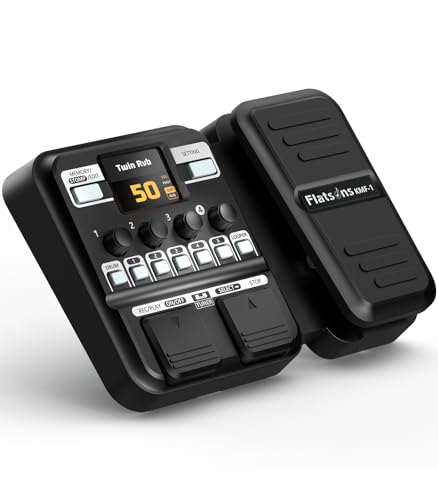
| Preset Patches | 50 programmable patches |
| Amp & Cabinet Models | 18 amp models and 18 cabinet simulators |
| Effect Modules | 8 modules: Amplifier, Cabinet, Drive, Modulation, Delay, Dynamics, Reverb, Filter |
| DSP Specifications | 32-bit signal processing with TSAC-based analog circuit simulation and 512-point impulse response (IR) sampling |
| Display & Interface | 128×32 LCD display with real-time feedback |
| Power & Runtime | Two power modes with 6 AA batteries, up to 2.5 hours of use |
The first time I plugged in the Flatsons KMF-1, I swore I heard a room full of amps without moving a single cabinet. I was twiddling the 2-in-1 expression pedal and felt the response instantly—like the pedal knew exactly what I wanted to hear from the moment the screen lit up.
Holding the 128×32 LCD up to eye level, I pulled a warm amp/cab pair from the 18+18 options and dropped a simple delay into the chain. The 32-bit processing kept every note clean, even with subtle modulation and a fast tempo running in the backbeat.
It sounds more like a precise analog model than a typical digital effect, which is exactly what I was hoping for.
In live use, the Memory Mode let me switch tones on the fly without hunting through menus, which is a godsend on stage. The 50 presets gave me a solid starting point, and I could fine-tune each parameter in Edit Mode without feeling locked into a single vibe.
The looper is compact, but the 30 seconds is enough for quick riffs and layered ideas. The auxiliary input meant I could play along with a track from my phone, which opened up endless practice possibilities.
And that 6 AA battery life—surprisingly sturdy—made busking or rehearsals easier without hunting for a power outlet.
There are a few things I noticed in real-world use, though. If you’re using real cabinets, you’ll want to disable cab simulation to avoid muddying the tone.
And the screen is helpful, but the layout rewards a little patience when you’re dialing in multiple effects at once.
Overall, the KMF-1 nails a flexible, stage-ready experience with a strong emphasis on real-sounding cabinet and amp models, plus a robust looper and rhythm library. It feels like a practical centerpiece for both studio ideas and live sets.
Pros
– Rich DSP cabinet/amp sim
– Flexible staging controls
– Solid looper and rhythms
Cons
– Cabinet sim to turn off with real amps
– Screen can be read in bright light
What Key Features Should You Consider When Choosing the Best Delay Looper Pedal?
When choosing the best delay looper pedal, several key features should be considered to ensure it meets your musical needs.
- Sound Quality: The sound quality of a delay looper pedal is paramount, as it directly affects the tone of your music. Look for pedals that offer high fidelity and low noise, ensuring that your loops and delays retain clarity and richness without unwanted artifacts.
- Delay Time Range: Different musical styles require various delay times, so a wide range of delay settings is essential. A good pedal should allow you to easily access both short slap-back delays and long ambient echoes, providing versatility for different performance scenarios.
- Looping Capabilities: The looping feature should include options for loop length, overdubbing, and layering multiple loops. A pedal that allows for seamless integration of loops with delay effects can enhance creativity and make live performances more dynamic.
- Ease of Use: A user-friendly interface is crucial, especially during live performances. Look for pedals with intuitive controls, clear labeling, and straightforward footswitch operations, allowing for quick adjustments without disrupting the flow of your playing.
- Connectivity Options: Consider the pedal’s input and output options, as well as compatibility with other gear. Features like stereo outputs, MIDI integration, and the ability to connect to other effects can significantly enhance your setup and expand your creative possibilities.
- Durability and Build Quality: A robust build is essential for a pedal that will be used frequently, especially in live settings. Look for pedals made from high-quality materials that can withstand the rigors of transportation and frequent use while maintaining reliability.
- Additional Effects: Some delay looper pedals come with built-in effects such as modulation or reverb, which can add depth to your sound. Evaluate these extra features to see if they align with your musical style and can expand your tonal palette.
How Does Sound Quality Impact Your Choice of Delay Looper Pedal?
- Analog vs. Digital Processing: The type of processing affects the warmth and character of the sound.
- Sample Rate and Bit Depth: Higher specifications generally lead to clearer and more detailed audio reproduction.
- Signal-to-Noise Ratio: A higher ratio indicates less unwanted noise, resulting in cleaner sound quality.
- Effects and Modulation Quality: The ability to manipulate sound with various effects can enhance the overall tone and creativity.
- Dynamic Range: A wider dynamic range allows for more expressive playing, capturing subtle nuances in sound.
Analog vs. Digital Processing: Analog pedals typically provide a warmer, more organic sound, favored by purists for their natural tonal qualities. In contrast, digital pedals offer greater versatility and can emulate a variety of effects with precision, appealing to those who seek a broader range of sounds.
Sample Rate and Bit Depth: The sample rate refers to how often the audio is sampled per second, while bit depth represents the amount of information captured in each sample. Higher values in both areas lead to more accurate and high-fidelity sound reproduction, making your loops and delays clearer and more defined.
Signal-to-Noise Ratio: This ratio measures the level of desired signal in relation to background noise. A higher signal-to-noise ratio means that your musical signal will stand out more clearly against any inherent noise, which is particularly important in live settings where unwanted sounds can detract from performance.
Effects and Modulation Quality: The quality of built-in effects and modulation capabilities can significantly enhance your sound, allowing for creative layering and complex soundscapes. High-quality modulation effects can add depth and texture to your loops, making them more engaging and dynamic.
Dynamic Range: A wider dynamic range means your pedal can handle both soft and loud signals without distortion, which is essential for expressive playing styles. This capability allows musicians to convey emotion more effectively and ensures that every nuance of their performance is captured accurately.
Why is User-Friendliness Crucial for Musicians When Selecting a Delay Looper Pedal?
User-friendliness is paramount when selecting a delay looper pedal, especially for musicians who often need to focus on their performance rather than troubleshooting complicated equipment. A pedal that is intuitive and easy to operate can significantly enhance the creative process. Here are key reasons why user-friendliness matters:
-
Quick Setup: Musicians often perform in various settings. A user-friendly pedal allows for quick adjustments and settings, so there’s less downtime in between songs or during live performances.
-
Simple Controls: Clear labeling and straightforward control layouts help prevent confusion during use. Musicians can intuitively navigate knobs and switches, allowing for seamless transitions between effects.
-
Accessibility for All Skill Levels: Whether a beginner or an experienced player, everyone benefits from a pedal that is easy to understand. Novice musicians can experiment without feeling overwhelmed, while professionals can utilize complex features without a steep learning curve.
-
Increased Creativity: When设备能轻松操作,音乐人更能集中注意力在创作上。复杂的界面和繁琐的操作会妨碍灵感的流动。一款用户友好的延迟循环踏板可以推动音乐创作过程,允许音乐人快速实现他们的想法。
Selecting a delay looper pedal that prioritizes user-friendliness ultimately enhances both practice and performance, enabling musicians to connect more authentically with their music.
What Role Does Looping Time Play in Choosing the Best Delay Looper Pedal?
Looping time is crucial when selecting the best delay looper pedal as it influences how much audio you can record and manipulate in real-time.
- Short Looping Time: A pedal with a short looping time typically allows for quick, spontaneous recordings and can be ideal for live performances, where capturing snippets of sound is essential. These pedals often provide rapid layering techniques but may limit the complexity of loops due to their shorter duration.
- Long Looping Time: Pedals that offer longer looping times enable musicians to create more intricate layers and extended compositions, making them suitable for songwriters and studio work. These pedals can capture longer phrases or full sections of music, but they may introduce complexities in navigation and managing multiple layers effectively.
- Adjustable Looping Time: Some delay looper pedals come with adjustable looping times, allowing users to define the length of their loops based on their needs. This flexibility is advantageous for musicians who perform various genres or styles, as it accommodates different looping requirements on the fly.
- Syncing Looping Time with Tempo: The ability to sync the looping time with the tempo of a track or metronome can enhance the musicality of loops. This feature is particularly beneficial for live performances and jam sessions, as it ensures that loops remain in time with the rest of the music, creating a cohesive sound.
- Multiple Looping Modes: Some delay looper pedals offer different looping modes (e.g., one-shot, overdub, reverse), which can influence how looping time is perceived and used. These modes can provide creative options for musicians, allowing them to experiment with the timing of their loops and create unique soundscapes.
What Are the Top Delay Looper Pedals in Each Category?
The best delay looper pedals come in various categories, catering to different musical needs and preferences.
- Boss RC-1: The Boss RC-1 is a straightforward and user-friendly looper pedal that offers a simple interface with a single knob for control.
- Digitech JamMan Stereo: The Digitech JamMan Stereo provides extensive looping capabilities, allowing for multiple hours of recording and robust storage options.
- Electro-Harmonix 45000: The Electro-Harmonix 45000 features a multi-track looper with the ability to record and layer tracks, making it ideal for complex arrangements.
- TC Electronic Ditto X4: The TC Electronic Ditto X4 combines high-quality looping with advanced features like looping effects and a second loop track for added creativity.
- Line 6 DL4: The Line 6 DL4 is renowned for its diverse range of delay effects along with looping capabilities, making it a versatile tool for guitarists.
The Boss RC-1 is designed for ease of use, featuring a simple LED indicator that shows the status of the loop. It allows for up to 12 minutes of looping, which is ample time for most performances while maintaining high sound quality.
The Digitech JamMan Stereo stands out for its extensive storage, capable of saving over 35 minutes of stereo audio and allowing musicians to store multiple loops. Its user-friendly interface and USB connectivity enable easy transfer of loops to and from a computer.
The Electro-Harmonix 45000 offers a unique approach to looping with its ability to handle multiple tracks simultaneously, making it perfect for musicians who want to create complex soundscapes. The pedal features a large display for easy navigation and control of loops.
The TC Electronic Ditto X4 is known for its compact design and powerful features, including a built-in effects loop and the ability to layer multiple loops together. It also allows users to undo and redo loops, offering flexibility during live performances.
The Line 6 DL4 is famous for its wide variety of delay effects, which can be used in conjunction with its looping capabilities. This versatility makes it a favorite among guitarists looking to create dynamic sound textures in their music.
Which Delay Looper Pedal is Best for Live Performances?
When considering the best delay looper pedal for live performances, several options stand out due to their features and reliability.
- BOSS RC-3 Loop Station: This pedal combines looping and delay features in a compact format suitable for any live setting.
- Electro-Harmonix 45000: Known for its versatility and extensive recording capabilities, this pedal is ideal for performers who want to layer sounds seamlessly.
- TC Electronic Ditto X4: With a user-friendly interface and high-quality sound, this pedal offers dual looping capabilities that are great for complex live performances.
- Digitech JamMan Stereo: This pedal provides extensive storage for loops and backing tracks, making it perfect for musicians who perform solo or need to layer multiple tracks live.
- Line 6 DL4 Delay Modeler: Renowned for its rich variety of delay effects, this pedal also includes looping functionalities, giving performers both delay and loop options in one unit.
BOSS RC-3 Loop Station: This compact pedal is favored for its ease of use and durability. It features a built-in memory that can store up to 3 hours of stereo recording time, allowing musicians to build complex loops on stage without hassle.
Electro-Harmonix 45000: This loop pedal stands out with its ability to record multiple tracks and its user-friendly interface. It offers up to four tracks of stereo recording, which can be used to create intricate soundscapes, making it a favorite for live performances.
TC Electronic Ditto X4: The Ditto X4 is celebrated for its intuitive controls and high-quality audio. It features two separate loops that can be played simultaneously, allowing for more dynamic and layered performances, making it a go-to for many live artists.
Digitech JamMan Stereo: With its impressive storage capacity, the JamMan Stereo can hold up to 35 minutes of stereo audio, which is perfect for musicians who want to perform with multiple tracks. Its ability to import and export loops via USB makes it a versatile choice for live work.
Line 6 DL4 Delay Modeler: The DL4 offers a rich palette of delay effects, combined with looping capabilities that can accommodate live performance needs. Its legendary status in the music community comes from its versatility, allowing performers to switch between different sound effects and loops effortlessly.
What Makes a Delay Looper Pedal the Best for Beginners?
The best delay looper pedals for beginners typically offer user-friendly features and versatility.
- Simplicity of Use: A beginner-friendly delay looper pedal should have an intuitive interface that allows easy navigation and operation. This means fewer knobs and buttons that can confuse new users, enabling them to focus on creativity rather than complicated settings.
- Quality of Sound: High-quality audio performance is crucial, even for entry-level pedals. A good delay looper pedal should produce clear, warm tones without unwanted noise or distortion, allowing beginners to develop their skills without frustration from poor sound quality.
- Versatile Delay Options: The best pedals offer multiple delay modes such as analog, digital, and tape delay. This versatility helps beginners experiment with different sounds and styles, making it easier to find their unique tone and enhance their playing experience.
- Built-in Looper Functionality: A built-in looper allows users to record and layer their playing in real time, which is essential for practice and songwriting. This feature encourages beginners to explore their musical ideas without the need for additional equipment.
- Portability: For beginners, a lightweight and compact design is important as it allows for easy transportation to gigs or practice sessions. A pedal that fits well on a pedalboard or in a gig bag enhances convenience and accessibility for new musicians.
- Affordability: Cost-effective options are crucial for beginners who may not want to invest heavily at the start. The best delay looper pedals for newcomers provide a balance of quality and affordability, ensuring that they can access great sound without breaking the bank.
Which Delay Looper Pedal Provides the Best Value for Budget-Conscious Players?
For budget-conscious players looking for the best delay looper pedal, several options stand out for their features and affordability:
- TC Electronic Ditto Looper: This pedal is renowned for its simplicity and excellent sound quality.
- Boss RC-1 Loop Station: A user-friendly option that offers a straightforward interface with solid performance.
- Electro-Harmonix 720 Stereo Looper: This pedal provides a wealth of features, including stereo capabilities and multiple loops.
- Digitech JamMan Express XT: Known for its versatility, it allows users to create loops and has a built-in metronome.
TC Electronic Ditto Looper: This pedal is compact and straightforward, making it an ideal choice for beginners. It features high-quality audio processing and an intuitive one-button operation, allowing musicians to easily record and overdub their loops without unnecessary complexity.
Boss RC-1 Loop Station: The RC-1 is designed with ease of use in mind, featuring a large LED display that indicates loop status clearly. It offers up to 12 minutes of stereo recording time, making it a great option for players who want to layer multiple parts without worrying about running out of space.
Electro-Harmonix 720 Stereo Looper: This looper stands out for its stereo recording and playback capabilities, allowing for a richer sound. It includes 10 minutes of recording time and the ability to save up to 11 different loops, which is exceptional for creative musicians looking to expand their sound.
Digitech JamMan Express XT: The JamMan Express XT offers a variety of features including a built-in metronome and the ability to loop with different tempos. It is particularly notable for its ability to store loops and has a rugged design, making it suitable for live performances as well as practice.
How Can You Get the Most Out of Your Delay Looper Pedal?
To maximize the potential of your delay looper pedal, consider the following tips:
- Understand the Controls: Familiarize yourself with the various controls available on your delay looper pedal, including delay time, feedback, and level settings.
- Experiment with Different Delay Types: Many delay looper pedals offer multiple delay types such as analog, digital, and tape echo; experimenting with these can yield unique sounds.
- Layer Sounds Thoughtfully: When using the looper function, layer sounds in a way that builds complexity without overcrowding the mix.
- Utilize Tempo Syncing: If your pedal supports it, sync the delay time to the tempo of your music; this ensures the delayed sounds fit rhythmically within your tracks.
- Incorporate Effects: Add modulation or reverb effects to your delay loops to create a richer, more dynamic sound.
- Practice Live Performance Techniques: Familiarize yourself with live looping techniques, such as creating rhythmic patterns or harmonies, to engage your audience effectively.
Understanding the controls of your delay looper pedal is crucial for unlocking its full potential. Each control allows you to shape the sound in various ways; for instance, adjusting the feedback can create anything from subtle echoes to long, haunting trails, making it essential to practice and find your preferred settings.
Experimenting with different delay types can lead to discovering your favorite sonic textures. Whether you prefer the warmth of analog delays or the clarity of digital echoes, each type can vastly change how your music feels, so don’t hesitate to explore all the options available on your pedal.
When layering sounds with the looper function, it’s important to think about the arrangement carefully. Start with a simple base layer and gradually add more elements, ensuring that each addition complements rather than competes with the existing sounds, creating a spacious and interesting mix.
Utilizing tempo syncing can greatly enhance your performance, especially in a band setting. By syncing the delay time to your song’s tempo, you can ensure that the repetitions feel cohesive and maintain the groove, which is especially important in rhythmic music styles.
Incorporating additional effects such as modulation or reverb can transform your loops from basic to captivating. These effects can add depth and dimension, allowing your sound to evolve over time and keep the audience engaged with dynamic shifts throughout your performance.
Finally, practicing live performance techniques with your looper pedal can significantly improve your stage presence. By mastering the art of layering and creating loops on-the-fly, you can deliver an impressive live experience that showcases your creativity and musicality, making each performance unique.
What Techniques Can Improve Your Experience with a Delay Looper Pedal?
Setting precise loop lengths is vital for creating seamless and coherent performances. By practicing with different loop lengths, you can master timing and ensure that your loops align perfectly, preventing any awkward gaps or overlaps that can disrupt the flow of your music.
How Should You Set Up Your Delay Looper Pedal for Optimal Performance?
To set up your delay looper pedal for optimal performance, consider the following key aspects:
- Input Level: Adjust the input level to ensure your signal is strong but not clipping.
- Delay Time Settings: Choose the appropriate delay time to match the tempo of your music.
- Feedback Control: Set the feedback level to dictate how many repeats you want, which can create different sound textures.
- Mix Level: Balance the mix level to blend the delayed signal with the dry signal effectively.
- Loop Length: Determine the loop length based on your performance needs, ensuring it can accommodate your phrases.
- Footswitch Functionality: Familiarize yourself with the footswitch functions to seamlessly start, stop, and overdub loops.
- Effects Integration: Experiment with placing modulation and reverb effects either before or after the delay in the signal chain.
The input level should be adjusted to ensure that your guitar or instrument signal is strong enough to be processed but not so strong that it distorts. This ensures clarity in your loops and delayed sounds.
Delay time settings are crucial for syncing your delay with the tempo of your music. If you set it too fast or too slow, it can disrupt the groove, so it’s essential to find a tempo that complements your playing style.
The feedback control allows you to determine how many times the delayed sound will repeat. High feedback settings can create ambient textures, while lower settings are better for rhythmic patterns.
Mix level is about balancing the wet (delayed) and dry (original) signals. A well-balanced mix allows the delayed sound to enhance your performance without overpowering the original signal.
Loop length is important for capturing phrases accurately. Depending on your performance style, you may need to set it long enough to accommodate intricate musical ideas without cutting off parts of your playing.
Understanding the footswitch functionality helps in creating a smooth performance. Knowing how to start, stop, and layer loops with your feet allows you to focus on playing rather than fiddling with knobs.
Finally, the placement of effects in the signal chain can significantly alter your sound. Placing modulation or reverb before the delay can create different textures compared to placing them after, so it’s worth experimenting to see what fits your style best.
Related Post: