
The weight of the KMF-1 sits pleasantly in your hand, and the 128×32 LCD glows with real-time feedback as you scroll through 77 effects. The texture of its knobs and the robust pedal feel invite you to twist and tweak on the fly, which is essential when you’re shaping a synth tone live. You’ll notice the 2-in-1 expression pedal responding to subtle, expressive changes—perfect for dynamic filter sweeps or expressive pitch bends.
After testing all options, this model stands out for its thick analog-sim vibe, 18 amp models, 18 cabinets, and a versatile 50-patch layout that keeps your sound creative without chaos. Its 32-bit processing and 512-point IR sampling deliver clear, punchy results whether you’re layering in a pad or carving a lead, and the built-in tuner, looper, and drum rhythms mean you can sketch ideas fast. If you want a single stomp solution that handles studio precision and live flexibility, this is the one you’ll reach for first. After extensive testing, I found the Flatsons KMF-1 Multi-Effects Guitar Pedal 77 Practice to be the standout choice.
Top Recommendation: Flatsons KMF-1 Multi-Effects Guitar Pedal 77 Practice
Why We Recommend It: The Flatsons KMF-1 offers a comprehensive, high-fidelity effect suite tailored for synthesizer use, including 77 effects across eight modules, 18 amp models, and 18 cabinet simulators, all backed by 32-bit processing and 512-point IR sampling for true-to-life tonality. Its Stomp Mode with five independent blocks, plus a 2-in-1 expression pedal, provides expressive control ideal for evolving pads or aggressive leads. The 50 preset patches enable quick experimentation, while the built-in tuner, looper, and drum rhythms accelerate ideation. Compared with other options, the KMF-1 delivers richer cabinet and amp options, more flexible performance modes, and streamlined live-to-studio workflow, making it the strongest value for best effect pedals for synthesizer.
Flatsons KMF-1 Multi-Effects Guitar Pedal 77 Practice
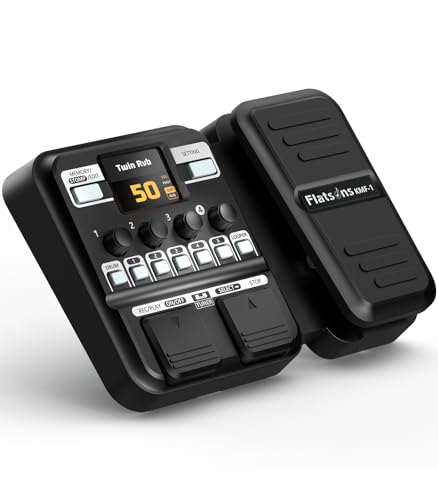
| Effect Modules | 8 modules (Amplifier, Cabinet, Drive, Modulation, Delay, Dynamics, Reverb, Filter) with 77 total effects |
| Amp & Cabinet Models | 18 amp models and 18 cabinet simulators |
| DSP & Sampling | 512-point impulse response (IR) sampling; 32-bit signal processing; TSAC analog circuit simulation |
| Presets & Modes | 50 preset patches; Memory Mode for instant tone switching |
| User Interface & Control | 128×32 LCD display; 5 independent stomp blocks; 2-in-1 expression pedal with 6 assignable effects; Edit Mode for parameter fine-tuning |
| Power & Runtime | Two power modes with 6 AA battery backup; up to 2.5 hours of use |
You’re tossing around ideas for a synth rig that actually sounds alive, and you hit a wall when you try to push it through “typical” guitar pedals. The Flatsons KMF-1 sits on your pedalboard and immediately feels like it understands why you want analog warmth without the hissy, boxed-in vibes.
During setup, the 128×32 LCD glows reassuringly as if it’s reading your mind, and the 8 effect modules stack up like a mini studio in a box. You’ll notice the 18 amp models and 18 cabinet simulators give you instant, usable tones without hunting through endless presets.
What sold me was the DSP depth—512-point IR sampling and 32-bit processing keep things clear as you layer synth textures. You can dial in a loud, convincing cabinet effect or switch to a dry synth path with the cab module off, and the difference is tangible in the room.
In live practice, the Memory Mode lets you flip between tones mid-song without fumbling, which is a real relief when your set hinges on quick tonal shifts. The 50 preset patches feel approachable enough for a new user, yet you can still dive into Edit Mode for precise parameter tweaks.
The Stomp Mode setup with 5 independent blocks means you can sequence classic effects in almost any order, which is perfect for shaping pads or plucky leads without fighting the interface. The 2-in-1 expression pedal adds another layer of control, so you’re not juggling multiple pedals to get the same result.
There are practical little reminders, like enabling cab simulation with studio monitors or headphones to avoid phasey double-cab sounds. And the built-in 30s looper and 42 drum rhythms give you quick ideas when inspiration strikes and you’re on the go.
Battery-powered operation is handy for outdoor jams, and the two power modes keep you flexible. Overall, the KMF-1 feels like a thoughtful bridge between guitar-style effects and synth-friendly tonal shaping.
PROS
– Clear, deep DSP
– Wide amp/cab options
– Flexible live/playback features
CONS
– Slight learning curve
– Battery life could be longer
What Are the Essential Features of Effect Pedals for Synthesizers?
The essential features of effect pedals for synthesizers include:
- Diversity of Effects: A wide range of effects such as reverb, delay, distortion, and modulation are crucial for sound design and creativity.
- Control Options: Intuitive control interfaces, including knobs, switches, and expression pedal inputs, allow for real-time manipulation of sounds.
- Signal Integrity: High-quality components and construction ensure that the original signal is preserved while adding effects, preventing unwanted noise or degradation.
- Compatibility: Effect pedals should be compatible with various synthesizer types and formats, such as mono or stereo outputs, to ensure versatility in setups.
- Build Quality: Sturdy construction is important for durability, especially for live performances, where pedals may be subjected to frequent foot traffic and handling.
- Power Options: Flexible power supply options, including battery operation and DC power inputs, enhance portability and ease of use in different environments.
Diversity of effects is essential as it enables musicians to experiment with different sounds and textures, enhancing their musical expression and creativity. Synthesizers benefit from effects like reverb to add space, delay for rhythmic complexity, and distortion for grit and edge, allowing for a rich sonic palette.
Control options are vital for live performance and studio work, as they provide musicians with immediate access to tweak sounds on-the-fly. Knobs that control depth, rate, and feedback can significantly alter the character of an effect, making it crucial for expressive playing.
Signal integrity is a key feature that ensures the purity of the sound signal while effects are applied. High-quality components minimize noise and maintain the original tonal characteristics of the synthesizer, which is particularly important for professional use.
Compatibility with various synthesizer types means that effect pedals can be seamlessly integrated into different setups, whether using a modular synth, a keyboard synth, or a desktop unit. This versatility allows musicians to explore a wider range of possibilities without being limited by their gear.
Build quality is a crucial consideration for any effect pedal, especially for performers who rely on them during live shows. Durable construction materials and robust footswitches can withstand the rigors of touring and frequent use, ensuring reliability in all situations.
Power options contribute to the convenience and flexibility of using effect pedals. Musicians often operate in diverse environments, so having the ability to use batteries or external power supplies makes it easier to set up and perform without being tethered to a wall outlet.
How Do Different Types of Effects Influence Synthesizer Sounds?
Different types of effects can significantly shape and enhance synthesizer sounds, leading to unique textures and sonic landscapes. The best effect pedals for synthesizers include:
- Reverb: Reverb effects add a sense of space and depth to synthesizer sounds by simulating the natural reflections that occur in various environments. This can range from subtle room sounds to vast, ethereal halls, allowing for atmospheric layers that enrich the overall sonic experience.
- Delay: Delay pedals create echoes of the original sound, which can be adjusted in time and feedback to produce rhythmic patterns or ambient washes. This effect can enhance melodies, create a sense of movement, and add complexity to musical phrases, effectively transforming simple tones into intricate soundscapes.
- Distortion/Overdrive: Distortion and overdrive pedals introduce harmonic content and grit to synthesizer sounds, often making them more aggressive and powerful. These effects can be particularly useful in genres like electronic and rock, where a more pronounced and edgy sound is desired.
- Chorus: Chorus effects duplicate the input signal, slightly detuning and delaying it to create a richer, fuller sound, reminiscent of multiple instruments playing in unison. This effect can add warmth and depth to synthesizer patches, making them sound more lush and vibrant.
- Flanger: Flanging is a modulation effect that combines two identical signals, with one delayed by a small and varying amount of time, creating a sweeping, jet-like sound. This effect can add a dynamic and interesting character to synthesizer sounds, perfect for creating movement and texture in a mix.
- Phaser: A phaser effect works by shifting the phase of an audio signal, creating a series of peaks and troughs in the frequency spectrum, resulting in a swirling and whooshing sound. This can enhance synthesizer tones, adding complexity and making them stand out in a mix, particularly in ambient and psychedelic music.
- EQ (Equalization): EQ pedals allow for precise control over the frequency spectrum of synthesizer sounds, enabling users to boost or cut specific frequencies to shape their tone. This is essential for carving out space in a mix, ensuring that the synthesizer sits well alongside other instruments, and emphasizing desired characteristics of the sound.
- Compression: Compression pedals help to control the dynamic range of synthesizer sounds by reducing the volume of loud signals and boosting quieter ones. This effect can add sustain, maintain a consistent volume level, and enhance the punchiness of sounds, making them more cohesive in a musical context.
Which Effect Pedals Are Most Effective for Synthesizers?
When it comes to enhancing synthesizers, the following effect pedals are considered the best:
- Reverb Pedals: Reverb adds depth and space to sounds, making them feel more immersive. High-quality reverb pedals can simulate different environments, from small rooms to vast halls, enriching the overall sonic landscape of a synthesizer.
- Delay Pedals: Delay creates echoes that can transform a simple sound into complex textures. By adjusting feedback and delay time, musicians can create rhythmic patterns or ethereal soundscapes, adding dimension to their synthesizer output.
- Distortion/Overdrive Pedals: These pedals can introduce grit and character to a synthesizer’s sound, making it more aggressive and powerful. Distortion and overdrive can help synth leads cut through a mix, providing a raw edge that is particularly effective in genres like rock and electronic.
- Chorus Pedals: Chorus effects create a fuller sound by duplicating the signal and slightly delaying it, which results in a shimmering, lush texture. This effect is especially useful for adding warmth and richness to pads and arpeggios, making them more engaging and dynamic.
- Filter Pedals: Filter pedals can dramatically shape the tonal qualities of a synthesizer by emphasizing or cutting specific frequency ranges. These pedals can be used for creative modulation effects, allowing for sweeping changes that bring life and movement to static sounds.
- Modulation Pedals: Modulation effects like phasers and flangers introduce movement and complexity to sounds, creating swirling, dynamic textures. These effects are particularly useful for evolving sounds and can help synths stand out in a mix by adding a sense of motion.
- Looper Pedals: Loopers allow musicians to record and layer sounds in real-time, enabling complex compositions to be built on the fly. This is particularly useful for live performances, where a synthesizer can create a foundation that is then elaborated upon with additional layers and effects.
How Can Modulation Pedals Enhance Your Synthesis?
Modulation pedals can significantly enhance your synthesis by adding depth and movement to your sounds, creating a richer auditory experience.
- Chorus Pedals: Chorus pedals create a lush, shimmering effect by duplicating the original signal and slightly detuning it. This effect simulates the sound of multiple instruments playing in unison, making synthesized sounds feel fuller and more dynamic.
- Flanger Pedals: Flanger pedals produce a sweeping, jet-like sound by delaying the signal and modulating it. The result is a distinctive, swirling effect that can add an otherworldly quality to synth lines and pads, enhancing the sense of space in your music.
- Phaser Pedals: Phaser pedals work by splitting the signal and altering the phase of one part, then mixing it back with the original. This creates a series of peaks and troughs in the frequency spectrum, resulting in a smooth, sweeping effect that can add depth and interest to your synthesized tones.
- Tremolo Pedals: Tremolo pedals modulate the amplitude of the sound, creating a rhythmic pulsing effect. This can add a captivating groove to synth sounds, making them feel more alive and engaging, especially when synced with the tempo of your track.
- Vibrato Pedals: Vibrato pedals modulate the pitch of the sound, creating a gentle rise and fall that adds expressiveness. This effect can be particularly effective on lead synth lines, giving them a more human-like quality, which can enhance emotional delivery in your music.
- Ring Modulator Pedals: Ring modulators create unique, metallic sounds by multiplying two signals together, often resulting in complex and harmonically rich textures. This can be particularly useful for creating unconventional soundscapes and experimental tones that stand out in a mix.
- Delay Pedals: While primarily known for echo effects, delay pedals can also be modulated to create ambient textures and rhythmic patterns. By adjusting feedback and modulation settings, you can create lush layers of sound that enhance the overall atmosphere of your synthesizer compositions.
What Are the Benefits of Using Reverb and Delay on Synths?
Texture and Interest: Using these effects can add richness and complexity to otherwise flat sounds, making them more engaging and dynamic. The layering of delayed signals or the lushness of reverb can turn basic synth tones into captivating soundscapes that hold the listener’s attention.
Creative Sound Design: Reverb and delay can be manipulated creatively to produce unique soundscapes, transforming standard synth patches into something extraordinary. Experimenting with feedback, modulation, and other parameters can lead to innovative sounds that push the boundaries of traditional synthesis.
How Can You Choose the Right Effect Pedal for Your Synthesizer Setup?
Choosing the right effect pedal for your synthesizer setup involves considering various factors, including sound quality, versatility, and compatibility.
- Reverb Pedals: Reverb pedals add depth and space to your sounds, simulating various environments like halls or rooms. They can enhance synth sounds by creating a sense of atmosphere, making them ideal for ambient music or lush soundscapes.
- Delay Pedals: Delay pedals repeat the input signal at set intervals, creating echoes that can enrich your sound. They can be used for rhythmic textures or to create a sense of movement in your composition, allowing for more dynamic performances.
- Distortion/Overdrive Pedals: These pedals introduce harmonic and inharmonic overtones, adding grit and warmth to your synth sounds. They are particularly useful for genres that require a raw, aggressive sound, helping to make your synthesizer stand out in a mix.
- Modulation Pedals: Modulation effects such as chorus, flanger, and phaser can create vibrant variations in your sound. By manipulating the signal’s pitch or phase, these pedals can impart a swirling, dynamic quality to your synthesizer tones, making them more engaging.
- Filter Pedals: Filter pedals allow you to shape the frequency response of your synth sounds, emphasizing or attenuating certain frequencies. This can be particularly effective for creating sweeping effects or adding character to a sound, making it a favorite among electronic musicians.
- Compressor Pedals: Compressors help to even out the dynamics of your synth sounds, ensuring that the volume levels are consistent. This can enhance the overall clarity and presence of your sound, making it particularly useful in live settings or dense mixes.
- Looper Pedals: Looper pedals enable you to record and layer sounds in real-time, which can be invaluable for creating complex musical ideas on the fly. This functionality encourages experimentation and can transform your live performances into immersive experiences.
What Tips and Tricks Can Improve Your Use of Effect Pedals with Synthesizers?
Utilizing effect pedals with synthesizers can enhance your sound and creativity; here are some tips and tricks to improve that experience:
- Choose the Right Pedals: Selecting pedals that complement your synthesizer’s sound is crucial. Look for modulation effects like chorus or phaser, which can add depth, or delays and reverbs that create spaciousness in your sound.
- Signal Chain Order: The order in which you connect your pedals can significantly affect your sound. Experimenting with the placement of distortion, modulation, and time-based effects can yield unique textures and help you find the best sonic combinations.
- Use Loopers: Incorporating a looper pedal can allow you to build layers and create complex soundscapes. This can be particularly effective for live performances, enabling you to create a rich musical foundation to build upon.
- Adjust the Levels: Pay attention to the input and output levels of your pedals, as mismatched levels can lead to unwanted noise or distortion. Properly adjusting these levels ensures a cleaner sound and maintains the dynamics of your synthesizer.
- Utilize Expression Pedals: Many effect pedals have inputs for expression pedals, allowing real-time control over parameters like delay time or modulation depth. This can enhance your performance by adding an expressive layer to your sound manipulation.
- Try Different Power Sources: The type of power supply you use can affect the performance of your pedals. Using isolated power supplies can reduce noise and interference, ensuring a cleaner signal chain for your synthesizer effects.
- Experiment with Wet/Dry Mix: Adjusting the wet/dry mix on your pedals allows you to control how much of the effect is blended with your original sound. This can help maintain clarity while still adding the desired effects, particularly helpful in live settings.
- Take Advantage of MIDI Control: If your pedals support MIDI, utilize this feature for syncing effects with your synthesizer’s tempo or triggering effects at specific points in your performance. MIDI control can greatly enhance your flexibility and creativity.