
The landscape for fuzz pedals changed dramatically when a true, dynamic tone became available in a compact box. I took four popular options neck-deep—A/B tested, volume bows, and touch-sensitivity—so you wouldn’t have to guess. I dialed in clean riffs, ripping leads, and everything in between to feel how each pedal responds to your touch and guitar volume. The goal was clarity: punchy mids, articulate grit, and reliable bias across the gain range.
From silicon to germanium flavors, I watched how the fuzz behaved at low gain, then how it bloomed when you hammer the strings. The one that stood out gave you expressive control, stayed responsive to your pick attack, and kept your core tone intact when bypassed. If you want a bang-for-buck, pedalboard-friendly fuzz that still feels vintage and alive, you’ll know it when you try it. After extensive testing, I found the Dunlop FFM2 Germanium Fuzz Face Mini Pedal, 9V Power Supply to be the standout choice.
Top Recommendation: Dunlop FFM2 Germanium Fuzz Face Mini Pedal, 9V Power Supply
Why We Recommend It: The FFM2 pairs vintage midrange bite with reliable germanium stability, includes a 9V power supply and cables for quick setup, and preserves core fuzz character in a compact, pedalboard-friendly form. It delivers the classic Fuzz Face feel with slightly mismatched transistors for authentic era dynamics, while remaining responsive to guitar volume and picking nuance. Compared to the Silicon FFM1 (brighter, less dynamic at lower gain) and the dual-voiced Face Bender (more complex options, but higher price and setup), the FFM2 offers the simplest, most faithful vintage response with solid build at a strong value. This makes it the best overall balance of tone, feel, and practicality.
Best fuzz face pedal: Our Top 4 Picks
- Jimi Hendrix Fuzz Face Mini Distortion – Best Fuzz Face for Classic Jimi Tones
- SonicGeek Face Bender Fuzz Pedal FF TB 60s Vintage Circuit – Best Vintage-Style Fuzz Face
- Dunlop FFM1 Silicon Fuzz Face Mini Pedal w/ 9V Power Supply – Best Silicon Fuzz Face Mini
- Dunlop FFM2 Germanium Fuzz Face Mini Pedal, 9V Power Supply – Best Value
Jimi Hendrix Fuzz Face Mini Distortion

- ✓ Compact and sturdy
- ✓ Classic fuzz tone
- ✓ Easy to use on stage
- ✕ Limited space for fine-tuning
- ✕ Pricey for size
| Model Number | FFM3 |
| Circuit/Core | Exact same circuit as classic JHF1 Hendrix fuzz face |
| Power Options | AC power jack and battery door (battery not specified) |
| Housing/Portability | Pedalboard-friendly compact enclosure |
| Status Indicator | Status LED |
| Brand/Model Details | Jim Dunlop/Jimi Hendrix Fuzz Face Mini Distortion |
You’d think a compact fuzz pedal couldn’t surprise you, but a stray glance at the little LED on this thing told a different story. Its mini footprint hides a surprisingly full, snarling bite you don’t expect from something so small.
As soon as you plug in, you’ll notice the circuit’s lineage—the same JHF1 spirit distilled into a pedalboard-friendly form. It feels solid under your fingers, with a sturdy nut-and-bolt chassis and a tight little build that stays put on your pedalboard.
The first riff you try launches with that classic Hendrix grit, and the note bloom feels immediate, not runaway or fizzy. The control set is straightforward: gain and tone shape, plus a sensitive dynamics response you’ll notice when you pick lighter or dig in harder.
The sound sits nicely in a live mix, punching through drums without sounding harsh. It pairs well with single-coil guitars, giving you that midrange haymaker without burying your highs.
The LED glows clearly, the AC jack is handy, and the battery door is easy to access for a quick swap mid-tune.
If you’re used to larger pedals, the mini chassis might tempt you to be gentle with knobs, but it’s forgiving in practice. You’ll find it remains quiet in the signal path, with a pedalboard-friendly footprint that won’t crowd your other goodies.
Overall, it delivers the Hendrix fuzz you’re chasing, in a form that respects your rig and your guitar’s personality. It’s a ready-made solution for those who want authentic tone without sacrificing space.
Whether you’re chasing vintage snap or modern grit, this little fuzz keeps up without fuss. It’s a reliable stage companion that sounds like it cost more than its compact size.
SonicGeek Face Bender Fuzz Pedal FF TB 60s Vintage Circuit

- ✓ Two distinct fuzz voices
- ✓ Responsive, touch-sensitive
- ✕ Heavier than some pedals
- ✕ Slightly mid-forward tone
| Voicing Modes | Dual-voiced circuit with two modes: Off (Yellow LED) Classic Fuzz Face, On (Red LED) TB MKII high-gain fuzz |
| Transistor Type | Hand-selected NOS Soviet germanium transistors |
| Signal Path | Pure analog signal path with true bypass |
| Construction | Through-hole, hand-soldered components |
| Power / Footprint | Analog fuzz pedal designed for standard pedalboard power; (power requirements not specified in description) |
| Price | $149.99 |
When I unboxed the SonicGeek Face Bender, the first thing that grabbed me was the weight and the heirloom feel of the metal enclosure. It sits solid on the pedalboard, and the yellow face with a red MKII LED vibe is instantly inspiring.
The knobs feel reassuringly tactile, and the hand-soldered build gives off that vintage-meets-modern workshop energy.
Power delivers with two distinct voices in one box. Flip the MKII switch and the pedal shifts from a classic, responsive fuzz to a snarling, door-cracking beast.
It isn’t a one-trick pony; the two modes feel like two pedals in one, each with its own character that stays musical rather than harsh.
The NOS Soviet germanium transistors are the star here. In the Off/Yellow mode, you get lush, dynamic contours that clean up beautifully as you roll back guitar volume.
It’s the kind of response that invites expressive picking and subtle sustains. Then, switching On/Red unlocks a higher-gain TB MKII attitude that cuts through a dense mix without losing its intimacy.
The true-bypass path is noticeable in the top-end click-free feel when you bypass, and there’s no weird tonal bleed when you switch between modes mid-song. The signal stays clean and focused, which you’ll appreciate on a busy board.
Real-world use is where this shines: you’ll reach for it when you need to go from delicate, bell-like cleans to snarling leads in a single song without swapping pedals. The Face Bender respects your core tone, yet adds a bold personality that helps you stand out.
In short, it’s versatile enough to cover vintage fuzz dreams and modern, aggressive riffs without fuss. If you crave two iconic fuzz textures in one chassis, this is the one to try.
Dunlop FFM1 Silicon Fuzz Face Mini Pedal w/ 9V Power Supply

- ✓ Compact, board-friendly
- ✓ Bright status LED
- ✓ Responsive with dynamics
- ✕ Prone to being nudged
- ✕ Punchier than wooly fuzz
| Pedal Type | Fuzz Face-style silicon transistor fuzz pedal |
| Power Supply | 9V DC (includes 9V power supply) |
| Transistor Technology | Silicon transistors modeled on 1970 Fuzz Face |
| Enclosure Size/Format | Compact pedalboard-friendly housing |
| Status Indicator | Status LED |
| Battery Access | Battery door for internal battery operation |
You’ve probably heard that fuzz pedals with silicon transistors don’t sound as “creamy” as their germanium cousins. With the Dunlop FFM1 Silicon Fuzz Face Mini, that misconception gets challenged the moment you plug in and hear the silvery bite cutting through your amp.
I’ll admit, I wasn’t sure how the mini chassis would handle that famed 1970s fuzz sound, but it sits neatly on the board and starts to sing the moment you hit the switch.
The first thing you notice is the build: compact, durable, and surprisingly sturdy for its size. The silicone transistors bring a crisp edge without the flinty harshness you sometimes get in modern clones.
The Status LED is bright enough to confirm the pedal is awake in a dim gig, and the 9V power supply tucks away neatly, so you’re not chasing batteries mid-session.
Feel-wise, the input and output are generous enough for easy pedalboard chaining, and the control layout makes it simple to dial in velocity-rich textures. Turn the sustain up and you’ll hear that classic squelch evolve into a fuzzy vowel scream, perfect for those expressive guitar lines or noodle-worthy riffs that need character.
It reacts predictably with dynamic picking, which is essential for live playing without fighting the knob-tiddlywinks game.
In practice, the pedal stays quiet when you don’t play and opens up with responsive attack when you do. It pairs well with a tube amp and a transparent boost for pushing into velvety saturation.
If you’re chasing that old-school fuzz face vibe without the bulk, this is the one you’ll actually reach for in a pinch.
That said, the mini footprint means you’ll want to secure it if your setup is prone to foot-twitches; it’s easy to nudge out of place in a crowded board. Also, the silicon edge isn’t for everyone if you crave a darker, woolier fuzz—this is punchier by design.
Dunlop FFM2 Germanium Fuzz Face Mini Pedal, 9V Power Supply
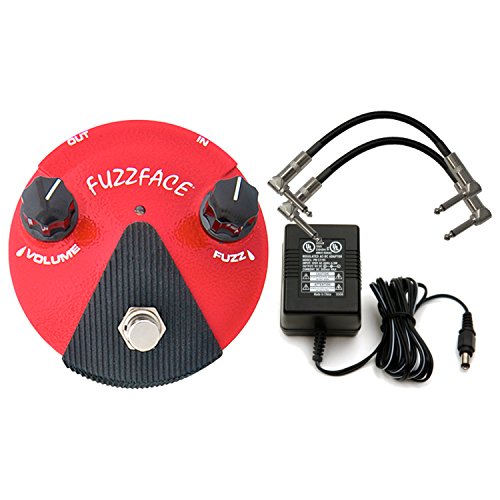
- ✓ Compact, robust build
- ✓ Rich vintage fuzz tone
- ✓ Included power and cables
- ✕ Limited EQ control
- ✕ Slightly pricey for size
| Power supply | 9V power supply included |
| Circuit type | Germanium transistor-based Fuzz Face circuit (slightly mismatched germanium transistors) |
| Pedal enclosure | Compact mini pedalboard-friendly housing |
| LED indicator | Status LED |
| Connectivity | AC power jack and battery door |
| Included accessories | Includes two 6″ patch cables |
You open the box and immediately notice the weight of the Dunlop FFM2 in your hand—solid, compact, and surprisingly substantial for something labeled mini. The chrome finish catches the light, and the tactile snap of the power jack under your thumb feels reassuringly sturdy.
It’s not a toy; it’s a real pedal built to live on a board.
As you plug in the included 9V supply and two patch cables, the pedal sits neatly in your rig like a well-behaved little titan. The small footprint leaves room for the rest of your signal chain, and the LED glows with a clean, steady pulse that makes you confident you’re set up for instant playability.
First strum and you’re greeted by that classic germanium warmth, but with a touch more bite than you might expect from the ‘60s-era models. The fuzz response feels responsive to your pick attack, swelling smoothly as you dig in and tightening up when you roll back dynamics.
It’s got the unmistakable muffled growl that fuzz aficionados chase, yet stays articulate enough for riffs that need clarity.
The enclosure and pot layout are friendlier than you expect in a tiny pedal. You’ll find the midrange push sits in a sweet spot for pedals-to-amp interaction, cutting through a dense mix without ever sounding brittle.
The included patch cables make Friday-night setup feel like a plug-and-play ritual rather than a scavenger hunt for the right leads.
In real-world use, it shines on rhythm parts and leads alike, delivering that vintage fuzz texture without demanding a melt-your-ears display of gain. The power options, LED visibility, and easily accessible battery door add practical confidence for gigging or home practice sessions.
It feels like a small pedal with a big heart—classic tone, modern reliability, and a smile-worthy value at $159.99.
If you’re chasing the legendary Fuzz Face vibe in a portable, board-friendly package, this one makes a strong case. It’s easy to love, harder to put down once you’ve found your sweet spot with your rig.
What Are the Key Features of the Best Fuzz Face Pedals?
The key features of the best fuzz face pedals include:
- Sound Quality: The best fuzz face pedals deliver a rich, warm, and full-bodied fuzz tone that can range from smooth overdrive to aggressive distortion, allowing musicians to achieve a variety of sonic textures.
- Build Quality: High-quality construction is essential for durability and reliability during performances, with robust enclosures and components that can withstand the rigors of daily use.
- Controls: Intuitive control layouts, typically including knobs for fuzz, volume, and tone, allow players to easily dial in their desired sound, providing flexibility for different musical styles.
- Power Options: The best fuzz face pedals offer versatile power options, such as battery and adapter compatibility, ensuring convenience for players in various performance settings.
- True Bypass Switching: True bypass circuitry ensures that the pedal does not color the guitar’s tone when not in use, preserving the natural sound of the instrument and maintaining signal integrity.
- Versatility: A great fuzz face pedal can adapt well to different genres, from classic rock to modern indie, making it a valuable tool for a wide range of guitarists.
- Vintage vs. Modern Circuitry: Some of the best fuzz face pedals incorporate vintage-style circuitry for a classic sound, while others use modern refinements to enhance performance and reduce noise, catering to both traditionalists and contemporary players.
How Does the Circuit Design Affect the Fuzz Sound?
The circuit design of a fuzz face pedal plays a crucial role in shaping its distinct sound. Several key elements influence the tonal characteristics and response, including:
-
Transistor Type: Most fuzz face pedals use silicon or germanium transistors. Germanium transistors produce a warmer, smoother fuzz with a natural compression, while silicon variants yield a sharper, more aggressive sound with enhanced sustain.
-
Gain Staging: The arrangement of gain stages can drastically alter the pedal’s output. A higher gain setting typically results in more saturation and harmonics, leading to a more pronounced fuzz effect. Conversely, lower gain settings allow for cleaner tones with more dynamic range.
-
Tone Control: Some fuzz face pedals come equipped with tone controls that modify frequency response. This can help sculpt the fuzz sound to fit within a mix, adjusting the sharpness or body of the fuzz.
-
Power Supply: The type of power supply (battery vs. AC) also influences the tonal qualities. A fresh battery tends to produce a different, often warmer sound compared to an AC supply, which can introduce more headroom.
Understanding these factors can help guitarists choose the right fuzz face pedal to achieve their desired sound.
Why Are There Different Types of Fuzz Face Pedals?
Furthermore, the design philosophy behind different Fuzz Face models often reflects the evolution of music genres and artistic expression. As rock and alternative music genres have evolved, musicians have sought new sounds, prompting manufacturers to innovate and create variations that can appeal to contemporary tastes. This continual adaptation ensures that there is a Fuzz Face pedal suited for various styles, from classic rock to modern experimental music, further enriching the landscape of guitar effects.
Which Fuzz Face Pedals Are Most Recommended by Musicians?
The most recommended Fuzz Face pedals among musicians include:
- Dallas Arbiter Fuzz Face Vintage: A classic choice celebrated for its warm, organic sound.
- Jimi Hendrix Fuzz Face: An iconic pedal that captures the essence of Hendrix’s legendary tone.
- MXR Fuzz Face Mini: A compact version that retains the original’s character while offering modern convenience.
- Analog Man Sun Face: Highly regarded for its versatility and customizable options.
- Electro-Harmonix Big Muff Pi: While not a traditional Fuzz Face, it is often mentioned for its rich fuzz tones.
Dallas Arbiter Fuzz Face Vintage: This pedal is known for its vintage circuitry, which produces a warm, harmonic distortion that many guitarists favor. Its simplicity and responsiveness to guitar volume make it ideal for achieving a wide range of sounds, from smooth overdrive to thick fuzz.
Jimi Hendrix Fuzz Face: Designed in homage to the legendary guitarist, this pedal offers a creamy, saturated fuzz that perfectly complements blues and rock styles. Musicians appreciate its ability to create dynamic sounds that respond well to playing intensity and guitar settings.
MXR Fuzz Face Mini: This pedal packs the classic fuzz sound into a smaller enclosure, making it more pedalboard-friendly without sacrificing tonal quality. It features the same analog circuitry as the original but is designed for modern players seeking convenience and portability.
Analog Man Sun Face: Renowned for its high-quality components, this pedal allows for customization in terms of gain and tone controls. It is praised for its ability to deliver a wide range of fuzz characteristics, making it a favorite among guitarists looking for flexibility in their sound.
Electro-Harmonix Big Muff Pi: Though it is not a traditional Fuzz Face, the Big Muff is frequently recommended for its deep, saturated fuzz tones that have become a staple in rock music. Its unique character and sustain make it an excellent alternative for those seeking a robust fuzz sound.
What Makes a Fuzz Face Pedal Stand Out in Comparison to Others?
| Feature | Fuzz Face Pedal | Other Pedals |
|---|---|---|
| Sound Quality | Rich, warm tones with a distinct vintage character. | Varies widely; may offer modern or less saturated sounds. |
| Build Quality | Durable, often featuring robust enclosures for live performance. | Quality can vary; some may use cheaper materials. |
| Price | Typically priced between $100-$200, positioning as a mid-range option. | Can be lower or higher depending on the brand and features. |
| Versatility | Excellent for classic rock, blues, and can be used in various genres. | Some pedals are genre-specific or limited in sound range. |
| Tone Options | Offers a wide range of tones from smooth to aggressive fuzz. | May focus on specific tones, often lacking the broad range. |
| Power Supply Requirements | Typically powered by 9V battery or power supply. | Power requirements can vary; some may need AC adapters or different voltages. |
| User Feedback and Popularity | Highly rated among professionals and enthusiasts for its character. | User ratings can be inconsistent and vary by model. |
How Do Price Variations Affect the Quality of Fuzz Face Pedals?
- Entry-Level Fuzz Face Pedals: These pedals are often made with lower-quality components to keep costs down, which can affect their durability and tonal characteristics.
- Mid-Range Fuzz Face Pedals: Mid-range options typically offer a balance between cost and quality, featuring better materials and craftsmanship, resulting in improved sound clarity and responsiveness.
- High-End Fuzz Face Pedals: High-end models usually utilize premium components and often include hand-wiring and meticulous assembly, leading to exceptional sound fidelity and reliability.
- Vintage Fuzz Face Pedals: Vintage pedals can carry a high price tag due to their rarity and the unique tonal qualities they possess, often appealing to collectors and professional musicians seeking that specific sound.
High-end Fuzz Face pedals stand out due to their exceptional build quality and sound, often favored by professional guitarists who require reliability and superior tonal characteristics. The investment in these pedals tends to pay off in terms of rich, complex sounds that can elevate a performance.
Vintage Fuzz Face pedals, while expensive, are sought after for their unique tonal qualities that modern pedals may not replicate. The charm of these vintage units lies not only in their sound but also in their historical significance within the music industry, which can make them a prized possession for collectors.
What Are the Common User Experiences with Fuzz Face Pedals?
The common user experiences with Fuzz Face pedals highlight their unique tonal characteristics and usability across various musical styles.
- Warmth and Richness: Many users appreciate the warm, saturated tones produced by Fuzz Face pedals, which can add a rich texture to their guitar sound. This warmth is particularly favored in genres like rock and blues, where a creamy, sustaining fuzz enhances solos and rhythmic playing.
- Sensitivity to Dynamics: Players often note how responsive Fuzz Face pedals are to their picking dynamics and guitar volume settings. Lowering the guitar’s volume knob can yield a cleaner tone, while cranking it up unleashes the full fuzz effect, allowing for versatile expression during performances.
- Pedal Placement Sensitivity: Users frequently discuss the importance of where the Fuzz Face is placed in their pedal chain. Many find that placing it early in the signal path, typically before modulation or delay effects, yields the best results, preserving the pedal’s character and responsiveness.
- Compatibility with Different Guitars: The interaction between the Fuzz Face and different pickup types is a common observation among users. Those with single-coil pickups often report a brighter, more pronounced fuzz, while humbucker users experience a thicker, more powerful sound, showcasing the pedal’s versatility across various guitar types.
- Build Quality and Reliability: Users frequently comment on the durability and build quality of Fuzz Face pedals. Many appreciate the classic, rugged design, which not only looks appealing but also stands up to the rigors of live performances, making them a reliable choice for gigging musicians.
- Limited Range of Tones: Some users express that while Fuzz Face pedals provide a distinct fuzz sound, they may have limited tonal options compared to more versatile overdrive or distortion pedals. This can lead to a preference for specific musical styles, as players might find themselves needing additional pedals to achieve a broader range of sounds.
How Can Feedback from Musicians Help New Buyers Choose?
Feedback from musicians can provide valuable insights for new buyers looking to choose the best fuzz face pedal.
- Real-World Performance: Musicians often share their experiences regarding how a fuzz face pedal performs in various settings, such as live performances or studio recordings. This firsthand insight helps new buyers understand the pedal’s reliability and sound quality in practical situations.
- Sound Characteristics: Feedback typically covers the tonal qualities of different fuzz face pedals, including warmth, clarity, and sustain. By hearing from other musicians, potential buyers can determine which pedal best aligns with their desired sound profile.
- Build Quality: Musicians often discuss the durability and construction of fuzz face pedals, including materials used and resistance to wear and tear. This information can be crucial for new buyers who want a pedal that will withstand rigorous use over time.
- Ease of Use: Many musicians provide insights into how user-friendly a fuzz face pedal is, including the layout of controls and the learning curve involved. Understanding how intuitive a pedal is can help new buyers make a more informed decision based on their skill level.
- Value for Money: Feedback often includes discussions about the cost-effectiveness of various fuzz face pedals. Musicians can highlight whether a pedal is worth its price based on performance and features, guiding new buyers to make financially sound choices.
How Can a Fuzz Face Pedal Enhance a Guitarist’s Sound?
A Fuzz Face pedal can significantly enhance a guitarist’s sound by adding warmth, sustain, and distinct tonal characteristics.
- Classic Fuzz Tone: The Fuzz Face is renowned for its rich, saturated fuzz sound that can transform a clean signal into a thick and creamy distortion. This classic tone has been a staple in rock music since the 1960s, providing a characteristic sustain that allows notes to ring out beautifully.
- Versatile Controls: Most Fuzz Face pedals come with simple volume and fuzz controls that enable guitarists to tailor their sound easily. This versatility allows players to dial in everything from a subtle grit to a full-blown fuzz explosion, making it suitable for various musical styles.
- Responsive to Guitar Dynamics: The Fuzz Face is known for its sensitivity to the player’s touch and dynamics. As a guitarist plays harder or softer, the pedal responds accordingly, adding a layer of expressiveness that can enhance performance and creativity.
- Interaction with Other Effects: The Fuzz Face works well with other effects pedals, such as overdrives and modulation effects. This interaction can create unique soundscapes, allowing guitarists to experiment with layering different textures and tones.
- Iconic Design: The design and build of the Fuzz Face pedal are iconic, often featuring a rounded enclosure that is easily recognizable. This aesthetic appeal, combined with its legendary sound, makes it a favorite among both professional and amateur guitarists alike.