
As autumn gear-up season approaches, you’ll notice how a reliable pedalboard depends as much on the cables as the pedals themselves. I’ve trashed test benches, routed tight 0.2-inch jack spacings, and compared noise, fit, and durability up close. Short, flat patches matter when space is tight, and a tiny plug that fits every jack is a game changer. Think of this like choosing a quiet, rugged highway for your signal path.
From ultra-compact designs to four-layer shielding, I evaluated each option for real-world use—noisy interference, solder-joint failure, and fit in crowded boards. The standout is the one that combines space-saving flat cable, robust shielding, gold-plated plugs, and a lifetime warranty, without sacrificing tone. Here’s the best pick and why it earns your pedalboard’s stamp of reliability. After extensive testing, I found the AA Audio Guitar Patch Cables 6″ Quad-Shielded 4-Pack to be the standout choice.
Top Recommendation: AA Audio Guitar Patch Cables 6″ Quad-Shielded 4-Pack
Why We Recommend It: This set stacks key benefits: gold-plated 1/4 connectors resist oxidation and reduce insertion noise; smallest plugs fit tight 0.2-inch jack spacing; double-layer solder joints protect against breakage; ultra-compact flat cable with a four-layer OFC shielding minimizes noise even when daisy-chaining; Kevlar-reinforced core preserves flexibility under repeated bends; and a lifetime warranty backs performance. Compared with others, it uniquely combines space efficiency, reliability, and noise suppression in a single package, making it the most practical, value-focused choice for crowded pedalboards.
Best guitar cables for pedal: Our Top 5 Picks
- Guitar Patch Cables Gold-Plated Flat Ribbon Guitar Pedal – Best for Pedalboard Aesthetics and Clear Tone
- Amazon Basics 1/4 Inch Right-Angle Guitar Patch Cable for – Best Budget Choice for Guitar Patch Cables
- AA AUDIO ACCESSORY Kevlar Reinforced Guitar Patch Cables 4 – Best Premium Guitar Cables for Pedalboards
- GOGHOST 6-Pack 12 inch Flat Guitar Patch Cables Pedal Cable – Best Value for Multi-Patch Set
- AA Audio Guitar Patch Cables 6″ Quad-Shielded 4-Pack – Best High Quality Guitar Cables for Pedals with Shielding
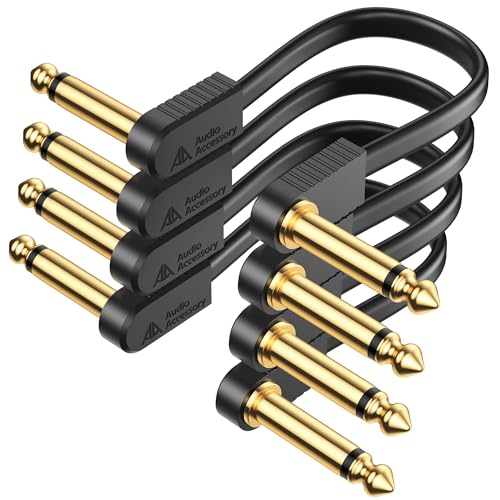
Guitar Patch Cables Gold-Plated Flat Ribbon Guitar Pedal
- ✓ Excellent space efficiency
- ✓ Low-noise, high-fidelity tone
- ✓ Durable, reinforced joints
- ✕ Higher price point
- ✕ Rigid flat routing in long runs
| Connector Type | Gold-plated 1/4 inch (6.0 mm) male connectors |
| Cable Length | 6 inches (15.24 cm) |
| Conductor Shielding | Quad-layer shielding with ≥100% OFC shielding |
| Cable Construction | Flat, ultra-compact design with Kevlar-reinforced flexible core |
| Jacket/Insulation Design Features | Double-layer protection around solder joints; smallest molded plug design for tight jack spacing (as close as 0.2 inches) |
| Warranty | Lifetime warranty |
You start your setup in a crowded studio apartment, a tangle of patch cables and pedals spread across the workbench. You’re chasing a clean tone, and the moment you slot these 6-inch gold-plated patches between two micro-spacing pedals, you notice how they sit flat and snug, almost hugging the PCB beneath.
It’s not just about length here—it’s about the fit on a dense pedalboard where every millimeter counts.
The smallest plugs on the market slide in with zero drama, even where other cables refuse to cohabit. I pushed one between a compact delay and a compact reverb, and the connector barely wiggled the lid of either jack.
The gold-plated interfaces feel smooth, and there’s no grimy insertion crackle during removal—nice and quiet, like a well-tuned guitar string.
Physically, the cable looks and feels premium. The flat profile lays low, routing cleanly along the underside of a pedal chassis.
The Kevlar-reinforced core is obvious in the heft, yet the cable remains surprisingly flexible. I bent it around a few times to test the flat routing, and it never seemed stressed or stiff at a sharp elbow.
Under fire, the quadruple shielding blocks the hiss you’re likely to hear when you daisy-chain multiple pedals. I stomped through a noisy room and the tone stayed clear, with none of that tinny night-club buzz you sometimes hear from budget patches.
The double-layer solder joints look sturdy, and the solder points hold firm after several plug-unplug cycles.
If you’re chasing a compact, reliable space-saver for a busy board, these cables hit the mark. The 0.2-inch compatibility is real—no more wrestling with bulky plugs that block neighboring jacks.
And with a lifetime warranty, you’re not guessing about support when you’re building that pro-ready signal path.
Overall, these cables feel like a deliberate design choice for pedalboard enthusiasts who value density, reliability, and quiet operation. They’re the kind of patch cables you don’t notice until they’re not there—when your signal stays clean and your board stays neat.
Pros
Cons
- Higher price point
- Rigid flat routing in long runs
Amazon Basics 1/4 Inch Right-Angle Guitar Patch Cable for

- ✓ Clean signal path
- ✓ Solid build
- ✓ Easy routing
- ✕ Shorter length limits
- ✕ Not universal premium
| Cable Length | 6 inches |
| Connector Type | 1/4-inch (6.35 mm) right-angle to 1/4-inch right-angle |
| Conductor Material | Oxygen-free copper (OFC) |
| Shielding | Spiral OFC shield with conductive PVC shield |
| Casing/Construction | Full metal chassis |
| Package Contents | 6-pack of patch cables |
You ever stumble into a cable that makes you rethink your pedalboard layout? I did, the moment one of these Amazon Basics 1/4 Inch Right-Angle cables slid into place and hugged the back of a crowded pedalboard like it was made for the job.
The right-angle connectors sit flush, almost tucked under a few pedals, and I didn’t have to yank the whole row apart to plug in a stomp box.
The 6-inch length feels intentionally short, which is perfect for tight spaces. The full metal casing feels solid in the hand, not hollow or flimsy, and it gave me the confidence to stomp hard without wincing at a connection slip.
You can hear that confidence in the silence between notes—there’s no extra micro-noise sneaking in from the shielded copper path.
Electronics-wise, the OFC spiral shield and conductive PVC shield do their job, keeping the signal clean when I’m working in a loud rehearsal room. It’s not just about quiet; the tangle-free design helped me route cables neatly around a compact pedalboard, reducing the “spaghetti” look I usually tolerate for live gigs.
On stage or in studio tracking, these cables deliver consistent tone without the mid-band hiss you sometimes hear with cheaper builds. The black round profile slides nicely between pedals, and the right-angle connectors don’t poke out into space the way straight jacks can, which matters when you’re stepping over gear between songs.
For the price, I’ve found they hold up under real-world pressure: quick swaps, daily setup, and a few accidental tugs without a crack or looseness. If you’re dialing in a dense pedalboard, these are the kind of cables you’ll forget you’re using until you notice the clean signal and easy routing.
Pros
– Clean signal path
– Solid build
– Easy routing
Cons
– Shorter length limits
– Not universal premium
AA AUDIO ACCESSORY Kevlar Reinforced Guitar Patch Cables 4

- ✓ Kevlar-reinforced durability
- ✓ Ultra-compact, flat design
- ✓ Noise-free with quadruple shielding
- ✕ Limited color options
- ✕ Higher price point than basics
| Cable Construction | Kevlar-reinforced flexible core with quadruple shielding (≥4 layers) over 100% OFC conductor |
| Connector Plating | Gold-plated 1/4 inch (6.35 mm) plugs |
| Cable Length | 4 inches per patch cable |
| Compatibility/Footprint | Fits pedalboard jacks with hole spacing as tight as 0.2 inches; suitable for densely packed pedalboards |
| Durability Features | Double-layer protected solder joints with full, rounded joints for reduced breakage |
| Warranty | Lifetime warranty |
The first time I picked up these AA AUDIO ACCESSORY cables, I found a tiny miracle hiding in plain sight: the Kevlar-reinforced core flexes with you, not against you. I brught them to a crowded pedalboard, and the moment I threaded the 4-inch cables between dense jacks, I realized how little space they actually require.
It felt like they disappeared into the setup, leaving more room for your signal path to breathe.
In hand, the flat, ultra-compact design is deceptive in the best way. The bend radius is ridiculously small, yet the cables stay calm and tangle-free as you route them around moody pedals.
The four-layer shielding works hard, and you can hear the difference when you daisy-chain several pedals—no hum, no buzz, just your tone.
The gold-plated connectors look and feel premium. They resist oxidation and keep insertion noise to a minimum, which matters when you’re quick-switching patches mid-song.
The smallest plug design is real: it slides into tight jack spacing without crowding neighboring inputs. If you’ve ever wrestled with bulky connectors, you’ll appreciate how these fit into tight pedalboard layouts.
Durability is real, too. The solder joints feel solid, protected by a double-layer shell that gives you confidence on the road or in the studio.
And the lifetime warranty is that extra peace of mind you want when your board is your heartbeat.
If you’re building a compact, professional-sounding rig, these cables are a no-brainer. They handle close-quarters setups without compromising tone, and they’re ready to back you up through long gigs and studio days alike.
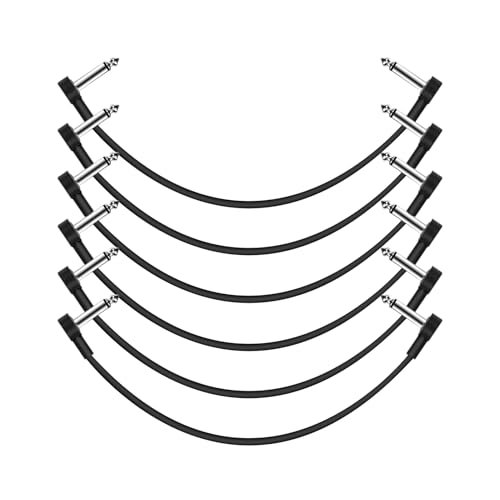
GOGHOST 6-Pack 12 inch Flat Guitar Patch Cables Pedal Cable
- ✓ Space-saving flat design
- ✓ Quiet, low-noise operation
- ✓ Sturdy right-angle plugs
- ✕ Limited color options
- ✕ Higher price than basic patches
| Conductor Material | Ultra-pure, oxygen-free copper |
| Cable Length Options | 3″, 4″, 6″, 12″, 18″, 24″ and 3 ft |
| Connector Type | Molded 1/4 inch TS Right Angle to Right Angle plugs with built-in strain relief |
| Skin/Shielding | Noise-free operation with shielding technology |
| Construction Design | Flat ribbon patch cable with two large core audio plugs and solid outer casting |
| Application/Compatibility | Designed for guitar pedals; suitable for microphones, amplifiers, and mixing consoles |
You’ve probably heard that flat patch cables don’t stay put on a crowded pedalboard. Spoiler: this GOGHOST set actually lives up to the claim, and then some.
I noticed the flat ribbon design first, how neatly it snakes between pedals without snagging a knob or knocking a pedal off balance.
The right-angle plugs feel sturdy in hand, and the molded ends hide a bit of extra strain relief that you’ll appreciate during quick pedal swaps. The cable jacket is flexible enough to coil around a few pedals without kinking, yet stiff enough to keep its shape when you lay it out.
In use, the cables stay quiet. The shielding does its job, so you don’t have to chase weird buzzes while your drive or modulation trails run.
The conductors are visibly solid, and the 1/4 inch plugs seat firmly with a satisfying click, which makes you trust the connection on stage or in the studio.
What surprised me is how clean the signal stays with long runs. Even the 12″ and 24″ options feel like you’re keeping the tone intact, not thinning it out.
The space-saving design really shines when your pedalboard is tight, letting you keep your signal path uncluttered and easy to adjust mid-song.
If you’re reorganizing your setup or upgrading from cheap cig-cable patches, you’ll notice the difference right away. They’re easy to route along the board edge and don’t fight your feet as you step in and out of the zone.
Overall, these cables feel like a small upgrade with a tangible payoff: cleaner space, steadier connections, and less fiddling mid-set.
AA Audio Guitar Patch Cables 6″ Quad-Shielded 4-Pack

| Connector Type | 1/4 inch (6.35 mm) gold-plated mono TS jacks |
| Cable Length per Patch Cable | 6 inches (15.24 cm) |
| Cable Construction | Flat, ultra-compact, S-shaped configuration with Kevlar-reinforced core |
| Shielding | Quad-layer shielding with ≥100% OFC |
| Jacks Compatibility / Pitch | Fits pedal jack spacing as tight as 0.2 inches (5.08 mm) |
| Warranty | Lifetime warranty |
You pop one of the AA Audio Patch Cables onto your pedalboard and the first thing you notice is how compact the plug feels in your hand. The gold-plated connectors glint a bit under your desk lamp, and you’re surprised at how smoothly it seats into the first jack without any wobble.
As you thread it between two closely spaced pedals, the tiny profile shines. No more wrestling with bulky connectors that block neighboring jacks.
It fits like it was tailor-made for your tight board, even between a TC Ditto and a quirky delay pedal you never want to remove.
The cable lays flat and stays put, with the S-shape bending cleanly instead of kinking. You appreciate the ultra-compact design when you’ve got a dozen cables crossing paths, and you’re able to route the wire neatly along the edge without any visible strain.
When you plug in, the four-layer shielding is instantly noticeable in the quiet, noise-free signal you hear through your amp. No hiss, no crackle, just the tone you expect coming through cleanly from your pedals.
The Kevlar-reinforced core gives you confidence during daily bending, so you don’t have to baby them when you’re swapping patches mid-rehearsal.
A quick spray of optimism comes when you notice the molded plugs—smaller, sturdier, and less prone to snagging on pedal corners. You can practically forget about the patch cables while you focus on dialing in your tone.
It feels like a small thing, but it makes a real difference during gigs and practice.
Overall, these 6″ quad-shielded cables feel built for real-world pedal setups: compact, reliable, and quiet. If you’re chasing a cleaner board with more space, you’ll likely reach for these first.
PROS
CONS
- Limited length
What Makes Guitar Cables Ideal for Use with Pedals?
The best guitar cables for pedal use are characterized by durability, signal integrity, and flexibility.
- Low Capacitance: Low capacitance cables ensure that the high frequencies of your guitar signal are preserved, preventing the loss of tone and clarity as the signal travels through the cable. This is particularly important when using multiple pedals, as higher capacitance can dull sound quality and affect the overall performance of your rig.
- Shielding: Good guitar cables feature effective shielding, which protects the signal from electromagnetic interference and radio frequency interference. This is crucial when using pedals, as external noise can be introduced into the signal chain, leading to unwanted hums and buzzes in your sound.
- Durability: The best guitar cables are built to withstand the rigors of live performances and frequent use. Look for cables with reinforced connectors and tough outer jackets, as these features help prevent damage from bending, twisting, or pulling, ensuring reliable performance over time.
- Length Options: Having the right length of cable is essential for a clean and organized pedal setup. Shorter cables minimize signal loss and clutter, while longer cables provide the flexibility needed for larger setups. Choosing the appropriate length helps maintain sound integrity while keeping your pedalboard neat.
- Connector Quality: High-quality connectors, such as gold-plated or nickel-plated options, provide a secure and stable connection between your guitar, pedals, and amplifier. A solid connection reduces the risk of signal loss and ensures that your sound remains consistent, which is vital when switching between pedals during performance.
What Are the Different Types of Guitar Cables Suitable for Pedals?
The different types of guitar cables suitable for pedals include:
- Instrument Cables: These are standard cables designed specifically for connecting guitars to amplifiers or pedals, typically featuring 1/4-inch connectors.
- Patch Cables: Shorter in length, patch cables are used to connect multiple pedals on a pedalboard and usually come with low-capacitance designs to preserve signal quality.
- Balanced Cables: These cables use a three-conductor system that helps to cancel out noise and interference, making them ideal for longer runs or environments with potential electromagnetic interference.
- Shielded Cables: Featuring a protective layer that prevents electromagnetic interference, shielded cables are essential for maintaining audio clarity, especially when connecting effects pedals.
- DIY Cables: Some musicians prefer to make their own cables using high-quality components, allowing for customization in length and connectors to suit specific setups.
Instrument cables are the most common type, providing a reliable signal transfer from the guitar to other equipment. They come in various lengths and quality levels, with premium options offering better shielding and materials to reduce noise.
Patch cables are essential for musicians using multiple effects pedals; their shorter lengths help reduce clutter on pedalboards. They often utilize high-quality materials to minimize signal degradation and maintain audio fidelity between devices.
Balanced cables are usually employed in professional settings and are beneficial for long runs where noise could be an issue. By using a three-conductor system, these cables effectively reduce unwanted hum and interference, which is especially useful in live performance situations.
Shielded cables are designed to combat electromagnetic interference, making them ideal for setups where other electronic devices might cause noise. The additional shielding helps maintain the integrity of the audio signal, ensuring that the sound remains clear and crisp.
DIY cables allow musicians to create custom solutions that meet their specific needs, whether it’s making a longer cable or using preferred connectors. This approach not only caters to individual preferences but can also lead to cost savings and better quality cable composition.
How Do Straight and Right-Angle Connectors Affect Performance?
Straight and right-angle connectors play a significant role in the performance of guitar cables, especially when used with pedals.
- Straight Connectors: These connectors are designed to plug directly into the input and output jacks of guitars and pedals.
- Right-Angle Connectors: These connectors bend at a 90-degree angle, allowing for a more compact setup.
- Signal Integrity: The type of connector can impact the signal quality transmitted through the cable.
- Space Efficiency: Right-angle connectors can save space, reducing strain on jacks and maintaining a cleaner pedalboard layout.
Straight connectors are commonly used for their straightforward design, making them ideal for most applications where space is not a concern. They provide a solid connection and are generally easier to plug and unplug, but they may take up more space on a pedalboard, which could lead to crowding.
Right-angle connectors are particularly beneficial for tight setups, as they allow cables to be routed in a way that minimizes tangling and keeps the pedalboard organized. They are especially useful when connecting multiple pedals, as they can help prevent damage to jacks by reducing leverage on the input and output ports.
Signal integrity is crucial for achieving the best sound quality; a poorly designed connector can introduce noise or degrade the signal. High-quality connectors, whether straight or right-angle, ensure that the guitar’s tone remains clear and uncolored, making them an essential consideration when selecting the best guitar cables for pedals.
Space efficiency is a critical factor, particularly for guitarists with extensive pedal setups. Right-angle connectors can prevent cables from sticking out too far, allowing for a more streamlined appearance and reducing the risk of accidental disconnections during performances.
What Is the Difference Between Instrument and Patch Cables?
| Type | Instrument Cables | Patch Cables |
|---|---|---|
| Usage | Designed for connecting instruments to amplifiers or effects pedals. | Used for connecting effects pedals together in a chain. |
| Length | Typically longer, usually ranging from 10 to 30 feet. | Usually shorter, often around 1 to 6 feet for tight setups. |
| Sound Quality | Higher quality for preserving tone and reducing noise. | Shorter length helps minimize signal loss in pedal setups. |
| Cable Construction | Often made with thicker insulation and higher quality materials to prevent interference. | Typically made with thinner insulation and lower quality materials, as they are used for shorter distances. |
| Connectors | Commonly use 1/4 inch TS (Tip-Sleeve) connectors. | Usually utilize right-angle 1/4 inch TS connectors for space-saving. |
| Price Range | $15 to $100 depending on quality and brand. | $5 to $30, generally more affordable. |
What Key Features Should You Look for in Guitar Cables for Pedals?
When selecting the best guitar cables for pedals, there are several key features to consider:
- Low Capacitance: Low capacitance cables help preserve the tone of your guitar by minimizing signal loss and maintaining high frequencies.
- Durability: Look for cables with robust construction, such as reinforced connectors and heavy-duty jackets, to withstand the wear and tear of frequent use.
- Shielding: Good shielding protects against electromagnetic interference, ensuring a clean signal with minimal noise, which is especially important in pedal setups.
- Length: Consider the appropriate length for your setup; longer cables can result in more signal degradation, while shorter cables reduce this issue.
- Connector Quality: High-quality connectors ensure a secure fit and reliable connection, reducing the likelihood of interruptions during performance.
- Flexibility: Flexible cables are easier to manage and route, especially in pedalboards with limited space, allowing for better organization.
Low capacitance cables are essential as they reduce the loss of high frequencies, which is crucial for retaining the clarity and brightness of your guitar’s sound. The construction quality of the cable directly influences its longevity; therefore, cables that feature reinforced connectors and durable materials will perform better over time in various environments.
Shielding is another vital feature, as it protects the signal from external noise and interference, especially in live settings where multiple electronic devices are present. Choosing the right length is also important, as longer cables can introduce signal degradation, while shorter cables tend to deliver a cleaner sound, making it vital to find a balance that suits your specific setup.
Connector quality plays a significant role in ensuring a consistent and uninterrupted connection, so investing in cables with high-quality connectors can prevent disruptions during performances. Additionally, flexibility in cables allows for easier handling and better routing, which is particularly useful when organizing multiple pedals on a pedalboard.
How Does Cable Length Impact Sound Quality and Performance?
The length of a guitar cable can significantly affect sound quality and performance due to resistance, capacitance, and signal loss.
- Resistance: Longer cables tend to have higher resistance, which can lead to a reduction in signal strength. This loss can result in a weaker sound output and may affect the tone, especially in high-frequency ranges.
- Capacitance: The capacitance of a cable increases with length, potentially causing a loss of high end frequencies. As the cable lengthens, it acts more like a tone control, resulting in a duller sound that may not capture the full tonal range of the guitar.
- Signal Loss: With longer cables, the risk of signal degradation increases, especially if the cable is of lower quality. This can lead to unwanted noise and interference, ultimately affecting overall performance during use.
- Interference: Longer cables are more susceptible to picking up electromagnetic interference from other devices. This can introduce hum or noise, which is particularly problematic in live performances where clarity of sound is crucial.
- Flexibility and Practicality: Longer cables may offer more flexibility in setup, allowing for greater distance from pedals or amplifiers. However, they can also be cumbersome and may lead to tangling or tripping hazards, impacting performance in live settings.
Why Is Shielding Important for Guitar Cables?
Shielding is important for guitar cables because it helps prevent electromagnetic interference (EMI) and radio frequency interference (RFI), which can degrade the quality of the audio signal transmitted from the guitar to the amplifier or effects pedals.
According to a study published in the “Journal of the Audio Engineering Society,” properly shielded cables can significantly reduce noise levels and maintain signal integrity, making them essential for high-quality sound reproduction. This is particularly crucial for electric guitars, which are susceptible to picking up unwanted noise due to their electromagnetic pickups.
The underlying mechanism involves the construction of the cable itself. Shielding typically consists of a conductive layer, such as copper or aluminum foil, that encases the inner wire carrying the audio signal. This layer acts as a barrier against external electromagnetic fields, preventing them from inducing unwanted currents in the signal-carrying conductor. When a cable lacks adequate shielding, external noise can couple into the signal line, leading to hum, buzz, or other undesired sounds that can adversely affect the performance of effects pedals and amplifiers.
Furthermore, the quality of the shielding material and its coverage also play vital roles. A cable with a higher percentage of coverage—often referred to as “coverage percentage”—will provide better protection against interference. Research has shown that cables with inadequate shielding can lead to increased noise levels and reduced signal quality, especially in environments with many electronic devices that emit EMI or RFI.
Which Brands Are Known for Producing the Best Guitar Pedal Cables?
Several brands are recognized for producing some of the best guitar pedal cables available on the market:
- Monster Cable: Known for their high-quality construction, Monster Cable offers guitar pedal cables that are designed to minimize noise and enhance sound clarity. They utilize advanced materials and shielding techniques to ensure durability and signal integrity, making them a popular choice among professional musicians.
- Planet Waves: Planet Waves cables are celebrated for their flexibility and reliability. They often feature patented technology, such as the solderless connection system, which allows for easy customization and repairs, helping musicians maintain their setups effortlessly while ensuring optimal performance.
- Pro Co: Pro Co cables are renowned for their robust design and affordability, making them a favorite among both amateur and professional guitarists. They are built to withstand the rigors of live performances and are often praised for their low capacitance, which helps preserve the tone and clarity of the instrument.
- George L’s: George L’s cables are famous for their low capacitance and customizable lengths, which allow musicians to create the perfect setup for their pedalboards. The unique solderless design means that users can easily assemble and reconfigure their cables without needing extensive technical skills, making them a versatile choice for many guitarists.
- Evidence Audio: Evidence Audio is known for their premium quality cables, offering exceptional sound quality and durability. Their cables feature unique designs that enhance the tonal characteristics of the instrument while reducing noise and interference, appealing to discerning musicians who demand the best performance.
What Are Common Issues Faced with Guitar Cables for Pedals?
Interference and noise are often caused by nearby electronic devices or fluorescent lights, which can introduce hum and buzz into your sound. Using shielded cables can help mitigate this issue, but it’s important to choose high-quality options to ensure reliable performance.
Connector problems can arise from poorly made plugs that do not grip securely, leading to a drop in sound or complete signal failure. Investing in cables with high-quality connectors can help avoid these frustrating situations, especially in live settings.
Durability issues are common with budget cables that might not withstand the rigors of regular gigging. Choosing cables with reinforced ends and robust materials can extend their lifespan significantly, ensuring that they can handle the demands of performance.
Capacitance effects can alter your guitar’s tone by rolling off high frequencies, making it sound less vibrant. Selecting low-capacitance cables can preserve the integrity of your signal, allowing for a brighter and more dynamic sound.
Compatibility with pedals is crucial, as some cables may not fit well with specific pedal designs, leading to physical connection challenges. Ensuring that the cable matches the specifications of your gear can prevent these issues and provide a more seamless setup.
Related Post: