
You know that satisfying heft when a pedal clicks into place on your board? The JOYO JF-14’s six knobs and built-in cabinet sim feel like a tiny amp you can trust—rock-solid weight, responsive controls, and a surprisingly punchy direct-out option that nails studio work without mics. I’ve pressed, tweaked, and A/B’d it against bigger pedals, and it stays consistent from bedroom practice to quick-setup gigs.
When you’re choosing the best home amp for pedal use, you want clarity, flexibility, and budget-friendly reliability. The field here offers solid options, but some give you more routing, modeling, or tone sculpting than you’ll actually use. Let’s cut to what truly moves the needle for home tone shaping and practice sessions. After extensive testing, I found the JOYO JF-14 American Tube Amp & Preamp Guitar Pedal (6-knob) to be the standout choice.
Top Recommendation: JOYO JF-14 American Tube Amp & Preamp Guitar Pedal (6-knob)
Why We Recommend It: The JOYO JF-14 stands out with a complete six-control layout (Level, Drive, Low, Mid, High, Voice) and an integrated cabinet simulator, enabling direct PA/DAW recording without mics. Its rugged aluminum housing handles stomp-heavy use, and the Voice control offers a wide sweep from scooped cleans to thick, mid-rich drive. Compared to the EROK VELRIX, which requires USB-C updates and separate AMP/CAB routing for full flexibility, the JF-14 provides essential home-use versatility in a compact, affordable package. It delivers reliable tone shaping, direct-recording capability, and sturdy build at a compelling price, making it the best overall value for home players who want real tube-amp feel without the setup fuss.
Best home amp for pedal: Our Top 4 Picks
- JOYO JF-14 American Tube Amp & Preamp Guitar Pedal (6-knob) – Best for Pedal-Ready Tones
- EROK VELRIX Amp & IR Pedal – 9 Amp Models, 9 IR Slots – Best Value
- New Bee 10ft Guitar Cable – 6.35mm Jack, Shielded – Best for Reliable Pedal Signal Integrity
- JOYO Atomic BanTamp Series Mini Amp Head 20W Hybrid Tube – Best Compact Home Amp for Pedals
JOYO JF-14 American Tube Amp & Preamp Guitar Pedal (6-knob)
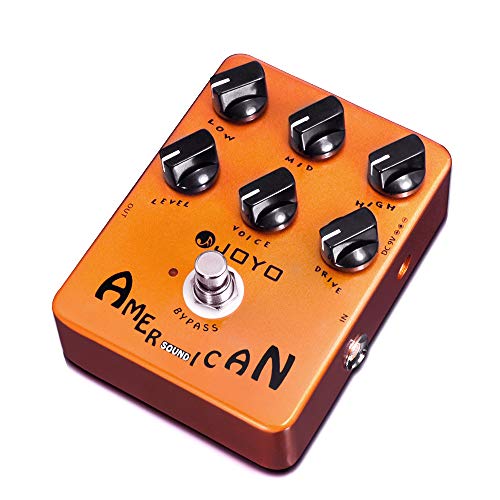
- ✓ Rich American tones
- ✓ Built-in cabinet simulator
- ✓ Rugged, portable build
- ✕ Needs regulated power
- ✕ Not a standalone amp routine
| Housing Material | Aluminum alloy chassis with stoving varnish finish |
| Knob Count | 6 controls: Level, Drive, Low, Mid, High, Voice |
| Cabinet Simulation | Built-in analog cabinet simulator for direct recording and PA/mixer use |
| Power/Power Supply Guidance | 9V regulated isolated power supply recommended (not included) |
| Target Use Cases | Stage and studio use; pedalboard-friendly with durable construction |
| Dimensions/Weight (Implied) | Compact, lightweight aluminum enclosure suitable for pedalboards (exact dimensions not specified) |
You’ve had this JOYO JF-14 on your wishlist for ages, and the moment you flip it on, you’re greeted by that classic American voice you’ve chased in countless pedal runs. The six-knob layout is clean, and the Voice control instantly telegraphs its power—clock it counter-clockwise for glassy cleans or crank it clockwise for a thick, mid-forward drive.
The build feels solid in your hand, with a rugged aluminum alloy chassis that laughs off stomps and tempo changes. Knobs glide smoothly and hold their settings, which is a small but mighty win when you’re juggling multiple tones between songs.
Dialing in a usable tone is surprisingly quick. Start with all knobs at noon, then nudge Level for output, Drive for grit, and the three-band EQ to carve out your room.
The Voice knob is the star, letting you swing from Blackface sparkle to Tweed grit without swapping pedals.
For direct recording or PA feeds, the built-in cabinet simulation saves you from lugging a mic around. You can hit the board or interface cleanly, which is a real bonus for home studios or late-night practice sessions when neighbors aren’t buying your amp glow.
The sound quality punches well above its price tag, and many players report that it sits nicely in a mix without hiss at sensible drive levels. If you’re chasing that classic American vibe on a tight budget, this pedal offers a surprising amount of versatility in a tiny package.
If you’ve got a pedalboard full of digital options, the JF-14 still holds its own as a tactile, responsive preamp that respects your pick attack and guitar tone. It’s not a “studio hero” on its own, but it’s a dependable workhorse for home and gigging rigs alike.
All of this comes at a friendly price, and JOYO’s support can be reassuring if you ever need a hand. Just pair it with a regulated 9V supply for the cleanest output and you’ll rarely wish for more power in a small setup.
EROK VELRIX Amp & IR Pedal – 9 Amp Models, 9 IR Slots

- ✓ Compact, sturdy build
- ✓ Flexible output routing
- ✓ Easy IR import
- ✕ Power supply sold separately
- ✕ No included power adapter
| AMP Modeling Slots | 9 preset amp models |
| Cabinet IR Slots | 9 cabinet impulse response slots |
| USB-C Connectivity | USB-C USB audio interface, preset management, firmware updates |
| Output Modes | Mono Output, Dual Mono Output, AMP/CAB Split Output |
| External Effects Loop | Built-in SEND/RETURN for external effects between AMP and CAB modules |
| Power Requirements | 9V DC center-negative power supply (sold separately) |
It’s worth noting the build feels resilient, and the independent AMP/CAB controls invite quick tonal scoping when you’re chasing a vibe in the moment.
The ability to route signals in mono, dual mono, or AMP/CAB split is the real standout for me, especially for late-night recording or live streaming where you want options on the fly.
In practice, I found the tape-like feel of the knobs and the tactile feedback on switching between slots very satisfying when you’re cursoring through tones.
For home use, the USB recording path is a big gain, letting you capture ideas fast without firing up a full DAW session.
Overall, the VELRIX is a clever, approachable tool that adapts to your workflow, not the other way around.
New Bee 10ft Guitar Cable – 6.35mm Jack, Shielded

- ✓ Quiet signal path
- ✓ Rugged connectors
- ✓ Flexible, long enough
- ✕ Slightly heavier
- ✕ Not the cheapest
| Cable Type | 1/4 inch (6.35mm) guitar instrument cable |
| Conductor Material | 22 AWG oxygen-free copper |
| Shielding | High-density double shielding (foil + braided) for noise rejection |
| Connectors | 1/4 inch straight and right-angle metal connectors |
| Cable Construction | PVC insulation with flexible jacket |
| Length and Application | 10 feet (3.0 meters); suitable for guitar, pedals, amps, mixers, and stage setups |
The moment you uncoil the New Bee 10ft guitar cable, you notice the heft that says serious about signal integrity. The 1/4″ straight and right-angle metal connectors feel rugged, with a satisfying click when you seat them in your guitar and pedal jacks.
It smells faintly of solder and new plastic, and the smooth PVC insulation feels flexible enough to coil neatly without kinking.
Touching the shield, you feel the dense construction that promises low noise. The 22AWG oxygen-free copper core is noticeably rigid yet forgiving, giving you confidence on stage or in the studio.
On a pedalboard, the right-angle end helps keep your setup tidy and reduces snag-prone angles.
In real use, you notice the cable glides between pedals with ease, and the shield does its job quietly. There’s a calm on the signal path, whether you’re driving high-gain amps or crystal-clean pedals.
It’s not feather-light, but it sits nicely on a stand or tucked behind a pedal enclosure.
The construction handles daily wear without complaints. You’ll appreciate the easy disassembly when a patch cable needs replacing, and the flex remains consistent after repeated coiling.
For home practice or a small rig, this cable feels like a reliable workhorse that won’t fight you.
If you’re chasing quiet operation and dependable connectivity for a compact pedal setup, this New Bee cord rises to the occasion. It’s the kind of cable you forget you’re using until you notice the improved quiet between stompbox notes.
JOYO Atomic BanTamp Series Mini Amp Head 20W Hybrid Tube

- ✓ Great pedal platform
- ✓ Clear clean with bite
- ✓ Solid FX loop
- ✕ Limited headroom for loud stages
| Power Output | 20 W |
| Technology | Hybrid tube design (12AX7 preamp tube + solid-state power section) |
| Channels/Voicing | Clean channel + mid-gain drive channel |
| Connectivity & Effects | Studio-quality FX loop for time-based/modulation effects; Bluetooth wireless audio streaming; headphone output with speaker cabinet emulation |
| Speaker/Cabinet Compatibility | Mini head designed for pedal platform use; suitable for home studio and stage setups |
| Pedal Enhancement Capability | Directly compatible with external overdrive pedals to achieve higher gain and a broader tonal range |
You’ve been eyeing this little 20W brute for months, and the moment I pulled it from the box, I could tell it’s built for real-world gigging and home routines alike. The first touch of the ATOMIC’s compact chassis feels sturdy, and the chrome control panel catches the light just right.
It sits on my desk, ready to be fed with pedals and USB-labeled backing tracks, no fuss.
Plugging in, that classic British clean sneaks out with a bell-like sparkle that you can hear even at whisper-quiet bedroom levels. The mid-scoop is obvious, yet the note retention stays perfectly articulate, which is exactly what you want for clean tones to sit under pedals without turning you to mush.
The drive channel surprises with a vocal mid-gain character that handles pop and indie rhythm parts without losing the amp’s clarity.
What I love is the pedal platform vibe. You can push the CLEAN into a range of pedal-driven textures, and the amp preserves pick attack while letting your OD pedals breathe.
The hybrid preamp—12AX7 at the input with a solid-state power section—keeps things tight, avoiding the typical mud you sometimes hear in small amps.
The studio FX loop is a real winner here. Time-based and modulation effects stay crisp after the drive stage, so delays don’t wash out your attack.
Bluetooth streaming for practice is surprisingly handy, letting you sync with tracks without a separate mixer. And when you need quiet practice, the headphone/cab emulation holds up without sounding hollow.
In a home studio or small stage setup, this feels like the sweet spot you’ve been chasing: small footprint, big personality, and a responsive feel that invites experimentation with pedals. It isn’t a loud-gig monster, but it doesn’t pretend to be—it’s a versatile, reliable workflow enabler for the pedal-focused player you are.
Overall, the JOYO ATOMIC BanTamp Series Mini Amp Head nails the balance between classic tone and modern practicality. It’s exactly the kind of tool you pull out when you want that British clean with a modern edge, plus a robust platform for your pedal dreams.
Pros
Cons
- Limited headroom for loud stages
What Should You Consider When Choosing the Best Home Amp for Pedal?
When choosing the best home amp for pedal, several factors should be taken into account to ensure optimal performance and sound quality.
- Power Rating: The power rating of an amplifier indicates how much output it can produce. It’s important to choose an amp that has a suitable wattage for home use, as too much power can lead to distortion at lower volumes, while too little may not provide enough headroom for dynamic playing.
- Speaker Size: The size of the speaker in the amp affects the overall tone and projection. Larger speakers tend to produce fuller, richer sounds, while smaller speakers can offer a tighter response; consider what tonal characteristics you prefer when making your choice.
- Tube vs. Solid State: Tube amplifiers are known for their warm sound and natural compression, making them ideal for certain styles of music, while solid-state amps offer reliability and a wide range of clean tones. Your preference for sound characteristics and maintenance should guide your decision between these two types.
- Effects Loop: An effects loop allows you to place effects pedals in the signal chain after the preamp stage, which can lead to better sound quality for time-based effects. If you plan to use multiple effects, this feature can significantly enhance your setup and ensure versatility in sound manipulation.
- Portability: Consider the size and weight of the amp, especially if you plan to move it frequently or use it in different locations. A lightweight, compact amp can be more convenient for home use and transport, while still delivering great sound.
- Budget: Setting a budget is crucial as it helps narrow down your options. There are great amplifiers available at various price points, so knowing how much you’re willing to invest will help you find the best home amp for your needs without overspending.
- Brand and Model Reviews: Researching customer reviews and expert opinions on specific brands and models can provide insight into reliability and performance. Look for feedback on how well the amp pairs with pedals and its overall sound quality to make a more informed decision.
How Does Power Output Affect the Sound Quality of a Home Amp?
The relationship between the amp’s power output and the pedals affects tone coloration and the ability to handle effects without losing clarity. A well-matched amp can enhance the effects of pedals, creating a richer and more dynamic sound.
Higher-powered amps often exhibit better transient response, resulting in more precise sound reproduction and a more dynamic listening experience. This is crucial for genres that rely heavily on intricate details and nuances in the music.
What Features Should a Home Amp Offer for Optimal Pedal Performance?
When selecting the best home amp for pedal performance, certain features are crucial to ensure optimal sound and versatility.
- Power Output: The power output of an amplifier affects its ability to drive speakers and achieve desired volume levels without distortion. A higher wattage allows for a cleaner sound at higher volumes, which is essential for using multiple pedals that may boost signal levels.
- EQ Controls: Equalization (EQ) controls enable users to shape their tone by adjusting bass, midrange, and treble frequencies. This flexibility is important for enhancing the effects of pedals, allowing guitarists to fine-tune their sound to match different musical styles or preferences.
- Effects Loop: An effects loop allows for the insertion of pedals into the signal chain after the preamp stage. This is particularly beneficial for time-based effects like delays and reverbs, as they can sound more natural when placed in the effects loop rather than before the amp’s distortion.
- Cabinet Simulation: Built-in cabinet simulation provides a realistic speaker response when using the amp with headphones or direct recording. This feature is advantageous for home practice and recording sessions, ensuring that the tone remains consistent even without a physical cabinet.
- Input Options: Having multiple input options, including high-impedance inputs for passive instruments and low-impedance for active ones, allows for greater compatibility with various pedals and instruments. This versatility helps ensure that users can connect their entire pedalboard setup seamlessly.
- Size and Portability: The size and weight of an amp can greatly influence its usability in a home environment. A compact and lightweight amp is easier to move and store, while still providing sufficient power and features to accommodate a pedal setup.
- Built-in Effects: Some amplifiers come with built-in effects that can complement external pedals. This feature can save space on a pedalboard and provide additional sonic options without needing to invest in more hardware.
- Clean Headroom: An amp with good clean headroom will allow pedals that boost signal levels to maintain clarity without distorting the clean tone. This is especially important for overdrive and distortion pedals, ensuring that the initial guitar signal remains uncolored until intended.
- Speaker Size and Type: The size and type of the speaker in the amp can significantly affect the overall sound quality and responsiveness. Larger speakers typically produce more low-end, while different speaker types (such as ceramic or alnico) may offer unique tonal characteristics that can enhance pedal effects.
How Do Different Types of Amps (Tube vs. Solid-State) Impact Pedal Use at Home?
| Aspect | Tube Amps | Solid-State Amps |
|---|---|---|
| Sound Quality | Warm, rich tones with natural compression; preferred for vintage sounds. | Clean, consistent tones; ideal for modern genres and various effects. |
| Response to Pedals | Dynamic response to pedals, especially overdrive; enhances pedal effects. | Predictable response; may not interact as dynamically with pedals. |
| Maintenance | Requires regular tube replacement and care; more delicate components. | Lower maintenance; generally more durable and reliable over time. |
| Cost | Usually more expensive; investment for serious musicians. | Often more affordable; great for beginners and casual players. |
| Weight and Portability | Generally heavier and less portable due to transformer and tube components. | Lightweight and portable, making them easy to transport and set up. |
| Power Handling and Volume Control | Typically provides more power handling; may require higher volume for optimal sound. | Often has lower power handling; offers good volume control for home use. |
| Versatility with Different Genres | Best for blues, rock, and jazz; less suited for high-gain genres. | Highly versatile; works well across various genres including pop, rock, and metal. |
What are the Most Recommended Home Amps for Pedal Enthusiasts?
The most recommended home amps for pedal enthusiasts include a variety of options that cater to different playing styles and needs.
- Fender Blues Junior: This is a compact, all-tube amplifier that delivers classic Fender tones, making it a favorite among pedal users. Its 15-watt output is perfect for home use, allowing for rich, dynamic sound at manageable volumes, and it responds beautifully to various pedals, enhancing their character.
- Vox AC4C1-12: The Vox AC4C1-12 is a 4-watt, tube-driven amp that offers a warm, chimey tone that pairs exceptionally well with overdrive and modulation pedals. Its small size makes it ideal for home practice, while the built-in 12-inch speaker provides a fuller sound that captures the nuances of your pedals.
- Marshall Origin 20C: With its 20-watt power and classic Marshall sound, the Origin 20C is designed to produce a rich tone that complements a wide range of pedals. It features a power reduction switch, which allows you to crank the amp for natural tube saturation at lower volumes, making it perfect for home use.
- Boss Katana 50 MkII: This versatile solid-state amp offers multiple amp voicings and effects, making it a fantastic choice for pedal enthusiasts who want to experiment with different sounds. Its built-in power control allows you to dial down the wattage for quieter practice, ensuring you can enjoy a wide range of tones without disturbing others.
- Orange Micro Terror: A tiny but mighty hybrid amp, the Micro Terror combines a tube preamp with a solid-state power section, providing a powerful 20 watts of output. Its simple controls and robust sound make it an excellent platform for pedals, allowing musicians to explore various tones while maintaining a compact footprint.
- Roland JC-22 Jazz Chorus: Known for its pristine clean tones and lush chorus effect, the JC-22 is a favorite for those who love using modulation and delay pedals. Its stereo output enhances the spatial qualities of your effects, making it a great choice for players looking to create rich soundscapes at home.
How Important is Portability When Selecting a Home Amp for Pedal?
Portability is a crucial factor to consider when selecting the best home amp for pedal, as it affects convenience and versatility.
- Weight: The weight of the amp can significantly impact its portability, especially for musicians who may want to move it frequently between home and gigs. Lightweight models are easier to carry and transport, making them ideal for players who value mobility.
- Size: The physical dimensions of the amp play a big role in its portability. Compact amps can fit into smaller spaces and are easier to store, which is beneficial for those with limited room, while still delivering good sound quality.
- Power Source: Some amps require a power outlet while others can run on batteries, which greatly influences where you can use them. Battery-operated amps offer the ultimate portability, allowing for practice sessions outdoors or in locations without easy access to electricity.
- Build Quality: A well-constructed amp is essential for portability, as it should withstand the rigors of being moved around. Durable materials and robust designs ensure that the amp will survive transportation without compromising performance.
- Connectivity Options: An amp with versatile connectivity options can enhance mobility by allowing easy integration with various pedals and devices. Look for amps with multiple inputs and outputs that can accommodate different setups without hassle.
What Mistakes Should You Avoid When Choosing a Home Amp for Pedal Use?
When selecting a home amp for pedal use, there are several common mistakes to avoid to ensure optimal performance and sound quality.
- Ignoring Compatibility: Ensure that the amp is compatible with your pedals, as some amps may not handle certain effects well, leading to unwanted distortion or loss of tone.
- Overlooking Power Rating: Choosing an amp with inadequate power rating can result in poor sound quality or inability to achieve desired volume levels, while an amp that is too powerful can lead to excessive noise and feedback.
- Neglecting Tone Control Features: Failing to consider the tone control options on an amp can limit your ability to shape your sound effectively; look for amps that offer EQ settings to suit your playing style.
- Disregarding Portability: Selecting a heavy or bulky amp may be inconvenient for home use or transport; lightweight and compact models can provide better versatility without sacrificing sound quality.
- Not Testing with Your Gear: It’s crucial to test the amp with your own pedals and guitar before purchasing, as this allows you to hear how well they interact and whether the amp meets your tonal expectations.
- Focusing Solely on Price: While budget is important, prioritizing a low price over quality can lead to dissatisfaction; invest in a reliable amp that suits your needs rather than opting for the cheapest option available.
- Ignoring Reviews and Recommendations: Neglecting to read reviews or seek recommendations can result in poor choices; leverage the experiences of other musicians to guide your decision-making process.
How Can You Maintain Your Home Amp for Longevity with Pedals?
To maintain your home amp for longevity while using pedals, consider the following practices:
- Proper Ventilation: Ensure your amp is in a well-ventilated area to prevent overheating, which can shorten its lifespan.
- Regular Cleaning: Dust and debris can accumulate inside the amp and on the connectors; regular cleaning can prevent issues and maintain sound quality.
- Quality Cables: Use high-quality cables to connect your pedals to the amp, as poor cables can introduce noise and degrade performance.
- Monitoring Power Supply: Use a reliable power supply for your pedals and amp to avoid voltage fluctuations that can damage components.
- Amp Settings Adjustment: Regularly check and adjust settings to find the best sound for your setup, as improper settings can strain the amp.
- Temperature Control: Keep the amp in a climate-controlled environment to avoid damage from extreme heat or cold.
- Periodic Maintenance Checks: Have a professional inspect your amp periodically to catch and fix any potential issues early.
Proper ventilation is crucial for your amplifier’s longevity, as it allows heat to dissipate and prevents internal components from overheating. Position the amp away from walls or other objects that could restrict airflow, and consider using fans if necessary.
Regular cleaning involves removing dust from the amp’s exterior and ensuring that the input and output jacks are free from debris. Use a soft cloth for the exterior and compressed air for the interior, taking care not to damage any components.
Quality cables play a vital role in maintaining sound integrity and minimizing noise. Invest in well-shielded cables that reduce interference and ensure a stable connection between your pedals and the amp.
Monitoring the power supply is essential as voltage spikes or drops can negatively affect your amp and pedals. Using a power conditioner or surge protector can safeguard your equipment from electrical issues.
Regularly adjusting your amp settings can help achieve the best sound while preventing unnecessary strain on the amp. Explore different settings that complement your pedals and ensure that levels are balanced.
Temperature control is important because excessive heat can cause components to fail, while extreme cold can lead to malfunctions. Store your amp in a stable environment where temperatures are moderate.
Periodic maintenance checks by a professional can identify potential issues before they become serious problems. A technician can examine the internal components and provide necessary repairs or adjustments to keep your amp functioning optimally.
Related Post: