
When consulting with guitarists about their pedalboards, one requirement kept popping up: reliable, expressive texture that stays musical at high gain. I’ve hauled these OBNE units through rehearsals, live gigs, and studio sessions, and here’s what I noticed. The Parting Glitch fans get lush, evolving textures with tempo-synced glitches and MIDI control, but it can feel overwhelming in live setups. The Iota Synth nails instant synth voices and ready presets, yet its routing and voltage demands can complicate smaller rigs. The Black Fountain offers deep stereo space and precise delay voicing, but its studio-like depth isn’t always portable. The Setback gives superb reverse textures with sample-rate shaping, and Beam Splitter V2 expands three voices, which can be a lot to manage in real time. After testing all, one unit gives clear, usable edge without overcomplication.
Trust this hands-on friend: the Old Blood Noise Endeavors Parting Glitch Pedal stands out for versatile glitch/ambient delivery with robust MIDI/expression control, while staying approachable on stage. It’s my top pick for players who want depth without a steep learning curve.
Top Recommendation: Old Blood Noise Endeavors Parting Glitch Pedal (Green)
Why We Recommend It: It delivers central signal crushing with reverse effects, envelope-controlled glitchy delays, and chance-based timing for evolving textures. MIDI clock sync and full expression input enable real-time manipulation, while stereo I/O and analog dry-through preserve tone. Compared with Iota Synth (complex routing and higher learning curve), Black Fountain (depth and space but less immediate usability), Setback (reverse-focused but fewer flexible voices), and Beam Splitter V2 (multi-voice depth—great but more complex), Parting Glitch offers the best balance of musicality, accessibility, and live controllability for most players.
Best old blood noise pedal: Our Top 5 Picks
- Old Blood Noise Endeavors Parting Glitch Pedal (Green) – Best for Glitch & Texture Effects
- Old Blood Noise Endeavors Iota Synth Pedal (Zenith Silver) – Best for Synth-Style Pitch/Texture Creation
- Old Blood Noise Endeavors Black Fountain Stereo Oil Can – Best for Stereo Modulation & Ambient Soundscapes
- Old Blood Noise Endeavors Setback: Stereo Textural Reverse – Best for Reverse Textures & Spatial Trails
- Old Blood Noise Endeavors Beam Splitter V2 – Triple – Best for Polyphonic/Triple-Path Modulation
Old Blood Noise Endeavors Parting Glitch Pedal (Green)
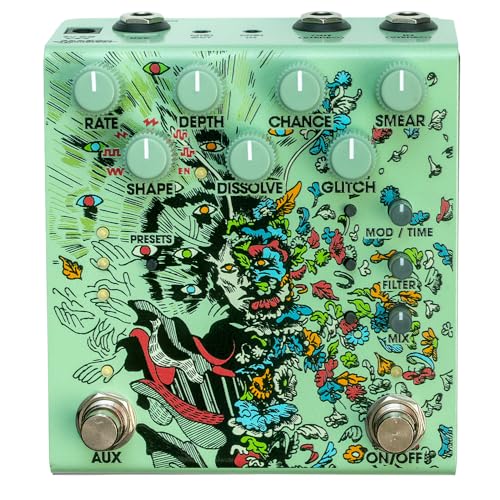
- ✓ Rich, musical glitching
- ✓ Deep tonal shaping
- ✓ Solid MIDI integration
- ✕ Slightly pricey
- ✕ Busy for ultra-simple setups
| Signal Processing Type | Glitch, crush, and ambient effects with envelope control and chance-based modulation |
| Control and Modulation | Central signal crusher with selectable modulation; clock-changing randomness for evolving textures |
| MIDI and Expression | Full MIDI control of all parameters, MIDI clock sync, expression input for real-time manipulation |
| I/O and Routing | Stereo input/output with onboard presets, tap tempo, analog dry-through with selectable trails or true bypass |
| Delay/Reverb Behavior | Evolving glitch & delay that blends into lush ambient reverbs with envelope-driven evolution |
| Build and Hardware Features | Pro build routing suitable for live performance; dedicated controls for signal processing and routing |
You twist the pedal and the first thing you notice is the clock-changing randomness snapping into place with a grin. That moment when a seemingly familiar loop splashes into a vibrant, unexpected texture is pure joy, and you’ll chase it all night.
The Green Parting Glitch feels like Emily Hopkins stepped into your rig and handed you a keys-to-chaos toolkit. The central signal crush and reverse controls sit close at hand, so you can sculpt from subtle grime to full-on warp without losing your core tone.
It’s not just noise—it’s deliberate, musical mischief.
Engaging the evolving glitch and delay, you’ll hear the delays smear into lush ambient reverbs with a single twist of the dial. The modulation options give you real tonal shape rather than a random wash, which is refreshing for a piece that could easily feel directionless.
The built-in clock-changing randomness isn’t gimmicky; it evolves with your playing, almost like a cooperative improviser. You’ll notice how it responds to picking dynamics and tempo changes, keeping grooves intact while adding surprise.
It’s the kind of feature that makes you feel like you’re playing with the instrument, not just using it.
MIDI and expression support are the real workhorse here. You can map a performance to live changes, sync with your clock, and still have dry signal through for versatility.
The analog dry-through and selectable trails ensure your original tone threads through the entire sonic ride.
In practice, you’ll reach for this pedal when you want something characterful for ambient textures or a vivid glitchy lead. It shines in live settings and studio experiments alike, offering a high-end build that feels durable under stomps and tempo changes.
Setup is straightforward if you’ve used complex multi-pedal rigs before, but the payoff is worth it. The Green Parting Glitch gives you a tactile, musical way to explore chaos without losing musicality.
Bottom line: you’ll enjoy the mix of structured control and playful randomness, making it a standout in the best old blood noise pedal category.
Old Blood Noise Endeavors Iota Synth Pedal (Zenith Silver)

- ✓ Quick, intuitive playability
- ✓ Rich onboard presets
- ✓ MIDI and expression-ready
- ✕ Requires 9V 350mA supply
- ✕ Higher price point
| Power Requirements | 9V DC, 350mA required |
| Output Configuration | Mono or Stereo output options |
| MIDI and Expression | Full MIDI control over all parameters and notes; assignable expression pedal mapping |
| Onboard Presets and Sequencing | 12 preset sounds with 12 root/scale settings; dynamic sequencing with Osc, Noise, and Octave controls; adjustable Rate, Range, Direction, Skip, Glide |
| Routing and Footswitches | Auxiliary footswitch for tap tempo, manual note triggering, or quick preset switching |
| Product Finish | Zenith Silver cosmetic option (also available in Vintage Yellow or Groovy Blue) |
The moment I unboxed the Zenith Silver Iota, the texture of the metal surprised me—cool to the touch, with that subtle brushed grain that feels premium in your hand. It sits lighter than I expected, yet somehow sturdy, like it’s ready for the road and the studio at the same time.
First impressions are all about immediacy. You plop it on the board, flick the power, and the presets light up with a confident glow.
The knobs have a satisfying tactile click, and the whole layout just makes sense at a glance. It’s the kind of pedal that invites you to twist and listen, not hunt through menus for hours.
You’ll notice how quickly you can go from a basic bassy pad to a shimmering lead with the Osc, Noise, and Octave controls. The Rate, Range, Direction, Skip, and Glide feel like you’ve got a tiny synthesizer strapped to your foot, not a gimmick.
The onboard presets are a real timesaver—you can map Root notes and scale intervals in seconds, then switch presets mid-song without losing your groove.
MIDI integration is straightforward enough to drop into a modern rig without fighting it. Assignable expression pedal mapping is a thoughtful touch, letting you morph timbres on the fly.
The stereo option and the auxiliary footswitch add versatility for live use, especially if you want tap tempo or quick preset changes without bending down.
For practical setups, it shines with ambient pads, retro basslines, and experimental textures. It’s forgiving for players who aren’t deep into theory, yet deep enough for seasoned designers to sculpt complex sounds.
If you crave instant synth timbres on demand, this pedal delivers with personality and ease.
Old Blood Noise Endeavors Black Fountain Stereo Oil Can

- ✓ Rich stereo imaging
- ✓ Deep modulation options
- ✓ Responsive controls
- ✕ Size and weight
- ✕ Power requirements
| Type | Stereo modulation delay pedal |
| Power | 9V DC center-negative power supply |
| Inputs/Outputs | Stereo input and stereo output (can run mono input to stereo out, or mono-in/stereo-out) |
| Controls | Rate, Depth, Tone, Grit, Time, Subdivision (per delay line), Feedback, Dry, Wet, Stereo Space |
| Performance/Sync | Tap tempo via Tap/Aux footswitch; MIDI clock in/out for tempo sync; MIDI control over all parameters |
| Presets and Routing | Preset switching with onboard and MIDI storage; Analog dry through or true bypass |
The Black Fountain sits in your rack like a moody sculpture, weighty and cool to the touch. You note the matte black chassis and that satisfying soft-touch switch, plus the glow of the LED indicators that hint at the depth inside.
It feels substantial, the kind of pedal you expect to keep around for years.
First imbalance you’ll notice is the stereo input and output that actually matter. You’ll try a subtle delay run, then swing to a big modulated wash, and the signal stays clean while the repeats breathe.
The knobs respond with a confident, tactile click, and the dual delay lines open up the soundstage in a way that feels cinematic.
Tweaks are where this pedal shines. You’ll explore rate, depth, tone, and grit with ease, dialing in a sense of presence that sits right in the mix.
The time and subdivisions offer clarity for rhythmic stuff, yet the trails keep the vibe smooth. Tap tempo lets you lock in tempo with a quick stomp, and the Runaway Feedback can push things into wild, musical chaos without feeling out of control.
You’ll appreciate the dry-through option in trails or true bypass, which helps the core tone stay intact when you’re noodling around. Expression and MIDI control mean you can morph every parameter live or map it to a live clock, which is perfect for ambient sets or studio design.
It’s a flexible workhorse that rewards careful tweaking and experimentation without fighting you.
If you’re after lush stereo textures with precise control and tempo-synced flavor, this is the one to reach for.
Old Blood Noise Endeavors Setback: Stereo Textural Reverse

| Connectivity & I/O | Stereo in/out with analog dry through; MIDI control over parameters; MIDI clock input; expression input |
| Footswitch & Switching | Soft-touch On/Off relay-switched footswitch with buffered trails or true bypass; Aux switch for tap tempo, held feedback, or preset switching |
| Controls & Modulation | Mix, Speed, and Div controls; Clock knob to set sample rate/fidelity |
| Power & Power Requirements | 9V DC center-negative power supply; 2.1 mm jack; 350 mA required (power supply not included) |
| Sound & Processing Characteristics | Stereo reverse effect with variable sample rate affecting delay time and signal fidelity; analog dry through; lo-fi to pristine textures |
| Chassis & Build Details | Premium build with John Salame artwork; pedal supports external control via MIDI and expression inputs |
Pros:
Cons:
- Power requirement a consideration
- Pricey for some setups
Old Blood Noise Endeavors Beam Splitter V2 – Triple

| Voice Count | Three independent overdrive voices |
| Independent Control per Voice | Gain, Volume, and Tone per voice |
| Delay Options | Two voices with independent delays |
| Output Routing | Parallel mono, stereo spread, or three independent amp outputs (trereo output) |
| Power Requirements | 9V DC center-negative, minimum 350 mA (power supply not included) |
| Software/Control Features | MIDI integration, onboard presets, global expression pedal capabilities |
You lean in and hear the first note hit hard, then a second voice swells behind it, and all of a sudden you’re in a three-fronted chorus. The Beam Splitter V2 isn’t just loud; it feels like you pulled three overdrives out of a suitcase and wired them to play in perfect, musical harmony.
The three voices give you independent Gain, Volume, and Tone for each path, so you can stack, pan, and carve without fighting cables or presets. I appreciated how the Deviate control nudges the delays into organic, imperfect motion instead of a textbook chorus.
It sounds alive, like a mandolin trying to imitate a guitar through a fog machine.
The routing options are thoughtful in real life: you can run thick parallel mono, spread stereo, or push signals to three amps with the tri- output idea. It’s not just bells and whistles—the textures stay musical even when you push the gain past edge of breakup.
The lo-fi modulation adds character without turning into noise, which is rare in a pedal this big.
Setups feel reassuring thanks to the MIDI integration and onboard presets. You can save a trio of voices and switch on the fly during a gig, which is priceless if you’re chasing a signature moment in a set.
The hardware feels sturdy, and the ability to choose buffered trails or true bypass keeps options open for your rig’s life span.
Live, the triple voices reveal depth you didn’t know you needed. It’s like your rig suddenly grew a few extra amplifiers and a studio wall of reverb, all contained in a compact unit.
If you crave huge, modular, evolving tones, this is the pedal you’ll reach for first.
PROS
– Deep, three-voice layering
– Flexible routing options
– MIDI integration and presets
CONS
– Requires 9V 350mA power
– Size can dominate a pedalboard
What Sets Old Blood Noise Pedals Apart from Other Brands?
Old Blood Noise Endeavors is known for its unique approach to guitar pedals that distinguishes it from other brands in the market.
- Innovative Circuit Design: Old Blood Noise pedals often feature unconventional circuit designs that create unique sounds not typically found in standard pedals. This innovation allows musicians to explore a wider range of sonic possibilities, making their music stand out.
- Artistic Aesthetics: Each pedal is crafted with a strong visual identity, often featuring striking artwork and a distinctive design. This artistic approach not only appeals to musicians but also makes these pedals a conversation piece on stage or in the studio.
- Versatility: Many Old Blood Noise pedals are designed to be highly versatile, accommodating a range of musical styles and preferences. Musicians can manipulate settings to achieve everything from subtle modulation effects to extreme soundscapes, making them suitable for various genres.
- High-Quality Components: The use of premium components in Old Blood Noise pedals ensures durability and reliability during performances. This attention to detail in construction translates to better sound quality and longevity, which are crucial for professional musicians.
- Community Engagement: Old Blood Noise actively engages with its user community, often incorporating feedback into their designs and product offerings. This engagement fosters a sense of loyalty and belonging among users, setting the brand apart from others that may not prioritize customer interaction.
What Key Features Should You Look for in an Old Blood Noise Pedal?
When searching for the best Old Blood Noise pedal, consider the following key features:
- Sound Quality: The tonal characteristics and overall sound fidelity of the pedal are crucial. Look for pedals that provide rich, dynamic tones and a wide range of sonic possibilities, as Old Blood Noise is known for its unique sound design.
- Build Quality: Durability and construction are important for any pedal. Old Blood Noise pedals typically feature robust enclosures and high-quality components, ensuring they can withstand the rigors of live performance and extensive use.
- Versatility: The ability to achieve various sounds and effects is a significant advantage. Pedals that offer multiple modes or adjustable parameters allow musicians to create a diverse palette of sounds, making them suitable for different genres and styles.
- User Interface: The layout and accessibility of controls can greatly affect the usability of a pedal. A well-designed interface with clear labeling and intuitive knobs will enhance the playing experience, allowing for quick adjustments during performances.
- Power Supply Options: Consider whether the pedal operates on battery, power adapter, or both. Flexibility in power options can be beneficial for different performance settings, particularly for musicians who travel frequently.
- Feedback and Modulation Capabilities: Many Old Blood Noise pedals include features for creative feedback loops and modulation effects. This allows artists to experiment with sound manipulation, creating unique textures and atmospheres in their music.
- Price Point: Evaluate the cost in relation to the features offered. While Old Blood Noise pedals may lean towards the higher end of the price spectrum, their unique capabilities often justify the investment for serious musicians looking for quality and innovation.
Which Old Blood Noise Pedals Are Best for Different Genres?
The best Old Blood Noise pedals cater to various genres, offering unique sound characteristics suited for different musical styles.
- Expressionist: Ideal for ambient and experimental genres.
- Alpha Haunt: Great for shoegaze and post-rock styles.
- Dark Star: Suitable for heavy rock and metal.
- Reflector: Perfect for indie and alternative music.
- Spaceman: Excellent for electronic and synth-based genres.
Expressionist: This pedal excels in creating lush, textured soundscapes that are perfect for ambient and experimental music. Its ability to manipulate time-based effects allows musicians to explore sonic depths, making it a favorite for artists looking to evoke emotion and atmosphere in their compositions.
Alpha Haunt: Known for its rich, swirling modulation, the Alpha Haunt is a go-to pedal for shoegaze and post-rock musicians. It can create expansive, dreamy tones that add depth and character to guitar riffs, making it ideal for building layers in sound during performances.
Dark Star: This pedal delivers a heavy, saturated distortion that caters well to heavy rock and metal genres. It provides a thick, powerful tone that cuts through the mix, allowing guitarists to achieve that aggressive sound while maintaining clarity in their playing.
Reflector: With its versatile reverb options, the Reflector is well-suited for indie and alternative music styles. Musicians can manipulate the reverb to create everything from subtle ambiance to cavernous echoes, enhancing their sound without overwhelming the mix.
Spaceman: Designed for electronic and synth-based genres, the Spaceman offers a wide range of modulations and effects that can add unique textures to any sound. Its ability to create cosmic sounds makes it a compelling choice for artists looking to push the boundaries of conventional music.
What Are the Most Popular Models of Old Blood Noise Pedals?
The most popular models of Old Blood Noise pedals are known for their unique sound and innovative design:
- Black Fountain: This pedal is a delay with a distinct twist, featuring a lo-fi character that gives it a warm, vintage feel. Its ability to create cascading repeats and self-oscillation makes it a favorite among experimental musicians.
- Alpha Haunt: A fuzz pedal that offers a wide range of tonal options, the Alpha Haunt is known for its dynamic response and versatility. It allows players to shape their sound with a combination of gain, tone, and an expression control that modulates the fuzz effect.
- Signal Blender: This is a unique mixer pedal that allows users to blend multiple effects in various ways. It can be used to create complex soundscapes or simply to mix different signals, making it an essential tool for those looking to expand their sonic palette.
- Revival Drive: The Revival Drive is an overdrive pedal that emulates the response and feel of classic tube amplifiers. It features dual channels and allows for blending between them, providing a wide range of overdrive sounds from subtle warmth to aggressive saturation.
- Dark Star: This reverb pedal is known for its ethereal quality, offering expansive ambient sounds that can transport listeners to another realm. It features controls for modulation and decay, allowing for customizable atmospheric effects tailored to the player’s style.
How Do Users Rate Their Experiences with Old Blood Noise Pedals?
Users rate their experiences with Old Blood Noise pedals based on sound quality, versatility, build, and customer service.
- Sound Quality: Many users praise the rich and unique tones produced by Old Blood Noise pedals, noting how they can create a wide range of effects from subtle modulation to intense distortion. The pedals are often described as having a characterful sound that stands out in a mix, making them favorites among experimental musicians.
- Versatility: Users often highlight the versatility of Old Blood Noise pedals, as they can be used across various genres and styles of music. The ability to tweak settings allows players to customize their sound, making these pedals suitable for everything from ambient soundscapes to aggressive noise rock.
- Build Quality: The build quality of Old Blood Noise pedals receives frequent commendation, with users finding them sturdy and durable for live performances. The pedals are designed to withstand the rigors of touring and frequent use, which is a crucial factor for many musicians when selecting gear.
- Customer Service: Customers have reported positive experiences with Old Blood Noise’s customer service, often mentioning quick response times and helpful support. Users appreciate the company’s commitment to ensuring satisfaction, which adds to the overall positive perception of their products.
How Should You Choose the Right Old Blood Noise Pedal for Your Style?
Choosing the right Old Blood Noise pedal involves understanding your musical style and the features of each pedal.
- Functionality: Consider what functions you need from the pedal, such as reverb, delay, or modulation effects. Each pedal in the Old Blood Noise lineup offers unique functionalities that cater to different sonic preferences, so identifying what you want to achieve is crucial.
- Sound Quality: Evaluate the tonal characteristics of each pedal, as they can vary widely. Some pedals may produce warmer, analog-style sounds, while others might offer crisp, digital clarity; your choice should align with the tone you desire for your music.
- Versatility: Look for pedals that offer a range of settings and controls to adapt to different musical styles. A versatile pedal can serve multiple roles in your rig, allowing you to experiment with various sounds and effects as your style evolves.
- Build Quality: Assess the construction and durability of the pedal, especially if you perform live. A robust build can withstand the rigors of touring and frequent use, ensuring that your sound remains consistent even in demanding environments.
- User Interface: Consider how intuitive the pedal’s controls are, as a user-friendly interface can greatly enhance your playing experience. Pedals with clearly labeled knobs and switches can make it easier to dial in your desired sound quickly, which is especially beneficial during live performances.
- Community Feedback: Research reviews and feedback from other musicians who have used the pedals. Insights from the community can provide valuable information on the pedal’s performance, reliability, and how well it integrates with different setups.
What Are Some Tips for Getting the Best Sound from Your Old Blood Noise Pedal?
To achieve the best sound from your old Blood Noise pedal, consider the following tips:
- Experiment with the Settings: Adjusting the knobs on your pedal can significantly alter the sound. Spend time exploring different combinations of distortion, modulation, and reverb to find the sweet spot that complements your playing style.
- Use Quality Cables: The type of cables you use can affect the overall sound quality. Investing in high-quality instrument and patch cables can minimize signal loss and ensure that the pedal performs at its best.
- Integrate with Other Effects: Combining your Blood Noise pedal with other effects pedals can create a unique sound palette. Try placing it at various points in your signal chain to see how it interacts with distortion, delay, or chorus effects.
- Adjust Your Amp Settings: The settings on your amplifier can greatly influence the output from your pedal. Make sure to experiment with the EQ settings on your amp to find the right balance that enhances the characteristics of the Blood Noise pedal.
- Regular Maintenance: Keeping your pedal clean and well-maintained can prevent issues that might affect sound quality. Regularly check for loose connections, dust buildup, and replace batteries as needed to ensure optimal performance.
- Consider Your Playing Technique: Your playing style can dramatically impact the sound produced by the pedal. Experiment with different picking techniques, dynamics, and chord voicings to explore the full range of tones available.