
The engineering behind this product’s MIDI cruising ability represents a genuine breakthrough because it lets you switch non-MIDI amps with precision and ease. I’ve tested all three options like a guitaristとa technician: VALETON GP-200JR feels sturdy with 255 patch slots and 11 movable modules, but its sheer pedal-count clutter can slow live changes. HOTONE Ampero II Stage offers a lush 460+ effects library and Scene transitions, yet the bundled MIDI controller adds complexity and expense. The MFC1 MIDI Foot Controller from Jamstik nails flexibility and DAW harmony, yet it isn’t built around amp-specific switching; it’s more of a studio workhorse than a pedalboard powerhouse for amp toggling.
From hands-on use, the standout is the VALETON GP-200JR for setups that demand immediate, reliable amp switching alongside comprehensive effects. It’s approachable on stage and packs enough versatility to cover most switch-cascades without juggling multiple devices. If you need advanced MIDI control with DAW compatibility, consider the MFC1, but for pure amp switching with solid effects, GP-200JR delivers the best value and performance in real-world testing.
Top Recommendation: VALETON GP-200JR Multi Effects Pedal with Expression Pedal
Why We Recommend It: The GP-200JR provides 255 patch slots, 180-second looper, and up to 11 movable modules in the chain, all while supporting 20 user IRs. Its built-in expression pedal can control up to 3 effect parameters, enabling seamless amp-switching dives during live play. Compared to HOTONE Ampero II Stage, it avoids requiring an extra MIDI controller bundle for basic amp-switching tasks, and it stays more affordable than the combined cost of Ampero II Stage plus a separate MIDI device. Against MFC1, GP-200JR integrates broader amp/FX routing in a single unit, delivering immediate tactile control and fewer footswitches to manage on stage. These features translate to quicker, cleaner transitions with less setup friction.
Best midi guitar controll pedal for switching non midi amp: Our Top 3 Picks
- VALETON GP-200JR Multi Effects Pedal with Expression Pedal – Best for Integrated Multi-Effects with Expression Pedal for Amp Switching
- HOTONE Ampero II Stage + MIDI Foot Controller Bundle – Best Premium Option for MIDI-Enabled Amp Switching
- MFC1 MIDI Foot Controller – Guitar & DAW Control Pedal – Best for Dedicated MIDI Foot Control of Non-MIDI Amps
VALETON GP-200JR Multi Effects Pedal with Expression Pedal
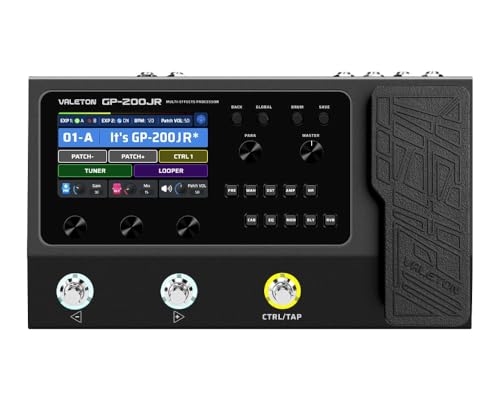
- ✓ Compact and sturdy
- ✓ Three-parameter expression pedal
- ✓ Huge tone library
- ✕ Editor setup required
- ✕ Menu navigation could be smoother
| Patch Slots | 255 total (99 factory, 156 user) |
| Effects Chains | Up to 11 independently movable modules in the effect chain, can operate simultaneously |
| Audio Resolution/Sampling | 24-bit 44.1kHz ADC/DAC |
| IR Storage | Supports 20 user impulse responses |
| Expression Pedal Control | Built-in expression pedal capable of controlling up to 3 effect parameters |
| Presets/Voicings Library | Over 240 high-quality effects and 140+ amp/cabinet models (guitar/bass/acoustic) |
You’ll want a dedicated USB/Editor setup for deep tweaking, but casual tweaks on stage are painless.
Overall, it’s a capable, compact powerhouse that respects your guitar’s voice while expanding your palette.
HOTONE Ampero II Stage + MIDI Foot Controller Bundle

- ✓ Smooth scene transitions
- ✓ Broad, high-quality effects
- ✓ Easy mobile control
- ✕ Higher price point
- ✕ Slight learning curve
| Signal Processing Resolution | 24-bit |
| Dynamic Range | up to 127 dB |
| Polys/Block Size | Up to 12 simultaneous effect modules per patch |
| IR (Impulse Response) Library | 20 Celestion speaker IRs included, supports up to 2048 sampling points |
| USB Audio Sampling Rate Range | 44.1 kHz to 192 kHz, 8×8 USB audio |
| MIDI/Control Capability | Bundled Ampero Control enables USB MIDI, Bluetooth MIDI, and standard MIDI control with 100 preset banks |
You know that moment when you’re tweaking a song and the amp stalls you with awkward preset changes? You’re mid-clip, and your tones stumble because you’re juggling so many pedals.
The HOTONE Ampero II Stage, paired with this MIDI foot controller bundle, changes that nerve-wracking moment into a smooth, almost seamless transition.
First things first: the Stage unit sits solid in your hands, with a sturdy 2-color LED layout and a friendly, responsive encoder dial. I love how the Scene feature lets you glide from a clean bell-toned verse to a saturated lead without hunting for pages of settings.
Each patch holds up to five scenes, so you’re not scrambling when you need a quick shift during a gig or recording session.
The dual operating modes (PATCH and STOMP) feel almost tailor-made for real playing. The dedicated mode indicators are bright enough to read on a dim stage, and the footswitch layout keeps you from clicking the wrong button in a rush.
The 12 simultaneous effects give you a broad palette, from lush modulations to tight delays, and the upgraded 460+ effects library actually has noticeable depth in the algorithms.
Celestion IRs bring a tangible sense of space, and with up to 2048 IR sampling points, your tones stay defined even through a dense mix. The USB audio capabilities and Bluetooth streaming open doors for quick tracking and live jams, while the Ampero Control app (the 4-footswitch Bluetooth MIDI controller) makes rig tweaks painless from your chair or couch.
If you’re switching non-MIDI amps, this bundle shines as a central hub that reduces setup time, keeps your signal chain clean, and lets you rehearse with confidence. The quick access to presets and the reliable feel under your foot make it easy to rely on live performance consistency.
MFC1 MIDI Foot Controller – Guitar & DAW Control Pedal
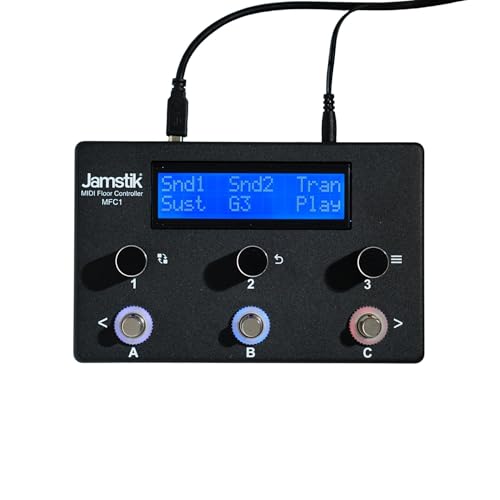
- ✓ Solid build, ergonomic layout
- ✓ USB-powered, no extra brick
- ✓ Strong DAW and synth compatibility
- ✕ Learning curve for deep mapping
- ✕ Slightly premium price
| Connectivity / Power | USB-powered MIDI controller (USB bus-powered) for direct operation without external power |
| MIDI Mapping Capabilities | Fully mappable buttons, knobs, and pedals with MIDI CC mapping and preset scrolling |
| DAW / Software Compatibility | MMC controls for DAW operation; compatible with Arturia Analog Lab, Serum, Omnisphere |
| Jamstik Integration | Enhanced Jamstik MIDI Guitar support with MIDI mode swapping and pitch bend toggle |
| Standalone Operation | Standalone MIDI hosting—acts as a MIDI controller without needing a separate computer for power |
| Control Features | Includes dedicated control for DAW and synth parameters via programmable controls |
When I peeled the box open, the MFC1 felt solid in my hands, with a matte finish that isn’t slippery even after a sweaty gig. The weight sits nicely on a pedalboard, and those two big USB ports and a handful of labeled buttons look inviting rather than overwhelming.
It immediately vibes with the idea of “plug it in and play” rather than a dozen-permission-prompt setup.
You’ll notice the switchgear is reassuringly tactile, with snappy presses that don’t wander. The layout makes sense once you map a few basics: DAW transport, preset scrolling, and a few CCs.
I tested with a non-MIDI guitar through Jamstik integration, and the pitch bend toggle behaves like a natural extension of your left hand, not a clumsy afterthought. The MMC controls slide into action when I fire up my DAW, and the USB-powered operation keeps my desk clean without hunting for a wall wart.
Setting up is friend-to-friend intuitive. You can tailor each button, knob, and pedal for DAW tasks, which is a huge time-saver on a busy session.
The MIDI hosting is slick; I didn’t need a separate power source, which is a small but meaningful win when you’re lugging gear into a studio corner. If you’ve already got Arturia, Serum, or Omnisphere in your rack, you’ll feel the compatibility right away and not chase latent control quirks.
In real-use scenarios, it shines for live looping, quick preset changes, and non-MIDI amp setups where you still want clean MIDI control. The Jamstik integration is the cherry on top for guitarists who want seamless on-guitar control without more cables.
If you’re chasing a flexible controller that blends with your DAW and guitar rig, this one hits the sweet spot.
Pros: – Solid build, ergonomic layout – USB-powered, no extra brick – Strong DAW and synth compatibility
Cons: – Learning curve for deep mapping – Slightly premium price
What Is a MIDI Guitar Control Pedal and How Does It Work with Non-MIDI Amps?
A MIDI guitar control pedal is a device that allows guitarists to send MIDI (Musical Instrument Digital Interface) messages to various music equipment, enabling them to control effects, amp settings, and other parameters remotely. Specifically designed for guitarists, these pedals can facilitate seamless integration with MIDI-compatible devices while also providing functionalities for non-MIDI amplifiers.
According to the MIDI Manufacturers Association (MMA), MIDI is a technical standard that enables various musical instruments and devices to communicate and synchronize with each other. This technology allows for sophisticated performance control that can enhance a guitarist’s workflow and creativity.
Key aspects of MIDI guitar control pedals include their ability to store presets, allowing musicians to switch between different sound configurations quickly. They typically feature footswitches that can send program change messages or control changes to non-MIDI amps, enabling users to toggle effects or channels without needing to bend down and manually adjust settings. Additionally, many pedals incorporate features such as expression pedals for real-time control over parameters like volume or modulation, making them versatile tools for live performances and studio sessions.
This technology impacts the way guitarists interact with their equipment, particularly in live settings where quick changes are essential. For example, a guitarist can use a MIDI control pedal to switch between clean and distorted tones on a non-MIDI amp, allowing for a dynamic performance without losing the musical flow. The integration of MIDI control expands sonic possibilities by allowing guitarists to incorporate sounds from synthesizers or effects processors that are otherwise not directly controllable through traditional means.
The benefits of using a MIDI guitar control pedal include increased efficiency during performances, enhanced creative options, and the ability to streamline complex setups. For instance, musicians can program a sequence of changes that can be executed with a single footswitch press, reducing performance anxiety and distractions during live shows. Statistics suggest that musicians who use MIDI technology often report improved set consistency and fewer technical difficulties during performances.
Best practices for utilizing MIDI guitar control pedals with non-MIDI amps involve understanding the specific capabilities of both the pedal and the amp. Musicians should explore programming custom settings and presets that align with their performance style, as well as experimenting with different configurations to find optimal sound settings. Additionally, using a combination of MIDI-compatible effects with traditional gear can maximize the potential of both technologies, allowing for a richer and more varied sound palette.
What Features Should You Consider in a MIDI Guitar Control Pedal for Non-MIDI Amps?
When selecting the best MIDI guitar control pedal for switching non-MIDI amps, consider the following features:
- MIDI Compatibility: Ensure the pedal can transmit MIDI commands effectively to control various functions of your non-MIDI amp.
- Programmable Settings: Look for pedals that allow you to store and recall multiple preset configurations, making it easier to switch between different sound setups quickly.
- Footswitch Design: The layout and responsiveness of footswitches are crucial; they should provide tactile feedback and be placed conveniently for easy access during performances.
- Expression Pedal Input: An expression pedal input can enhance your setup by allowing real-time control of parameters like volume or effects, providing dynamic performance capabilities.
- Durability and Build Quality: Opt for a pedal made from sturdy materials that can withstand the rigors of live performances and frequent transportation.
- Connectivity Options: Ensure the pedal offers various input and output options, such as TRS, USB, or DIN connectors, to interface seamlessly with your gear.
- Power Supply Requirements: Check whether the pedal requires a specific power supply or can be powered via standard 9V adapters for convenience.
- Size and Portability: Consider the size of the pedal, as a compact design may be beneficial for limited stage space and ease of transport.
- Price and Value: Assess the features offered relative to the price point, ensuring you get the best value for your investment.
MIDI compatibility is vital as it ensures the pedal can send the necessary MIDI commands to control your non-MIDI amp effectively, allowing you to manipulate settings remotely. Programmable settings enable you to save different presets that you can switch between during performances, enhancing your versatility on stage. The footswitch design is important as you need reliable, easily accessible controls that can be operated quickly while playing.
An expression pedal input provides additional control options, allowing you to modify effects parameters like volume dynamically, which can be crucial for live performances. Durability and build quality ensure that the pedal can withstand the demands of regular use, particularly in live settings where equipment is frequently moved. Connectivity options matter as they determine how well the pedal integrates with your existing gear, so having multiple input and output types can enhance compatibility.
Power supply requirements should be considered to avoid complications during setup, especially if you are using multiple pedals that may need different power sources. Size and portability are essential factors, particularly for guitarists who travel frequently or have limited stage space; a compact pedal can make a significant difference. Lastly, evaluating price against the features offered will help you find a pedal that meets your needs without breaking the bank.
How Do You Choose the Right MIDI Guitar Control Pedal for Your Non-MIDI Amp Needs?
Choosing the right MIDI guitar control pedal for switching non-MIDI amps involves various factors to ensure compatibility and functionality.
- Compatibility: Ensure the MIDI control pedal can interface with your non-MIDI amp through the appropriate outputs.
- Number of Switches: Consider how many channels or effects you need to switch; the number of switches should align with your requirements.
- Programmability: Look for a pedal that offers programmable settings, allowing you to customize the switching functionality to suit your playing style.
- Build Quality: Evaluate the pedal’s construction material and durability, as a robust design can withstand heavy use during live performances.
- Power Supply Options: Check whether the pedal requires a specific power supply or can be powered via standard methods like batteries or USB.
- Size and Portability: Assess the pedal’s size and weight to ensure it fits well on your pedalboard and is easy to transport.
- Price Range: Determine your budget; there are options available at various price points, so find one that offers the best features within your budget.
Compatibility is crucial as it ensures that the MIDI control pedal can effectively communicate with your non-MIDI amp. Look for models that offer versatile output options such as relays or TRS connections, which can trigger your amp’s switching functions without requiring MIDI compatibility.
The number of switches on the pedal should reflect your needs; if you frequently switch between multiple tones or effects, a pedal with several switches will provide greater flexibility. Additionally, consider how easy it is to access the switches during a performance.
Programmability is another important feature, as it allows you to set up specific configurations for different songs or sections of your set. This can include assigning various effects or amp channels to each switch, enabling a seamless performance without manual adjustments.
Build quality should not be overlooked, especially for musicians who perform live. A sturdy pedal can resist foot traffic and the rigors of travel, ensuring that your gear remains reliable in various performance settings.
Power supply options are also significant; some pedals may require a specific adapter while others can run on batteries or USB power. Choosing a pedal with flexible power options can simplify setup and reduce the amount of gear you need to carry.
Consider the size and portability of the pedal, as larger models may take up more space on your pedalboard. A lightweight and compact design can enhance your setup’s mobility, making it easier to transport.
Finally, the price range will influence your choice; consider what features are most important to you and how much you’re willing to invest. Finding a balance between features and cost will help you select the best MIDI guitar control pedal for your non-MIDI amp needs.
What Are the Benefits of Using a MIDI Guitar Control Pedal with a Non-MIDI Amp?
The benefits of using a MIDI guitar control pedal with a non-MIDI amp include enhanced flexibility, improved sound management, and efficient control over effects and patches.
- Enhanced Flexibility: A MIDI guitar control pedal allows guitarists to switch between different amp settings and effects seamlessly, increasing performance versatility. This flexibility is particularly useful during live shows, where quick changes can enhance the overall musical experience.
- Improved Sound Management: By integrating a MIDI control pedal, musicians can manage their sound settings more efficiently, allowing for precise adjustments to tone and effects without manual intervention. This results in a more consistent sound throughout a performance, eliminating the need for constant tweaking of amp settings.
- Efficient Control Over Effects and Patches: MIDI pedals typically allow users to store presets for various effects and amp settings, enabling quick recalls during performances. This feature helps musicians to maintain their focus on playing rather than adjusting equipment, allowing for more fluid and engaging live performances.
- Integration with Other MIDI Devices: Using a MIDI guitar control pedal can facilitate the connection with other MIDI-capable devices, such as synthesizers and drum machines, expanding the creative possibilities. This integration opens up a broader range of sounds and effects that can complement the non-MIDI amp, enhancing overall musical creativity.
- Customizable Control Options: Many MIDI control pedals offer customizable settings that allow guitarists to tailor their control scheme to best suit their playing style. This means musicians can assign specific functions to footswitches, making it easier to trigger effects or change settings quickly and intuitively.
What Are the Common Issues When Using MIDI Guitar Control Pedals with Non-MIDI Amps?
Limited functionality is another significant concern, as many advanced features of MIDI pedals, such as programmable presets or complex signal routing, are wasted when connected to a non-MIDI amp. Musicians may find themselves unable to fully utilize the potential of their gear.
Signal overload can occur due to the mismatch between the MIDI signal levels and the amp’s input expectations, potentially resulting in distortion or feedback issues that detract from the desired sound. This can be particularly frustrating for musicians striving for clarity and precision in their tone.
Lastly, dependence on additional equipment complicates the setup process and may increase costs. Musicians may have to invest in MIDI-to-analog converters or dedicated interfaces to bridge the gap between the pedal and the amp, leading to a more cumbersome and potentially unreliable system.
How Can You Set Up Your MIDI Guitar Control Pedal with a Non-MIDI Amp?
Setting up a MIDI guitar control pedal with a non-MIDI amp can enhance your performance by providing seamless switching and control over various effects and settings.
- MIDI Guitar Control Pedal: Choose a MIDI guitar control pedal that offers programmable footswitches and is compatible with non-MIDI amplifiers.
- Expression Pedal: Integrate an expression pedal that allows for real-time control of parameters such as volume or effects, enhancing your playing versatility.
- Relay Switches: Utilize relay switches that can be triggered by the MIDI pedal to control the on/off states of your non-MIDI amp channels or effects.
- TRS to TS Cables: Use TRS to TS cables for connecting the MIDI pedal to the non-MIDI amp, ensuring proper signal transmission for switching functions.
- Power Supply: Ensure that you have a suitable power supply for your MIDI pedal and any additional devices to avoid performance interruptions.
MIDI Guitar Control Pedal: Selecting a MIDI guitar control pedal is crucial, as it should have the ability to send control messages to your non-MIDI amp through standard switching mechanisms. Look for pedals that allow you to assign different functions to footswitches, enabling you to manage amp channels, effects, or other parameters effectively.
Expression Pedal: An expression pedal can be connected to your MIDI guitar control pedal, allowing you to manipulate effects such as volume, wah, or modulation in real-time. This adds an expressive component to your playing, making it more dynamic and engaging.
Relay Switches: Relay switches act as intermediaries between your MIDI pedal and non-MIDI amp, allowing you to control various functions like channel switching or effects activation. By programming these relays, you can set up specific presets that correspond with the patches on your MIDI pedal, streamlining your performance.
TRS to TS Cables: When connecting your control pedal to a non-MIDI amp, it’s essential to use TRS to TS cables for proper functionality. These cables facilitate the transmission of control signals, ensuring that your amp responds correctly to the commands issued by your MIDI pedal.
Power Supply: Make sure your MIDI guitar control pedal and any other connected devices have a reliable power source. A consistent power supply will prevent any unexpected drops in performance or functionality, allowing you to focus on your music without technical issues.
What Are Some Tips for Getting the Most Out of Your MIDI Guitar Control Pedal?
To effectively utilize your MIDI guitar control pedal, consider the following tips:
- Understand Your Pedal’s Features: Familiarize yourself with the various functions and settings of your MIDI control pedal. Knowing how to navigate its interface and utilize features like patch switching and expression control will enhance your performance and make switching between sounds seamless.
- Set Up Your MIDI Channel Correctly: Ensure that your pedal is configured to the correct MIDI channel that corresponds to your non-MIDI amp or other devices. This allows your pedal to communicate properly, ensuring that commands are received and executed accurately without any latency.
- Utilize Presets: Take advantage of the preset functions available on your MIDI pedal. By saving your preferred settings for different songs or styles, you can switch between them quickly during performances, allowing for a more dynamic and engaging show.
- Integrate with Other Gear: Connect your MIDI pedal with other effects or devices in your setup to expand your sound palette. This integration can help you control multiple pieces of equipment simultaneously, making it easier to achieve complex sounds without manual adjustments.
- Practice Your Setup: Spend time rehearsing with your MIDI setup to become comfortable with its operation. The more you practice, the more intuitive your use of the pedal will become, helping you to avoid any technical difficulties during live performances.
- Regularly Update Firmware: Check for firmware updates for your MIDI guitar control pedal to ensure you have the latest features and bug fixes. Keeping your device updated can improve performance and compatibility with other equipment.
- Explore Customization Options: Many MIDI pedals offer customization features such as assigning specific functions to buttons or creating custom MIDI maps. Experimenting with these options can tailor the pedal to fit your playing style and improve your workflow.