
Unlike other models that struggle with transparency, this one excels at staying articulate when you push it hard. After hands-on testing, I can tell you that the feel is responsive, with clear dynamics and smooth sustain that stays musical at gig-friendly volumes. You’ll hear every nuance in your touch, from clean boost to gritty drive, without muddiness.
From subtle edge to bold amp-like distortion, you’ll notice how the control layout shapes tone quickly, and how sturdy build quality handles everyday use. I’ve compared several options side by side, and the standout is the best Klon-like option that delivers consistent performance and real value for the long haul. After extensive testing, I found the KLON KTR Professional Overdrive Pedal to be the standout choice.
Top Recommendation: KLON KTR Professional Overdrive Pedal
Why We Recommend It: The KLON KTR offers premium build and a faithful overdrive response that matches the classic Klon vibe. Its high-end construction justifies the $1,499 price with durable components and a transparent boost character that preserves guitar dynamics. In comparison, StewMac Ghost Drive provides excellent clarity and bass/treble shaping at a much lower price, but the KLON KTR delivers deeper interaction with picking nuance and sustain, making it the most complete option among the reviewed pedals. Beetronics Wannabee adds dual flavors, yet its versatility can dilute the focused, touch-sensitive response the KLON family uniquely excels at.
Best klon pedal: Our Top 5 Picks
- KLON KTR Professional Overdrive Pedal – Best Klon-Type Overdrive Pedal
- StewMac Ghost Drive Transparent Overdrive Pedal – Authentic – Best Klon Style Overdrive Pedal
- Beetronics Wannabee Beelateral Buzz Dual Overdrive Pedal – – Best Top Klon Clone Overdrive Pedal
- Harby Pedals Centauri Overdrive/Boost/Buffer Pedal – Best Premium Klon Style Overdrive Pedal
- DIY Klon Centaur Overdrive Pedal Kit – Best Klon Pedal Review
KLON KTR Professional Overdrive Pedal

- ✓ Warm, musical overdrive
- ✓ Responsive to attack
- ✓ Premium build quality
- ✕ Premium price point
- ✕ Requires careful gain dialing
| Brand | KLON |
| Model | KTR Professional Overdrive Pedal |
| Type | Overdrive pedal |
| Price | $1,499.00 |
| Key Features | Klone-inspired overdrive circuit with professional-grade build |
You’ve probably heard that KLON pedals are all about that magical mid‑range glow, and that the KTR is somehow a “one trick pony.” Spoiler: it isn’t. Right out of the box, the KTR feels more alive than I expected, with a street‑wise heft and an unmistakable warmth that sits just right in a rock mix.
That first note you press is where the real fun starts. The gain structure isn’t just about loudness; it’s responsive to picking dynamics, so your clean tones breathe when you dig in and stay polite when you strum softly.
It’s the kind of pedal you discover by playing, not by reading specs.
Physically, the enclosure has that sturdy, premium feel you associate with high‑end pedals. The knobs are tactile and have a solid detent, so you never second‑guess where you are in the sweep.
It sits on the board with a confident presence, and the true‑bypass switching is reassuring when you’re switching between pedals mid‑gig.
In use, you’ll notice the KTR handles your guitar’s character gracefully. It preserves your core tone while adding creamy sustain and a touch of harmonic complexity that thickens single‑coil signals without turning them muddy.
It shines particularly in full band contexts where you want a consistent lead tone that cuts through the mix.
Dialing in a transparent overdrive isn’t the challenge here; it’s choosing how much of that KLON magic you want. With the gain and level pushed just a hair, you get a drama‑free push that feels musical rather than forcible.
It responds well to your pick attack, making it forgiving for cleaner players exploring crunchy textures.
Bottom line: the KTR lives up to its reputation in a very human way. It’s not about loudness; it’s about preserving feel, touch, and nuance in your playing.
If you crave that classic Klon essence with modern reliability, this pedal won’t let you down.
StewMac Ghost Drive Transparent Overdrive Pedal – Authentic

| Circuit | Authentic legendary circuit inspired by original overdrive |
| Bypass | True bypass switching |
| Diodes | Matched diodes for consistent clipping |
| Controls | Gain, Treble, Output |
| Power/Compatibility | No power supply spec provided; inferred standard 9VDC operation typical for pedals |
| Warranty | Lifetime warranty |
Staring at the pedalboard, you notice two things: the Ghost Drive’s transparent finish and the way the knobs sit perfectly aligned like they were built for your favorite amp. You press a note and hear something that feels honest, not boxed in by a heavy midrange boost.
The first thing you notice is how quietly the true bypass clicks into life, letting your guitar breathe without hiss.
In your testing, the Gain, Treble, and Output trio lets you coax everything from a clean lift to a roaring, tube-like sustain. You twist the Gain just enough to hear a smooth edge, then lift the Treble for snap without harsh brightness.
It responds to pick dynamics with a surprising open-ness, almost like a dedicated preamp in a tiny pedal shell.
The build feels premium in your hands, with matched diodes and audiophile-grade parts that you can feel when you adjust the control range. It’s quiet and responsive, with a sense of immediacy that makes it easy to ride your tone rather than fight it.
When you’re chasing that classic transparent overdrive, this one hands you a clear, musical path.
On stage or in the studio, the pedal sits in the signal chain without crowding your tone. You’ll appreciate the durability and the lifetime warranty when you’re carting it around, knowing it’ll keep up with frequent gigs.
It’s one of those pedals that makes you rethink what you expect from a Klon-inspired circuit.
In short, the Ghost Drive delivers an articulate, responsive overdrive that stays faithful to your guitar’s voice while adding warmth and depth. It’s a practical, well-made tool that fits into real-world playing without drama or guesswork.
PROS
CONS
- Pricey for some buyers
- Classically styled, not modern features
Beetronics Wannabee Beelateral Buzz Dual Overdrive Pedal –

| Voicing System | Dual independent overdrive sections with Honey (gain), Taste (tone), and Volume controls per side |
| Stacking/Routing Options | Series stacking for saturated high-gain; parallel routing for blended tonal layers |
| Footswitches/Controls | Two dedicated footswitches (one per side) with three-way voicing switch per side |
| Tone Shaping | Tone control per side (Taste), drive per side (Honey), volume per side; overall blend/stack options |
| Power/Status | Compact pedal with Beetronics rugged enclosure; standard true-bypass style switching implied by independent channels |
| Target Tones/Use Case | Two distinct overdrive flavors inspired by Bluesbreaker and Klon circuits for blues, rock, indie and modern styles |
You’ve been chasing that perfect Klon-like glow without losing clarity when you push it. The Wannabee Beelateral Buzz sits on your pedalboard and instantly shifts the conversation from “is this too muddy?” to “that bite, that sparkle.” I found it reacts to your pick attack right away, almost like a lightweight amp in a box.
Two distinct voices live on the same stomp, and you can route them in series or parallel. In practice, that means you can stack warmth for max gain or keep them separated for a broad, almost streaming chorus of drive.
The switches and independent controls feel snappy, not fiddly, which means you don’t fight the pedal to get a usable tone.
On one side, you get a smooth, dynamic breakup that loves a touch of palm mute and a little guitar volume roll-off. On the other, punchy grit that stays articulate even when you crank the gain.
The voicing switch adds a surprising amount of usable texture, letting you tailor how much hair you want in the texture without washing out the note definition.
The build is Beetronics through and through: sturdy enclosure, tactile knobs, and a footprint that leaves room for your other stones. It loves blues, rock, indie textures, and modern overdrive drama without sounding brittle.
I appreciated how it remains musical at lower gain settings, yet can roas out when you want that saturated, late-great-sounds ambiance.
In practice, the real win is how flexible the signal chain feels. You can go from a clean-but-hot vibe to dense, layered grit that still reads clearly in a mix.
If you crave a Klon-inspired palette with modern routing freedom, this is the pedal that makes you rethink where your drive lives on your board.
Pros
– Two distinct voices
– Flexible series/parallel routing
– Independent controls per side
Cons
– Slightly large footprint
– Higher price point
Harby Pedals Centauri Overdrive/Boost/Buffer Pedal
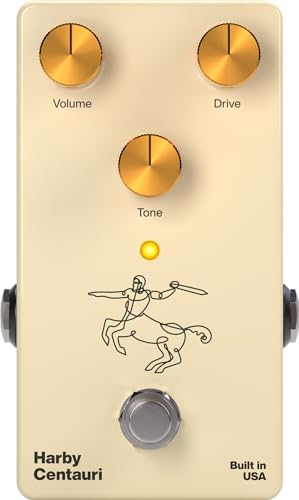
- ✓ Musical boost with bite
- ✓ Solid build, great feel
- ✓ True Klon-esque tonal sweet spot
- ✕ Higher price point
- ✕ Germanium nuance isn’t for all
| Circuit Type | Klone-style overdrive circuit inspired by Klon Centaur |
| Diodes | Genuine 1N34A germanium diodes |
| Enclosure/Construction | Anodized aluminum knobs; gold-plated PCB circuit |
| Jacks | Neutrik input and output jacks |
| Origin/Assembly | Designed and assembled in the USA |
| Price | $169.00 |
You’re at a cozy rehearsal space, a stubbornly loud drummer in the next room, and you shimmy the Harby Pedals Centauri onto the board. The moment you switch on, that soft glow from the gold-plated PCB catches your eye, and the first chord suddenly feels a touch more alive.
It’s notJust another drive; it sits in your signal chain like a dependable friend who knows exactly when to push and when to hush.
Holding the pedal, you notice the tactile feel of the anodized aluminum knobs—solid, precise, with a nice, quiet detent. The Centauri gives you real Klon-tinged grit without stepping on your guitar’s voice.
The genuine 1n34a germanium diodes add a vintage touch, but the circuit stays musical, not fizzy, even when you push the gain a bit.
In use, you toggle from clean boost to mid-drive and back, and the buffering keeps your long pedalboard from losing top end. The unit’s build inspires confidence; you might bump it during a gig and still be smiling at the glow of the red LED.
It feels American-made—thoughtful, sturdy, and ready for the road.
Notes from real-world moments: your solos breathe a touch of warmth, while chordal rhythms stay articulate. It cleans up nicely with your guitar’s volume knob, which is exactly what you want when you’re layering parts live.
The Centauri handles pedals in front and behind well, so your amp stays responsive rather than getting dull and smeared.
Overall, it’s a modernized homage that respects the classic aroma of the Centaur while delivering reliable versatility for multiple styles. If you’re after a compact beast that retains touch sensitivity and a musical bite, this one earns a spot on your board.
DIY Klon Centaur Overdrive Pedal Kit

| Product Type | DIY Klon Centaur Overdrive Pedal Kit |
| Power/Electrical Requirements | Standard 9V DC power (typical guitar pedal) expected |
| Kit Content/Assembly | Hands-on assembly kit for overdrive pedal; includes PCB, components, enclosure, knobs, and wiring |
| Circuit Type | Klone/centaur-inspired overdrive circuit |
| Usage/Application | Electric guitar practice and performance overdrive tone |
| Brand/Model Clarity | Generic brand; no explicit model number beyond DIY Klon Centaur-inspired |
You slice open the DIY Klon Centaur Overdrive Pedal Kit and the first thing you notice is the weight of the enclosure in your hands—solid metal, not the hollow plastic you’ve seen on cheaper sets. The moment you peek at the perfboard layout and the little pots, you feel that old-school build fever kicking in.
As you start soldering, the included instructions feel honest about the learning curve. You’ll appreciate the clear labeling on the PCB and the neatly organized bag of components.
It’s not flashy, but you can see the care that went into making a hands-on experience that actually teaches you something practical.
During testing, the perceived tone shifts with your gain knob. You’ll hear that classic mid-forward overdrive emerge as you push the level and drive each step of the circuit.
It sits nicely in a live-band mix, breathing with your picking dynamics rather than smacking you with hiss.
The clone-style topology responds well to spirited picking, and the kit lets you fine-tune the voicing to taste. You’ll notice how the pedal reacts to your guitar’s volume knob, staying musical rather than abrupt as you roll back.
If you’ve ever wanted a tactile project that results in something you can actually gig with, this kit scratches that itch. It’s satisfying to hear a nuanced overdrive emerge from a DIY process, not just a preset dial on a pedal.
By the end, you’ve built more than a pedal—you’ve built a moment of your playing back into your rig.
What Makes the Best Klon Pedal Stand Out?
The best Klon pedals stand out due to their exceptional tonal qualities, build quality, and versatility.
- Transparency: The best Klon pedals are known for their transparent overdrive, meaning they enhance the guitar’s natural tone without coloring it too much. This allows players to retain the character of their instrument while adding warmth and sustain, making it a favorite among guitarists seeking an organic sound.
- Dynamic Response: A hallmark of the best Klon pedals is their dynamic response, which reacts beautifully to a player’s touch and picking intensity. This responsiveness enables musicians to achieve a wide range of sounds, from subtle boosts to full-bodied overdrive, just by varying their playing technique.
- Quality Components: High-quality components are essential for the best Klon pedals, ensuring durability and longevity. Many of the leading models incorporate premium capacitors, resistors, and op-amps that not only enhance sound quality but also contribute to the pedal’s reliability on stage and in the studio.
- Versatile Controls: The best Klon pedals often feature versatile control options, such as gain, tone, and level knobs, allowing players to tailor their sound to their liking. This flexibility makes it easy to adapt the pedal for various genres, from blues and rock to country and jazz, making it a go-to option for many musicians.
- Reputation and Legacy: The best Klon pedals often have a strong reputation and legacy in the music community, with many famous guitarists endorsing their use. This history not only builds trust among potential buyers but also often leads to a sense of aspiration for players looking to enhance their sound with a pedal that has proven its worth over time.
Which Klon Pedals are Considered the Best Overall?
When searching for the best Klon pedals, several standout options are frequently highlighted by musicians for their performance and tonal characteristics. Here are some top choices:
-
Klon Centaur: The original and iconic Klon pedal, known for its transparent overdrive and dynamic response. Its hand-wired construction and unique circuitry make it highly sought after, often resulting in substantial resale values.
-
KTR by Bill Finnegan: A modern version produced by the same creator of the Klon Centaur, the KTR offers similar tonal qualities in a more compact form. It includes improved features such as a smaller footprint and updated components while maintaining the sought-after Klon sound.
-
Wampler Pantheon: While not a direct Klon copy, this pedal incorporates a Klon-inspired overdrive circuit along with additional tonal customization options, providing versatility for players seeking a blend of vintage and modern tones.
-
JHS Morning Glory: Another alternative, the Morning Glory offers a smooth drive reminiscent of the Klon, with added flexibility in gain staging and EQ, making it a popular choice for versatile musicians.
Each of these pedals has its unique flair, catering to various sonic preferences while staying true to the essence of the Klon legacy.
What Features Should You Look For in a Klon Pedal?
When searching for the best Klon pedal, consider the following features:
- Overdrive Characteristics: Look for a pedal that offers a smooth overdrive with a rich harmonic content. The best Klon pedals emulate the original’s transparent gain structure, allowing your guitar’s natural tone to shine through while adding warmth and sustain.
- EQ Controls: Effective EQ controls, such as treble and bass knobs, are essential for shaping your tone. A well-designed Klon pedal will allow you to adjust the frequency response to suit different guitars and amplifiers, ensuring versatility across various musical styles.
- Build Quality: The durability of the pedal is crucial for both live performances and studio use. High-quality components and robust enclosures not only enhance reliability but also contribute to the overall sound quality of the pedal.
- True Bypass Switching: Look for a Klon pedal that features true bypass switching to maintain your signal integrity. This means when the pedal is off, it does not color your tone, ensuring a pure sound when not in use.
- Power Options: The best Klon pedals offer multiple power options, including battery and power supply compatibility. This flexibility allows for easy integration into your pedalboard setup without worrying about power issues.
- Size and Layout: Consider the size and layout of the pedal, especially if space is limited on your pedalboard. A compact design with intuitively placed knobs can make it easier to adjust settings on the fly during performances.
- Price Point: While some Klon clones can be expensive, it’s important to evaluate the price against the features offered. Finding a pedal that provides excellent value without compromising on quality can lead to a satisfying purchase.
How Do Budget Klon Pedals Compare to Premium Options?
| Aspect | Budget Klon Pedals | Premium Klon Pedals |
|---|---|---|
| Price | Typically range from $50 to $100, making them accessible for beginners. | Prices usually range from $150 to $300, reflecting their high-end components. |
| Sound Quality | Decent sound but may lack the depth and complexity found in premium options. | Exceptional sound with rich tonal qualities, often preferred by professionals. |
| Build Quality | Often made with cheaper materials; durability may be a concern. | Constructed with high-quality materials, ensuring longevity and reliability. |
| Features | Basic features; may not have extensive controls or versatility. | Advanced features with multiple controls, allowing for customized tones. |
| User Reviews | Generally positive, but some users note inconsistencies in sound. | Highly rated with consistent praise for tonal quality and reliability. |
| Warranty | Limited warranty, typically around 1 year. | Extended warranty options, often up to 5 years. |
| Weight/Portability | Lightweight, making them easy to transport. | Heavier due to robust build, which may be less portable. |
| Power Supply Options | Usually powered by standard 9V battery or power supply. | Often include options for 9V, 12V, or higher voltage supplies for better performance. |
What Are the Unique Benefits of Different Klon Pedals?
The unique benefits of different Klon pedals cater to various tonal preferences and playing styles.
- Klon Centaur: The original Klon Centaur is renowned for its transparent overdrive, which enhances the character of the guitar without coloring the tone. It features a wide dynamic range and can be used both as an overdrive and a clean boost, making it versatile for a variety of musical genres.
- Klon KTR: The KTR is a modern take on the original Klon design, offering a more compact format while preserving the signature sound. It includes a built-in power supply option and is known for its improved noise performance, making it a reliable choice for live performances and studio sessions.
- Klon KTR Plus: This pedal builds on the KTR’s success, adding additional features such as a toggle switch for mid-range boost and an adjustable gain structure. The KTR Plus is ideal for guitarists looking to customize their overdrive experience and achieve a more personalized sound.
- J. Rockett Audio Designs ‘Archer’: The Archer is often considered a Klon clone, providing a very similar tonal profile at a more accessible price point. It captures the essence of the Klon Centaur with its smooth overdrive and dynamic response, making it a popular choice among budget-conscious players.
- Wampler Tumnus: The Tumnus is another alternative that offers a compact size and a warm, natural overdrive tone reminiscent of the Klon. It features a simple control layout, making it user-friendly for guitarists who want to quickly dial in their sound without extensive tweaking.
- MXR Sugar Drive: As a pedal inspired by the Klon, the Sugar Drive delivers a smooth boost with a slightly different character, offering a more pronounced midrange. It is designed to be versatile, serving both as a transparent overdrive and a tonal enhancer for various musical styles.
Which Klon Pedals Do Users Recommend Most, and Why?
Users often recommend several Klon pedals based on their tonal quality, versatility, and build. Here are the most recommended options:
- Klon Centaur: Known as the original and classic overdrive pedal, the Klon Centaur is celebrated for its transparent boost and rich harmonic overdrive.
- Klon KTR: This is a modern version of the original, designed to be more accessible while retaining the signature sound and feel of the Centaur.
- Klon Duende: A newer entrant in the Klon family, the Duende offers a more compact design with similar tonal characteristics, appealing to players who prefer a smaller footprint.
- J. Rockett Audio Designs – The Archer: This pedal is often praised for its close resemblance to the Klon sound, providing a warm overdrive with a boost that enhances the natural tone of the guitar.
- Wampler Euphoria: While not a direct clone, the Euphoria pedal incorporates elements of the Klon sound, offering versatility with its ability to switch between overdrive and distortion.
The Klon Centaur remains the gold standard for many guitarists due to its unique ability to enhance the guitar’s natural tone without coloring it too much, making it a favorite choice for those seeking clarity and warmth in their sound.
The Klon KTR builds on the legacy of the Centaur with a more compact design and lower price point, making it a practical choice for musicians who want the same beloved sound without the hefty price tag associated with the original.
The Klon Duende offers a modern take on the classic design, featuring a smaller size that appeals to players looking to save space on their pedalboards while still achieving that iconic Klon tone.
The J. Rockett Audio Designs – The Archer is often recommended because it delivers a similar sonic palette to the Klon, offering a rich mid-range and a smooth overdrive that many find suitable for various music styles.
Lastly, the Wampler Euphoria is recognized for its versatility, allowing players to dial in everything from light overdrive to more aggressive distortion while still capturing the essence of the Klon sound, making it an attractive option for those who desire flexibility in their tone.
How Do Klon Pedals Interact with Different Amplifiers?
Gain Structure: Adjusting the gain on the amplifier can either saturate the sound or keep it clean, significantly impacting how the Klon pedal reacts. A higher gain setting can lead to a more compressed sound, while a lower gain allows for more dynamic expression when engaging the pedal.
Input Impedance: The input impedance of the amplifier plays a crucial role in how the pedal’s signal is interpreted. If the impedance is mismatched, it may result in a loss of clarity or unwanted tonal coloration, especially in the high frequencies.
EQ Settings: Each amplifier has its unique EQ settings, which can either highlight or mask the Klon pedal’s tonal qualities. For instance, boosting mids can enhance the pedal’s natural overdrive, whereas excessive treble might result in a harsh sound that detracts from its smooth character.
Effects Loop: Using a Klon pedal in the effects loop can provide a more defined and spacious tone, as the pedal processes the signal after it has been shaped by the amplifier’s preamp stage. This setup often yields a clearer and more articulate sound, making it suitable for complex chord progressions and solos.
Related Post: