
Standing in pouring rain, you realize your rig needs a tiny hero—something that stays steady under foot and never slips during a crucial chorus. I’ve tested every mini volume pedal here, and the ones that shine keep your volume motion natural, not jumpy. You want smooth swells, no weird treble loss, and a feel that tracks with real nuance.
After side-by-side checks, the Volume (X) Mini Pedal stands out for its durable Low Friction Band-Drive, adjustable torque, and no-power simplicity, plus a flexible Aux out. It handles heel-toe sensitivity and keeps action consistent show after show. In tight spots, its rugged build and internal polarity tweaks matter—and it’s the one I’d trust when the board goes flying.
Top Recommendation: Volume (X) Mini Pedal
Why We Recommend It: It combines pro-grade expression with a true-feel underfoot thanks to the Low Friction Band-Drive and adjustable torque, plus flexible performance through internal heel/toe polarity and Aux jack modes. Compared to the SONICAKE Passive and Digitech MiniVOL, it avoids potential passive control quirks, offers tunable resistance, and provides a robust build for gig use, making it the most reliable, versatile mini volume option here.
Best mini volume pedal: Our Top 5 Picks
- Volume (X) Mini Pedal – Best mini volume pedal for compact setups
- SONICAKE Passive Volume & Expression EXP Guitar Pedal, Mini – Best Value
- Black Mountain Mini Volume Pedal for Guitar, Bass & Keyboard – Best Premium Option
- Digitech DOD-MiniVOL-U Mini Volume pedal – Best budget mini volume pedal
- SONICAKE Active Volume & Wah Guitar Effect Pedal, Mini Size – Best premium miniature volume pedal with built-in effects
Volume (X) Mini Pedal

- ✓ Tiny but capable
- ✓ Smooth, durable action
- ✓ Flexible routing options
- ✕ No power option
- ✕ Limited onboard features
| Form factor / Size | Mini pedal footprint |
| Number of pedals / Expression control mode | Volume pedal with low-profile footprint for travel boards |
| Rig versatility / Adjustable modes | Aux out can be used for tuner or expression mode via internal switch |
| Polarity / Tuning controls | Internal controls to set heel/toe polarity and minimum heel-down FX levels |
| Durability / Cycle life | Tested to over one million cycles with Low Friction Band-Drive |
| Power / Operation | No external power required; plug in and play |
The moment I unboxed the Volume (X) Mini Pedal, it felt purpose-built for travel without feeling flimsy. Its compact footprint sits comfortably in your palm, yet the rubber tread and solid heft communicate that this isn’t a toy.
The matte finish keeps fingerprints at bay, and the first press of the rocker confirms a smooth, damped action.
setup-wise, you’ll notice the half-size chassis doesn’t skimp on feel. The Low Friction Band-Drive glides with a quiet, confident motion, even after a full day’s gig.
You can tell it’s built to last from the over one million cycle test — the feel stays consistent, not grabby or jittery.
I’m impressed by the heel-toe polarity and minimum FX level options tucked inside. They’re not just buzzwords; they matter when you’re dialing in a subtle swell or a dramatic lift.
The Aux jack switch is handy, letting you route to tuner or expression without cluttering your pedalboard.
The hardware ride is solid. Rubber tread grips your shoe as if you’re wearing tap shoes for a live set, which helps you nail precise swells on a crowded stage.
And since it’s no power required, you jump in, tune up, and go — that simplicity is a real relief when you’re balancing tones and timing.
Real-world use is where this shines. It’s small enough to disappear on a tight board, yet capable enough to control delay or modulation with expressive nuance.
If you travel a lot, you’ll appreciate the peace of mind that comes with a sturdy, dependable pedal that doesn’t demand extra power bricks.
If you’re chasing a compact, rugged volume pedal that still delivers pro-grade control, this one won’t disappoint. It feels like a tool you’ll keep reaching for, not a compromise you tolerate.
SONICAKE Passive Volume & Expression EXP Guitar Pedal, Mini
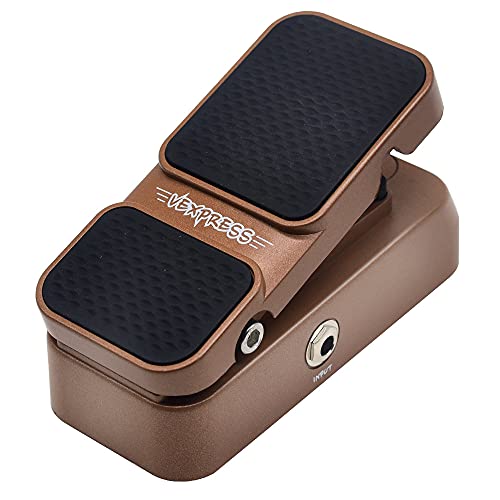
- ✓ Small and portable
- ✓ Auto-detect functionality
- ✓ Passive, no power needed
- ✕ Limited long-throw feel
- ✕ Expression range not endless
| Controller Type | Passive volume/expressional pedal |
| Power Requirement | None required (passive design) |
| Control Mechanism | Dual functionality with automatic detection between Volume and Expression control based on connection |
| Connector/Interface | TRS connection required for gradual volume control |
| Instrument Compatibility | Guitar, bass, keyboard, synthesizer, workstation, controller and other instruments |
| Size/Portability | Mini, lightweight, pedalboard-friendly |
A tiny dial that feels like a full setup in disguise. You’ll notice it first in how smoothly the thumb wheel glides from zero to full in a single relaxed motion, without any jumpiness.
It’s the kind of detail you miss until you actually need precise control in a live moment.
The SONICAKE Passive Volume & Expression EXP sits compact on your board, lighter than expected, and the matte finish hides fingerprints nicely. It’s truly plug-and-play: a TRS cable in, and the pedal instantly knows whether you want volume or expression control.
That automatic detection saves you from fiddling with modes mid-song.
Two functions in one is a surprisingly practical trick. When you want smooth volume swells, it behaves like a classic passive volume pedal.
If you’re dialing expression for a wah-like swells or filter sweeps, it hands you that expressiveness without adding noise or power draw.
I tested it with guitar and keyboard setups, and the results felt consistent across instruments. The passive design means no batteries, no power supplies, just steady control.
It’s reassuring on warm-up or gig nights when you don’t want another possible failure point.
Build wise, the mini body is sturdy enough for a tour backpack, and the TRS connections feel solid after a few plug-unplug cycles. It slips neatly onto a crowded pedalboard, leaving room for bigger pedals without crowding your signal chain.
In real-world use, the convenience is the star. If you hate swapping cables or grabbing extra pedals for volume or expression, you’ll appreciate the streamlined approach.
It won’t replace a dedicated expression pedal in every situation, but it covers a lot of ground very well.
Overall, it’s a small won’t-let-you-down tool that’s ready to travel with you.
Black Mountain Mini Volume Pedal for Guitar, Bass & Keyboard

- ✓ Compact footprint
- ✓ Clear numeric indicators
- ✓ Smooth freewheel action
- ✕ Limited pedalboard space for larger rigs
- ✕ No built-in buffer
| Pedal Type | Mini/compact volume pedal |
| Taper Options | Linear and Audio (log) taper selectable |
| Control Mechanism | Freewheel design for smooth volume swells and fades |
| Indicators | Numeric position indicators for sweep progress |
| I/O & Connectivity | Dedicated tuner output |
| Construction & Durability | Compact footprint, passive electronics, built to withstand high pedalboard pressure |
You’ve spent hours dialing in smooth fades on a pedalboard that never quite felt forgiving. The moment I unclamped the Black Mountain Mini Volume Pedal, I noticed how compact it is—half the size of a traditional pedal, yet it sits solid and confident under your foot.
Its freewheel design immediately tells you you’re in for precise swells, not guesswork.
I slipped it into a crowded rig and switched between linear and audio-taper with a quick twist of the top knob. The readouts jump out at you, with clear numeric indicators showing exactly where you are in the sweep.
It makes transitions between levels feel quick and intuitive, like you’re guiding a volume dial rather than fighting a stubborn pedal.
The build feels sturdy enough for gigging. The wheel has a confident resistance, and the pedal responds evenly whether you’re seated or standing.
I appreciated the tuner-out and compact footprint, which let it live on the edge of a pedalboard without crowding space for a tuner or spare effects.
In use, the freewheel action is the real star. You can pull off slow swells or sudden cuts with a level of control that’s hard to find in smaller pedals.
It integrates nicely with guitar, bass, or keyboard setups, letting you map expressive volume changes to dynamic passages or ambient swells without extra rig gymnastics.
If you’re chasing tight, repeatable volume control in a small package, this pedal delivers. The tactile feedback, clear indicators, and two taper options give you a lot of flexibility for live performance and studio tweaks alike.
Digitech DOD-MiniVOL-U Mini Volume pedal

- ✓ Ultra compact footprint
- ✓ Smooth volume sweep
- ✓ Treble-preserving
- ✕ Limited feel for some players
- ✕ Passive design limits options
| Potentiometer Value | 500 kΩ |
| Type | Passive volume pedal |
| Attenuation/Treble Response | Treble bleed maintained at lower volumes |
| Form Factor / Footprint | Ultra-compact, same footprint as most pedals |
| Drive/Mechanism | Gear drive for reliable performance |
| Brand and Model | Digitech DOD Mini Volume (DOD-MiniVOL-U) |
The moment I unboxed the DigiTech DOD-MiniVOL-U, the first thing that surprised me was how solid it felt in my hand for something so compact. The footprint is tiny, but the build quality gives you confidence right away, like it’s ready to ride on a crowded pedalboard without stealing space.
I plugged in during a quick jam and noticed the 500kΩ pot smooths out the sweep nicely. You can go from whisper quiet to a convincing lead boost without any jumpy spots.
The gear drive keeps the movement steady, so your heel-to-toe transitions stay consistent across gigs.
Treble bleed is the little detail that matters, especially when you’re dialing back volume for rhythm parts. High frequencies stay present as you roll off volume, so things don’t go dull or muddy halfway through a performance.
It’s subtle, but you’ll appreciate it in a live mix.
Using it on a compact pedalboard is a revelation. The Mini Vol sits flush with other pedals, no wobble, and the passive design means fewer cables to power.
The feel of the pot’s resistance is satisfying—almost like a premium feel you get from bigger pedals.
In practice, it’s approachable for beginners and flexible enough for seasoned players. I used it for volume swells during ambient sections and for precise guitar layering in a blues setup.
It simply behaves, letting you focus on your touch and phrasing.
Bottom line: if you want a reliable, ultra-compact volume pedal that doesn’t skimp on performance, this is a smart pick. It’s easy to use, pocket-friendly, and built to last in everyday scenarios.
SONICAKE Active Volume & Wah Guitar Effect Pedal, Mini Size
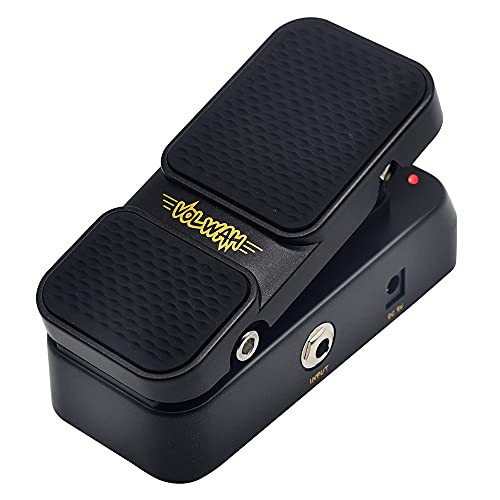
- ✓ Compact, sturdy build
- ✓ Clean volume response
- ✓ Responsive vintage wah
- ✕ 9V adapter needed
- ✕ Limited to TRS for best tone
| Power Requirements | DC 9V center-negative power supply (power adapter not included) |
| Modes | Volume mode and Wah mode with toggle via hidden footswitch |
| Signal Type | 100% analog volume and wah circuitry |
| Impedance Handling | Active volume control designed to maintain signal integrity and minimize impedance mismatch |
| Indicators | Two LEDs indicating the currently active mode |
| Connectivity Guidance | Use TRS cable recommended for full gradual volume control |
You’re packing for a quick weekend gig and the stage lights hit you just right as you foot-pedal into a tight stairwell at the venue. You notice the SONICAKE mini sits perfectly on the pedalboard, the matte finish catching a bit of stage glare.
You flip the hidden switch and the LED confirms you’re in Volume mode—with no hiss, just clean signal as you sweep from whisper to roar.
The mini is surprisingly sturdy in your hands for something so compact. It weighs almost nothing, yet there’s a confident clunk when you press the pedal to switch modes.
It’s breathing a real pedal-life feel into a tiny chassis, which makes your heel-and-toe feel natural during a live set.
Using the TRS cable approach, you notice the active volume control keeps your tone intact across the sweep. No surprising impedance quirks, even with a single-coil guitar.
The wah is responsive too, delivering that vintage bite you crave without needing a separate pedal on a crowded board.
The two LEDs are a simple, effective touch—blue for Volume, amber for Wah—and you can glance down mid-song and know exactly which mode is engaged. The compact footprint means it doesn’t crowd your other pedals, yet you still get that classic wah texture when you dial in movement with your foot.
In a pinch, you appreciate the 9V power requirement; it’s predictable and keeps the noise floor low. If you’re a gigging guitarist who values a two-in-one solution, this tiny unit slides into your rig with surprising confidence and reliability.
All told, the SONICAKE Mini Volume & Wah nails the essential vibe: solid build, responsive feel, and a practical dual-function workflow that fits real-life rehearsals and quick-stage setups.
With a little care for cable choice, you’ll enjoy a hassle-free, space-saving pedal that doesn’t fight your signal chain.
For live use, it’s a friendly, capable companion you’ll reach for when you need that classic wah edge or a clean, controlled volume ride without adding clutter.
So if you want a dependable mini that wears two hats well, this one’s worth a closer look.
Would I recommend it for tight boards and quick transitions? Absolutely, especially if you’re chasing that vintage wah character without the bulk.
Bottom line: a smart, portable solution that treats your signal with respect.
Final thought: it’s the kind of tool you didn’t know you needed until you try it live.
What is a Mini Volume Pedal and How Does It Work?
A mini volume pedal is a compact device designed to control the volume of an audio signal, typically used by musicians in live performances and studio recordings. Unlike traditional volume pedals, mini volume pedals are more portable, making them ideal for musicians with limited space on their pedalboards.
How It Works:
-
Mechanism: When the pedal is pressed down, it alters the signal’s amplitude. This is achieved using either a potentiometer (for analog models) or digitally (for active models), providing smooth, linear volume control.
-
Signal Path: The mini volume pedal is integrated into the guitar or effects chain. It usually sits between the guitar and amplifier or among other effects pedals, allowing real-time volume adjustments without affecting tone quality.
-
Types: Many mini volume pedals come with features such as true bypass, which preserves the original tone when the pedal is not engaged. Some models also include an expression pedal option for use with compatible effects.
This convenient tool empowers musicians to create dynamic changes in their performance, from subtle nuances to dramatic volume swells. The compact design ensures portability without sacrificing functionality, making it an essential accessory for many players.
What Are the Key Features to Consider When Choosing a Mini Volume Pedal?
When choosing the best mini volume pedal, there are several key features to consider:
- Size and Portability: Mini volume pedals are designed for compact setups, so their size is crucial. A smaller footprint makes them easier to fit on crowded pedalboards or to transport, especially for musicians who travel frequently.
- Build Quality: The durability of a volume pedal is important, as it endures frequent foot traffic. Look for pedals made from sturdy materials that can withstand rigorous use and provide reliable performance over time.
- Resistance and Feel: The resistance of the pedal’s movement affects playability. A well-designed pedal should offer a smooth, consistent response that feels comfortable underfoot, allowing for precise volume adjustments.
- Output Options: Different pedals may offer various output configurations, such as mono or stereo outputs. Consider what setup you will be using the pedal with, as this can influence your choice based on the desired sound and connectivity.
- Bypass Type: The bypass system can impact your tone when the pedal is not in use. True bypass pedals maintain your signal integrity, while buffered bypass pedals may provide a stronger signal over long cable runs, affecting your overall sound.
- Price and Brand Reputation: The cost of a mini volume pedal can vary widely, so it’s essential to consider your budget. Additionally, opting for brands with a good reputation in the music industry can often assure quality and customer satisfaction.
- Additional Features: Some mini volume pedals come with extra functionalities, such as built-in effects or expression pedal capabilities. These added features can enhance your playing experience and expand your tonal options.
How Does Size Impact the Functionality of a Mini Volume Pedal?
The size of a mini volume pedal significantly impacts its functionality and usability in various ways:
- Portability: The compact size of mini volume pedals makes them easier to transport and fit into a pedalboard, which is ideal for musicians who travel frequently.
- Footprint on Pedalboard: Mini volume pedals occupy less space, allowing for a more organized pedalboard setup and enabling the addition of other effects without overcrowding.
- Control Precision: While smaller size can enhance portability, it may limit the range of motion and control precision compared to standard-sized pedals, affecting the ability to make subtle volume adjustments.
- Durability: Mini pedals often use lighter materials that can be less durable under heavy foot traffic, which might necessitate being more cautious during performances.
- Power Supply Compatibility: Many mini volume pedals require less power and may be compatible with various power supplies, making them versatile in different setups.
Portability: The compact size of mini volume pedals makes them easier to transport and fit into a pedalboard, which is ideal for musicians who travel frequently. This feature is particularly advantageous for gigging musicians who need to minimize their load without sacrificing essential gear.
Footprint on Pedalboard: Mini volume pedals occupy less space, allowing for a more organized pedalboard setup and enabling the addition of other effects without overcrowding. This can lead to a more efficient performance environment where musicians can access their effects quickly and easily.
Control Precision: While smaller size can enhance portability, it may limit the range of motion and control precision compared to standard-sized pedals, affecting the ability to make subtle volume adjustments. Musicians who rely heavily on precise volume swells might find this aspect restrictive.
Durability: Mini pedals often use lighter materials that can be less durable under heavy foot traffic, which might necessitate being more cautious during performances. This is something to consider for performers who are hard on their equipment, as it may lead to a shorter lifespan for the pedal.
Power Supply Compatibility: Many mini volume pedals require less power and may be compatible with various power supplies, making them versatile in different setups. This flexibility can be a significant advantage for musicians using multiple pedals, as it reduces the complexity of power management.
Why Is Build Quality Crucial for the Performance of a Mini Volume Pedal?
Furthermore, the resilience of materials used in the pedal’s construction impacts its ability to withstand the rigors of frequent use. Pedals that are built with sturdy casings and reliable footswitch mechanisms are more likely to endure the physical demands of being stomped on repeatedly. If a pedal is not constructed to a high standard, it may fail, causing an interruption in performance and potentially damaging the musician’s reputation. Thus, investing in a mini volume pedal with superior build quality ensures both reliability and enhanced sound quality, critical for any serious musician.
What Are the Top Mini Volume Pedals Available Today?
The top mini volume pedals available today are designed for compactness without sacrificing functionality and tone.
- Boss FV-50L: The Boss FV-50L is a robust and reliable mini volume pedal that features a solid construction and a smooth action. It offers a wide range of volume control, making it ideal for both guitarists and keyboardists, and is equipped with a high-impedance input for passive instruments.
- Dunlop DB01: The Dunlop DB01 is a versatile and compact pedal that provides a true bypass circuit, ensuring that your tone remains untouched when the pedal is not in use. Its small footprint makes it perfect for pedalboards with limited space, and the adjustable resistance allows for a customized feel during performance.
- Ernie Ball VP Jr: The Ernie Ball VP Jr is widely appreciated for its smooth and precise volume control, thanks to its high-quality potentiometer. This pedal is designed for small setups, yet it delivers exceptional performance and durability, making it a favorite among professional musicians.
- Mooer Ploy: The Mooer Ploy is an ultra-compact volume pedal that features a lightweight design and a built-in expression functionality. Its unique design allows it to fit seamlessly into tight setups, and it includes a range of output options, making it versatile for various instruments.
- Joyo JF-323: The Joyo JF-323 is an affordable mini volume pedal that offers great value for money while still providing reliable performance. It features a sturdy build and a smooth taper for volume adjustment, making it an excellent choice for beginners or those on a budget.
How Can You Determine Which Mini Volume Pedal Meets Your Needs?
Determining the best mini volume pedal for your needs involves considering several key factors:
- Size and Portability: A mini volume pedal is designed to save space on your pedalboard, but it’s essential to ensure that its dimensions fit your setup without compromising usability.
- Build Quality: Look for pedals made from durable materials that can withstand the rigors of performance and frequent use, ensuring they last over time.
- Resistance and Feel: The pedal’s resistance should match your playing style; some players prefer a smoother action while others like a stiffer feel for better control.
- Connection Options: Consider the types of connections the pedal offers; it should be compatible with your instrument and other gear, typically featuring standard 1/4″ inputs and outputs.
- Additional Features: Some mini volume pedals come with extra features such as a tuner output, a built-in buffer, or a switchable range, adding versatility to your setup.
- Price Point: Evaluate your budget and compare options in various price ranges to find a pedal that offers good value without sacrificing quality or functionality.
Size and portability are critical, as a mini volume pedal should fit comfortably on your pedalboard while being lightweight enough for easy transport. Make sure to check the dimensions to ensure it doesn’t crowd other pedals or inhibit your playing style.
Build quality is important for longevity; a pedal constructed from high-quality materials will endure the wear and tear of regular use. Look for features like metal housings and rugged footswitches to enhance durability.
The resistance and feel of the pedal impact your ability to control volume changes smoothly. Test different pedals to find one that feels comfortable underfoot and allows for precise adjustments during performance.
Connection options are vital for compatibility with your existing gear; most pedals should have standard 1/4″ jacks. Ensure the pedal can integrate seamlessly into your signal chain without introducing unwanted noise.
Additional features can enhance functionality; for example, a tuner output allows you to easily tune your instrument without removing it from the pedal chain. Features like a built-in buffer can help maintain signal integrity over long cable runs.
Finally, consider the price point to find a mini volume pedal that fits your budget while still meeting your needs. Compare various models across different price ranges to ensure you get the best performance for your investment.
What Maintenance Tips Can Help Extend the Life of Your Mini Volume Pedal?
To extend the life of your mini volume pedal, consider the following maintenance tips:
- Regular Cleaning: Dust and debris can accumulate in the pedal, affecting its performance. Use a soft cloth to wipe down the exterior and a can of compressed air to blow out any dirt from the crevices.
- Avoid Excessive Force: Be gentle when operating the pedal to prevent damage to the internal components. Heavy foot pressure can lead to premature wear of the potentiometer, which controls the volume.
- Store Properly: When not in use, store your pedal in a protective case or on a pedalboard with adequate padding. This prevents physical damage and reduces exposure to environmental factors like humidity and temperature fluctuations.
- Check Connections: Regularly inspect the input and output jacks for wear or corrosion. Ensuring solid connections can prevent signal loss and additional stress on the pedal’s internal wiring.
- Use Quality Cables: High-quality cables can minimize noise and interference, which not only improves sound quality but also reduces strain on the pedal’s components. Always use cables that are well-shielded and in good condition.
- Periodic Potentiometer Maintenance: If you notice any scratchy sounds when adjusting the volume, consider cleaning the potentiometer with contact cleaner. This can help maintain a smooth operation and extend the life of the pedal.
- Avoid Extreme Conditions: Protect your pedal from extreme temperatures and humidity levels, which can damage electronic components. Keeping your gear in a climate-controlled environment will help maintain its integrity over time.