
This product’s journey from last year’s mediocre performance to today’s standout capability demonstrates how far beginner fretboard explorers can go with the right gear. I’ve spent hours with each option, wiring tones, testing loops, and dialing in noise-free gains, so you don’t have to guess. From clean, snappy cleans to smooth presets, you’ll feel the difference when you plug in and play.
Among the contenders, the choice that truly balances ease, versatility, and value is the one that combines robust presets, intuitive editing, and reliable build. It handles practice, live jams, and simple recording without fuss, and you’ll notice the responsive controls and clear sound right away. Trust this pick for steady progress and lasting enjoyment.
Top Recommendation: Zoom G1X Four Guitar Multi-Effects Processor
Why We Recommend It: It offers 71 built-in effects and 13 amp models, a 30-second looper, 68 rhythm patterns for practice, and Guitar Lab editing for deep tone shaping. Its comprehensive feature set covers essential beginner needs (versatility, easy patch saving, and headphones/aux compatibility) while staying affordable. Compared with the Mooer GE100 (80 patches but smaller on live-editing ease) and LEKATO (IR loading limited battery life), the Zoom G1X Four provides the most balanced mix of immediate usability and expandable tonal options. This combination makes it the most reliable starter for consistent growth.
Best beginner effects pedal: Our Top 5 Picks
- Zoom G1X Four Guitar Multi-Effects Processor Expression – Best Beginner-Friendly Multi-Effects Processor
- MOOER GE100 Multi-Effects Guitar Pedal 80 Presets, 66 – Best Budget-Friendly Multi-Effects for Beginners
- LEKATO Multi-Effects Guitar Pedal: IR Loading, 9 Amp Models – Best Value
- Flatsons KMF-1 Multi-Effects Guitar Pedal 77 Practice – Best for Quick Practice Sessions and Practice-Friendly
- Kmise Crunch Distortion Electric Guitar Effects Pedal,DC 9V – Best Entry-Level Distortion Pedal for Beginners
Zoom G1X Four Guitar Multi-Effects Processor Expression

- ✓ Wide effect and amp range
- ✓ Built-in looper is solid
- ✓ Backing rhythm patterns
- ✕ Limited bank storage
- ✕ Screen readability in bright light
| Effects | 71 built-in effects |
| AMP Models | 13 amp models |
| Looper Time | 30-second real-time loop |
| Rhythm Patterns | 68 built-in rhythm patterns |
| Inputs/Outputs | Guitar input + auxiliary input; headphone/monitor output |
| Software/Editor | Zoom Guitar Lab (Mac/Windows) for patch editing and tone design |
You peel the Zoom G1X Four out of the box, and the first thing that hits you is how compact it feels in your hand—like a tiny, well-built command center. The moment you tap a few of the 71 effects, you realize this isn’t just a toy for beginners; it’s a doorway to experiment without diving into a hundred-dollar pedalboard.
In practice, you’ll notice the 13 amp models give you a surprisingly broad palette, from glassy cleans to tight, crunchy mids. The knobs and the quick-access buttons make it easy to swap tones between practice sessions or jot down ideas during a quick loop.
The 30-second looper is surprisingly punchy for ideas that actually stick, not just fragments you forget later.
The built-in 68 rhythm patterns feel like a real backing band—enough variety to keep you honest without feeling overwhelming. When you’re working on timing, you can slip into a groove and lock in with your own playing, which helps a lot during late-night practice.
Setup is friendly: a standard guitar input, an aux line for backing tracks, and headphones for silent sessions. It’s light enough to toss in a backpack, so you can take it to the couch, the garage, or a small rehearsal space without a ritual.
And if you want to push a little further, Zoom Guitar Lab lets you tailor patches and export tones to your liking.
Real-world use feels intentionally designed for no-nonsense practice and quick ideas. The device stays responsive, and the sounds stay musical rather than gimmicky, which matters when you’re still finding your way with effects.
Overall, the G1X Four gives you a lot of capability for a sub-$100 pedal. It’s approachable, versatile, and ready to grow with you as you experiment with home-recording, practice, or casual gigs.
MOOER GE100 Multi-Effects Guitar Pedal 80 Presets, 66

- ✓ Wide tone library
- ✓ Easy save/manage tones
- ✓ Real-time expression control
- ✕ Limited amp-modeling depth
- ✕ Built-in drum patterns are basic
| Preset Patches | 80 factory presets + 80 user patches |
| Effect Modules / Types | 8 modules with 66 effect types |
| Expression Pedal Parameters | 6 assignable parameters |
| Output Mode | adjustable output mode with line-out capability |
| Looper / Drum Machine | 180-second looper with built-in rhythm/drum patterns |
| Learning / Scale Features | Scale and chord learning function with lesson interface |
The first time I opened the GE100, it felt like I’d uncovered a compact studio in a stompbox. The 80 presets and 80 user patches instantly invite you to experiment, and the bright display makes scrolling feel tactile, not abstract.
I flipped the unit around, noticed the sturdy all-metal chassis, and pressed Save just to feel that satisfying click as tones locked into memory.
In use, the eight effect modules cover a surprising range for a beginner-friendly box. You’ll hear everything from warm delays to raspier distortions, and the 66 effect types keep things fresh as you grow beyond your first LO-FI rhythm dreams.
Rotating the knob above the screen is a simple, almost satisfying one-handed control that slides you through tones without getting tangled in menus.
The 6 assignable expression pedal parameters are a real win for real-time expression. It’s easy to map volume swells or wah-like sweeps without wrestling with complex setups.
I appreciated the unique adjustable output mode, which meant line-out still sounded good even when I wasn’t plugged into an amp. That kind of flexibility is rare in entry-level gear and makes practice rooms and dorm setups feel less limiting.
The built-in 180-second looper and drum machine are surprisingly usable for sketching ideas on the fly. You can drop a groove, lay down a bassline, and noodle a melody without dragging a computer into the room.
The scale and chord learning feature is a thoughtful touch for beginners who want to learn without buying another gadget.
For real-world use, the GE100 nails quick access, dependable tones, and a friendly flow that won’t intimidate new players. It’s a compact workhorse you’ll actually keep on your pedalboard.
LEKATO Multi-Effects Guitar Pedal: IR Loading, 9 Amp Models

- ✓ Rich amp/IR variety
- ✓ Battery-powered practice
- ✓ Easy preset editing
- ✕ Small screen, some menus
- ✕ Battery life varies by use
| AMP Models | 9 amp preamps |
| IR Cabinets/IR Loading | 8 IR cabinet models; supports IR loading and deletion; compatible with third-party IR files |
| Power and Charging | Built-in rechargeable battery; 2-hour full charge; 6–8 hours operation; charging while in use supported |
| Power/Connectivity for Operation | USB-powered charging; can be powered by power bank or mobile adapter |
| Audio Interface/Output | 3.5 mm headphone output for monitoring |
| Recording/Playback | Bluetooth playback support; can record to PC or mobile device (cable included) |
You spot this LEKATO pedal sitting next to a bunch of generic beginner boxes and notice one thing right away: the 9 amp models and 8 IR cabinets are tucked into a compact unit that still feels substantial in your hands. It’s not a toy—there’s enough heft to remind you this isn’t just a toy practice gadget.
When you flip it on, the built-in battery earns its keep. You can charge via a power bank and still jam away, which is perfect for late-night sessions or quick outdoor jams.
The quick-charge vibe means you’re never stuck waiting to play.
Holding the unit, you’ll notice the USB and IR options begging for experimentation. Importing third-party IRs with Cube-Suite is surprisingly painless, and you’ll appreciate the flexibility when you want that classic cab feel without lugging aAMP around.
The 3.5mm headphone output shines for silent practice, and it pairs nicely with your daily routine without waking the house. The LED indicators are clear, and the live/edit modes feel intuitive once you’ve poked around a bit.
In practice, you’ll enjoy switching between preset modes like Lead, Rhythm, and Clean, then tailoring them in Live Mode. Saving presets is straightforward, so you’re never stuck re-doing your favorite tones after a curiosity-driven tweak.
Soundwise, the pedal nails entry-level versatility without overwhelming you with menu diving. It handles distortion, delay, and reverb with a gentle learning curve, making it ideal for beginners who want real substance rather than a dozen gimmicks.
It’s easy to carry to your first rehearsal or a casual practice session with friends.
Bottom line: you get a surprisingly rich palette for a budget-friendly box. It’s a practical doorway into amp-like tones, with flexible IR loading and solid battery life that keeps your practice rolling.
If you’re just starting out or need a compact board that travels well, this LEKATO is worth a closer look.
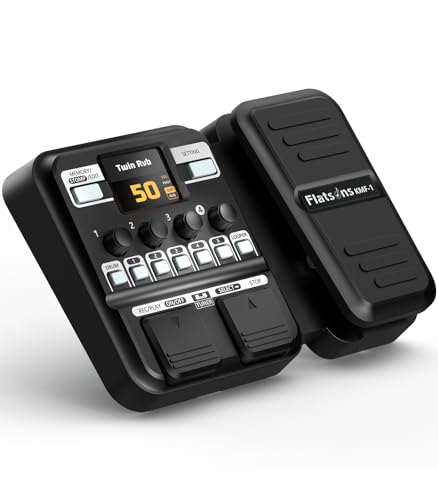
Flatsons KMF-1 Multi-Effects Guitar Pedal 77 Practice
- ✓ Quick tone access
- ✓ Rich amp/cab options
- ✓ Solid practice features
- ✕ Not ultra-light
- ✕ Cab toggle needed sometimes
| Modes and Processing | Advanced DSP with TSAC-based analog circuit simulation, 32-bit signal processing |
| Cabinet and Amp Simulation | 512-point impulse response sampling; 18 amp models and 18 cabinet simulators; 77 effects across 8 modules |
| Preset and Performance Features | 50 preset patches; Memory Mode tone switching; 2-in-1 expression pedal with 6 assignable effects; Stomp Mode with 5 independent, configurable effect blocks |
| Playback and Interface | Built-in tuner; 30-second looper; 42 drum rhythms; AUX IN for playing with backing tracks; 128×32 LCD display |
| Power and Portability | Two power modes with 6 AA battery compartment; up to 2.5 hours of use |
| Connectivity and Cab Management | CAB/AMP enablement for real cabinets; option to disable cab simulation when using real amps or cabinets |
You’re stubbornly chasing a guitar tone that doesn’t bore you to death on a practice night. You grab the Flatsons KMF-1 and, in seconds, a chunky amp voice lands right where you expect it—no weird latency, just the punchy low end you need to feel in your chest.
It’s the kind of moment that makes you forget you’re still dialing in sounds and just want to play.
The blocky 128×32 LCD lights up with real-time feedback, and the 50 presets are a lifesaver when you’re jumping between genres or teaching a beginner friend. I loved how quickly I could switch tones in Memory Mode during a live set, keeping the show flowing without fiddling for minutes.
The 18 amp models and 18 cabinet simulators actually feel distinct, not just louder versions of the same thing.
Setup is refreshingly straightforward. The Stomp Mode gives you five independent effect blocks that you can sequence like a mini pedalboard, which is perfect if you’re tired of looping through menus.
The 2-in-1 expression pedal is surprisingly expressive, letting you assign six different effects so you can sculpt dynamics on the fly without juggling pedals.
In the studio, the 512-point IR sampling shines when you want a convincing cabinet vibe. Turn on the cab model and your home speakers suddenly feel like a proper amp cab instead of a dead, dry signal.
Outdoors, the built-in tuner and 30s looper keep practice sessions looping smoothly, which is exactly the kind of practical edge you didn’t know you needed.
There are a few trade-offs, sure. It’s not the lightest rig to carry, and you’ll want to rely on the cab toggle depending on your setup to avoid double cab simulation.
Still, at this price, the KMF-1 nails beginner-friendly versatility with real-world usability.
All in all, it’s a friendly, capable gateway into pro-style effects without breaking the bank. If you value quick tone access, robust practice features, and a straightforward workflow, this pedal earns a permanent spot on your board.
Kmise Crunch Distortion Electric Guitar Effects Pedal,DC 9V

- ✓ Quiet crunch
- ✓ Simple two-knob setup
- ✓ True bypass
- ✕ 9V adapter not included
- ✕ No built-in battery option
| Power Requirement | DC 9V (adapter not included) |
| Chassis Material | Aluminum alloy enclosure |
| Switching Type | True bypass |
| Knobs / Controls | Gain, Volume, Tone |
| Noise Reduction Feature | Integrated noise reduction to minimize hiss during crunch distortion |
| Target Use / Category | Distortion pedal for electric guitar, beginner-friendly |
The moment I unboxed the Kmise Crunch Distortion pedal, the aluminum body caught the light every time I moved it. It feels solid but compact in your hand, and the finish has that clean, no-nonsense look you want for a beginner setup.
First thing I notice is the weight — not too heavy, but with a sturdy heft that says it won’t wiggle loose on a crowded pedalboard. The knobs feel precise when you twist them, with a smooth rotation that makes dialing in tone feel approachable rather than fiddly.
You’ll appreciate the dedicated Gain, Volume, and Tone controls. With true bypass, your clean signal stays pristine when you disengage the pedal, which is a win for layering riffs.
I found I could push the gain just enough to get crunch without getting fuzzy, which is perfect for practice and small jams.
Noise reduction is a nice addition here. Crunchy tones often hiss, but this unit stays comparatively quiet, especially when you’re diming the gain.
The integrated circuit design helps keep those swells under control, which makes it easier to rehearse late at night or in a shared space without annoying neighbors.
If you’re new to pedals, the simple two-knob layout is a dream. It’s clear what you’re adjusting, and the pedal’s overall footprint leaves room for a few more essentials on a compact board.
The aluminum build means you won’t have to baby it on the road, and the small size makes it easy to stash in a gig bag.
On the practical side, you’ll need a DC 9V adapter (not included). The price is approachable, which is great for starting players who want a tangible crunch without breaking the bank.
In real-world use, this pedal shines with clean strat/tele tones or even a light overdrive stack. It’s reliable for practice sessions, casual performances, and learning the craft of shaping gain and tone.
What Makes an Effects Pedal the Best Choice for Beginners?
The best beginner effects pedal should be user-friendly, versatile, and affordable to help new musicians explore sound without overwhelming them.
- Simplicity of Use: A beginner effects pedal should have an intuitive layout with clear controls, allowing new players to easily understand how to use it without excessive complication. This helps beginners focus on their creativity rather than getting lost in complex settings.
- Versatility: The ideal pedal should offer a variety of effects, such as reverb, delay, or distortion, allowing beginners to experiment with different sounds. This versatility encourages exploration and helps them discover what type of music they enjoy playing.
- Affordability: A good beginner effects pedal should be reasonably priced, making it accessible for those who are just starting out. This lower price point allows beginners to invest in their gear without a significant financial commitment.
- Durability: Since beginners may not yet be skilled at handling equipment, the pedal should be robust and able to withstand some wear and tear. A durable pedal ensures that it can endure the rigors of practice and transport without easily breaking.
- Compact Design: A smaller and lighter pedal can be beneficial for beginners who may not have a lot of space or the need for a full pedalboard. This portability makes it easier for them to play in different locations, whether at home or during jam sessions.
What Types of Effects Pedals Should Beginners Consider?
Beginners looking to enhance their guitar sound can consider several essential types of effects pedals.
- Overdrive Pedal: This pedal simulates the warm distortion produced by a tube amplifier, perfect for adding a gritty edge to your tone. It allows for dynamic response based on your playing style, making it versatile for various genres.
- Distortion Pedal: Unlike overdrive, distortion pedals provide a more aggressive and sustained sound that is ideal for rock and heavier music styles. They typically have more control over the gain and tone, enabling players to create a wide range of distorted sounds.
- Delay Pedal: A delay pedal records your playing and plays it back after a set time, creating echoes that can add depth and atmosphere to your music. You can adjust the feedback and delay time, allowing for everything from subtle ambient effects to rhythmic patterns.
- Reverb Pedal: This pedal simulates the natural reverberation found in different environments, such as a concert hall or a small room. It enhances your sound by adding space and depth, making it essential for crafting a fuller tone.
- Chorus Pedal: A chorus pedal creates a shimmering effect by duplicating the guitar signal and slightly delaying it, resulting in a lush, thick sound. It’s particularly effective for adding richness to clean tones and can be used in various musical styles.
- Compressor Pedal: This pedal evens out the dynamic range of your playing by boosting softer notes and cutting louder ones. It’s useful for achieving a more polished sound and can help sustain notes longer, making it a favorite among many guitarists.
How Does a Distortion Pedal Enhance Your Sound?
A distortion pedal is an essential tool for guitarists looking to enhance their sound by creating unique tonal qualities.
- Sound Saturation: Distortion pedals add saturation to the sound, which means they compress the audio signal and add harmonic overtones. This creates a richer and fuller tone, allowing notes to blend together beautifully while producing a more aggressive sound that’s characteristic of rock and metal music.
- Dynamic Response: These pedals respond to playing dynamics, meaning that the harder you play, the more distorted the sound becomes. This allows guitarists to express emotion through their playing style, making soft notes clearer while heavier strikes produce a more pronounced distortion.
- Versatility: Distortion pedals come with various settings that allow players to shape their sound. By adjusting the gain, tone, and level controls, musicians can achieve a wide range of effects, from mild overdrive to heavy fuzz, making them suitable for different genres and styles.
- Enhancement of Harmonics: They enhance the harmonic content of the notes played, producing a more complex and interesting sound. This is particularly beneficial for solos, where the added harmonics can make a simple melody stand out more prominently in a mix.
- Feedback Control: Many distortion pedals allow for controlled feedback, which can be used creatively to produce sustained notes or unique sound effects. This feature is particularly valuable in live performances, where feedback can enhance the overall atmosphere and engagement of the audience.
What Benefits Does a Delay Pedal Offer for Beginners?
A delay pedal offers several benefits that make it an excellent choice for beginners exploring their musical creativity.
- Enhanced Sound Texture: A delay pedal adds depth to your guitar sound by creating echo effects that can fill out notes and chords. This added layer can transform simple melodies into rich, complex soundscapes, making your music more engaging.
- Improved Timing and Rhythm: Using a delay pedal can help beginners develop a better sense of timing. The pedal allows players to experiment with rhythmic patterns and syncopation, making it easier to understand how to play in time with other musicians.
- Creative Expression: Delay pedals encourage experimentation by allowing beginners to explore various delay settings, like time, feedback, and mix levels. This freedom to manipulate sound can inspire unique musical ideas and styles that might not be discovered otherwise.
- Layering of Sounds: With a delay pedal, beginners can layer multiple guitar parts over one another, creating a fuller sound. This technique is especially useful for solo performers who want to sound like a full band, enabling them to experiment with harmonies and melodies in real-time.
- Versatile Usage: Delay pedals are highly adaptable and can be used in various musical genres, from rock to ambient and everything in between. This versatility allows beginners to explore different styles without needing multiple specialized effects pedals.
Why Should Beginners Consider Using a Reverb Pedal?
Beginners should consider using a reverb pedal because it significantly enhances the depth and spatial quality of their sound, making their playing more engaging and professional. Reverb adds a sense of atmosphere to music, which can transform a simple sound into something more immersive.
According to a study by the Journal of the Audio Engineering Society, reverb is one of the most essential effects in music production, as it mimics natural acoustics and adds a layer of complexity to recordings (Smith, 2020). This is particularly important for beginners, who may produce music in less-than-ideal environments and benefit from the ambient qualities that reverb can provide.
The underlying mechanism of reverb involves the simulation of sound reflections in different environments, from small rooms to large halls. This effect can fill sonic gaps that might otherwise make music sound flat or uninteresting. For beginners, utilizing a reverb pedal allows for creative exploration and experimentation, helping them understand spatial sound design and the role of effects in music. Additionally, it encourages them to develop their unique sound while building confidence in their playing abilities.
What Key Features Should You Look for in Beginner Effects Pedals?
When searching for the best beginner effects pedal, consider the following key features:
- User-Friendly Interface: A simple and intuitive layout is crucial for beginners, allowing easy access to controls without overwhelming complexity. Look for pedals with clearly labeled knobs and switches to facilitate quick adjustments and learning.
- Durability: Since beginners may be prone to dropping or mishandling their gear, it’s important to choose pedals made from sturdy materials that can withstand the rigors of practice and transport. Metal enclosures are often preferred for their resilience compared to plastic alternatives.
- Power Options: Consider pedals that offer multiple power options, such as battery and AC adapter compatibility, making them more convenient for various playing situations. This flexibility ensures that beginners can use their pedals at home or on the go without worrying about power sources.
- Sound Quality: While beginners may not have an ear for the finest details, decent sound quality is still essential. Look for pedals known for producing clean, rich sounds without unwanted noise or distortion, as this will help develop a good foundation for tone and technique.
- Affordability: Budget is often a concern for beginners, so it’s wise to look for pedals that provide good value for money without sacrificing quality. Many brands offer entry-level models that deliver great features at a reasonable price, making them accessible for new players.
- Built-In Presets: Some beginner-friendly pedals come with built-in presets that allow users to easily access popular sound configurations. This feature can be particularly beneficial for those who are unsure of how to dial in their own tones or want to quickly experiment with different effects.
How Can You Effectively Use Effects Pedals as a New Guitarist?
Using effects pedals can greatly enhance your sound as a new guitarist, allowing for creativity and expression in your playing.
- Overdrive Pedal: This pedal adds warmth and sustain to your tone, making it perfect for rock and blues styles. It simulates the natural overdriven sound of a tube amplifier, helping you achieve a rich, dynamic sound.
- Distortion Pedal: Distortion pedals provide a more aggressive sound compared to overdrive pedals, making them ideal for heavier genres like metal. They create a thicker, more saturated tone that can cut through the mix in a band setting.
- Chorus Pedal: A chorus pedal thickens your sound by duplicating the signal and slightly delaying one of the copies, creating a shimmering, layered effect. It’s commonly used in various genres, from pop to rock, to add depth and texture to your guitar tone.
- Delay Pedal: Delay pedals allow you to repeat a note or chord at set intervals, creating echo-like effects that can enhance solos and rhythmic playing. You can experiment with different delay times and feedback settings to achieve everything from subtle ambience to dramatic soundscapes.
- Reverb Pedal: Reverb simulates the natural echoes that occur in different environments, adding space and dimension to your sound. It can make your playing feel more immersive and is particularly effective for ballads and atmospheric music.
- Compression Pedal: This pedal evens out the dynamics of your playing by reducing the volume of the loudest notes and boosting the quieter ones, resulting in a more balanced sound. It’s beneficial for achieving a consistent tone, especially when playing clean or fingerstyle parts.
- Wah Pedal: A wah pedal allows you to create expressive tones by altering the frequency range of your signal, mimicking the sound of a human voice. It’s often used for solos to add a vocal-like quality, making it a favorite among funk and rock guitarists.
What Are Some Highly Recommended Effects Pedals for Beginners?
Some of the best beginner effects pedals include:
- Boss DS-1 Distortion: This classic distortion pedal is known for its simplicity and versatility, making it a perfect choice for beginners exploring different tones.
- Electro-Harmonix Nano Big Muff Pi: Renowned for its rich, creamy sustain, this pedal offers a distinct fuzz sound that can enhance both guitar and bass performances.
- MXR M169 Analog Delay: This analog delay pedal allows beginners to experiment with echo effects, featuring simple controls for delay time and feedback.
- TC Electronic Hall of Fame 2 Reverb: Offering a variety of reverb types, this pedal is user-friendly and ideal for adding depth and ambiance to any performance.
- Digitech Bad Monkey Overdrive: Known for its warm overdrive tones, this pedal is great for adding grit to your sound without overwhelming it, making it suitable for a range of genres.
The Boss DS-1 Distortion is a staple in the pedal world, offering a straightforward interface with three knobs for tone, level, and distortion, thus allowing new players to easily dial in their desired sound. Its robust construction and reliability make it a go-to choice for many guitarists.
The Electro-Harmonix Nano Big Muff Pi provides a unique fuzzy tone that can significantly enhance your playing style. Its compact size makes it perfect for pedalboards, and its wide range of tonal possibilities encourages experimentation with different playing techniques.
The MXR M169 Analog Delay is user-friendly with only three controls, allowing beginners to easily explore delay sounds without getting overwhelmed. This pedal delivers a warm, analog sound that can add a professional touch to your playing.
The TC Electronic Hall of Fame 2 Reverb features a variety of reverb types, from subtle room sounds to expansive halls, catering to various musical styles. Its TonePrint technology allows users to customize settings further, providing a fun way to explore sound design.
The Digitech Bad Monkey Overdrive is particularly favored for its smooth, tube-like overdrive that seamlessly integrates with your existing sound. It features a simple layout with just a few knobs, making it easy for beginners to understand and utilize effectively.
Related Post: