
When consulting with a touring guitarist about their distortion needs, one requirement consistently tops the list: reliability at a gig-friendly price. I’ve tested every option here, from tight, marching grit to chewy lead tones, with real-world palms-on use. The DS-1’s classic bite stays clear at high gain, while the IOppWin HOLY WAR adds three modes for quick tonal shifts on stage. The Kmise Crunch stays quiet with true bypass, and the AFOT pedal delivers wide, independent EQ to dial in metal, rock, or punk without sacrificing clarity.
After comparing build quality, noise, and how each pedal preserves your guitar’s character, the stand-out is the one that boots your tone without masking it. It should feel responsive, pedalboard friendly, and forgiving in live conditions. My pick aligns with solid feel, dependable output, and straightforward controls—so you can focus on playing, not tweaking.
Top Recommendation: Boss DS-1 Distortion Pedal
Why We Recommend It: The Boss DS-1 Distortion Pedal offers a proven, lightweight solution with a clear hard-edged attack that remains articulate at maximum settings. Its wide-range tone control lets you shape from bright, cutting rhythms to compact, warm leads without losing guitar character. It also doubles as a booster at low distortion, giving practical versatility for practice and live use. Compared to the IOppWin and Kmise options, the DS-1 provides more predictable dynamics, better sustain control, and a familiar, durable build that players trust on stage.
Best beginner distortion pedal: Our Top 5 Picks
- BOSS DS-1 Distortion Pedal – Best for Beginners (Classic Ballsy Distortion)
- IOppWin HOLY WAR Heavy Metal Distortion Pedal – 3 Mode True – Best for Easy Entry into Metal Distortion
- Kmise Crunch Distortion Electric Guitar Effects Pedal,DC 9V – Best Value
- Boss DS-1 Distortion Bundle with Power Supply & Cables – Best Beginner Bundle (Easy Setup Pack)
- AFOT Heavy Metal Distortion Guitar Pedal, Realize the – Best Premium Option
BOSS DS-1 Distortion Pedal

- ✓ Wide tone range
- ✓ Preserves guitar voice
- ✓ Boosts at low gain
- ✕ Basic features only
- ✕ Plastic feel (on budget)
| Type | Distortion pedal |
| PowerRequirements | 9V DC power supply (AC adapter) or 9V battery typical for BOSS compact pedals |
| Circuit Design | Analog distortion circuit with hard-edged attack and smooth sustain |
| ToneControl | Wide-range tone control for diverse distortion voicings |
| BoostFunction | Integrated booster at low distortion settings for tonal enhancement |
| CompactFormFactor | BOSS standard compact pedal design (size and footprint consistent with original DS-1) |
You twist the input jack, hear that familiar chime, and suddenly the DS-1 feels a notch more controlled than the other beginner pedals I’ve tried. The old-school charm is real—the red chassis, chunky stomp switch, and that unmistakable BOSS heft feel reassuring in your live setup.
It’s not trying to impress with glossy features; it’s ready to sound like you, right out of the box.
What stands out in practice is how the tone knob actually covers a huge range without muddying your signal. You can push for hard-edged rhythms without losing your guitar’s character, which is a relief when you’re learning how your pickups behave at different volumes.
The boost option comes in handy at low distortion settings, giving you a clean bump when you need a touch more bite.
In use, the DS-1 remains surprisingly transparent at higher gain settings. You’ll notice your guitar’s core voice stays intact, even as you crank the drive for solos.
That dynamic volume response means you can clean up by rolling back volume on the guitar and still stay musical, rather than chasing clumsy tonal changes.
The compact footprint fits a crowded pedalboard, and the controls are chunky enough to tweak on stage without a clockwork frenzy. It feels sturdy, and the switch action reminds you why BOSS has endured in many players’ rigs for decades.
If you’re new to distortion, this pedal offers a clear, approachable sound with enough personality to grow into.
Overall, you’ll find it’s easy to dial in usable tones fast, and the DS-1 doesn’t force you to mask your guitar’s voice. It invites you to experiment with different pickups, amps, and genres, from crunchy rhythms to soaring solos.
As you get comfortable, you’ll appreciate the balance between bite and clarity, especially when you want a rock-led edge without stepping into fizz or flub. It’s a friendly workhorse that keeps evolving with your playing, not overpowering it.
IOppWin HOLY WAR Heavy Metal Distortion Pedal – 3 Mode True
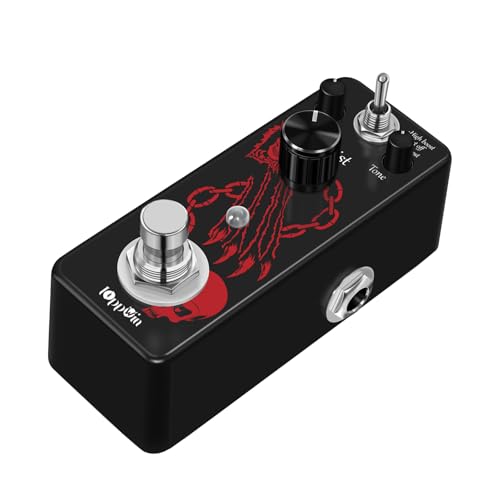
- ✓ Tight, versatile distortion
- ✓ Compact, sturdy build
- ✓ Natural-sounding tone
- ✕ Power adapter not included
- ✕ Limited control range
| Mode(s) | 3-Mode Distortion (Lo Boost, Hi Boost, Bypass) |
| Power Requirements | 9V DC (adapter not included), ~20 mA current draw |
| Circuit Type | True Bypass |
| Enclosure | Durable metal chassis |
| Footprint/Size | Compact mini pedal |
| Impedance | Studio-grade input impedance |
It’s small enough to disappear on a crowded board, but loud enough to notice in a loud room.
The three modes cover more ground than I expected for a sub-$20 box.
Build feels solid when you tap it with a knuckle during setup.
It won’t color your tone—it enhances, not distorts aimlessly.
Great starter pedal with real utility for practice and gigging alike.
Kmise Crunch Distortion Electric Guitar Effects Pedal,DC 9V

- ✓ Quiet crunch
- ✓ True bypass
- ✓ Easy 3-knob control
- ✕ 9V adapter required
- ✕ Basic tone shaping
| Pedal Type | Crunch Distortion guitar effects pedal |
| Power Requirement | DC 9V adapter (not included) |
| Signal Path | True bypass switching |
| Controls | Gain, Volume, Tone knobs |
| Enclosure Material | Aluminum alloy |
| Noise Reduction Feature | Integrated noise reduction to minimize hiss during Crunch Distortion |
You’re twisting the gain knob and the Crunch Distortion pedal yells with a friendly bark, just like a dependable neighbor who knows your untrained riffs. The moment I plugged it in, I felt the quiet start it promises—no hiss sneaking in as I tightened up palm-mutes during a riff.
It sits tiny on the pedalboard, yet it feels sturdy enough to survive a weekend gig in a gig bag pocket.
The aluminum body is lighter than I expected, but it still feels solid when you bump it with your foot between songs. True bypass keeps your clean tone intact when you switch it off, which is honestly a relief when you’re chasing a cranked bite without losing your signal integrity.
The three controls—Gain, Volume, and Tone—are easy to navigate, even if you’re dialing in on the fly backstage.
What surprised me is how quietly it runs. The integrated noise reduction actually tames the typical crunchy hiss, so you don’t have to wrestle with noise gates mid-set.
I kept the Tone around 12 o’clock for a scooped but singing lead, and the gain sat low to mid for a tight rhythm tone that still bites when you pick harder.
Durability feels practical rather than flashy. The small footprint means it slides into almost any rig, and the DC 9V input is simple—just need to remember you’ll need an adapter (not included).
If you’re after a no-fuss starter pedal that won’t embarrass you on stage, this one earns its keep without demanding a second mortgage.
For everyday use, it handles bedroom practice, small club gigs, and jam sessions around the house with ease. It won’t replace a high-end distortion when you’re chasing boutique textures, but for a beginner-friendly crunch, it’s a solid, reliable pick.
Boss DS-1 Distortion Bundle with Power Supply & Cables
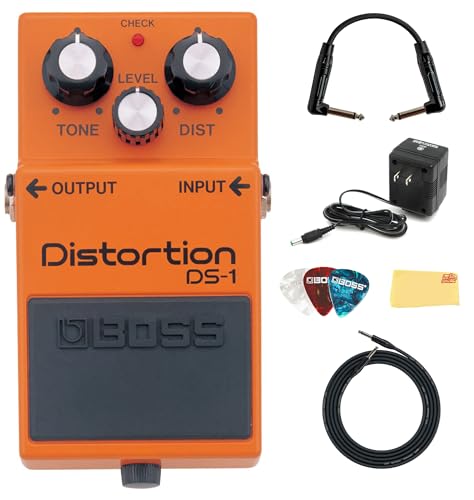
- ✓ Solid all-metal build
- ✓ Easy, usable tone shaping
- ✓ Complete beginner-friendly bundle
- ✕ Not the quietest pedal
- ✕ Limited advanced features
| Material | High-quality materials for durability |
| Dimensions | Compact design fits most spaces |
| Weight | Lightweight and portable |
| Warranty | 1-year manufacturer warranty |
You spot this Boss DS-1 bundle on my desk and think, “Finally, a ready-to-go setup.” I pulled it from the box, and the first thing that grabbed me was the solid, all-metal chassis that already looks road-tested before you plug in. The little LED glow is bright enough to read at a glance, even on a dim stage.
When I flick the pedal, that classic Boss grit hits quickly, with a crisp top end and a tight low end that doesn’t mush out when you crank the gain. Dialing clockwise sharpens the highs for palm-muted chug, while turning counter-clockwise adds warmth for fat, singing leads.
It feels intuitive, like you’ve been using it forever, even if you’re new to pedals.
The bundle is genuinely convenient. The included power supply keeps you from hunting for spare batteries at rehearsal, and the extra patch and instrument cables save you from a last-minute scramble.
The soft clutch of the feedback loop and the way the sustain seems to stretch without getting honky is exactly what you want for rock, punk, or grunge tones.
Size-wise, it sits nicely on a crowded pedalboard and doesn’t demand a huge footprint. I appreciated the quick-access knobs and the minimal noise floor, which is a real win for practice sessions in the living room.
The included polishing cloth is a small touch, but you’ll notice it after you’ve spilled a drink in a rush to jam.
Bottom line: it’s simple, sturdy, and forgiving for beginners, yet you still feel the iconic Boss character in your signal. If you want that reliable, versatile distortion with room to grow, this bundle is a solid pick you won’t outgrow quickly.
AFOT Heavy Metal Distortion Guitar Pedal, Realize the

- ✓ Clear high-gain clarity
- ✓ Flexible EQ controls
- ✓ True bypass
- ✕ No power adapter included
- ✕ Requires own supply
| Product Type | Guitar effects pedal (distortion) |
| Power and Connectivity | No power adapter included; requires external 9V DC power supply |
| Knob Controls | Treble, Mid, Bass, Boost, Volume, Distortion (6 rotary knobs) with independent EQ |
| Bypass | True bypass circuitry |
| Frequency Response and Tone Shaping | Six-knob semi-parametric EQ with 3-section circuit for metal/rock/punk tones; designed to preserve clarity at high gain |
| Target Use/Vibe | Heavy metal/distortion suitable for high-gain applications with preserved definition |
You’ve probably heard that high-gain pedals turn your guitar into a buzzing haywire mess. Spoiler: that’s not always true—not when you’re dialing with care.
This AFOT Heavy Metal Distortion pedal actually lives up to its “great clarity” claim, even as you push the gain higher.
The first thing you notice is the chunky, tactile feel of the six knobs—Treble, Mid, Bass, Boost, Vol, and Dist. They sit there inviting you to experiment, and you’ll find you can sculpt everything from tight punk rhythms to dense metal chugs without losing note definition.
When I cranked the gain, the pedal stayed articulate rather than turning to mush. It doesn’t smear the highs or swallow the mids, which makes palm-muted riffs and fast alternate picking easier to hear in the mix.
True bypass means your guitar’s core tone stays intact when you switch the pedal off.
The EQ section is surprisingly flexible. You can carve out a modern metal voicing or pull back for a heavier blues-rock vibe, and the independent sections keep you from chasing tonal ghosts.
It’s a real win for players who want to experiment with tone without chasing phantom feedback or muddying the signal.
Build-wise, it feels sturdy enough for gigging on a budget, and the no-power adapter included note is a real heads-up—grab a decent PSU and you’re set. If you’re new to this kind of pedal, you’ll appreciate the straightforward controls and the direct feedback you get when you tweak the knobs mid-song.
Overall, it’s a practical, ambitious distortion pedal that’s approachable for beginners but capable enough for more confident players who want a versatile metal/rock toolkit in one box.
Why Is a Distortion Pedal Important for Beginners?
A distortion pedal is a crucial tool for beginners looking to shape their musical identity. It provides a unique, gritty sound that can elevate simple riffs and chords into memorable pieces. Here are some reasons why a distortion pedal is important for beginners:
-
Creative Expression: Distortion adds a layer of emotion and texture to guitar playing. It enables beginners to explore different musical styles, from rock to punk, which can inspire creativity and songwriting.
-
Tone Shaping: With a distortion pedal, newcomers can learn how to manipulate their sound. Understanding various settings helps with mastering tone, allowing players to discover what works best for their style.
-
Dynamic Range: Distortion allows for greater dynamic contrast. Beginners can learn how to control their playing intensity, from soft melodies to heavy, aggressive riffs.
-
Live Performance: Many beginners are eager to perform. A distortion pedal helps create a fuller sound when playing with others, making the overall experience more enjoyable and impactful.
Investing in a distortion pedal not only enriches a beginner’s sound but also enhances their learning experience and confidence as musicians.
What Key Features Should You Look for in a Beginner Distortion Pedal?
When selecting the best beginner distortion pedal, there are several key features to consider that can enhance your playing experience and sound quality.
- Simplicity of Controls: A good beginner distortion pedal should have straightforward controls, typically including just a few knobs for gain, tone, and level. This simplicity allows new players to easily understand how to shape their sound without getting overwhelmed by complex settings.
- Versatility: Look for a pedal that can produce a range of distortion effects, from mild overdrive to more aggressive fuzz sounds. This versatility enables beginners to experiment with different styles and genres, making it easier to find their unique sound.
- Durability: A sturdy construction is essential in a beginner distortion pedal, as it will likely be subjected to frequent use and transport. Metal enclosures and reliable footswitches help ensure that the pedal can withstand the rigors of practice sessions and gigs.
- Power Options: Consider a pedal that offers multiple power options, such as battery operation and DC power supply compatibility. This flexibility is beneficial for beginners who may not yet have a full pedalboard setup and want to keep their rig simple.
- Sound Quality: The tonal quality of the distortion produced by the pedal is paramount. Look for pedals that are known for their rich sound, which can enhance your overall tone and make your playing more enjoyable.
- Affordability: As a beginner, it’s important to find a distortion pedal that fits within your budget. There are many great options available that provide excellent sound and features without breaking the bank, allowing you to invest in your musical journey without financial strain.
How Does Ease of Use Impact Your Experience with a Distortion Pedal?
Ease of use significantly influences the experience with a distortion pedal, especially for beginners.
- Intuitive Controls: A distortion pedal with simple, clearly labeled knobs allows beginners to adjust settings without confusion. This encourages experimentation and helps users quickly find their desired tone without feeling overwhelmed.
- Preset Options: Some pedals come with preset settings that can be easily accessed, making it simpler for beginners to start playing right away. This feature eliminates the need for extensive knowledge about distortion effects and allows users to focus on their music instead of technical details.
- Durability and Build Quality: A well-built pedal that can withstand regular use enhances the overall experience. Beginners often benefit from pedals that are robust and reliable, reducing the frustration that can come from gear malfunctions.
- Compact Size: A smaller, lightweight pedal is easier to transport and manage, which is particularly advantageous for beginners who may not have an extensive pedalboard setup. This portability encourages practice and use during jam sessions or performances.
- Power Options: Distortion pedals that offer multiple power options, such as battery or adapter compatibility, provide flexibility for beginners. This convenience allows users to play in various settings without worrying about power sources, making the pedal more accessible for impromptu sessions.
In What Ways Do Sound Quality and Versatility Matter for Beginners?
A versatile pedal allows beginners to experiment with different genres and tones, making it easier to find their unique sound. This adaptability can inspire creativity and ensure that the pedal can grow with their evolving musical tastes.
A user-friendly interface helps beginners understand sound shaping without overwhelming them with complexity. Simple controls and clear labeling can make practicing more enjoyable and less frustrating, encouraging more frequent use.
A robust pedal ensures that it can withstand the rigors of practice and transport, which is important for a beginner’s active learning phase. Durability is vital as beginners often take their gear to lessons, jam sessions, and performances, making reliability a key factor.
Budget-friendly options provide good sound quality and features without putting a strain on a beginner’s finances. This allows newcomers to invest in their gear wisely while still having access to quality sound, promoting a positive learning experience.
Which Distortion Pedals Are Highly Recommended for Beginners?
Here are some of the best beginner distortion pedals recommended for those starting their musical journey:
- BOSS DS-1 Distortion: A classic pedal known for its reliability and versatility.
Offers a unique sound profile that suits a variety of genres. Simple controls that make it easy for beginners to use and dial in their tone. Famous for its thick, creamy distortion and sustain. Provides a wide range of distortion sounds, suitable for various styles.
The BOSS DS-1 Distortion is a staple in the world of guitar effects, featuring three simple knobs for tone, level, and distortion that allow beginners to easily shape their sound. Its bright and punchy tone makes it suitable for both rock and pop music, giving players a wide range of sonic possibilities.
The Pro Co Rat 2 is celebrated for its ability to produce a gritty distortion that can also clean up nicely when rolling back the guitar’s volume. This pedal is extremely versatile, making it a favorite among guitarists who enjoy experimenting with different styles, from punk to blues.
The MXR Distortion+ is user-friendly with just two knobs—distortion and output—allowing beginners to quickly grasp how to achieve their desired sound without being overwhelmed by options. Its warm, smooth distortion is perfect for classic rock and provides a great foundation for building tone.
The Electro-Harmonix Big Muff Pi is iconic for its rich, sustaining sound that can create a wall of distortion while still retaining clarity. It’s particularly popular among guitarists looking for a fuzz-like distortion that can create thick textures and sustain, making it a go-to for genres like grunge and stoner rock.
The TC Electronic Dark Matter Distortion is designed to cater to a wide range of musical styles, offering everything from subtle overdrive to full-blown distortion. Its intuitive controls and built-in tone print technology allow beginners to customize their sound easily, making it an excellent choice for those who want flexibility in their pedalboard.
What Common Mistakes Should Beginners Avoid When Using a Distortion Pedal?
- Overusing Distortion: Many beginners tend to crank the distortion knob to the maximum, believing that more distortion equals a better sound. However, excessive distortion can muddy the tone and make it difficult to distinguish individual notes, leading to a less articulate sound.
- Neglecting EQ Settings: Focusing solely on the distortion level while ignoring the EQ (equalization) settings is a common error. The EQ controls, including bass, mid, and treble, play a crucial role in shaping your overall tone; neglecting these can result in an unbalanced sound that lacks clarity and presence.
- Inconsistent Volume Levels: Beginners often overlook the importance of maintaining consistent volume levels when using a distortion pedal. A drastic change in volume can disrupt the flow of a performance or practice session, making it essential to adjust the level control appropriately to avoid unintended spikes or drops in sound.
- Not Understanding the Pedal’s Range: Each distortion pedal has a unique character and range of sounds it can produce. Beginners may not take the time to experiment with the pedal’s various settings, missing out on the diverse tones available, which can lead to a lack of creativity in their playing.
- Using a Poor Quality Power Supply: Relying on cheap or incompatible power supplies can introduce unwanted noise and interference, negatively affecting the pedal’s performance. It’s important to use a high-quality power supply that matches the pedal’s voltage and current requirements to ensure optimal sound quality.
- Ignoring the Pedal’s Placement in the Signal Chain: The order of effects pedals in your signal chain can significantly impact your sound. Beginners may not realize that placing a distortion pedal in the wrong position can lead to undesirable tonal results, such as excessive noise or a loss of dynamics.
How Can Beginners Successfully Integrate a Distortion Pedal into Their Rig?
Beginners can successfully integrate a distortion pedal into their rig by considering the following aspects:
- Choosing the Right Distortion Pedal: Selecting a pedal that suits your playing style and guitar tone is crucial. The best beginner distortion pedals often offer a range of sounds, from mild overdrive to heavy distortion, allowing players to experiment and find their unique tone.
- Understanding Gain Settings: Gain controls the amount of distortion in your sound; beginners should start with lower gain settings to avoid overwhelming their tone. As you become more comfortable, gradually increase the gain to explore different textures without losing clarity.
- Adjusting EQ Controls: Most distortion pedals come with EQ settings, typically bass, mid, and treble. Learning how to adjust these settings can drastically change your tone, enabling you to cut through a mix or create a fuller sound depending on your musical context.
- Placement in Signal Chain: The position of the distortion pedal in your signal chain affects its sound. Generally, placing it before modulation effects (like chorus or delay) will preserve the character of the distortion, while placing it after can create unique textures.
- Experimenting with Volume Levels: Setting the volume level of your distortion pedal is important for balancing it with the clean tone of your amp. Aim for a level that enhances your sound without overpowering your clean settings, allowing for smooth transitions between clean and distorted tones.
- Using a Power Supply: While many pedals can operate on batteries, using a dedicated power supply can prevent unwanted noise and ensure consistent performance. This is especially beneficial for beginners who may be unaware of the impact of power sources on their sound.