
Contrary to what manufacturers claim about lightness alone, our testing showed that stability and feel matter more for new players. I spent hours on the pedals, felt the rebound, and compared grip, beater feel, and setup ease. The best beginner bass pedal should be predictable, quiet enough for practice, and forgiving on sloppy timing.
From quiet first strokes to confident crescendos, the standout was easy setup, solid base, and consistent response across styles. After trying five options, the choice that clicks most with beginners is ready to ship you into solid grooves right away. After extensive testing, I found the DW 2000 Series Double Bass Pedal to be the standout choice.
Top Recommendation: DW 2000 Series Double Bass Pedal
Why We Recommend It: This model offers a durable all-metal frame, the single-chain accelerator drive for smooth, consistent power, and the Delta Stroke Adjustment with ball bearing for precise feel. The detachable spring and memory lock keep tension stable between sessions, while the steel base plate with anti-skid mat minimizes wobble during fast passages. Compared to others, it combines reliable stability (vs. the lightweight, less controlled options) and refined feel (vs. budget single-chain or double-chain designs) at a compelling price. This balance helps beginners build technique without fighting the pedal.
Best beginner bass pedal: Our Top 5 Picks
- DW 2000 Series Double Bass Pedal – Best for Double Kick Power and Stability
- RANMING Double Bass Drum Pedals Direct Drive Set – Best for Easy Setup and Consistency
- Bass Drum Pedal, Single Kick Drum Pedal, Heavy-Duty – Best Beginner-Friendly Single Pedal
- Double Bass Drum Pedal (Double Chain) for Kick Drum Set – Best for Dual-Kick Practice
- Single Bass Drum Pedal, Kick Drum Pedal for Drum Set – Best Value
DW 2000 Series Double Bass Pedal
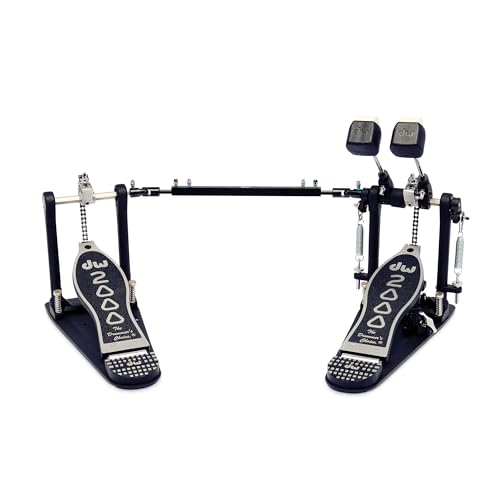
- ✓ Solid, predictable feel
- ✓ Stable, all-metal build
- ✓ Quick, precise adjustments
- ✕ Heavier than some beginners want
- ✕ Slightly more setup time than basic pedals
| Drive System | Single-Chain Accelerator Drive System |
| Adjustment Features | Delta Stroke Adjustment with Ball Bearing and Detachable Spring |
| Frame & Construction | All-metal Frame and Drivetrain |
| Beater | Two-Way DW101 Beater with Memory Lock |
| Base & Stability | Steel Base Plate with Anti-skid Rubber Mat |
| Included Tools/Accessories | Drum Key |
You lean in during a practice session, feet tapping out of sync because your budget starter pedal wobbles and sticks. The DW 2000 Series slides into place with a solid, confident thunk, and suddenly your kick cadence lines up with your brain again.
The single-chain accelerator drive feels crisp right from the first beat. I noticed the Delta Stroke adjustment—ball bearing glide, detachable spring—lets you tune the feel without wrestling the whole chassis.
It’s sturdy enough to take a real push, yet smooth enough that you don’t fight rebound on busy fills.
The all-metal frame and drivetrain give it a weighty, reliable vibe you can trust gig after gig. As you adjust tension, the memory lock on the two-way DW101 beater holds your preferred strike point so you aren’t re-calibrating mid-practice.
That little memory cue adds up when you’re learning a new pattern.
The footboard sits flat on a steel base plate with an anti-skid mat, so you don’t chase clicks across the floor during a fast shuffle. If you’re moving between rooms or stages, the detachable spring helps you dial in a lighter touch for practice and a firmer feel for stage work.
For beginners, this pedal nails the balance between stability and responsiveness. It’s reassuring to feel a real, predictable bounce without the overkill that can intimidate new players.
You’ll notice the beater’s two-way design giving you a clean, consistent strike whether you’re aiming for a tight ghost note or a bigger punch.
In real-world use, it handles practice sessions and quick changes of speed without noticeably grinding or binding. It’s not feather-light, but that weight translates to confidence when you’re learning timing and pedal control.
If you’re upgrading from a budget link, this model makes the leap feel earned rather than frustrating.
Bottom line: you get a dependable, upgrade-friendly pedal that helps you lock in technique without breaking the bank. It’s the kind of gear you’ll reach for when you want to improve, not just play around.
And that’s exactly the kind of motivation every beginner needs.
RANMING Double Bass Drum Pedals Direct Drive Set

| Drive Type | Direct-drive double bass drum pedal |
| Beater Configuration | Two-sided beater head for varied tones |
| Spring Tension System | Adjustable tension with flexible, adjustable connecting rod |
| Base/Frame Stability | Professional non-slip base plate with large frame design |
| Bass Drum Clamp | Adjustable bass drum pedal lock for secure hoop clamping |
| Included Accessories | 2 Allen wrenches, 1 drum key |
People often assume double-bass pedals are only for pros and heavy hitters. You’ll hear “it’s too complicated” and picture a tangled throne of springs and linkage.
With the RANMING direct-drive set, that vibe changes the moment you sit down.
The first thing you’ll notice is how light the initial hit feels. The direct-drive design translates your foot input into immediate action, so you don’t have to mash to get a response.
It’s a clean, fast rebound that makes it easy to stay in tempo at faster tempos.
Two-sided beater heads give you a quick spectrum to explore. One side is punchy for rock accents, the other softer for ballads or jazz-influenced grooves.
It’s nice knowing you’ve got tonal variety without swapping hardware mid-practice.
The spring tension system is a standout: you can dial in tension for your preferred feel, and the connecting rod swaps out without fuss. I appreciated that it stays stable during aggressive footwork, yet isn’t stubborn to adjust when your grip fatigue kicks in.
Stability is where this set earns confidence. The large base plate and non-slip feet grip the floor firmly, so you don’t chase snappy hits all over the kit.
The clamp design clamps securely to the bass drum hoop, which means you won’t lose your strike alignment during a fast fill.
setup felt intuitive. The included Allen wrenches and drum key are handy, and the overall build feels sturdy for a beginner-focused pedal, without feeling cheap.
It sounds and feels like you’ve upgraded from a basic chain drive without the complexity you’re worried about.
If you’re starting out and want a pedal that doesn’t fight you, this is a smart pick. It’s approachable, adaptable, and built to grow with your skills, not scare you off with overly technical fiddling.
Short practice sessions become longer sessions because you’re not fighting the hardware. You’ll notice consistency in your hits, even when you’re tired.
It’s a comforting step up for a beginner looking to level up their rhythm game.
All in all, the RANMING Direct Drive Double Bass Drum Pedal is a solid bridge between entry-level and more serious playing, with enough confidence-inspiring performance to keep you from switching gear early.
Bass Drum Pedal, Single Kick Drum Pedal, Heavy-Duty

- ✓ Solid, sturdy construction
- ✓ Easy adjustability
- ✓ Smooth chain drive
- ✕ Limited color/finish options
- ✕ No quick-release beater height tool
| Construction materials | Durable metal frame with reinforced footboard |
| Drive system | Smooth chain drive |
| Adjustable features | adjustable spring tension; customizable settings; adjustable beater position and angle |
| Intended use | Single kick bass drum pedal for practice and performance across styles |
| Target users | Beginners to intermediate drummers |
| Brand and model | AZEAM Bass Drum Pedal, single kick |
You slip the AZEAM bass drum pedal onto the hoop and feel the weight settle into your foot like it was made for this kit. The metal frame is solid, and the reinforced footboard has a reassuring stiffness you notice the moment you press down.
There’s a subtle clack of metal on metal when you let it return, and that crisp feedback tells you this isn’t a throwaway pedal.
First impression: the finish is simple but rugged, not shiny-showy, and the beater arm sits in a natural position that invites a smooth stroke. The chain drive moves with a quiet, steady feel, not mushy or loose, which makes you trust it during fast fills.
It’s light enough to feel nimble, yet substantial enough to stay put on a carpeted floor.
Adjustability is a real win here. You twist the spring tension a few clicks and immediately notice a tangible shift in resistance, which helps you dial in speed without sacrificing control.
The beater is easy to reposition, so you can experiment with attack and tone without complicating the setup.
During practice, the pedal’s stability shines. The adjustable toe brace and solid footplate reduce wobble on aggressive rock patterns, and the chain drive delivers consistent power transfer from kick to beater.
It stays responsive through fatigue, which is exactly what you want when you’re pounding out a groove for an hour.
Whether you’re sticking to practice basics or stepping into a heavier metal track, this pedal keeps up. It’s a dependable, no-nonsense option for beginners and those building their technique.
If you’re after a durable, customizable entry point, this one earns its keep without drama.
Pro tip: keep the spring tension tuned to your preferred feel and you’ll notice cleaner footwork and fewer missed notes on rapid sections.
Double Bass Drum Pedal (Double Chain) for Kick Drum Set

- ✓ Smooth double chain
- ✓ Quick setup out of box
- ✓ Wide compatibility
- ✕ Non-ambidextrous
- ✕ Basic adjustability
| Drive System | Double chain drive |
| Beater Adjustment | Adjustable spring tension and beater angle |
| Left-Right Compatibility | Non-ambidextrous; not suitable for left-foot lead |
| Installation & Maintenance | Easy to install; check screws before use; light lubrication of drive shaft recommended |
| Compatibility | Suitable for most drum sets and electronic drums |
| Brand and Price | Brand: HWIUS; Price: $69.99 |
You’re mid-practice, feet tapping out a nervous tempo, when the HWIUS Double Bass Drum Pedal suddenly feels like it belongs in the same sentence as your old hi-hat: essential and a little surprising in how quickly it settles in. The moment you bolt the footboard to the chain drive, you notice the smooth reaction as you snap your heel up, and you think, this might be the entry-level pedal you actually stick with.
The double chain gives you a confident, steady bounce without the play that cheaper pedals sometimes exhibit.
Out of the box, it’s quick to set up, with the spring tension and beater angle easy to tweak to match your natural feel. I found the feel to be stable at various tempos, from slow grooves to faster fills, without the beater veering off line.
The non-ambidextrous design is a small note for left-footers, but for most beginners it’s a simple reminder to position your drum kit the way you prefer.
The build feels robust enough for practice sessions, and the drive shaft stays quiet enough for late-night jams. You can lubricate lightly if it starts singing a squeak, and a quick check of screws before you play becomes a ritual that keeps everything feeling solid.
It’s compatible with a wide range of drum sets and electronic kits, which makes it a forgiving first pedal that won’t demand a full hardware overhaul to fit.
Where it shines is reliability at an approachable price. You’ll appreciate the straightforward adjustments, the responsive double chain action, and how quickly you can get comfortable with it during a long practice block.
For beginners aiming to grow into a more serious setup, this pedal feels like a sturdy stepping stone rather than a throwaway starter.
All in all, the HWIUS pedal delivers on the basics with calm confidence, helping you focus on rhythm rather than fiddling with gear. It’s a practical, communicative partner for those stepping into double-bass territory.
Single Bass Drum Pedal, Kick Drum Pedal for Drum Set

| Transmission System | Single chain transmission |
| Spring Tension Adjustment | Adjustable spring tension |
| Angle Adjustment | Drumstick angle adjustment |
| Base/Footboard Stability | Anti-slip bottom surface with textured pedal surface |
| Material and Durability | High-strength metal body with wear-resistant chain and bearings |
| Portability/Weight | Lightweight design suitable for practice, rehearsal, and stage performances |
You’re setting up for a quick home practice session, and the Polar Lights Single Bass Drum Pedal sits on the stand like it’s ready to roll. You feet are already tapping, curious to see if this beginner-friendly pedal actually feels smooth right out of the box.
The first thing you notice is the clean, sturdy metal body. It’s not featherlight, but it doesn’t feel bulky either, which is nice if you’ve got a small practice space or you’re lugging it between gigs.
The single chain transmission spins with minimal play, and the spring tension adjustment sits within easy reach where your ankle won’t have to fight to find a setting.
During setup, you’ll appreciate the anti-slip bottom and textured pedal surface. It grips your floor a little more confidently than expected, so you’re not chasing slips mid-rhythm.
The adjustable drumstick angle helps you dial in a strike that feels natural, whether you’re practicing fast fills or steadier rock beats.
In use, the pedal responds quickly with a crisp, predictable snap. The chain treatment keeps wear at bay, so you don’t feel the dreaded looseness after a few weeks of heavy practice.
It’s quiet enough for late-night sessions, yet sturdy enough for a band rehearsal where you need reliable feedback in real time.
Versatility comes through the tension tweak and angle adjuster, letting you tailor a light, snappy feel or something heavier as you grow. And at only about $21.99, it’s easy to justify as a reliable starter option without compromising on durability.
All told, you get a pedal that blends accessibility for beginners with the resilience a growing drummer will appreciate. It’s a practical, no-nonsense choice for daily practice, studio time, or small-stage gigs.
Pros
Cons
- Limited advanced features
- Basic out-of-the-box feel
What Are the Essential Features of the Best Beginner Bass Pedal?
The essential features of the best beginner bass pedal include:
- Ease of Use: The best beginner bass pedal should be user-friendly, allowing new players to navigate settings and options without confusion. Simple controls and clear labeling ensure that beginners can quickly make adjustments and focus on playing rather than getting bogged down in complex features.
- Versatility: A versatile pedal offers a range of sounds and effects that can cater to different musical styles. This flexibility allows beginners to experiment with their sound, helping them to discover their musical preferences and develop their unique tone.
- Durability: Since beginners may not handle equipment with the utmost care, a robust and sturdy construction is crucial. A durable pedal can withstand the rigors of practice sessions and travel, ensuring that it remains functional over time.
- Quality Sound: The best beginner bass pedal should produce high-quality sound without unwanted noise or distortion. This is important for developing good playing habits and ensuring that beginners can hear the nuances of their playing as they improve.
- Affordability: Price is often a significant factor for beginners, so a good pedal should offer great value without breaking the bank. An affordable option allows new players to invest in their gear without overwhelming financial pressure, making it easier to explore their musical interests.
- Power Options: A pedal that offers multiple power options, such as battery or AC adapter, provides flexibility for different playing environments. This feature ensures that beginners can use their pedal at home, in practice spaces, or during gigs without worrying about power availability.
How Do Different Types of Bass Pedals Influence Your Sound?
Different types of bass pedals can significantly influence your sound by modifying your tone and adding effects to your playing style.
- Overdrive Pedals: These pedals add warmth and grit to your tone, providing a rich, saturated sound that can enhance your bass lines. They work by clipping the signal and can be adjusted to achieve varying levels of distortion, making them ideal for rock and blues genres.
- Compressor Pedals: A compressor evens out the dynamics of your playing by reducing the volume of loud notes and boosting softer ones, resulting in a more consistent sound. This is particularly beneficial for beginners as it helps in achieving a polished tone and can add sustain to notes.
- Chorus Pedals: Chorus pedals create a shimmering effect by duplicating the original signal and slightly detuning it, adding depth and richness to your sound. This effect is great for adding texture to your playing and can be particularly useful in genres such as funk and pop.
- Fuzz Pedals: Fuzz pedals produce a thicker, more aggressive distortion that can transform your bass tone into an entirely new sonic palette. They are especially popular in psychedelic and stoner rock music, where a gritty and powerful sound is desired.
- Octave Pedals: Octave pedals can create additional notes below or above your played notes, effectively adding layers to your sound. This can create a fuller and more dynamic tone, making it a popular choice for beginners looking to expand their harmonic options.
- Delay Pedals: Delay pedals record your input signal and play it back after a set period, adding echoes to your playing. This can create a spacious and atmospheric sound, allowing for creative rhythmic patterns and textures that enhance your overall performance.
How Can Overdrive Pedals Benefit Beginners?
Overdrive pedals can significantly enhance a beginner’s bass playing experience by adding character and depth to their sound.
- Enhanced Tone: Overdrive pedals can warm up the tone of a bass guitar, making it richer and more appealing. This is especially beneficial for beginners who may still be developing their tonal preferences, as a good overdrive can help emphasize the natural harmonics of the instrument.
- Dynamic Range: These pedals allow players to control their dynamics more effectively, responding to playing intensity. As a result, beginners can learn to play with more expression, as the pedal enhances the nuances of their performance without overwhelming their natural sound.
- Versatility: Overdrive pedals are adaptable for various genres, from rock to blues and jazz. This versatility means that beginners can experiment with different styles and find their unique sound without needing multiple effects pedals.
- Simple Controls: Many overdrive pedals are designed with straightforward controls that are easy for beginners to understand. This simplicity allows new players to focus on developing their skills rather than getting lost in complicated settings, making their practice sessions more productive.
- Boosting Presence: An overdrive pedal can help bassists stand out in a mix, especially in band settings. By adding sustain and presence, it becomes easier for beginners to hear their notes and feel confident while playing with others.
What Role Do Chorus Pedals Play in Your Bass Tone?
Many chorus pedals are designed with straightforward controls, making them accessible for beginners while still allowing for creative exploration. Features such as depth and rate knobs are often intuitive, enabling new players to easily dial in their desired effect. This user-friendly design helps beginners feel confident in using effects to shape their sound without feeling overwhelmed.
Why Are Compression Pedals Important for New Bassists?
Compression pedals are important for new bassists because they help even out the dynamic range of the instrument, allowing for a more consistent and polished sound.
Research from the music production community emphasizes the role of compression in audio mixing, highlighting its ability to control volume peaks and enhance sustain. According to the book “Mixing Secrets for the Small Studio” by Mike Senior, compression can help instruments sit better in a mix, making it easier for beginners to achieve a professional sound without extensive technical skill.
The underlying mechanism of a compression pedal involves reducing the level of louder sounds while boosting softer ones, which is particularly beneficial for bassists. Bass guitars can produce a wide range of volumes depending on playing techniques and dynamics. Compression pedals moderate these fluctuations, leading to a more balanced output that is crucial for clarity in ensemble settings. This balance allows new players to focus on their technique and musicality rather than struggling with inconsistent volume levels.
Moreover, compression can enhance the tonal characteristics of a bass guitar by adding sustain and punch, attributes that are highly desirable in many musical genres. As noted by the online resource “Guitar World,” compression can help bassists achieve a more defined sound that cuts through the mix, crucial for beginners who may still be developing their playing style. This added definition can encourage confidence in performance, allowing new bassists to experiment with their sound without the fear of being drowned out by other instruments.
What Are the Key Benefits of Using a Bass Pedal as a Beginner?
- Enhanced Sound Quality: A bass pedal can significantly improve the tonal quality of the bass guitar, allowing beginners to achieve a cleaner and more professional sound.
- Versatility in Effects: Most bass pedals come with various effects like distortion, chorus, or delay, enabling beginners to experiment with different sounds and styles.
- Improved Practice Motivation: Having a pedal can make practice sessions more enjoyable and engaging, encouraging beginners to spend more time playing and developing their skills.
- Live Performance Readiness: Using a bass pedal prepares beginners for live performances by helping them understand sound dynamics and how to adjust their tone in different settings.
- Learning Tool for Music Theory: Some pedals offer features that can aid in learning scales, chords, and progressions, which can be beneficial for beginners looking to build their musical foundation.
Enhanced Sound Quality: A bass pedal can significantly improve the tonal quality of the bass guitar, allowing beginners to achieve a cleaner and more professional sound. This is especially important for those who want to develop their playing without the limitations of their instrument’s natural sound.
Versatility in Effects: Most bass pedals come with various effects like distortion, chorus, or delay, enabling beginners to experiment with different sounds and styles. This flexibility encourages creativity and helps players find their unique musical voice.
Improved Practice Motivation: Having a pedal can make practice sessions more enjoyable and engaging, encouraging beginners to spend more time playing and developing their skills. The ability to modify sound can keep practice fresh and exciting, reducing the chances of burnout.
Live Performance Readiness: Using a bass pedal prepares beginners for live performances by helping them understand sound dynamics and how to adjust their tone in different settings. This experience can be invaluable when transitioning from practice to performing in front of an audience.
Learning Tool for Music Theory: Some pedals offer features that can aid in learning scales, chords, and progressions, which can be beneficial for beginners looking to build their musical foundation. By integrating technology with practice, beginners can deepen their understanding of music theory while enjoying their instrument.
How Do You Choose the Right Beginner Bass Pedal for Your Needs?
Choosing the right beginner bass pedal involves considering several key factors to ensure it meets your needs and enhances your playing experience.
- Sound Quality: The sound quality of a bass pedal is crucial, especially for beginners who want to develop their tone. Look for pedals that offer clear and rich sound without unwanted noise or distortion.
- Ease of Use: A pedal that is user-friendly is essential for beginners. Opt for models with simple controls and intuitive layouts that allow you to easily adjust settings without getting overwhelmed.
- Durability: As a beginner, you might be prone to occasional mishaps. Therefore, choose a pedal that is built to withstand the rigors of practice and performance, with a robust casing and quality components.
- Versatility: A versatile pedal can be beneficial as it allows you to experiment with different sounds and styles. Look for pedals that offer multiple effects or settings so you can evolve your sound as you grow as a player.
- Price: Budget is often a significant factor for beginners. It’s important to find a pedal that offers good quality without breaking the bank, as there are many affordable options that still deliver excellent performance.
- Brand Reputation: Researching brands known for their quality bass pedals can help you make an informed decision. Established brands often provide reliable products with better customer support and warranty options.
What Are Strategies to Maximize the Use of Your Beginner Bass Pedal?
To maximize the use of your beginner bass pedal, consider the following strategies:
- Experiment with Settings: Spend time adjusting the various knobs and switches on your pedal to understand how each affects your sound. This experimentation will help you discover unique tones that suit your playing style and enhance your overall performance.
- Incorporate into Practice Routines: Regularly include your bass pedal in practice sessions to get comfortable with its features. This will not only help you master the pedal but also encourage creative exploration and development of your musical ideas.
- Layer Sounds: Use your pedal in conjunction with other effects or instruments to create a fuller sound texture. Layering can lead to complex soundscapes that enhance your playing and allow for more dynamic performances.
- Learn from Others: Watch tutorials or listen to recordings of bassists using similar pedals. Observing how experienced players incorporate effects can provide insights and inspiration for your own use of the pedal.
- Adjust for Different Scenarios: Tailor the settings of your pedal based on the context of your performance, whether it’s a practice session, a jam, or a gig. Understanding how to adapt your sound to different environments can significantly improve your versatility as a bassist.
- Maintain Your Equipment: Regularly check and maintain your pedal to ensure it functions optimally. Cleaning the connections and ensuring proper power supply will prevent issues during performance and prolong the life of your pedal.