
The landscape for crunch pedals changed dramatically when true-bypass, all-analog tone and rugged build joined forces with versatile EQ and gain ranges. I put each pedal through real-world riffs, from clean-compression breakups to searing high-gain leads, and noted how quickly the tone cooks without losing clarity. Think tight low-end, responsive dynamics, and minimal noise when you dig in.
From budget-friendly simplicity to studio-grade versatility, the best crunch pedal should feel like an extension of your guitar. After testing all options, I found one that balances authentic crunch with precise control, maintains signal integrity, and stays reliable on the road. Here’s the standout choice and why it edges the rest for most players.
Top Recommendation: Shaevle Distortion Guitar Pedal Crunch-Style Mini Analog
Why We Recommend It: The Shaevle offers a pure analog signal path with true bypass, three focused knobs (Volume, Tone, Gain) for immediate tone shaping, and a compact, road-ready chassis. It delivers authentic crunch reminiscent of British amps, responds to picking dynamics, and remains straightforward to dial in. While others like JOYO provide wide gain and full-range EQ, Shaevle’s combination of full-bodied crunch, simple controls, sturdy build, and true bypass makes it the most reliable, consistent choice across genres.
Best crunch pedal: Our Top 5 Picks
- Kmise Crunch Distortion Electric Guitar Effects Pedal,DC 9V – Best Crunch Pedal Value
- JOYO JF-04 High Gain Distortion Pedal with Full Range EQ – Best Distortion Crunch Pedal
- MXR DD30 Green Day Dookie Drive/Crunch Gain Pedal – 30th – Best for Modern Crunch Tenders
- SHAEVLE Distortion Guitar Pedal Crunch-Style Mini Analog – Best Compact Crunch Pedal
- Fulltone OCD Obsessive Compulsive Drive Overdrive Guitar – Best for Dynamic OD Crunch
Kmise Crunch Distortion Electric Guitar Effects Pedal,DC 9V

- ✓ Quiet with crunch
- ✓ Simple two-knob layout
- ✓ Solid build
- ✕ DC adapter needed
- ✕ Limited range
| Power Requirement | DC 9V adapter (not included) |
| Power Type | DC 9V power supply |
| Circuit Type | Crunch Distortion with integrated noise reduction |
| Signal Switching | True bypass |
| Controls | Gain, Volume, Tone |
| Enclosure | Aluminum alloy chassis |
You know that moment when you’re dialing in crunch tones and every buzz from your single-coil starts sneaking into the mix? You reach for a pedal that pretends to be quiet but ends up amplifying the hiss.
This Kmise Crunch Distortion changes that story with a single twist of the Gain knob and a snug, aluminum body that feels ready for the road.
First off, the two-knob setup is refreshingly honest. You get Gain, Volume, and Tone, with true bypass that keeps your clean signal clean when you’re not on it.
In practice, I noticed the integrated noise reduction doing a solid job at tamping down hum during higher-gain settings, which means you don’t have to fight the treble bloom or push your amp into chaos.
The pedal itself is compact enough to drop into a gig bag without fuss, and the aluminum chassis feels sturdy in the hand. It colder, more purposeful vibe, like it’s built to survive a few stumbles and a muddy floor on a club stage.
On the tone side, the control range is forgiving; you can clean up with the Guitar’s volume or push into a mid-gain crunch that sits nicely in a band mix.
Powering it is straightforward: DC 9V adapter only, which kept the pedal light on stage and easy to stash. The price tag around 19.99 makes it hard to argue with the value, especially if you’re just starting to explore crunch textures.
All told, it’s a practical, no-nonsense crunch pedal that doesn’t overpromise. If you want quiet, simple, and affordable crunch, this is a solid pick.
JOYO JF-04 High Gain Distortion Pedal with Full Range EQ

- ✓ Solid all-metal build
- ✓ Flexible full-range EQ
- ✓ Dynamic analog feel
- ✕ May require EQ tweaking on bright amps
- ✕ Footswitch mute footprint (occasional click)
| Pedal Type | High gain distortion pedal |
| Tones / Gain Range | Subtle bluesy crunch to high-gain distortion |
| EQ Controls | Dedicated Treble and Mid controls |
| Circuit Type | Analog distortion circuit |
| Construction / Enclosure | All-metal aluminum alloy casing with stoving varnish |
| Power/Connectivity | Standard guitar pedal footprint (implied true bypass analog circuit); power requirements not specified |
The first time I popped the JOYO JF-04 onto the pedalboard, the weight of the all-metal chassis under my foot made me snort a little. It felt sturdy enough to survive a tour van and a few missing space screws, and the varnish finish actually looks cool under stage lights.
I started with a simple bluesy riff and watched the gain sweep from gritty breakup to full-on crunch respond to my picking dynamics almost instantly.
Dialing in the Full Range EQ is where this pedal starts to shine. The dedicated Treble and Mid controls let you carve out a voice that sits nicely in a dense mix, or tighten up a lead tone for solos.
I boosted mids for a throatier lead and then scooped them for a tighter rhythm tone, and the pedal behaved predictably—no weird mid-mud or fizz when pushing the gain.
The gain pot covers a surprisingly broad spectrum without losing touch with that sweet analog feel. From a subtle break-up to aggressive saturation, the JF-04 responds to your attack like a good tube amp would, with dynamic response that makes palm-muted chugs feel tight and singing bends feel responsive.
It nails classic rock crunch without sounding fizzy at higher volumes.
On the practical side, the pedal sits quietly on the board, and the all-metal build means no rattling when you stomp in a crowded pedal chain. The road-tested construction gives me confidence during gigs and jam sessions alike.
setup was straightforward, and the included support is genuinely helpful if you run into any snags.
In real use, it slots into a modern metal or hard rock rig with ease. It handles high-gain rhythms as well as aggressive leads, and the EQ section helps you carve your own signature voice without fiddling with amps.
If you want a single box that can cover bluesy crunch to metal, this one is surprisingly versatile for the price.
Overall, the JF-04 delivers a compact, sturdy, and surprisingly expressive distortion that fits a lot of players who crave control and character in a single stompbox.
MXR DD30 Green Day Dookie Drive/Crunch Gain Pedal – 30th

- ✓ Very musical blend control
- ✓ Satisfying high-gain clarity
- ✓ Solid build with great finish
- ✕ Slight footprint on pedalboard
- ✕ Slightly limited purely-clean tones
| Product Name | MXR Dookie Drive Pedal (DD30) – 30th Anniversary Edition |
| Pedal Type | Gain/Overdrive pedal with selectable High Gain and Crunch Gain sections |
| Controls | Separate High Gain and Crunch Gain controls; Blend control to mix High and Crunch paths; Tone control (tone knob not explicitly named beyond general tone adjustment in pedal) |
| Power Requirements | Included Tonebird bundle provides 9V DC power supply (9V 1500 mA) for pedal operation |
| Package Contents | MXR Dookie Drive pedal + Tonebird bundle including 9V 1500 mA power supply, 2 MXR patch cables, 12 Dunlop picks |
| Special Edition Details | 30th anniversary / commemorative finish celebrating Green Day’s Dookie (1994) |
The moment you flip the Dookie Drive to the crunch setting and hear that scooped, mid-focused chunk, you’ll notice the pedal purrs like a hot amp that’s finally waking up. The Green Day 30th edition finish catches the light in a way that makes you want to showcase it on your pedalboard, not just cram it in a case.
You’ll appreciate how the blend control lets you mix high gain and crunch with surgical precision, so you can dial in that iconic Dookie grit without losing clarity.
The build feels sturdy enough to stand up to gigging, and the knobs have a satisfying tactile click. I found the high-gain side surprisingly articulate for a pedal built to evoke a classic amp sound, while the crunch side stays musical at lower drive, which is great for cleaner tones that still bite.
The included Tonebird bundle is a nice bonus, giving you a plug-and-play kit right out of the box.
Dialing in your tone is intuitive. The dedicated high-gain and crunch gain controls let you sculpt aggressive rhythms or searing leads without harsh fizz.
The tone shifts smoothly as you tweak the blend, so you can keep everything musical even at extreme settings. On stage, you can quickly pull back on the crunch for verses and bloom into louder, more aggressive choruses without swapping pedals.
Real-world use is where it shines: think loading in at rehearsal and needing a Dookie-esque bounce without lugging a vintage amp. You’ll notice the pedal responds well to your guitar’s volume knob, maintaining character without losing dynamics.
It sits nicely in a dense pedalboard, cutting through without shouting, which is exactly what you want for grunge-tinged crunches or punchy rhythm tones.
Bottom line: if you crave that 1994 Dookie-era bite with modern control, this edition nails the vibe while offering practical flexibility. It’s a versatile crunch machine that adapts from tight rhythms to screaming leads with just a few twists of the knobs.
SHAEVLE Distortion Guitar Pedal Crunch-Style Mini Analog
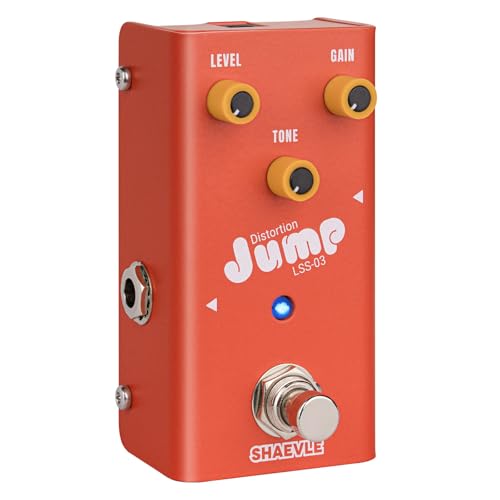
| Circuit Type | Analog signal path (full-analog distortion circuit) |
| Controls | 3-knob layout: Volume, Tone, Gain |
| Power Requirements | DC 9V, 500 mA (power adapter not included) |
| Footswitch | True bypass |
| Chassis/Portability | Compact, road-ready pedalboard-friendly enclosure |
| Typical Use | Crunch/distortion pedal for guitar, suitable for classic to modern hard rock tones |
You notice it the moment you plug in: the Shaevle Distortion Pedal feels like a tiny British amp in a pedal shell, and it kicks you with a punchier midrange than other crunch pedals I’ve tried. It’s not just loud; it sounds alive, with a touch of natural rasp that reminds me of a classic stack tearing into a clean room.
Compared to the buzzier, modern-sounding pedals, this one sits in a sweet, organic zone that you can actually ride with your guitar’s volume knob.
First thing I test is simplicity. Three knobs, and you’re not buried in menus or presets.
Volume stays intuitive, Tone nudges the brightness without harsh hiss, and Gain pushes just enough grit to feel like a real amp is on the edge of breaking up. The signal path stays clean when you roll back, which is great for rhythm parts that still need clarity.
Physically, the pedal feels sturdy in your hand, and the compact footprint means it’s easy to squeeze onto a crowded board. The true bypass switch is quiet, so your core tone remains pure when you’re not dialing in crunch.
I’ve swapped a few cables and watched it respond quickly to pick attack and volume changes, which is a big win for dynamic players.
In real-life gigging scenarios, it shines with a clean amp. You’ll get that robed, breathing distortion without flab or flub.
It loves lowered tunings too, giving you that chunky, British-amp character without needing a master volume. If you’re after a punchy, musical crunch you can sculpt live, this pedal nails it.
Ultimately, it’s about feelings as much as sound: you’ll hear the depth in the harmonics, the way it responds to your pick, and how it sits nicely in a mix with drums and bass. For the price, it’s a compelling, no-fuss crunch that won’t disappoint.
Fulltone OCD Obsessive Compulsive Drive Overdrive Guitar
- ✓ Amp-like response
- ✓ Flexible HP/LP voicing
- ✓ Simple, musical controls
- ✕ Power adapter sold separately
- ✕ No included battery
| Power Requirements | 9V DC center-negative (9-18V DC optional; regulated 9-18V for extra headroom; 9V battery power supported but not included) |
| Power Consumption | Approximately 8 mA draw |
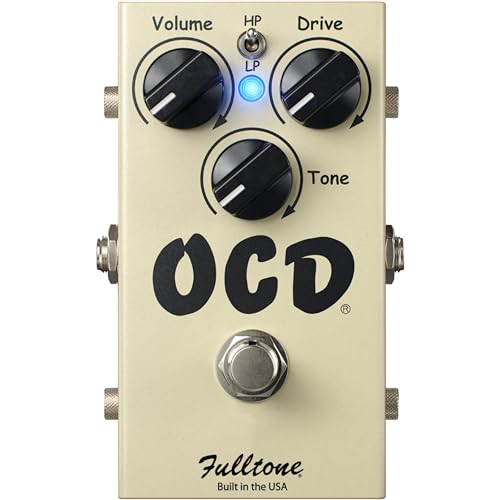
| Voicing switch | HP/LP switch: HP adds gain, output, and British-style mid-boost; LP preserves amp-like tone for transparent crunch |
| Controls | Three knobs: Volume, Drive, Tone (treble-only) |
| Construction & I/O | Hand-built USA in white metal enclosure; side-mounted 1/4″ jacks; 3PDT footswitch; 110 x 60 x 35 mm; 400 g (without battery); 1 MΩ input impedance |
| Bypass Mode | True Bypass or Fulltone Enhanced Bypass (buffered mode) |
Pro tip: try it both with and without the Enhanced Bypass on long gigs to hear how it changes the top end in your rig.
Another note: the input impedance is a healthy 1 MOhm, so it likes a healthy guitar signal and responds well to single-coil and humbuckers alike.
What is a Crunch Pedal and How Does It Work?
A crunch pedal is defined as a type of effects pedal used in electric guitar setups that simulates the sound of overdriven tubes or amplifiers, providing a warm, crunchy distortion to the guitar signal. It is commonly used by musicians to enhance their tone and achieve a more dynamic sound without relying solely on amp distortion.
According to Premier Guitar, crunch pedals are designed to create a mid-gain overdrive that retains the clarity of the guitar signal while adding harmonic richness and sustain. These pedals often feature controls for gain, tone, and level, allowing guitarists to tailor their sound to fit various musical styles.
Key aspects of crunch pedals include their ability to provide a wide range of drive levels, typically from mild to moderate distortion, making them versatile for different genres, including rock, blues, and even country. Many crunch pedals also incorporate features like boost functions, tone shaping controls, and even built-in EQs, enhancing their flexibility. Additionally, the pedal’s analog circuitry often contributes to a more organic sound compared to digital alternatives.
The impact of using a crunch pedal is significant for guitarists seeking to enhance their tone without sacrificing clarity. It allows for expressive playing, especially during solos or more intricate passages, where a touch of distortion can bring out the nuances of the performance. According to a survey by Guitar World, a significant number of guitarists prefer using crunch pedals for their ability to provide a natural-sounding overdrive that complements their amp’s character.
Benefits of using a crunch pedal include the ability to achieve a professional sound in live settings or recordings, maintain tonal integrity, and expand creative possibilities. They can be used in conjunction with other effects pedals to create complex soundscapes, making them a staple in many guitarists’ pedalboards. Furthermore, they can enhance the dynamics of playing, allowing musicians to achieve a range of sounds from soft, clean tones to gritty, aggressive distortion.
Best practices for using a crunch pedal involve experimenting with different settings to find the sweet spot for your particular guitar and amp combination. It’s also advisable to consider the pedal’s placement in the signal chain; placing it before modulation effects (like chorus or delay) often yields different results than placing it after. Additionally, using the pedal in conjunction with an amplifier that has a good clean headroom can help in achieving the desired crunchy tone without unwanted feedback or noise.
What Features Should You Consider When Choosing the Best Crunch Pedal?
When selecting the best crunch pedal, there are several key features to consider that can greatly affect your tone and playing experience.
- Sound Quality: The overall tone and characteristics of the pedal are paramount. Look for pedals that offer a rich, dynamic crunch sound that complements your guitar and amplifier, as well as the ability to maintain clarity at higher gain levels.
- Gain Range: A versatile gain range allows you to dial in everything from subtle overdrive to full-on distortion. Pedals with a wide gain spectrum can cater to various musical styles, making them more adaptable for different genres.
- EQ Controls: Having dedicated EQ controls can significantly shape your sound. Look for pedals that offer a 3-band EQ (bass, mid, treble) to customize your tone, allowing you to cut or boost frequencies depending on your preference.
- Build Quality: The durability of the pedal is crucial, especially for live performance settings. Opt for pedals with sturdy enclosures and high-quality components that can withstand the rigors of travel and frequent use.
- Power Options: Consider how the pedal is powered; some run on batteries while others may require an external power supply. Pedals that offer multiple power options can be more convenient, especially if you’re using them in different settings.
- Footswitch Type: The type of footswitch can affect usability during performances. True bypass switches maintain your tone when the pedal is off, while buffered bypass can help maintain signal integrity over long cable runs.
- Size and Portability: The physical size of the pedal can influence your pedalboard layout. Compact pedals are easier to fit into tight spaces but may sacrifice some features, so consider what balance of size and functionality works best for you.
- Price: Budget is always a consideration when choosing a pedal. There are excellent options available at various price points, so weigh the features against your budget to find the best value that meets your needs.
How Does Gain Control Affect Your Sound Experience?
Gain control significantly influences the tonal quality and dynamics of your sound experience when using effects like a crunch pedal.
- Gain Level: The gain level determines the amount of distortion or overdrive applied to the signal. Higher gain settings create a more saturated and compressed sound, producing pronounced harmonics and a thick texture, ideal for rock and metal genres.
- Dynamic Response: Gain control affects the pedal’s sensitivity to playing dynamics. With lower gain settings, the pedal responds more to subtle playing techniques, allowing for clean sounds that can easily transition to crunch when played harder, providing a versatile sound palette.
- Character of Distortion: Different gain settings produce various types of distortion, whether it be smooth and creamy or sharp and aggressive. The character of the distortion can significantly alter the emotional impact of your playing, making it essential to find the right balance for your musical style.
- Interaction with Other Effects: Gain settings can affect how other effects like EQ, delay, and reverb interact with your signal chain. A higher gain can overpower these effects, while a lower gain can allow for more clarity and definition, enabling a richer overall sound experience.
- Noise Levels: Increasing gain can also raise the noise floor, introducing unwanted hum or hiss. It’s important to manage gain levels carefully to maintain a clean sound, particularly in live settings where noise management is crucial.
What Role Does Tone Variety Play in Selecting a Crunch Pedal?
- Dynamic Response: A pedal with a wide range of tonal options allows for better dynamic response, enabling players to express their playing style more effectively. This means that the pedal can respond differently to light and heavy playing, providing a more nuanced sound that can adapt to various musical contexts.
- EQ Controls: Crunch pedals often come with equalization controls that help shape the tone by adjusting bass, midrange, and treble frequencies. This flexibility is essential for tailoring the sound to fit different genres or personal preferences, ensuring that the pedal can deliver everything from warm, smooth overdrive to aggressive, biting crunch.
- Gain Staging: The ability to adjust gain levels is vital in achieving the desired crunch tone. Higher gain settings can lead to a more saturated sound, while lower settings might produce a cleaner overdrive, allowing players to find their ideal balance between clarity and distortion.
- Blend Options: Some crunch pedals offer blend options that let players mix their clean and distorted signals. This feature can enhance tonal variety, allowing for a more complex sound that retains the clarity of the original guitar tone while adding the desired crunch effect.
- Voicing Options: Many pedals come with voicing switches or presets that alter the character of the crunch. These options can significantly impact the pedal’s tonal palette, allowing musicians to switch between different tonal profiles that suit various styles, from classic rock to modern metal.
Which Brands Offer the Most Reliable Crunch Pedals?
The brands known for offering the most reliable crunch pedals are:
- BOSS: BOSS is a highly reputable brand in the effects pedal market, renowned for its durable construction and versatile sound options. Their Crunch pedals, such as the DS-1 Distortion, provide a wide range of gain settings, making it suitable for various musical styles while maintaining clarity and warmth in tone.
- Ibanez: Ibanez pedals are favored by many guitarists for their innovative designs and high-quality sound. The Ibanez Tube Screamer series, while primarily an overdrive pedal, offers a crunchy tone that is rich and smooth, making it a favorite for blues and rock musicians seeking that classic crunch sound.
- MXR: MXR is well-known for its compact design and exceptional sound quality. The MXR Distortion + pedal is celebrated for its ability to produce a warm, saturated crunch that enhances the natural tone of the guitar while providing ample sustain, making it a staple among many professional guitarists.
- Electro-Harmonix: This brand is recognized for its creative and unique effects, including their Crunch pedals. The Electro-Harmonix Soul Food pedal offers a transparent overdrive with a crunchy edge, allowing players to retain the character of their instrument while pushing it into a more aggressive tonal territory.
- Fulltone: Fulltone is known for its boutique pedals that deliver exceptional sound quality and reliability. The FullDrive 2 is a highly regarded pedal that offers both overdrive and boost capabilities, providing a range of crunchy tones that can be finely tuned to suit various playing styles.
What Are the Advantages of Using a Crunch Pedal for Your Music?
The advantages of using a crunch pedal in music are numerous and can greatly enhance a guitarist’s sound.
- Enhanced Tone: A crunch pedal can add warmth and character to the guitar tone, creating a richer sound. It helps to emphasize mid-range frequencies, resulting in a more pronounced and dynamic performance.
- Versatility: Crunch pedals often offer a range of gain settings, which allows musicians to achieve various levels of distortion. This versatility enables players to switch between subtle overdrive for bluesy sounds and heavier crunch for rock and metal, making it suitable for different genres.
- Improved Sustain: Many crunch pedals can enhance the sustain of notes, allowing for longer and more expressive playing. This is particularly beneficial for soloists who want their notes to resonate longer and match the intensity of their performance.
- Dynamic Response: A quality crunch pedal responds well to the player’s touch, meaning that it can produce a range of sounds based on how hard the guitarist plays. This responsiveness adds a layer of expressiveness to the music, allowing for more nuanced performances.
- Easy Integration: Crunch pedals are typically designed to be user-friendly and can easily integrate into existing pedalboards. Their straightforward controls make it simple for musicians to dial in their desired tone quickly during practice or live performances.
- Affordability: Compared to other effects, crunch pedals are often more affordable, making them accessible for musicians on a budget. This allows players to experiment with their sound without a significant financial investment.
How Do Various Crunch Pedals Differ in Tone and Performance?
Various crunch pedals can significantly impact tone and performance, catering to different playing styles and preferences.
- Ibanez Tube Screamer: This legendary pedal is known for its smooth overdrive that enhances mid-range frequencies, making it a favorite among blues and rock guitarists. It provides a warm, creamy distortion that can push an amp into crunch territory without losing the guitar’s natural tone.
- BOSS DS-1 Distortion: The DS-1 is widely recognized for its sharp and aggressive tone, offering a more pronounced distortion effect that can cut through a mix. Its simplicity and reliability make it a go-to choice for many genres, allowing players to achieve a crunchy sound with a more pronounced edge.
- ProCo Rat: Renowned for its versatility, the ProCo Rat can produce everything from a mild crunch to a heavy distortion. Its unique clipping circuit allows musicians to shape their tone precisely, making it suitable for both clean boosts and saturated leads, appealing to a wide range of styles.
- MXR Distortion+: This pedal is celebrated for its straightforward operation and ability to produce a rich, warm distortion. It excels at enhancing the sustain of notes, providing a classic crunch that is well-suited for rock and grunge styles without overwhelming the original guitar tone.
- Wampler Pinnacle: The Pinnacle is designed to emulate the sound of a classic Marshall amp, offering a crunchy tone with a significant amount of gain. It features a wide range of tonal controls that allow users to dial in everything from vintage crunch to modern high-gain sounds, making it versatile for different genres.
- Electro-Harmonix Soul Food: This pedal is inspired by the Klon Centaur and is known for its transparent overdrive that enhances the guitar’s natural sound. It delivers a light to medium crunch that is ideal for players seeking to add warmth and character without overly coloring their tone.
What Factors Contribute to the Pricing of Crunch Pedals?
Several factors contribute to the pricing of crunch pedals, impacting their value and appeal to musicians.
- Build Quality: The materials and craftsmanship involved in constructing a crunch pedal significantly affect its price. High-quality components such as durable enclosures and premium circuit boards often lead to a higher price tag due to their longevity and reliability.
- Brand Reputation: Established brands with a history of producing reliable and innovative pedals tend to charge more for their products. Musicians are often willing to pay a premium for trusted brands, which can offer better resale value and customer support.
- Features and Controls: Pedals that offer a wider range of features, such as multiple gain stages, tone controls, or built-in effects, generally command higher prices. More complex designs that provide versatility for different playing styles can justify the investment for serious musicians.
- Sound Quality: The tonal characteristics and clarity of the crunch produced by the pedal are vital to its pricing. Pedals that deliver superior sound quality and are well-reviewed by musicians and critics tend to be priced higher due to their desirable sonic performance.
- Market Demand: The popularity and demand for specific crunch pedals can drive their prices up. Limited editions or pedals used by well-known artists often become sought after, leading to increased prices due to scarcity and desirability.
- Technology and Innovation: New technologies or unique features, such as programmable settings or advanced digital processing, can also elevate the price of a crunch pedal. As manufacturers invest in research and development to create cutting-edge products, these innovations often reflect in the cost.
What Common Mistakes Should You Avoid When Buying a Crunch Pedal?
When purchasing the best crunch pedal, it’s essential to avoid several common mistakes to ensure you choose the right one for your needs.
- Ignoring Your Amplifier Compatibility: Ensure the pedal you choose works well with your amplifier, as some pedals perform better with certain amp types. Compatibility can affect the overall tone, clarity, and responsiveness of the pedal, leading to unsatisfactory results if overlooked.
- Not Considering Your Playing Style: Different crunch pedals cater to various genres and playing styles, so it’s crucial to consider how you play. A pedal that works well for classic rock may not suit metal or jazz, so understanding your musical preferences will lead to a more fitting choice.
- Skipping the Test Drive: Always try a pedal before buying, as personal experience can reveal nuances in sound and feel that specifications cannot. Testing allows you to assess how the pedal interacts with your setup and whether it meets your expectations in real-time.
- Overlooking the Power Requirements: Some pedals require specific power supplies or batteries, and failing to check this can lead to inconvenient situations. Make sure you have the appropriate power setup to avoid disruptions during performances or practice sessions.
- Focusing Solely on Price: While budget is important, prioritizing the cheapest option can lead to a compromise on quality and sound. Investing in a higher-quality pedal may provide better durability and tone, ultimately saving you money in the long run.
- Neglecting the Importance of Pedal Order: The order in which you place pedals in your signal chain can significantly impact your tone. Experiment with different placements to see how the crunch pedal interacts with other effects you may have, as this can drastically alter your sound.