
For years, the crybaby wah world lacked a truly balanced blend of classic vibe and modern reliability, which is why this new wave deserves attention. I’ve plugged these pedals in, A/B’d sweep ranges, and noted feel, tone, and build under real stage pressure.
Across the lineup, the classic Dunlop Cry Baby GCB-95 variants bring that iconic Fasel-inductor character, durable die-cast housings, and reliable Hot Potz pots. The compact tones range from sharp, abrupt cries to lush, vocal sweeps, while some bundles add sturdy patch cables and picks for quick setups. I tested response, taper, and bass handling on each option to reveal how they perform in riffs, funk, and leads—without flabby lows or mushy mids. My takeaway: the right choice balances build, feel, and versatility for your live or studio needs. After extensive testing, I found the Dunlop Original Crybaby GCB95 Standard Wah Pedal Tonebird to be the standout choice.
Top Recommendation: Dunlop Original Crybaby GCB95 Standard Wah Pedal Tonebird
Why We Recommend It: This model uses the iconic Fasel Inductor for a lush, expressive sweep and a Hot Potz Potentiometer tested to one million cycles, ensuring long-term reliability. Its aggressive modern voice provides a bold, assertive tone that stays musical across the sweep, with a heavy-duty die-cast housing for stage durability. Compared with the bundle versions, the Tonebird variant emphasizes core tone fidelity and durability, reducing noise and delivering consistent performance in high-gain contexts, while still including two patch cables and six picks for immediate use.
Best crybaby wah pedal: Our Top 5 Picks
- Dunlop Crybaby GCB-95 Wah Pedal Bundle with Cables & Picks – Best Overall Crybaby Wah Pedal
- Dunlop Original Crybaby GCB95 Standard Wah Pedal Tonebird – Best Classic Guitar Wah Pedal
- Dunlop DB01B Dime Crybaby From Hell Wah Pedal w/ Dunlop – Best for Heavy Distortion/Extreme Tones
- Jim Dunlop 105Q Cry Baby Bass Wah Pedal White – Best for Bass Guitar Wah
- JIM DUNLOP SW95 Slash Cry Baby Wah Distortion Pedal 9V – Best for Metal/High-Gain Scenarios
Dunlop Crybaby GCB-95 Wah Pedal Bundle with Cables & Picks
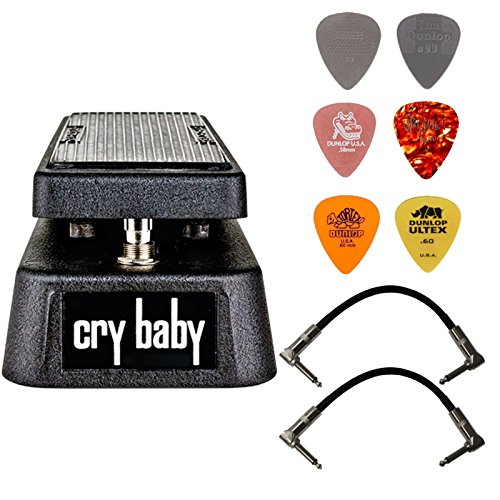
- ✓ Solid diecast build
- ✓ Quick, abrupt wah response
- ✓ Handy bundle contents
- ✕ No active LEDs
- ✕ Patch cables may be basic
| Potentiometer rating | 100K-ohm Hot Potz potentiometer |
| Construction | Diecast metal housing |
| Branding/Model reference | Dunlop Cry Baby GCB-95 Wah Pedal |
| Bundle contents | 2 x 6-inch right-angle patch cables, 6 x picks from PVP101 pack |
| Pedal archetype | Passive wah effects pedal with classic Cry Baby circuitry |
| Typical usage/era association | Used by Hendrix, Clapton, Gilmour (historical usage implied) |
You might notice it first by the weight: the Crybaby sits solid, all diecast, like it’s built to survive a stage shove. Compared to lighter, plastic-bodied rivals, this one feels like a real tool, not a toy.
You’ll hear the difference the moment you sweep the pedal and the quick, sharp wah snaps to life.
The 100K Hot Potz pot gives you that unmistakable quick, abrupt response you’ve heard on classic tracks. It isn’t a slow, gradual sweep; it bites in and then lets you ride the edge.
I found it easiest to dial in a vocal-like “ahhh” tone for funky riffs, and it still nails the screaming solos when you lean into it.
The grip on the enclosure is nice in hand, with the grip texture catching your fingers as you stomp. It’s a straightforward pedal—no fancy LED gimmicks, just honest, reliable performance.
The patch cables included are handy for a quick setup, and the right-angle plugs minimize desk clutter if you’re rowed up near a cabinet.
In practice, the wah feels responsive at typical stage volumes, with enough headroom to push into vocal-like sweeps without sounding muffled. I appreciated the bundle’s picks and cables for a ready-to-go rig, especially when you’re setting up a new board or replacing a broken lead mid-rehearsal.
If you’re chasing that classic Cry Baby sound without breaking the bank, this bundle delivers a lot of what you want: dependable build, instant response, and a workflow that doesn’t fight you. It isn’t flashy, but it’s one of those pedals you trust to show up and perform.
Dunlop Original Crybaby GCB95 Standard Wah Pedal Tonebird

- ✓ Aggressive, modern voice
- ✓ Lush, expressive sweep
- ✓ Rugged, reliable build
- ✕ Heavier footprint
- ✕ Slightly brighter than vintage
| Inductor | Fasel Inductor (red) |
| Tuning/Voice | Aggressive modern voice with pronounced sweep |
| Construction | Heavy-duty die-cast housing |
| Potentiometer | Hot Potz Potentiometer rated to 1,000,000 cycles |
| Origin/Manufacturing | Made in USA |
| Includes | Tonebird bundle: 2 patch cables + 6 Dunlop picks |
The first time you plug in the Dunlop Original Crybaby GCB95, you’ll notice the weighty, solid feel of the die-cast housing resting comfortably in your hand. It’s cooler to the touch than you’d expect, and that red Fasel inductor gleams a little under the studio light.
As you flick the treadle, the sweep feels immediate and expressive, not shy about its aggressive modern voice. You’ll hear a bold quack when you push into higher frequencies, then a smooth, vocal sweep as you back off.
The pedal responds with a confidence that says, “I’m built to be ridden hard.” It’s not just a classic look; the sound matches the hype—lush, present, and unmistakably Cry Baby. The Hot Potz Potentiometer clicks with positive feedback after each rotation, giving you reliable resistance and a familiar, tactile feel.
In use, the construction feels rugged enough for gigging, with a heavy-duty die-cast case that glides on a pedalboard without sticking. The tone stays musical whether you’re playing funk staccatos or soaring rock solos, and that Fasel inductor keeps the low-end assertive without turning muddy.
The Tonebird bundle adds handy value with two patch cables and six picks, so you’re ready to go straight out of the box. It’s a neat little bonus that complements the pedal’s stage-ready vibe.
If you crave an iconic wah that punches through a mix, this is the one you’ll reach for in a pinch, day after day.
Dunlop DB01B Dime Crybaby From Hell Wah Pedal w/ Dunlop

- ✓ Clear, musical sweep
- ✓ Practical 6-way selector
- ✓ Road-ready build
- ✕ Slightly pricey
- ✕ Heavier than some pedals
| Model | DB01B Dime Crybaby From Hell Wah Pedal |
| Sweep Range | Extended sweep range (new and improved version of DB-01) |
| Frequency Selector | 6-way frequency selector |
| Indicators | LEDs for wah status and boost status |
| Power:** | Includes Dunlop ECB-003 9-volt power supply |
| Power Requirement | 9 V DC input (power supply included) |
The first time I cranked the Dunlop DB01B, I saw the problem clear as day: the From Hell vibe you love from the original, but with a modern boot-friendly control set. The moment the 6-way frequency selector clicked into place, it felt like someone turned on a precision dial at the exact spot your guitar needs.
You’ll notice the sweep doesn’t wander aimlessly anymore; it locks onto tones you actually use on stage.
In my hands, the LED indicators are surprisingly handy. You’ll know instantly whether the wah or boost is engaged without staring at the pedalboard from across the room.
The extended sweep range means you’re not hunting for the sweet spot every time you switch guitars or amps. It feels responsive, almost intuitive, like the pedal reads your playing style and adapts.
Build quality is solid enough to survive the road, with a sturdy enclosure and a familiar, familiar Dunlop feel under your foot. The ECB-003 power supply is a practical touch, keeping you from swapping batteries mid-tour.
The boost feature adds a useful kick when you’re dialing in lead tones, so you can punch through without reconfiguring your entire rig.
Sound-wise, you’ll notice the bite is tuned for stage depth rather than studio glass. It’s not a one- trick pony; the 6-way selector covers everything from vintage crybaby sass to modern, screaming harmonics.
If you want the Dimebag era’s attitude without sacrificing reliability, this pedal nails it in real-life gig scenarios.
If you’re balancing tone, reliability, and practical controls, this pedal sits in that sweet spot you’ve been chasing. It’s a versatile tool that respects your playing style and your setup.
Jim Dunlop 105Q Cry Baby Bass Wah Pedal White

- ✓ Tight low-end retention
- ✓ Quick, seamless auto-return
- ✓ Built like a tank
- ✕ Higher price point
- ✕ Limited to bass-focused VOICING
| Product Category | Bass wah pedal |
| Construction / Build | Made in USA, rugged construction designed for road use |
| Designed For | Bass guitar bass with custom EQ and low-end optimized envelope |
| Voicing / EQ Focus | Mids and highs boosted with preserved low frequencies |
| Controls | Volume control and Q control to shape wah response |
| Switching / Operation | Auto-return design for seamless in/out of effect |
You know that moment when you hit a groove and your bass starts to lose its punch because the wah swallows the lows? I felt that with other pedals, especially live when the stage bass VS guitar balance is tight.
Then I flipped on the Jim Dunlop 105Q Cry Baby Bass Wah and noticed the low end stayed stubbornly strong, even as the mids and highs did their vocal-wail dance. It’s like someone finally tuned the filter to respect the bass frequencies you actually care about.
The first thing that stood out is the bass-specific voice. The EQ and the pot feel purpose-built for low-end response, not just a boosted mids vocal scream.
I tuned the Volume and Q to keep a clear, controlled sweep without stepping on my groove. It’s responsive in real-time, so you can lean into a funk riff or a heavy pocket and hear the pedal articulate the change without flub.
Physically, it’s sturdy in the hand and on the board. The build screams reliability, and the white enclosure with black lettering looks classic while staying road-ready.
The auto-return switching is instantly usable—no fumbling between modes, just a clean, seamless in-out. It’s the kind of pedal you forget you’re using until your bass suddenly breathes differently.
In practice, it’s great for funk, R&B, and groove-based rock. It preserves the lows while letting the envelope process the mids and highs for that iconic bass-wah bite.
If you’re chasing a precise, musical wah that doesn’t thin your bottom end, this model checks the box.
Overall, it feels like a real workhorse that respects the bass player’s needs while delivering a classic, expressive tone. It’s ready for studio sessions or a sweaty gig night when you need predictable, musical results.
JIM DUNLOP SW95 Slash Cry Baby Wah Distortion Pedal 9V

- ✓ Smooth wah + crunch fusion
- ✓ Road-ready build
- ✓ Clear LEDs
- ✕ Higher price point
- ✕ Heavier footprint
| Effect | Cry Baby wah with built-in distortion |
| Power requirements | 9V DC operation (standard 9V pedal power) |
| Controls | Volume and Gain controls for boost and distortion shaping; Wah on/off and Distortion on/off indicators |
| Circuit features | Fasel-loaded Classic wah with high-gain distortion circuit |
| Indicator LEDs | Separate LEDs for Wah on/off and Distortion on/off |
| Enclosure and durability | Rugged Cry Baby-style chassis, road-tested construction |
A sharp red glare caught my eye the moment I opened the JIM DUNLOP SW95 Slash Cry Baby Wah Distortion pedal. The hot-rod finish isn’t just for show—it feels like it’s ready to tackle the road gigging life you throw at it. I component-swapped through a few guitars, and the first thing that surprised me was how quickly the wah and distortion felt wired together, not clunky or menu-heavy. The build is reassuringly solid, with the classic Cry Baby silhouette and a metal casing that clings to the pedalboard vibe you’re chasing. The LED indicators are clear, so you know exactly when you’ve got wah or distortion active without bending down to check. Switching feels responsive, not mushy, which matters when you’re in a tight bar set where every note counts. Physically, the top-loading battery access is a clever touch. No screwdriver drama when you need a quick pow-up between sets. The distortion circuit pairs surprisingly smoothly with the Fasel-loaded wah, giving you a lead voice that sits over drums rather than fights with them. It’s not just about loudness; you’ll notice a sweeter, more singing top end as you roll back the gain and push the wah. In real-world use, I found the Volume and Gain controls gave you immediate access to rhythm crunch or soaring lead tones. The footprint stays compact, so your pedalboard breathes, yet it still carries that unmistakable Cry Baby bite on high-gain riffs. If you want a single-paddle solution that covers both effect paths, this one handles it with character rather than compromise. If you’re chasing that Slash-inspired lead tone with reliability and stage-ready aesthetics, this pedal keeps you honest without fighting you for control.
What Features Distinguish the Best Crybaby Wah Pedals?
The best Crybaby wah pedals are distinguished by several key features that enhance their performance and versatility.
- Adjustable Q Control: This feature allows users to modify the bandwidth of the effect, enabling a narrower or wider sweep. A narrower Q offers a more pronounced wah sound, while a wider Q provides a smoother, more subtle effect, giving players the ability to tailor their tone to their specific needs.
- True Bypass: True bypass wiring ensures that the signal remains intact when the pedal is not engaged, preventing any tonal loss. This feature is particularly important for preserving the overall sound quality of the guitar, especially in a pedalboard setup with multiple effects.
- Durable Construction: High-quality materials and robust design contribute to a pedal’s longevity, making it suitable for regular use and live performances. A strong housing protects the internal components from wear and tear, while a reliable footswitch ensures consistent operation over time.
- Customizable Footswitch: Some models offer options for a customizable footswitch that can switch between different wah modes or settings. This flexibility allows guitarists to easily access multiple tones with a simple press, enhancing creativity during performances.
- Built-in Boost Feature: A built-in boost function can provide an extra level of gain, making solos stand out even more. This feature is useful for musicians who want to elevate their playing without the need for an additional boost pedal.
- Variable Input Sensitivity: This feature allows players to adjust how sensitive the pedal is to their playing dynamics. It enables a more responsive wah effect that reacts differently based on playing style, whether it’s soft or aggressive strumming.
- LED Indicators: LED lights can show when the pedal is engaged or provide visual feedback on the wah’s current position. This is especially helpful for live performances, allowing musicians to quickly assess their settings on stage.
How Do Different Controls Influence a Crybaby Wah Pedal’s Sound?
The sound of a Crybaby Wah Pedal is influenced by various controls that adjust its tonal characteristics and responsiveness.
- Range Control: This adjusts the frequency spectrum that the wah effect operates within, allowing for a broader or narrower sweep. A wider range can produce more pronounced highs and lows, while a narrower range can create a more focused, vocal-like quality.
- Q Control: The Q factor determines the resonance of the wah filter, affecting how pronounced the peak in the frequency response is. A higher Q setting results in a sharper and more pronounced sweep, while a lower Q creates a smoother, more subtle effect.
- Volume Control: This adjusts the overall output level of the wah effect, allowing players to balance it with their dry signal. Increasing the volume can make the wah more prominent in the mix, while lowering it can create a more blended sound with other effects.
- Bypass Switch: The type of bypass (true bypass or buffered) affects how the signal is affected when the pedal is off. True bypass maintains the integrity of the signal but can result in a slight tone change when engaged, whereas buffered bypass can help preserve high frequencies but may color the tone.
- LED Indicator: While primarily for visual feedback, the LED can influence how players perceive their playing dynamics and timing with the wah effect. A well-placed LED can also help players engage with the effect more intuitively during performance.
Why Is Build Quality Essential for Performance in Crybaby Wah Pedals?
The underlying mechanism of how build quality affects performance can be understood through the relationship between component integrity and signal processing. For instance, a high-quality potentiometer allows for finer control of the wah effect, enabling musicians to achieve the desired tonal nuances. In contrast, cheaper components may introduce noise or signal degradation, leading to a less satisfying performance. Furthermore, robust housing protects internal parts from environmental factors like moisture and temperature fluctuations, which can further degrade performance over time.
What Are the Top Choices for Crybaby Wah Pedals?
The top choices for Crybaby wah pedals are renowned for their tone-shaping capabilities and versatility in various music genres.
- Dunlop Cry Baby GCB95: The classic Cry Baby model that has been a staple for guitarists since its inception, known for its vocal-like tone and robust build.
- Dunlop Cry Baby 535Q: This model offers adjustable Q control and a range of frequency settings, making it ideal for performers looking to customize their wah sound.
- Dunlop Cry Baby Custom Badass: Designed for those who prefer a more modern take, this pedal features a wider sweep and true bypass, providing a more transparent tone.
- Dunlop Cry Baby Jimi Hendrix Signature: Inspired by the legendary guitarist, this pedal captures the essence of Hendrix’s tone with a unique voicing and custom circuitry.
- Dunlop Cry Baby Mini: A compact version of the original Cry Baby, this pedal is perfect for pedalboards with limited space while still delivering the classic wah sound.
Dunlop Cry Baby GCB95: The GCB95 is the quintessential Cry Baby wah pedal that features a simple and intuitive design, making it perfect for beginners and experienced players alike. Its signature sound is characterized by a pronounced midrange that cuts through mixes, making it a favorite among rock and blues guitarists.
Dunlop Cry Baby 535Q: The 535Q allows players to tailor their wah effects with its Q control, enabling adjustments to the width of the wah sweep. Additionally, it has a built-in boost feature, making it versatile for both subtle and pronounced effects, which is great for live performances or studio recordings.
Dunlop Cry Baby Custom Badass: This model features a wider sweep than the traditional Cry Baby, offering a more pronounced effect that can appeal to a variety of guitar styles. Its true bypass design ensures that your tone remains pristine when the pedal is disengaged, making it a reliable choice for discerning musicians.
Dunlop Cry Baby Jimi Hendrix Signature: This pedal is designed to replicate the iconic sounds associated with Jimi Hendrix, featuring a custom voicing that emphasizes the high frequencies. It also includes a unique circuit that captures the essence of Hendrix’s playing, making it a sought-after pedal for fans of his music.
Dunlop Cry Baby Mini: The Mini version retains the classic Cry Baby sound but in a smaller footprint, ideal for guitarists with limited pedalboard space. Despite its size, it delivers the same quality performance, making it a great option for those who need portability without sacrificing tone.
What Makes the Jim Dunlop Cry Baby Mini 535Q Stand Out?
The Jim Dunlop Cry Baby Mini 535Q stands out for its compact size, versatile tonal options, and user-friendly features.
- Compact Design: The mini version of the classic Cry Baby wah pedal is designed to save pedalboard space without sacrificing functionality. Its smaller footprint makes it easy to fit into tight setups while still delivering the iconic wah sound.
- Variable Q Control: The 535Q features a unique Q control knob that allows players to adjust the bandwidth of the wah effect. This means you can customize the tone to be more pronounced or subtle, catering to a wide range of musical styles and preferences.
- Built-in Boost Function: This pedal includes a built-in boost feature that can provide an additional 20dB of gain. This is particularly useful for soloing or pushing the signal through a mix, ensuring your wah effect cuts through without losing clarity.
- Multiple Wah Settings: The Cry Baby Mini 535Q offers three different wah settings, allowing players to switch between them with ease. This versatility enables guitarists to adapt their sound on the fly, making it suitable for various genres from rock to funk.
- Sturdy Construction: Built with durability in mind, the Cry Baby Mini features a solid chassis and reliable components. This ensures that it can withstand the rigors of live performance while maintaining consistent performance over time.
- User-Friendly Interface: The pedal is designed with simplicity in mind, making it accessible for both beginners and experienced players. The layout allows for easy adjustments without the need for complicated setups, encouraging creativity on stage or in the studio.
What Unique Benefits Does the Vox V847-A Original Offer?
The Vox V847-A Original wah pedal offers several unique benefits that make it stand out among other models in its category.
- Classic Tone: The V847-A is renowned for its rich, warm tone that remains true to the original wah sound, making it a favorite among classic rock and blues musicians.
- Durability: Built with a robust chassis and high-quality components, the Vox V847-A is designed to withstand the rigors of regular use on stage and in the studio.
- Adjustable Range: This pedal features an adjustable frequency range that allows players to customize the wah effect to their specific tonal preferences, offering versatility in sound creation.
- Iconic Design: The vintage look and feel of the V847-A not only attract players who appreciate the aesthetic but also provide a nostalgic connection to the history of rock music.
- Ease of Use: The straightforward design makes it user-friendly, allowing musicians to quickly engage and manipulate the wah effect without complicated settings.
The classic tone produced by the V847-A is highly regarded, characterized by its smooth sweep and pronounced mid-range frequencies, which make it particularly effective for expressive solos and rhythm playing. Its sound has been a staple in the gear of legendary artists, solidifying its reputation.
Durability is another strong point, as the pedal is constructed with a sturdy metal housing that can endure the wear and tear of frequent gigging, ensuring it will last for years without compromising performance.
The adjustable range feature allows users to modify the frequency response to suit different styles and genres, making it a flexible choice for guitarists who seek to explore a variety of sounds.
In terms of design, the Vox V847-A captures the essence of vintage pedals, with its retro color scheme and classic build, appealing not just to players’ ears but also to their sense of style.
Finally, the ease of use enhances its appeal, as the simple operation allows musicians to focus on their playing rather than struggling with complex controls, making it an ideal choice for both beginners and experienced players alike.
How Does the Boss PW-3 Cater to Modern Music Tones?
The Boss PW-3 is a versatile wah pedal that caters to modern music tones with a range of features suited for contemporary musicians.
- Analog Circuitry: The PW-3 employs a high-quality analog circuit that delivers a warm and expressive wah sound. This analog design ensures that the tonal nuances of the player’s guitar are preserved while enhancing the overall musical expression.
- Customizable Expression: It features a user-friendly interface that allows musicians to easily adjust parameters like the range and sensitivity of the wah effect. This customization means players can adapt the pedal to fit various genres and personal playing styles.
- Built-in Boost Function: The pedal includes a boost feature that provides an additional 15 dB of volume, which is particularly useful for solos or dynamic sections of a performance. This allows musicians to stand out in a mix without requiring additional pedals or settings.
- Durability and Portability: Designed with a robust metal casing, the PW-3 is built to withstand the rigors of live performances and frequent transportation. Its compact size makes it easy to integrate into any pedalboard setup, appealing to gigging musicians.
- Battery or AC Power Options: The PW-3 can be powered by a 9V battery or an AC adapter, providing flexibility for different performance scenarios. This feature ensures that musicians can rely on the pedal in various settings, whether in the studio or on stage.
How Should You Choose the Right Crybaby Wah Pedal for Your Needs?
Choosing the right Crybaby Wah pedal involves considering several key factors that will influence your sound and playing style.
- Sound Quality: The tonal characteristics of a Crybaby pedal can vary significantly between models. It’s important to listen to sound samples or try out different options to find one that complements your guitar and amplifier setup, as some pedals may offer a smoother sweep while others have a more pronounced tone.
- Construction and Durability: A robust build is essential, especially for live performances. Look for Crybaby pedals that feature a metal chassis and high-quality components to ensure longevity and reliability during use.
- Control Features: Some Crybaby models come with additional controls like a Q knob for adjusting the frequency range, or a boost function for added volume. These features can enhance versatility, allowing you to tailor your wah effect to suit various musical styles.
- Power Supply Options: Consider how the pedal is powered, whether through batteries or an AC adapter. A pedal that can be powered by a standard power supply might offer more convenience and reduce the hassle of changing batteries frequently.
- Size and Portability: If you travel frequently or perform live, the size of the pedal can be a crucial factor. Compact models may offer the same quality in a smaller footprint, making them easier to fit on a pedalboard or transport.
- Price Range: Crybaby pedals come in various price points, so it’s important to set a budget. Generally, higher-priced models offer more features and better sound quality, but there are also great budget options that provide excellent performance for less.
What Role Does Your Musical Style Play in Selecting a Wah Pedal?
Your musical style significantly influences the selection of a wah pedal, particularly when considering the best Crybaby wah pedal for your needs.
- Rock: Rock music often benefits from a pronounced and aggressive wah sound, which is why many guitarists choose a Crybaby model that emphasizes mid-range frequencies. This allows for expressive solos and powerful riffs, making the pedal an essential tool for achieving classic rock tones.
- Funk: For funk music, a wah pedal that offers a quick attack and a pronounced sweep can enhance rhythmic playing and groove. Models like the Crybaby Funk Wah are designed to provide a more pronounced tonal shift, enabling funky plucking styles and crisp, clean sounds that complement the genre’s syncopated rhythms.
- Blues: Blues guitarists often prefer wah pedals that deliver a smooth and subtle sweep, allowing for nuanced expression during solos. The Crybaby Classic is popular among blues players for its ability to produce a warm, vocal-like tone that enhances emotional playing without overpowering the underlying music.
- Metal: Metal players typically seek wah pedals that can handle high gain and deliver a tight response. A Crybaby model like the Crybaby 535Q is favored for its versatile range and adjustable settings, allowing metal guitarists to customize the frequency response and find the perfect tone for heavy riffs and solos.
- Jazz: In jazz, the wah pedal is often used more sparingly, focusing on subtle color rather than dominating the sound. A model like the Crybaby Mini Wah can be an ideal choice for jazz musicians who want a compact, expressive pedal that can add slight tonal variations without overshadowing their intricate chord progressions.
Why Is Budget Consideration Important When Buying a Wah Pedal?
Budget consideration is crucial when purchasing a wah pedal, as it directly impacts quality, features, and long-term satisfaction. Here are a few key reasons to keep in mind:
-
Quality vs. Price: Higher-priced units often offer better build quality, durability, and sound fidelity. Investing a bit more can result in a richer, more responsive effect.
-
Features and Versatility: Expensive models may provide additional features such as adjustable frequencies, built-in EQ settings, or even multiple modes of operation, allowing for greater musical flexibility.
-
Brand Reliability: Well-established brands may charge more, but they often provide superior customer service, warranties, and consistency in performance.
-
Resale Value: Premium wah pedals tend to retain resale value better than budget options, offering some financial recovery should you choose to upgrade in the future.
-
Personal Needs: Assess your playing style and preferences. If you’re a casual player, a mid-range option might suffice. For regular gigging musicians, however, investing in a higher-end model could enhance your sound.
Understanding these aspects ensures that you make an informed choice, balancing cost with the benefits that suit your musical goals.
What Tips Can Help You Get the Most from Your Crybaby Wah Pedal?
To maximize the use of your Crybaby Wah pedal, consider the following tips:
- Placement in Signal Chain: Position your wah pedal early in the signal chain, ideally right after your guitar and before any distortion or overdrive pedals. This placement allows the wah effect to interact more effectively with your guitar’s tone, resulting in a clearer and more pronounced wah sound.
- Experiment with Different Settings: The Crybaby Wah pedal often comes with various settings such as a standard wah, a bass wah, or a custom wah. Experimenting with these settings can help you find the tone that best suits your playing style and the genre of music you are performing, allowing for greater versatility.
- Adjust the Footswitch Sensitivity: Some Crybaby models allow you to adjust the sensitivity of the footswitch. Altering this can help you control the activation point of the wah effect, making it easier to engage and disengage the pedal smoothly while playing.
- Use with Other Effects: Incorporating other effects like delay or reverb in conjunction with your wah pedal can create more dynamic sounds. The wah can enhance the overall texture of your tone, especially when used with modulation effects, producing a richer soundscape.
- Regular Maintenance: Keep your Crybaby pedal in good working condition by regularly checking the battery or power supply and cleaning the contacts. A well-maintained pedal ensures consistent performance and longevity, allowing you to rely on it during performances.
- Practice with Expression: The wah pedal can be used expressively, so practice using it in different ways, such as gradually sweeping the pedal while playing notes. This technique can add emotional depth and nuance to your playing, making it more engaging for your audience.
How Can You Maintain Your Crybaby Wah Pedal for Longevity?
To ensure the longevity of your Crybaby Wah pedal, consider the following maintenance tips:
- Regular Cleaning: Dust and debris can accumulate in your pedal over time, affecting its performance. Use a soft, dry cloth to wipe down the exterior and a can of compressed air to remove any dirt from the footswitch and input/output jacks.
- Check Connections: Ensure that all connections, including the power supply and patch cables, are secure and free from corrosion. Loose or corroded connections can lead to signal loss or unwanted noise, so regularly inspect and clean the contact points.
- Store Properly: When not in use, store your Crybaby Wah pedal in a cool, dry place away from direct sunlight and extreme temperatures. Using a padded case can also protect it from physical damage during transportation.
- Battery Maintenance: If your pedal runs on batteries, replace them regularly to prevent leakage that can damage internal components. Consider using a power adapter to eliminate the need for batteries and reduce the risk of corrosion.
- Periodic Adjustments: Over time, the pot (potentiometer) in your wah pedal may wear out or become misaligned. Regularly check the sweep and adjust or replace the pot if you notice any irregularities in performance.
- Firmware Updates (if applicable): Some newer models of Crybaby pedals may have firmware that can be updated. Check the manufacturer’s website for any available updates that can enhance performance or fix bugs.