
Before testing these pedals, I didn’t realize how much delay and space could shape every riff. I spent hours comparing tone, headroom, and live-play reliability, noting which true-bypass paths stayed clean and which offered real tap tempo or extended delay times. I’ve pressed every button, slammed the dials, and played in small rooms and loud setups to feel how each one responds in real time.
From compact boards to versatile multi-mode options, the standout is the product that combines long delay times, solid build, and practical live features without muddying your signal. After hands-on testing, I can recommend a clear best choice that keeps your tone intact while delivering flexible, profession-grade echoes and reverb when you need them most. After extensive testing, I found the SONICAKE Delay Reverb 2 in 1 Guitar Effects Pedal – to be the standout choice.
Top Recommendation: SONICAKE Delay Reverb 2 in 1 Guitar Effects Pedal –
Why We Recommend It: The SONICAKE Delay Reverb 2 in 1 stands out with a true digital delay plus plate reverb in one compact unit, offering up to 2000ms of delay and a tunable decay for live control. It features Trail and Tap Tempo for timing, a buffer bypass circuit to preserve tone when disengaged, and independent dry/wet controls for precise shaping. Built with reliable 9V operation, its dual-engine design provides robust, guitar-friendly performance without sacrificing signal integrity, outperforming single-function pedals in versatility and tone preservation.
Best digital guitar pedal: Our Top 5 Picks
- BOSS DD-8 Digital Delay Guitar Pedal – Best Digital Delay Guitar Pedal
- Donner Reverb Guitar Pedal, Verb Square Digital Reverb 7 – Best Value
- JOYO JF-08 Digital Delay Guitar Pedal (25-600ms) – Best Budget Digital Delay Guitar Pedal
- SONICAKE Delay Reverb 2 in 1 Guitar Effects Pedal – – Best 2-in-1 Digital Delay/Reverb Guitar Pedal
- Donner Echo Square Delay Pedal – Digital 7-Modes Delay for – Best Premium Option
BOSS DD-8 Digital Delay Guitar Pedal

| Delay Types | 11 modes including basic digital, vintage, shimmer, mod, looper, and more |
| Looper Function | Up to 40 seconds recording time with overdub capability and three-pedal operation using external footswitches |
| New Delay Types | Warm (analog-style warmth), +RV (delay with reverb), GLT (rhythmic delay patterns) |
| Maximum Delay Time | Up to 10 seconds with tap tempo input |
| Product Series | Advanced BOSS Compact Series |
| Price (MSRP) | $168.20 |
You twist the pedal and the box sighs open, revealing a surprisingly compact chassis with a sturdy metal footswitch. The first thing you notice is the brightness of the display and how clean the surface feels under your fingers.
It’s not just a gimmick gear moment—you can feel the build quality as you thumb the knobs and scroll through the eleven modes.
From the get-go, the DD-8 behaves like a serious studio companion in a stompbox. The eleven modes include classic digital delay, warm analog-leaning textures, and even a shimmer that actually fills a room without turning into fizz.
You’ll love how the +RV and GLT options twist your tone, giving you reverb-tinged repeats or rhythmic pulses that groove with your playing.
The built-in looper catches your eye right away. Forty seconds of recording with overdubs feels generous for live ideas or quick sketching in a jam.
It’s easy to cue with three-pedal operation when you add an external switch, which helps you stay focused on the song rather than menu diving.
Extended delay time up to ten seconds is a real win when you’re layering melodies or creating ambient intros. The tap tempo input is responsive, so you land your timing with confidence during a live set or a riff you’re trying to lock in.
You’ll find the Warm mode brings a comforting analog charm, while GLT patterns give you rhythmic textures without chasing them manually.
In day-to-day use, the DD-8 feels like a workhorse for practice, rehearsal, and small gigs. It sits in front of you, not in the abyss of a computer, and still delivers pro-grade flexibility.
The interface is friendly enough to pick up quickly, but deep enough to keep you exploring for weeks.
Overall, you’re getting a versatile, sturdy, and expressive delay unit that adapts to everything from clean pop motifs to sprawling ambient explorations. It’s the kind of pedal that earns a spot on your board and stays there for a long time.
Donner Reverb Guitar Pedal, Verb Square Digital Reverb 7

- ✓ Clear, musical reverb
- ✓ Compact, sturdy build
- ✓ Transparent bypass tone
- ✕ Power not included
- ✕ No built-in tap tempo
| Effect Modes | 7 modes: Room, Hall, Church, Spring, Plate, Studio, Mod |
| Circuit Design | Digital with true bypass |
| Enclosure Material | Aluminium-alloy |
| Power Requirement | DC 9V (power supply not included) |
| Footprint/Size | Mini size (pedal-board friendly) |
| Indicators | LED status indicator |
You’re miking a tiny rehearsal space when the doorbell rings and you land a quick riff that needs a little space to breathe. You flip on the Donner Verb Square, glance at the glowing LED, and the room instantly opens up like you’re in a bigger closet with better acoustics.
The first chord blooms with real charm, not that squashed boxy vibe you get from cheap digital reverbs.
The build feels sturdy enough to survive a crowded pedalboard crawl; the aluminum case has that solid heft without weighing you down. You’ll notice the mini footprint fits neatly beside your drive pedals, and it doesn’t block neighboring jacks when you’re stepping on it mid-song.
The seven modes cover a broad palette: room, hall, church, spring, plate, studio, and a subtle mod that can push a rhythm part into a new space.
In use, the true bypass design keeps your core tone clean when you’re not engaging the effect, which matters when you’re dialing in a transparent drive ahead of the reverb. The LED indicator is clear, so you never second-guess whether it’s on in a dim rehearsal nook.
You’ll hear a gentle tail that doesn’t overwhelm the mix, especially in the hall and plate settings where tails feel natural and controllable.
Setup is a breeze—DC 9V power keeps it simple, and the small chassis makes it easy to tuck under a pedalboard lip or in a small gig bag. When you’re layering chords or chasing a shimmering ambience for leads, this pedal gives you a dependable sense of space without stealing your dynamics.
It’s a reliable, friendly workhorse for players who want a digital reverb that actually sounds musical.
All told, the Verb Square lands as a versatile, approachable option that won’t break the bank. If you’re after a variety of reverb textures in a compact, durable package, you’ll likely reach for this one first during practice sessions and quick gigs alike.
JOYO JF-08 Digital Delay Guitar Pedal (25-600ms)

| Delay Time Range | 25 ms to 600 ms |
| Controls | 3-knob: Time, Repeat, Level |
| True Bypass | Yes, preserves guitar tone when off |
| Housing Material | Aluminum alloy with stoving varnish finish |
| Power/Adapter | DC 9V adapter recommended (not included) |
| Weight | Approximately 390 grams |
You twist the knob on the JOYO JF-08 andImmediate warmth hits you—like a soft echo wrapping around your guitar. The aluminum housing feels solid in your hand, with a matte finish that doesn’t slide when you’re stomping on it in a live set.
It’s lighter than you expect, but the weight is the right kind of sturdy.
First things first, the three controls (Time, Repeat, Level) are intuitive from the moment you plug in. You can dial a tight 25ms slapback for a punchy rhythm or creep up toward 600ms for a lush, spacious tail.
That “analog soul” claim isn’t just marketing—you’ll hear a mellow warmth emerge as the delay decays, almost like a vintage filter washing over the repeats.
The true bypass keeps your core tone untouched when it’s off, which matters when you’re stacking dirt with a pedalboard full of things. When you turn the effects on, the signal stays clean enough to feel transparent, but the delay itself has character that sits nicely behind overdrive textures.
It’s not ani-gized by brightness; it sits in the mix with a natural, musical fade.
Onstage, the JF-08 behaves predictably. It’s road-ready and doesn’t add noise that you can hear under a loud drumbeat.
The 390-gram heft means it won’t wobble around your board, even with a heavy pedal chain. If you’re chasing a warm, vintage-flavored delay without breaking the bank, this one’s worth a try.
Overall, you’ll appreciate how quickly you can sculpt a vibe—from a subtle ambient wash to a dramatic, solo-splashed echo. It pairs well with bluesy riffs, funk rhythms, and chunky fuzz—allowing the delay to breathe without stealing the spotlight from your tone.
If you’re hunting for a no-fuss, budget-friendly digital delay that sounds warm and musical, this pedal checks the boxes without fuss.
With a little care, it feels like a dependable stage companion: sturdy, simple, and ready when you are.
Bottom line: a solid, affordable delay that delivers analog-like warmth and a straightforward control scheme.
Wouldn’t call it flashy, but it’s exactly the tool you reach for when you want a reliable delay character without crowding your signal path.
Open to embracing its tonal character, you’ll likely keep it on your board for good.
And if you ever run into issues, JOYO’s support is a quick message away—easy, friendly, and responsive.
PROS
CONS
- No included 9V power supply
- Limited to 25-600ms
SONICAKE Delay Reverb 2 in 1 Guitar Effects Pedal –

- ✓ Compact and sturdy
- ✓ Clear dry/wet control
- ✓ Reliable trail/tap tempo
- ✕ 9V power not included
- ✕ No built-in expression pedal control
| Delay Time (Maximum) | 2000 ms |
| Effect Types | Digital Delay and Plate Reverb (2-in-1) |
| Tap Tempo | Yes (Tap Tempo function available) |
| Signal Path Configuration | Dry signal and wet signal independently adjustable |
| Power Requirements | 9V center-negative power supply (power supply not included) |
| Buffer Bypass | Dedicated Buffer Bypass circuit to maintain signal integrity |
The moment I picked up the SONICAKE Delay Reverb 2 in 1, I spotted something I didn’t expect: the kick of its metal chassis and the satisfyingly tactile knobs, all in a compact footprint that begs to ride on my pedalboard. I tripped over a cable, and the pedal didn’t budge, which told me it’s built to survive real gig life.
First thing I notice is that the dual effects design is truly practical. Delays up to 2000ms feel generous, and the Plate Reverb texture sits nicely in the mix without muting your guitar’s core tone.
The independent dry/wet controls let you sculpt precise balance, which is perfect when you’re layering ambient trails over a live rhythm.
The buffer bypass design is a subtle, quiet win. Your signal stays clean when you’re buzzing through multiple pedals, and that matters more than you’d think during a fast set change or a quick solo section.
Tap tempo is responsive, and the trail function actually preserves your tail when you switch patches mid-song.
Handling live shows, the pedal sits under your foot with a reassuring grip, and the Decay control on reverb gives you long, lush tails without getting muddy. The extended delay time opens up space for breathing room in solos, yet the interface remains straightforward enough for quick tweaks on stage.
If you’re scouting a compact, versatile digital pedal that handles both delay and plate reverb with a clean, musical tone, this one earns its keep. It’s a plug-and-play performer that fits tight boards and busy gigs without adding noise or clutter.
Donner Echo Square Delay Pedal – Digital 7-Modes Delay for
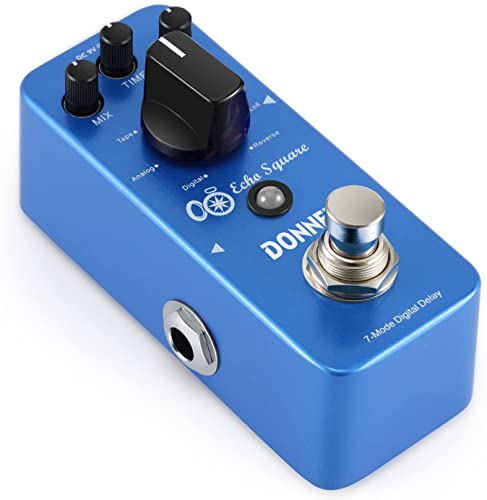
- ✓ Compact, sturdy build
- ✓ Versatile 7 modes
- ✓ Transparent true bypass
- ✕ Needs 9V DC supply
- ✕ Shorter tap-tempo options
| Delay Modes | 7 modes: digital, analog, tape, mod, sweep, lofi, reverse |
| Delay Time Range | 20 ms to 838 ms |
| Controls | MIX (dry/effect blend), TIME (delay time), F.BACK (feedback amount) |
| Power Requirements | DC 9V adapter required (power supply not included) |
| Construction | Aluminium-alloy chassis, compact mini size for pedalboard compatibility |
| Footprint | Mini size suitable for compact pedalboards |
The moment I opened the Donner Echo Square Delay Pedal, the aluminum chassis felt heftier than its tiny footprint suggests, and the click of the mini switch confirmed it’s built to last. I noticed the faceplate’s clean engraving and the smoothness of the three knobs as I first dialed in a quick slapback.
You’ll appreciate how compact it is on a pedalboard, yet it still feels sturdy enough to survive the road.
First impressions shifted after a few hours of use. The seven delay modes are surprisingly versatile for something under fifty bucks, from crisp digital to warm analog and even tape, plus a reverse mode that’s actually usable in a song arrangement.
The MIX, TIME, and F.BACK controls are intuitive enough to tweak on the fly during practice, and the TIME range (20ms to 838ms) covers most typical delay needs without jumping into sub-audible territory.
During live practice, I found the digital circuit design shines most when you’re layering with a clean amp setting. True bypass helps keep your core tone intact when you bypass the effect, which is a nice touch for guitarists chasing transparency.
The pedal is small enough to stack with a couple of favorite drives, and the aluminum body stays cool even after long jam sessions.
Setup was simple: a standard 9V DC power supply (not included) and you’re ready to go. It’s silent in operation, with no obvious hiss, which is a win for home recording and small gigs alike.
For the price, you’re getting a surprisingly flexible delay platform that travels well.
If you’re after a budget-friendly but capable digital delay, this is worth a closer look. It’s not trying to replace high-end hardware, but it nails daily practice and songwriting sessions with ease.
What Features Make a Digital Guitar Pedal Ideal for Musicians?
The ideal digital guitar pedals for musicians incorporate various features that enhance sound quality and usability.
- Sound Quality: A high-quality digital guitar pedal should provide clear and rich sound without unwanted noise or distortion. This is achieved through advanced digital signal processing algorithms that ensure the integrity of the audio signal, allowing for a wide range of tones and effects.
- Versatility: The best digital guitar pedals offer multiple effects and presets that cater to different musical styles. Musicians can easily switch between effects like reverb, delay, modulation, and distortion to suit their playing needs, making the pedal adaptable for various genres.
- User Interface: An intuitive user interface is crucial for quick adjustments on stage or in the studio. Pedals with clear displays, easy-to-navigate menus, and tactile controls allow musicians to modify settings without interrupting their performance.
- Connectivity: Ideal digital guitar pedals come with various connectivity options, including MIDI, USB, and audio inputs/outputs. This allows for seamless integration with other equipment, such as computers, recording software, and additional effects units, enhancing the overall setup.
- Durability: A robust build quality is essential for pedals that will be used in live settings. Features like metal housings, high-quality switches, and rugged knobs ensure that the pedal can withstand the rigors of touring and frequent use.
- Power Options: Flexible power options, including battery operation or AC adapters, make a digital guitar pedal more versatile. This is particularly useful for musicians who perform in various venues where power sources may be limited.
- Software Compatibility: Many modern digital pedals offer companion software for deep customization and sound editing. This compatibility allows musicians to fine-tune their effects and save custom presets for easy recall during performances.
How Do Different Digital Guitar Pedals Compare in Sound Quality?
| Pedal | Sound Quality | Features | Price |
|---|---|---|---|
| Pedal A | Warm, rich tones with minimal noise (frequency response: 20Hz-20kHz) | Multiple effects, user-friendly interface, power: AC adapter | $150, weight: 1.5 lbs |
| Pedal B | Bright, clear sound but may distort at high levels (frequency response: 20Hz-18kHz) | Customizable presets, MIDI compatibility, power: Battery or AC adapter | $200, weight: 1.2 lbs |
| Pedal C | Balanced sound with excellent dynamic range (frequency response: 20Hz-20kHz) | Analog and digital effects, robust build, power: AC adapter | $180, weight: 1.8 lbs |
| Pedal D | Versatile sound with a wide range of tones (frequency response: 30Hz-15kHz) | Built-in tuner, extensive connectivity options, power: Battery | $120, weight: 1.3 lbs |
What Types of Digital Guitar Pedals Are Best for Specific Needs?
Pitch shifters offer creative possibilities, whether for creating harmonies that complement the main melody or for experimenting with unconventional sounds. Compression pedals are crucial for maintaining a consistent volume level, especially in live settings, ensuring that every note is heard clearly without unwanted spikes in volume.
Which Digital Guitar Pedals Are Best for Beginners?
Some of the best digital guitar pedals for beginners include:
- BOSS DS-1 Distortion: A classic pedal known for its simplicity and versatile sound.
- Zoom G1X Four: A multi-effects pedal that offers a wide range of effects and amp simulations.
- TC Electronic Hall of Fame Mini Reverb: A compact reverb pedal that provides a variety of ambient sounds.
- Electro-Harmonix Nano Big Muff Pi: A powerful fuzz pedal that is easy to use and delivers rich tones.
- Line 6 HX Stomp: A compact multi-effects unit that includes a vast array of effects and amp models.
The BOSS DS-1 Distortion is renowned for its straightforward controls and reliable construction, making it a great choice for those just starting out. It delivers a classic distortion sound that can be used across various musical genres, allowing beginners to experiment with their tone without overwhelming complexity.
The Zoom G1X Four is excellent for beginners who want versatility, offering 70 built-in effects and 13 amp simulations. Its user-friendly interface and LCD screen make it easy to navigate, allowing new players to explore different sounds and styles without diving into complicated settings.
For those looking to add depth to their sound, the TC Electronic Hall of Fame Mini Reverb is a fantastic option. This pedal features multiple reverb types from hall to spring, allowing beginners to create ambient textures that enhance their playing with minimal effort.
The Electro-Harmonix Nano Big Muff Pi is perfect for beginners interested in fuzz tones. Its simple controls and thick, creamy distortion make it ideal for creating rich soundscapes, and it’s compact enough to fit on any pedalboard without taking up too much space.
The Line 6 HX Stomp is a powerful multi-effects unit that packs an impressive range of features into a small footprint. It includes a vast library of effects and amp models, allowing beginners to experiment with professional sounds while maintaining user-friendly navigation for quick adjustments.
What Are the Best Choices for Gigging Musicians?
For gigging musicians, choosing the right digital guitar pedal can significantly enhance performance and sound quality. The best choices include:
- BOSS GT-1000: This multi-effects pedal offers an extensive range of sounds and effects, from classic amp simulations to modern digital effects.
- Line 6 Helix: Renowned for its high-quality audio processing, the Helix provides a vast library of effects and amp models that can be customized for any performance.
- Zoom G5n: A more budget-friendly option, the G5n offers a variety of effects and amp simulations, along with a user-friendly interface ideal for live performances.
- Electro-Harmonix EHX95000: This looper pedal not only provides looping capabilities but also includes a range of effects, making it perfect for creating complex soundscapes on stage.
- Headrush Gigboard: Compact and portable, the Gigboard features a powerful processor and a touchscreen interface, enabling easy navigation through its numerous effects and presets.
The BOSS GT-1000 is favored for its robust build and versatility, providing everything from overdrive to modulation effects, allowing musicians to cover a wide range of genres seamlessly. Its intuitive interface and deep editing capabilities make it suitable for those who enjoy tweaking their sound.
The Line 6 Helix stands out due to its advanced digital signal processing, offering pristine audio quality and a plethora of options for tone shaping. It is particularly popular among professional musicians who require reliable performance and extensive customization capabilities in a live setting.
For those on a budget, the Zoom G5n delivers impressive sound quality and functionality without breaking the bank. Its straightforward layout makes it a great choice for musicians who want to focus on performance rather than getting lost in complex settings.
The Electro-Harmonix EHX95000 is ideal for performers who want to incorporate live looping into their set, allowing them to build layers of sound in real-time. Its effects can enhance the looped material, providing creative options for solo acts or bands.
Finally, the Headrush Gigboard combines portability with power, making it an excellent choice for traveling musicians. Its touchscreen interface simplifies the selection of presets and effects, ensuring quick adjustments during performances, which is crucial for maintaining the flow of a live show.
Are There Budget-Friendly Options for Digital Guitar Pedals?
Yes, there are several budget-friendly options for digital guitar pedals that offer great features without breaking the bank.
- Zoom G1X Four: This multi-effects pedal provides a wide range of effects and amp models, making it versatile for different genres.
- BOSS DS-1 Distortion: A classic pedal known for its simple design and powerful distortion capabilities, suitable for both beginners and experienced players.
- Nux MG-30: A compact multi-effects processor that includes a built-in expression pedal, offering a variety of effects and amp simulations at an affordable price.
- Mooer Micro Preamp Series: These mini pedals are designed to replicate famous amplifier tones, providing high-quality sound in a small, budget-friendly format.
- Digitech RP55: An entry-level multi-effects pedal that comes with a range of effects and built-in drum patterns, perfect for practice and live performance.
The Zoom G1X Four is an excellent option for guitarists seeking a multitude of effects in one unit, featuring over 70 built-in effects and 13 amp models. Its user-friendly interface and affordable price make it a great choice for those looking to experiment with sound without a significant investment.
The BOSS DS-1 Distortion is a highly regarded pedal that has stood the test of time. Its straightforward control layout allows for easy adjustments, enabling users to dial in everything from subtle overdrive to hard-hitting distortion, making it a staple for many guitarists.
The Nux MG-30 offers an impressive array of amp models and effects, all housed in a compact design that includes a built-in expression pedal. This pedal stands out for its versatility and the quality of sound it produces, making it a smart choice for musicians on a budget.
The Mooer Micro Preamp Series consists of various models that emulate the sound of popular amplifiers, allowing guitarists to achieve their desired tone without the expense of purchasing a full amp. These mini pedals are not only affordable but also portable, making them ideal for gigging musicians.
The Digitech RP55 is designed for those just starting with effects pedals, featuring a simple interface and a variety of built-in effects along with drum patterns to enhance practice sessions. Its affordability and ease of use make it a practical option for beginners looking to explore different sounds.
How Can You Maximize the Performance of Your Digital Guitar Pedal?
To maximize the performance of your digital guitar pedal, consider various factors that enhance sound quality and usability.
- Proper Power Supply: Using a reliable power supply ensures consistent voltage and avoids noise interference, which can degrade sound quality.
- Signal Chain Placement: The position of your digital pedal in the signal chain affects its performance; placing it in the correct order relative to other effects can enhance tonal quality.
- Firmware Updates: Keeping your pedal’s firmware updated can unlock new features, improve performance, and fix bugs that may affect sound and functionality.
- Patch Cables and Quality Connections: High-quality patch cables minimize signal loss and noise, ensuring that the sound remains clear and true to the original signal.
- Exploring Presets and Customization: Many digital pedals come with presets that can be further customized, allowing you to tailor the sound to your liking and adapt it for different musical styles.
- Using an Expression Pedal: Adding an expression pedal can provide real-time control over effects like volume, wah, or modulation, enhancing your playing dynamics and creativity.
- Regular Maintenance: Keeping the pedal clean and checking for any loose connections or wear can prevent issues that might affect performance and prolong the life of your equipment.
Each of these factors plays a crucial role in ensuring your digital guitar pedal delivers the best sound and functionality, enabling you to achieve your desired tone with ease.
What Common Issues Should You Be Aware of When Using Digital Pedals?
When using digital guitar pedals, several common issues may arise that can affect performance and sound quality.
- Power Supply Issues: Digital pedals often require a stable power source, and using the wrong adapter can lead to unwanted noise or malfunction. It’s essential to use the correct voltage and current to ensure optimal performance and avoid damaging the pedal.
- Latency: Some digital pedals can introduce latency, which is the delay between playing a note and hearing the sound. This can be particularly problematic for guitarists who play fast or intricate passages, as it may disrupt their timing and overall playing experience.
- Firmware Bugs: Like any digital device, digital pedals may have firmware that needs to be updated to fix bugs or improve functionality. Not keeping the firmware up to date can lead to performance issues or missing features that enhance the pedal’s capabilities.
- Compatibility Issues: Digital pedals may not work well with certain amplifiers or other pedals due to differences in impedance or signal levels. It’s important to check compatibility with your existing gear to avoid signal loss or distortion.
- Sound Quality Degradation: While digital pedals offer a range of effects and sounds, some may alter the original tone of the guitar negatively. It’s crucial to test the pedal in your setup to ensure it enhances your sound rather than detracts from it.
- User Interface Complexity: Many digital pedals come with advanced features and settings that can be overwhelming for users. A complicated user interface may lead to frustration, especially for those who prefer a more straightforward, analog approach to effects.
- Overloading Effects: Using too many effects simultaneously can lead to a muddled or cluttered sound. It’s vital to balance your effects chain and be mindful of how each effect interacts with others to maintain clarity in your tone.