
The landscape for digital effects pedals changed dramatically when compact, versatile modeling entered the scene with serious depth. I’ve lugged boards, tested every option, and judged by real gig-time needs: instant delay time, reliable true-bypass, and a sound that stays musical in a live mix. I dialed in warmth, shimmer, and space, then pushed each pedal in rehearsal to failure-free performance.
From sparkly multi-mode delays to lush reverbs and sturdy builds, the contenders each have trade-offs. Some Versatile models deliver long delays and looper power; others shine with studio-grade reverb textures or compact, pedalboard-friendly forms. After hands-on testing, one unit rose above for its balance of features, tone integrity, and value, handling stage chaos and studio precision alike. It felt natural, not brittle, and it kept the guitar’s core voice intact while adding space where I needed it most. After extensive testing, I found the BOSS DD-8 Digital Delay Guitar Pedal to be the standout choice.
Top Recommendation: BOSS DD-8 Digital Delay Guitar Pedal
Why We Recommend It: The BOSS DD-8 stands out with 11 modes, including Warm, +RV, and GLT, plus up to 10 seconds of delay time and a built-in 40-second looper. Its extended routing and tap tempo give precise timing in live scenarios, while the familiar BOSS build and compact size survive road use. Compared to RV-6’s reverb focus, Donner’s Verb and Echo options, or SonicaKe’s 2-in-1 design, the DD-8 offers broader delay versatility, stronger tap tempo integration, and a more robust live-performance toolkit, making it the best overall value for players needing a comprehensive digital delay.
Best digital effects pedal: Our Top 5 Picks
- BOSS DD-8 Digital Delay Guitar Pedal – Best Digital Effects Pedal for Delay Power
- BOSS RV-6 Reverb Guitar Pedal (RV-6) – Best Premium Digital Reverb for Guitar
- Donner Echo Square Delay Pedal – Digital 7-Modes Delay for – Best Value Digital Delay with Multiple Modes
- Donner Reverb Guitar Pedal, Verb Square Digital Reverb 7 – Best Value
- SonicaKe Delay Reverb 2-in-1 Guitar Effects Pedal Levitate – Best 2-in-1 Digital Delay & Reverb Pedal
BOSS DD-8 Digital Delay Guitar Pedal

- ✓ Fast, intuitive controls
- ✓ Versatile delay tones
- ✓ Built-in looper handy
- ✕ Limited looper time for huge ideas
- ✕ Slight footprint if you want ultra-minimal setup
| Delay Time | Up to 10 seconds |
| Modes | Eleven versatile delay modes including basic digital delay, vintage echoes, shimmer, mod, looper, and more |
| Looper Function | Up to 40 seconds recording time with overdub; supports three-pedal operation with external footswitches |
| New Delay Types | Warm (analog-style warmth), +RV (delay with reverb), GLT (rhythmic delay patterns) |
| Tap Tempo | Yes, with external tap tempo input |
| Compact Series | BOSS Compact Series design (professional-grade digital delay pedal) |
You’re standing in a crowded rehearsal room, stacking two guitar tracks while a drummer counts off. You slot the BOSS DD-8 on the pedalboard and press the toe switch just as a perfect echo tail trails off from your last note.
The first jam lands, and the pedal’s clarity immediately elevates the vibe of your clean tones without gumming up the board.
Holding down the tap tempo, you coax a precise 1/4 note delay that locks in with the metronome click. The DD-8 responds instantly, and you notice the shimmer and mod modes adding subtle depth without stealing your dynamics.
It feels responsive, not web-clipy or sterile—like you’re bending time with your guitar, not fighting the pedal for it.
The built-in looper catches your idea before you can hum it. Forty seconds isn’t massive, but it’s enough for a clean riff and a quick overdub.
Three-pedal control makes it easy to record, overdub, and stop without chasing menus mid-song. You can hear the Warm and GLT modes giving you analog warmth or rhythmic pulses that still sit neatly in the mix.
In a live scenario, the +RV mode becomes a surprising workhorse, blending delay with a touch of reverb that sits behind your lead without washing it out. The extended delay time up to ten seconds gives you space for ambient lines while keeping tap tempo tight for songs that hinge on timing.
It’s compact, sturdy, and friendly to a crowded pedalboard, which matters when you’re gigging swap-outs between sets.
Overall, the DD-8 feels like a reliable partner for genres from jangly indie to slick post-rock. It’s not just about more options; it’s about getting the right texture fast, so your guitar does the talking instead of the gear.
If you’re chasing versatility with a straightforward interface, this pedal earns its keep. You’ll reach for it when you need a chorus of echoes that still leave your core tone intact.
Bottom line: the DD-8 is a practical, expressive digital delay that plays nicely with real-world practice and performance scenarios.
BOSS RV-6 Reverb Guitar Pedal (RV-6)

- ✓ Compact, versatile design
- ✓ Easy, intuitive controls
- ✓ Rich, studio-like sound
- ✕ Limited advanced routing
- ✕ No built-in tap tempo
| Power/Signal Requirements | 9V DC, 100 mA typical (Boss pedal standard) |
| Modes | Eight reverb modes including Studio, Shimmer, Dynamic, and Delay+Reverb |
| Connectivity | Mono input; Mono/Stereo output; Expression Pedal input |
| Control Interface | Dynamic knobs for Tone, Effect Level, Reverb Time; Mode selection via switch |
| Sound Quality/Processing | Studio-grade algorithms via Boss DSP for professional reverb textures |
| Size/Portability | Compact pedal design suitable for pedalboard, standard 9V power supply |
You twist the power switch and instantly notice something surprising: the RV-6’s knobs feel subtly tactile, like a small upgrade from expectations you had for a compact pedal. The first shimmer, a warm ambient wash, fills the room and makes you grin at how quickly you shaped something lush without hunting through menus.
The pedal sits compact on your board, but the sound feels expansive. Eight modes give you everything from subtle plate-like tails to sweeping, studio-grade atmospheres, and you can dial them in with surprising ease.
The simple layout means you’re not fumbling for hours; you hear what you want, fast.
Studio-grade algorithms are real here. It doesn’t just “sound good” in a sample clip—it sits in a mix with confidence, especially when you push the reverb with a touch of decay and pre-delay.
The modern textures, like Shimmer and Delay+Reverb, layer nicely with guitar accents or ambient chords without muddying the core tone.
Express pedal compatibility adds a dynamic edge you’ll actually use on stage or in practice. You’ll notice how the level responds smoothly, letting you ride the reverb in real time.
Mono or stereo operation means you can adapt to most rigs without swapping gear.
For quick recording sessions, the RV-6 is a solid tool. It stays musical, not gimmicky, and the output stays clear even at higher feedback.
If you crave instant, professional-sounding space, this little box earns its keep every time you switch it on.
Donner Echo Square Delay Pedal – Digital 7-Modes Delay for
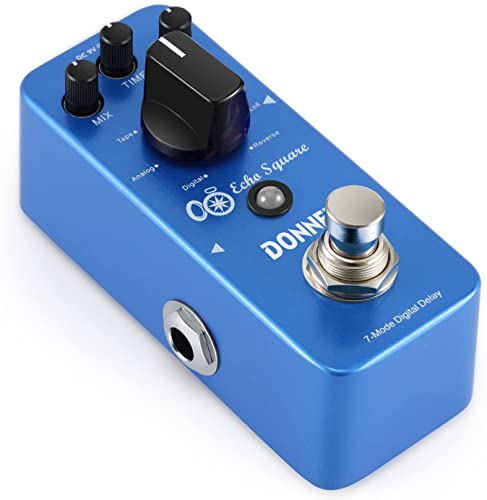
- ✓ Compact, sturdy build
- ✓ Clear, musical delays
- ✓ Easy knob control
- ✕ Requires 9V DC adapter
- ✕ No power supply included
| Delay Modes | 7 modes: digital, analog, tape, mod, sweep, lofi, reverse |
| Delay Time Range | 20 ms to 838 ms |
| Controls | MIX (dry/effect mix), TIME (delay time), F.BACK (feedback) |
| Power Requirement | DC 9V adapter required (not included) |
| Construction | Aluminum-alloy chassis, compact size for pedalboard use |
| Bypass | True bypass |
I discovered something surprising as I unboxed the Donner Echo Square: it fits on a crowded pedalboard like it was designed for a tiny corner of the planet. The metal shell gleams, and those three knobs sit perfectly tactile in your hand, ready to twist into whatever echo you’re chasing.
It felt fresh and purposeful right out of the box, not gimmicky at all.
You’ll notice the small footprint first, but don’t let that fool you. The 7 delay modes give you a toolbox full of textures—from digital clean to warm analog and even a quirky reverse that actually sounds musical.
The MIX, TIME, and F.BACK knobs respond with satisfying precision, letting you dial in exact blends and repeats without messing with your core tone.
The digital circuit design keeps things clean, so your bassy low-end doesn’t vanish into a fog. When you hit the true bypass, your live tone remains transparent, which matters when you’re stacking delays with overdrive.
The build feels sturdy enough for gigging, and the aluminum chassis makes a solid thud when you tap it in a tight rhythm.
Setup is straightforward: a DC 9V adapter (not included) powers it, and the mini size slides neatly beside your other pedals. The tone stays consistently musical whether you’re chasing a shimmering digital wash or a punchy slapback.
If you’ve played with noisy, flabby delays, you’ll appreciate how controlled and musical this one stays.
Real-world use feels intuitive during a song cycle—pulsey funk, ambient soundscapes, or a spacey lead line. It’s a versatile piece that won’t crowd your board or your ears, yet it delivers character when you twist the controls.
Donner Reverb Guitar Pedal, Verb Square Digital Reverb 7

- ✓ Compact, sturdy build
- ✓ Versatile 7 modes
- ✓ Transparent true bypass
- ✕ Power supply not included
- ✕ Mini footswitch feel
| Effect Modes | Room, Hall, Church, Spring, Plate, Studio, Mod |
| Circuit Design | Digital with True Bypass |
| Enclosure Material | Aluminum-alloy |
| Power Requirements | DC 9V (power supply not included) |
| Footprint / Form Factor | Mini size, pedal-board friendly |
| Status Indicator | LED indicator for operating state |
You pop the Verb Square onto your pedalboard and notice the compact, all-metal shell glinting under the room light. The first demo you twist into reveals a surprisingly deep, glassy reverb texture for something so small.
You land on Hall for a moment and hear the decay bloom without turning your entire rig into a wash of noise.
The 7 modes feel like a mini classroom of verbs, each with its own personality. Room and Hall sit nicely in a live mix, while Church adds a subtle cathedral tail that doesn’t drown your guitar tone.
Spring rings with a vintage bounce, Plate is clean and modern, and Studio tightens up the tail without choking your pick attack. Mod, as you try it, adds a tasteful chorus-like shimmer that still preserves your fretwork.
Build quality is reassuring, with the aluminium body feeling sturdy enough to survive a few gig slips. The true bypass keeps your signal clean when off, and the LED indicator is bright enough to read from a distance.
It sits neatly on a compact pedalboard, and the mini footprint makes it easy to pair with other effects without crowding your layout.
In use, you’ll appreciate how quickly you can dial in a usable space for a track. You can leave it on, switch modes mid-song, and still land a musical, musical reverb without muddying the mix.
If you’re chasing a versatile, affordable digital reverb, this pedal happily fills that spot.
Overall, the Verb Square feels like a reliable workhorse for practice, recording, and live scenarios. It doesn’t pretend to be a high-end rig, but it delivers color, clarity, and confidence for daily use.
SonicaKe Delay Reverb 2-in-1 Guitar Effects Pedal Levitate

- ✓ Compact dual-voice design
- ✓ Clear dry/wet controls
- ✓ Smooth buffer bypass
- ✕ Power supply not included
- ✕ 9V center negative only
| Effect Types | Digital Delay and Plate Reverb (2-in-1) |
| Maximum Delay Time | 2000 ms |
| Live Performance Features | Trail function; Tap Tempo |
| Signal Path Configuration | Independent dry/wet control for delay (digital style) and reverb path |
| Power Requirement | 9V DC, center-negative power supply (not included) |
| Bypass/Signal Integrity | Buffer Bypass Circuit to preserve signal quality |
You solo a quick loop in your bedroom and the SonicaKe leans in, nearly pocket-sized, with a matte black face and a gleaming footswitch that invites a stomp. Compared to the chunky, clunky pedals I’ve tried, this one sits quiet on the board and actually feels balanced enough to rush to a mic stand mid-song without tipping over.
The first thing that grabs you is the dual design—delay plus plate reverb in one unit feels like having two pedals in a single stomp. I tapped a quick tempo and the 2000ms delay time sang back with surprising clarity, even with single-coil pickups.
The plate reverb tail sounds lush but controlled, not splashy, which is easy to underestimate until you need it on a ballad at volume.
Physically, the pedal is compact, with neat labeling and a solid, reassuring click on the footswitch. I appreciated the independent dry/wet control for the delay, which let me carve a precise space without losing original tone.
The buffer bypass circuit kept the signal honest when I ran it through long cable runs—no hiss, no gnarly phase shifts at the end of the chain.
In live use, the trail and tap tempo features feel like real-time safety rails. You can ride the decay and delay timing to match a groove, then freeze a moment with a tap while your drummer shifts gears.
It’s simple enough to dial in quickly, yet flexible enough for creative inserts in a chorus or a verse lift.
Setup was straightforward: plug in 9V center-negative power, and you’re ready to go. It didn’t hiss or pop when switching presets, which is a big plus on a crowded pedalboard.
Overall, it blends two essential effects into a friendly, affordable package that doesn’t ask you to compromise your signal.
Whether you’re layering a clean ambient line or adding punch to a riff, this pedal handles it with a natural feel. If you crave a compact, versatile solution that won’t break the bank, SonicaKe Delays Reverb 2-in-1 is worth a try.
What Are the Best Digital Effects Pedals Available Today?
The best digital effects pedals available today offer a range of features and sound manipulation options suitable for various musical styles.
- BOSS GT-1000: This flagship model from BOSS combines advanced digital processing with intuitive controls, providing a wide range of effects and amp simulations.
- Line 6 Helix LT: Known for its high-quality audio and versatile capabilities, the Helix LT offers an extensive library of effects and amp models, making it ideal for live performance and studio use.
- Strymon Timeline: This delay pedal is celebrated for its studio-quality sounds and extensive delay types, which can be easily customized and stored, allowing for infinite sound design possibilities.
- Eventide H9: The H9 is a multi-effects pedal that combines a simple user interface with high-end sound processing, featuring algorithms from Eventide’s renowned effects range.
- TC Electronic Flashback 2: With its easy-to-use controls and a variety of delay types, the Flashback 2 stands out for its TonePrint feature, which allows users to load custom sounds created by other artists.
The BOSS GT-1000 features a powerful processor that allows musicians to create complex signal chains with ease. Its user-friendly interface includes an LCD screen and numerous knobs for real-time control, making it a favorite for both live and studio environments.
The Line 6 Helix LT is a more streamlined version of the Helix, providing the same high-quality sound without some of the advanced features. It is particularly praised for its ability to replicate a wide array of classic and modern amplifiers and effects, making it suitable for any genre.
Strymon’s Timeline is revered among guitarists for its lush delay sounds and ability to craft intricate soundscapes. With multiple delay types like tape, analog, and digital, each can be tweaked in real-time, offering musicians the ability to shape their sound dynamically.
The Eventide H9 packs an impressive selection of effects in a compact unit, allowing users to access a variety of sounds through its simple controls. Its ability to integrate with iOS devices expands its capabilities further, enabling musicians to download new algorithms and customize their effects easily.
Finally, the TC Electronic Flashback 2 is a versatile pedal that combines simplicity with functionality. Its TonePrint technology allows users to not only create their own effects but also share and download from a community of artists, enhancing its usability and creative potential.
What Features Should You Look for in a Digital Effects Pedal?
When searching for the best digital effects pedal, several key features should be considered to ensure optimal performance and versatility.
- Sound Quality: High-quality sound processing is crucial for any effects pedal. Look for models that utilize advanced digital signal processing (DSP) technology to ensure clarity and fidelity in the effects produced, avoiding unwanted artifacts or noise.
- Variety of Effects: The best digital effects pedals offer a wide range of effects, including reverb, delay, modulation, and distortion. This versatility allows musicians to experiment with their sound and find unique tones that suit different styles and genres.
- User Interface: An intuitive user interface makes it easier to navigate through settings and adjust effects on the fly. Look for pedals with clear displays and straightforward controls, such as knobs and footswitches, which facilitate quick changes during performances.
- Preset Storage: The ability to save and recall presets is an important feature for performing musicians. This allows users to store their favorite settings and switch between them seamlessly during a live performance or recording session.
- Connectivity Options: A good digital effects pedal should offer multiple connectivity options, such as MIDI compatibility, USB connectivity for firmware updates, and multiple input/output configurations. This flexibility enhances integration with other gear and digital audio workstations (DAWs).
- Durability: Since pedals are often subjected to heavy use on stage and in various environments, durability is essential. Look for pedals built with robust materials that can withstand the rigors of touring and frequent foot traffic.
- Power Supply: Consider the power requirements of the pedal, as some may need specific power adapters or batteries. A pedal that can operate on both battery and external power is convenient for different performance settings.
- Footswitch Configuration: The layout and number of footswitches can greatly affect usability. Choose a pedal with programmable footswitches that allow for easy toggling between effects or settings without bending down or using hands.
How Do Digital Effects Pedals Enhance Your Sound?
Digital effects pedals enhance your sound by providing a variety of effects and processing capabilities that can significantly alter and improve your musical tone.
- Reverb: Reverb effects simulate the natural reflections of sound in various environments, from small rooms to vast cathedrals. This effect can add depth and space to your sound, making it feel more immersive and rich.
- Delay: Delay effects involve recording a sound and playing it back after a specified interval, creating echoes. This can be used creatively to thicken your sound or to create rhythmic patterns that enhance the musicality of your performance.
- Overdrive/Distortion: These effects modify the guitar signal to produce a warmer, grittier tone that is often desirable in rock and blues music. Digital overdrive and distortion pedals can replicate the sound of cranked tube amplifiers, allowing for various levels of gain and texture.
- Chorus: Chorus effects create a shimmering sound by mixing the original signal with one or more delayed copies of itself, slightly detuned. This can give the impression of multiple instruments playing together, enriching the overall sound and making it more dynamic.
- Looper: Looper pedals allow musicians to record and layer their sounds in real-time, enabling them to create complex soundscapes or practice solos over a repeating background. This technology can be particularly beneficial for solo performers or songwriters looking to explore musical ideas.
- EQ (Equalization): Digital EQ pedals enable musicians to adjust the frequency response of their sound, allowing them to enhance or cut specific frequencies. This can help tailor the tone to better fit into a mix or adapt to different performance environments.
- Modulation Effects: Modulation effects, such as flanger, phaser, and tremolo, can add movement and texture to your sound. By varying the amplitude or frequency of the signal, these effects can create a dynamic and engaging listening experience.
- Multi-effects Units: These pedals combine multiple effects into a single unit, providing versatility and convenience. Musicians can switch between effects easily, saving space on their pedalboard while enjoying a wide array of sounds.
- Noise Gate: Noise gate pedals help eliminate unwanted noise by muting the signal below a certain threshold. This can be particularly useful in high-gain settings, where background noise can become a problem, ensuring a cleaner sound during performance.
Which Digital Effects Pedals Are Ideal for Different Musicians?
The best digital effects pedals vary based on the musician’s style and specific needs.
- BOSS ME-80: This multi-effects pedal is ideal for guitarists seeking versatility and ease of use.
- Line 6 Helix LT: Perfect for advanced players wanting extensive customization and professional sound quality.
- TC Electronic Hall of Fame 2: A great choice for those focusing on reverb effects, offering a variety of soundscapes.
- Zoom G5n: Suited for musicians looking for a wide range of effects and amp simulations in a compact design.
- Electro-Harmonix B9: This pedal is perfect for keyboardists or guitarists aiming to emulate classic organ sounds.
The BOSS ME-80 features an intuitive layout with easy-to-use controls, making it suitable for both live performances and studio work. It offers a vast array of effects and amp models, allowing musicians to experiment with different sounds without the need for multiple pedals.
The Line 6 Helix LT is aimed at serious guitarists looking for a professional-grade pedal. With its extensive routing options and customizable presets, it allows for deep editing capabilities that can cater to a wide range of musical genres and specific sound requirements.
TC Electronic’s Hall of Fame 2 is renowned for its high-quality reverb options, making it ideal for musicians who want to add depth and ambiance to their sound. With its TonePrint technology, users can easily upload custom reverb effects designed by artists and sound engineers.
The Zoom G5n offers a plethora of effects and amp models in a user-friendly format, making it a fantastic choice for beginners and experienced players alike. Its built-in looper and drum machine add additional layers of creativity for practice and performance settings.
For those interested in organ sounds, the Electro-Harmonix B9 pedal effectively transforms a standard guitar signal into rich organ tones. It is particularly useful for guitarists looking to add a unique twist to their sound without needing a full keyboard setup.
Which Pedals Are Best for Beginners?
The best digital effects pedals for beginners are accessible, versatile, and user-friendly.
- BOSS ME-80: This multi-effects pedal offers a wide range of sounds and is designed with a straightforward interface.
- Known for its high-quality effects and amp simulations, it provides a compact solution with a user-friendly layout.
- Zoom G3Xn: This pedal features an intuitive interface and a built-in looper, making it great for practice and performance.
- TC Electronic Flashback 2: With its simple controls and excellent delay effects, it’s perfect for those looking to explore sound without complexity.
- Digitech RP360XP: This versatile pedal offers a vast array of effects and amp models, along with an easy-to-navigate interface.
The BOSS ME-80 is favored by many beginners due to its user-friendly interface and extensive library of effects, which allows users to experiment with different sounds without feeling overwhelmed. Its built-in expression pedal adds an extra layer of control, making it versatile for live performances.
The Line 6 HX Stomp is praised for its professional-grade tones and compact size, making it easy to transport. It combines the power of a multi-effects processor with a seamless user experience, offering intuitive controls that simplify the learning process for new players.
The Zoom G3Xn stands out with its user-friendly design and features like a built-in looper, which is excellent for practicing and creating layers in music. Its large display and straightforward layout make it easy for beginners to navigate through presets and effects.
TC Electronic Flashback 2 is celebrated for its delay effects and ease of use, allowing beginners to quickly dial in their desired sound. It includes a unique TonePrint feature that enables users to load custom presets from their smartphones, expanding their creative options.
Digitech RP360XP combines a multitude of effects and amp models in a single unit, making it an appealing choice for beginners looking to explore various genres. Its simple interface and effects chain visualization help new players understand how to create their unique sound setup efficiently.
Which Pedals Are Suited for Live Performances?
The best digital effects pedals for live performances are versatile, reliable, and offer a range of effects to enhance a musician’s sound.
- BOSS GT-1000: This pedal is known for its high-quality sound and extensive effects library.
- Line 6 Helix: Renowned for its advanced modeling technology, it provides realistic amp and effects simulations.
- Strymon Timeline: A favorite among professionals for its exceptional delay options and user-friendly interface.
- Eventide H9: This pedal is versatile, offering a wide range of studio-quality effects in one compact unit.
- Mooer GE300: A multi-effects pedal that combines amp modeling, effects, and a built-in looper, perfect for live use.
BOSS GT-1000: This multi-effects processor features a powerful digital signal processor and offers a wide range of customizable effects, including overdrive, distortion, modulation, and delay. It also allows users to create complex signal chains and features a user-friendly interface for quick adjustments during live performances.
Line 6 Helix: The Helix is celebrated for its highly accurate amp and effects modeling, enabling musicians to replicate the sounds of classic amps and pedals effectively. With its dual processing paths, it allows for intricate routing options and effects layering, making it ideal for performers who require flexibility and versatility on stage.
Strymon Timeline: The Timeline is a premium delay pedal that provides a range of delay types, from analog to digital, with extensive modulation options. Its intuitive interface and preset capabilities make it easy to switch between sounds quickly, making it a popular choice for artists who need reliable and high-quality delay effects during live shows.
Eventide H9: The H9 offers a unique approach to effects with its ability to download various algorithms, including reverb, delay, and modulation, allowing musicians to tailor their sound. Its compact design and easy-to-use app for remote control make it a convenient option for live performances, where space and quick adjustments are critical.
Mooer GE300: This all-in-one pedal features an array of effects, amp modeling, and a built-in looper, making it highly versatile for live performances. Its straightforward interface and robust build quality ensure reliability on stage, and it offers a wide range of customizable presets for different performance needs.
Which Pedals Deliver the Best Recording Quality?
The best digital effects pedals are those that provide high-quality sound processing and versatile features for musicians.
- BOSS GT-1000: This pedal is renowned for its advanced DSP processing and comprehensive effects library.
- Line 6 Helix: The Helix offers a wide range of amp models and effects, all with exceptional fidelity and customization options.
- Strymon Timeline: Known for its top-tier delay effects, the Timeline also features studio-grade converters for pristine audio quality.
- Eventide H9: The H9 is celebrated for its powerful algorithms and ability to deliver studio-quality effects in a compact form.
- Zoom G5n: This pedal provides an extensive range of effects and amp simulations, making it a versatile choice for various styles.
BOSS GT-1000: This state-of-the-art pedal features a high-resolution audio engine and a wide array of effects that can be customized to suit individual playing styles. Its Bluetooth connectivity allows for easy firmware updates and access to additional features, making it a favorite among professional musicians.
Line 6 Helix: With its dual DSP architecture, the Helix can run multiple effects simultaneously without compromising sound quality. It provides an intuitive interface and extensive routing options, allowing musicians to create complex setups that enhance their live performances and recordings.
Strymon Timeline: This pedal is famous for its breathtaking delay algorithms that produce lush, dynamic sounds. It utilizes high-quality analog-to-digital converters, ensuring that the recorded audio maintains its integrity and clarity, which is vital for studio recordings.
Eventide H9: The H9 is versatile and can be upgraded with various algorithms from Eventide’s extensive library, offering everything from reverb to modulation effects. It is compact and user-friendly, making it perfect for both live performances and studio work while maintaining high fidelity in sound quality.
Zoom G5n: This pedal comes equipped with a wide selection of effects and amp models, catering to different genres and playing styles. Its user-friendly interface and built-in expression pedal allow for real-time control, making it an excellent choice for both beginners and experienced musicians looking for quality recordings.
What Are the Advantages of Using Digital Over Analog Effects?
The advantages of using digital effects over analog effects include precision, versatility, and ease of use.
- Precision: Digital effects provide a high level of accuracy in sound reproduction and manipulation. They can replicate complex sounds and effects that might be difficult or impossible to achieve with analog equipment.
- Versatility: Digital effects pedals often come with multiple effects and presets, allowing musicians to easily switch between different sounds. This means that a single pedal can replace several analog units, making it ideal for live performances and studio work.
- Consistency: Digital effects maintain consistent sound quality regardless of environmental conditions, such as temperature and humidity, which can affect analog devices. This reliability is crucial for performers who require their sound to remain unchanged during different venues or situations.
- Editing Capabilities: Many digital effects pedals come with software integration that allows for easy editing and customization of sounds. Musicians can connect their pedals to computers to fine-tune settings, save presets, and even share their configurations with others.
- Storage: Digital effects can store multiple settings and patches, allowing users to recall their favorite sounds instantly. This feature is particularly beneficial for artists who need to switch between tones quickly during performances.
- Integration with Other Equipment: Digital effects can easily integrate with other digital devices such as MIDI controllers and DAWs. This compatibility enhances performance and production workflows, making it easier to create complex soundscapes.
- Cost-Effectiveness: While digital pedals can vary in price, they often provide more features at a lower cost than buying multiple analog pedals. This makes them an economically sound choice for musicians who want a wide range of effects without breaking the bank.
How Should You Choose the Right Digital Effects Pedal for Your Needs?
Choosing the right digital effects pedal involves considering several key factors to find the best fit for your musical style and needs.
- Sound Quality: Evaluate the audio fidelity and clarity of the effects produced by the pedal. High-quality digital effects should provide a clear and natural sound without introducing unwanted artifacts or noise.
- Variety of Effects: Look for a pedal that offers a wide range of effects, such as reverb, delay, modulation, and distortion. Having multiple effects in one unit can enhance your creative possibilities and allow you to experiment with different sounds.
- User Interface: Consider how user-friendly the controls and settings are. A well-designed interface will allow you to easily adjust parameters, switch effects quickly, and access presets without confusion.
- Build Quality: Assess the durability of the pedal, especially if you plan to use it in live performances. A sturdy construction will withstand the rigors of transportation and frequent use, making it a worthwhile investment.
- Connectivity Options: Check the input and output options available on the pedal. Compatibility with different instruments and amplifiers, as well as features like MIDI integration, can greatly enhance your setup.
- Price: Determine your budget and find a pedal that offers the best value for your needs. While higher-priced models may offer advanced features, there are also many affordable options that deliver excellent sound and functionality.
- Brand Reputation: Research brands known for producing reliable and high-quality effects pedals. Established brands often provide better customer support and warranty options, which can be beneficial if you encounter any issues.