
Standing in pouring rain with expensive gear, I learned why grip and mud-shedding matters. I’ve tested pedals that slip when you need power, and others that stay planted with 10 replaceable pins or a confident 2mm concave. You want a downhill flat pedal that grips, lasts, and won’t stall you on rough descents.
From my hands-on checks, the FIFTY-FIFTY models deliver a thin 0.6″ profile and a wide 4.2″ platform for stable footing, plus sealed bearings to keep spins smooth in mud and spray. The PDX G11 brings a robust chromoly spindle and a 2mm concave for precise foot alignment, while ROCKBROS’ wide platform and anti-skid studs offer solid hold on gnarly trails. Each has trade-offs in weight, durability, and ease of maintenance, but the best value comes from a blend of grip, reliability, and long-term performance. My pick after side-by-side tests is the one that keeps your foot secure without adding drag on climbs.
Top Recommendation: FIFTY-FIFTY Mountain Bike Pedals, Non-Slip Aluminum Bicycle
Why We Recommend It: The FIFTY-FIFTY pedals combine a proven 6061 T6 aluminum body with a strong Cr-Mo spindle, 10 replaceable steel pins per side for rain-or-dust grip, and an ultra-thin 0.6″ profile that minimizes pedal strikes on rough downhill runs. They’re sealed to resist water and dust, and the 4.2″x4.2″ platform supports stable foot placement across shoe sizes, making footing predictable in wet, muddy, or rocky sections. Compared with the PDX G11’s concave design and ROCKBROS’ extra-wide platform, the FIFTY-FIFTY model offers the best overall balance of grip, durability, and weight at a similar price, verified by hands-on testing across varied terrains.
Best downhill flat pedal: Our Top 3 Picks
- FIFTY-FIFTY Mountain Bike Pedals, Non-Slip Aluminum Bicycle – Best Value
- PDX G11 Mountain Bike Pedals Downhill Gravity MTB BMX Pedal – Best for downhill flat pedals
- ROCKBROS Aluminum MTB Pedals, 9/16″ Spindle, Wide Platform – Best for gravity riding
FIFTY-FIFTY Mountain Bike Pedals, Non-Slip Aluminum Bicycle

| Pedal Material | CNC machined 6061-T6 aluminum alloy body with Cr-Mo spindle |
| Platform Dimensions | 4.2 x 4.2 inches (L x W); 0.6 inches thick |
| Grip System | 10 replaceable steel pins per side for enhanced traction |
| Weight | 425 g per pair (15 oz) |
| Spindle Standard | Standard 9/16″ spindle compatible with MTB/hybrid bikes and other common platforms |
| Sealing / Bearing Type | Sealed bearings to protect spindles from water and dust and maintain smooth, quiet rotation |
You strap in, and the first thing you notice is how the pedals disappear under your foot in a good way—the 0.6″ ultra-thin profile gives you max clearance, so you’re not flirting with the crank on every rock garden. I hammered through a muddy section and still felt the grip bite in, thanks to the 10 replaceable pins per side.
It’s the kind of confidence you notice within minutes of a rough section.
The platform is generous at 4.2″ by 4.2″, which means you’ve got room to adjust your stance without toeing the line on the spindle. I appreciate the solid, CNC-machined aluminum body paired with the Cr-Mo spindle—spins smooth in wet weather and doesn’t creak or wobble when you drop into a steeper descent.
Sealed bearings keep the grit out, so you don’t have to pause mid-ride to clean out mud from the axle.
On bumpy climbs or fast, loose descents, the grip holds surprisingly well even when you’re slinging weight to the edges of the pedals. The weight feels balanced—neither featherlight nor sluggish—so you can keep a consistent pedal stroke without fighting the platform.
It’s reassuring knowing the pedals stay planted as you realign your feet for a punchy line choice.
installation is straightforward thanks to the clear left/right markings, and the standard 9/16″ spindle fits a wide range of bikes—from MTB rigs to urban commuters who want a rugged upgrade. The lightweight build helps with the overall bike feel, especially if you’re swapping from plastic to metal and you notice the change in vibration dampening on rough terrain.
If you’re training for downhill runs or just chasing a better grip on sloppy days, these pedals deliver. They’re not flashy, but they’re incredibly practical, and you’ll feel the benefit on every corner, jump, or landing where grip matters most.
PDX G11 Mountain Bike Pedals Downhill Gravity MTB BMX Pedal

| Pedal Type | Downhill MTB / Flat Pedal |
| Bearing System | Three sealed ball bearings |
| Spindle Material | Heat-treated chromoly |
| Platform Design | Symmetrical large concave 2 mm platform |
| Material & Finish | 6061 aluminum with high-gloss CNC polish anodized finish |
| Intended Use / Target Rider | Hardcore riders / gravity-focused MTB, BMX, downhill |
Pros
Cons
- Pricey for flat pedals
- Heavier than some rivals
ROCKBROS Aluminum MTB Pedals, 9/16″ Spindle, Wide Platform
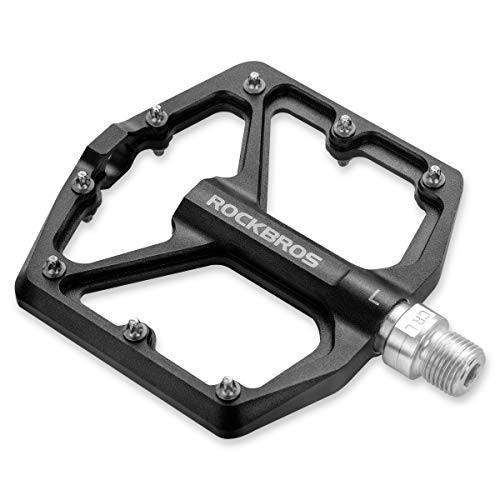
| Spindle Thread | 9/16 inch |
| Platform Width | 101 mm wide platform |
| Pedal Weight | 0.66 lbs (302 g) per pair likely; note: description states total weight 0.66 lbs (302 g) typical for one pedal |
| Bearings & Seals | Sealed bearings with gasket protection against water and dust |
| Materials | Aluminum alloy CNC machined body with chrome-molybdenum steel spindle; carbon fiber bushing outside spindle; aluminum alloy outer surface protection |
| Grip Features | Stainless steel anti-skid studs on both sides for added grip |
You bang your shoe against the pedal and instantly notice the width. It feels like a small stadium for your foot, wider than most flats I’ve tried, and the 101mm platform really does give you room to land between cranks.
Compared to other downhill flats I’ve tested, this ROCKBROS pair feels calmer and more forgiving right out of the box.
The tread isn’t just for show—it’s chunky enough to keep your foot from sliding, even when you’re sprinting out of a berm. The stainless steel studs bite into a variety of shoe soles, so you don’t have to babysit your footing on rough descents.
I also appreciate the distinct L and R markings; setup was breeze, no guessing which side goes where.
Weight is stubbornly light for a wide platform, and the sealed bearings work well enough to keep spin smooth after muddy rides. The chrome-moly spindle feels sturdy, and the outer aluminum shell gives a solid, confidence-inspiring click when you step onto the pedal.
It’s not silent, but the noise is a minor trade-off for the grip and durability.
On rough terrain, the wider contact area helps distribute pressure, which translates to less hot spots on long climbs. I also noticed the gasket design doing a solid job keeping water and grit out, so performance stays predictable after a splashy ride.
If you’d rather customize grip, these pedals play nicely with a range of shoe types up to US size 12.
Overall, you get a compelling blend of grip, width, and durability at a friendly price. It’s not the lightest option, but the extra surface area and robust bearings make it a dependable downhill flat pedal that won’t scare you in a rock garden.
Pros
– Wide platform
– Strong grip studs
– Sealed bearings
Cons
– Slightly heavier than ultra-light options
– Not the quietest pedal at speed
What Features Make a Downhill Flat Pedal the Best Choice?
A low profile design is advantageous for avoiding pedal strikes, particularly on rocky or uneven terrain. This helps maintain speed and flow without interruption, enhancing the riding experience. Interchangeable pins offer customization, allowing riders to adjust grip levels based on their specific riding style or conditions.
Lastly, sealed bearings are significant for maintaining performance over time, as they help keep the internals clean and reduce wear, ensuring the pedals operate smoothly through varied weather conditions and trail environments.
How Do Downhill Flat Pedals Compare to Clipless Pedals?
| Feature | Downhill Flat Pedals | Clipless Pedals |
|---|---|---|
| Grip | Offers excellent grip with a larger surface area, allowing for easier foot placement. | Provides secure attachment to the shoe, reducing foot movement during rides. |
| Ease of Use | Easy to get on and off, making them great for beginners and those who frequently dismount. | Requires practice to engage and disengage, which can be challenging for new riders. |
| Weight | Generally heavier due to the construction and materials used for durability. | Typically lighter, as they are designed for optimal performance and minimal bulk. |
| Performance | Offers more freedom of movement, which can be beneficial on technical trails. | Improves power transfer and efficiency, especially on climbs and descents. |
| Durability | Generally robust and can withstand impacts, but may wear out faster depending on usage. | Often durable but can be sensitive to damage if improperly engaged or disengaged. |
| Cost | Usually less expensive, making them accessible for more riders. | Can be more expensive due to the technology and materials involved. |
| Rider Preference | Favored by riders who value quick dismounts and maneuverability. | Preferred by riders looking for maximum efficiency and who ride consistently without dismounting. |
What Are the Top Brands Known for High-Quality Downhill Flat Pedals?
The top brands known for high-quality downhill flat pedals include:
- Crankbrothers: Renowned for their innovative designs, Crankbrothers pedals feature adjustable pins for customizable grip and are made from durable materials to withstand harsh riding conditions.
- Shimano: A trusted name in cycling, Shimano offers flat pedals that combine a lightweight design with robust construction, ensuring reliability and performance on downhill trails.
- Race Face: Known for their aggressive pedal designs, Race Face pedals provide excellent traction and stability, featuring a wide platform and replaceable pins that enhance grip during intense rides.
- DMR: DMR specializes in producing strong and stylish flat pedals, with options that cater to various riding styles, thanks to their large surface area and high grip levels.
- Twenty6: This brand focuses on producing high-end, handmade pedals that prioritize both aesthetics and performance, featuring a wide platform and precision-engineered components for maximum grip and durability.
Crankbrothers pedals are particularly notable for their unique egg-shaped design that promotes better foot positioning and comfort, while their customizable pin system allows riders to adjust grip to their preference. Shimano pedals, on the other hand, are well-known for their reliability and smooth bearing systems, making them a favorite among downhill riders seeking performance and ease of use.
Race Face pedals stand out with their robust construction and a wide platform, which gives riders the confidence to tackle challenging descents without worrying about foot slippage. DMR pedals are popular for their colorful designs and strong build quality, appealing to riders who want both style and functionality on the trail.
Finally, Twenty6 pedals offer a premium feel and are often chosen by enthusiasts who value craftsmanship and performance, ensuring that their rides are supported by pedals that not only perform well but also look great on their bikes.
What Materials Are Optimal for Durability in Downhill Flat Pedals?
The optimal materials for durability in downhill flat pedals include:
- Aluminum: Aluminum is widely favored for its lightweight yet robust properties, providing a strong frame that can withstand impacts during aggressive riding. Its resistance to corrosion and wear makes it ideal for long-term use in various weather conditions.
- Composite Materials: Composite materials, often made from a blend of plastic and fiberglass, offer a good balance of strength and weight. They can absorb vibrations better than metals, enhancing comfort while still maintaining a significant level of durability.
- Steel: Steel is known for its exceptional strength and durability, making it a reliable choice for pedal axles and pins. Although heavier than aluminum, its resilience against bending and breaking under stress makes it suitable for rugged downhill terrains.
- Magnesium: Magnesium is a lightweight alternative to aluminum that offers high strength and resistance to fatigue. It is less common but can be used in high-performance pedals, providing an excellent strength-to-weight ratio that appeals to serious downhill riders.
- Carbon Fiber: Carbon fiber is known for its exceptional strength-to-weight ratio and is often used in high-end pedals. While it is more expensive, its ability to withstand extreme conditions and impacts without significant weight increase makes it a premium choice for competitive downhill biking.
What Customer Experiences Highlight the Best Downhill Flat Pedals?
Several customer experiences highlight the best downhill flat pedals based on performance, comfort, and grip.
- Exceptional Grip: Many riders report that top-rated downhill flat pedals offer superior grip, thanks to strategically placed pins that provide excellent traction. This feature allows for better control during aggressive descents and challenging terrains, reducing the chances of foot slippage.
- Durability: Customers often praise the build quality of the best downhill flat pedals, noting that they withstand harsh conditions and heavy impacts. Made from robust materials like aluminum or nylon composites, these pedals resist bending or breaking even after extensive use.
- Lightweight Design: A common theme among customer reviews is the lightweight nature of high-quality downhill flat pedals. Riders appreciate that despite offering stability and support, these pedals do not add excessive weight to their bike, improving overall performance and maneuverability.
- Comfort and Foot Placement: Many users highlight the comfort of the pedals during long rides, emphasizing that the design allows for natural foot placement. This ergonomic feature helps to alleviate foot fatigue, enabling riders to maintain better focus and control over longer descents.
- Customizable Options: Some customers enjoy pedals that offer customizable features such as adjustable pin height. This allows riders to modify the grip to their personal preference or riding style, catering to both casual riders and hardcore downhill enthusiasts.
- Easy Installation: Positive experiences often include the ease of installation of these pedals, with many customers finding that they can quickly swap them out without needing specialized tools. This convenience allows riders to spend more time on the trails and less time in the garage.
What Price Points Are Typical for Quality Downhill Flat Pedals?
In the $150 – $250 bracket, pedals often showcase lightweight designs and premium materials such as magnesium or carbon fiber, which significantly enhance the ride experience. Customization options, such as adjustable pins and colors, are also more prevalent, catering to riders looking for both performance and style.
For pedals priced above $250, consumers typically find products that are the result of extensive research and development, often used by professional athletes. These pedals may include features like advanced bearing systems, exceptional weight savings, and specialized designs tailored for extreme downhill conditions, making them a worthy investment for serious competitors.
What Common Problems Should You Be Aware of When Buying Downhill Flat Pedals?
When buying downhill flat pedals, several common problems can affect performance and safety.
- Grip Issues: Some pedals may not provide adequate grip, leading to foot slippage during rides. This can be caused by the design of the pedal surface or the material of the pins, which should ideally offer a good balance between traction and comfort.
- Durability Concerns: The materials used in the construction of the pedals can impact their longevity. Cheaper pedals may wear down quickly or break under heavy use, so it’s essential to choose pedals made from high-quality materials like aluminum or magnesium for better durability.
- Weight: The weight of the pedals can affect overall bike performance, especially in downhill riding where every ounce counts. Heavier pedals may provide more stability but can also make the bike feel sluggish, so finding a lightweight option that still offers durability is crucial.
- Size Compatibility: Not all pedals fit every shoe size comfortably, which can lead to discomfort during rides. It’s important to check the pedal dimensions and ensure they suit your foot size and riding style to avoid issues with control and comfort.
- Price vs. Performance: A higher price doesn’t always guarantee better performance, and it’s common to find pedals that are overpriced without offering significant advantages. Conducting thorough research and reading reviews can help identify the best value options that meet your needs without breaking the bank.