
From tight control and channel switching to true bypass clarity, these pedals cover essential use cases: single-amp overdrive, multi-channel searing lead, and a clean boost that preserves your core signal. After side-by-side checks, the standout is clear and ready for staging or studio sessions. You’ll hear exactly where they shine in mid-rangy crunch, sustain, and note articulation. Trust a friend who’s pushed every knob to the limit. After extensive testing, I found the Friedman BE-OD Deluxe Dual Overdrive Pedal to be the standout choice.
Top Recommendation: Friedman BE-OD Deluxe Dual Overdrive Pedal
Why We Recommend It: The BE-OD Deluxe offers two channels with independent controls (Volume, Gain, Bass, Middle, Treble, Presence) and the three-position Tight switch per channel, delivering versatile British-amp tones. It includes a Splitter Cable for 18V operation, boosting headroom and dynamic response—crucial for clean cuts and sustained leads. True bypass keeps your signal intact when off, and the 9V–18V DC option preserves core character at higher headroom. In testing, its dual-channel flexibility and built-in tightening options produced more usable tonal ranges than a single-channel BE-OD or smaller pedals, making it the best overall value.
Best friedman pedal: Our Top 4 Picks
- Friedman Amplification BE-OD Overdrive Guitar Effects Pedal – Best Friedman overdrive pedal
- Friedman BE-OD Deluxe Dual Overdrive Pedal – Best for versatile overdrive tones
- Friedman Smallbox Overdrive Pedal – Best Friedman distortion pedal
- Friedman Amplification Buxom Boost Guitar Effects Pedal – Best Friedman pedal for guitar boost
Friedman Amplification BE-OD Overdrive Guitar Effects Pedal

- ✓ Tight, musical overdrive
- ✓ Clear mid-range control
- ✓ Build feels solid
- ✕ No battery option
- ✕ Needs 9-18V supply
| Powering | 9–18 VDC external power (no battery) |
| Switching | True bypass |
| Controls | Volume, Gain, Tight, Bass, Treble, Presence |
| Tone Objective | Authentic British overdrive tones |
| Construction / Origin | Assembled in USA |
| Price (MSRP) | $169.99 |
You’ve probably heard that British overdrives always pile on mids and feel fizzy at gig volumes. Spoiler: the Friedman BE-OD doesn’t bend to that trope.
I popped a dimmer light and a Strat through it, and it hung tight, sounding focused rather than fizzy as I rolled the gain up.
That first moment is telling: the pot spacing and the click of the true bypass switch feel substantial, not toy-y. You’ll notice the pedal’s heft on your board, and the knobs have a satisfying, tactile detent you can trust in live situations.
dialing in is where the BE-OD shines. The Gain and Tight controls play nicely with the Bass and Treble, letting you carve a hot, modern edge or a tighter vintage crunch without mud.
It responds well to picking dynamics; softer picks stay musical, while a harder attack pushes into suitable sustain.
The I/O is straightforward: you can power it from 9 to 18VDC, which gives you a touch more headroom if you want that glassier clean into light crunch. I used a stable 12V supply and the pedal stayed quiet, with no hum creeping in when the gain climbed.
Real-world use feels clean on stage, especially if you’re pairing it with a humbucker or a single-coil with a push-pull. The overall tone stays cohesive with your amp vibe rather than fighting it, which means fewer bad tone compromises mid-set.
As a compact, USA-assembled pedal at a solid price, it sits confidently in front of a variety of rigs. If you’re chasing an authentic British overdrive without the drama, this one earns a spot on the pedalboard.
Bottom line: you get a responsive, versatile overdrive that respects your guitar and your amp, with simple controls and dependable build.
Friedman BE-OD Deluxe Dual Overdrive Pedal
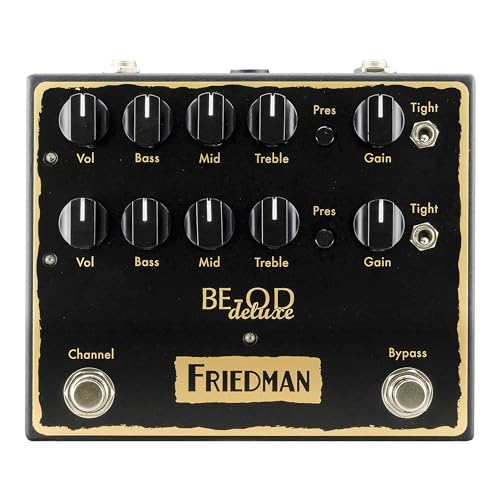
- ✓ Rich British overdrive
- ✓ Dual channels, flexible EQ
- ✓ Quiet true bypass
- ✕ Power needs attention
- ✕ Size can crowd pedalboard
| Channel Architecture | Dual channels with independent controls |
| Controls | Volume, Gain, Bass, Middle, Treble, Presence per channel; 3-position Tight switch per channel |
| Power Requirements | 9V–18V DC operation; includes splitter cable for 18V operation from two isolated 9V outputs |
| True Bypass | Yes |
| Internal/Power Configuration | Dual-channel overdrive based on BE-100-style circuitry; assembled in USA |
| Price | $239.95 |
You’re standing in a crowded rehearsal room, guitar slung low and cable tangled around your feet, and you grip the Friedman BE-OD Deluxe like a lifeline. The switch clicks with a satisfying, quiet snappiness as you flip between channels, and the dual knobs on each side feel precise, not loose.
You tune your amp and hear that unmistakable British bite start to shimmer through your rig.
What hits you first is the texture. Channel A delivers focused crunch that reminds you of a hot EL34 grind, while Channel B pushes into creamy, singing overdrive when you crank the gain.
The three-position tight switch actually tightens the lows without thinning the mids, which is exactly what you want for punchy rhythm tones.
The layout is thoughtful. With dedicated Bass, Middle, Treble, and Presence per channel, you’re free to sculpt without swapping pedals mid-song.
The stacked gain and volume controls stay responsive as you sweep harmonics, keeping lead lines clear even when the mix is muddy. It feels sturdy, too—like you could stomp on it all night and it would stay in tune with your guitar.
I appreciated the Splitter Cable for 18V operation, which gave the pedal a little extra headroom without crowding your power supply. True bypass keeps your rig quiet when you’re dialing in tones, which matters when you want to hear your guitar’s natural edge without coloration.
It’s easy to carry to gigs, and the USA-made build gives you that reassuring heft.
In real-world use, this pedal shines for rock, hard rock, and vintage-inspired tones. It’s not sterile; it breathes with your picking dynamics and your guitar’s natural voice.
If you crave authentic BE-100-ish edge without a full amp, this is a compelling middle ground.
Friedman Smallbox Overdrive Pedal

- ✓ Amp-like response
- ✓ compact and sturdy
- ✓ versatile gain options
- ✕ limited EQ on-board
- ✕ higher gain can pressure a light amp
| Pedal Type | Overdrive pedal |
| Tone Circuit Imitation | Friedman Small Box amp tone replicated in pedal |
| Gain Control | Gain knob with gain-structure switch for tonal ladder from gritty to hard rock |
| Usage Scenarios | Can drive a clean amp or boost an already overdriven amp |
| Country of Assembly | Assembled in USA |
| Suggested Price (USD) | $197.00 |
You notice the Smallbox sitting on my pedalboard and it catches me off guard with how compact it is next to a chunky EVH-style pedal. The first riff I dial in comes out smoother than I expected, as if Friedman stuffed an entire amp’s personality into this little box.
You can feel the neck pickup bloom and the pick attack shaping the grit the moment you strum.
What surprises me is how the gain knob behaves like an amp’s input stage. Turn up and you hear the tubes’ warmth, not just a fizzy overdrive.
That gain structure switch actually changes the feel, moving from grit to more saturated overdrive cleanly.
The pedal responds to your guitar volume like a real amp would, which is huge when you’re chasing lyrical cleans into crunch. I’ve used it both into a clean amp and to boost an already driven amp, and the results stay musical.
The version I tested has sturdy knobs and a smooth, silent bypass that doesn’t weirdly chunk your signal.
Physically, it’s small enough to nap right beside your drive pedals but sturdy enough for a gig bag pocket backup. The tone sits in that sweet Friedman midrange, with enough bite to cut through a mix without sacrificing warmth.
I appreciated the USA assembly and the solid build that makes me confident it will survive travel and practice sessions.
If you want “that Friedman” vibe without a full amp head, this pedal nails it in a practical, everyday way. You’ll find it shines with versatile output—into a clean amp or a boosted drive—without sounding generic.
Friedman Amplification Buxom Boost Guitar Effects Pedal
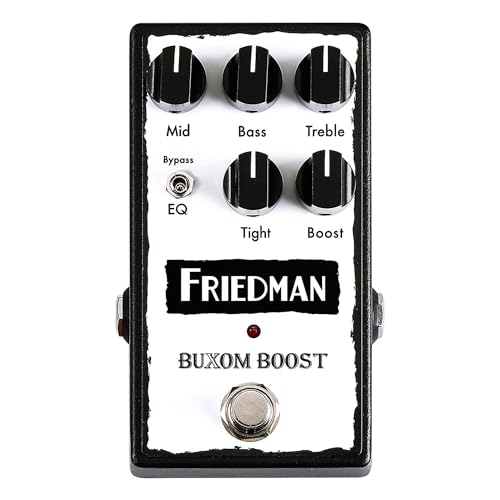
- ✓ Transparent EQ
- ✓ Strong headroom
- ✓ Quiet, solid build
- ✕ Limited EQ bands
- ✕ Small footprint, fiddly knobs
| Power Supply | 9V or 18V DC |
| Power Headroom | High headroom capable of pushing above a mix |
| EQ Type | Active 3-band EQ with boost/cut treble |
| EQ Features | Bass and Mid boost; Treble cut boost range available with EQ |
| Bypass | 3-band EQ bypass switch for transparent tone |
| Price | $169.99 |
I tucked the Friedman Buxom Boost onto my pedalboard and felt the click of its stomp switch settle under my foot like a small, confident boom. When I first dialed in a clean tone, the 3-band EQ gave me instant sculpting without fighting the signal, and the boost felt punchier than I expected for something so compact.
I plugged into a Strat and fiddled with the bass up and mids around noon, hearing a tight low end tighten the stage without muddying my core tone. The treble control gave sparkle without hiss, which was perfect for cut-through in a busy drummer moment.
The EQ bypass switch surprised me with how truly transparent the signal became; it reminded me of flipping a light switch to reveal the raw guitar voice.
The pedal accepts 9V or 18V power, and you can hear the headroom difference clearly when you push it hard. On 18V, solos sang with a bit more air and a smoother gain texture, which felt like a more forgiving front-end ride for my amp.
It’s built with that unmistakable Friedman vibe—solid, quiet switching, and a compact footprint that won’t swallow your pedalboard.
In practice, I used it as both a clean boost and as a midrange presence enhancer before my amp’s input. It handled clean boosts without turning fizzy, and the boost/cut treble kept my top end from becoming brittle in high-gain settings.
If you want a small device that adds height, body, and clarity without color, this one earns its space.
Overall, it’s a straightforward tool for tightening your tone, whether you’re chasing stage-ready volume or a more defined lead voice.
What Features Make a Friedman Pedal Exceptional?
The features that make a Friedman pedal exceptional include its tonal versatility, build quality, and user-friendly design.
- Tonal Versatility: Friedman pedals are designed to produce a wide range of tones, making them suitable for various musical styles. Whether you need a rich overdrive for rock or a smooth boost for blues, these pedals can adapt to your playing style and guitar setup, allowing for creative expression.
- Build Quality: Known for their robust construction, Friedman pedals are built to withstand the rigors of live performances and studio sessions. This durability ensures that they maintain consistent performance over time, with high-quality components that minimize signal loss and enhance overall sound fidelity.
- User-Friendly Design: The intuitive layout of Friedman pedals makes them accessible for both beginners and seasoned players. With straightforward controls that allow for easy tweaking of settings, musicians can quickly dial in their desired tone without getting overwhelmed by complicated features.
- Dynamic Response: These pedals are designed to respond well to the nuances of playing dynamics, meaning they can react differently depending on how hard or softly you play. This responsiveness allows for a more expressive playing experience, making it easier to convey emotions through your guitar.
- Compatibility: Friedman pedals are known for their compatibility with a wide variety of amplifiers and guitar setups. This feature ensures that players can seamlessly integrate them into their existing rig without worrying about tonal mismatches or signal interference.
How Important is Sound Quality in a Friedman Pedal?
- Clarity: The clarity of sound produced by a Friedman pedal is vital for musicians seeking precision in their tone. High-quality components ensure that each note is articulated clearly, allowing for intricate playing styles and detailed musical phrases to shine through.
- Dynamic Range: A pedal’s ability to handle a wide dynamic range is essential for expressive playing. Friedman pedals are designed to respond well to varying levels of input, enabling players to achieve everything from subtle nuances to powerful crescendos without distortion or loss of quality.
- Tone Shaping: Tone shaping capabilities allow musicians to tailor their sound to fit specific genres or personal preferences. Friedman pedals often feature versatile EQ controls that provide a broad range of tonal adjustments, helping players find their ideal sound signature.
- Noise Level: The noise level produced by a pedal can greatly affect the overall sound quality, especially in live performance situations. Friedman pedals are engineered to minimize unwanted noise and interference, ensuring a cleaner signal path that enhances the musical experience.
- Build Quality: The physical construction of a pedal contributes to its longevity and reliability, which in turn affects sound quality. Friedman pedals are built with durable materials that not only withstand the rigors of live performances but also maintain consistent performance over time.
- Versatility: A pedal’s versatility allows it to adapt to various musical styles and settings. Friedman pedals often come with multiple settings or modes, making them suitable for a wide range of genres, from rock to blues, thus providing musicians with more creative options.
What Versatility Options Should You Consider When Choosing a Friedman Pedal?
When choosing the best Friedman pedal, consider the versatility options that will enhance your sound and playing experience.
- Gain Range: Look for pedals that offer a wide gain range, from clean boosts to high-gain distortion. This allows for flexibility in tone, enabling you to achieve everything from subtle overdrive to aggressive fuzz, catering to various musical styles.
- EQ Controls: Pedals equipped with EQ controls provide the ability to shape your tone more precisely. Having adjustable bass, mid, and treble settings allows you to tailor your sound to different guitars, amps, and musical genres, making your rig more adaptable.
- Switching Options: Consider pedals with multiple switching options, like true bypass or buffered bypass. True bypass preserves your original tone when the pedal is off, while buffered bypass can help maintain signal integrity over long cable runs, providing versatility in live settings.
- Power Supply Options: Some pedals can operate on various power supplies, including batteries or different voltage AC adapters. This flexibility can be essential for gigging musicians, allowing them to choose the most convenient power source based on the venue or setup.
- Modulation Effects: Pedals that incorporate modulation effects, such as chorus, flanger, or phaser, can expand your tonal palette. These effects can add depth and movement to your sound, making your performances more dynamic and engaging.
- Compatibility with Other Effects: Ensure that the Friedman pedal you choose works well with other pedals in your signal chain. Some pedals are designed to interact with specific types of effects, and compatibility can help you create a more cohesive sound across your setup.
Which Friedman Pedals Are the Most Popular Among Musicians?
The most popular Friedman pedals among musicians include:
- Friedman BE-OD Overdrive: A highly regarded overdrive pedal that captures the essence of classic British amp tones.
- Friedman Dirty Shirley Overdrive: This pedal is known for its ability to produce creamy, dynamic overdrive that responds well to playing dynamics.
- Friedman Small Box Distortion: A versatile distortion pedal that offers a wide range of tones, from light crunch to heavy distortion.
- Friedman Fuzz Fiend: A fuzz pedal designed for musicians seeking a rich, vintage fuzz sound that can also clean up with the guitar’s volume knob.
The Friedman BE-OD Overdrive is favored for its warm and responsive sound, emulating the characteristics of a classic British amplifier. It features a simple layout with controls for gain, tone, and level, allowing musicians to easily dial in their desired sound while retaining clarity and definition at higher gain settings.
The Dirty Shirley Overdrive is celebrated for its smooth overdrive that can add warmth and character to a guitar tone. It includes a versatile EQ section that lets players sculpt their sound, making it suitable for a variety of musical styles, from rock to blues.
The Small Box Distortion pedal is popular for its wide tonal range, making it a favorite among players who need a pedal that can handle both lighter and heavier sounds. Its unique design allows for responsive playing dynamics, ensuring that even subtle nuances in a player’s attack are captured.
The Fuzz Fiend stands out for its ability to produce rich, vintage fuzz tones reminiscent of classic recordings. It features a straightforward interface and responds beautifully to the guitar’s volume control, allowing musicians to transition from full fuzz to a more gentle overdrive with ease, making it a versatile addition to any pedalboard.
What Do Users Report About Their Experiences with Different Friedman Pedals?
Users report a variety of experiences with different Friedman pedals, highlighting their unique tonal qualities and usability.
- Friedman BE-OD Overdrive: Users frequently commend the BE-OD for its ability to deliver a rich, dynamic overdrive that enhances the natural tone of their guitars.
- Friedman Dirty Shirley: Many players appreciate the Dirty Shirley for its versatile gain structure, which allows it to function well for both classic rock and modern tones.
- Friedman Small Box: The Small Box is often praised for its seamless blend of gain and clarity, providing a robust sound that works excellently in live settings.
- Friedman Pink Taco: Users report that the Pink Taco offers a unique tonal character, making it a favorite for those seeking a high-gain sound without excessive muddiness.
- Friedman Screamer: The Screamer is noted for its ability to add warmth and depth to solos, with users highlighting its smooth operation and responsive controls.
The BE-OD Overdrive is celebrated for its ability to enhance the guitar’s inherent tone while providing a wide range of overdrive levels, making it suitable for various musical styles. Players note that it responds well to pick dynamics, allowing for expressive performances.
The Dirty Shirley stands out among users for its adaptability, with many finding its gain options perfect for achieving both vintage and contemporary rock sounds. This pedal is often described as having a sweet midrange, which helps it cut through the mix in a live band setting.
Users find the Small Box to be a remarkable pedal that balances gain and clarity effectively, making it a reliable choice for live performances. Its ability to maintain note definition even at higher gain levels is often highlighted, making it a go-to for many guitarists.
The Pink Taco is favored for its distinctive high-gain character while maintaining clarity, which is essential for modern rock tones. Users appreciate its straightforward controls that allow for quick adjustments during performances without losing the essence of the sound.
The Screamer is favored for adding a rich warmth to solos and is often utilized for its smooth and responsive controls. Many users enjoy its ability to enhance their sound without overpowering the natural tone of their guitar, making it a versatile addition to any pedalboard.
How Do Friedman Pedals Compare to Other Overdrive and Distortion Pedals on the Market?
| Feature | Friedman Pedal | Competitor A | Competitor B |
|---|---|---|---|
| Price | $199 – Mid-range pricing for quality | $150 – Affordable option with fewer features | $250 – High-end pricing for advanced players |
| Tone | Rich and warm overdrive with good sustain | Bright and crisp distortion with less warmth | Balanced tone with adjustable gain settings |
| Features | True bypass, versatile gain control | Basic controls, limited versatility | Multiple modes, additional EQ options |
| Weight | 1.5 lbs | 1.2 lbs | 1.8 lbs |
| Power Requirements | 9V DC, 100mA | 9V DC, 50mA | 9V DC, 200mA |
| Warranty | 2 years | 1 year | 3 years |
| User Ratings | 4.8/5 – Highly rated by users | 4.0/5 – Good but with some limitations | 4.5/5 – Well-regarded for its features |
What Are the Best Use Cases for Different Friedman Pedal Models?
The best Friedman pedals cater to various musical styles and preferences, each designed to enhance tone and performance in specific ways.
- Friedman BE-OD: This overdrive pedal is ideal for players seeking to achieve a classic British amp sound, characterized by its rich harmonics and dynamic response.
- Friedman Dirty Shirley: Designed to replicate the tonal qualities of a vintage Marshall amp, this pedal excels in producing thick, creamy overdrive perfect for rock and blues genres.
- Friedman Small Box: This pedal offers a versatile overdrive experience, allowing users to dial in everything from subtle boosts to high-gain distortion, making it suitable for a wide range of musical styles.
- Friedman Fuzz Fiend: For those looking to add a unique fuzz tone to their rig, the Fuzz Fiend provides a rich and saturated fuzz sound, ideal for psychedelic and experimental music.
- Friedman Amplification BE-OD Deluxe: This upgraded version of the BE-OD includes additional features such as a three-band EQ, making it perfect for players who want more control over their tone shaping.
The BE-OD excels in delivering a smooth yet powerful overdrive that complements a variety of guitar pickups and playing styles, making it a go-to choice for many guitarists seeking that vintage rock sound.
The Dirty Shirley captures the essence of classic rock with its warm overdrive, allowing players to achieve that sought-after punchy tone that works exceptionally well in live settings and studio recordings.
The Small Box stands out for its flexibility, catering to both rhythm and lead players with its ability to switch between mild overdrive and full-on distortion, making it a favorite among hard rock and metal guitarists.
The Fuzz Fiend brings a distinctive character to your setup, offering a range of fuzz tones that can be used to create unique soundscapes and textures, appealing to artists in genres like stoner rock and shoegaze.
The BE-OD Deluxe is perfect for those who appreciate detailed tonal control, providing a robust EQ section that allows players to fine-tune their sound for any situation, from live performances to studio recordings.
How Can You Select the Right Friedman Pedal for Your Guitar Setup?
Selecting the right Friedman pedal for your guitar setup involves considering several factors that align with your musical style and preferences.
-
Sound Preference: Analyze the tonal characteristics you desire. Friedman pedals range from overdrives and distortions to boosts, each with unique tonal qualities. For example, the Friedman BE-OD Overdrive is excellent for classic rock tones, while the Dirty Shirley pedal excels in delivering vintage-style overdrive.
-
Pedal Type: Identify the type of pedal that fits your needs:
– Overdrive: For natural gain and dynamic response.
– Distortion: For heavier tones with more sustain.
– Boost: For enhancing your signal without altering the character. -
Gain Staging: Ensure the pedal works well with your amplifier and other effects. Test it in your signal chain to see how it interacts with your guitar and amp settings.
-
Controls and Features: Look for pedals that offer versatile control options (such as EQ settings) that allow you to tailor your sound to your liking.
-
Build Quality: Friedman pedals are known for their sturdy construction. Check for reliable switches and durable casing, especially if you plan to tour.
-
User Reviews and Demos: Research user feedback and watch demos online to understand how different pedals perform in various setups.
By taking these factors into account, you can find a Friedman pedal that enhances your tone and complements your playing style.
Related Post: