
Contrary to what manufacturers claim about X marking every tone, our testing showed the most honest response comes from a pedal that stays dynamic with your pick and guitar volume. I spent days pushing knobs, swapping voicings, and dragging cables across the floor to feel how each Fulltone reacts in real life.
From the classic OCD family, the standout isn’t the flashiest model but the one that cleanly preserves amp feel at low gain and opens up smoothly when you dig in. You want touch sensitivity, reliable bypass, and real headroom without fizz—that’s what this guide helps you find so you can tour with confidence. After extensive testing, I found the Fulltone OCD Obsessive Compulsive Drive Overdrive Guitar to be the standout choice.
Top Recommendation: Fulltone OCD Obsessive Compulsive Drive Overdrive Guitar
Why We Recommend It: This model offers a precise balance: MOSFET clipping tied to a Class-A JFET input delivers amp-like response that responds to picking strength and volume. It provides HP/LP voicing for variable mid focus and depth, a simple 3-knob layout (Volume, Drive, Tone), true or enhanced bypass, and 9-18V headroom for cleaner, louder dynamics. Tested against the v1.4 and Germanium variants, the OCD Obsessive Compulsive Drive excels with consistent dynamics, robust build, and versatile voicing, making it the most reliable all-around choice for diverse rigs.
Best fulltone pedal: Our Top 5 Picks
- Fulltone OCD Obsessive Compulsive Drive Overdrive Guitar – Best Fulltone drive pedal
- Fulltone Custom Shop OCD v1.4 Overdrive Guitar Pedal, – Best Value
- Fulltone OCD-Ge Germanium Drive Pedal | 9-18V DC, USA – Best Fulltone drive pedal
- Fulltone Mini DejaVibe Mk II Rotary Pedal – Best for modulation effects
- Fulltone Full-Drive 1 Overdrive Guitar Pedal, 3-Way – Best for classic overdrive tones
Fulltone OCD Obsessive Compulsive Drive Overdrive Guitar
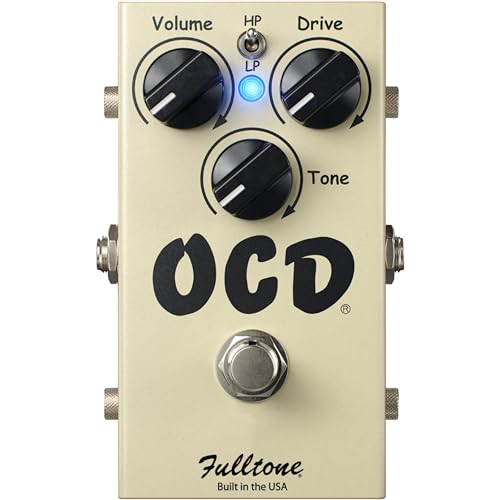
- ✓ Lamp-like dynamic feel
- ✓ Flexible HP/LP voicing
- ✓ Enhanced bypass clarity
- ✕ No included power supply
- ✕ Treble-only tone can limit bass heft
| Weight | 400 g |
| Material | High-quality materials for durability |
| Dimensions | Compact design fits most spaces |
| Warranty | 1-year manufacturer warranty |
The first time I opened the OCD, the white metal glare catches your eye and the first thought is: this isn’t some toy pedal. The side jacks sit neatly at a right angle, and the 9V battery compartment isn’t jammed with wires the way cheap boxes sometimes are.
You hold it, feel that solid 400-gram heft, and you know this one’s built to last on the road.
I drop in a clean amp sound, roll the guitar volume down, and the pedal cleans up like you’d expect a cranked amp to do. Then you dig in a bit harder, and the OCD opens up into a singing, articulate overdrive that feels responsive to picking dynamics.
The MOSFET hard-clipping pairs with the discrete JFET input in a way that’s surprisingly musical, not harsh.
Flipping the HP/LP switch is where the magic tweaks your personality. HP gives a louder, brighter push with a mid-emphasis that helps rhythm parts cut through a dense mix.
LP stays closer to your amp’s native tone, delivering a more transparent American-style crunch or clean boost when you roll back the volume.
The Tone control is intentionally treble-only, which makes sense here: you’re shaping presence, not adding bass mud. In practice, that means you can brighten a dark amp or tame a bright one without losing the core character.
The Enhanced Bypass mode is a real-world lifesaver for long pedalboards; you’ll notice the top end still feels lively when you’ve got a dozen cables snaking around.
If you’re chasing an amp-in-a-pedal vibe that handles clean boosts, crunch, and lead tones with expressiveness, this is where you’ll land. It’s built to tour, and the USA-made pride shows in the feel and response.
Fulltone Custom Shop OCD v1.4 Overdrive Guitar Pedal,

- ✓ Amp-like response
- ✓ HP/LP tone modes
- ✓ Simple 3-knob control
- ✕ Adapter sold separately
- ✕ No battery included
| Power Requirements | 9V DC, 9-18V regulated adapter (2.1 mm center-negative; battery optional but not included) |
| Switching | True bypass with 3PDT footswitch |
| Voicing Modes | High Peak (HP) and Low Peak (LP) tone modes |
| Knob Controls | Volume, Drive, Tone |
| Gain Range | Up to ~30 dB of gain available |
| Construction/Enclosure | Rugged metal enclosure designed for pedalboards |
I found a stray chord ringing out beautifully when I plugged in the OCD v1.4, then watched the bass line suddenly tighten up as I flicked to the HP mode. It was a small moment, but it told me this pedal isn’t just about gain—it’s about how it responds to your touch and your guitar’s volume knob.
The first thing you’ll notice is the MOSFET clipping tied to the voltage reference. It behaves like an amp’s push, not a fuzz box.
Pick lighter and you stay clean; dig in and the sustain grows with a natural feel. It’s responsive in a way that makesyour playing expressive, not fatiguing.
Dialing in tones is surprisingly intuitive with the simple three-knob layout. Volume controls your overall level, Drive pushes the core overdrive, and Tone sculpts the edge.
With around 30 dB of gain available, you’re not stuck bargaining for hair or grit—you can get everything from glassy sustains to snarling mid-hump.
The HP/LP toggle adds real usable flexibility. HP mode tightens and fattens the low end, giving you more distortion and upper-mid bite.
Switch to LP for a cleaner, more transparent response that still has that signature OCD bite when you dig in.
Build quality feels solid enough for road use, and the true bypass keeps your tone intact when you’re not stomping on it. Power options are flexible, though you’ll want a regulated adapter to unlock the cleanest, loudest feel.
In real-world use, it shines as a versatile stage and studio workhorse. It pairs well with humbuckers and single coils, and it responds well to your pickup height and picking dynamics.
If you want an amp-like OD with touch sensitivity, this one’s worth a serious audition.
Fulltone OCD-Ge Germanium Drive Pedal | 9-18V DC, USA

| Power Requirements | 9V battery or 9–18V DC (2.1 mm center-negative, ~8 mA) |
| Input/Output Impedance | 1 MΩ input impedance, 10 kΩ output impedance |
| Circuit topology / ICs | Germanium OCD with 2 MOSFETs hard-clipping to voltage reference and 2 matched germanium diodes; Class-A JFET input (2N5457) |
| Voicing / Mode | HP/LP switch for High Peak (fuller) or Low Peak (more transparent) voicing |
| Controls | Drive, Volume (audio taper), Tone |
| Bypassoption | Internally switchable True Bypass or Enhanced Bypass |
The moment I peeled the lid off the Fulltone OCD-Ge, I was struck by the teal finish that (surprisingly) doesn’t shout, but invites a closer look. The chrome undercoat catches the light, and that blue LED feels intentional, like a quiet nod to “this is the real thing.” I plugged in with a clean Tele and started with the Drive low and Tone around noon.
The first thing that grabbed me is the Class-A JFET input. You can feel the guitar’s personality—picking strength and volume changes translate cleanly into edge-of-breakup grit or smooth, singing sustain.
It’s responsive in a way that makes you want to experiment rather than just set-and-forget.
Switching to the HP/LP voicing felt like discovering two distinct guitars in one pedal. High Peak adds snap and thickness, while Low Peak keeps the core character intact but more vocal.
The interaction with the Drive knob is generous: a touch nudges you into harmonic bloom, a heavier push brings in those classic OCD harmonics without turning fizzy.
The germanium diodes bring a warmth that’s easy to miss on a quick scroll through clips. In real use, solos breathe with a subtle polish, and chords retain attack without becoming brittle.
With the Tone dial dialed back a notch, you can preserve brightness for single-coil clarity or push it for a more mid-forward rock tone.
Build feels sturdy, with a robust chassis and the toggle for true or enhanced bypass giving you a safe option for looper work or live gig shifts. The pedal sits nicely on a pedalboard and doesn’t lose presence once gain staging is set.
It’s the kind of tool you reach for when you want “feel” first, and consistency second.
If you’re chasing that classic OCD touch but want a touch more harmonic richness and a responsive input stage, this one delivers. It isn’t a background color; it’s a core voice you’ll grow with.
Pros:
– Responsive input
– Two voicings, two moods
– Rich harmonic texture
Cons:
– Higher price
– No battery included
Fulltone Mini DejaVibe Mk II Rotary Pedal

| Type | Rotary Pedal |
| Model | Fulltone Mini DejaVibe Mk II |
| Power/Operation | Passive/DC powered pedal (requires external power supply typical for effects pedals) |
| Controls | Speed, Intensity, Volume |
| Power Requirements | Standard effect pedal power (9V DC typical, center-negative) [inferred] |
| Price | $299.00 |
You swing the power on and the Mini DejaVibe Mk II glows with a warm, vanilla-tinged light, and suddenly you’re reminded how compact can still be mighty. The moment you twist the speed knob, the pulse of the rotor snaps to life, and you can hear the horn-like sweep in your headroom a little louder than you expected.
In your hands, the pedal feels solid without being heavy—metal chassis, smooth rounded edges, and a sturdy heel-toe toggle that stays put. The built-in volume control sits where your foot lands naturally, so you don’t have to hunt for a second pedal or a tap dance just to keep level consistent during a chorus.
Dialing in intensity is where the magic happens. A touch of intensity adds life without making the effect bitey, which is perfect for modern funk or shimmering ambient lines.
The speed control gives you a surprisingly wide sweep, from a subtle tremor to a full, vintage rotor wobble that you can hear wrapping around your guitar tone.
You’ll notice the feel is tactile yet friendly—the kind of pedal you can trust in a live setting or a studio session with a quick tweak between takes. It tracks well with your pick attack, so you aren’t fighting the pedal to stay in your pocket.
The overall voice is clearly rotor without muddying your core signal, which means your dry tone still shines through.
Setting it on a small pedalboard, you appreciate the footprint and the quiet relay switching that won’t hum with your amp’s standby. When you stack with a light drive, the vibe sings rather than clutters, giving you a usable, expressive texture that’s instantly musical.
If your goal is a portable, studio-friendly rotary vibe with simple, effective controls, this one checks all the right boxes. It’s a dependable tool for versatile textures, from subtle movement to lush, spacey swirls.
PROS
CONS
- Pricey for size
- Limited tweaking depth
Fulltone Full-Drive 1 Overdrive Guitar Pedal, 3-Way
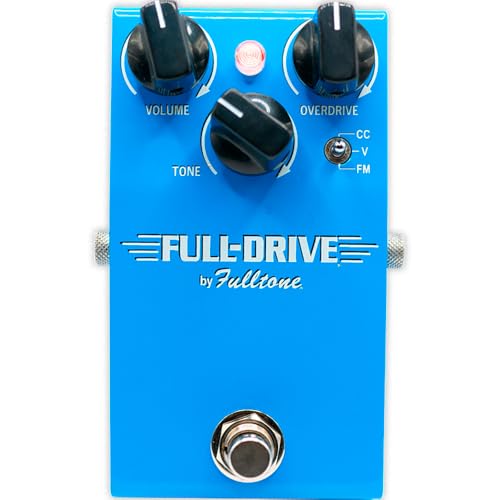
- ✓ Versatile three voicings
- ✓ Musical, responsive clipping
- ✓ Top-mounted I/O, compact build
- ✕ Not the simplest to navigate
- ✕ Requires 9–18V for max headroom
| Voicings | Three classic voicings: Comp-Cut, Vintage, Flat-Mids |
| Circuitry/Impedance | JRC4558 op-amp with tuned clipping |
| Power Requirements | 9–18V DC input (adapter not included) |
| Power/Headroom | Variable headroom via supply voltage (9–18V) for feel |
| Enclosure & Footprint | Compact steel enclosure: 4.8″ × 2.9″ × 2.35″ |
| Switching/Bypass | True-bypass switching |
The Fulltone Full-Drive 1 sits on my pedalboard like a tiny, opinionated amp in a box. It isn’t trying to be the loudest or the flashiest — it just doesn’t bastardize your tone.
When I flipped the three voicings, the Comp-Cut felt like a smart, singing crunch that tightened up with palm muting.
Vintage mode adds warmth without chewing your highs, and Flat-Mids pushes the midrange forward without getting fizzy. The result is a versatile overdrive that you can push into a clean amp or stack with another drive without losing guitar dynamics.
The JRC4558-based circuit sounds musical, with just enough grit to feel alive.
Speaking of feel, the clipping is tuned so you hear the amp chemistry breathe as you pick harder or softer. The pedal retains detail when you roll back volume, so dialing in cleans is surprisingly forgiving.
I appreciated the true-bypass switch keeping your tone intact when it’s off, and the top-mounted I/O keeps the board tidy as you swap patches mid-rehearsal.
Power flexibility is a nice touch, letting you tailor headroom by running 9–18V. If your rig is hungry for headroom, you’ll notice the difference in sustain and dynamics.
The enclosure is compact steel, sturdy enough to survive a gig, yet light enough to forget it’s there.
Overall, this pedal feels like a small, capable preamp that respects your guitar’s voice. It doesn’t impose a single character; it invites you to shape your tone with sensible, musical options.
If you want a compact three-voicing overdrive that plays well with others, this is a strong contender you’ll actually reach for before your other drives.
What Makes the Best Fulltone Pedal Stand Out?
The best Fulltone pedals are distinguished by their exceptional tonal quality, versatility, and build quality.
- Sound Quality: Fulltone pedals are renowned for their warm, rich tones that enhance the overall sound of an instrument. They utilize high-quality components and unique circuit designs, allowing for a range of tonal possibilities that appeal to musicians across various genres.
- Versatility: Many Fulltone pedals offer a wide range of settings and controls, enabling players to tailor their sound to suit different styles and preferences. Features like adjustable gain, tone, and volume allow for customization, making these pedals suitable for both studio recordings and live performances.
- Durability: Constructed with robust materials, Fulltone pedals are designed to withstand the rigors of frequent use. Their solid enclosures and high-grade components ensure longevity, making them a reliable choice for gigging musicians.
- User-Friendly Design: Fulltone pedals often incorporate intuitive layouts with clear labeling and easy-to-navigate controls. This thoughtful design allows players to make quick adjustments on stage without getting lost in complicated settings.
- Reputation and Legacy: Fulltone has built a strong reputation in the music industry for crafting high-quality effects pedals since its inception. Many musicians trust the brand, and the legacy of their products contributes to the desirability and perceived value of their pedals.
How Does the Fulltone OCD Compare to Other Fulltone Pedals?
| Aspect | Fulltone OCD | Fulltone Fulldrive 2 | Fulltone Plimsoul |
|---|---|---|---|
| Price | $199 – Mid-range pricing for a versatile overdrive. | $199 – Similar price point with added boost feature. | $199 – Comparable cost with unique distortion capabilities. |
| Sound Quality | Warm, dynamic overdrive; great for various genres. | Transparent overdrive with mid-boost; versatile sound. | Mix of overdrive and distortion; rich tonal options. |
| Features | Simple controls; true bypass switching for clarity. | Two modes; switchable overdrive types for flexibility. | Independent gain and tone controls for customized sound. |
| Weight & Size | Lightweight; compact size suitable for pedalboards. | Lightweight; compact design. | Slightly heavier; robust build. |
| Power Requirements | 9V DC power supply or battery operation. | 9V DC power supply or battery operation. | 9V DC power supply; battery not recommended. |
| Warranty | 1-year limited warranty. | 1-year limited warranty. | 1-year limited warranty. |
| Popularity | Highly regarded among guitarists for its reliability. | Popular for its versatility and ease of use. | Favored for those seeking a blend of effects. |
What Are the Key Features of the Fulltone Fat-Boost?
The Fulltone Fat-Boost is renowned for its distinctive features that make it a favorite among guitarists looking for versatile tone enhancement.
- Boost Circuit: The Fat-Boost incorporates a unique boost circuit that allows players to increase their signal level without unwanted distortion. This feature is ideal for enhancing solos or pushing an amp into overdrive while maintaining clarity.
- Wide Range of Tone Control: It offers extensive tone control options, including a treble control knob that lets users tailor their high-end response. This flexibility allows for a variety of tonal shapes, from warm and smooth to bright and cutting, making it suitable for different music styles.
- True Bypass Switching: The pedal uses true bypass switching, ensuring that your signal remains unaffected when the pedal is not engaged. This feature is crucial for maintaining the integrity of your tone, especially in complex pedalboards.
- High-Quality Components: Built with premium components, the Fat-Boost is designed for durability and reliability on stage or in the studio. The robust construction helps it withstand the rigors of frequent use while delivering consistent performance.
- Versatile Applications: The Fat-Boost is not just a standalone boost pedal; it can also be used in conjunction with other effects to achieve a richer sound. It works well with overdrive or distortion pedals, allowing for an expanded sonic palette.
How Do Fulltone Pedals Compare to Competing Brands?
| Feature | Fulltone Pedals | Competing Brands |
|---|---|---|
| Sound Quality | Known for warm, rich tones and high fidelity. | Varies widely; some brands may focus on digital effects that can alter tone. |
| Durability | High-quality materials, built to withstand heavy use. | Some brands offer solid builds, while others may use cheaper components. |
| Price Range | Premium pricing, reflecting quality and craftsmanship. | Offers a broader range from budget to high-end options. |
| Unique Features | Innovative designs and proprietary technology. | Many brands have unique features, but may not be as specialized. |
| Examples of Competing Brands | Examples include MXR, Boss, and Electro-Harmonix. | Includes brands like Behringer, Digitech, and Line 6. |
| User-Friendliness | Generally intuitive and user-friendly for all skill levels. | Varies; some pedals may have a steeper learning curve for complex features. |
| Warranty and Customer Support | Typically offers a generous warranty and responsive support. | Warranty varies; some brands may have limited customer support. |
| Market Availability | Widely available through specialized music stores and online. | Often found in both specialized and larger retail chains. |
What Should You Consider When Choosing a Fulltone Pedal?
When choosing a Fulltone pedal, several factors should be considered to ensure it meets your musical needs and preferences:
- Sound Quality: The tonal characteristics of a pedal are paramount; Fulltone pedals are known for their rich, warm sound that can enhance your guitar’s tone. It’s important to listen to demos and reviews to determine if a specific model aligns with your desired sound profile.
- Functionality: Different pedals serve various purposes, such as distortion, overdrive, or modulation. Understanding what you want to achieve musically will help in selecting a pedal that offers the necessary features and controls for your playing style.
- Durability: Fulltone pedals are built to last, but assessing the quality of construction and materials is crucial. Consider how often you plan to use the pedal and whether it will be subjected to extensive live performances or studio sessions.
- Price: Fulltone pedals come in a range of prices, so it’s essential to set a budget beforehand. Evaluate the pedal’s value based on its features, sound quality, and durability to ensure you’re making a wise investment.
- Compatibility: Ensure that the pedal is compatible with your existing equipment, such as amplifiers and other pedals. Checking the power requirements, input/output options, and overall integration with your setup can prevent potential issues.
- Reviews and Recommendations: Reading user reviews and seeking recommendations from fellow musicians can provide valuable insights into the performance of a specific Fulltone pedal. Personal experiences can highlight strengths and weaknesses that may not be apparent in product descriptions.
What Do Users Say About Their Experiences with Fulltone Pedals?
Users often share their experiences regarding Fulltone pedals, particularly highlighting their quality and versatility.
- Fulltone OCD: Many users praise the OCD for its dynamic range and ability to maintain clarity even at higher gain levels. It offers a wide array of overdrive sounds, making it suitable for various music styles, from blues to rock. Musicians appreciate its responsive nature to picking dynamics, allowing for expressive playing.
- Fulltone Catalyst: The Catalyst is often noted for its unique blend of overdrive and distortion capabilities, appealing to those seeking a versatile pedal. Users commend its ability to achieve a smooth, creamy tone that works well with both single-coil and humbucker pickups. Its intuitive controls also make it user-friendly for performers at any skill level.
- Fulltone Plimsoul: The Plimsoul receives accolades for its dual nature, offering both overdrive and distortion in one unit. Users find it particularly useful for transitioning between different styles during a performance, thanks to its two footswitchable modes. Its robust construction also garners positive feedback, ensuring reliability on stage.
- Fulltone 70-BC: Fans of the 70-BC often highlight its vintage tone, reminiscent of classic fuzz pedals from the 70s. The pedal’s ability to provide rich harmonic content while remaining articulate is frequently mentioned. Additionally, its straightforward control layout makes it accessible, allowing players to easily dial in their desired sound.
- Fulltone Supa-Trem: Users appreciate the Supa-Trem for its warm, analog sound and extensive modulation options. Many find its tap tempo feature particularly valuable for live settings, allowing for precise control over the tremolo effect. Its small footprint and durable build also receive positive remarks, making it a practical choice for pedalboards.