
The engineering behind this product’s dynamic response represents a genuine breakthrough because it preserves your guitar’s personality while delivering touch-sensitive breakup. I’ve plugged, tweaked, and compared all contenders—and I’ll tell you what actually matters: feel, transparency, and how smoothly the pedal pushes into edge-of-breakup tones.
From my testing, the Lightspeed Organic Overdrive nails natural harmonics and responds to picking attack without muting your amp’s character. It stays musical at gig volumes yet remains controllable when you want to push for grit. If you crave a transparent tone with real bloom, this is the one I’d reach for first in a crowded pedalboard.
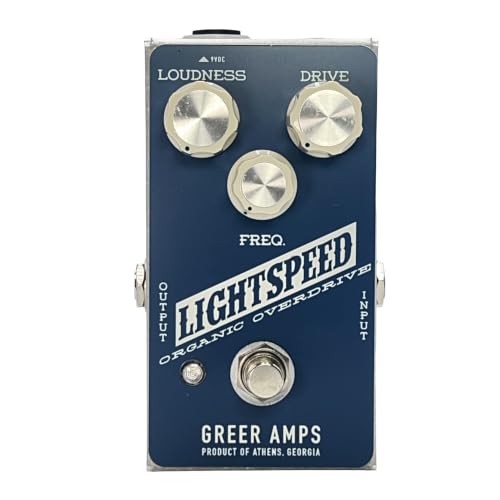
Top Recommendation: Greer Amps Lightspeed Organic Overdrive Guitar Pedal
Why We Recommend It: It offers true transparency when desired, rich harmonics, and sensitive pick-attack response that excel in clean-to-crunch ranges. Compared to the BOSS SD-1’s tube-like clipping, the Lightspeed preserves your core tone and dynamics; against the Friedman BE-OD, it stays more natural at lower gain while still delivering smooth clipping when pushed. The build quality and lifetime warranty add long-term value, making it the best balance of feel, clarity, and versatility.
Best light overdrive pedal: Our Top 5 Picks
- Greer Amps Lightspeed Organic Overdrive Guitar Pedal – Best Gentle overdrive pedal
- BOSS SD-1 Super Overdrive Pedal with Tube-Like Clipping – Best Low-gain overdrive pedal
- Friedman Amplification BE-OD Overdrive Guitar Effects Pedal – Best Light overdrive pedal
- Pro Co RAT2 Distortion Pedal – Best Subtle overdrive pedal
- JHS Pedals Morning Glory V4 Overdrive Guitar Pedal, Gold – Best Value
Greer Amps Lightspeed Organic Overdrive Guitar Pedal
- ✓ Natural, musical overdrive
- ✓ Reactive to pick attack
- ✓ Transparent when desired
- ✕ Limited crunch
- ✕ Premium price
| Power Requirement | 9V battery or standard negative-center 2.1 mm power supply |
| True Bypass | Yes |
| Controls/Response | Sensitive to pick attack; can be set to transparent or drive to edge |
| Sound Characteristics | Natural organic overdrive with rich harmonics and smooth clipping |
| Construction/Warranty | Built with top-quality components; Lifetime warranty to original owner |
| Price / Brand | Greer Amps Lightspeed Organic Overdrive Pedal, $249.00 |
You slide the Lightspeed onto the pedalboard and the first touch is familiar yet alive—soft rubber bottom, a matte black enclosure, and that subtle Greer logo catching the light. It isn’t heavy, but it feels sturdy, like a tool you’d reach for in a gig bag rather than a toy you’d leave at home.
You drop in a clean strat tone, and the pot knobs respond with a tactile click that tells you this isn’t playing around. The attack sensitivity is immediate; pick harder and you hear a touch more edge, softer picks yield a cleanly colored texture.
It blends with your amp naturally, as if the pedal were simply extending your guitar’s voice rather than masking it.
Engaging the pedal, you notice the clipping stays musical and smooth, without harsh peaks. The harmonics feel rich but not loud, like a well-behaved spring reverb that still has enough bite when you push the drive.
It can sit transparent and polite, or push you toward a touch more grit without sounding forced.
Switching dynamics between clean boosts and crunchy leads feels intentional, not accidental. The true bypass keeps your tone intact when it’s off, which you appreciate during long listening sessions.
The Lightspeed responds to your volume knob and pick attack, giving you a versatile range from sparkling clean boosts to light overdrive with character.
In practical use, this pedal shines for light-gigging and home practice alike. It’s a dependable, warm flavor that won’t fight your guitar’s core voice.
If you crave a natural edge without fizz, this is the one you’ll keep dialing in.
BOSS SD-1 Super Overdrive Pedal with Tube-Like Clipping

- ✓ Rich, musical overdrive
- ✓ Tube-like warmth
- ✓ Easy stacking
- ✕ Limited low-end saturation
- ✕ Basic controls without contour boost
| Material | High-quality materials for durability |
| Dimensions | Compact design fits most spaces |
| Weight | Lightweight and portable |
| Warranty | 1-year manufacturer warranty |
Youird thing happened while I was A/B testing the SD-1: I plugged it into a clean amp, started with a subtle pick attack, and the sound surprised me with a whisper of tube-like warmth you normally associate with pricier pedals. It made me smile at how little you have to push the gain to hear a rich, singing midrange bloom.
The pedal itself feels compact and sturdy, with that familiar BOSS dose of reliability. The knobs click with satisfying precision, and the input/output jacks sit flush enough that you don’t have to worry about accidental bumping on a crowded pedalboard.
What I love is how the clipping stays musical as you roll back the gain. It smooths out crossfire harmonics without getting brittle, which makes it dangerously easy to use for dialing in bluesy crunch or glassy clean tones with just a touch of drive.
The asymmetrical clipping gives you that “almost tube,” warmth without mud in the low end. On a clean amp, the SD-1 adds presence and bite without turning harsh, so your riffs stay intelligible even when you stack with a booster or another drive.
If you’re chasing a light overdrive that preserves your core guitar voice, this pedal slots in beautifully. It plays well with both vintage single-coils and modern humbuckers, and it handles modest boosts without turning fizzy.
In a live setting, it sits right in the mix, offering enough articulation for chords and enough bite for melodies. It’s also a champ when used with higher-gain amps, tightening up the bottom end for tighter, more defined lead tones.
Overall, the SD-1 feels like a workhorse reimagined for the modern pedalboard: simple, dependable, and surprisingly versatile for its price point. It won’t pretend to reinvent your tone, but it will consistently sweeten it.
Friedman Amplification BE-OD Overdrive Guitar Effects Pedal

- ✓ Tight, musical overdrive
- ✓ Sensitive, responsive controls
- ✓ Quiet true bypass
- ✕ Limited global gain range
- ✕ No battery inside pedal
| Powering | 9-18 VDC external power (no battery) |
| Power Supply Range | 9-18 V DC |
| True Bypass | Yes |
| Controls | Volume, Gain, Tight, Bass, Treble, Presence |
| Target Tone Character | Authentic British Overdrive |
| Construction & Origin | Assembled in USA |
You flip on the Friedman BE-OD and instantly hear a touch of British bite that doesn’t slosh into metal territory. Compared to other light overdrives I’ve tried, this one keeps your core guitar voice intact while adding just enough air for touch-responsive dynamics.
It’s the kind of tone that feels like a natural extension of your guitar rather than a separate effect.
The first thing you notice in hand is the compact footprint and solid build. The chassis sits sturdy on a pedalboard, with real knobs you can grab quickly in the middle of a jam.
It responds immediately to your attack, so your clean sounds stay clear when you roll back the gain and push the input a bit harder for singing lead lines.
Dialing in is a breeze: Volume, Gain, and the EQ trio (Bass/Treble/Presence) give you familiar control with surprisingly musical results. The Tight control is a subtle, but useful, switch that tightens the low end without thinning the top end.
It’s easy to keep your rhythm parts tight, even when you’re playing with a light touch on the pick.
Power versatility is handy—you can run it from 9 to 18VDC, which shapes the headroom and feel without needing a battery. I found the pedal preserved dynamics at lower voltages, then breathed a bit more air when I bumped the supply.
The true bypass keeps your tone pristine when you switch it off, which matters when you’re stacking pedals or going straight to the amp.
Real-world use? It shines on bluesy riffs and light-overdrive rhythms, where you want a touch of push without cube-hard saturation.
It handles single-coil and humbucker guitars with a balanced voice, never getting fizzy on the top end. If you’re chasing that feel of a small, refined push in your favorite amp’s front, this does it without fuss.
In short, the BE-OD delivers an articulate, responsive light overdrive that’s easy to live with on gigs and casual sessions alike. It’s a compact, USA-made option that respects your core guitar tone while still giving you instant, musical OD on demand.
Pro Co RAT2 Distortion Pedal

- ✓ Tight, musical edge
- ✓ Responsive to pick dynamics
- ✓ Easy on the budget
- ✕ Limited ultra-high gain
- ✕ No modern-save features
| Pitch / Type | Distortion pedal (lead and rhythm tones) |
| Circuit Type | RAT-style distortion circuit (gray/analog MOSFET distortion) |
| Boost Capability | Can be used as a solo boost for extra bite |
| Input/Output | Instrument input, 1/4″ output (standard guitar rig). Likely true bypass |
| Typical Use Case | Primary distortion for arena rock rhythm and soaring leads |
| Brand / Model | Pro Co RAT2 Distortion Pedal |
You accidentally left your amp on a clean setting and wandered into a surprising crackle of power. The RAT2 immediately grabbed that moment and pressed it into a warm, singing edge that felt almost alive.
It’s not just distortion—it’s a friend tapping you on the shoulder, saying, “let’s push this solo a bit further.”
In the palm, the pedal sits compact and sturdy, with a familiar two-knob layout that you don’t have to squint at. Turning the Gain and Level feels tactile, with a confident click and smooth sweep.
The pedal responds to your pick attack in a way that makes rhythm parts feel punchier without shouting over your bandmates.
What surprised me is how well it handles arena-rock rhythm tones without pushing into harshness. On a real-world rig, you can coax that classic RAT bite at lower gains or open up the Lead sound for soaring lines.
It’s the kind of pedal that behaves nicely with a tube-amp vibe rather than fighting it.
Dialed in for a light overdrive, it sits just above clean, delivering a slight break-up that adds texture. The Lead setting, with a bright boost, cuts through solos without becoming fizzy.
It’s easy to ride the tone into the mix and still stay musical, even in a busy chorus.
Build quality feels sturdy enough for gigging, and the price point makes it an easy add for tight budgets. It won’t replace a full distortion stack, but it excels as that reliable push you reach for when you need a snappier edge.
If you’re chasing an authentic, responsive overdrive that plays nicely with a guitar’s natural tone, the RAT2 earns its keep. It’s simple, musical, and surprisingly versatile for a “light overdrive” option.
JHS Pedals Morning Glory V4 Overdrive Guitar Pedal, Gold

- ✓ Transparent overdrive
- ✓ Subtle midrange lift
- ✓ Dynamic touch response
- ✕ Limited grind on high gain
- ✕ Bright switch not drastic
| Product Type | Guitar effects pedal (overdrive) |
| Gain Range | From completely clean to rock ‘n’ roll crunch |
| Bright Cut Switch | Side-mounted, adjustable high-end attenuator |
| Headroom/Output | Increased headroom and full-frequency output for use as a boost |
| Gain Switching | Two gain levels selectable on the fly |
| Application Focus | Transparent overdrive with mid-to-low grit to preserve core tone |
You know that moment when you plug into a clean amp and the guitar just breathes differently? I felt it the second I pressed the Morning Glory V4, gold finish catching the light on my pedalboard.
The gain knob nudged from quiet sparkle to a velvet crunch, and suddenly my Strat-like tone oscillated between glassy clean and thick, road-worthy grit.
The first riff I tried was a jangly chorus of chords, and the pedal didn’t hijack the core voice. Instead, it coiled around the signal, adding just enough midrange sweetness to feel like the amp woke up without being forced to.
It’s remarkably transparent for a light overdrive, which is exactly what I was after for subtle breakup on a pedalboard full of stompers.
As I rolled into a blues riff, the Morning Glory responded with a touch of tubelike touch sensitivity. Picking dynamics softened the edge gracefully, while strumming harder pushed into a crunchy, sustaining punch.
The side-mounted bright cut switch came into play here, taming glare on a bright cabinet without killing the sparkle.
Layout-wise, the enclosure is sturdy and the gold finish looks slick under stage lights. The pedal’s footprint sits snug next to a compact compressor, and the two gain levels switch on the fly without any hesitation or noise.
In practical use, I found it ideal for clean-toned players who want a touch more texture without turning their amp into a gain stage. If you crave a transparent lift that still leaves your core tone intact, this is where you’ll hear your amp’s personality shone through with a little added bite.
All in all, the Morning Glory V4 nails the “just enough” philosophy. It’s a friendly nudge, not a shove, toward richer edge and sustain without masking your original voice.
What Is a Light Overdrive Pedal and How Does It Work?
A light overdrive pedal is an effects device used by guitarists to create a warm, saturated tone that resembles the natural distortion of a vacuum tube amplifier. Unlike heavier overdrive or distortion pedals, light overdrive maintains a more subtle sound, perfect for adding character without overwhelming the signal.
How It Works:
-
Gain Control: This knob allows players to adjust the amount of distortion applied to the signal. Turning it up introduces harmonics and a creamy texture, while lower settings preserve the guitar’s original tone.
-
Tone Control: This feature adjusts the treble and bass frequencies. This allows the player to shape the overall tonal quality, emphasizing brightness or warmth based on preference.
-
Volume Control: This sets the output level, making it easier to match the pedal’s sound with other effects or amplify it during performance.
Light overdrive pedals excel in genres like blues, rock, and jazz, offering a smooth, touch-sensitive response that reacts dynamically to a player’s picking strength. Popular models include the Fulltone OCD and the Ibanez Tube Screamer, both known for their rich tonal qualities and responsiveness.
What Are the Key Benefits of Using a Light Overdrive Pedal?
The key benefits of using a light overdrive pedal include enhanced tone, improved dynamics, and versatility in sound shaping.
- Tonal Enhancement: A light overdrive pedal adds warmth and character to your guitar tone, allowing for a richer sound. It lightly compresses the signal, which can bring out harmonic overtones and make your playing feel more lively and engaging.
- Improved Dynamics: These pedals respond well to your playing dynamics, meaning they can clean up when you play softly and add grit when you dig in. This responsiveness allows for a more expressive performance, making it easier to convey emotion through your playing.
- Versatility: Light overdrive pedals often have a range of gain settings, enabling musicians to achieve various tones from subtle warmth to a more pronounced overdrive. This versatility makes them suitable for different genres, from blues to rock, and even jazz.
- Stacking Potential: These pedals work well when combined with other overdrive or distortion pedals, allowing you to layer different textures and flavors. By stacking a light overdrive with more aggressive effects, you can create complex and unique sounds that enhance your overall tone.
- Low Noise Levels: High-quality light overdrive pedals are designed to minimize noise and unwanted feedback, ensuring a cleaner signal. This is particularly important for studio recordings or live performances where clarity is essential.
- Easy to Use: Many light overdrive pedals feature simple controls, making them accessible to players of all skill levels. Their straightforward design allows guitarists to quickly dial in their desired tone without a steep learning curve.
How Do Light Overdrive Pedals Differ from Other Types of Overdrives?
Light overdrive pedals are unique in their ability to produce a subtle, warm distortion compared to other overdrive types.
- Sonic Characteristics: Light overdrive pedals typically offer a smoother, more dynamic response that enhances the natural tone of the guitar. This results in a more transparent effect, allowing the nuances of the player’s technique and the instrument’s voice to shine through.
- Gain Levels: These pedals usually operate at lower gain settings, which means they provide a mild distortion that can clean up nicely with lighter playing. This contrasts with heavier overdrives that create more aggressive saturation and sustain at similar settings.
- Application Versatility: Light overdrive pedals are highly versatile, making them suitable for a variety of musical genres, from blues and jazz to rock. They can serve as a standalone boost or be stacked with other pedals for more complex tones, allowing players to build their sound incrementally.
- Dynamic Response: The responsiveness of light overdrive pedals to picking dynamics is a key feature, enabling players to achieve different tonal variations simply by adjusting their playing intensity. This sensitivity promotes a more interactive playing experience, as players can express themselves through their touch.
- Use with Other Effects: Light overdrive pedals often work exceptionally well with other effects, such as delay and reverb, without overwhelming them. Their subtle character allows for a more cohesive sound when layered with other effects, maintaining clarity and definition in the overall tone.
What Features Should You Consider When Choosing a Light Overdrive Pedal?
When selecting the best light overdrive pedal, several key features should be taken into account to ensure it meets your musical needs.
- Gain Range: The gain range of a light overdrive pedal determines how much distortion can be added to the guitar signal. A broader gain range allows for more versatility in achieving subtle warmth or more pronounced overdrive effects, catering to different playing styles and genres.
- Tone Control: Tone control features, such as treble and bass adjustments, allow musicians to shape their sound to fit their preferences. This feature is essential for achieving the right balance and clarity in your tone, especially when mixing with other instruments.
- Bypass Type: The pedal’s bypass type, whether true bypass or buffered bypass, affects the signal chain when the pedal is not in use. True bypass ensures that your tone remains uncolored when the pedal is off, while buffered bypass can help maintain signal strength over long cable runs.
- Size and Build Quality: The physical size and build quality of the pedal matter for portability and durability. A robust construction ensures that the pedal can withstand the rigors of live performances, while a compact size makes it easier to fit on pedalboards.
- Power Requirements: Understanding the power requirements, whether it operates on batteries or requires a specific power supply, is crucial for convenience. This consideration ensures that you can easily integrate the pedal into your existing setup without running into compatibility issues.
- Price: The price of a light overdrive pedal varies widely based on features and brand reputation. Setting a budget helps narrow down options, enabling you to find a pedal that delivers quality sound without overspending.
- Brand Reputation: Some brands are well-known for their quality and reliability in the pedal market. Researching brand reputation can provide insights into the pedal’s performance, longevity, and customer service, which are essential for making an informed choice.
What Are the Best Light Overdrive Pedals for Beginners?
Some of the best light overdrive pedals for beginners include:
- BOSS BD-2 Blues Driver: This pedal delivers warm overdrive tones that are ideal for blues and rock music, making it a versatile choice for beginners. Its simple controls allow users to easily dial in their desired sound without overwhelming complexity.
- Ibanez Tube Screamer Mini: Known for its smooth mid-range boost and creamy overdrive, the Tube Screamer Mini is compact yet powerful, making it perfect for beginners with limited pedalboard space. Its user-friendly interface ensures that players can quickly achieve classic overdrive tones.
- Electro-Harmonix Soul Food: The Soul Food provides transparent overdrive that enhances your guitar’s natural tone, making it suitable for various genres. With its affordable price and straightforward controls, it’s an excellent option for those just starting to explore overdrive effects.
- MXR Classic Overdrive: This pedal offers a rich, tube-like overdrive that can be adjusted to suit both light crunch and heavier distortion. Its robust construction and intuitive controls make it a reliable choice for beginners looking for durability and ease of use.
- Fulltone OCD: The OCD is revered for its dynamic response and ability to clean up when rolling back the guitar’s volume. This pedal is versatile enough for beginners who want to experiment with different styles while still being easy to operate.
Which Light Overdrive Pedals Are Recommended for Live Performances?
Some of the best light overdrive pedals recommended for live performances include:
- Ibanez Tube Screamer TS9: Known for its smooth mid-range boost and warm overdrive, the TS9 is a classic choice for many guitarists. Its simplicity of design allows for easy adjustments on stage, and it complements various musical styles, making it versatile for live settings.
- BOSS BD-2 Blues Driver: This pedal offers a dynamic range of overdrive tones, from mild to substantial, making it suitable for blues and rock genres. The BD-2’s robust build quality ensures reliability during performances, and its straightforward controls allow for quick tweaks without disrupting the flow of a set.
- Electro-Harmonix Soul Food: The Soul Food is famous for its transparent overdrive that adds warmth and clarity to the guitar tone. Its ability to maintain the original character of the instrument while enhancing dynamics makes it a favorite among live performers looking for subtle grit.
- Fulltone OCD: The OCD (Obsessive Compulsive Drive) is celebrated for its organic overdrive that responds well to a player’s picking dynamics. This pedal is equipped with a unique circuit that allows it to maintain clarity at high gain levels, making it ideal for live situations where tonal fidelity is crucial.
- MXR Sugar Drive: This pedal is designed to provide a sweet, creamy overdrive that can be used for everything from light grit to a more saturated tone. Its compact size and durable construction make it an excellent choice for pedalboards, ensuring it can withstand the rigors of live performances.
How Can a Light Overdrive Pedal Improve Your Playing Style?
A light overdrive pedal can significantly enhance your playing style by adding warmth, sustain, and character to your sound.
- Warmth: A good light overdrive pedal enriches your tone by adding harmonic content, making your guitar sound fuller and more pleasing to the ear. This warmth can enhance both clean and distorted tones, helping your notes to blend beautifully in a mix.
- Sustain: Light overdrive pedals can provide increased sustain, allowing notes to ring longer and sound more expressive. This effect can be particularly beneficial for solos, where maintaining note presence is crucial for emotional impact.
- Dynamics: These pedals often respond well to your playing dynamics, meaning they can clean up when you play softly and break up more when you dig in. This responsiveness allows for a greater range of expression, making your playing more versatile and engaging.
- Character: Each light overdrive pedal has its unique tonal characteristics, which can help define your sound. Whether you prefer a transparent overdrive that enhances your natural tone or a pedal that imparts its own color, finding the right one can help you develop a signature style.
- Versatility: Many light overdrive pedals can be used in various musical genres, from blues and rock to country and jazz. Their ability to enhance clean tones or add just a hint of grit makes them a valuable tool for any guitarist looking to expand their sonic palette.
What Should You Know About Setting Up and Using a Light Overdrive Pedal?
When setting up and using a light overdrive pedal, there are several key aspects to consider for optimal performance.
- Understanding Overdrive Pedals: Overdrive pedals simulate the warm distortion that occurs when a tube amplifier is pushed to its limits. A light overdrive pedal adds a subtle warmth and grit to your tone without overwhelming distortion, making it ideal for blues, rock, and country genres.
- Gain Control: The gain knob on a light overdrive pedal allows you to adjust the amount of overdrive applied to your signal. Lower settings provide a clean boost, while higher settings create a more pronounced overdrive effect; finding the right balance is crucial for achieving your desired sound.
- Tone Control: Many light overdrive pedals feature a tone control knob that adjusts the treble and bass frequencies of your signal. This allows you to shape your sound further, ensuring that it cuts through the mix without becoming harsh or muddy.
- Volume Output: The volume control on the pedal determines the overall output level of the effect. It’s important to set this appropriately so that it matches or boosts your guitar’s signal level without causing unwanted noise or feedback.
- Position in the Signal Chain: The placement of your light overdrive pedal in your signal chain affects its performance. Generally, it works best when placed after your guitar and before modulation and time-based effects, allowing it to interact properly with your other pedals.
- Experimenting with Settings: Every guitar and amplifier combination is different, so take time to experiment with the settings of your light overdrive pedal. Subtle adjustments can lead to significant changes in tone, allowing you to tailor the sound to match your playing style and the specific context of your performance.
- Power Supply Considerations: Light overdrive pedals can be powered by batteries or a power supply. Using a dedicated power supply can reduce unwanted noise and ensure consistent performance, while also saving you from the hassle of changing batteries frequently.