
The first thing that struck me about these pedals wasn’t their hype, but how they respond to your picking. I dug in, rolled back guitar volume, and heard the Fulltone OCD Obsessive Compulsive Drive reveal a clean boost, then blossom into singing lead when I dug in. It’s responsive, with HP/LP voicings that let you tailor bite and grit without losing touch with your amp.
Compared to the others, the OCD gives a clearer high-end and tight feel at low gain, while still delivering rich lead sustain when you want it. The Soldano and iStingor bring more aggressive midrange shaping and high-gain push, but they’re wider-sweeping beasts. If you want precise, amp-like dynamics that clean up with volume and stay articulate at higher gain, the Fulltone stands out as the most versatile choice.
Top Recommendation: Fulltone OCD Obsessive Compulsive Drive Overdrive Guitar
Why We Recommend It: The Fulltone OCD offers amp-like response with MOSFET hard-clipping and a single treble-focused tone knob for sharpening or softening edge. The HP/LP voicing switch adds a British mid-push for rhythm and lead, while the ability to run on 9-18V for extra headroom boosts dynamic range. It also supports True Bypass or Enhanced Bypass to preserve tone through long pedalboard runs. These features combine clarity, dynamic response, and versatile gain staging, outperforming the more generalized overdrives in the lineup.
Best lead guitar pedal: Our Top 3 Picks
- Fulltone OCD Obsessive Compulsive Drive Overdrive Guitar – Best Lead Guitar Effects Pedal
- Soldano Super Lead Overdrive Plus Pedal (Guitar Effects) – Best Top Lead Guitar Distortion Pedal
- iStingor SL-1 Lead Distortion Guitar Pedal, 3-Band EQ – Best for Lead Guitar Booster Pedal
Fulltone OCD Obsessive Compulsive Drive Overdrive Guitar
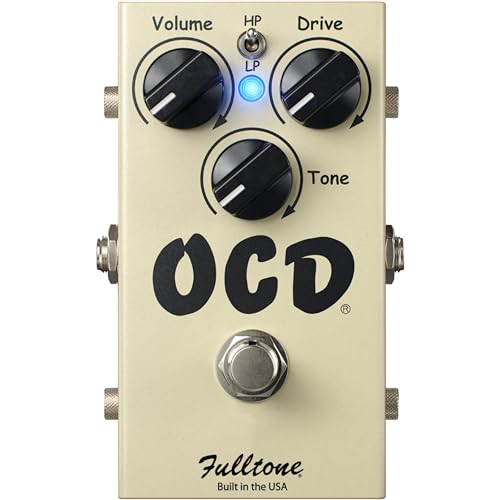
- ✓ Amp-like response
- ✓ HP/LP tonal options
- ✓ Enhanced bypass option
- ✕ Power supply sold separately
- ✕ No battery included
| Power Options | 9V battery or regulated 9–18V DC center-negative power supply (2.1 x 5.5 mm barrel) |
| Input/Impedance | 1 MΩ input impedance |
| Voicing Switches | HP (High Peak) and LP (Low Peak) voicing with corresponding gain/output and mid emphasis |
| Controls | Volume, Drive, and Treble Tone (treble-only) control layout |
| Enclosure and Build | White metal enclosure, 110 x 60 x 35 mm, 400 g (no battery), 1/4″ side jacks, 3PDT footswitch |
| Bypass Options | True bypass or Fulltone Enhanced Bypass (buffered) |
You’ve probably heard that the OCD pedal is a one-note scream machine that only sounds good cranked to eleven. Spoiler: that’s not the whole truth, and you’ll feel it the moment you roll back your guitar volume.
I flicked the guitar into a cleansed, glassy bite, then buried the pick and watched the amp-like response wake up in real time.
The HP/LP switch isn’t hype, it’s reality. With HP engaged, the gain and that British mid-tilt push your riffs forward with real bite, perfect for aggressive rhythm parts or soaring leads.
Flip to LP and it stays more faithful to your amp, so you don’t lose that serene, American-style crunch when you want a transparent boost.
Three knobs keep things simple. Volume controls how loud you’ll scream, Drive pushes from clean boost to full lead saturation, and the treble-tone only shape helps you carve out top-end without mud.
In practice, past noon you’re into crunchy lead territory, yet you never feel like you’re fighting the pedal to stay musical.
The bypass options matter in practical use. Enhanced Bypass keeps your top-end sparkle intact on long pedalchains, which is huge for guitar into a big rig or a long cable run.
True bypass works when you want the pure pit-your-amp-into-a-cranked-amp vibe without any buffering.
Build quality feels like a tour-tested instrument itself. The enclosure is sturdy, the controls are tactile, and the 1 MOhm input impedance preserves your pickup feel.
It’s not the smallest pedal, but it sits confidently on the board and doesn’t nag at you with noise or hiss.
In real-world practice, this pedal shines as a lead-into-crunch transition tool. It handles clean boosts, tight rhythm, and singing leads with a dynamic touch you can feel in your hands.
If you crave that responsive, amp-like feel in a pedal, OCD delivers.
Soldano Super Lead Overdrive Plus Pedal (Guitar Effects)

- ✓ Thick, singing sustain
- ✓ Clear, musical EQ
- ✓ Rugged, compact build
- ✕ Moderate price tag
- ✕ Needs a strong power supply
| Pedal Type | Overdrive guitar effects pedal |
| Circuit Type | Overdrive Plus, high-gain overdrive with enhanced gain staging |
| Controls | Gain, Volume, 3-band EQ shaping |
| Form Factor | Compact pedalboard-ready enclosure |
| Power/Compatibility | Wide compatibility with various amplifiers and signal chains |
| Suggested Use/Application | Suitable for live performance or studio use |
You’re pulling into your rehearsal space, pedalboard already humming, when the Soldano Super Lead Overdrive Plus lands on your board with that familiar, sturdy click of the power switch. You dial in a quick lead patch and hear that thick, singing sustain bloom just as you expect from the classic amp tone, but in a compact pedal.
The first note feels almost creamy, like a red-hot candlewick of gain that doesn’t bite back your guitar’s string tension.
The overdrive-plus circuit responds with surprising clarity as you sweep the gain from a tight crunch to full-on lead synth territory. You’ll notice the harmonic complexity creeps in naturally, giving solos a push without you needing to fight the response.
The dedicated EQ knobs let you carve mids and highs without turning the overall voice too harsh, which is perfect when you switch to a clean platform or push an already dirty amp channel.
Build quality is reassuring—the enclosure is rugged and compact enough to fit beside your tuner and a couple of higher-output pedals. It’s the kind of pedal that doesn’t beg for attention; it simply delivers when the gig calls for it.
In live scenarios, you’ll appreciate how stable the output feels through your signal chain, even with a touch more gain than you planned for in soundcheck.
Verdict: if you hunt for that legendary lead bite and sustain without losing touch with your guitar’s natural character, this pedal hits the mark. It’s straightforward to use, and the tone stays musical whether you’re soloing on a high-gain rhythm bed or pushing a clean amp hard for edge.
It feels like a reliable workhorse you’ll reach for again and again.
iStingor SL-1 Lead Distortion Guitar Pedal, 3-Band EQ

- ✓ Tube-like snap
- ✓ Flexible EQ range
- ✓ Quiet at high gain
- ✕ Limited ultra-clean headroom
- ✕ Battery-swap may feel fiddly
| Distortion Type | High-Gain lead/rhythm distortion with analog CMOS-based circuit |
| Controls / Tone Shaping | TREBLE, MIDDLE (with RANGE control for midrange precision), BASS |
| Power Requirement | 9V DC standard pedal power |
| Power Convenience | Quick-swap battery system for easy battery changes on stage/board |
| Frequency Response Focus | Midrange-shapeable via RANGE+MIDDLE for expressive mid frequencies |
| Circuit Architecture | Tube-like CMOS analog amplification delivering smooth compression and rich harmonics |
The first time you pick up the iStingor SL-1, the weight sits pleasantly solid in your hand and the matte finish feels just grippy enough to keep your fingerings precise. The chrome faceplate catches the light, and that 3-band EQ with a dedicated RANGE control feels like a kid in a candy store for mid-scoop and bite.
You’ll notice the pedal has a quiet quiet personality when you’re dialing in gain. It stays clean enough at lower gain, then blossoms into a smooth, tube-like crunch as you push past noon.
The midrange shaping via the RANGE and MIDDLE knobs is where you’ll find the real character for lead lines or chunky rhythm.
In use, the TREBLE, MIDDLE, and BASS controls give you plenty of tonal sculpting without mudding the bottom. It responds instantly to your pick attack, which makes your solos feel expressive rather than plastic.
I appreciated how the circuit preserved clarity even at higher gain, so you don’t have to gate the noise out manually.
Setup is straightforward, and the 9V DC power option with iStingor’s quick-swap battery system is a real convenience when you’re tweaking on the fly. The pedal’s footprint fits snugly on a compact board, and the switch feels solid enough to survive gigging without creeping or flaking out.
For practice and stage use, it’s forgiving yet bold. If you crave modern high-gain with articulate mids and a lively, responsive feel, the SL-1 delivers without requiring a drawer full of pedals to get there.
What Features Should I Look for in a Quality Lead Guitar Pedal?
When searching for the best lead guitar pedal, consider the following essential features:
- Gain Control: This feature allows you to adjust the level of distortion or overdrive in your sound. A higher gain setting can produce a more aggressive tone ideal for lead playing, while lower settings offer a cleaner sound for rhythm sections.
- EQ Settings: Equalization controls enable you to shape your tone by boosting or cutting specific frequencies. A versatile EQ section is crucial for tailoring your sound to fit different musical styles, helping you stand out in a mix.
- Built-in Effects: Some lead guitar pedals come with additional effects such as delay, reverb, or modulation. These built-in effects can enhance your lead sound by adding depth and texture, providing more creative possibilities during performances.
- True Bypass Switching: This feature ensures that when the pedal is off, your guitar signal remains unaffected. True bypass maintains the integrity of your tone, preventing any unwanted coloration or loss of signal quality when the pedal is not in use.
- Durability: A quality lead guitar pedal should be built to withstand the rigors of live performance. Look for pedals made from robust materials with sturdy footswitches to ensure they can handle repeated use without failure.
- Power Options: Consider how the pedal is powered, whether through batteries or an external power supply. Having multiple power options can enhance convenience, especially during gigs where access to power outlets may be limited.
- Size and Weight: The physical dimensions and weight of the pedal can affect its portability. A compact and lightweight design is ideal for musicians who travel frequently or have limited pedalboard space.
- Price and Brand Reputation: While budget is always a consideration, it’s also wise to consider the reputation of the brand. Established brands often provide reliable quality and customer support, ensuring that your investment is worthwhile.
How Do Different Effects Shape My Lead Guitar Sound?
- Overdrive: Overdrive pedals are designed to simulate the warm and natural distortion produced by a cranked tube amplifier. They enhance the harmonics of the guitar signal, resulting in a creamy and smooth lead tone that can range from subtle grit to full-on saturation, making them a staple for rock and blues leads.
- Delay: Delay pedals create echoes of the guitar signal, allowing notes to linger and creating a sense of space. By adjusting the feedback and timing, musicians can create everything from a subtle ambiance to rhythmic patterns that add depth to solos, enhancing melodic lines and making them more memorable.
- Reverb: Reverb pedals simulate the natural reflections of sound in a space, giving the guitar a sense of depth and dimension. This effect can make lead lines sound more expansive and atmospheric, ideal for creating a lush backdrop in ballads or adding drama to solos.
- Chorus: Chorus pedals add richness and fullness to the guitar sound by duplicating the signal and slightly detuning it. This effect creates a shimmering quality that can make solos feel wider and more textured, effectively making a single guitar sound like multiple instruments playing in harmony.
- Fuzz: Fuzz pedals produce a heavily distorted sound that is more aggressive and gritty than overdrive. They are often used in rock and psychedelic music, imparting a raw and powerful character to lead parts, making them stand out in a mix.
- Wah: Wah pedals allow the guitarist to manipulate the tone and frequencies of their signal using a foot pedal. This effect is known for its expressive qualities, enabling players to create vocal-like tones and dynamic swells, making lead phrases more emotive and engaging.
- Compression: Compression pedals even out the dynamics of the guitar signal by reducing the volume of loud sounds and boosting quieter ones. This results in a more consistent sound that helps lead lines cut through the mix, adding sustain and clarity to each note played.
What Role Does Build Quality Play in Pedal Performance?
Build quality is crucial in determining the performance and reliability of a guitar pedal.
- Material Quality: The materials used in the construction of a pedal can greatly impact its durability and sound. High-quality metals and robust plastics are typically used in premium pedals, which can withstand heavy use and environmental factors without compromising the internal circuitry.
- Circuit Design: A pedal’s internal circuit design affects its tone and responsiveness. Well-designed circuits ensure that the signal path remains clean and that the pedal reacts predictably to changes in playing dynamics, contributing to a more expressive performance.
- Footswitch Mechanism: The type and quality of the footswitch can influence a pedal’s reliability during performances. A durable footswitch provides consistent activation and minimizes the chances of failure during a live setting, allowing guitarists to focus on their playing rather than worrying about malfunctioning equipment.
- Enclosure Design: A pedal’s enclosure not only protects the internal components but also affects its usability on stage. A well-designed enclosure with rubber feet or a non-slip surface ensures stability while being used and prevents accidental adjustments or disconnections during performances.
- Heat Resistance: Some pedals are more susceptible to heat damage than others, especially those with sensitive electronic components. A pedal built with heat-resistant materials can maintain consistent performance in various environments, making it more reliable for touring musicians.
How Can I Identify the Right Lead Guitar Pedal for My Playing Style?
Identifying the right lead guitar pedal for your playing style involves understanding different types of effects and how they can enhance your sound.
- Overdrive Pedals: Overdrive pedals are essential for achieving a warm, natural distortion that enhances your guitar’s tone without overwhelming it. They work by boosting the signal to create a smooth, creamy sound, making them ideal for blues and rock solos.
- Distortion Pedals: Distortion pedals provide a more aggressive and saturated sound compared to overdrive, making them suitable for heavier genres like hard rock and metal. They alter the signal more drastically, giving you a thick, cutting tone that can sustain notes and add harmonic complexity.
- Fuzz Pedals: Fuzz pedals create a unique, gritty sound that can add character to your lead playing, reminiscent of classic rock and psychedelic music. They produce a more pronounced clipping effect, resulting in a sound that is both thick and full, often used for solos that need to stand out.
- Delay Pedals: Delay pedals allow you to create echoes of your notes, which can add depth and dimension to your solos. With various settings for time and feedback, they can create anything from subtle repeats to dramatic soundscapes that enhance your lead guitar performances.
- Reverb Pedals: Reverb pedals simulate the natural reflections of sound in a space, adding atmosphere to your lead playing. They can range from subtle to overwhelming, allowing you to create a sense of space that complements your playing style, especially in slower, more melodic solos.
- Chorus Pedals: Chorus pedals create a shimmering effect by doubling the signal and slightly detuning one of the signals, giving the impression of multiple guitars playing together. This effect can enrich your lead sound, making it more lush and full, perfect for creating an expansive tone in your solos.
- Compressor Pedals: Compressor pedals help to even out your guitar’s dynamics by boosting softer notes and limiting louder ones, resulting in a more consistent sound. This can be particularly beneficial for lead guitarists as it allows for greater sustain and clarity, making solos sound more polished and controlled.
What Sound Options Should I Consider for Different Genres?
When it comes to selecting sound options for different genres, particularly for lead guitar, there are several crucial pedals to consider:
- Overdrive Pedal: An overdrive pedal enhances the natural tone of your guitar and amp, providing a warm, smooth distortion that is essential for rock, blues, and country music. It allows for dynamic response, meaning the more you dig in with your pick, the more distortion you get, which is perfect for expressive lead playing.
- Distortion Pedal: A distortion pedal offers a heavier, more aggressive sound compared to overdrive, making it ideal for genres like hard rock and metal. It compresses the signal more, resulting in a saturated tone that cuts through the mix, allowing lead guitarists to achieve powerful riffs and solos.
- Fuzz Pedal: Fuzz pedals create a thick, fuzzy sound that is characteristic of psychedelic rock and garage music. This type of pedal produces a distinctive texture and sustain, which can help lead lines stand out with a unique and vintage flavor.
- Delay Pedal: A delay pedal adds echoes of your notes, which can create a sense of depth and space in your lead guitar playing. It’s versatile across genres, from ambient and post-rock to classic rock, allowing players to craft intricate soundscapes or enhance melodic lines.
- Reverb Pedal: Reverb pedals simulate the natural echo of sound in various environments, adding richness and ambiance to your lead guitar tone. It’s commonly used in genres like surf rock and shoegaze, where a lush, atmospheric sound is desired, helping to fill out the sonic space.
- Chorus Pedal: A chorus pedal thickens your sound by duplicating the signal and slightly detuning it, creating a shimmering effect that works well in pop, rock, and funk genres. This modulation can make lead lines more captivating and adds a sense of movement to your playing.
- Wah Pedal: The wah pedal is a filter effect that allows players to manipulate the frequency response, producing a vocal-like sound. It is highly expressive and often used in funk, rock, and blues to add dynamics to solos and enhance emotional expression.
How Important is Versatility in a Lead Guitar Pedal?
Versatility in a lead guitar pedal is crucial for achieving a wide range of sounds and styles, making it an essential factor when choosing the best lead guitar pedal.
- Sound Variety: A versatile lead guitar pedal allows players to explore different tones, from clean and crisp to heavy and distorted. This adaptability empowers musicians to seamlessly transition between genres, enhancing their overall performance versatility.
- Dynamic Response: The ability of a pedal to respond well to playing dynamics is a key aspect of versatility. A pedal that can adjust its output based on how aggressively a player strikes the strings offers more expressive capabilities, allowing for subtle nuances in playing style to shine through.
- Multiple Effects Integration: Many versatile lead guitar pedals incorporate various effects, such as overdrive, delay, and modulation, all in one unit. This integration not only saves space on a pedalboard but also provides the guitarist with the ability to create complex soundscapes without needing additional equipment.
- Ease of Use: A versatile pedal should also be user-friendly, allowing guitarists to quickly dial in their desired tone without extensive tweaking. Simple controls and intuitive layouts enable players to focus more on their performance rather than being bogged down by complicated settings.
- Compatibility with Other Gear: Versatility also encompasses how well a pedal interacts with different types of guitars and amplifiers. A pedal that can maintain its quality and tone across various setups is invaluable, as it ensures that players can achieve their desired sound regardless of their equipment.
Which Popular Brands Are Renowned for Producing Top Lead Guitar Pedals?
Several popular brands are renowned for producing top lead guitar pedals that elevate a guitarist’s performance.
- BOSS: Known for their reliability and versatile sound, BOSS pedals are a staple in many guitarists’ setups. Their DS-1 Distortion and BD-2 Blues Driver are particularly favored for lead guitar work, delivering rich tones and sustain that cuts through the mix.
- Electro-Harmonix: Electro-Harmonix offers a wide range of unique effects, with the Big Muff Pi being one of the most iconic for lead solos. This pedal is celebrated for its creamy sustain and harmonically rich distortion, making it a favorite among rock and metal guitarists.
- MXR: MXR pedals are known for their compact design and high-quality sound. The MXR Distortion+ and the MXR Super Badass Distortion are popular choices for lead guitarists, providing a warm and punchy overdrive that enhances solos with clarity and presence.
- Fulltone: Fulltone is recognized for producing premium pedals that offer exceptional tone and responsiveness. Their OCD Overdrive is particularly popular among lead guitarists for its ability to deliver a dynamic range of overdrive tones, making it suitable for various musical styles.
- Wampler: Wampler pedals are highly regarded for their boutique quality and innovative designs. The Wampler Pinnacle and the Wampler Sovereign are both excellent for lead guitar, providing a wide range of overdrive and distortion options that retain the guitar’s natural tone while adding sustain and warmth.
- Ibanez: Ibanez is known for its innovative approach to guitar effects and their Tube Screamer series has been a long-time favorite among lead guitarists. The TS9 and TS808 models are particularly prized for their smooth overdrive and mid-range boost, perfect for cutting through during solos.
What Are the Unique Features of Each Brand’s Best Models?
The best lead guitar pedals from various brands each offer unique features that cater to different playing styles and preferences.
- BOSS DS-1 Distortion: This classic pedal is known for its versatility and reliability, featuring a three-knob layout for tone, level, and distortion. It provides a warm, full sound that works well for both lead and rhythm playing, making it a staple in many guitarists’ pedalboards.
Renowned for its smooth overdrive, the OD808 enhances the natural tone of the guitar while providing a boost in mid-range frequencies. It’s perfect for lead players looking to add sustain and warmth without overpowering their clean sound, making it ideal for solos. - Ibanez Tube Screamer TS9: The TS9 is celebrated for its ability to produce a creamy overdrive that accentuates the mid frequencies, ideal for cutting through a mix during solos. Its simple controls allow for easy adjustments, enabling guitarists to achieve that iconic ‘screaming’ tone with minimal effort.
- Electro-Harmonix Big Muff Pi: This fuzz pedal is famous for its thick, sustaining sound, ideal for lead guitarists seeking a gritty tone. With its distinctive three-knob design, players can easily manipulate the sustain, tone, and volume, creating a unique sonic palette for solos.
- Strymon Timeline: Known for its high-quality delays, the Timeline offers a range of delay types and extensive modulation options. Its powerful digital processing allows lead guitarists to create complex soundscapes and textures, enhancing the depth and emotion of their solos.
- MXR Phase 90: This iconic phaser pedal is favored for its simplicity and effectiveness, delivering a rich, swirling modulation. It’s particularly effective in adding a lush character to lead lines, making it a favorite among guitarists looking to enrich their sound without overwhelming their playing.
- Wampler Pinnacle Deluxe: This pedal offers a wide range of gain options, allowing players to go from a light crunch to a full-blown distortion. With its three-band EQ and voice controls, lead guitarists can tailor their sound to fit perfectly within any musical setting.
How Can I Evaluate Pricing and Value for Lead Guitar Pedals?
Evaluating pricing and value for lead guitar pedals involves considering various factors that influence their performance and suitability for your needs.
- Build Quality: The construction of a pedal can greatly affect its durability and reliability during performances. High-quality materials often result in a higher price but can provide better longevity and resistance to wear and tear.
- Sound Quality: The tonal characteristics produced by a pedal are essential for lead guitarists. Investing in pedals that offer superior sound quality and versatility will enhance your playing experience and justify the cost.
- Features and Controls: Different pedals come with various features such as modulation, delay, or distortion settings. Assessing the range of controls available can help determine if the pedal meets your specific playing style and musical requirements.
- Brand Reputation: Some brands are known for their exceptional performance and reliability, which can influence pricing. Researching brand reviews and musician endorsements can help you identify the best lead guitar pedals that are worth the investment.
- Used vs. New: Consider whether to buy new or used pedals, as the latter can offer significant savings. However, it’s important to evaluate the condition and functionality of used pedals to avoid spending on something that might not perform well.
- Compatibility: Ensuring that a pedal is compatible with your existing gear is crucial. A pedal that complements your amplifier and other effects will provide better integration and overall performance, potentially affecting its value.
- Resale Value: Some pedals retain their value better than others, making them a smarter investment if you plan to upgrade in the future. Researching the resale market can help you understand which pedals are worth the price if you need to sell them later.
Should I Opt for Budget vs. Premium Pedals?
| Feature | Budget Pedals | Premium Pedals |
|---|---|---|
| Price | Typically range from $30 to $80, making them accessible for beginners. | Generally priced from $100 to $300, targeting serious musicians willing to invest. |
| Sound Quality | Good for basic tones but may lack depth and clarity. | Superior sound quality with more nuanced tones and effects. |
| Durability | Often made with cheaper materials, potentially less durable. | Built with high-quality materials, designed for long-lasting use. |
| Features | Limited features, often basic effects. | Advanced features, multiple settings, and customizations available. |
| Weight | Generally lighter, making them easier to transport. | Often heavier due to robust construction, which can provide stability. |
| Brand Reputation | Often from less recognized brands with varying quality. | From well-known brands with strong reputations for quality and performance. |
| Resale Value | Lower resale value, as they are often seen as entry-level. | Higher resale value, especially if maintained well. |