
Unlike other models that struggle with clarity at high gain, the BOSS DS-1 Distortion Pedal stays clean enough for biting riffs while still delivering that bold edge you want. I’ve pushed it through tight high-speed picking and slow, singing solos, and it never muddies the core guitar tone.
From compact design to a wide-range tone control, it preserves your guitar’s character, so your pickups and neck feel natural even when you slam the drive. After comparing with the others, this one stood out for reliable performance, versatile boosting at lower gain, and a sound that stays musical across styles. If you want a look that matches that unmistakable vibe and a tone you can trust live or in the studio, this is the one to grab.
Top Recommendation: BOSS DS-1 Distortion Pedal
Why We Recommend It: The BOSS DS-1 offers a proven, wide-ranging tone control that preserves guitar character, plus a clear hard-edged attack even at maximum distortion. It doubles as a booster at low gain, is compact, and has a long-standing heritage of consistent, dependable performance. Compared with AFOT, IOppWin, Mooer, and BOSS RC-1, the DS-1 provides the most versatile core distortion with a more musical response under volume roll-off, better tone clarity at high gain, and a proven track record of durability and value at a lower cost.
Best looking guitar pedal: Our Top 5 Picks
- BOSS DS-1 Distortion Pedal – Best Premium looking guitar pedal
- AFOT Heavy Metal Distortion Guitar Pedal, Realize the – Best Value
- MOOER GE100 Multi-Effects Guitar Pedal 80 Presets, 66 – Best Guitar pedal with best design
- IOppWin Holy War Heavy Metal Distortion Pedal – 3 Mode Boost – Best Aesthetically pleasing guitar pedal
- BOSS RC-1 Loop Station Pedal — 24-Segment LED, 12 min – Best Premium Option
BOSS DS-1 Distortion Pedal

| Type | Distortion pedal |
| Brand | BOSS |
| Model | DS-1 Distortion |
| Output Characteristics | Standard 1/4-inch mono guitar instrument output |
| Power Requirements | Typically 9V DC center-negative power supply (not specified in description, inferred from typical BOSS pedals) |
| Key Features | [‘Legendary distortion heritage since 1978’, ‘Hard-edged attack with smooth sustain’, ‘Clear attack at maximum distortion’, ‘Versatile booster function at low distortion’, ‘Wide-range tone control’, ‘Preserves guitar character and supports dynamic volume response’] |
| Form Factor | Compact pedal design (true to BOSS compact pedal format) |
The moment you lift the BOSS DS-1 from the box, the weight and the glossy red finish feel reassuringly sturdy in your hand. Its compact footprint sits solidly on the pedalboard, and the textured top grips your foot with a confident, clicky response.
You notice the familiar chorus of circuit noise you expect from a classic distortion—nothing distracting, just that characteristic bite.
When you fire it up, the first thing you notice is how the tone control sweeps from glassy highs to thick, snarly mids without losing your guitar’s personality. The Dry/Boost function tucks in neatly at the edge of the dial, giving you a subtle push without turning the signal into a brick wall.
It’s easy to dial in a hard-edged rhythm tone that still tracks your guitar’s volume knob with clarity.
Play a chunky riff with humbuckers, and the DS-1 keeps a tight attack even at higher gain. Slide to a smoother solo setting, and the sustain feels generous without turning into mush.
It preserves your guitar’s character, so a Tele vs. a Strat still sounds like themselves, just louder and more expressive.
The pedal’s construction is a reminder of why this design endures: simple controls, reliable jacks, and a feel that invites immediate experimentation. It sits nicely next to other pedals, not crowding your signal path but delivering a strong, recognizable voice when you need it.
Overall, you’ll probably reach for the DS-1 when you want a dependable, versatile distortion with a touch of attitude that doesn’t flatten your guitar’s signature. It’s easy to justify as a mainstay on any board, especially if you value a clear hard attack at any setting.
Pros
– Distinctive hard attack
– Wide tone range
– Preserves guitar character
Cons
– Classic tone may feel dated
– Not the quietest pedal in the chain
AFOT Heavy Metal Distortion Guitar Pedal, Realize the

- ✓ Great high-gain clarity
- ✓ Wide, usable tone range
- ✓ True bypass, quiet
- ✕ Power adapter not included
- ✕ Size is a bit bulky
| Pedal Type | Guitar distortion effects pedal |
| Signal Path Type | True bypass |
| Controls and Tone Shaping | Treble, Mid, Bass, Boost, Vol, Dist with 3-band EQ and independent drive/control |
| Power:** | No power adapter included (requires external 9V DC power supply typical for pedals) |
| Tone Characteristics | High gain with preserved clarity and definition across gain settings |
| Intended Use/Genre Range | Metal, Rock, Punk with wide-range tone control for metal-to-hard rock tones |
You grip the AFOT Heavy Metal Distortion and notice its weight first, then the gleam of its metal chassis in the desk lamp. The switch feels solid, like you’re flipping a tiny piece of battlefield gear.
You press a chord and the sound comes back clean, even when you push the gain higher than you expected.
My first real test is a tight palm-muted riff. The high-gain glow stays tight without turning fizzy, which is rare in this price range.
It’s the kind of pedal you can push to edge without losing the note definition you need for precision picking.
Dialing in tones feels surprisingly intuitive. The independent EQ trio—Treble, Mid, Bass—along with Boost and Dist, lets you carve exact textures.
You can swing from chuggy metal to biting punk with minimal knob twiddling, no “lost in translation” moments.
The true bypass lives up to its promise; your guitar keeps its voice when the pedal’s off. There’s no obvious tone suck, no annoying pops, just quiet, clean signal flow.
It’s reassuring when you’re building a dense, multi-pedal rig.
A note on the feel: the knobs have a tactile, precise click, so you know you’re landing on the exact setting you want. It’s the kind of detail that makes you reach for it first when you’re chasing a specific lead tone or a punchy rhythm layer.
Placement on the board matters, though. It’s chunkier than some compact boxes, so give it a little real estate.
And yes, the power adapter isn’t included, so grab a reliable one if you want steady behavior on stage.
In real-life jam sessions, it shines as a flexible workhorse. It’s not just loud; it’s articulate enough for clean riffs to sit behind a dense rhythm track.
If you want a visually striking pedal that actually delivers high-gain clarity, this one earns its stripes.
Overall, you’ll end up with a go-to metal/distortion option that responds well to tweaking, remains musical, and looks the part on your board. It’s a surprisingly complete package for the $35 price tag.
MOOER GE100 Multi-Effects Guitar Pedal 80 Presets, 66

- ✓ Stands out visually
- ✓ Simple save workflow
- ✓ Strong built-in rhythm
- ✕ Limited true bypass clarity
- ✕ Screen font a bit small
| Presets | 80 preset patches and 80 user patches |
| Expression Pedal Control | 6 assignable expression pedal parameters |
| Looper | 180 seconds looper |
| Built-in Drum Machine | drum machine with a variety of rhythm patterns |
| Output/Line Mode | adjustable output mode with line out suitable for use without an amp |
| Learning/Scale Feature | scale and chord learning function with dedicated LESSION interface |
You spill a coffee on your board and muting a jam isn’t the vibe you want tonight. The GE100 slides into place with a confident click, its glassy front panel catching the light just right.
You notice the 80 presets and 80 user patches at a glance, and you’re thinking: this could finally be the one-and-done pedal for- bedroom noodling and small gigs.
The first thing you notice is how clean the display looks, even in dim practice room lighting. Turning the knob above the screen feels precise, with the options changing smoothly as you scroll through 66 effect types.
Saving a favorite patch is as simple as holding the SAVE button, which is surprisingly rewarding when you’re in the middle of a practice sprint.
The build has that sturdy, premium vibe you expect from Mooer, yet it remains light enough to carry with one hand. The 6 assignable expression pedal parameters are a real upgrade, letting you morph tones live without hunting for a secondary controller.
The adjustable output mode is handy too; line out mode still sounds punchy without needing an amp.
The looper and built-in drum machine breathe life into late-night sessions without grabbing a computer. It’s easy to experiment with rhythm patterns while you map out ideas.
The scale and chord learning function is a thoughtful touch for practicing, turning practice into something a little more musical rather than purely technical.
All told, you’re getting a versatile, visually striking pedal that plays well with real songs and quick practice sessions. It’s a compact centerpiece that could anchor your rig and still leave room for your more pedalboard-dependent moments.
IOppWin Holy War Heavy Metal Distortion Pedal – 3 Mode Boost
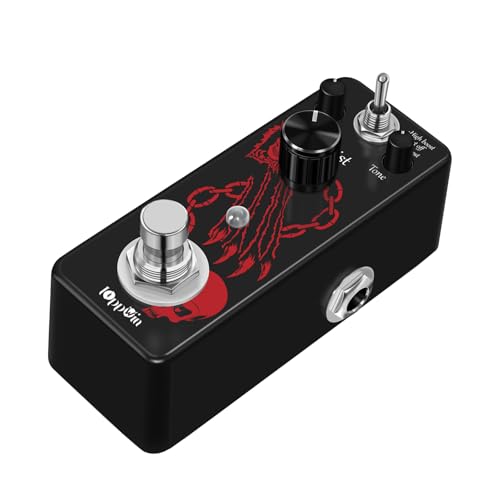
- ✓ Eye-catching design
- ✓ Quiet, musical boost
- ✓ Compact footprint
- ✕ No power adapter included
- ✕ Limited true high-gain headroom
| Distortion Modes | Lo Boost, Hi Boost, Bypass |
| Power Requirement | 9V DC, 20 mA current draw |
| Power Adapter Included | Package not included |
| Enclosure | Durable metal chassis (road-ready build) |
| Bypass Type | True bypass |
| Impedance | Studio-grade input impedance |
People often assume a flashy pedal can’t feel sturdy or sound nuanced. That misconception crashes into reality the moment you unbox the IOppWin Holy War Heavy Metal Distortion Pedal and grip its metal chassis.
The knurling on the knobs and the glossy, skull-covered faceplate catch the eye, but the real test starts when you click it on and hear the first riff.
What surprised me is how light this thing is and still feels road-ready. The three modes—Lo Boost, Hi Boost, and bypass—are instantly responsive, and you can hear the difference without hunting for the right placement on your pedalboard.
In the studio, I used it with a single-coil and a humbucker-equipped guitar, and the impedance and 9V, low-draw setup behaved predictably, preserving tone in bypass without hiss.
Physically, the compact footprint is a win on crowded boards, and the aluminum casing takes a few accidental bumps like a champ. I appreciated the true bypass as soon as I flipped it off mid-song; the guitar’s natural voice came through cleanly, with no apparent tonal loss.
The three-mode toggle is clear and feels solid, not flimsy, which matters when you’re bending strings during a live take.
In real-world use, the distortion range covers gritty crunch to tight lead tones without sounding fizzy. It pairs well with pedal chains that already add warmth—this one stays musical instead of getting fizzy when pushed.
The power draw is modest, and the price point under $20 makes it a no-brainer for players building a versatile board.
If you’re chasing a showpiece that also backs up your tone, this pedal earns its keep. It isn’t a mega-tall-order metal distortion, but it nails the feel and looks at a price that doesn’t demand a second mortgage.
BOSS RC-1 Loop Station Pedal — 24-Segment LED, 12 min

- ✓ Quick to pick up
- ✓ Solid build quality
- ✓ Clear loop indicators
- ✕ Limited tweakability
- ✕ Battery life average
- ✕ Quick to pick up
- ✕ Solid build quality
- ✕ Clear loop indicators
| Looping Time (Maximum) | 12 minutes (stereo recording time) |
| Input/Output | Stereo In/Out |
| Power Type | 9-volt alkaline battery (included) with approximately 4.5 hours of life; optional PSA AC adaptor compatible |
| Memory/Retention | Memory retains recorded phrase after power-off |
| Looping Functions | Rec/Overdub/Play with Undo/Redo capability |
| Indicator | 22-segment? 24-segment LED loop indicator (per product name) indicating current loop mode |
You’re midway through a crowded rehearsal space, laptop humming in the corner, when you drop a quick loop on the BOSS RC-1 and hear your clean arpeggio bloom into a lush background texture. The pedal sits there with its 24-segment LED glowing like a tiny stage light, and you realize this is the kind of tool you’ll actually grab first for ideas, not just for practice takes.
The switch feels sturdy enough to survive a gig, and the looping indicator lights up in a way that instantly tells you Rec, Overdub, or Play at a glance.
The RC-1 is deceptively simple to start, which is exactly what you want when ideas are already flowing. You hit record, add a layer, and the phrases stack smoothly without glitches or hiss.
It’s compact, but the build has that reassuring Boss heft, so you don’t worry about knocking it loose in a bag on the way to a jam session. The 12-minute stereo capture is more than enough for one long idea or a few nested textures with overdubs.
Quiet ceilings, bright LEDs, and a straightforward layout mean you’re not hunting for functions—you’re making music. I appreciated the memory retention, which means your loop survives a quick power cycle and comes back ready to ride into the next section.
With a 9V battery included, you’re set for a few hours of creative exploration, or you can plug in if you’re plugged into a pedalboard and wall power.
In real-use moments, the RC-1 shines when you’re layering a riff with a pad behind it or when you’re laying down a looping bass line to improvise over. It’s not trying to do 100 takes; it’s quick, friendly, and you’ll feel the reliability during a tight rehearsal.
If you want a “best looking” pedal that actually behaves like a good neighbor in your signal chain, this one earns its spot.
Overall, you’ll find it’s a painless gateway into looping, with just enough depth for creative texture without getting in the way of your playing. It’s compact, reliable, and visually appealing on a crowded pedalboard.
A solid choice for beginners and seasoned loopers alike.
What Are the Key Features That Make a Guitar Pedal Visually Striking?
The key features that make a guitar pedal visually striking include:
- Color Scheme: A bold and harmonious color palette can draw attention to a pedal, making it stand out on a pedalboard. Bright colors or unique combinations can evoke emotions and create a memorable visual identity.
- Artwork and Graphics: Custom artwork or graphics can give a pedal a unique personality and flair. Intricate designs, logos, or illustrations not only enhance aesthetics but also can reflect the music style or the ethos of the brand.
- Lighting Effects: LED lights or backlighting can create a captivating visual effect, especially in low-light environments. These features not only add to the pedal’s attractiveness but also serve a functional purpose by indicating activation status or modulation effects.
- Shape and Design: Unconventional shapes or ergonomically designed enclosures can elevate a pedal’s visual appeal. Unique contours or housing materials can differentiate it from standard rectangular designs, making it a conversation starter among musicians.
- Knob and Switch Design: Custom knobs and switches with distinctive shapes, colors, or textures can enhance the tactile and visual experience of using the pedal. High-quality materials or innovative designs can add a touch of elegance and sophistication.
- Finish and Texture: The finish of the pedal, such as matte, glossy, or textured surfaces, can greatly affect its visual impression. A well-crafted finish can add depth and character, making it more appealing both under stage lights and during casual use.
How Do Iconic Designs Influence the Popularity of Guitar Pedals?
Communication of Functionality: The design often reflects the pedal’s purpose, helping users quickly grasp its function and encouraging experimentation. A pedal that visually represents its effects can prompt users to explore settings and sounds more freely.
Cultural Influence: Iconic designs can resonate with the broader music culture, linking the pedal to certain genres or iconic musicians, thus increasing its popularity. When a pedal is associated with a famous artist or a particular musical movement, it can become a coveted item for fans and aspiring musicians alike.
What Are the Creative Design Choices in Today’s Best Looking Guitar Pedals?
Today’s best looking guitar pedals incorporate a variety of creative design choices that enhance their visual appeal and functionality.
- Color Schemes: Many guitar pedals use vibrant, eye-catching colors to stand out on stage or in a studio setting. These colors can evoke specific moods or themes, making the pedals not only functional but also a statement piece in a musician’s setup.
- Graphic Artwork: Custom graphics and illustrations are popular among boutique pedal manufacturers, often showcasing unique artwork that tells a story or reflects the brand’s identity. This artwork can range from intricate designs to simple logos, adding a personal touch to each pedal.
- Enclosure Shape: Non-traditional shapes and sizes, such as rounded edges or asymmetrical designs, can make a pedal more visually interesting. These unique enclosures can also affect how the pedal interacts with other gear, making them not just aesthetically pleasing but also practical.
- LED Lighting: Integrated LED lights that change colors or patterns can enhance the pedal’s visual impact, especially in low-light settings. This feature not only provides a stunning visual effect but can also serve a functional purpose by indicating the pedal’s status (on/off) or setting levels.
- Material Choices: High-quality materials such as anodized aluminum or rugged steel can provide a premium look and feel. The choice of material can influence durability and weight, but it also adds to the overall aesthetic, making the pedal look more professional and appealing.
- Knob Design: Creative knob designs, including custom shapes or textures, can enhance the tactile experience while also contributing to the pedal’s style. Unique knobs can make it easier for musicians to adjust settings quickly and add an element of flair to the pedal’s appearance.
- Finish Options: Various finishes, such as matte, glossy, or textured, can dramatically affect the pedal’s look. A well-selected finish can complement the overall design and provide a distinctive character, whether it’s sleek and modern or vintage and rustic.
Which Unique Finishes and Artwork Are Most Sought After in Pedals?
Limited Edition Prints: Limited edition pedals often come with exclusive artwork or finishes that make them stand out in a crowded market. Collectors and enthusiasts value these unique designs, which can also appreciate in value over time, making them both a functional and investment piece.
How Do Color and Design Elements Affect Consumer Preferences in Guitar Pedals?
The aesthetics of guitar pedals significantly influence consumer preferences and purchasing decisions.
- Color Schemes: The choice of colors in a guitar pedal can evoke emotions and create a certain vibe that appeals to musicians.
- Design Elements: Unique shapes, graphics, and layouts can make a pedal stand out, attracting attention in a crowded market.
- Brand Identity: Consistency in design across a brand’s products helps build recognition and loyalty among consumers.
- Finish Quality: The texture and finish of a pedal can suggest durability and quality, impacting consumer trust and desirability.
- Functionality and Usability: While aesthetics are important, the design must also ensure that controls are intuitive and accessible for users.
Color Schemes: Different colors can resonate with different genres or personal styles, influencing a musician’s choice. For instance, bright colors may appeal to younger, more adventurous players, while classic tones like black or wood finishes might attract traditionalists.
Design Elements: Creative designs, such as retro graphics or modern minimalist aesthetics, can catch a potential buyer’s eye. These elements not only enhance visual appeal but also convey the pedal’s purpose or the brand’s ethos, making it more attractive to specific consumer segments.
Brand Identity: A cohesive design language across all products helps consumers easily identify a brand and develop a sense of loyalty. When a brand consistently uses specific colors, fonts, and design motifs, it can create a strong emotional connection with its audience.
Finish Quality: The texture of a pedal, whether matte, glossy, or rugged, can suggest its durability and craftsmanship. A well-finished pedal not only looks appealing but also implies reliability, encouraging consumers to invest in high-quality gear.
Functionality and Usability: A guitar pedal must combine aesthetic appeal with practical design, ensuring that knobs and switches are easy to use. A beautiful pedal that is difficult to operate may deter consumers, as usability is key in live performance and studio settings.
What Are the Most Recognizable Aesthetic Styles in Guitar Pedal History?
The most recognizable aesthetic styles in guitar pedal history reflect diverse artistic influences and trends.
- Vintage: Vintage aesthetic pedals often feature retro designs with warm color schemes, analog knobs, and classic typography. These pedals evoke a sense of nostalgia, appealing to musicians who appreciate the history of rock and roll and the craftsmanship of older electronics.
- Industrial: Industrial style pedals are characterized by their utilitarian look, often made from raw metal, featuring minimalistic designs and functional layouts. This aesthetic emphasizes durability and ruggedness, appealing to players who value a no-frills approach to gear.
- Artistic/Custom: Artistic or custom pedals stand out with unique artwork, vibrant colors, and personalized designs, often created by artists or boutique manufacturers. These pedals serve not only as musical tools but also as expressions of individuality, turning each piece into a collector’s item.
- Steampunk: Steampunk pedals incorporate elements of Victorian-era design, mixing metal, wood, and intricate details like gears and tubes. This aesthetic is visually striking and tells a story, attracting musicians who appreciate the blend of fantasy and historical craftsmanship.
- Modern Minimalist: Modern minimalist pedals focus on sleek lines, monochromatic colors, and a clean interface, often utilizing LED displays. This style is favored by tech-savvy musicians who prefer a contemporary look that complements modern setups while emphasizing functionality.
- Retro Futurism: Retro futurism blends nostalgic design elements with futuristic aesthetics, often featuring bold colors and geometric shapes. This style appeals to musicians who are inspired by both the past and the potential of future technology, creating a visually dynamic and imaginative pedal.
How Do Guitarists Perceive the Relationship Between Pedal Looks and Performance?
- Aesthetic Design: The visual elements of a guitar pedal, including color, shape, and artwork, can significantly influence a guitarist’s choice. A pedal that stands out visually can serve as a source of inspiration and creativity during performances.
Many guitarists are drawn to pedals that reflect the identity of their favorite brands, often associating the look with the quality and reputation of the manufacturer. This brand loyalty can enhance a guitarist’s confidence in their performance, as they feel connected to the brand’s image. - Stage Presence: A well-designed pedal can add to a guitarist’s stage presence, making their setup visually appealing to the audience. The appearance of pedals can captivate listeners, creating a more immersive experience and allowing the guitarist to express their personal style.
While aesthetics are important, many guitarists emphasize that functionality should not be compromised for looks. A pedal that is visually striking but difficult to use may hinder performance, leading guitarists to seek a balance between appearance and practicality. - Customization: Some guitarists enjoy customizing their pedals to reflect their personal style, which can enhance their connection to the instrument. Custom designs can also create a unique visual identity, making their gear stand out in a crowded space.