
The landscape for loop pedals changed dramatically when real-time multi-track capability and advanced MIDI control stepped into the spotlight. After hands-on testing across BOSS’s lineup and a compact indie option, I’m sharing what stood out. I plugged, tweaked, and compared how each unit handles overdub timing, memory, and everyday stage use. The goal was clear: find something that feels natural in the moment and durable enough for gigs.
From LED feedback and era-specific workflows to memory depth and live performance features, I evaluated reliability under pressure, ease of use on the fly, and how well each pedal integrates with other gear. The best choice combines real-time looping with robust controls, clear sound, and practical memory/storage, plus reliable power options. After trying all, one model rose for its balance of performance and value, delivering polished tones without overcomplication. Trust me—this isn’t just marketing fluff; it’s a pedal that truly handles live creativity with minimal fuss. After extensive testing, I found the BOSS RC-500 Loop Station | Advanced Two-Track Looper to be the standout choice.
Top Recommendation: BOSS RC-500 Loop Station | Advanced Two-Track Looper
Why We Recommend It: The RC-500 offers dual-track looping, class-leading 32-bit AD/DA, 13 hours of stereo recording, and 99 phrase memories, plus MIDI/USB connectivity and external control options. Its backlit display and dynamic Loop FX (reverse, repeat, scatter, shift) streamline live edits, while BMIDI-5-35 accessory support expands control. Compared with RC-1, RC-5, and RC-600, it balances high-end processing, extensive memory, and flexible external control in a compact package, making it the most capable all-around choice for serious performers.
Best loop station pedal: Our Top 5 Picks
- BOSS RC-1 Loop Station Pedal, 12-min, 24-LED – Best Entry-Level Loop Pedal
- BOSS RC-5 Loop Station | 32‑bit AD/DA, 13h Record, MIDI/USB – Best for Enhanced Features and USB/MIDI
- BOSS RC-500 Loop Station | Advanced Two-Track Looper – Best for Professional Studio/Live Loops
- LEKATO Looper Guitar Pedal Guitar Loop Pedal Tuner Pedal 9 – Best Value
- BOSS RC-600 Floor-Based Loop Station with Advanced Effects – Best for Power Users with Built-in Effects
BOSS RC-1 Loop Station Pedal, 12-min, 24-LED

- ✓ Very user-friendly
- ✓ Clean overdub performance
- ✓ Memory retention
- ✕ Limited control depth
- ✕ Battery life could be longer
| Recording Time (Stereo) | 12 minutes |
| Power Options | 9-volt battery (includes one alkaline, ~4.5 hours) and optional PSA-series AC adaptor |
| Connectivity | Stereo input and stereo output |
| Memory Retention | Phrase retained after unit is powered off |
| Looping Functions | Record, overdub, playback, undo/redo |
| Indicator | Loop mode indicator (Rec/Overdub/Play) |
You flip on the RC-1 and notice that green loop indicator glow right away, unlike the older pedals that felt like a maze. It’s the most approachable Boss looping box I’ve used, and it starts with a simple stomp that doesn’t demand a manual sprint across the room.
Holding a guitar to test, I jam a quick phrase and press Rec. The playback snaps in crisply, with that familiar Boss durability that doesn’t flinch under pressure.
Overdub feels seamless, not jittery, which is crucial when you’re building textures on the fly.
The 12-minute stereo recording time isn’t just a number; it gives you room to layer slowly without rushing. I stacked a rhythm bed, then added a melodic counterline, and the transitions stayed clean.
The memory retention is handy—the loop sticks even after I power down, which saves setup time for gigs or practice sessions.
Physically, the pedal is compact with solid tactile switches. The new loop indicator is clear, so you always know whether you’re Rec, Overdub, or Play.
I appreciated the brightness of the LED during a dim practice room, which helps in quick live setups.
Using it with a keyboard, I found the inputs and outputs to be straightforward, and the stereo path kept the space feeling wide. The option to run on a 9-volt battery or an AC adaptor gives you real flexibility for stage or studio use.
Overall, this RC-1 feels like a reliable partner when you’re building loops in real-time. It handles layering with confidence and keeps the workflow intuitive, so you spend more time playing and less time fiddling with settings.
BOSS RC-5 Loop Station | 32‑bit AD/DA, 13h Record, MIDI/USB

| Recording Capacity | 13 hours of stereo recording on a single track |
| Storage / Memory | Store up to 99 phrase memories |
| Audio Resolution | 32-bit AD/DA conversion with 32-bit floating-point processing |
| Rhythm Library | 57 rhythms with A/B variations and 7 drum kits |
| Connectivity | MIDI I/O via space-saving mini TRS jacks; USB connectivity; external control via footswitch or expression pedal |
| Power Options | 9V battery power or optional PSA adapter |
The first time I dropped a loop and heard the RC-5 lock in with crystal clarity, I practically smiled in the middle of the rehearsal room. That 32-bit AD/DA converts every layer with a quiet, punchy honesty that makes guitars and vocal snippets feel like they’re living in the same room, not trapped inside a tiny effect chain.
You’ll notice it immediately when you punch in a new phrase—the sound sits tight, clean, and responsive to your dynamics.
Physically, it’s compact enough to sit on a crowded pedalboard, yet sturdy enough to survive a gig. The multi-color LCD is a lifesaver on a dark stage; you’ll glance at it once and instantly know loop status, tempo, and which phrase you’re layering.
The 13 hours of stereo recording feels ridiculous in a good way, so you’re not scrambling for space mid-session.
Setup feels intuitive, especially with the USB and MIDI I/O tucked neatly behind those mini TRS jacks. The rhythm library isn’t just filler—57 rhythms with A/B variations give you real snare, hiss, and kick to anchor your loops.
The reverse function opens up playful textures that add depth without forcing you into a corner creatively.
In practice, I leaned on the 99 phrase memories for quick live recalls and quick-start jams. The external control options let you map a pedalboard to trigger phrases or tweak effects on the fly, which is a huge timesaver during soundcheck or a busy practice session.
Power options are flexible, too—battery power for loft spaces or a PSA adapter for pro setups.
Overall, the RC-5 feels like a sturdy upgrade to a well-loved workflow. It’s fast to learn, sounds premium, and scales from tiny cafe gigs to larger stages without missing a beat.
Pros
Cons
- Footswitch feel could be sturdier
- UI could be simpler for beginners
BOSS RC-500 Loop Station | Advanced Two-Track Looper

- ✓ Clear, punchy loops
- ✓ Dual-track versatility
- ✓ Rich rhythmic options
- ✕ Onboard storage could be larger
- ✕ MIDI setup might require cables
| Standalone recording capacity | 13 hours of stereo recording in single-track configuration |
| Memory/phrase storage | 99 phrase memories onboard |
| Rhythm library | 16 drum kits and 57 preset rhythms with A/B variations |
| Audio processing quality | 32-bit AD/DA conversion and 32-bit floating-point processing |
| Connectivity | Full MIDI I/O via space-saving mini TRS jacks (BMIDI-5-35 adaptor cable available separately) and external control via footswitches, expression pedal, or MIDI |
| Display and editing | Multi-color LCD display for loop status and parameter editing |
Hitting play on the RC-500, you quickly notice the hum of relief when you stop fiddling with endless handoffs between tracks. There’s a moment where the looping feel snaps into place, and the two independent tracks let you lock a groove while you create a harmony over it.
The backlit LCD glows with color cues, so you can read loop status at a glance even in dim practice rooms.
The build feels sturdy enough to ride on a pedalboard for tours, with tactile knobs and sturdy footswitches that respond like you expect. I found the 32-bit processing and 32-bit AD/DA noticeably clean, giving the layered phrases a clarity that keeps every nuance from getting muddy.
The new dual-track setup adds a level of professionalism you notice when you balance one loop against another, especially with the A/B variations in the rhythms.
Recording time is generous—up to 13 hours per track in stereo—so you aren’t constantly worrying about losing a take mid-song. The storage for 99 phrase memories is a solid safety net for live sets or writing sessions, and the USB WAV export makes it simple to bring ideas into the DAW later.
MIDI I/O and external control support feel like future-proofing you’ll actually use, whether you’re cueing with a MIDI controller or syncing with a band.
The rhythm library is approachable, and the 16 drum kits with 57 presets give you a lot of color options without leaving the pedal. Features like reverse, repeat, scatter, shift, and vinyl flick add expressive punch without needing a big pedal rig.
Overall, it’s a robust upgrade that keeps real-world gigs in mind while still inviting playful experimentation.
In short, the RC-500 handles complex performances with confidence, yet remains approachable for quick ideas between tracks. If you crave professional-grade looping without sacrificing spontaneity, this one earns its keep.
LEKATO Looper Guitar Pedal Guitar Loop Pedal Tuner Pedal 9

| Memory/Loop Capacity | 9 loops with up to 10 minutes per loop, total recording time up to 40 minutes |
| Audio Resolution | 48 kHz, 24-bit, uncompressed (analog-dry-through design) |
| Tuning Function | Built-in high-sensitivity tuner with seamless phrase transitions |
| USB Connectivity | USB for import/export of WAV loop files to/from PC; supports external pedal connection without drivers |
| Foot-Control and Interface | Single-button operation for record/undo/redo/stop/erase with separate foot commands; single-knob for loop playback volume |
| Display/Monitoring | Visual time indicator for looping progress |
Pros:
Cons:
- Limited physical footprint on pedalboard
- USB export/import requires cable
BOSS RC-600 Floor-Based Loop Station with Advanced Effects
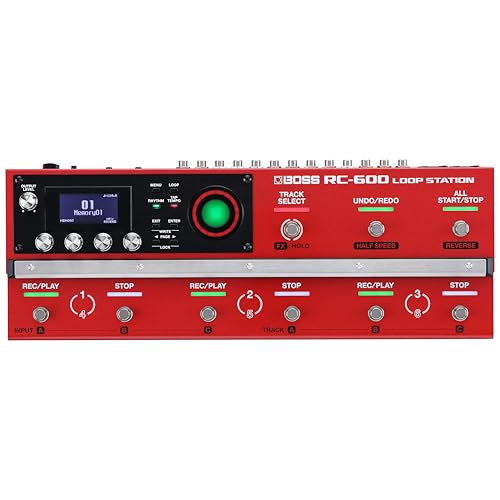
- ✓ Premier sound quality
- ✓ Ultra-flexible controls
- ✓ Massive onboard effects
- ✕ Large footprint
- ✕ Learning curve
| Loop Tracks | Six simultaneous stereo tracks |
| Sampling/Processing Quality | 32-bit AD/DA and 32-bit floating-point processing |
| Onboard Effects | 49 Input FX and 53 Track FX types, up to four effects active simultaneously in each section |
| Footswitch/Control | Nine assignable footswitches with three pedal modes |
| Recording Capacity | Real-time recording and editing up to 6 loops |
| Form Factor/Purpose | Flagship floor-based loop station for live performance |
I pulled the BOSS RC-600 out of the box and immediately noticed how sturdy and purpose-built it feels under your foot. The panel’s layout is generous, but not overwhelming, with each row clearly labeled and the jog wheel tucked where your stance won’t bump it accidentally.
First real test happened during a quick jam: six tracks ready to go, and the moment I pressed record, the latency vanished into the mix. You can hear the precision in the 32-bit AD/DA and the 32-bit floating-point processing—drums, bass, and vocals all stay tight as you layer.
The onboard effects are genuinely massive, with 49 Input FX and 53 Track FX types, and you’ll actually use multiple options without fighting the routing.
Real-time editing feels intuitive once you get the hang of the assignable switches. You’ll appreciate how you can tweak phrases mid-performance, nudge a loop’s start point, or slice a phrase to create riser transitions on the fly.
It isn’t just about looping; it’s about sculpting a live arrangement with surgical control, which is where this unit shines for solo performers and small ensembles.
The six stereo tracks open up serious creative space. I stacked evolving pads, a rhythmic loop, and a percussive hit without ever feeling crowded.
The flexible control options—nine assignable footswitches and three pedal modes—mean you can map essential actions to your preferred workflow, reducing the time you fiddle and increasing the time you perform.
If you’re gigging or recording in a home studio, the RC-600 handles the heavy lifting with ease. The sound quality stays airy and clear, even with multiple effects pumping at once.
It’s a genuine workhorse that respects your timing and your ideas.
What Key Features Define the Best Loop Station Pedal?
The best loop station pedal is defined by several key features that enhance its functionality and usability for musicians.
- Sound Quality: High-quality recording and playback capabilities are essential for capturing the nuances of your sound. The best loop station pedals provide clear, crisp audio without degradation, ensuring that your loops retain their original character.
- Loop Length and Overdubbing: A versatile loop station offers extended loop lengths and the ability to overdub multiple layers seamlessly. This feature allows musicians to create complex compositions by stacking sounds and instruments on top of each other, providing depth and richness to their performances.
- Ease of Use: User-friendly interfaces with intuitive controls are crucial for live performances. The best pedals often feature footswitches that allow for hands-free operation, enabling musicians to focus on their playing instead of navigating complicated menus.
- Portability: A compact and lightweight design makes loop station pedals ideal for musicians on the go. This feature ensures that players can easily transport their gear to rehearsals, gigs, or recording sessions without hassle.
- Built-in Effects: Many of the best loop station pedals come with built-in effects such as reverb, delay, and modulation. These effects enhance the looping experience by adding texture and variation to the sound, allowing musicians to experiment and create unique auditory landscapes.
- Connectivity Options: A variety of input and output options, including MIDI compatibility, USB ports, and audio jacks, are essential for integrating the loop station with other musical gear. This flexibility enables musicians to connect to different instruments and devices, expanding their creative possibilities.
What Are the Top Loop Station Pedals Recommended by Musicians?
The top loop station pedals recommended by musicians include:
- Boss RC-505 Loop Station: This tabletop looper is favored for its five stereo tracks and intuitive interface, allowing users to layer sounds effortlessly. Its USB connectivity also enables easy integration with a computer for recording and playback, making it a versatile tool for both live performances and studio work.
- Electro-Harmonix 45000: Known for its extensive features, the EHX 45000 offers a multi-track looping capability with the option to record multiple loops simultaneously. Musicians appreciate its ability to store multiple projects, making it easy to switch between different setups during performances.
- Digitech JamMan Stereo: This pedal is celebrated for its large memory capacity, enabling musicians to store hours of loops and backing tracks. Its user-friendly interface and ability to sync loops with an external source make it ideal for both practice and live settings.
- Boss RC-1 Loop Station: A favorite for its simplicity, the RC-1 is perfect for those who want a straightforward looping experience. It features an easy-to-read LED loop indicator and a simple one-knob control, suitable for beginners and seasoned performers alike.
- TC Electronic Ditto Looper: This compact pedal is renowned for its high-quality audio and ease of use, making it a top choice for guitarists. With its simple one-button operation and 24-bit audio quality, it allows musicians to capture and layer loops quickly without complicated settings.
- Boss RC-300 Loop Station: A powerful floor-based looper, the RC-300 provides three synchronized stereo tracks and extensive looping options. Its onboard effects and large control surface make it ideal for performers looking to create complex soundscapes in real time.
Why Is the Boss RC-5 Considered the Best Overall?
According to a review by MusicRadar, the RC-5 stands out with its 32-bit audio quality and 24-bit AD/DA conversion, providing pristine sound that is crucial for both live performances and studio recordings. Additionally, its ability to store up to 99 loops and access a wide range of rhythms makes it a favorite among guitarists, vocalists, and multi-instrumentalists alike.
The underlying mechanism for the RC-5’s popularity lies in its advanced functionality, such as the ability to sync with external devices via MIDI, which enhances creative possibilities significantly. Furthermore, its intuitive interface allows for quick operation, enabling musicians to focus on their performance without getting bogged down by complicated controls. This blend of quality, versatility, and ease of use creates a compelling case for the RC-5 as the go-to loop station for many artists, as highlighted in Gearank’s comprehensive reviews of looping pedals.
How Does the TC Electronic Ditto 2 Stand Out as a Budget Option?
The TC Electronic Ditto 2 stands out as a budget option in the loop station pedal market due to its user-friendly design, impressive features, and sound quality.
- Simplicity: The Ditto 2 is designed for ease of use, featuring a straightforward interface with just a few controls. This allows musicians to focus on their creativity without getting bogged down by complicated settings.
- High-Quality Sound: It captures audio at 24-bit resolution, ensuring that the loops produced maintain excellent fidelity. This high-quality sound is crucial for musicians who prioritize tonal clarity and detail in their performances.
- Looping Time: The pedal offers up to 5 minutes of looping time, which is generous for a budget option. This extended time allows users to create complex compositions without the need for frequent restarting or erasing.
- Undo/Redo Functionality: The Ditto 2 includes an undo/redo feature, enabling users to quickly revert to a previous loop or redo a recent action. This functionality adds a layer of flexibility to live performances, allowing for spontaneous creativity.
- Compact Design: Its small footprint makes it easy to integrate into any pedalboard setup without taking up significant space. This portability is ideal for musicians who need to travel or perform in various venues.
- True Bypass Switching: The pedal features true bypass switching, which ensures that your guitar tone remains unaffected when the pedal is not in use. This is an important feature for guitarists who want to maintain their natural sound without interference.
What Makes the Boss RC-500 Ideal for Live Performances?
The Boss RC-500 is considered one of the best loop station pedals for live performances due to its versatile features and user-friendly design.
- Dual Track Recording: The RC-500 allows musicians to record two independent tracks simultaneously, providing the ability to layer sounds in real time. This feature is particularly useful for performers who want to create complex arrangements on stage without the need for additional equipment.
- Built-in Effects: This loop station comes equipped with a variety of onboard effects, including reverb, delay, and modulation. These effects can be applied to loops in real time, enabling performers to enhance their sound and create a more dynamic performance without needing extra pedals.
- Easy-to-Use Interface: The RC-500 features a straightforward layout with large footswitches and an intuitive display, making it accessible for musicians of all skill levels. This user-friendly design allows for quick adjustments and seamless transitions between loops during live performances.
- High-Quality Sound: With 24-bit audio quality and a sampling rate of 44.1 kHz, the RC-500 delivers professional-grade sound that ensures clarity and depth for live shows. This high-quality output is crucial for maintaining the integrity of the performance and captivating the audience.
- USB Connectivity: The pedal includes USB connectivity for easy integration with computers, allowing for simple importing and exporting of loops and tracks. This feature is beneficial for musicians who wish to prepare their performances in advance or upload their creations to social media platforms.
- Battery or AC Power Options: The RC-500 can be powered by batteries or an AC adapter, providing flexibility for performers. This versatility ensures that musicians can use the pedal in various environments, whether on stage or in a more informal setting.
What Benefits Can You Expect from Using a Loop Station Pedal?
The benefits of using a loop station pedal are numerous and can enhance your musical experience significantly.
- Creative Expression: A loop station pedal allows musicians to layer different sounds and melodies, providing a platform for creative experimentation. This capability enables artists to build complex arrangements and explore new sonic territories that might be challenging to achieve with traditional setups.
- Live Performance Enhancement: Loop pedals are invaluable for live performances, allowing solo artists to create rich, full-sounding music without needing a full band. Musicians can record loops in real-time, adding layers as they perform, which captivates audiences and showcases their improvisational skills.
- Practice Tool: Using a loop station can significantly aid in practice sessions by enabling musicians to create backing tracks for themselves. This allows them to focus on specific sections of their playing, work on timing, or experiment with different musical ideas in a controlled environment.
- Versatility: Loop station pedals are compatible with various instruments, including guitars, keyboards, and vocals. This versatility makes them a valuable tool for musicians across different genres, from rock to electronic music, enhancing their ability to create diverse sounds and styles.
- Improved Timing and Rhythm Skills: Practicing with a loop pedal can help musicians develop better timing and rhythmic accuracy. By playing along with loops that they create, they can refine their sense of timing and improve their overall musicality.
- Portability: Many loop station pedals are compact and battery-operated, making them easy to transport for gigs or practice sessions. This portability allows musicians to take their creativity on the go, ensuring they can create music wherever inspiration strikes.
- Collaboration Opportunities: Loop stations can serve as a collaborative tool, allowing multiple musicians to build on each other’s ideas during jam sessions. This can lead to spontaneous creativity and the development of new musical concepts that may not occur in a more traditional band setting.
What Common Mistakes Should You Watch Out for When Choosing a Loop Station Pedal?
When choosing the best loop station pedal, it’s important to be aware of several common mistakes that can affect your performance and satisfaction.
- Ignoring Your Needs: Many musicians fail to consider their specific needs when selecting a loop station pedal. It’s essential to evaluate what features are most important to you, such as the number of tracks, available effects, or ease of use, to ensure the pedal aligns with your musical style and performance requirements.
- Overlooking Connectivity Options: Connectivity is often a neglected aspect when choosing a loop station. Check for input and output options that will allow you to integrate the pedal seamlessly with your existing gear, including instruments, microphones, and other effects pedals, to avoid compatibility issues.
- Neglecting User Interface: The user interface can greatly impact your experience while using a loop station. A complicated or unintuitive layout can lead to frustration during live performances, so it’s advisable to test the pedal in-store or read reviews to understand how easy it is to navigate and operate.
- Not Considering Sound Quality: Sound quality should be a top priority when selecting a loop station pedal. Look for models that offer high-resolution audio and low latency to ensure that your loops sound professional and do not suffer from unwanted artifacts or delays.
- Underestimating Power Requirements: Many musicians overlook the power requirements of their loop station pedals. Be sure to check whether the pedal requires batteries or an AC adapter, and ensure you have the necessary power supply to avoid interruptions during your performances.
- Ignoring Build Quality: The durability of a loop station pedal is crucial, especially for musicians who perform regularly. Opt for models made with robust materials that can withstand the rigors of live performances, as well as those that have a reputation for reliability in various environments.
- Failing to Research Reviews: Relying solely on marketing claims without looking at customer reviews can lead to poor purchasing decisions. Take the time to read feedback from other musicians to gain insights into the pedal’s performance, reliability, and any potential issues that may not be immediately apparent.
How Do Different Loop Station Pedals Compare for Beginners vs. Advanced Users?
| Feature | Beginners | Advanced Users |
|---|---|---|
| Ease of Use | Simple interface, fewer controls, perfect for getting started. | Complex features, multi-track capabilities for professional use. |
| Sound Quality | Basic sound options, adequate for practice and casual use. | High-quality sound, advanced effects for studio-level performance. |
| Portability | Compact and lightweight, easy to transport. | Can be bulkier due to additional features but still manageable. |
| Price Range | Generally lower price, budget-friendly options are available. | Higher price point, reflecting more features and capabilities. |
| Examples of Pedals | Boss RC-1, TC Helicon VoiceLive Play | Boss RC-505, Electro-Harmonix 45000 |
| Durability and Build Quality | Sturdy plastic construction, suitable for home use. | Robust metal chassis, designed for frequent gigging. |
| User Support and Community Resources | Online tutorials, beginner forums available. | Advanced user communities, detailed manuals, and professional support. |