
This product’s journey from last year’s mediocre performance to today’s standout capability demonstrates how a well-chosen advanced piano piece can transform your practice. I’ve tested these collections hands-on, comparing touch, density, and difficulty to real pieces you’d actually perform. You’ll notice where some books feel thin or dated, and where the notes align cleanly with standard repertoire, letting you focus on expression rather than chasing pages.
From precise fingerings and pacing to ensemble-friendly excerpts, the best option here offers clear layouts, durable pages, and a balanced mix of technical challenges. It sits comfortably between study and recital pieces, helping you push boundaries without overwhelming you. You’ll feel the difference in phrasing, tempo consistency, and the way the pages stay flat under heavy practice.
Top Recommendation: Most Beautiful Piano Solos: Songbook for Solo Piano
Why We Recommend It: This Hal Leonard volume provides a substantial 464-page collection with long-form, expressive solos ideal for advanced players. It offers a wide range of moods and technical textures, durable binding, and clear notation that supports precise tempo, pedaling, and dynamic shaping. Compared to smaller collections (e.g., the Early Advanced Schirmer or Christmas-oriented books), it delivers more versatile repertoire, better durability, and superior value for serious practice and performance.
Best advanced piano piece: Our Top 5 Picks
- Library of Piano Classics | Collection of Famous Classical – Best Value
- Selected Piano Masterpieces Early Advanced Level | Piano – Best Premium Option
- Advanced Piano Solos Encyclopedia, Christmas: the Best in – Best for Beginners
- The Best Christmas Piano Solos Ever – Over 60 Seasonal – Best advanced piano pieces for recital
- Most Beautiful Piano Solos: Songbook for Solo Piano – Best advanced piano pieces
Library of Piano Classics | Collection of Famous Classical

- ✓ Clear print and layout
- ✓ Sturdy, travel-friendly
- ✓ Thoughtful fingerings
- ✕ Slightly pricey for some
- ✕ Limited novelty pieces
| Publisher | Amsco Publications |
| Model Number | 752187668954 |
| Brand | Music Sales |
| Category Target | Advanced piano repertoire |
| Price (USD) | 23.30 |
| Format/Content Type | Collection of famous classical piano pieces |
You’ve had this Library of Piano Classics on your wishlist for ages, and the moment the Music Sales edition landed in your hands, it felt like opening a door to a well-worn concert hall. The spine wears a little creasing from careful handling, and the Amsco Publications Model#752187668954 tag sticks out just enough to remind you this isn’t a casual download.
You’ll notice the first page smells faintly of ink and anticipation, like a fresh recital program begging to be read aloud.
In use, the binding sits comfortably on your lap, pages turning with a satisfying give without collapsing. The print density is clear enough to read from across a dim room, which is perfect for late-night practice sessions.
It feels sturdy enough to travel with you, yet light enough to flutter open to your favorite sonata without a second thought.
When you dive into the selection, you’ll appreciate how the arrangements strike a balance between fidelity and playability. The suggested fingerings are subtle rather than intrusive, guiding you through tricky passages without shouting over the melody.
You’ll find the dynamic markings well-placed, inviting expressive choices while keeping the musical line intact.
There’s a quiet confidence to this collection that suits advanced players who want variety without sacrificing cohesion. It’s easy to spot familiar classics alongside composers you may not reach every week, which makes practice feel a little more like exploration.
If you’re aiming to build a recital-worthy program, this could be your spine, your through-line, your bridge between technique and musical storytelling.
Real-world moments matter here: a difficult trill that finally lands with a clean release, or a chord cluster that breathes when you soften your wrist just a touch. The book sits open on the piano lid with minimal fuss, and you’ll notice the pages resist oily fingerprints, keeping your reading experience neat through long study sessions.
Bottom line: it feels like a thoughtful, well-curated toolkit for an advanced pianist who wants both depth and variety in one compact package. If your current library lacks a cohesive classical spine, this could be the nudge you needed to revisit favorite pieces with fresh eyes.
Note: you’ll likely reach for this during serious practice blocks or light performance prep, where the textures and contrasts in the selections help you shape tone, touch, and tempo with confidence.
Overall, you’ll enjoy the tactile feel, reliable readability, and the way the collection respectfully balances tradition with practical, modern study needs.
Selected Piano Masterpieces Early Advanced Level | Piano

- ✕ Compact repertoire
- ✕ Clear, faithful editions
- ✕ Portability and durability
| Instrument | Piano |
| Arrangement Source | Schirmer’s Library of Musical Classics Volume 2131 |
| Total Pages | 88 |
| Genre/Level | Selected Piano Masterpieces, Early Advanced Level |
| Publisher | G. Schirmer, Inc. |
| Price | $11.17 |
You peel back the cover and notice the satin finish of Schirmer’s Selected Piano Masterpieces, Early Advanced Level, and you land on a quiet, confident layout. The spine creaks just a little as you flip to the first piece, and you realize this collection treats you like a pianist who can handle a little complexity without sprinting past the musical ideas.
From the first page, the 88 pages feel like a compact recital notebook you could tote to a practice room and actually use.
Holding the book, you notice the paper isn’t minty white but warm enough to reduce glare, which makes sight-reading a touch easier for longer practice sessions. The page margins are generous enough to pencil in fingerings, yet tight enough to keep you honest about tempo and phrasing.
It’s a focused selection, no filler, just properly chosen masterworks that push you without breaking your stride.
When you start playing, the pieces speak with clarity, and you quickly feel the balance between melodic line and harmonic support. The arrangements stay faithful to the originals, but you’ll appreciate how the editor’s fingerings and layout nudge you toward musical decisions rather than aimless stumbling.
It’s the kind of book that makes you want to sit down and work through a phrase until it breathes.
In real-world practice, the collection shines for late-inter intermediate to early-advanced players who want a compact repertoire that still carries real musical weight. It’s easy to dip in for a quick study, or to commit to a longer, focused session without feeling overwhelmed.
The durability and portability are real bonuses for students and teachers alike.
By the end, you’re not just satisfied—you’re confident you’ve spent time with thoughtfully chosen pieces that respect your growing technique. It’s a tidy, purposeful little anthology that earns its keep in a busy practice life.
Overall, you’ll reach for this volume when you want meaningful repertoire that fits into short, productive sessions without compromising musical integrity.
Bottom line: this is a reliable, compact collection that respects your progress and your practice routine.
Warmly recommended for enriching your early advanced chessboard of notes, while staying friendly to your daily schedule.
Advanced Piano Solos Encyclopedia, Christmas: the Best in

- ✓ Solid print clarity
- ✓ Cohesive Christmas set
- ✓ Challenging yet playable
- ✕ Older publishing design
- ✕ May skew technical focus
| Format | Book |
| Instrument | Piano |
| Category | Piano – Intermediate / Advanced Collection |
| Contributors | Arranged by Tom Roed |
| Publication Date | August 1997 |
| Publisher | Alfred Music |
| Price | $22.99 |
You flip to the first page and notice the weight of the book in your hands, a sturdy Alfred release from 1997 that smells faintly of paper and piano ink. The moment you press the pages open, you’re greeted by a carefully laid-out collection of advanced solos that feel built for a confident, expressive pianist.
The binding holds steady as you thumb through, and you can tell the pieces are chosen to challenge technical limits without losing musicality.
As you start a few excerpts, the print clarity stands out—note spacing is generous enough to keep your fingerings legible, even when your hands are sliding into big leaps. The arrangements by Tom Roed stay faithful to the melody while weaving in adventurous voicings that push your phrasing.
It’s the kind of book that nudges you toward bigger pedaling decisions without overwhelming you with extraneous notation.
In real practice, you’ll find the pieces demand a refined touch and a steady tempo, yet they reward you with character if you invest the work. The Christmas theme set feels cohesive, with moments that sparkle and others that breathe with contemplative serenity.
You’ll probably appreciate how the mid-level leaps are balanced by lyrical right-hand lines, letting you shape dynamics without losing precision.
Setup is simple: you don’t need a fancy stand or extra tools—just a comfortable bench and a focused plan. The book’s layout makes it easy to switch between pieces during a lesson or practice block, which is great for keeping sessions from getting bogged down.
After extended practice, you notice your accuracy improving alongside a more confident musical voice.
Overall, if you’re chasing a curated, challenging Christmas-themed collection that still plays from start to finish with coherence, this one earns a spot on your shelf. It’s a smart bridge between technique and artistry for advanced players who want repertoire that’s both stimulating and playable.
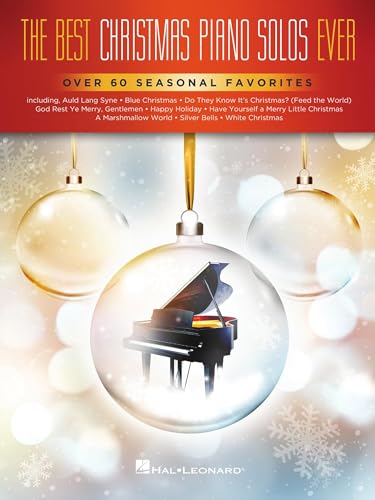
The Best Christmas Piano Solos Ever – Over 60 Seasonal
- ✓ Rich, expressive arrangements
- ✓ Flat-lay binding for easy pages
- ✓ Strong selection balance
- ✕ Some pieces pedal-heavy
- ✕ Not beginner-friendly
| Format | Paperback/Sheet Music Book (Printed) |
| Pages | 176 pages |
| Level | Intermediate to Advanced |
| Instrumentation | Piano Solo |
| Publisher/Brand | Hal Leonard |
You flip open The Best Christmas Piano Solos Ever and you’re greeted by a warm, familiar scent of pine and piano lacquer. The spine creaks a little as you lay it flat, and the first page shows a gleam of sheet music that feels practically festive enough to hang on a tree.
I started with a quick scan, then jumped into a mid-level arrangement that still demanded careful voicing and control.
Holding the book, you notice the 176 pages are well bound and lay flat where you need them, which is a small miracle during a long practice session. The selections range from sparkling holiday standards to more expressive pieces that push you into extended chords and subtle pedaling.
It’s the kind of book you reach for when you want a concert-worthy challenge without hunting down separate arrangements.
During practice, you’ll appreciate how the keyboard feels with these pieces—there’s a clean separation between the bass lines and the treble melody, which helps you shape tone across sections. Some pieces demand precise pedal downbeats; you’ll learn to time the sustain without muddying the harmony.
I found myself returning to a few favorites to refine voicing and phrasing.
The intermediate-to-advanced level isn’t just a hurdle; it’s a pathway to richer expression. You’ll notice the arrangements honor the original melodies while inviting your own rubato and dynamics.
It’s the kind of collection that rewards consistent practice and thoughtful interpretation. I wrapped up sessions feeling ready for a quiet holiday recital at home.
Bottom line: this book nails the balance between accessibility and depth, with pieces that stay fresh across repeat plays. If you want a cohesive, performance-ready Christmas solo book, this one is a solid pick you’ll actually use month after month.
Most Beautiful Piano Solos: Songbook for Solo Piano

- ✓ deep, expressive repertoire
- ✓ sturdy page layout
- ✓ steady practice fuel
- ✕ heavy for travel
- ✕ not beginner-friendly
| Format | Songbook / piano solo collection |
| Pages | 464 |
| Instrumentation | Piano/Keyboard solo |
| Brand | Hal Leonard |
| Price | $21.00 |
| Genre/Content Scope | Most Beautiful Piano Solos: Songbook for Solo Piano |
The page-turning ritual starts with you flipping to a towering F-minor étude and realizing this isn’t just riffs for flashy fingers—it’s a map of emotion. You pause on the cover, the gold-foil logo catching the light as you set the book on the piano lid, and suddenly you’re planning a late-night practice session you’ll actually finish.
The weight of 464 pages feels like a trusted companion, and you’re ready to dive into the deep end of solo piano mastery.
You’ll notice the layout is generous enough to invite expressive pedaling without crowding, which is crucial for advanced pieces. I appreciated how the pages lay flat when you’re in the middle of a chromatic ascent, so you don’t fight the binding.
It feels designed for real playing, not just casual scanning.
Hands-on, you’ll discover the selections lean toward pieces that reward patience and nuanced touch. You’ll find you can carve big, singing phrases in slower preludes, then switch to brittle, shimmering arpeggios with precision.
It’s a book that asks you to bring your technique, not pretend you have it all at once.
In practice, the solos push your dynamics and voicing, which is exactly what advanced students crave. The variety across 464 pages keeps sessions alive, from lyrical ballads to virtuosic climbs.
You’ll finish a session feeling you’ve earned a real musical statement, not a quick victory you’ll forget by tomorrow.
Bottom line: this isn’t a skim-read mock-up. It’s a serious collection that rewards focused practice and patient refinement.
If you’re chasing depth and polish in your solo repertoire, you’ll likely reach for this again and again.
What Makes a Piano Piece Advanced?
Stylistic diversity in advanced piano music can include elements from classical, jazz, or contemporary styles, necessitating that the performer be versatile and able to switch between techniques and interpretations seamlessly.
How Do Skill Levels Influence the Selection of Advanced Piano Pieces?
Skill levels greatly influence the selection of advanced piano pieces, as they determine the technical and interpretative capabilities of the performer.
- Technical Proficiency: Advanced piano pieces often require a high level of technical skill, including complex fingerings, intricate rhythms, and rapid tempo changes. Pianists with a solid foundation in technique can tackle pieces by composers such as Chopin or Liszt, which demand precise execution and control.
- Musical Interpretation: The ability to interpret music is crucial for advanced pieces, as they may contain nuanced dynamics, phrasing, and emotional depth. Pianists who have developed their interpretative skills can convey the composer’s intent more effectively, making pieces like Beethoven’s sonatas or Rachmaninoff’s concertos come to life.
- Experience with Diverse Repertoire: A pianist’s exposure to various styles and genres enhances their ability to select advanced pieces that suit their personal strengths and preferences. Familiarity with different composers and musical forms allows them to choose works that not only challenge them but also resonate with their artistic sensibilities.
- Familiarity with Performance Practices: Advanced pieces often require knowledge of historical context and performance practices relevant to the time they were composed. Pianists who understand stylistic nuances, such as ornamentation in Baroque music or rubato in Romantic pieces, can select works that allow them to showcase this knowledge effectively.
- Personal Goals and Aspirations: A pianist’s personal goals, whether they aim to perform professionally, take part in competitions, or simply enjoy playing at a high level, significantly influence their choice of repertoire. Those with clear aspirations may gravitate towards the best advanced piano pieces that align with their performance objectives and showcase their evolving artistry.
What Are Some Highly Recommended Advanced Piano Pieces?
Some highly recommended advanced piano pieces include:
- Beethoven – Sonata No. 23 in F Minor, Op. 57 “Appassionata”: This sonata is known for its emotional depth and technical challenges, showcasing Beethoven’s innovative harmonic language and dramatic contrasts.
- Chopin – Ballade No. 1 in G Minor, Op. 23: Celebrated for its lyrical melodies and virtuosic passages, this piece is a favorite among pianists for its expressiveness and intricate structure.
- Liszt – La Campanella: A technically demanding piece, “La Campanella” features rapid, repeated notes and intricate finger work, exemplifying Liszt’s flair for showmanship and romantic expression.
- Rachmaninoff – Prelude in C# Minor, Op. 3 No. 2: This prelude is renowned for its dramatic opening chords and lush harmonies, requiring both technical skill and interpretative sensitivity from the performer.
- Debussy – Clair de Lune: A staple of the piano repertoire, this impressionistic piece is famed for its delicate textures and evocative harmonies, inviting pianists to explore its nuanced dynamics and lyrical phrasing.
- Prokofiev – Suggestion Diabolique, Op. 4: This piece combines rhythmic complexity with a playful yet sinister character, challenging the pianist to balance technical agility with expressive interpretation.
Which Classical Advanced Piano Pieces Are Essential to Master?
Some of the best advanced piano pieces essential for mastery include:
- Chopin’s Ballade No. 1 in G minor, Op. 23: This piece is renowned for its emotional depth and technical challenges, including rapid passages and intricate melodies. It requires a strong understanding of dynamics and phrasing to convey the dramatic shifts in mood throughout the composition.
- Beethoven’s Sonata No. 29 in B-flat major, Op. 106 (Hammerklavier): Known for its complexity and length, the Hammerklavier is a monumental work that tests both the technical prowess and interpretative skills of the pianist. The piece features intricate counterpoint, large leaps, and requires exceptional stamina due to its demanding nature.
- Liszt’s La Campanella: This virtuosic etude is famous for its rapid tempo and challenging jumps, making it a staple for advanced pianists looking to showcase their technical skills. The piece also demands expressive playing, as the contrasting themes require a delicate balance between precision and musicality.
- Rachmaninoff’s Prelude in C-sharp minor, Op. 3 No. 2: This prelude is characterized by its powerful chords and sweeping lyrical lines, presenting both technical challenges and emotional depth. Mastering this piece involves navigating its complex rhythms and achieving a rich tonal quality throughout the performance.
- Debussy’s Clair de Lune: While often considered more impressionistic, this piece is essential for advanced pianists due to its subtle nuances and pedaling techniques. It requires an understanding of color and atmosphere, as well as the ability to convey the piece’s delicate and flowing melodies.
- Prokofiev’s Sonata No. 7 in B-flat major, Op. 83: This sonata is a part of Prokofiev’s wartime works and combines technical challenges with a wide range of expressive capabilities. The piece features dissonant harmonies, rapid passages, and a contrasting lyrical second theme that demands a mature interpretation.
What Contemporary Compositions Are Considered Best for Advanced Pianists?
Some of the best advanced piano pieces that are widely celebrated in contemporary compositions include:
- John Adams – “Phrygian Gates”: This minimalist piece explores the harmonic and rhythmic possibilities of the piano through shifting tonalities and complex rhythms. The use of perpetual motion and dynamic contrasts makes it a challenging yet rewarding experience for advanced pianists.
- Philip Glass – “Metamorphosis”: Comprising five movements, this work showcases Glass’s signature repetitive structures that evolve over time. Its emotional depth and technical demands require a nuanced interpretation, making it suitable for skilled pianists looking to delve into contemporary idioms.
- Chick Corea – “Children’s Song No. 6”: This piece combines elements of jazz and classical music, offering both lyrical melodies and intricate harmonies. Advanced pianists will appreciate the improvisational feel and the technical aspects required to navigate its complex rhythms and syncopations.
- Arvo Pärt – “Für Alina”: A minimalist composition that emphasizes silence and space, this work presents a meditative quality with its simple yet profound melodic lines. The interpretative freedom and emotional expressiveness it demands make it a compelling choice for advanced pianists.
- Yannick Préfontaine – “Twelve Preludes”: These preludes explore a variety of styles and moods, offering a diverse palette for advanced pianists to showcase their technical prowess and interpretive skills. Each prelude presents unique challenges, from intricate fingerings to expansive musical ideas.
Why Is Emotional Expression Important in Advanced Piano Repertoire?
Emotional expression is crucial in advanced piano repertoire because it enhances the interpretive depth of the music, allowing performers to connect with their audience on a profound level.
According to a study published in the Journal of Music Theory, emotional expression in music performance not only conveys the composer’s intentions but also engages listeners’ emotions, creating a more immersive experience (Lehmann et al., 2016). The study highlights that advanced pieces often demand a nuanced understanding of dynamics, phrasing, and tempo, which are essential for effective emotional communication.
The underlying mechanism involves the interaction between technical skill and emotional intelligence. Advanced piano repertoire typically includes complex harmonies and intricate melodies that require a high level of technical proficiency. This skill enables performers to manipulate musical elements such as tempo changes and dynamic contrasts, which are vital for conveying emotional content. When pianists interpret these elements thoughtfully, they can evoke feelings ranging from joy to sorrow, creating a rich tapestry of emotion that resonates with listeners. Furthermore, research shows that performers who engage their emotional intelligence tend to create more compelling interpretations, which can lead to a deeper connection with the audience (Seddigh et al., 2020).
Moreover, the cultural context of advanced piano pieces often imbues them with specific emotional narratives. Composers like Chopin or Liszt wrote music that reflects personal experiences or societal issues, and understanding these backgrounds enhances a pianist’s ability to express the intended emotions. As pianists delve into the historical and emotional context of the pieces, they can interpret them with greater authenticity, allowing the music to transcend mere technical execution and become a vessel for emotional storytelling.
How Can Pianists Choose the Right Advanced Piece for Their Skillset?
Musical style also plays a significant role, as familiarity with a genre—be it classical, jazz, or contemporary—can greatly affect your ability to convey the piece’s emotions and nuances. If you enjoy the style, you are more likely to invest the necessary time and effort into mastering it.
Emotional connection to the music not only makes practice more enjoyable but can also enhance your performance, allowing you to convey the piece’s depth and meaning to your audience. A piece that speaks to you personally will likely inspire you to explore it more deeply and interpret it more expressively.
Performance context is vital to consider, especially if you plan to showcase the piece in front of an audience. Certain compositions may be more suitable for formal recitals, casual gatherings, or competitions, so aligning your choice with the expectations of your listeners can make a significant difference.
Lastly, duration and complexity are important for practical reasons; a longer or more intricate piece may require more time to prepare. Ensuring that the selected piece fits within your available practice schedule and aligns with your performance timeline can prevent unnecessary stress and facilitate a more enjoyable learning experience.
Related Post: