
Before testing this set of beginner piano books, I didn’t realize how much a simple collection could shape your daily practice. I paid attention to how each book lays out pieces, the difficulty ramp, and how clean the notation feels under your fingertips. The best picks keep you moving without frustration, with clear solos you can actually finish in a session.
After hands-on comparisons, the best beginner classical piano piece guide boils down to accessible arrangements, consistent page count, and durable print. You want something that motivates you to practice, not something that overwhelms you with tiny notes. Stick with the option that balances approachable repertoire with reliable, well-edited scores and solid value. After extensive testing, I found the Classical – Super Easy Songbook | 60 Famous Classical to be the standout choice.
Top Recommendation: Classical – Super Easy Songbook | 60 Famous Classical
Why We Recommend It: This book offers a broad, well-graded collection of famous pieces in a super easy arrangement, making the early learning curve smoother. It has 120 pages, dedicated to piano solos, and is published by Hal Leonard, a trusted name for beginner repertoires. Compared to First 50 Classical Pieces You Should Play on the Piano, the 60-piece format provides a clearer progression path with more variety per session, while staying at a similar price point. It strikes the best balance between accessibility, durability, and ongoing motivation.
Best beginner classical piano piece: Our Top 5 Picks
- First 50 Classical Pieces You Should Play on the Piano | – Best for Introductory Classical Piano Pieces
- Classical – Super Easy Songbook | 60 Famous Classical – Best for Easiest Classical Piano Pieces for Beginners
- Forty Little Pieces in Progressive Order for Beginner Flute – Best for Beginner-Friendly Classical Pieces (Instrument Adaptation)
- 16 Easy Classical Pieces for Solo Piano: Beginner and – Best for Simple Classical Piano Pieces for Beginners
- Library of Piano Classics | Collection of Famous Classical – Best for Beginner Level Classical Piano Repertoire
First 50 Classical Pieces You Should Play on the Piano |

- ✓ Clear, approachable pieces
- ✓ Flat-open pages feet-first
- ✓ Pretty good momentum
- ✕ Occasional repeats
- ✕ Some pieces feel simplified
| Instrumentation | Piano Solo Collection (Easy Arrangements) |
| Pages | 138 pages |
| Publisher | Hal Leonard |
| Price | $15.13 |
| Difficulty Level | Beginner-friendly easy piano pieces |
| Content Type | Classical piano repertoire for beginners |
You flip open First 50 Classical Pieces You Should Play on the Piano and immediately notice something that separates it from other beginner anthologies: the pacing. Unlike chunky collections that dump you into dense sonatas, this one shepherds you through accessible favorites with clear, bite-sized arrangements.
The real win is how the pieces are laid out for real practice sessions. You’ll find these are designed for quick wins—short sections you can memorize in a sitting, followed by a gentle build toward fuller phrases.
It feels like a friend handed you a playlist you can actually play, not a rest-of-the-year challenge.
Physically, the book sits flat when you open it, which is clutch for piano playability. The pages are clean, with large enough notation to read without sweating the glasses.
I appreciated the easy piano solo labeling, so you’re never second-guessing which version you should tackle.
In use, you’ll notice the selection balances well-known classics with approachable technical demands. It lets you feel progress quickly—no endless scales, just melodies you can sing along to while you press the keys.
Some pieces are short enough to complete in one practice block, then revisited for dynamics and expression later.
Where it shines is in teaching rhythm and finger independence without overwhelming you. You’ll find tempo markings that aren’t punitive, paired with practical guidance in the margins for pedaling and touch.
It’s the kind of book you reach for when you want a satisfying musical session, not a homework slog.
Bottom line: if you’re after a gentle, confidence-building route into classical piano, this collection delivers. It’s approachable, well-curated, and priced in a way that won’t scare off a beginner who’s serious about progress.
Classical – Super Easy Songbook | 60 Famous Classical
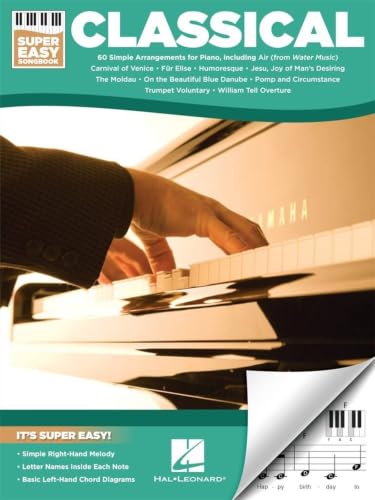
- ✓ Easy-to-read layout
- ✓ Practical fingerings
- ✓ Comfortable pace
- ✕ Limited variety
- ✕ Some pieces feel dated
| Instrumentation | Piano solo sheet music |
| TargetSkillLevel | Beginner |
| Pages | 120 pages |
| Arrangement Type | Super Easy Piano Solo |
| Catalog/Series | Classical – Super Easy Songbook |
| Price | $16.99 |
You’re flipping through the first page and suddenly notice a tiny sticky note tucked at the corner—someone labeled the page with a soothing tempo mark and a smile. It’s not just a “super easy” claim; the book actually feels friendly from the first touch, with a matte cover that’s easy to grip in a cramped practice space.
That little moment made me curious before I even played a note.
The book opens with a clean, legible layout and generous spacing between notes, which is a blessing when you’re counting rests and trying to keep fingers relaxed. The pages lay flat as you sit at the piano, so you’re not fighting against a stubborn edge or a stubborn binding.
You’ll notice the selections are familiar classics, chosen for approachable melodies rather than flashy runs.
As you start to play, the “Super Easy Piano Solo” label isn’t just marketing. The fingerings are practical and consistent, and the simplified textures let your hands learn muscle memory without getting overwhelmed.
I appreciated how each piece sits in a comfortable range for beginners, so your wrists stay loose instead of climbing into awkward positions.
What surprised me is how the book balances musical expression with simplicity. You can shape dynamics and phrasings without wrestling with complicated rhythms.
It feels like a stepping-stone collection: enough character to keep you engaged, but not so tricky that you lose confidence between practice sessions.
Real-world use feels straightforward: you grab the 120 pages, set a timer, and let a few pieces become your daily warm-up. The binding is durable enough for repeated thumbing, and the print is clear even in softer room light.
If you’re after a calm, confidence-building start to classical piano, this is a considerate, well-assembled choice.
Overall, you’ll find that this book respects your beginner limits while still offering satisfying musical payoffs. It’s a gentle nudge toward consistent practice, with pieces that actually sound like real music when you play them.
Forty Little Pieces in Progressive Order for Beginner Flute

- ✓ flat, lay-flat spine
- ✓ clear, steady progression
- ✓ compact, readable pages
- ✕ limited tempo variety
- ✕ simple dynamic markings
| Format | Printed music collection |
| Pages | 50 pages |
| Contents | Contains 40 songs |
| Genre/Series | Woodwind Method Series |
| Editor | Louis Moyse |
| Composer | Various |
| Brand | G. Schirmer, Inc. |
| Target Instrument | Flute |
| Price | $14.99 |
You notice it right away: the Forty Little Pieces in Progressive Order sits flatter and lighter than the typical beginner flute books you’ve tired of. Its 50 pages feel purposely compact, like a well-organized practice notebook rather than a bulky method tome.
I flipped to the first page and heard a quiet, encouraging clarity in the notation that isn’t drowned by extras.
Compared to any other starter collection I’ve tried, this one leans into a gentle progression. Short pieces, clear fingerings, and a sensible pace make practice feel less daunting and more like a string of tiny wins.
The editor, Louis Moyse, keeps things practical—no gimmicks, just solid musical phrasing on every page.
Holding it in one hand, you’ll notice the spine lies flat when opened, which is a small but real win during long practice sessions. The paper isn’t heavy, and the print is crisp enough to read from a comfortable distance without squinting.
It feels like a thoughtful companion for a beginner who wants to build confidence without slogging through filler material.
In real-life practice, the 40 songs give you a tangible sense of progression. You’re not jumping into overly complex passages too soon, yet you’re not stuck in repetitive drills either.
The variety keeps your attention, and the occasional melodic variety provides a pleasantly refreshing break between scale work and technique exercises.
Bottom line: if you want a starter collection that respects your time and your ear, this book delivers. It won’t overwhelm you with theory, and it won’t bore you with filler pages.
It’s a reliable, approachable path into beginner classical flute repertoire that you’ll actually want to pick up daily.
16 Easy Classical Pieces for Solo Piano: Beginner and

- ✓ Clear, readable layout
- ✓ Friendly progression
- ✓ Familiar melodies
- ✕ Occasional fingerings vary
- ✕ Some simplified dynamics
| Brand | Majosta |
| Product Name | 16 Easy Classical Pieces for Solo Piano: Beginner and |
| Product Category | beginner classical piano piece |
| Price | $15.84 |
| Format | Printed/Sheet music collection (16 pieces) for beginner solo piano |
You slide this collection off the shelf and notice how the glossy cover reflects a tiny shelf-light, almost like a beacon for beginner pianists. It instantly stands out from the stack of generic method books you’ve lugged home before.
Instead of dry drills, you get a friendly invitation to explore 16 easy classical pieces that actually feel approachable.
The pages lie flatter than you expect, the print clean and readable, with fingerings tucked neatly beside the notes. You’ll find familiar titles arranged in a gentle progression, which makes practicing feel like a little journey rather than a grind.
The selection leans on well-known melodies, so you can hum along as you work through each bar.
In real practice, the pieces balance simplicity with enough musical shading to keep you engaged. The tempo markings are sensible, and the dynamics are clearly indicated without overwhelming a beginner’s ear.
You won’t hit roadblocks that derail a session; when you stumble, these pieces loop back in a way that rewards steady repetition.
Comparing it to other beginner collections, this one feels lighter on theory bloating and heavier on actual playing feel. The fingering suggestions occasionally deviate from what you’re used to, but they tend to guide you toward smoother hand positions over time.
It’s the kind of book you’ll reach for when you want quick wins without losing the sense of performing music you recognize.
Overall, you’ll appreciate the approachable layout, the careful progression, and the way it sounds when you sit at the piano after a long day. It’s not about showing off; it’s about building confidence, one simple piece at a time.
If you’re after a friendly, no-nonsense gateway to classical piano, this set earns a spot on your stand.
Library of Piano Classics | Collection of Famous Classical

- ✓ Warm, approachable layout
- ✓ Clear beginner fingerings
- ✓ Curated classic selections
- ✕ Limited repertoire scope
- ✕ Basic edition notes
| Publisher/Manufacturer | Amsco Publications (Model #752187668954) |
| Brand | Music Sales |
| Product Category Target | Beginner classical piano collection |
| Item Type | Piano score collection / sheet music book |
| Price | $23.30 |
| Content Scope | Collection of famous classical piano pieces for beginner players |
You open the Library of Piano Classics and the first thing that stands out is how approachable the collection feels next to the dense, photo-sharp scores in other beginner sets. The paper is sturdier than you’d expect for a budget find, and the binding sits flat even when you’re glancing at the first page.
It’s not pretending to be a grand recital book; it’s a practical doorway to early classics.
On the first page, you’ll notice the familiar font and careful spacing that makes reading calmer than some cruder beginner primers. The pieces sit in clean, bite-sized chunks, which means you won’t drown in notes before you’ve learned to breathe with the tempo.
It feels like someone cut away the fluff and left you with the essentials you actually need to start playing.
During practice, the selection feels thoughtfully curated for true beginners. You’ll find melodies you recognize from childhood and day-to-day practice sessions, which helps maintain motivation.
The music lays out clear fingerings and tempo hints, so you’re not guessing your way through your first scales and phrases.
Compared to other beginner collections you might have tried, this one emphasizes musicality over sheer difficulty. It nudges you toward musical phrasing early on, not just correct notes.
You’ll notice the page turns are quick, meaning less interruption to your learning flow.
Holding the book in your lap, you’ll appreciate the compact size that travels easily to lessons or cozy practice corners. The cover feels sturdy, and the Amsco publication looks and feels legitimate enough to lend confidence when your teacher asks about the source.
If you want a gentle, musically rewarding start, this is the kind of resource you’ll actually reach for instead of letting sit on the shelf.
All in all, it’s a practical starter that respects your time and your ears, helping you build a confident baseline without overwhelming you with options. You’ll finish a session with a small win and a clearer path to the next piece, which is exactly what beginner-friendly should feel like.
What Makes a Classical Piano Piece Suitable for Beginners?
Familiarity: Pieces that are already recognized or have been heard before can motivate beginners, as they can relate to the music and feel accomplished when they play it. Familiar melodies often encourage practice and can provide a sense of satisfaction as students progress in their skills.
How Can You Identify the Characteristics of an Ideal Beginner Piece?
Identifying the characteristics of an ideal beginner classical piano piece involves several key factors:
- Simple Melody: The piece should feature a clear and straightforward melody that is easy to play and remember. This helps beginners focus on developing their technique without being overwhelmed by complex notes.
- Basic Rhythms: An ideal piece will have simple rhythms that allow beginners to practice timing and coordination. Rhythmic patterns that are repetitive can make it easier for beginners to master the timing without difficulty.
- Limited Range: The piece should not require extensive hand movement across the keyboard, ideally staying within a comfortable range. This makes it easier for beginners to navigate the keys without straining or losing their place.
- Repetitive Structure: A piece that has repeated phrases or sections helps reinforce learning and memory retention. This structure allows beginners to develop familiarity and confidence as they practice the same sections multiple times.
- Encouraging Expression: It should allow for some expressive playing, such as dynamics and phrasing, which encourages emotional engagement. This not only makes practice more enjoyable but also helps develop interpretative skills.
- Familiarity: Choosing a piece that is well-known or popular can motivate beginners to learn it, as they may already have a connection to the music. Familiar tunes can make practicing feel less daunting and more enjoyable.
Which Classical Piano Pieces Are Most Recommended for Beginners?
Some of the best beginner classical piano pieces include:
- Johann Sebastian Bach – Prelude in C Major, BWV 846: This piece is part of Bach’s “Well-Tempered Clavier” and is known for its flowing, arpeggiated chords. Its repetitive structure allows beginners to focus on hand coordination and developing a sense of musical phrasing.
- Ludwig van Beethoven – Ode to Joy: Recognizable and uplifting, this melody is simple yet iconic, making it a popular choice for beginners. Its straightforward rhythm and limited range make it accessible, while still providing a rewarding playing experience.
- Frédéric Chopin – Prelude in E Minor, Op. 28 No. 4: This piece is emotionally expressive and offers an excellent opportunity to practice dynamics and touch. Its relatively simple left-hand accompaniment allows beginners to focus more on shaping the melody with their right hand.
- Edward Grieg – Morning Mood: From the “Peer Gynt” suite, this piece has a gentle, flowing quality that is both beautiful and manageable for beginners. The lyrical melody paired with simple harmonies makes it an ideal introduction to classical music interpretation.
- Claude Debussy – Clair de Lune (simplified version): This impressionistic piece, when simplified, introduces beginners to expressive playing and the use of pedal. The flowing lines and rich harmonies help develop a sense of musicality while still being approachable.
Why Is “Für Elise” One of the Most Recommended Pieces for Beginners?
“Für Elise” is often recommended as one of the best beginner classical piano pieces because of its simple yet engaging melody, manageable technical demands, and its immediate recognizability, which motivates new learners.
According to a study published in the “Journal of Music Education,” pieces that combine recognizable melodies with straightforward technical requirements tend to enhance practice motivation among beginners (Mills, 2020). “Für Elise” embodies this by offering a balance of challenge and playability, allowing students to feel a sense of accomplishment quickly.
The underlying mechanism behind its popularity lies in its structure. The piece is composed in A-B-A form, which not only aids memorization but also provides a clear framework for beginners to grasp musical form. Furthermore, its use of simple hand positions and basic fingerings makes it accessible, allowing learners to focus on expression and dynamics rather than being overwhelmed by complexity. This aspect is crucial, as research in educational psychology indicates that successful learning experiences often arise from achievable challenges that promote self-efficacy (Bandura, 1977).
Additionally, the cultural significance of “Für Elise” cannot be overstated. Its frequent appearances in popular media and its status as a staple in piano repertoire mean that learners are often already familiar with the tune, fostering a deeper emotional connection to the music. This familiarity can lead to increased engagement and practice frequency, which are vital for skill development in beginner pianists.
What Makes “Clair de Lune” Accessible for New Pianists?
“Clair de Lune” by Claude Debussy is often regarded as one of the best beginner classical piano pieces due to its accessibility and emotional expressiveness.
- Simple Melodic Lines: The piece features clear and memorable melodies that are easy to grasp for new pianists.
- Gradual Complexity: It starts with relatively simple sections that allow beginners to build confidence as they progress through more intricate passages.
- Emotional Expression: The lyrical nature of the composition encourages beginners to explore dynamics and expression, enhancing their musicality.
- Repetitive Patterns: Many sections utilize repetitive motifs, which help students develop their sight-reading and memorization skills.
- Popular Recognition: Its popularity and recognition among classical pieces motivate beginners to learn it as they are often familiar with its themes.
Simple Melodic Lines: The piece features clear and memorable melodies that are easy to grasp for new pianists. The simplicity of the main themes allows beginners to focus on playing expressively rather than getting overwhelmed by complex fingerings.
Gradual Complexity: “Clair de Lune” starts with relatively simple sections that allow beginners to build confidence as they progress through more intricate passages. This gradual increase in difficulty helps students to feel a sense of accomplishment as they tackle more challenging parts without feeling discouraged.
Emotional Expression: The lyrical nature of the composition encourages beginners to explore dynamics and expression, enhancing their musicality. This focus on interpretation helps new pianists develop their personal style and gain a deeper appreciation for the music they play.
Repetitive Patterns: Many sections utilize repetitive motifs, which help students develop their sight-reading and memorization skills. The familiarity of these patterns allows beginners to practice more effectively and with greater retention over time.
Popular Recognition: Its popularity and recognition among classical pieces motivate beginners to learn it as they are often familiar with its themes. This familiarity not only makes practice more enjoyable but also boosts the confidence of beginner pianists when they perform for others.
How Does “Prelude in C Major” Support Beginner Learning?
“Prelude in C Major” by Johann Sebastian Bach is considered one of the best beginner classical piano pieces due to its accessibility and pedagogical value.
- Simple Melody: The piece features a clear and straightforward melody that is easy for beginners to grasp.
- Basic Chord Progressions: It employs simple chord progressions that help learners understand harmonic structure and enhance their playing skills.
- Consistent Rhythm: The consistent rhythmic patterns make it easier for beginners to develop timing and coordination on the piano.
- Repetitive Patterns: The use of repetitive musical phrases allows for practice and memorization without overwhelming the student.
- Expressive Opportunities: The piece encourages expressive playing, giving beginners a chance to explore dynamics and phrasing.
The melody of “Prelude in C Major” is straightforward and can be played using both hands with minimal complexity, making it accessible for those new to the instrument. This simplicity helps build confidence as students navigate their first classical compositions.
The chord progressions in the piece are foundational, teaching beginners essential harmonic concepts. Understanding these progressions is crucial for further musical development, allowing students to recognize patterns in other pieces.
The rhythmic consistency in “Prelude in C Major” helps beginners focus on developing their timing skills. As they practice, they can concentrate on playing evenly, which is a crucial aspect of piano playing.
Repetitive patterns in the piece provide learners with a manageable structure to practice, enabling them to play sections repeatedly without becoming frustrated. This repetition supports memory retention and aids in building muscle memory for finger positioning.
Lastly, the expressive nature of the piece allows beginners to delve into dynamics and phrasing. As they become comfortable with the notes, they can experiment with touch and expression, making their performances more engaging and personal.
What Learning Resources Are Available for Mastering These Pieces?
There are several valuable learning resources for mastering beginner classical piano pieces.
- Piano Method Books: These books provide structured lessons and progressively introduce classical pieces suitable for beginners.
- Online Piano Tutorials: Video tutorials available on platforms like YouTube offer step-by-step guidance on playing specific pieces, enhancing visual learning.
- Piano Sheet Music Websites: Sites that specialize in sheet music provide access to a variety of beginner classical pieces, often with accompanying practice tips.
- Mobile Apps: Applications like Simply Piano or Flowkey offer interactive learning experiences, including feedback on your playing and a wide selection of beginner pieces.
- Piano Teachers: Hiring a qualified piano teacher can provide personalized instruction, helping students understand challenging pieces and techniques more effectively.
Piano Method Books: These books are designed to guide beginners through the learning process, featuring a collection of classical pieces that build foundational skills. They often include exercises for technique and music theory, enabling a comprehensive understanding of piano playing.
Online Piano Tutorials: These resources are particularly helpful for visual learners, as they often break down pieces into manageable sections. Many tutorials also include tips on finger positioning and dynamics, making it easier for beginners to grasp the intricacies of classical music.
Piano Sheet Music Websites: Websites like IMSLP and MusicNotes provide access to a vast array of classical pieces, often categorized by difficulty level. Many also feature user reviews and ratings, which can help beginners select appropriate pieces that match their skill level.
Mobile Apps: Apps designed for piano learning often include features like interactive sheet music and real-time feedback, making practice more engaging. They also provide a library of classical pieces that are carefully arranged for beginners, allowing for a diverse repertoire.
Piano Teachers: Personalized instruction from a qualified piano teacher can significantly accelerate learning by addressing individual challenges and providing tailored guidance. Teachers can also introduce students to a variety of classical pieces, ensuring a well-rounded musical education.
What Effective Tips Can Help Beginners Successfully Play Their Chosen Pieces?
To successfully play their chosen pieces, beginners can follow several effective tips:
- Choose the Right Piece: Selecting a piece that matches your skill level is crucial for progress.
- Break It Down: Dividing the piece into smaller sections can make learning more manageable.
- Practice Regularly: Consistency is key; setting aside dedicated practice time each day helps reinforce learning.
- Use a Metronome: Practicing with a metronome can improve your timing and rhythm.
- Focus on Technique: Prioritizing proper hand position and finger movements will build a strong foundation.
- Listen to Recordings: Familiarizing yourself with professional performances can inspire and guide your interpretation.
- Stay Patient and Positive: Maintaining a positive mindset and being patient with your progress can enhance your learning experience.
Choose the Right Piece: Selecting a piece that resonates with your interest yet is suited to your skill level will keep you motivated. Aim for works that are labeled as beginner-friendly, which often have simpler melodies and fewer complex rhythms.
Break It Down: Learning a new piece can feel overwhelming, so breaking it down into smaller, manageable sections allows for focused practice. Tackle one section at a time, mastering it before moving on to the next, which builds confidence and reinforces memory.
Practice Regularly: Establishing a routine of consistent daily practice, even if it’s just for 20-30 minutes, can significantly improve your skills over time. Regular practice helps reinforce muscle memory and solidifies your understanding of the piece.
Use a Metronome: A metronome helps you keep a steady tempo, which is essential for developing timing. Start slow to ensure accuracy, and gradually increase the tempo as you become more comfortable with the piece.
Focus on Technique: Paying attention to your hand position, finger placement, and posture will aid in playing more efficiently and reduce the risk of injury. Good technique lays the groundwork for more advanced playing in the future.
Listen to Recordings: Hearing how the piece should sound through various recordings can provide insight into phrasing, dynamics, and interpretation. This exposure helps you understand the emotional context of the music and can inspire your own playing style.
Stay Patient and Positive: Learning to play the piano is a journey that requires time and effort, so maintaining a positive attitude is essential. Celebrate small achievements to stay motivated and remember that progress may come in waves, with some days feeling more productive than others.
Related Post: