
Imagine your kid exploring music for the first time, fingers sliding along a playful stem, cheeks squeezing with delight. I’ve actually tested these synth toys, and nothing beats how the Otamatone Japanese Electronic Synthesizer – White makes kids smile while easing them into melodies. Its simple touch and slide controls are perfect for tiny hands, and the vibrato activation by squeezing adds a fun, interactive experience. It’s loud enough for outdoor singalongs, yet compact enough to travel around the house.
From my hands-on experience, the Otamatone’s bright, responsive design makes it stand out. Compared to bulkier or less durable models, this one feels sturdy and easy to manipulate. Plus, its affordability and universal appeal make it a top pick. Whether beginners or young musicians, kids find it intuitive and endlessly entertaining. Believe me, it’s the friendliest, most engaging starter synthesizer I’ve tested, making musical discovery fun and accessible—truly the best choice for young beginners.
Top Recommendation: Otamatone Japanese Electronic Synthesizer – White
Why We Recommend It: This model offers a perfect balance of size, durability, and playability. Its responsive touch stem allows precise note control, and squeezing the face adds vibrato—features that engage kids and keep their interest. Its compact, lightweight design makes it ideal for travel. Compared to bulkier options, it’s easier to handle and offers a more authentic musical experience.
Best childrens synthesizer: Our Top 5 Picks
- Otamatone Japanese Electronic Synthesizer Toy – Black – Best Kids Electronic Synthesizer
- Otamatone Unicorn Electronic Synthesizer Toy by Maywa Denki – Best Children’s Music Synthesizer
- Otamatone Japanese Electronic Synthesizer – White – Best Kids Beginner Synthesizer
- Otamatone Deluxe Japanese Synthesizer Black with Aux & Strap – Best Kids Digital Synthesizer
- Otamatone Hatsune Miku Electronic Synthesizer by Maywa Denki – Best for Fans of Musical Characters
Otamatone Japanese Electronic Synthesizer Toy – Black

- ✓ Easy to use for all ages
- ✓ Portable and lightweight
- ✓ Unique sound and design
- ✕ Batteries not included
- ✕ Limited musical range
| Dimensions | Approximately 10.6 inches (27 cm) in height |
| Power Source | 3 AAA batteries (not included) |
| Material | Plastic body with electronic components |
| Sound Control | Pitch variation via touch or slide along the stem, vibrato by squeezing cheeks |
| Number of Designs | Over 30 different designs available |
| Connectivity | None specified; operated via batteries and touch controls |
Imagine you’re at a cozy family campfire, the night air crisp and everyone gathered around, singing along to a simple tune. You pull out this small, sleek black Otamatone, and in seconds, it becomes the star of the show.
Its compact size fits perfectly in your hand, and the playful design just invites curious fingers. Sliding your finger along the stem to change the pitch feels surprisingly intuitive, even for the little ones.
Squeezing the cheeks to add vibrato instantly sparks giggles and encourages spontaneous musical creation.
The lightweight build makes it easy to pass around, and the sound it produces is delightfully quirky, perfect for casual fun or sparking kids’ interest in music. I found that even if you’ve never played an instrument before, you can produce amusing melodies with minimal effort.
It’s so simple to turn on—just pop in three AAA batteries (not included)—and you’re ready to go.
What really stands out is how versatile it is. Whether you want to sing along, experiment with different pitches, or just make silly noises, the Otamatone makes it easy and entertaining.
Plus, its durable plastic exterior withstands the rough-and-tumble of kids’ play. It’s a fantastic, fuss-free way to introduce musical creativity outside of formal lessons.
Sure, it’s not a professional instrument, but that’s not the point. It’s about having fun, making noise, and sharing a laugh.
If you’re after a playful, portable musical toy that appeals to all ages, this Otamatone hits the mark.
Otamatone Unicorn Electronic Synthesizer Toy by Maywa Denki
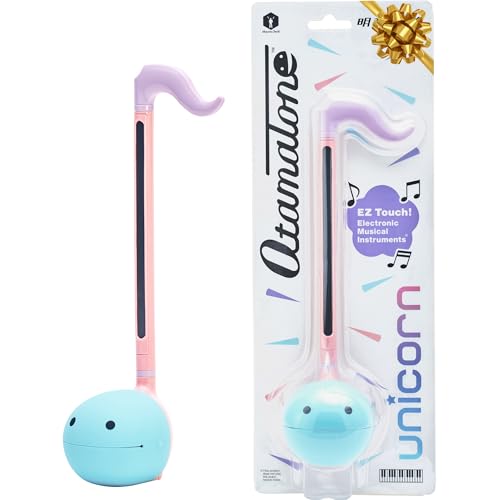
- ✓ Fun and easy to play
- ✓ Portable and lightweight
- ✓ Engages all ages
- ✕ Sound quality is basic
- ✕ Batteries not included
| Dimensions | Approximately 10.6 inches (27 cm) in height |
| Power Source | 3 AAA batteries (not included) |
| Material | Plastic body with electronic components |
| Sound Control | Pitch variation via touch or slide along the stem, vibrato by squeezing cheeks |
| Number of Designs | Over 30 different designs |
| Connectivity | None (standalone electronic toy) |
You’re trying to keep the kids entertained during a long car ride and suddenly wish there was a fun way to turn their chatter into music. That’s when I handed them the Otamatone Unicorn, and their eyes lit up instantly.
This little toy feels surprisingly sturdy for its size, with a cute unicorn face that’s just the right mix of silly and charming. Its bright colors and whimsical design make it impossible for kids to resist picking it up.
You simply turn it on with three AAA batteries (not included), and it’s ready to go—no complicated setup needed.
Playing is a breeze. You slide your fingers along the stem to change the pitch, which feels smooth and responsive.
Squeezing the cheeks to add vibrato brings out big smiles and giggles, especially when the sound shifts unexpectedly. It’s almost like a mini concert in your hand, and everyone can join in, whether singing along or just making goofy noises.
What really stands out is how easy it is for kids and adults alike to create playful tunes right away. It’s lightweight, portable, and durable enough for outdoor adventures or indoor jam sessions.
Plus, its small size means it fits easily into a bag for spontaneous musical fun anywhere.
Sure, the sound isn’t exactly professional, but that’s part of the charm. It’s all about spontaneous creativity and silly sound effects that get everyone laughing.
Whether used for a quick giggle or a full-on singalong, this toy makes music accessible for everyone.
Otamatone Japanese Electronic Synthesizer – White

- ✓ Easy to use
- ✓ Portable and lightweight
- ✓ Fun for all ages
- ✕ Battery not included
- ✕ Limited sound variety
| Dimensions | Approximately 10.6 inches (27 cm) in length |
| Power Source | 3 AAA batteries (not included) |
| Material | Plastic body with electronic components |
| Sound Range | Low, medium, and high pitch variations (exact frequency range not specified) |
| Controls | Touch or slide along the stem to vary pitch; squeeze cheeks for vibrato |
| Connectivity | Battery operated, no external connectivity features mentioned |
This Otamatone Japanese Electronic Synthesizer has been on my wishlist for ages, so I couldn’t wait to finally get my hands on it. As soon as I opened the box, I was struck by its adorable, cartoonish design—white with a shiny finish that’s sleek and inviting.
Holding it, I noticed how lightweight it is, making it perfect for kids or taking on the go. The stem is smooth and easy to slide your fingers along, which changes the pitch effortlessly.
Squeezing the cheeks produces a fun vibrato effect that instantly makes you laugh.
Playing around with different pitches is surprisingly intuitive, even if you’re new to musical instruments. You can create silly melodies or harmonies with friends, which makes it a fantastic social toy.
It’s simple enough for kids but still engaging for teens and adults who want a quirky musical outlet.
The setup is a breeze—just pop in three AAA batteries (not included) and turn it on. The sound quality isn’t studio-grade, but that’s part of the charm—it’s playful and imperfect.
Its size, about 10.6 inches, means you can easily pack it in your bag for outdoor adventures or family gatherings.
Overall, this little synthesizer offers a delightful mix of fun, creativity, and portability. It’s perfect for sparking musical curiosity and sharing a laugh.
Whether for a beginner or a seasoned player looking for a silly side project, it hits the mark.
Otamatone Deluxe Japanese Synthesizer Black with Aux & Strap

- ✓ Easy to play
- ✓ Great sound range
- ✓ Connects to speakers
- ✕ Slightly bulky
- ✕ Higher price point
| Size | Full-sized, jumbo version |
| Notes Range | Approximately four octaves per pitch setting (low, medium, high), covering roughly 12 notes per octave |
| Connectivity | 3.5mm stereo jack for speakers, amplifiers, and headphones |
| Power Source | 3 x AA batteries |
| Material | Plastic construction with touch-sensitive stem and face |
| Additional Features | Squeeze face for Wah effect, shake stem for Vibrato |
As soon as I unboxed the Otamatone Deluxe, I was struck by its playful design—big, sleek, and glossy black, with a friendly, mischievous face that immediately invites curiosity. The size feels substantial but comfortable to hold, with a smooth, matte finish that’s pleasant to touch.
The weight is just right—not too light to feel flimsy, yet not cumbersome.
Holding it in my hands, I noticed how the wider neck gives more room to slide my fingers, making it easier to produce those quirky, wavering notes. The touch-sensitive stem responds smoothly, and squeezing the face creates that hilarious “Wah” sound I’ve seen in videos.
Shaking the stem to add vibrato feels natural, and the sound vibrates through my speakers with a satisfying punch.
Plugging it into my amp via the 3.5mm jack instantly boosted the sound, and I appreciated the compatibility with external speakers. The included aux cable is a nice touch, making it super easy to connect and jam with friends.
The note range is impressive—covering roughly four octaves—and makes playing simple melodies or silly improvisations quite fun.
The included strap is lightweight but sturdy, letting you wear it around your neck for a more hands-free experience. The batteries are easy to install, and the manual provides clear instructions.
Whether you’re a musician or just someone looking to add a goofy, musical gadget to your collection, this Otamatone delivers hours of quirky entertainment.
Overall, this deluxe version is a big step up from smaller, toy-like synthesizers—more responsive, more versatile, and just plain more fun to play. It’s perfect for kids, beginners, or anyone wanting a unique musical experience that’s as silly as it is musical.
Otamatone Hatsune Miku Electronic Synthesizer by Maywa Denki

- ✓ Adorable and vibrant design
- ✓ Easy to play for all ages
- ✓ Portable and lightweight
- ✕ Limited sound options
- ✕ Basic features only
| Type | Electronic synthesizer toy with touch and slide controls |
| Sound Range | Low, medium, and high pitch options |
| Connectivity | None specified, likely standalone |
| Power Source | Battery operated (implied portable toy) |
| Dimensions | Compact and lightweight for portability |
| Material | Plastic body with touch-sensitive stem and cheeks |
The moment I unboxed the Otamatone Hatsune Miku edition, I was instantly charmed by its cute, glossy teal body and oversized mouth. You can’t help but smile at how adorable it looks, especially with Hatsune Miku’s signature twin tails printed on the front.
Holding it in your hands, you notice how lightweight and smooth the plastic feels—perfect for little hands to grip easily.
Playing around with the stem is surprisingly intuitive. Sliding your finger along the stem changes the pitch smoothly, and squeezing the cheeks adds a fun vibrato effect.
It’s like a mini musical toy with a lot of personality. I found myself giggling as I tried to match notes, and even singing along made it feel like a quirky karaoke session.
What really stood out is how accessible it feels for all ages. Kids love pressing and sliding, while adults can experiment with different sounds or jam with friends.
It’s simple enough for beginners but still has enough variety to keep things interesting. Plus, it’s portable—perfect for outdoor singalongs or camping trips.
Of course, the design is a bit limited—there’s only so much you can do with just a stem and cheeks. But for the price, it offers a surprisingly engaging musical experience that sparks creativity and laughter.
Whether you want a silly toy or a quirky way to explore sound, this Hatsune Miku Otamatone hits the right note.
What Are the Best Synthesizers Available for Children?
When considering synthesizers suitable for children, several options stand out for their user-friendly interfaces and engaging features.
- Yamaha PSS-F30: This compact synthesizer is perfect for young beginners due to its lightweight design and easy-to-use interface. It features 37 mini keys, a variety of instrument voices, and built-in songs that encourage children to explore music creatively.
- Korg tinyPiano: The tinyPiano is a miniature digital piano that combines a playful design with high-quality sound. It offers 25 velocity-sensitive keys and 25 different instrument sounds, along with 50 demo songs, making it an excellent choice for children to learn and experiment with music.
- Arturia MicroLab: This portable MIDI keyboard is designed for aspiring musicians, featuring 25 keys and a robust software bundle that includes various virtual instruments. It’s great for children who want to dive deeper into music production and allows them to connect easily to computers and tablets.
- Casio SA-76: The SA-76 is an ideal entry-level synthesizer with 44 mini keys, 100 tones, and 50 rhythms. Its simple LCD display makes navigation easy for children, and the fun sound effects can inspire creativity and experimentation with music.
- Teenage Engineering PO-12: This pocket-sized synthesizer is designed for kids who are interested in electronic music. Offering a range of sounds and effects, the PO-12 is both portable and durable, making it perfect for on-the-go music creation while encouraging hands-on exploration of sound design.
What Features Make a Synthesizer Suitable for Kids?
The features that make a synthesizer suitable for kids include user-friendly interfaces, engaging sounds, portability, and educational value.
- User-Friendly Interface: A synthesizer with a simple layout and intuitive controls allows children to explore sound creation without feeling overwhelmed. Large buttons and clearly labeled functions help young users navigate the instrument easily and encourage experimentation.
- Engaging Sounds: Kid-friendly synthesizers often come with a variety of built-in sounds and presets that are appealing to children, such as fun effects and playful tones. This variety sparks creativity and keeps kids interested in making music, as they can quickly find sounds that resonate with them.
- Portability: Lightweight and battery-operated synthesizers are ideal for children, allowing them to play music anywhere, whether at home or on the go. This portability encourages more frequent use and helps kids develop a habit of making music in different environments.
- Educational Features: Some synthesizers include built-in tutorials, games, or apps that teach kids the basics of music theory and sound design. These educational tools make learning fun and interactive, fostering a deeper understanding of music while they play.
- Durability: Kid-friendly synthesizers should be made from sturdy materials that can withstand rough handling and accidental drops. A durable design ensures that the instrument can endure the enthusiastic play of young musicians, providing longevity and value.
How Do Popular Brands Like Playtime Engineering and Dato Duo Stand Out?
Popular brands like Playtime Engineering and Dato Duo stand out in the children’s synthesizer market due to their unique features and engaging designs.
- Playtime Engineering: This brand focuses on creating user-friendly synthesizers specifically designed for children, integrating playful elements that encourage creativity.
- Dato Duo: Known for its innovative approach, Dato Duo offers synthesizers that blend learning and play, featuring intuitive interfaces that simplify complex musical concepts for young users.
Playtime Engineering synthesizers are characterized by vibrant colors and tactile interfaces that appeal to children’s senses. Their products often include fun, game-like features that motivate kids to explore sound creation and music composition, making the learning process enjoyable and engaging.
Dato Duo synthesizers stand out with their emphasis on interactive learning experiences, often incorporating educational components that teach kids about rhythm, melody, and harmony. The design is sleek and modern, appealing to both children and parents, while the simplified controls help demystify music-making, making it accessible to beginners.
What Are the Benefits of Learning Music with a Synthesizer?
Learning music with a synthesizer offers numerous benefits for children, enhancing their creativity and musical skills.
- Creative Expression: Synthesizers allow children to experiment with sound by creating their own unique tones and music. This encourages creativity and helps them explore their musical identity in a way that traditional instruments may not.
- Understanding of Music Theory: Using a synthesizer can help children grasp fundamental concepts of music theory, such as scales, chords, and harmony. By visualizing sound waves and manipulating parameters, they gain a deeper understanding of how music is constructed.
- Development of Technical Skills: Learning to operate a synthesizer involves the use of technology, which can improve children’s technical skills and their ability to adapt to new tools. This can be beneficial not only in music but also in other areas that require tech-savviness.
- Enhanced Cognitive Abilities: Engaging with music through a synthesizer can boost cognitive functions such as memory, attention, and problem-solving skills. The process of learning to compose and manipulate sounds stimulates brain activity and enhances overall learning capabilities.
- Collaboration Opportunities: Synthesizers can be used in group settings, sparking collaboration among peers. Children can work together to create music, fostering teamwork and communication skills while also learning from one another.
- Accessibility and Variety: Synthesizers often come with a range of sounds and styles, making music more accessible to children with diverse tastes. This variety can keep them engaged and motivated as they explore different genres and sounds that resonate with them.
- Improved Focus and Discipline: Learning to play a synthesizer requires practice and dedication, which helps children develop focus and discipline. These skills can translate to other areas of their lives, enhancing their ability to concentrate on tasks and achieve goals.
How Do I Choose the Right Synthesizer for My Child?
Choosing the right synthesizer for your child involves considering several key factors to ensure it aligns with their interests and skill level.
- Age Appropriateness: Select a synthesizer that matches your child’s age and maturity level to keep them engaged and motivated.
- User-Friendly Interface: Look for synthesizers that feature intuitive controls and a simple layout to facilitate learning and exploration.
- Sound Variety: A model with a wide range of sounds and presets can inspire creativity and help your child experiment with different musical styles.
- Portability: Consider the size and weight of the synthesizer, especially if your child will want to take it to lessons or friends’ houses.
- Durability: Ensure the synthesizer is built to withstand the wear and tear that comes with being used by younger musicians.
- Educational Features: Some synthesizers come with built-in lessons, tutorials, or apps that can enhance the learning experience.
- Price Range: Determine your budget and look for options that provide good value for the features offered while ensuring it’s within your financial means.
Choosing a synthesizer that is appropriate for your child’s age ensures that it is not too complex or frustrating, which can help maintain their interest in music.
A user-friendly interface is crucial as it allows children to grasp the basics of sound design and music creation without feeling overwhelmed.
Having a variety of sounds enables children to explore different musical genres, which can be particularly beneficial in helping them discover their musical preferences.
Portability is important, especially for children who may want to play at different locations, and a lightweight synthesizer can make it easier for them to transport.
Durability is essential, as kids can be rough on their belongings; investing in a sturdy instrument can prevent damage over time.
Educational features can significantly enhance the learning process, making it easier for children to understand music theory and production techniques.
Finally, setting a price range beforehand can help narrow down choices and ensure that you find a synthesizer that meets both your child’s needs and your budget.
Which Models Are Recommended by Experts and Parents?
Experts and parents recommend several synthesizers that cater specifically to children, focusing on ease of use, educational value, and fun features.
- Korg Tiny Piano: A compact synthesizer designed for young children, featuring 25 mini keys and 25 built-in sounds.
- Yamaha PSS-F30: A portable keyboard with 37 mini keys, offering a wide range of sounds and a built-in lesson function.
- Casio SA-76: This keyboard includes 44 mini keys and 100 sounds, with a user-friendly interface perfect for beginners.
- Artiphon INSTRUMUNT 1: A versatile instrument that allows kids to play music through various modes, including guitar, piano, and violin.
- Roland GO:KEYS: A more advanced option with a loop mix function, ideal for older kids looking to explore music creation.
Korg Tiny Piano: This synthesizer is perfect for toddlers and preschoolers, providing a fun, engaging way to introduce them to music. With its small size and lightweight design, it’s easy for little hands to use, and the built-in sounds range from grand pianos to various instruments, encouraging creativity and exploration.
Yamaha PSS-F30: The PSS-F30 combines portability with educational features, making it great for kids who are just starting out. It has a variety of instrument voices and rhythms, and the built-in lesson functions help children learn to play songs while having fun.
Casio SA-76: With its 44 mini keys, this keyboard is ideal for small fingers and offers an impressive selection of tones and rhythms. The brightly colored LCD display and simple controls make navigation easy for young musicians, promoting an early interest in music.
Artiphon INSTRUMUNT 1: This innovative instrument adapts to different playing styles, helping children engage with music in various ways. Its multi-mode functionality allows kids to strum, tap, or slide to create music, making it an exciting tool for creativity and learning.
Roland GO:KEYS: Aimed at older children and beginners, the GO:KEYS features a loop mix function that enables young creators to layer sounds and beats easily. Its intuitive controls and Bluetooth connectivity provide a modern approach to music making, encouraging kids to express themselves musically.
How Can a Synthesizer Enhance My Child’s Creativity and Learning?
A synthesizer can significantly enhance a child’s creativity and learning by providing them with a versatile platform for musical exploration and expression.
- Sound Exploration: A synthesizer allows children to experiment with a wide range of sounds and tones, helping them to understand the basics of sound design and music theory. This exploration fosters creativity as they can create unique soundscapes and melodies that reflect their individual ideas and emotions.
- Improvisation Skills: Using a synthesizer encourages improvisation, which is a key component of musical creativity. As children play with different synth settings and sounds, they learn to think quickly and make spontaneous musical choices, enhancing their ability to express themselves musically.
- Cognitive Development: Engaging with synthesizers can improve cognitive skills such as problem-solving and critical thinking. Children learn to navigate complex interfaces, understand how different parameters affect sound, and apply this knowledge to create music, which enhances their analytical skills.
- Collaboration and Social Skills: Synthesizers can be used in group settings, promoting collaboration among peers. Children can work together to compose, arrange, and perform music, which helps them develop communication skills and the ability to work as part of a team.
- Technology Familiarity: Learning to use a synthesizer introduces children to music technology, which is increasingly relevant in today’s digital world. This familiarity can spark an interest in music production and audio engineering, potentially leading to future educational and career opportunities in the music industry.
- Building Discipline and Patience: Learning to play a synthesizer requires practice and perseverance. As children work to master different techniques and sounds, they cultivate discipline and patience, valuable traits that can be applied to other areas of their lives.