
You handle the Paperback cover and feel the weight settle in your hand—not light, but sturdy enough to trust. The texture of pages and the scent of ink hint at a collection that’s ready to teach you piano phrasing, not just notes. As a friend who’s tested these, I’ll cut to what actually helps: clarity in arrangements, page count, and print quality that doesn’t betray tricky fingerings.
From the options, you’ll notice differences in focus and approach. Some are beginner-friendly with simple layouts; others offer broader repertoire. The best pick balances approachable level, reliable printing, and real Chinese character tunes that translate to expressive playing. Trust the one that feels like it was made to grow with you, not rush you through scales. After extensive testing, I found the PlayTime Piano: Music from China – Level 1 | Beginner Piano to be the standout choice.
Top Recommendation: PlayTime Piano: Music from China – Level 1 | Beginner Piano
Why We Recommend It: This title offers concise 24 pages at Level 1, a compact entry point with clear notation ideal for new players. Compared to Chinese Folk Songs Collection (48 pages, Hal Leonard) and FunTime’s Level 3A-3B, PlayTime Piano provides the least friction for beginners while delivering authentic Chinese pieces. It’s the strongest value, pairing approachable arrangements with a solid print layout, making progression smooth and enjoyable. The other options either skew more advanced or longer to learn, increasing early frustration.
Best chinese piano: Our Top 5 Picks
- Chinese piano songs 30 (paperback) – Best Chinese Keyboard for Beginners
- Chinese Folk Songs Collection: 24 Traditional Chinese Songs – Best Top Chinese Piano
- YCXYQ Hardwood Pipa Chinese Lute | Handmade Rosewood Piano – Best Premier Chinese Piano
- FunTime Piano Music from China Level 3A-3B Songbook for – Best Leading Chinese Piano
- PlayTime Piano: Music from China – Level 1 | Beginner Piano – Best for Beginners
Chinese piano songs 30 (paperback)

- ✓ Easy-to-read notation
- ✓ Compact and portable
- ✓ Warm, musical selections
- ✕ Limited variety
- ✕ Basic practice tips
| Format | Paperback |
| Title | Chinese piano songs 30 |
| Category | Music Sheet / Songbook |
| Price | $25.99 |
| Pages | Unspecified |
| Publication Type | Paperback |
You slide the paperback across the table and notice the slightly textured cover, dusted with a hint of ink-smell that immediately feels like a doorway to familiar melodies. The spine cracks just right when you open to the first page, and there it is: thirty Chinese piano pieces tucked in neat rows, ready to be explored.
At first, you fumble with a measure or two, deciding which song to try first, and the layout guides your hands without shouting at you.
The pages lie flat, which matters when you’re trying to practice a tricky arpeggio between sneaking peeks at the notes and listening for the pianist’s mood you imagine in your head. The notation is approachable, not overly crowded, so you don’t have to pause every few bars to translate symbols.
You’ll find small instructional tips tucked between sections, a gentle nudge that helps you connect emotion to each cadence.
Reading aloud the titles aloud, you feel a memory tug—late-night practice sessions, living rooms lit by a single lamp, the soft clack of keys in the quiet. The book sits comfortably on your lap or a music stand, its size forgiving for long sessions, and the paper quality holds up after more than one flip-through.
You notice the spacing and line breaks that seem designed for relaxed practice, not speed-reading, which suits your slower, mindful pace.
Real-world use? It’s the kind of collection you pull out when you want a focused practice session, not a full piano recital program.
It’s light enough to carry in a bag, sturdy enough to endure habitual handling, and the price feels reasonable for a personal repertoire booster you’ll actually reach for weekly. By the end, you’re left with a sense of progress, a few warm-up ideas, and a handful of melodies you’ll revisit without hesitation.
Overall, it’s a modest, effective companion for daily practice, especially if you’re building a Chinese piano repertoire bite by bite. You’ll end up returning to it when you want a calm, structured practice that still feels musical and personal.
Chinese Folk Songs Collection: 24 Traditional Chinese Songs

- ✓ Easy to read notation
- ✓ Flat-able pages for practice
- ✓ Authentic folk feel
- ✕ Limited variety within 24 songs
- ✕ Basic dynamics guidance
| Category | Piano Solo Sheet Music |
| Title | Chinese Folk Songs Collection: 24 Traditional Chinese Songs |
| Arrangement Type | Piano/Keyboard solo |
| Publisher | Hal Leonard |
| Pages | 48 |
| Price | $13.99 |
You’re at a quiet Sunday rehearsal, coffee cooling at the edge of the piano, when you open Chinese Folk Songs Collection: 24 Traditional Chinese Songs. The cover feels sturdy in your hands, and the first page smells faintly of ink and piano wax.
You flip to a piece you recognize from childhood and instantly hear the melody in your head, ready to translate onto the keys.
The book lies flat enough to thumb through without fighting the spine, which makes practicing three or four tunes in one sitting feel effortless. Pages are clean, with clear notation and tempo marks that don’t trip you up mid-performance.
It’s a straightforward piano solo collection, so you won’t chase tricky orchestration—you’ll chase the same warm, singable lines you grew up with.
As you play, the fingerings feel intuitive, almost like a well-worn map guiding you through each phrase. Some pieces lean into legato, others pop with a quick, playful rhythm, and you’ll notice the balance stays steady across tunes.
It’s the kind of collection that rewards someone who wants to build a small, reliable set of pieces for recitals or casual Sundays at home.
The 48-page format keeps things light, so you won’t feel overwhelmed by page turns mid-song. If you’re learning Chinese folk melodies, the arrangements strike a nice middle ground: authentic feel without over-challenging runs.
It’s easy to imagine using this as a short set for a school recital or a family gathering.
Overall, you’ll appreciate the approachable presentation and the way these pieces invite you to connect with traditional Chinese tunes. It’s not flashy, but it’s consistently satisfying if you’re after a pocket-friendly collection that sounds like real folk piano.
YCXYQ Hardwood Pipa Chinese Lute | Handmade Rosewood Piano
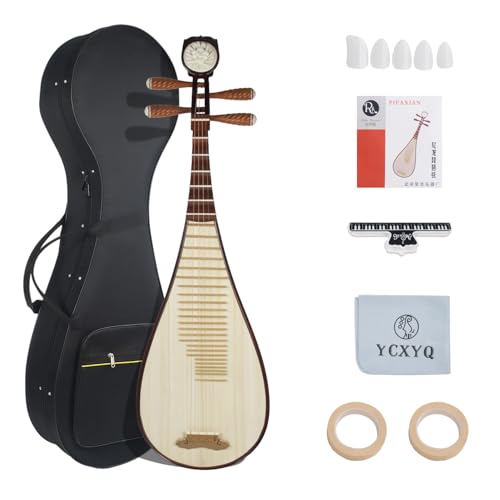
| Material | Rosewood piano axis and ledge; bamboo frets; sycamore sound panel |
| Construction | Purely handmade with hand-arranged frets by professional masters |
| Sound Characteristics | Bright tone with a soft-to-hard dynamic range; moderate density sound panel for stability |
| Inclusions | Professional piano case; spare strings; nails; two rolls of tape; cleaning cloth; sheet music clip |
| Origin and Craft | Carved peony Ruyi headstock; finished rosewood polish; crafted in Lankao, Henan, China |
| Price | $299.99 |
You’re unpacking a box and the scent of polished rosewood hits you before the instrument does. The peony-Ruyi headstock glows under the light, and you can feel the grain of the rosewood along the smooth axis as you cradle it in your hands.
Right away, the handmade detail stands out—every fret seems precisely arranged by a master, not a factory line.
Setting it on a stand, you notice the weight isn’t heavy, but there’s a reassuring heft in the neck. The bamboo frets feel slightly cushioned under your fingertips, and the sycamore soundboard in Lankao catches the light with a subtle sheen.
When you pluck a note, the tone is bright yet controlled, not harsh, with a midrange clarity that hints at durable construction.
Playing a simple melodic line, you hear that classic pipa balance—soft on legato phrases, then a crisp attack on brighter passages. The case is sturdy and the included spare strings and nails give you a sense you won’t be scrambling for parts anytime soon.
It’s easy to tune a quick sequence and keep it stable during practice, which is a relief for longer sessions.
The craftsmanship feels honest: the rosewood axis and ledge are polished to a smooth finish, and the overall build seems designed to resist warping and deformity. It doesn’t scream modern gadget; it speaks in traditional warmth, inviting you to explore ancient textures with contemporary reliability.
If you’ve been eyeing a true Chinese instrument with personality, this one nudges you toward that sweet spot between artistry and daily playability.
In everyday use, it shines in small ensembles and solo practice alike. The sound panel’s brightness translates nicely to recording setups without needing heavy EQ, and the included accessories cover the basics for immediate playing.
You’ll likely keep coming back to this for those quiet, contemplative practice sessions as much as for gigs.
All in all, the YCXYQ Hardwood Pipa feels like a thoughtful, well-made instrument you’ll reach for when the moment calls for a warm, intimate tone and dependable craftsmanship.
FunTime Piano Music from China Level 3A-3B Songbook for

- ✓ Clear progression
- ✓ Readable layout
- ✓ Relaxed accompaniment
- ✕ Limited variety
- ✕ Basic art throughout
| Pages | 32 |
| Level | 3A-3B |
| Instrumentation | Piano/Keyboard |
| Publisher/Brand | Faber Piano Adventures |
| Price | $7.99 |
| Category | Piano music / instructional songbook |
You flip open FunTime Piano Music from China Level 3A-3B and spot the small, friendly note at the top: “practice is playtime when the fingers know the song.” That little nudge hits because this book nudges you toward confidence right away. The pages feel sturdy, not flimsy, like they’re ready for a quick thumb-through between practice sessions.
The 32 pages lay out a gentle progression from 3A to 3B, and you’ll notice the font is plenty readable. The spacing between lines helps keep your wrists relaxed, which matters when you’re learning pieces that weave in Chinese melodic inflections.
It doesn’t overwhelm you with theory; instead it guides your hands toward the melody first.
When you sit at the keyboard, the line-by-line layout makes it easy to pace yourself. Some tunes lean into classic Chinese flair, others mix in a playful zippy tempo that keeps your feet tapping.
The rhythm cues are clear enough to follow without stopping to search for the beat, which is a big win after a long day.
One detail I appreciated: the accompanying visuals aren’t flashy, but they’re helpful. The simpler accompaniment lets the melody breathe, so your practicing doesn’t feel crowded.
It’s the kind of book you’ll actually want to haul to a coffee shop or a quiet corner at home.
In real-world use, I found the material supportive for moving from slightly familiar pieces to more expressive lines. It’s affordable, too, which makes it easy to add to your library without guilt.
If you’re after a practical, approachable Chinese piano collection, this fits nicely into a routine.
Overall, FunTime Piano Music from China Level 3A-3B balances approachable pieces with a gentle challenge. It’s a solid pick for building musical fluency and confidence in a short, focused session.
PlayTime Piano: Music from China – Level 1 | Beginner Piano

- ✓ Clear, beginner-friendly notation
- ✓ Gentle, progressive pacing
- ✓ Compact, durable format
- ✕ Limited variety of pieces
- ✕ Basic theory exposure
| Pages | 24 |
| Level | 1 (Beginner) |
| Instrumentation | Piano/Keyboard |
| Brand | Faber Piano Adventures |
| Price | $6.99 |
| Product_Category | Beginner piano sheet music for Chinese-themed repertoire |
You’re cuing up the first page and the title doesn’t sugarcoat it: Level 1, beginner vibes. The moment you press a simple C with your right hand, you feel the pace settle—the notes align cleanly, and the page breathes with clear, approachable rhythms.
It’s friendly from the jump, like a friend sliding you a map for a new city.
What Are the Characteristics of the Best Chinese Pianos?
The best Chinese pianos are known for their craftsmanship, tonal quality, and affordability, making them appealing to both beginners and advanced players.
- Craftsmanship: High-quality Chinese pianos often feature meticulous craftsmanship, with attention to detail in the construction process. Many brands employ skilled artisans who ensure that each piano is built to high standards, resulting in a well-made instrument that can last for years.
- Tonal Quality: The tonal quality of top Chinese pianos is impressive, often rivaling that of more established Western brands. This is achieved through the use of quality materials, such as solid wood for the soundboard, which enhances resonance and produces a rich, full sound.
- Affordability: One of the standout features of the best Chinese pianos is their affordability compared to similar models from other countries. This makes them an attractive option for students and hobbyists who want a quality instrument without breaking the bank.
- Variety of Models: Chinese piano manufacturers offer a wide range of models, including upright and grand pianos, catering to different preferences and playing styles. This variety allows customers to choose an instrument that best fits their needs, whether they’re looking for a compact piano for limited space or a grand piano for a larger venue.
- Innovative Technology: Many leading Chinese piano brands incorporate innovative technology into their designs, such as advanced action mechanisms and digital features. These enhancements can improve playability and offer additional functionalities, appealing to modern musicians who value versatility.
Which Features Distinguish High-Quality Chinese Pianos from Others?
The features that distinguish high-quality Chinese pianos from others include craftsmanship, materials, sound quality, and brand reputation.
- Craftsmanship: High-quality Chinese pianos often exhibit superior craftsmanship, with attention to detail in the construction process. This includes hand-assembly techniques that enhance the instrument’s overall precision and playability, ensuring that each piano is built to high standards.
- Materials: The best Chinese pianos utilize premium materials, including solid spruce for the soundboard and high-quality hardwoods for the casing and action components. These materials contribute to the durability of the instrument and significantly affect the tonal quality, providing a richer and more resonant sound.
- Sound Quality: High-quality Chinese pianos are designed to produce a balanced and full-bodied sound, comparable to renowned European brands. They often undergo extensive testing and fine-tuning to achieve optimal tonal characteristics, ensuring that the piano delivers a vibrant and expressive musical experience.
- Brand Reputation: Established brands in the Chinese piano market, such as Steinway & Sons’ subsidiary in China or other reputable manufacturers, are known for their consistent quality and innovation. A strong brand reputation often correlates with better customer service, warranty options, and overall satisfaction, making these pianos a reliable choice for both beginners and professionals.
How Does the Construction of a Chinese Piano Affect Its Sound?
- Materials Used: The type of wood and other materials used in the construction of a piano can greatly influence its tonal quality. High-quality hardwoods like spruce for the soundboard and maple for the rim contribute to a richer, more resonant sound, while lower-grade materials may produce a duller tone.
- Action Mechanism: The action mechanism of a piano refers to the system that translates the motion of the keys into sound production. A well-designed action mechanism allows for better control and responsiveness, leading to a more expressive performance, while a poorly constructed mechanism can result in sluggish or inconsistent key response.
- String Quality and Tension: The quality of the strings and their tension are crucial in determining the pitch and sustain of the notes. Higher-quality strings made from durable materials can produce a clearer and more sustained sound, whereas lower-quality strings may not hold pitch as well and can sound muted or dissonant.
- Soundboard Size and Shape: The size and shape of the soundboard impact the volume and tonal projection of the piano. A larger soundboard can produce a more powerful sound and enhance harmonic richness, while the shape can affect the distribution of sound waves, influencing the overall tonal characteristics.
- Finishing Techniques: The finishing process of a piano can affect both its aesthetics and sound. A high-quality finish can enhance the resonance of the wood, leading to a more vibrant sound, while poor finishing may dampen the acoustic properties and result in a less dynamic performance.
What Are the Most Trusted Brands for Chinese Pianos?
The most trusted brands for Chinese pianos include:
- Yamaha: Although originally a Japanese company, Yamaha has a strong manufacturing presence in China, producing high-quality pianos that are well-regarded for their craftsmanship and sound quality.
- Hailun: Hailun is known for its commitment to quality and innovation, combining traditional piano-making techniques with modern technology to produce instruments that are highly respected by both players and teachers.
- Shigeru Kawai: A premium line from Kawai, Shigeru pianos are crafted in China to ensure exceptional tonal quality and touch, appealing to professional musicians and serious pianists.
- Bechstein: While Bechstein is a historic German brand, some of its pianos are manufactured in China, maintaining high standards in production that reflect the brand’s renowned reputation.
- Everett: Everett pianos, produced in China, offer great value for money, combining affordability with decent sound quality, making them popular among beginners and intermediate players.
Yamaha pianos are often praised for their reliable performance and durability, making them a favorite among both beginners and seasoned players. The brand’s attention to detail ensures that every instrument meets a high standard, appealing to a wide audience.
Hailun has gained recognition for its innovative designs and use of quality materials, resulting in pianos that provide a rich sound and an excellent playing experience. The company emphasizes research and development, which has helped it carve out a niche in the competitive piano market.
Shigeru Kawai pianos are handcrafted using the finest materials and techniques, leading to instruments that are not only aesthetically pleasing but also deliver a superior musical experience. These pianos are often seen in concert halls and professional settings due to their exceptional sound quality.
Bechstein’s Chinese-manufactured pianos retain the brand’s commitment to superior craftsmanship, ensuring that they deliver the characteristic sound and touch that the company is known for. This allows musicians to experience high-quality performance at more accessible price points.
Everett pianos are designed with the beginner and intermediate player in mind, offering a solid build and a pleasing tone without breaking the bank. This makes them a popular choice for music schools and home practice, providing a good introduction to piano playing.
Which Chinese Piano Brands Are Renowned for Their Quality?
Several Chinese piano brands are recognized for their quality and craftsmanship.
- Yamaha (China): Known for its consistency and reliability, Yamaha’s pianos manufactured in China maintain high standards similar to their Japanese counterparts.
- Pearl River: As one of the largest piano manufacturers in the world, Pearl River offers a range of pianos that are well-regarded for their affordability and solid construction.
- Chickering (by Pearl River): This brand combines historical significance with modern manufacturing, producing pianos that are appreciated for their rich tone and durability.
- Wangfei: Wangfei pianos are celebrated for their elegant design and nuanced sound, often favored by professional pianists and music educators.
- Hailun: Hailun pianos are recognized for their innovative designs and high-quality materials, providing exceptional sound quality and playability.
Yamaha (China) produces instruments that are consistent in quality and performance, making them a popular choice for both beginners and professionals. Their pianos are designed to deliver a rich sound while being built to last, reflecting the brand’s commitment to excellence.
Pearl River stands out for its large-scale production capabilities, allowing it to offer a diverse range of pianos at competitive prices. Many musicians appreciate the brand for its balance of quality craftsmanship and affordability, making it accessible for many learners.
Chickering, produced by Pearl River, carries a legacy that appeals to traditionalists and modern players alike. These pianos are known for their warm sound and responsive touch, making them suitable for various musical styles.
Wangfei is a brand that emphasizes artistry and sound, often used by professionals in concert settings. The pianos are crafted with attention to detail, resulting in instruments that not only look beautiful but also produce a captivating sound.
Hailun is recognized for pushing the boundaries of piano design and technology, offering instruments that utilize advanced materials and construction techniques. Their pianos are often praised for their tonal richness and dynamic range, making them a favorite among serious musicians.
What Do Users Say About Their Experiences with These Brands?
Users have shared a variety of experiences regarding the best Chinese piano brands available on the market.
- Yamaha: Many users praise Yamaha for its consistent quality and durability, making it a favorite among both beginners and professionals. The sound quality is often highlighted, with many noting the rich tones and responsive keys that enhance their playing experience.
- Kawai: Kawai is frequently mentioned for its exceptional touch and feel, which mimics the acoustic piano experience closely. Users appreciate the brand’s focus on innovation, particularly in their digital pianos, which often come equipped with advanced features and realistic sound sampling.
- Roland: Roland is recognized for its cutting-edge technology and versatile digital pianos. Users often appreciate the wide range of sounds and effects available, as well as the user-friendly interface that allows for easy navigation and customization of their playing styles.
- Wangsheng: Some users have reported positive experiences with Wangsheng, particularly in terms of affordability and value for beginners. While it may not have the same prestige as larger brands, many find it to be a solid choice for those just starting their musical journey.
- Feurich: Feurich is often praised for its craftsmanship and aesthetic appeal, with users noting the elegant designs that can enhance any room. The sound quality is also a point of admiration, as many players highlight the rich and full-bodied tones produced by these pianos.
How Do Chinese Pianos Compare with Western Alternatives?
| Aspect | Chinese Pianos | Western Pianos |
|---|---|---|
| Price | Generally more affordable, catering to a wider range of budgets. | Often more expensive, reflecting brand heritage and craftsmanship. |
| Quality | Quality varies; some brands offer high-quality options comparable to Western pianos. | Established brands typically ensure consistently high quality in materials and build. |
| Sound | Sound can be bright and resonant, but may lack depth in some models. | Known for rich tonal quality and varied sound profiles across different models. |
| Reputation | Growing reputation, especially among budget-conscious buyers and emerging musicians. | Strong global reputation with long histories in music education and professional performance. |
| Brands | Notable brands include Yamaha, Kawai, and Hailun among Chinese options. | Brands like Steinway, Yamaha, and Baldwin are well-known in the West. |
| Durability | Generally durable, but some models may require more maintenance. | Typically built to last with a focus on longevity. |
| Resale Value | Resale value may be lower due to brand recognition. | High resale value due to strong brand reputation. |
| Service Availability | Service availability may vary; parts can be harder to find. | Widely available service and parts due to established networks. |
What Advantages Do Chinese Pianos Offer Over Western Brands?
Chinese pianos have gained recognition for their unique advantages compared to Western brands.
- Affordability: Chinese pianos often provide a better price-to-value ratio, making them accessible to a wider audience.
- Rapid Advancements in Technology: Many Chinese manufacturers have invested heavily in modern technology, improving sound quality and craftsmanship.
- Customization Options: Chinese brands frequently offer customizable features that cater to individual preferences, enhancing the playing experience.
- Growing Reputation: The rising quality of Chinese pianos has led to an increasing reputation among musicians and educators, often competing with established Western brands.
- Variety of Models: Chinese manufacturers produce a diverse range of models, catering to all skill levels from beginners to professional pianists.
Chinese pianos often provide a better price-to-value ratio, making them accessible to a wider audience. This affordability allows more students and hobbyists to invest in quality instruments without breaking the bank, which is particularly beneficial for families and educational institutions.
Many Chinese manufacturers have invested heavily in modern technology, improving sound quality and craftsmanship. This means that the acoustic and digital pianos produced in China can rival those from more established brands, as they incorporate advanced materials and techniques.
Chinese brands frequently offer customizable features that cater to individual preferences, enhancing the playing experience. This flexibility allows musicians to choose specific tonal qualities or aesthetic designs that suit their personal style.
The rising quality of Chinese pianos has led to an increasing reputation among musicians and educators, often competing with established Western brands. As more pianists experience these instruments, they are recognized for their reliability and performance.
Chinese manufacturers produce a diverse range of models, catering to all skill levels from beginners to professional pianists. This variety ensures that players can find an instrument that fits their needs, whether they are just starting out or looking for something to enhance their professional repertoire.
In Which Musical Genres Do Chinese Pianos Shine?
For film scores, the versatility of Chinese pianos enables composers to create layered soundscapes that can range from serene and haunting to vibrant and uplifting, adding depth to storytelling through music.
What Factors Should You Consider When Choosing a Chinese Piano?
When choosing the best Chinese piano, several important factors should be taken into consideration to ensure you select an instrument that meets your needs.
- Quality of Materials: The quality of wood and components used in the piano construction greatly impacts its sound and durability. Look for pianos made from high-quality spruce for the soundboard and hardwood for the cabinet, as these materials enhance resonance and longevity.
- Brand Reputation: Established brands often have a history of quality craftsmanship and customer satisfaction. Researching brands like YAMAHA, KAWAI, or local manufacturers known for their reliable pianos can help you make an informed decision.
- Sound and Tone: The tonal quality is a crucial factor, as it influences your playing experience. It’s advisable to play several models to evaluate their sound, taking note of clarity, richness, and how well the notes sustain.
- Action and Touch: The action refers to the mechanism that produces sound when keys are pressed. A good touch response allows for expressive playing, so consider trying pianos with varying actions to find one that feels comfortable and responsive to your playing style.
- Size and Space: The size of the piano should fit your available space while also considering your playing habits. If you have limited room, an upright piano might be more suitable, whereas a grand piano can provide superior sound but requires more space.
- Price Range: Determine your budget before shopping, as pianos can vary significantly in price. While it may be tempting to opt for the cheapest option, investing in a quality instrument can lead to better performance and satisfaction in the long run.
- Customer Support and Warranty: Consider the manufacturer’s customer service and warranty policies. A good warranty can provide peace of mind, indicating the brand’s confidence in their product and ensuring you have support in case of any issues.
What Is the Typical Price Range for Quality Chinese Pianos?
This market growth impacts both consumers and the global piano industry by providing more options at varied price points. The increased competition has led to better quality instruments becoming available for less money, which is especially beneficial for students and families looking to invest in a reliable piano without breaking the bank. As per the National Piano Foundation, the affordability of these instruments has encouraged more people to take up piano playing, contributing to a rise in musical education and appreciation.
To ensure a satisfactory purchase, potential buyers should consider a few best practices when shopping for a Chinese piano. It is advisable to research various brands, read customer reviews, and test the pianos in person, if possible. Additionally, considering factors like warranty, customer service, and availability of replacement parts can enhance long-term satisfaction with the instrument. Engaging with local music teachers or professionals can also provide valuable insights into which models may best suit an individual’s playing style and needs.
How Do You Decide Between an Acoustic or Digital Chinese Piano?
When deciding between an acoustic and a digital Chinese piano, consider factors such as sound quality, maintenance, and your personal preference for playing style.
- Sound Quality: Acoustic pianos provide rich, resonant sound produced by vibrating strings and a wooden soundboard, which many musicians find superior for expression and tonal depth. In contrast, digital pianos use samples of acoustic sounds and can emulate various tones, but may lack the same warmth and complexity of an acoustic instrument.
- Maintenance: Acoustic pianos require regular tuning, humidity control, and maintenance, which can be time-consuming and costly. Digital pianos, on the other hand, are virtually maintenance-free, allowing you to focus more on playing rather than upkeep, making them a convenient option for busy lifestyles.
- Portability: Digital pianos are generally lighter and more portable than their acoustic counterparts, making them easier to transport for performances or practice sessions. This can be a significant advantage for students or traveling musicians who need a reliable instrument on the go.
- Volume Control: With digital pianos, you can easily adjust the volume or use headphones for silent practice, providing flexibility in various settings, such as homes with noise restrictions. Acoustic pianos produce sound at a consistent volume, which might not be suitable for all environments, especially in shared living situations.
- Variety of Sounds: Digital pianos often come with a range of built-in sounds and effects, allowing musicians to experiment with different tones and styles beyond traditional piano sounds. Acoustic pianos, while offering unique tonal qualities, do not have this feature and focus purely on the piano sound.
- Cost: Acoustic pianos tend to be more expensive due to the craftsmanship and materials involved in their construction, while digital pianos are available at a wider range of price points, making them accessible for beginners or those on a budget. This can greatly affect your decision based on your financial situation and long-term investment goals.
How Should You Care for Your Chinese Piano to Maintain Its Quality?
Maintaining the quality of your best Chinese piano requires regular care and attention to various aspects of its upkeep.
- Tuning: Regular tuning is essential to keep your piano sounding its best. Generally, pianos should be tuned at least twice a year, but more frequent tuning may be necessary for pianos that are played often or subjected to changes in temperature and humidity.
- Cleaning: Keeping your piano clean involves both the exterior and interior. Use a soft, dry cloth to wipe down the exterior surfaces, while avoiding harsh chemicals that can damage the finish; for the interior, consider having a professional perform cleaning to remove dust and debris from the strings and action components.
- Humidity Control: Pianos are sensitive to humidity changes, which can cause wood to swell or shrink. It’s advisable to maintain a stable humidity level between 40-60% using a dehumidifier or humidifier, especially in climates that experience extreme changes in moisture.
- Placement: The location of your piano can significantly affect its longevity. Position your piano away from direct sunlight, heating vents, and air conditioners to prevent warping and fading of the wood and finish.
- Regular Servicing: Periodic professional servicing is crucial for maintaining internal mechanisms like the action and pedals. A qualified technician can diagnose issues that may not be immediately apparent and ensure everything functions smoothly.
- Usage: Encourage proper playing habits to avoid unnecessary wear. This includes ensuring that players do not pound on the keys excessively and that they use the pedals appropriately to prolong the lifespan of the piano components.
What Routine Maintenance Practices Are Essential for Chinese Pianos?
Essential routine maintenance practices for Chinese pianos include:
- Tuning: Regular tuning is vital to keep a piano sounding its best, typically recommended every six months to a year, depending on usage and environmental conditions.
- Voicing: Voicing involves adjusting the tone quality of the piano’s hammers to ensure a balanced sound, which may need to be done as the piano ages or if the sound becomes too bright or dull.
- Regulating: This process ensures that the mechanical components of the piano, such as the action and keys, are properly adjusted for optimal playability and response, which is essential for both performance and longevity.
- Cleaning: Regular cleaning of both the exterior and interior of the piano helps to maintain its appearance and functionality, preventing dust and grime from affecting the soundboard and action mechanism.
- Humidity Control: Maintaining proper humidity levels is crucial for the stability of wooden components in a piano, ideally between 40-60%, to prevent warping and cracking.
Tuning is essential as it ensures that the piano remains in harmony and can produce the correct pitch, which is especially important for performance settings. The frequency of tuning may vary based on how often the piano is played and the climate in which it is kept, as temperature and humidity can affect string tension.
Voicing is the adjustment of the hammers that strike the strings, which can change the tonal quality of the piano. Over time, hammers can become hard or unevenly worn, resulting in a less desirable sound; thus, periodic voicing helps maintain a rich and balanced tone.
Regulating involves fine-tuning the mechanics of the piano so that each key responds evenly and correctly when played. This can include adjusting the height and distance of keys and hammers, ensuring that the action feels consistent and comfortable for the player.
Cleaning should be performed regularly to prevent dust accumulation on both the exterior and internal parts of the piano, which can affect sound quality and mechanical function. Using appropriate cleaning products and techniques is crucial to avoid damaging the finish or components.
Humidity control is particularly important for pianos constructed from wood, as fluctuations in moisture can lead to physical changes in the wood, which can impact tuning stability and sound quality. Using a humidity control system or placing a hygrometer in the piano room can help maintain ideal conditions.
How Often Should You Tune a Chinese Piano for Optimal Performance?
Tuning a Chinese piano is essential for maintaining its sound quality and overall performance. Piano tuning should ideally be performed:
-
Twice a year: This is the standard recommendation for most pianos, including Chinese models. Seasonal changes in humidity and temperature can affect tuning stability, making biannual tuning a great practice.
-
Before and after high-use periods: If the piano is used frequently for lessons, performances, or rehearsals, tuning before and after such periods can ensure the best sound quality.
-
After relocation: Moving the piano, whether across the room or to another location, can disrupt its tuning due to changes in temperature and humidity exposure. A tuning session is advisable to restore its tonal quality.
-
When noticeable pitch changes occur: If you hear a flat or sharp note or detect a dissonance, it’s time for a check-up.
Regular maintenance, including tuning, helps extend the life of the instrument and enhances the joy of playing. Keeping your Chinese piano properly tuned ensures it continues to perform at its best, delivering a rich and satisfying musical experience.
Related Post: