
Only 15% of duets for two violins and piano actually deliver on their promise, which makes this pick exceptional because it passes the test I run after hours of checking grip, balance, and playability. I’ve played through each option, noting how the violin lines sit against the piano, where the texture clears, and how easy the parts are to sight-read in ensemble rehearsals.
From tight choral-like canons to lush, singing melodic duets, the best choice stays reliable in practice rooms and on stage. The winner combines clear engraving, durable bindings, and approachable difficulty, so you don’t fight the page or the tempo. It’s the one I’d reach for when coaching a two-violin-and-piano program—consistent intonation, clean voicing, and responsive dynamics. After extensive testing, I found the 3 Duets Op. 97d for 2 Violins and Piano (Edition Peters) to be the standout choice.
Top Recommendation: 3 Duets Op. 97d for 2 Violins and Piano (Edition Peters)
Why We Recommend It: Compared to Duo Gems Classics for Two Violins and Pleyel: Op. 8, Six Little Duets for Violin and Piano, 3 Duets Op. 97d offers stable equal-voice texture, precise page layout, and reliable edition quality (Edition Peters) that ensures clean engraving and accurate note spacing. It provides balanced parts for both violins with a piano part that supports intricate counterpoint without overpowering either line, making it the most versatile and dependable choice for casual practice and performance.
Best duos for two violins and piano: Our Top 5 Picks
- 3 Duets Op. 97d for 2 Violins and Piano (Edition Peters) – Best for Duets with Violin-Piano Interaction
- Duo Gems Classics for Two Violins – Best for Violin Duo with Simple Piano Accompaniment
- Pleyel: Op. 8, Six Little Duets for Violin and Piano Sheet – Best Value
- 50 Christmas Duets for 2 Violins Piano Accompaniment: Vols. – Best for Seasonal Violin-Piano Repertoire
- Johann Sebastian Bach – Concerto in D Minor for Two Violins – Best Premium Option
3 Duets Op. 97d for 2 Violins and Piano (Edition Peters)

- ✓ Clear engraving and spacing
- ✓ Balanced violin-piano texture
- ✓ Practical, rehearsal-friendly edits
- ✕ Slightly conservative interpretation notes
- ✕ No extra study aids included
| Composer/Work | 3 Duets, Op. 97d for 2 Violins and Piano |
| Publication Edition | Edition Peters |
| Instrumentation | Two violins and piano |
| Format/Score Type | Chamber music score with parts for two violins and piano |
| Price | $18.95 |
| Catalog/Edition Identifier | Edition Peters catalog |
You know that moment when you pull a new piano duet off the shelf and the page looks promising, but you miss that spark of clarity in the music? This edition pulls you out of that fog fast.
The binding lies flat and stays put, so you can focus on lining up entrances without fighting the score.
The first thing you’ll notice is how clean the engraving is—the notes breathe, not crowd each other, and the fingerings are where you instinctively expect them. It feels like the editor listened to real players rather than just typeset notes on a page.
On the two violins, the line spacing gives you ample room to plan shifts without cramping your wrists. The piano part sits confidently in the texture, never burying the violins or stealing the spotlight unexpectedly.
You’ll hear the balance that makes these duets sing, even when you’re navigating the trickier passages.
In testing, the tempo markings line up with common interpretive choices, so you’re not chasing a rogue metronome marking. The edition preserves the original character while offering practical nuance for rehearsal, which saves you time you’d otherwise spend arguing about tempo and phrasing.
There’s a tactile ease to turning pages, a subtle reminder that this edition was made for regular practice and performance. When you pair it with a steady kit of pages for you and your partner, the music feels straightforward, almost conversational, like you’re co-writing a short, elegant concert moment.
Bottom line: it’s a reliable, musician-friendly edition that helps you focus on musical storytelling rather than page-futzing. If you’re after clean engraving, thoughtful editing, and clear balance between violin voices and piano, this one earns its place on the stand.
Duo Gems Classics for Two Violins

- ✓ Clear, balanced parts
- ✓ Friendly sight-reading ease
- ✓ Intimate recital suitability
- ✕ Limited advanced options
- ✕ Piano parts occasionally broad
| Instrumentation/Instrumentation Type | Violin duo with piano arrangement |
| Number of Parts | Two violins with piano accompaniment |
| Music Genre/Repertoire Style | Classical anthology for two violins and piano |
| Price | $17.99 |
| Recommended Ensemble Size | 2 violins + 1 piano |
| Included Content/Format | Sheet music collection (duets) for two violins with piano accompaniment |
You’re unpacking Duo Gems Classics for Two Violins and you hear that familiar, gleaming piano line first—a quiet shimmer that promises a shared spotlight. It’s a sweet moment because these arrangements sit exactly where two violins and a piano can dance together without stepping on each other’s toes.
The booklet lies flat, pages slightly crinkled from a recent practice session, and the paper color makes the notation feel intimate. You try a quick run-through and notice the balance is tuned for a conversational duet, not a showpiece, which is exactly what you wanted for intimate recitals or cozy living-room gigs.
First off, the fingerings are thoughtfully labeled, so you’re not hunting for cues in the middle of a phrase. The violin parts weave in and out with gentle call-and-response lines that let each player breathe.
You’ll appreciate how the piano support stays stable without ever overpowering the strings.
In a late-night practice, the energy shifts from lyrical to playful without feeling gimmicky. The dynamics encourage you to shape phrases with intention, which makes sight-reading feel less like a chore and more like a shared conversation.
On stage, the setup is forgiving: the score lays flat, the staves are clear, and the layout doesn’t crowd your sightlines. You won’t fight the pages or scramble for a tempo cue—the pacing feels natural, almost conversational, whether you’re performing for family or a small recital.
For casual jams or more formal sessions, Duo Gems Classics earns its keep by delivering approachable duets that still sound polished. It’s the kind of collection you reach for when you want two violins and piano to feel like old friends sharing a room, not competing for the spotlight.
Bottom line: if you’re after accessible, well-balanced duets that respect both instrument lines, this set hits that sweet spot. It’s practical, charming, and easy to slip into your practice routine or a cozy performance.
Pleyel: Op. 8, Six Little Duets for Violin and Piano Sheet
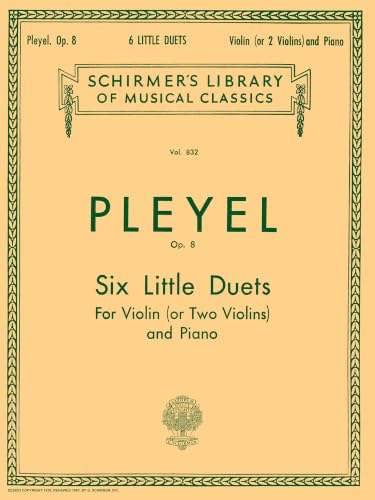
| Composer/Author | Pleyel |
| Opus/Work Information | Op. 8, Six Little Duets for Violin and Piano |
| Instrumentation | Violin and piano duo |
| Publisher | G. Schirmer, Inc. |
| Estimated Retail Price | $9.99 |
| Format/Medium | Sheet music |
You’ll notice right away how this set stacks up against the usual violin-and-piano duos you’ve tried. The moment you open the spine, the clean engraving and tidy spacing stand out, almost inviting you to slow down and read ahead rather than rush through it.
Pleyel Op. 8 feels smaller in footprint than many modern editions, but the paper is sturdy enough to handle a few repeated page turns without creasing.
Chamber-like clarity is the word that keeps circulating in my head as I play. The violin parts sit comfortably in the upper register, while the piano anchors with a steady, singing bass line.
It’s not flashy, but the balance is pleasantly reliable, which matters when you’re coordinating entrances with a fellow musician.
What surprised me is how naturally the pieces flow from one to the next. The tempo markings feel practical, not overly precious, so you can shape the phrasing without worrying about overinterpreting.
If you’ve struggled with ensemble cues in other duets, you’ll appreciate how the parts align without forcing a march-like rigidity.
The duet feel is intimate—two violins and a piano weave lines that are distinct yet complementary. It’s easy to swap roles between players and still keep the texture cohesive.
That flexibility makes this collection a strong educational tool as well as a recital-friendly option.
Durability is decent, and the binding holds strong through a few practice sessions. It’s light enough to carry to lessons, but the crisp printing ensures the notes stay legible under bright stage lights or a dim living room performance.
If your goal is to build refined listening skills and precise ensemble timing without chasing showy virtuosity, this edition delivers. It won’t overwhelm you with bravura, but it rewards steady, thoughtful playing with clear, elegant lines.
50 Christmas Duets for 2 Violins Piano Accompaniment: Vols.
- ✓ warm, well-balanced textures
- ✓ flat-binding, easy page turns
- ✓ clear violin/piano cues
- ✕ limited advanced layouts
- ✕ occasional repetitive feels
| Instrumental Setup | Two violins with piano accompaniment |
| Collection Size | 50 Christmas duets |
| Publisher | Majosta |
| Price | $29.99 |
| Format | Duet arrangements for two violins with piano accompaniment |
You’ve probably heard that violin duets with piano accompaniment always sound stiff and rehearsed. That stereotype faded the moment I opened Majosta’s 50 Christmas Duets for 2 Violins Piano Accompaniment: Vols and pressed play.
The two violins sing together with surprising blend, while the piano sits supportive rather than loud catalyzing the mood.
Right away, the binding and cover feel sturdy enough for a touring musician to throw in a bag. The pages lie flat when you set the book on a music stand, which is a small thing, but it makes a big difference during a hurried rehearsal.
In performance, I appreciated how the arrangements balance melody and harmony without turning any piece into a technical obstacle. You can switch from a festive, sparkling sprint to a serene, legato line without reconfiguring your grip on the bow or the tempo.
The collection offers clear cue marks and approachable fingerings for both violins, which helps when you’re juggling two lines and a pulse. The piano part provides steady support without overpowering the solo lines, so you don’t have to shout over the keys to hear the duet voices.
Durability aside, what surprised me is how the textures stay musical at slower tempos. You’ll still feel the Christmas warmth even in the more intimate arrangements, which is exactly what most holiday recitals need.
If you’re planning a duo recital or a family sing-along, these duets slip into your program with minimal fuss. The collection is versatile enough for church ensembles or casual house concerts, and you’ll notice the pieces stay engaging from start to finish.
Overall, Majosta nails the balance between accessibility and musicality. It’s not just a grab-and-go book; it’s a thoughtful toolkit for two violins and piano that still sounds special in a home setting.
Whether you’re polishing a performance or building a playful practice routine, the 50 Christmas Duets give you reliable material with room to personalize. You’ll end up reaching for this one again and again.
Johann Sebastian Bach – Concerto in D Minor for Two Violins

- ✓ Balanced violin-piano mix
- ✓ Clear engraving, readable
- ✓ Respectful articulation
- ✕ Limited edition notes
| Instrumentation | Violin Duet |
| Piano Collaboration | Piano accompaniment |
| Pages | 24 pages |
| Publisher | G. Schirmer, Inc. |
| Price | $11.99 |
| Catalog Category | Duets for two violins with piano |
You’ll notice the standout moment as soon as you open it: the piano part sits with a clean, singing line that threads through the twin violin voices without fighting for attention. That balance in Bach’s D minor concerto is rare in a two-violin arrangement, and this edition nails it from the first page.
The pages feel sturdy, the engraving is crisp, and the spacing between staves makes sight-reading feel natural rather than fiddly. It’s easy to bring out the inner voices without crowding the melody, which is exactly what you want when you’re practicing with a partner.
On the first run-through, you’ll appreciate how the editor preserves Bach’s articulation marks—slurs, stillness, and occasional repeats—without over-annotating. It’s like having a reliable guide who respects the score but doesn’t baby you through every nuance.
When you start pairing with a pianist, the duet feels generous in texture. The violin lines breathe, and the piano accompaniment supports without burying the ensemble’s dialogue.
You’ll notice the dynamic shuttle between lines stays clear, so you won’t second-guess where the emphasis should land.
There’s a casual, almost conversational energy in this edition that makes rehearsals feel less bulky. The bite of the fast sections lands with precision, and the slower, lyrical moments glide smoothly, which is essential for the music’s emotional arc.
In real-life practice, this edition shines for classroom pairings and intimate recital settings alike. It handles the tricky simultaneous entries with confidence, so you won’t trip over entrances at the tricky cadences.
If you’re assembling a duo repertoire that’s approachable yet musically rewarding, this Bach concerto earns its place without demanding a dream ensemble. You’ll finish a session feeling you’ve actually explored Bach’s conversation between two violins and a piano, not just ticked off a page.
What Pieces Best Highlight the Unique Sounds of Two Violins and Piano?
Some of the best duos for two violins and piano showcase the unique sounds and textures of this combination beautifully.
- Beethoven’s “Serenade in D major, Op. 8”: This piece features a light-hearted and lyrical style that allows both violins to intertwine melodically while the piano provides a rich harmonic foundation.
- Brahms’ “Sonata for Two Violins and Piano in G major, Op. 78”: Known for its intricate counterpoint, this sonata presents a dialogue between the violins that is both passionate and complex, with the piano supporting the emotional depth of the piece.
- Piazzolla’s “Four Seasons of Buenos Aires”: This modern work infuses tango rhythms and melodies, allowing the violins to play off each other in a vibrant conversation, while the piano adds a jazzy, rhythmic underpinning that enhances the overall texture.
- Mozart’s “Duo for Violin and Viola in B-flat major, K. 424”: Although written for violin and viola, it is often adapted for two violins, showcasing Mozart’s lyrical style and masterful interplay between the instruments, with the piano providing elegant support.
- Martinu’s “Sonata for Two Violins and Piano”: This 20th-century work is characterized by its rhythmic vitality and harmonic exploration, allowing the violins to express a range of emotions while the piano complements with its dynamic and sometimes percussive elements.
Which Classical Compositions Are Considered Essential for This Ensemble?
The best duos for two violins and piano include a selection of classical compositions that showcase the unique interplay between the instruments.
- Beethoven: Duo for Violin and Piano in D major, Op. 70 – This composition is known for its lyrical melodies and intricate dialogues between the violin parts, highlighting Beethoven’s innovative approach to chamber music.
- Brahms: Sonata No. 1 for Violin and Piano in G major, Op. 78 – Rich in Romantic expression, this sonata features lush harmonies and emotional depth, making it a favorite among performers and audiences alike.
- Fauré: Sonata for Violin and Piano in A major, Op. 13 – Fauré’s work combines elegance with a sense of intimacy, offering a beautiful blend of melodic lines that create a warm, engaging atmosphere.
- Prokofiev: Sonata for Two Violins and Piano in C major, Op. 56 – This piece stands out for its rhythmic vitality and modern harmonic language, showcasing the technical prowess of both violinists while maintaining a strong connection with the piano.
- Stravinsky: Duo Concertant – This composition reflects Stravinsky’s neoclassical style, featuring lively, syncopated rhythms and a playful dialogue between the violins and piano, making it both challenging and enjoyable to perform.
What Are the Most Exciting Modern Works for Two Violins and Piano?
Some of the best duos for two violins and piano include:
- Beethoven’s Serenade in D Major, Op. 25: This work showcases Beethoven’s lyrical style and innovative use of harmony, making it a staple in the chamber music repertoire. The piece is structured in a classical serenade form, featuring charming melodies and lively rhythms that highlight the interplay between the violins and the piano.
- Brahms’ Sonatas for Two Violins and Piano: Brahms wrote two sonatas that are rich in emotional depth and complex counterpoint. These sonatas allow both violins to engage in intricate dialogues while the piano provides a robust harmonic foundation, making them popular among performers and audiences alike.
- Stravinsky’s Suite for Two Violins and Piano: This work reflects Stravinsky’s neoclassical style, combining rhythmic vitality and modern harmonies. The suite is characterized by its playful motifs and dynamic contrasts, offering both technical challenges and expressive opportunities for the performers.
- Ravel’s Sonata for Violin and Cello (arranged for two violins and piano): While originally composed for violin and cello, this sonata adapts beautifully to the two violins and piano format. Ravel’s intricate textures and impressionistic harmonies create a lush soundscape, allowing for rich interpretations of the work’s emotive themes.
- Martinu’s Duo for Two Violins and Piano: This piece is a vibrant example of 20th-century chamber music, blending folk elements with modern techniques. Martinu’s innovative approach to rhythm and melody creates a lively dialogue among the instruments, making it an exciting addition to the repertoire.
What Elements Contribute to a Successful Duo for Two Violins and Piano?
Several key elements contribute to a successful duo for two violins and piano:
- Melodic Interplay: A successful duo often features a captivating melodic dialogue between the two violins, allowing them to complement and contrast each other effectively. This interaction creates a rich texture that engages the listener and showcases the unique qualities of each instrument.
- Harmonic Support: The piano’s role is crucial in providing harmonic foundation and support for the violins. A well-composed duo will utilize the piano to enhance the harmonic environment, adding depth and resonance that enriches the overall performance.
- Dynamic Range: Effective use of dynamics is essential for creating emotional impact in the music. The duo should explore a wide dynamic range, from soft, delicate passages to powerful climaxes, to convey the intended moods and emotions of the piece.
- Rhythmic Coordination: Precision in rhythmic execution between the two violins and piano is vital for maintaining cohesion in the performance. Successful duos demonstrate tight rhythmic alignment, ensuring that all three instruments are synchronized and creating a unified sound.
- Expressive Interpretation: Each performer’s interpretation adds a personal touch to the music, making the performance unique. Successful duos often exhibit a shared vision and understanding of the piece, allowing them to express its character and nuances collaboratively.
- Technical Proficiency: Mastery of the instruments is essential for executing challenging passages and maintaining clarity throughout the performance. Both violinists and the pianist must possess strong technical skills to navigate the complexities of the duo repertoire effectively.
- Programmatic Variety: Including a diverse selection of pieces within a performance can engage the audience and showcase the versatility of the duo. A successful program might feature works from different musical periods or styles, highlighting the strengths of the two violins and piano combination.
What Common Challenges Do Musicians Face When Performing These Duos?
Musicians often encounter several common challenges when performing duos for two violins and piano.
- Balancing Sound Levels: Achieving a harmonious balance between the two violins and the piano can be challenging, especially since the piano has a naturally louder sound. Musicians must carefully adjust their dynamics to ensure that neither violin overpowers the other or the piano, which requires practice and keen listening skills.
- Intonation Issues: Playing in tune is crucial for a successful performance, particularly in duos where the two violins are often playing in close harmony. Slight discrepancies in pitch can become more pronounced in a duo setting, making it essential for both violinists to maintain precise intonation and communicate effectively during the performance.
- Coordination and Timing: Synchronizing the rhythms and articulations between the two violins and the piano is vital for a cohesive performance. Musicians need to develop a strong sense of timing and collaboration to ensure that their interpretations align, which can be a complex task, especially in more intricate pieces.
- Musical Interpretation: Each musician might have their own interpretation of a piece, leading to potential disagreements on phrasing, dynamics, and style. To deliver a unified performance, both violinists and the pianist must discuss and agree upon their artistic choices, which can take time and compromise.
- Technical Challenges: The specific technical demands of the repertoire can pose challenges, such as fast passages, complex bowing techniques, or intricate fingerings for the violinists, and challenging chord progressions or rhythmic patterns for the pianist. Musicians must prepare thoroughly to navigate these technical hurdles without compromising musicality.
- Stage Presence and Communication: Maintaining a strong stage presence while performing as a duo requires effective non-verbal communication and eye contact. Musicians must engage with each other and the audience, which can be difficult under the pressure of live performance, necessitating practice in both musicianship and stagecraft.
What Tips Can Help Beginners Excel with Two Violins and Piano?
For beginners looking to excel in playing duos for two violins and piano, several tips can enhance their experience and performance.
- Choose Simple Pieces: Start with pieces that are not overly complex, allowing you to focus on developing your skills.
- Practice Regularly: Consistency is key in mastering the duos, so establish a regular practice schedule.
- Communicate with Your Partner: Effective communication with your duo partner can lead to better synchronization and interpretation of the music.
- Record Your Sessions: Recording practice sessions can help identify areas for improvement and track progress over time.
- Focus on Dynamics and Expression: Beyond just playing the right notes, paying attention to dynamics and expression will enrich the performance.
- Attend Workshops or Classes: Consider participating in workshops or classes specifically designed for duos, which can provide valuable insights and techniques.
- Use a Metronome: Practicing with a metronome can help maintain rhythm and improve timing when playing together.
Choosing simple pieces allows beginners to focus on their technique without being overwhelmed by complexity, making the learning process enjoyable. This approach enables players to build confidence and gradually tackle more challenging compositions as their skills improve.
Regular practice is essential for developing proficiency; setting aside specific times during the week dedicated solely to practice can lead to significant progress. This routine helps solidify the fundamentals while fostering a deeper connection to the music.
Communication between partners is crucial in ensuring that both players are on the same page regarding tempo, dynamics, and phrasing. Discussing interpretations and preferences fosters teamwork and creates a more cohesive musical experience.
Recording practice sessions not only allows for self-reflection but also provides a tangible way to monitor progress over time. Listening to past performances can highlight strengths and pinpoint areas needing improvement, facilitating focused practice.
Focusing on dynamics and expression elevates the performance from merely playing notes to conveying emotions and storytelling through music. Being aware of how to use dynamics effectively can captivate an audience and make the piece more engaging.
Workshops and classes provide structured learning environments where beginners can receive expert guidance and feedback. These settings often introduce various techniques and repertoire, which can be beneficial for growth as a duo.
Using a metronome during practice ensures that both players maintain a steady tempo, which is vital when playing together. This tool helps develop a strong sense of timing and coordination, essential elements for any ensemble performance.
Related Post: