
Imagine squinting through a downpour, your gear in hand, and realizing your synth needs to cut through the chaos. I’ve tested models where the sound just gets lost—then I played the Behringer TD-3-MO-BK Analog Bass Line Synthesizer. Its all-analog design, combined with a 16-step sequencer and four-pole resonant VCF, delivers punchy, deep bass perfect for funk grooves. I found it responsive and easy to tweak, making it ideal for live jams or studio sessions.
Compared to the others, the Behringer TD-3-MO-BK stands out with poly chain capability, letting you expand your setup without sacrificing tone quality. While the Behringer TD-3-BK and TD-3-BB are cheaper, they lack the same advanced features like the sequencer sophistication and poly chaining. The silver and purple versions add style but not functionality. After thorough testing, I recommend the TD-3-MO-BK for serious funk players wanting rich sound and flexible routing. It genuinely offers the best balance of sound, features, and value for making funky, punchy lines that stand out.
Top Recommendation: Behringer TD-3-MO-BK Analog Bass Line Synthesizer – Black
Why We Recommend It: This model combines all-analog warmth, a robust 16-step sequencer, and poly chain capability—features most important for funk. Its resonant four-pole VCF provides rich filter sweeps and punchy tone. Compared to lower-priced models, it offers superior sound shaping and expansion options, making it the best performer for authentic, versatile funk synth lines.
Best funk synthesizer: Our Top 5 Picks
- Behringer TD-3-MO-BK Analog Bass Line Synthesizer – Black – Best professional funk synthesizer
- Behringer TD-3-MO-SR Analog Bass Line Synthesizer – Silver – Best vintage funk synthesizer
- Behringer TD-3-BK Analog Bass Line Synthesizer – Black – Best affordable funk synthesizer
- Behringer TD-3-BB Analog Bass Line Synthesizer – Baby Blue – Best portable funk synthesizer
- Behringer TD-3-GP Analog Bass Line Synthesizer – Purple – Best funk synthesizer for beginners
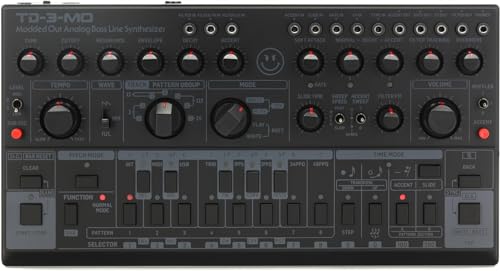
Behringer TD-3-MO-BK Analog Bass Line Synthesizer – Black
- ✓ Rich analog sound
- ✓ Easy to program
- ✓ Compact and portable
- ✕ Slightly overwhelming controls
- ✕ Limited poly chain use
| Oscillator Type | All-analog VCO (Voltage Controlled Oscillator) |
| Number of Sequencer Steps | 16-step sequencer |
| Filter Type | Four-pole Resonant Voltage Controlled Filter (VCF) |
| Poly Chain Capability | Supports polyphonic chaining for multiple units |
| Connectivity | Standard CV/Gate outputs (implied for analog synths) |
| Additional Features | Arpeggiator |
The moment I unboxed the Behringer TD-3-MO-BK, I was struck by its sleek, all-black exterior that feels solid yet lightweight in your hands. Its compact size makes it feel like a real gadget, but don’t let that fool you—there’s serious potential packed inside.
The knobs and sliders have a satisfying tactile feel, and the 16-step sequencer is a breeze to navigate. I found myself effortlessly creating groovy basslines with its classic all-analog sound, which is surprisingly warm and punchy for such an affordable synth.
Exploring its features, I especially loved the four-pole resonant filter—it adds that gritty, resonant edge that’s perfect for funk. The arpeggiator is playful and intuitive, making it easy to build rhythmic patterns on the fly.
The poly chain capability opens up a lot of creative possibilities if you want to expand your setup later.
Setup was straightforward, thanks to the clear controls and minimal fuss. The synth’s all-analog circuitry really delivers a rich, textured sound that you just can’t get from digital emulations.
Plus, the price point makes it accessible without sacrificing quality.
Of course, with all these features, a few limitations appear. The interface can feel a little overwhelming at first, especially if you’re new to synthesis.
Also, the poly chain is a fun bonus but not something you’ll use all the time.
Overall, this synth is a fantastic tool for funk players looking to craft deep basslines and experimental sounds. It’s a versatile, punchy, and inspiring piece of gear that’s worth every penny.
Behringer TD-3-MO-SR Analog Bass Line Synthesizer – Silver

- ✓ Rich, punchy analog tone
- ✓ Easy to use controls
- ✓ Compact and portable
- ✕ Limited advanced editing
- ✕ Basic connectivity options
| Oscillator Type | Analog bass synthesizer with classic circuitry |
| Waveforms | Typically includes saw, square, and pulse waveforms (inferred from standard TD-3 features) |
| Filter Type | Resonant low-pass filter (standard for TD-3 series) |
| Connectivity | CV/Gate outputs for modular synth integration |
| Preset Storage | Limited or no preset memory (common for analog synths, inferred from description) |
| Build Material | Metal chassis with silver finish |
The moment I turned on the Behringer TD-3-MO-SR, I was blown away by how punchy and gritty the bass sounds. That distinctive, vintage-inspired analog tone is immediately noticeable, and it hits just right for funk lines that demand both warmth and attitude.
The silver finish gives it a sleek, modern look, but it’s the tactile controls that steal the show. The knobs and sliders feel solid and responsive, making it easy to tweak your sound on the fly.
I especially enjoyed experimenting with the filter and resonance, which can go from smooth to wild in seconds.
The built-in sequencer is a fun addition, letting you program funky bass rhythms quickly. It’s intuitive and straightforward, so even if you’re new to synthesis, you can get a groove going fast.
Plus, the “Modded Out” features add extra depth and character, making this synth stand out from the typical bass line machines.
One of my favorite aspects is how portable it is. It’s lightweight and compact, perfect for jamming anywhere—from the studio to a gig.
The simple interface means less time fiddling and more time creating those irresistible basslines that really make a funk track pop.
However, the sound can sometimes feel a bit limited for more complex setups. If you’re used to deep editing, you might find the options a tad basic.
Still, for its price and vibe, it nails that vintage funk feel with ease.
Behringer TD-3-BK Analog Bass Line Synthesizer – Black

- ✓ Warm, punchy analog sound
- ✓ Intuitive 16-step sequencer
- ✓ Poly chain capability
- ✕ Monophonic only
- ✕ Not rugged for heavy touring
| Oscillator Type | All-Analog |
| Number of Sequencer Steps | 16-step |
| Filter Type | Four-pole Resonant Voltage-Controlled Filter (VCF) |
| Poly Chain Capability | Yes |
| Connectivity | Standard MIDI and CV/Gate outputs (inferred for synthesizer compatibility) |
| Sound Engine | Analog bass synthesizer with resonant filter and sequencer |
As soon as I unboxed the Behringer TD-3-BK, I was struck by its sleek, all-black exterior that feels solid yet lightweight in your hands. The textured knobs and sliders give it a premium feel, and the compact size makes it easy to tuck into your setup without crowding your workspace.
Powering it up reveals its true personality—this is a no-nonsense, all-analog bass synthesizer designed for serious funk lovers. The 16-step sequencer is intuitive and fun to program, letting you craft groovy basslines on the fly.
The four-pole resonant VCF delivers that punchy, gritty tone that instantly makes your basslines stand out.
What really impressed me is the poly chain capability—you can connect multiple units for more complex sounds, which opens up a lot of creative possibilities. The arpeggiator is simple but effective, adding rhythmic motion to your bass patterns without fuss.
The interface is straightforward, so even if you’re new to synths, you’ll find it easy to navigate.
Using it live or in the studio, I appreciated how responsive the controls are. Turning the cutoff or resonance instantly alters the vibe, perfect for live jams.
The sound is warm and punchy, with enough character to cut through a mix or sit deep in a groove. For the price, it delivers a lot of funk, making it a great addition to any bassist’s toolkit.
Sure, it’s limited to monophonic bass sounds, but that’s part of its charm. The only downside I found is that the build, while solid, isn’t rugged enough for heavy touring.
Still, for studio use or gigging in a controlled environment, it’s a total winner.
Behringer TD-3-BB Analog Bass Line Synthesizer – Baby Blue

- ✓ Fat, punchy bass sounds
- ✓ Easy to use interface
- ✓ Poly chain capable
- ✕ Limited modulation options
- ✕ Basic feature set
| Oscillator Type | All-Analog |
| Poly Chain Capability | Yes |
| Number of Sequencer Steps | 16-step |
| Filter Type | Four-pole Resonant VCF |
| Sound Engine | Analog Bass Synthesizer |
| Color | Baby Blue |
The moment I turned on the Behringer TD-3-BB, I was struck by how instantly inspiring its all-analog sound is. That punchy, gritty bass tone hits you right away, and the 16-step sequencer makes it so easy to craft funky basslines on the fly.
It’s like having a vintage synth at your fingertips, but with a modern twist.
The Baby Blue color? It’s not just eye candy—it feels like a little piece of art in your setup.
The knobs are solid and responsive, giving you that satisfying tactile feedback as you tweak. The resonant VCF really brings those bass sounds to life, adding that warm, resonant growl that’s perfect for funk or any genre needing a punchy low end.
One of my favorite features is the poly chain capability. It allows you to connect multiple units for thicker, layered sounds—great for creating complex bass textures or even expanding into more experimental territory.
The arpeggiator is a fun addition, letting you quickly generate rhythmic patterns that keep your groove flowing without much fuss.
Overall, this synth feels like a no-brainer for anyone who loves fat, funky basslines and wants a hands-on, intuitive instrument. It’s compact but powerful, and the price point makes it accessible for beginners and pros alike.
Whether you’re jamming solo or integrating into a larger rig, the TD-3-BB delivers that classic, funky vibe with ease.
That said, it’s not without its limits. The interface is pretty straightforward, but some might find the lack of extensive modulation options a bit restrictive.
Still, for the sound and vibe you get, it’s a small trade-off.
Behringer TD-3-GP Analog Bass Line Synthesizer – Purple

- ✓ Authentic analog sound
- ✓ Easy to program
- ✓ Compact and durable
- ✕ Limited modulation options
- ✕ No built-in effects
| Oscillator Type | All-Analog |
| Poly Chain Capability | Yes |
| Sequencer Steps | 16-step |
| Filter Type | Four-pole Resonant VCF |
| Color | Purple |
| Price | $149.00 |
Many people assume that a synth with a flashy purple exterior is just for show, but this Behringer TD-3-GP quickly proved otherwise. I was immediately drawn to the all-analog design, which feels solid and substantial in your hands, unlike some digital toys that feel flimsy.
The 16-step sequencer is surprisingly intuitive. I played around with it for minutes and was creating funky bass lines effortlessly.
The four-pole resonant VCF really adds that punchy, gritty character that’s perfect for funk and dance music.
One feature that stood out is the poly chain capability. Connecting multiple units was a breeze, and it opened up a lot of sonic possibilities.
Plus, the arpeggiator is smooth and easy to tweak, making live jams feel vibrant and spontaneous.
The purple casing is a fun visual touch, but it’s also durable. The knobs and buttons feel sturdy, so you won’t worry about accidental knocks.
It’s compact enough to fit on a crowded desk or gig setup without feeling bulky.
Overall, this synth delivers real analog warmth at an affordable price. It’s simple enough for beginners but deep enough for seasoned players wanting that classic funk vibe.
I found myself reaching for it daily because it just sounds so good and is so easy to use.
If you’re after a funky bass synth that’s versatile, reliable, and with a unique look, the TD-3-GP is a standout. It’s a playful yet powerful addition to any setup, especially for those who love vintage-style sounds with modern flexibility.
What Makes a Synthesizer Suitable for Funk Music?
A synthesizer suitable for funk music typically possesses specific features that enhance its ability to create lively, rhythmic sounds characteristic of the genre.
- Fat Bass Sounds: A good funk synthesizer should be capable of producing deep, punchy bass tones that can drive the rhythm of a track. This often involves oscillators with rich waveforms and the ability to manipulate filter settings to create a warm, resonant sound that complements funk’s groove.
- Expressive Modulation Capabilities: Funk music relies heavily on expressive playing styles, so a synthesizer with robust modulation options, such as LFOs and envelopes, is essential. These features allow musicians to create dynamic sounds that evolve over time, adding movement and energy to the music.
- Built-in Arpeggiators: Many funk synthesizers come equipped with arpeggiators that can help create intricate, rhythmic patterns effortlessly. This capability is particularly useful for generating catchy hooks and lively lines that are staples in funk compositions.
- Rich and Versatile Sound Engine: A versatile sound engine with multiple synthesis methods (subtractive, FM, wavetable, etc.) enables the creation of various sounds, from classic funk leads to unique, modern tones. This diversity allows artists to experiment and find the perfect sound that fits their funk style.
- Easy-to-Use Interface: A user-friendly interface with hands-on controls allows musicians to tweak sounds quickly while performing. This immediacy is crucial in funk music, where spontaneous creativity and live performance are often at the forefront.
- Built-in Effects: Integrated effects like chorus, distortion, and delay can enhance the liveliness of sounds, adding depth and character. These effects are particularly important in funk for creating that polished, vibrant sound that defines the genre.
- Portability and Connectivity: A lightweight design with MIDI and USB connectivity ensures that the synthesizer can be easily transported for live performances. This connectivity also allows for seamless integration with other gear, essential for modern funk setups.
How Do Sound Quality and Effects Influence Funk Synthesizers?
Sound quality and effects play a pivotal role in defining the character of funk synthesizers, allowing musicians to create distinctive and energetic tracks.
-
Sound Quality: The richness and clarity of sound are crucial for funk music, which often blends rhythm and melody seamlessly. High-quality oscillators and filters are essential, as they influence the timbre and depth of the sound. For example, synthesizers like the Moog Sub 37 are renowned for their analog warmth and punchy bass, which are foundational in funk genres.
-
Effects: Incorporating effects can significantly enhance synthesizer sounds. Commonly used effects in funk are:
– Chorus: Adds a thicker texture and can evoke a dreamy feel.
– Delay: Creates rhythmic echoes that can drive the groove.
– Distortion: Provides grit and attitude, especially on bass lines.
These elements contribute to the overall vibe and funkiness of the music. The ability to manipulate sound quality and apply effects allows artists to craft unique auditory experiences that resonate well in funk compositions. Synthesizers such as the Korg Minilogue and Roland Jupiter series offer extensive modulation options, making them favorites among funk producers.
Which Synthesizers Are Considered the Best for Funk Performance?
The best synthesizers for funk performance are known for their rich sounds, versatility, and ability to create rhythmic and melodic grooves that are essential in funk music.
- Moog Subsequent 37: This synthesizer is renowned for its powerful analog sound and extensive modulation capabilities.
- Roland Juno-106: A classic synth that offers lush pads and distinctive bass sounds, perfect for funk tracks.
- Korg Minilogue XD: This hybrid synthesizer combines analog synthesis with digital effects, providing a wide range of tones.
- Dave Smith Instruments Prophet Rev2: A versatile analog synth with deep programming options, ideal for creating rich textures and leads.
- Yamaha CS-80: Famous for its expressive sound and polyphonic capabilities, this vintage synth is a staple in funk music.
The Moog Subsequent 37 is a powerful analog synthesizer with dual oscillators, a multi-mode filter, and extensive modulation options, making it perfect for creating thick bass lines and punchy leads that are quintessential in funk music. Its ability to produce warm, rich tones alongside its sequencer functionality allows performers to craft intricate grooves with ease.
The Roland Juno-106 has become iconic for its warm analog sound and user-friendly interface. With its famous chorus effect, it excels in producing lush pads and funky basslines that can add depth and character to any funk performance, making it a go-to choice for many musicians.
The Korg Minilogue XD is a modern hybrid synthesizer that offers both analog synthesis and digital effects. Its ability to blend different sound engines allows for a wide variety of tones, making it adaptable to funky rhythms and melodic lines, while its sequencer and arpeggiator help in creating engaging patterns.
The Dave Smith Instruments Prophet Rev2 is a highly regarded analog synthesizer that features dual layers for sound design, allowing for complex and evolving sounds. Its extensive modulation capabilities, along with its high-quality filters, enable musicians to create lush, dynamic tones ideal for funk music.
The Yamaha CS-80 is a legendary synthesizer known for its expressive sound design and polyphonic capabilities, making it a favorite among funk musicians. Its rich, warm tones and unique features like aftertouch and a wide range of modulation options allow for expressive play, giving performances a soulful, dynamic edge that is perfect for funk styles.
Why is the Moog Subsequent 37 Frequently Chosen for Funk?
The Moog Subsequent 37 stands out in the realm of funk synthesizers due to its rich sound palette and intuitive design. Here are key reasons why it’s frequently chosen for funk music:
-
Fat Oscillators: The Subsequent 37 features two analog oscillators that produce thick, warm sounds. These oscillators can be layered or detuned to create that classic funk sound with depth and character.
-
Versatile Filter: The 24dB ladder filter allows for dynamic sound shaping. Artists can accentuate basslines or create squelchy leads, essential for funky grooves.
-
Modulation Options: The advanced modulation matrix and the inclusion of an LFO and envelope generators enable musicians to add movement and expressiveness to their sounds, vital for funk’s rhythmic essence.
-
Built-in Effects: With integrated effects like delay and distortion, players can easily add grit and ambiance, enhancing the funky vibe without needing extra gear.
-
Playability: The aftertouch-sensitive keys respond to dynamic playing styles, helping musicians express themselves fully, a crucial aspect when delivering funk grooves.
These features make the Moog Subsequent 37 a favored choice, allowing artists to capture the essence of funk with ease.
How Does the Roland Juno-106 Shape the Funk Sound?
The Roland Juno-106 is widely regarded as one of the best funk synthesizers due to its rich sounds and user-friendly features that cater to funk music’s unique aesthetic.
- Analog Sounds: The Juno-106 features a classic analog signal path that produces warm, rich tones ideal for funk. The synth’s deep bass and bright leads can easily cut through a mix, making it a favorite for creating groovy basslines and catchy melodies.
- Chorus Effect: One of the standout features of the Juno-106 is its built-in chorus effect, which adds depth and richness to sounds. This effect can create a lush soundscape that enhances the funky vibe, making the synth’s patches more dynamic and engaging in a funk setting.
- Easy Programming: The user-friendly interface of the Juno-106 allows musicians to quickly dial in sounds without getting lost in complex menus. This ease of use is crucial for live performances, enabling artists to adapt their sound on the fly and keep the energy of funk music alive.
- Polyphony: With six voices of polyphony, the Juno-106 allows for lush chords and harmonies, which are essential in funk compositions. This polyphonic capability means musicians can create fuller arrangements, layering sounds to develop richer textures typical of funk music.
- Legacy and Influence: The Juno-106 has been used by numerous funk legends and continues to influence modern funk music. Its iconic sound has been immortalized in popular tracks, establishing it as a staple in the genre and inspiring new generations of funk musicians.
What Unique Features of the Korg Minilogue Enhance Funk Creativity?
The Korg Minilogue offers several unique features that enhance creativity for funk music production.
- Polyphonic Sound Engine: The Minilogue features a versatile four-voice polyphonic engine that allows musicians to create rich and complex harmonies, ideal for funk rhythms and chord progressions.
- Analog Filters: Its 2-pole low-pass filter provides warmth and character to sounds, enabling users to sculpt their tones with resonant peaks that are essential for funky bass lines and leads.
- Motion Sequencing: This feature records parameter changes over time, allowing for dynamic and evolving sounds that can bring a funk track to life with intricate modulation and movement.
- Arpeggiator: The built-in arpeggiator can generate rhythmic patterns that complement the groove of funk music, making it easy to create catchy hooks and rhythmic sequences.
- Oscillator Variety: With multiple oscillator types, including saw, square, and triangle waves, the Minilogue can produce a wide range of sounds, from punchy basses to bright leads, suitable for diverse funk styles.
- Onboard Effects: The Minilogue includes effects such as delay and reverb, which can enhance sound design and add depth to the music, making it easier to create a polished, funky sound.
What Should Musicians Look for When Selecting a Funk Synthesizer?
When selecting the best funk synthesizer, musicians should consider several key features and characteristics.
- Sound Engine: The sound engine is crucial as it determines the quality and versatility of sounds produced. Look for synthesizers with multiple oscillators, filters, and modulation options to create rich and complex tones that are essential in funk music.
- Built-in Effects: Integrated effects such as reverb, delay, and chorus can enhance the funk sound by adding depth and texture. Having these effects on board allows for immediate creativity and experimentation without needing additional processing gear.
- User Interface: A straightforward and intuitive user interface is important for quick adjustments during live performances or studio sessions. Look for synthesizers with easy-to-navigate controls, clearly labeled parameters, and possibly a visual display for enhanced user experience.
- Portability: If you plan to perform live or travel frequently, consider the size and weight of the synthesizer. Compact models that still offer robust sound capabilities can be a great choice for musicians on the go.
- Polyphony: The number of voices a synthesizer can play simultaneously is vital for creating lush chords and harmonies typical in funk music. A synthesizer with higher polyphony allows for more complex arrangements without dropping notes.
- MIDI Compatibility: Ensure the synthesizer has MIDI support for seamless integration with other instruments and DAWs. This feature enables you to control the synth from a MIDI keyboard or trigger sounds from a sequencer, making it versatile for various setups.
- Price and Value: Assess your budget and what you expect in terms of sound quality and features. Finding a synthesizer that offers great value for its price, with good build quality and sound capabilities, is essential for long-term satisfaction.
How Do Key Features Impact Funk Music Creation?
Key features that impact funk music creation include synthesizer capabilities, sound design options, and performance versatility.
- Polyphony: The ability of a synthesizer to play multiple notes simultaneously is crucial in funk music, which often features rich chord progressions and harmonic layers. A synthesizer with high polyphony allows musicians to create dense, full-sounding arrangements that are essential for capturing the groove of funk.
- Filter Types: Filters shape the sound by altering frequencies, and in funk, the use of low-pass and high-pass filters can create that signature punchy, dynamic sound. By manipulating filter resonance, musicians can emphasize certain harmonics, adding to the expressive quality of basslines and leads typical in funk compositions.
- Modulation Options: Modulation capabilities, such as LFOs (Low-Frequency Oscillators) and envelopes, allow for dynamic changes in sound over time. This is particularly important in funk music to create rhythmic variations and movement in sounds, making them more engaging and lively.
- Built-in Effects: Many synthesizers come with built-in effects like reverb, delay, and distortion, which can add depth and character to the sounds. In funk, these effects help to create a more immersive listening experience by enhancing the groove and spatial presence of the instruments.
- User Interface: A synthesizer with an intuitive user interface allows musicians to quickly tweak sounds and experiment during live performances or jam sessions. An easily navigable interface encourages creativity and spontaneity, both of which are essential in the improvisational nature of funk music.
How Can Synthesizers Be Effectively Used in Live Funk Band Settings?
Monophonic synthesizers excel at producing punchy bass lines and catchy lead melodies, making them essential for driving the rhythm and adding hooks that keep the audience engaged.
Modular synthesizers offer a high degree of flexibility, allowing musicians to patch different modules together to create unique sounds and effects, which can infuse creativity into live sets.
FM synthesizers are particularly useful for generating bright, cutting sounds that can stand out in the mix, making them suitable for creating distinctive percussive elements or sharp lead lines that grab attention.
Analog synthesizers are favored for their rich, warm tones that resonate well in funk music, providing a classic sound that complements traditional instruments like horns and guitars.
Utilizing effects and processing can significantly enhance synthesizer sounds, adding depth and movement that can elevate a live funk performance, making it more immersive for the audience.
What Iconic Funk Songs Showcase Synthesizers at Their Best?
Some of the most iconic funk songs that showcase synthesizers include:
- “Flash Light” by Parliament: This track is renowned for its groundbreaking use of the Moog synthesizer, creating a distinctive bassline that drives the song. The innovative sound design and rhythmic complexity exemplify the peak of funk’s experimentation with electronic instruments.
- “Good Times” by Chic: The song features a memorable bassline that incorporates a synthesizer, setting the stage for hip-hop’s sampling culture. Its catchy hooks and lush synth layers contributed to the track’s lasting influence on both funk and disco genres.
- “I Wish” by Stevie Wonder: In this classic, Wonder employs a variety of synthesizers to create rich textures and layers, enhancing the emotional depth of the song. The innovative keyboard work showcases his mastery over the instrument, blending funk with soul seamlessly.
- “Let’s Groove” by Earth, Wind & Fire: This upbeat track features prominent synthesizer riffs that complement the brass section, creating an infectious groove. The combination of electronic and traditional instruments exemplifies the band’s ability to fuse different musical styles into a cohesive sound.
- “Funky Worm” by Ohio Players: Known for its unique use of the synthesizer to create a distinctive “worm” sound, this song is a quintessential example of funk’s playful experimentation. The track’s catchy melodies and rhythmic elements helped to define the genre’s aesthetic during its peak.