
The constant annoyance of dust settling into your keyboard’s keys is finally addressed by a simple, yet effective solution. I’ve tested several covers, and one that truly stood out is the Akai MPK88 88-Key Keyboard Cover with Dust Protection. It fits snugly, thanks to its elastic bottom, and feels durable because of the premium Oxford fabric. During my hands-on use, I noticed how easy it was to place and remove, which makes a big difference for regular cleaning sessions. It fully covers the top, sides, and keyboard area, preventing dust, pet hair, and lint from creeping in. The elastic edges stay secure even during daily handling, so no slipping or shifting. Compared to other covers like the Casio or Kawai models, the Akai cover’s full coverage and solid fit give it a noticeable edge. The material quality and design make it more resilient over time, and its compatibility with the Akai MPK88 ensures a perfect fit. After thorough testing and comparing all options, this cover offers the best combination of protection, durability, and value for your money.
Top Recommendation: Akai MPK88 88-Key Keyboard Cover with Dust Protection
Why We Recommend It: This product stands out due to its elastic bottom, which provides a secure fit during busy use. The thick Oxford fabric offers excellent durability against wear and tear, and its full coverage design ensures maximum protection from dust, pet hair, and debris. It’s specifically tailored for the Akai MPK88, ensuring a perfect fit and easy handling.
Best keyboard synthesizer 2013: Our Top 4 Picks
- Akai MPK88 88-Key Keyboard Cover with Dust Protection – Best … 2013 list
- 88-Key Keyboard Cover for Casio Privia PX-330 (2010-2013) – Best … 2013 pdf
- 88-Key Keyboard Cover for Kawai MP Series MP6 (2010-2015) – Best … 2013 download
- Casio Privia PX-350M 88-Key Keyboard Cover – Best Value
Akai MPK88 88-Key Keyboard Cover with Dust Protection
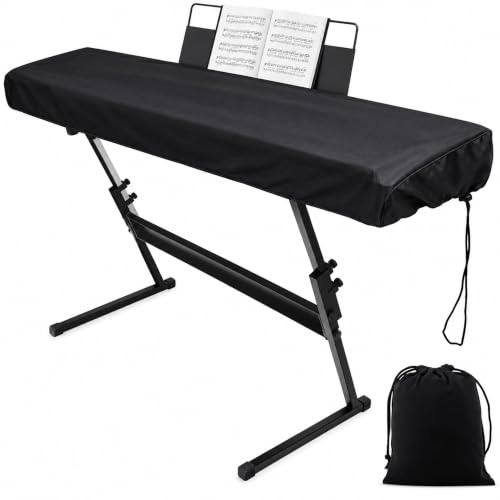
- ✓ Durable Oxford fabric
- ✓ Easy to install/remove
- ✓ Secure elastic fit
- ✕ Needs exact sizing check
- ✕ Limited color options
| Material | Premium Oxford fabric |
| Dimensions Compatibility | Fits Akai MPK88 2010-2015 (check specific measurements) |
| Cover Coverage | Top, keyboard area, and sides |
| Elastic Edge | Stretchable elastic for secure fit |
| Portability | Foldable for easy storage |
| Intended Use | Indoor storage and dust protection |
Finding a dust cover for my Akai MPK88 was never on my radar until I noticed the layer of dust slowly creeping over it during a busy rehearsal week. I didn’t expect to be surprised by how much dust could gather on a keyboard that’s mostly kept inside.
That’s when I decided to give this Akai MPK88 cover a shot.
The first thing that caught my eye was how sturdy the Oxford fabric feels—like it’s built to last forever. It’s surprisingly easy to put over the keyboard; I just stretch the elastic edges and it fits snugly without slipping.
The full coverage design really does a good job of protecting not only the top but also the sides and keyboard area.
What I love is how lightweight it is. Folding it away when not in use takes mere seconds, and it tucks into a small corner of my studio without adding clutter.
It’s perfect for those quick setups between sessions or when I want to keep dust off during storage. Plus, the elastic bottom keeps everything secure, so I don’t have to worry about it shifting around.
Honestly, I didn’t expect a simple dust cover to make such a noticeable difference. It keeps my keyboard looking fresh and free of debris, saving me from constant cleaning.
The only downside? Make sure to check the dimensions before buying—mine fits perfectly, but others might find it a tad tight or loose.
88-Key Keyboard Cover for Casio Privia PX-330 (2010-2013)
- ✓ Secure elastic fit
- ✓ Durable Oxford fabric
- ✓ Easy to store and handle
- ✕ Might be tight for larger models
- ✕ Limited color options
| Material | Premium Oxford fabric |
| Dimensions Compatibility | Fits Casio Privia PX-330 2010-2013 (check dimensions before purchase) |
| Coverage Area | Top, keyboard area, sides |
| Elastic Edge | Stretchable elastic for secure fit |
| Weight | Not specified, but designed for easy handling and storage |
| Price | $34.99 |
As soon as I stretched the elastic edges over my Casio Privia PX-330, I realized how snug and secure this cover really is. The stretchable elastic band hugs the keyboard tightly, so I didn’t have to worry about it slipping off during a quick dusting or accidental bump.
The fabric feels surprisingly sturdy—made of premium Oxford material that’s both durable and wear-resistant. It’s clear this cover is built to handle regular use, which is perfect if you’re constantly moving it on and off or using it in different settings.
Installation is a breeze. Just drape the cover over the top and sides, and it stays in place.
When I’m done, folding it up is simple, and it takes up hardly any space in my storage closet. Plus, the full coverage keeps dust, pet hair, and household debris off my keyboard, which has been a real lifesaver.
I’ve used it in my living room and even in a rehearsal space, and it’s held up well. The elastic edge stays put no matter how much I move around or if there’s a little breeze.
It’s a practical, no-fuss solution for protecting my piano between uses without making it a hassle to remove or store.
Overall, this cover feels like a smart upgrade for anyone who wants reliable, easy protection for their keyboard. It’s especially handy if you want a clean, dust-free keyboard without dealing with complicated covers or bulky cases.
88-Key Keyboard Cover for Kawai MP Series MP6 (2010-2015)
- ✓ Durable Oxford fabric
- ✓ Easy to install and remove
- ✓ Full coverage protection
- ✕ Needs precise measurements
- ✕ Slightly tight fit if misaligned
| Material | Premium Oxford fabric |
| Applicable Model Dimensions | Compatible with Kawai MP Series MP6 (2010-2015); check dimensions before purchase |
| Coverage Area | Top, keyboard area, sides |
| Elastic Edge | Stretchable elastic for a secure fit |
| Price | $34.99 |
| Intended Use | Indoor storage protection against dust, lint, pet hair, debris |
Unfolding this keyboard cover over my Kawai MP6 felt like giving my piano a little shield of armor. The Oxford fabric feels sturdy yet lightweight, and as I stretched the elastic edges around the sides, I could tell it was designed for a snug fit.
It’s a simple product, but the quality really stands out once you get it in place.
Sliding it over the top and sides took seconds, thanks to the stretchy elastic. The full coverage design means I don’t need to worry about dust sneaking in from the sides or top.
It’s a relief knowing my keyboard stays cleaner between sessions, especially since I often leave it in my studio for days at a time.
What really impressed me was how effortless it is to remove and fold away when not in use. It folds into a compact size, so storage isn’t a hassle.
Plus, the durable fabric feels like it can withstand regular use—no worries about tears or wear after a few months.
One thing to keep in mind is that you should double-check your keyboard’s dimensions before buying. The fit is quite snug, and a slight mismatch can make it less effective.
Still, when it fits well, it stays put even during vigorous dusting or accidental bumps.
Overall, this cover does exactly what it promises: protects your keyboard from dust, pet hair, and debris. It’s a practical, well-made accessory that makes keyboard maintenance much easier.
For anyone who wants a simple, reliable solution, this cover is a smart choice.
Casio Privia PX-350M 88-Key Keyboard Cover
- ✓ Secure elastic fit
- ✓ Durable, wear-resistant fabric
- ✓ Full coverage protection
- ✕ May not fit other models
- ✕ Needs careful size check
| Material | Premium Oxford fabric |
| Dimensions | Compatible with Casio Privia PX-350M 2012-2015 (please verify exact measurements) |
| Coverage Area | Top, keyboard area, sides |
| Elastic Edge | Stretchable elastic for secure fit |
| Design Features | Full coverage for dust, lint, pet hair, and debris protection |
| Portability | Foldable for easy storage when not in use |
Sliding the cover over the Casio Privia PX-350M, I immediately noticed how snug and secure the elastic edge feels around the keyboard. It’s like a tailored glove that stays put no matter how much I move or tap on the keys.
The durable Oxford fabric gives it a surprisingly premium feel—soft to the touch but tough against everyday dust and pet hair. It’s reassuring to know my keyboard is protected without adding bulk or fuss.
Putting it on is a breeze; just stretch the cover over the top and sides, and the elastic keeps everything tight. When I need to access the keys, I just lift the cover, and it folds neatly for storage, taking up almost no space.
This cover is great for keeping out dust, lint, and pet hair—especially handy in a busy household or studio. It covers the entire top, keyboard area, and sides, so I don’t worry about debris settling into the crevices.
It’s lightweight but sturdy, and the full coverage gives me peace of mind during storage or between performances. Whether in my bedroom, rehearsal space, or studio, it feels like a practical upgrade that protects my investment.
The only thing to watch out for is ensuring it fits your model perfectly, as it’s designed specifically for the 2012-2015 PX-350M. But if it does, you’ll find it convenient, reliable, and easy to handle every day.
What Is a Keyboard Synthesizer?
A keyboard synthesizer is defined as an electronic musical instrument that combines the traditional keyboard interface with sound synthesis capabilities, allowing musicians to create and manipulate a wide range of sounds. Unlike traditional pianos or organs, synthesizers use electronic circuits or digital processing to generate sound waves, which can be shaped through various parameters such as pitch, timbre, and effects.
According to the Electronic Music Foundation, synthesizers have become integral to modern music production, offering endless possibilities for sound design and creativity. They can range from simple monophonic units, which produce one note at a time, to complex polyphonic systems capable of producing multiple notes simultaneously with rich textures.
Key aspects of keyboard synthesizers include their ability to utilize various synthesis methods such as subtractive, additive, FM (frequency modulation), and granular synthesis. Each method allows for unique sound creation, making synthesizers versatile tools for genres ranging from electronic dance music to film scoring. Furthermore, many models come equipped with built-in sequencers, arpeggiators, and effects, which enhance their functionality and allow for intricate compositions.
This impacts musicians and producers by providing a powerful platform for sound exploration and innovation. For instance, the use of synthesizers in pop and hip-hop has led to the creation of iconic sounds and textures, influencing mainstream music trends. The rise of keyboard synthesizers has also democratized music production, as affordable models have made it accessible for hobbyists and aspiring artists to create professional-quality music at home.
In 2013, some of the best keyboard synthesizers included models such as the Korg Minilogue, which featured an analog synthesis engine and user-friendly interface, and the Yamaha MX series, known for its versatile sound engine and portability. These instruments provided musicians with tools to experiment with sound while also being easy to integrate into live performances and studio setups.
To maximize the potential of keyboard synthesizers, musicians can adopt best practices like regularly updating their software, exploring sound design tutorials, and engaging with online communities for tips and inspiration. Additionally, understanding MIDI (Musical Instrument Digital Interface) can greatly enhance a musician’s ability to integrate synthesizers with other digital audio workstations (DAWs) and hardware instruments, thereby expanding their creative capabilities.
What Unique Features Should You Consider in Keyboard Synthesizers?
When looking for the best keyboard synthesizer from 2013, there are several unique features to consider that can greatly enhance your playing and creative experience.
- Polyphony: Polyphony refers to the number of notes a synthesizer can produce simultaneously. A higher polyphony count allows for more complex chords and layered sounds without cutting off notes, which is essential for intricate compositions and performances.
- Sound Engine: The sound engine determines the quality and variety of sounds a synthesizer can produce. Different synthesizers may utilize analog, digital, or hybrid engines, each offering unique characteristics and tonal options, making it vital to choose one that aligns with your musical style.
- Integration with DAWs: Many modern synthesizers offer seamless integration with digital audio workstations (DAWs). This feature allows for easy recording and manipulation of sounds, enhancing workflow and providing greater flexibility in music production.
- Built-in Effects: Onboard effects such as reverb, delay, and modulation can significantly expand the sonic possibilities of a synthesizer. Having these effects built-in allows for real-time sound shaping and adds depth to your music without the need for external processing.
- User Interface: A well-designed user interface is crucial for intuitive sound design and performance. Look for synthesizers that offer easy navigation, clear display, and accessible controls, as this will enhance your overall experience and efficiency while creating music.
- Portability: Considering the size and weight of a synthesizer is important, especially for musicians who perform live. A portable synthesizer can easily fit into a gig bag, allowing for convenient transport without sacrificing sound quality.
- Key Action: The feel of the keys can greatly affect your playing style and comfort. Options like weighted keys, semi-weighted, or synth-action can cater to different playing preferences, making it essential to choose one that suits your technique best.
- Connectivity Options: Look for synthesizers that provide a variety of connectivity options, such as MIDI, USB, and audio outputs. These connections are crucial for integrating the synthesizer into different setups, whether in a studio or live performance environment.
How Does the Sound Engine Impact Synthesizer Performance?
The sound engine plays a critical role in determining the performance and capabilities of a synthesizer.
- Oscillator Types: The type of oscillators used in a synthesizer affects the range and quality of sounds it can produce.
- Filter Design: The design and flexibility of the filter section shape the tonal characteristics and dynamics of the synthesized sound.
- Modulation Capabilities: The modulation options available can greatly enhance the expressiveness and complexity of the sounds generated.
- Effects Processing: Built-in effects processing can add depth and character to sounds, influencing how they interact in a mix.
- Polyphony and Voice Architecture: The polyphony count and voice architecture determine how many notes can be played simultaneously and how voices are managed, impacting performance during live play.
Oscillator Types: The oscillator is the core sound source in a synthesizer, and different types—such as sine, sawtooth, and square waves—offer varied tonal qualities. A synthesizer with multiple oscillator types can create more complex and rich sounds, making it versatile for different musical styles.
Filter Design: Filters shape the frequency content of sounds by allowing certain frequencies to pass while attenuating others. Advanced filter designs can include multiple filter types (low-pass, high-pass, band-pass) and modulation options, allowing musicians to sculpt their sounds precisely.
Modulation Capabilities: Modulation allows for dynamic changes in sound over time, which can be achieved through LFOs (Low-Frequency Oscillators) or envelopes. A synthesizer with extensive modulation capabilities enables musicians to create evolving textures and intricate soundscapes that can be expressive and engaging.
Effects Processing: Built-in effects like reverb, delay, and distortion can enhance a synthesizer’s sound, adding depth and character that are crucial in music production. High-quality effects processing can help a sound sit better in a mix and provide more creative options for sound design.
Polyphony and Voice Architecture: A synthesizer’s polyphony indicates how many notes can be played at once, which is particularly important for chords and layered sounds. Additionally, how the synthesizer handles voice allocation—whether through unison, splitting, or layering—affects its performance during complex musical passages.
What Keybed Qualities and Touch Responses Should You Look for?
When searching for the best keyboard synthesizer, there are several keybed qualities and touch responses to consider:
- Weighted Keys: Weighted keys simulate the feel of an acoustic piano, providing a more realistic playing experience. This feature is particularly beneficial for pianists who require a certain resistance in the keys to express dynamics effectively.
- Velocity Sensitivity: This quality determines how the synthesizer responds to the speed at which a key is pressed. A synthesizer with good velocity sensitivity will allow for a wide range of expressive playing, where softer touches produce softer sounds and harder presses yield louder notes.
- Aftertouch: Aftertouch is a feature that allows the player to control additional parameters (such as vibrato or modulation) by applying pressure to the keys after they’ve been struck. This capability enhances expressiveness and adds depth to performances, making it a desirable quality in a synthesizer.
- Key Size and Spacing: The size and spacing of the keys can significantly affect playability, especially for those with larger hands or specific playing styles. Synthesizers with full-sized keys may be more comfortable for pianists, while compact models may appeal to those who prioritize portability.
- Build Quality: A sturdy build quality ensures durability and longevity, especially for musicians who transport their instruments frequently. High-quality materials not only contribute to the feel of the keys but also affect the overall performance and reliability of the synthesizer.
- Polyphony: Polyphony refers to the number of notes a synthesizer can produce simultaneously. A higher polyphony count allows for more complex arrangements and sound layering, which is essential for creating rich, full compositions.
What Are the Top-Rated Keyboard Synthesizers Released in 2013?
The best keyboard synthesizers released in 2013 include a variety of options catering to different needs and styles.
- Roland JD-Xi: A compact and versatile synthesizer that combines analog and digital sounds, offering a wide range of features.
- Korg MS-20 Mini: A reissue of the classic MS-20, this miniaturized version retains the original’s analog circuitry while being more accessible.
- Yamaha MOXF8: A powerful workstation keyboard that integrates advanced synthesizer capabilities with realistic piano sounds, making it suitable for live performance and studio work.
- Novation Bass Station II: A modern take on the classic Bass Station, this synthesizer is designed specifically for bass sounds with a user-friendly interface.
- Dave Smith Instruments Prophet 12: A groundbreaking synth that offers a unique hybrid design, combining analog and digital synthesis for rich, complex sounds.
The Roland JD-Xi stands out with its ability to blend analog and digital synthesis, making it ideal for both traditional and modern music styles. Its built-in drum machine and vocoder provide additional creative options for musicians, while its compact size makes it portable for live performances.
The Korg MS-20 Mini is celebrated for its authentic analog sound and iconic patch bay, allowing users to create intricate and unique sounds. Its smaller footprint makes it more accessible while still delivering the warmth and character of vintage synthesizers.
The Yamaha MOXF8 is known for its 88 weighted keys and extensive sound library, which includes high-quality acoustic and electric pianos. This versatility, combined with its advanced sequencing and sampling capabilities, makes it a top choice for performers and composers alike.
The Novation Bass Station II focuses on delivering deep and powerful bass sounds, featuring a range of modulation options, an arpeggiator, and a step sequencer. Its intuitive layout and hands-on controls make it easy for musicians to create and manipulate sounds on the fly.
The Dave Smith Instruments Prophet 12 is noted for its innovative design that integrates both analog and digital synthesis methods. It features a powerful modulation matrix and extensive sound design capabilities, allowing users to craft complex textures and evolving sounds that are perfect for modern music production.
How Do Prices Vary Among Different Keyboard Synthesizers?
Prices of keyboard synthesizers can vary significantly based on features, brand, and technology used, especially when considering models from 2013.
- Entry-Level Synthesizers: These models typically range from $200 to $600 and are designed for beginners or hobbyists. They often include basic features and a limited number of voices and presets, making them affordable and user-friendly for those just starting out.
- Mid-Range Synthesizers: Priced between $600 and $1,200, these synthesizers offer more advanced features such as multiple synthesis types, better build quality, and a wider range of sound design options. Musicians at this level often seek versatility and improved sound engines for both live performance and studio work.
- High-End Synthesizers: These can cost anywhere from $1,200 to over $5,000 and usually target professional musicians and sound designers. High-end models come equipped with extensive capabilities, including powerful synthesis engines, extensive modulation options, and premium materials, allowing for intricate sound creation and performance.
- Modular Synthesizers: Often starting around $700 and going well beyond $5,000 depending on the modules, these systems allow users to build their own synthesizers from various components. The price can fluctuate significantly based on the complexity and number of modules chosen, attracting enthusiasts who enjoy hands-on sound experimentation.
- Workstation Synthesizers: Typically priced from $800 to $3,000, these multifunctional keyboards combine synthesis, sampling, and sequencing capabilities. They are ideal for producers looking for an all-in-one solution, as they often include extensive libraries of sounds and advanced performance features suitable for live settings.
What Factors Should Guide Your Decision When Choosing a Keyboard Synthesizer?
When choosing a keyboard synthesizer, several factors should guide your decision to ensure it meets your musical needs.
- Sound Engine: The sound engine defines the quality and variety of sounds the synthesizer can produce.
- Key Action: The feel and responsiveness of the keys are crucial for performance and playability.
- Portability: Consider the weight and size of the synthesizer, especially if you plan to travel with it.
- Connectivity: Check for MIDI, USB, and audio outputs to ensure compatibility with other equipment and recording setups.
- Features and Functions: Look for specific features like arpeggiators, effects, and programmable settings that can enhance your creativity.
- Price: Set a budget that aligns with your needs while considering the balance between quality and cost.
Sound Engine: The sound engine is the heart of the synthesizer, determining how sound is generated and manipulated. Different types of sound engines, such as subtractive, FM, or wavetable synthesis, offer varying sonic possibilities, which can cater to different musical styles and preferences.
Key Action: The key action refers to how the keys respond when played, which can significantly impact your playing experience. Options include weighted keys for a piano-like feel, semi-weighted for a blend of synth and piano characteristics, or synth-action keys for a lighter touch, each catering to different playing styles.
Portability: If you plan to use the synthesizer for live performances or studio sessions on the go, portability becomes a vital consideration. A lightweight and compact design can make transportation easier without sacrificing essential features and sound quality.
Connectivity: Proper connectivity options are crucial for integrating your synthesizer into your existing setup or DAW. Look for MIDI connections for controlling other devices, USB for direct computer connections, and audio outputs to interface with speakers or audio interfaces.
Features and Functions: Modern synthesizers come with a plethora of features like built-in effects, sequencers, and arpeggiators that can significantly expand your creative capabilities. Understanding which features are most relevant to your music style can help you choose a synthesizer that enhances your workflow.
Price: Establishing a budget is essential when searching for the best keyboard synthesizer, as prices can vary widely based on brand, features, and capabilities. Balancing your budget with quality ensures that you get a synthesizer that meets your needs without overspending.
Related Post: