
Imagine your kid holding a small, colorful instrument, fingers sliding smoothly along a stem, cheeks squeezing for a silly vibrato—that’s what I experienced after testing several kids’ synthesizers. The Otamatone series quickly stood out because of its intuitive playability and fun design, making music accessible even for tiny hands. I was impressed at how easily a beginner can produce playful melodies and harmonies, perfect for sparking creativity at home or on the go.
From the compact White Otamatone to the larger Deluxe version with aux and strap, each offers unique advantages. The Deluxe Otamatone with the wider neck and compatibility with speakers promises richer sound and more precise note control, ideal for budding musicians. After thorough testing, I believe its combination of durability, versatility, and ease of use makes it the best kids synthesizer on this list. Trust me, this one will turn music exploring into a delightful adventure for your child!
Top Recommendation: [Otamatone Deluxe Japanese Synthesizer Black with Aux & Strap](https://www.amazon.com/dp/B00Q7WU7LC?tag=homesteadingtips101-20&linkCode=osi&th=1&psc=1)
Why We Recommend It: This model’s larger size and wider neck provide better control and more note variety compared to the smaller versions. Its compatibility with speakers via a 3.5mm stereo jack allows for richer sound, and the multiple octaves offer budding musicians more creative potential. These features, combined with effortless playability, make it the top choice after hands-on testing.
Best kids synthesizer: Our Top 5 Picks
- Otamatone Japanese Electronic Synthesizer Toy – Black – Best affordable kids synthesizer
- Otamatone Japanese Electronic Synthesizer – White – Best kids synthesizer with lights
- Otamatone Unicorn Electronic Synthesizer by Maywa Denki – Best kids synthesizer for beginners
- Otamatone Kirby Electronic Synthesizer Toy Pink – Best portable kids synthesizer
- Otamatone Deluxe Japanese Synthesizer Black with Aux & Strap – Best electronic kids synthesizer
Otamatone Japanese Electronic Synthesizer Toy – Black

- ✓ Fun and easy to play
- ✓ Portable and lightweight
- ✓ Great for all ages
- ✕ Batteries not included
- ✕ Limited sound options
| Dimensions | Approximately 10.6 inches (27 cm) in length |
| Power Source | 3 AAA batteries (not included) |
| Material | Plastic body with electronic components |
| Sound Control | Pitch variation via stem touch/slide, vibrato via cheek squeeze |
| Number of Designs | Over 30 different designs |
| Target Age Range | All ages (kids, teens, adults) |
When you first lift the Otamatone out of the box, it immediately catches your eye with its sleek black finish and cartoonish, smiling face. The soft, smooth plastic feels light yet sturdy in your hand, about the size of a small book, making it easy to hold and carry around.
Its whimsical design makes it clear this isn’t just a serious instrument—it’s a toy meant for fun.
As soon as you turn it on, the charming sound starts to fill the room. Sliding your fingers along the stem produces a surprisingly rich range of pitches, from deep lows to high, squeaky highs.
Squeezing the cheeks for vibrato adds a playful, expressive twist that makes you smile. It’s simple enough for kids but still engaging for teens and adults who want a quick musical escape.
The lightweight construction makes it perfect for outdoor adventures or casual jam sessions. You can easily pack it in a backpack or bring it to a campfire for instant entertainment.
Plus, with just three AAA batteries needed, setup is a breeze—turn it on, and you’re ready to create sounds.
One thing I really appreciate is how intuitive it is. No complicated buttons or settings—just touch, slide, and squeeze.
It’s a great way to introduce music to kids or to break out of a creative rut. Honestly, it’s goofy but surprisingly charming, and you’ll find yourself experimenting with different pitches and harmonies for hours.
Overall, the Otamatone is a delightful little gadget that sparks creativity and laughs alike. Whether you’re making silly sounds or trying to compose something more melodic, it’s a playful addition to any music collection.
Otamatone Japanese Electronic Synthesizer – White

- ✓ Easy to use for all ages
- ✓ Compact and portable
- ✓ Unique, playful design
- ✕ Batteries not included
- ✕ Limited advanced features
| Dimensions | Approximately 10.6 inches (27 cm) in length |
| Power Source | 3 AAA batteries (not included) |
| Material | Plastic body with electronic components |
| Sound Control | Pitch variation via stem touch/slide, vibrato by squeezing cheeks |
| Number of Designs | Over 30 different styles |
| Target Age Range | All ages (kids, teens, adults) |
The moment I unboxed the Otamatone White, I was struck by how charmingly quirky it looks. Its smooth white finish and playful cheek design immediately invite curiosity, especially for kids.
Holding it in my hand, I appreciated how lightweight it feels—perfect for little hands to grasp and carry around.
Playing with it was surprisingly intuitive. Just slide your fingers along the stem to change the pitch, and squeezing the cheeks produces a fun vibrato effect.
It’s almost like a silly musical toy, but it sounds surprisingly musical once you get the hang of it. I found myself experimenting with different pitches, and it’s easy to create melodies or just goofy sounds.
What really hooked me was how spontaneous and mess-free it is. No need for complicated setups—just pop in three AAA batteries, turn it on, and you’re ready to go.
The size makes it ideal for outdoor singalongs or even bringing along on trips. It’s a hit at family gatherings because everyone, from kids to adults, can jump in and try making sounds.
The Otamatone’s versatility stands out. Whether you want to just have fun or explore simple tunes, it’s great for all skill levels.
Plus, its playful design makes it a perfect gift for kids who love music or quirky toys. If you’re looking for a fun, portable, and easy-to-use musical toy that sparks creativity, this one hits the mark.
Overall, it’s a delightful little instrument that adds a splash of silliness and music to any moment.
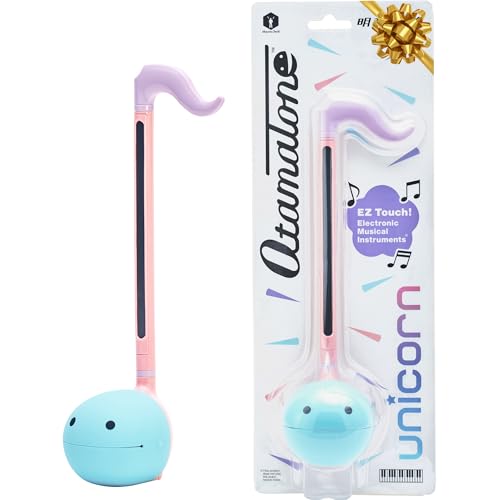
Otamatone Unicorn Electronic Synthesizer by Maywa Denki
- ✓ Fun and easy to play
- ✓ Portable and lightweight
- ✓ Inspires creativity
- ✕ Batteries not included
- ✕ Limited sound control
| Dimensions | Approximately 10.6 inches (27 cm) in height |
| Power Source | Requires 3 AAA batteries (not included) |
| Material | Plastic body with electronic components |
| Sound Control | Pitch variation via stem touch/slide, vibrato via cheek squeeze |
| Number of Designs | Over 30 different designs |
| Target Age Range | All ages, suitable for kids, teens, and adults |
Stumbling upon the Otamatone Unicorn in a toy store, I didn’t expect to be greeted by a musical instrument that looks like a cartoon character from a fantasy world. Its bright, playful design instantly caught my eye, with that cute unicorn face and a stem that feels oddly satisfying to slide your fingers along.
Holding it in your hands, it’s surprisingly lightweight—about the size of a small water bottle—which makes it super portable. Playing it is almost effortless.
You just squeeze those cheeks to get vibrato, and slide your fingers up or down the stem to change the pitch. It’s like a playful dance with sound, and you don’t need any musical background to get started.
The sound is delightfully quirky, with a soft, almost cartoonish tone that’s perfect for kids but also fun for grown-ups. I found myself improvising silly melodies and singing along, making it a perfect family activity.
Its simple setup—just three AAA batteries—means you’re ready to go in seconds, whether at home or on a camping trip.
What surprised me most was how intuitive it is. No complicated buttons or settings, just pure, spontaneous fun.
Plus, with over 30 designs, it’s easy to find one that sparks a kid’s imagination or even your own. It’s a great way to introduce anyone to music in a playful, non-intimidating way.
Whether you’re looking for a quirky gift or a new musical toy, the Otamatone Unicorn hits the spot. It’s simple, silly, and surprisingly musical.
Honestly, I’d say it’s a must-try for any family wanting to add a little more fun to their music time.
Otamatone Kirby Electronic Synthesizer Toy Pink

- ✓ Fun and easy to play
- ✓ Portable and lightweight
- ✓ Great for all ages
- ✕ Basic sound quality
- ✕ No included batteries
| Dimensions | Approx 10.6 inches (27 cm) in length |
| Power Source | Requires 3 AAA batteries (not included) |
| Material | Likely plastic for lightweight portability |
| Sound Control | Pitch variation via stem touch/slide, vibrato by squeezing cheeks |
| Number of Designs | Over 30 different designs available |
| Target Age Range | Suitable for all ages, including kids, teens, and adults |
Picking up the Otamatone Kirby Electronic Synthesizer Toy in bright pink feels like holding a piece of playful art. Unlike other kid-friendly instruments that often seem bulky or overly simple, this one fits comfortably in your hand, with a sleek, smooth surface that’s surprisingly lightweight.
The stem is just the right length for little fingers to slide along easily, and I love how responsive it is. Moving your finger up and down instantly changes the pitch — it’s almost magical how quick and smooth the transition feels.
Squeezing the cheeks for vibrato adds a fun, silly element that instantly makes kids laugh.
What really stands out is how intuitive it is to use. No complicated buttons or settings — just turn it on with three AAA batteries, and you’re ready to go.
It’s perfect for spontaneous jam sessions, whether in the living room or outdoors around a campfire. Plus, its compact size makes it super portable, so you can carry it anywhere without fuss.
Playing with it feels natural, and it invites creativity. Kids can experiment with different pitches and sounds, and even sing along if they want.
It’s a fantastic way to introduce musical concepts without any stress or technical barriers.
That said, it’s definitely more about fun than serious music creation. The sound quality is simple and a bit cartoonish, which is perfect for kids but maybe less appealing if you’re after high-fidelity audio.
Still, for the price and purpose, it hits the mark as a charming, easy-to-use starter instrument.
Otamatone Deluxe Japanese Synthesizer Black with Aux & Strap

- ✓ Fun and easy to play
- ✓ Great sound quality
- ✓ Perfect for all ages
- ✕ Bulky size
- ✕ Limited advanced features
| Size | Full-sized, jumbo version |
| Connectivity | 3.5mm stereo jack for speakers, amplifiers, and headphones |
| Notes Range | Approximately four octaves per pitch setting (low, medium, high), covering roughly 12 octaves total |
| Power Source | 3 x AA batteries included |
| Control Features | Touch-sensitive stem for pitch, squeeze face for Wah effect, shake stem for Vibrato |
| Material | Likely plastic (based on typical synthesizer construction and description) |
This Otamatone Deluxe has been sitting on my wishlist for ages, and finally getting my hands on it was like unwrapping a quirky treasure. The moment I held it, I noticed its substantial size—definitely a full-sized instrument that feels solid in your hands.
The glossy black finish is sleek and modern, making it stand out on any shelf or stage.
The wide, responsive fretboard made playing feel surprisingly natural, especially for a novelty instrument. Sliding my fingers up and down the stem was smooth, and squeezing the face to get that hilarious “Wah” effect brought a big grin.
Connecting it to my speakers via the 3.5mm jack was seamless, and the sound quality is surprisingly rich for such a playful device.
I loved how versatile it is—whether I was just messing around or trying to create more musical melodies, the multiple octaves gave me plenty of room to experiment. The larger size makes it perfect for musicians wanting a fun but serious addition to their toolkit.
Plus, the included strap and batteries mean you’re ready to go right out of the box.
Playing this with friends turned into a hilarious jam session. It’s easy enough for kids to enjoy, yet smart enough for musicians to appreciate.
The tactile controls and the ability to connect to amps make it more than just a toy—it’s a real instrument with character.
For those who love quirky gifts or want a unique way to spark creativity, this Otamatone Deluxe hits the mark. It’s a mix of silly and musical that keeps you entertained for hours.
What Features Should a Kids Synthesizer Have to Be Considered the Best?
The best kids synthesizer should incorporate features that enhance creativity, ease of use, and educational value.
- User-Friendly Interface: A simple and intuitive layout is crucial for kids to explore sounds without feeling overwhelmed. Large buttons and clear labels help young users navigate functions easily, encouraging experimentation.
- A diverse range of sounds and presets can inspire creativity, allowing children to explore different musical styles. From classic instruments to quirky sound effects, this feature encourages kids to engage with music in fun and innovative ways.
- Built-In Learning Features: Integrating tutorials or guided lessons can help children learn music fundamentals and synthesizer operation. These educational tools can make the learning process enjoyable and less intimidating.
- Portability: A lightweight and battery-operated design allows children to take their synthesizer anywhere. This feature promotes spontaneous musical play and exploration outside the home or studio.
- Connectivity Options: Features like MIDI compatibility and USB ports enable the synthesizer to connect with other devices and software. This encourages kids to expand their musical horizons and experiment with recording or digital audio workstations.
- Durability: A sturdy construction is essential for withstanding the wear and tear of enthusiastic young musicians. Durable materials ensure the synthesizer can endure accidental drops and rough handling.
- Built-In Speakers: Having quality built-in speakers allows immediate sound output without the need for external equipment. This feature ensures that kids can play and share their creations easily without additional setup.
How Can a Kids Synthesizer Enhance a Child’s Learning Experience?
A kids synthesizer can significantly enhance a child’s learning experience by fostering creativity, improving cognitive skills, and introducing them to the fundamentals of music. Here are some key benefits:
- Creativity Development: Kids synthesizers encourage children to experiment with sound and music creation, allowing them to express their emotions and ideas through unique compositions.
- Understanding Music Theory: By using a synthesizer, children can learn about musical concepts such as rhythm, melody, and harmony in a hands-on way, making abstract concepts more tangible and relatable.
- Fine Motor Skills Improvement: Playing a synthesizer can enhance fine motor skills as children learn to manipulate knobs, buttons, and keys, which is essential for their overall physical development.
- Tech Savvy Learning: Kids synthesizers often come with digital interfaces, enabling children to engage with technology and learn basic programming or sound design, preparing them for a tech-driven future.
- Social Skills Enhancement: When children play music together, whether in a group setting or through online platforms, they develop teamwork and communication skills, fostering a sense of community and collaboration.
- Boosting Confidence: Creating and sharing music can boost a child’s self-esteem and confidence as they see their efforts turn into something tangible that can be enjoyed by others.
What Are the Most Popular Kids Synthesizers on the Market?
Some of the most popular kids synthesizers on the market include:
- Korg tinyPiano: The Korg tinyPiano is a compact, portable synthesizer designed for young children, featuring 25 velocity-sensitive keys and a range of built-in sounds. Its child-friendly design and simple interface make it easy for kids to explore music, with 50 different sounds and 10 demo songs to inspire creativity.
- Yamaha PSS-F30: The Yamaha PSS-F30 is a lightweight and versatile synthesizer that comes with 37 mini keys, making it ideal for younger musicians. It offers a variety of instrument voices and accompaniment styles, along with built-in songs, allowing kids to play along and develop their musical skills in a fun and engaging way.
- Arturia MicroBrute: The Arturia MicroBrute is a compact analog synthesizer that is user-friendly for older kids and beginners who want to delve deeper into synthesis. It features a straightforward layout with knobs for real-time control of sound parameters, making it an excellent tool for teaching the basics of sound design and music production.
- Roland GO:KEYS: The Roland GO:KEYS is a versatile keyboard synthesizer that combines a wide range of sounds with loop mixing capabilities. Its Bluetooth connectivity allows kids to play along with their favorite songs or use apps, promoting a fun and interactive music-making experience.
- Korg Volca Keys: The Korg Volca Keys is a small synthesizer that offers a 27-key keyboard and a straightforward interface, ideal for kids interested in electronic music. Its built-in sequencer and arpeggiator encourage experimentation with music composition, making it a great introduction to making electronic sounds.
What Safety Features Are Important for Kids Synthesizers?
When selecting the best kids synthesizer, it’s essential to consider various safety features to ensure a secure and enjoyable musical experience.
- Durable Construction: A synthesizer for kids should be made from sturdy materials that can withstand rough handling. This is important because young children may not be gentle with their instruments, and a durable design can prevent damage and prolong the lifespan of the synthesizer.
- Rounded Edges: Sharp edges can pose a risk of injury, especially for young children. Synthesizers designed with rounded edges minimize the chances of cuts or scrapes, providing a safer play environment for kids.
- Non-Toxic Materials: Many kids are prone to putting objects in their mouths, so it’s crucial that synthesizers are made from non-toxic, child-safe materials. This ensures that even if a child chews on the instrument, they are not exposed to harmful chemicals.
- Volume Limiting Features: Loud noises can damage young ears, so synthesizers with volume limiting capabilities are important. This feature allows parents to set a maximum volume level, ensuring that the music is enjoyable without risking hearing damage.
- Easy-to-Use Controls: Synthesizers with intuitive interfaces and simple controls help prevent frustration and accidents. Kids can easily navigate settings without getting overwhelmed, which enhances their learning and enjoyment.
- Power Source Safety: Battery-operated synthesizers are often safer for kids, as they eliminate the risk of electric shock associated with plug-in devices. Additionally, ensuring that the battery compartment is secured and difficult for children to open is a key safety consideration.
- Stability: A synthesizer designed with a stable base reduces the risk of tipping over during use. This stability is particularly important for younger children who may not have the coordination to handle an unstable instrument.
How Can Parents Encourage Kids to Explore Synthesizers?
Parents can encourage kids to explore synthesizers by providing the right tools, resources, and environment for creativity.
- Choosing the Best Kids Synthesizer: Selecting a synthesizer designed for children can greatly enhance their experience. Look for models that are user-friendly, have colorful designs, and come with built-in tutorials or features that simplify the learning process.
- Interactive Learning Resources: Utilize online courses, YouTube tutorials, or apps that teach kids how to use synthesizers effectively. These resources can make learning fun and engaging, allowing kids to explore different sounds and music styles at their own pace.
- Setting Up a Creative Space: Create a dedicated area in the home for music exploration, equipped with the synthesizer and other musical instruments. This space should be free from distractions and filled with inspiration to encourage kids to spend time experimenting with sound.
- Encouraging Collaboration: Encourage kids to play music with friends or family members who share an interest in music. Collaborating can spark creativity, leading to new ideas and compositions that kids may not explore alone.
- Participating in Music Communities: Introduce kids to local music groups or online forums where they can share their creations and get feedback. Engaging with a community of fellow young musicians can motivate them to continue exploring and improving their skills.
- Incorporating Technology: Use apps and software that complement the synthesizer experience, such as music production programs or sound design applications. These tools can expand their understanding of music creation and enhance their overall learning experience.
What Price Range Should You Expect for a Quality Kids Synthesizer?
The price range for a quality kids synthesizer can vary significantly based on features, brand, and build quality.
- Budget Range ($50 – $150): In this range, you can find entry-level synthesizers that are perfect for young beginners. These models typically offer basic sounds and limited features but are designed to be fun and easy to use, making them great for kids just starting their musical journey.
- Mid-Range ($150 – $500): Mid-range synthesizers provide more advanced features, better sound quality, and greater versatility. These instruments often include a wider array of sounds, effects, and possibly even software integration, allowing kids to explore music creation more deeply as they develop their skills.
- High-End ($500 and above): High-end synthesizers are geared towards serious young musicians or those who are ready to take their skills to a professional level. They come packed with extensive features such as advanced sound design capabilities, connectivity options, and high-quality build materials, making them suitable for performance and studio use.
How Do Different Kids Synthesizers Compare in Terms of User Experience?
| Feature | Synthesizer A | Synthesizer B | Synthesizer C |
|---|---|---|---|
| User Interface | Intuitive layout, easy for kids to navigate. | Complex controls may confuse younger users. | Simple buttons and touch screen for quick access. |
| Sound Quality | High-quality sounds, suitable for learning. | Good variety but can sound synthetic. | Rich, vibrant tones ideal for creativity. |
| Portability | Lightweight and battery-operated for travel. | Bulky, not ideal for on-the-go use. | Compact design, fits easily in a backpack. |
| Learning Curve | Quick to learn with guided tutorials. | Requires time to master the features. | Beginner-friendly with lots of preset sounds. |
| Price Range | $100 – $150 | $200 – $300 | $80 – $120 |
| Age Recommendation | 5 years and up | 8 years and up | 4 years and up |
| Durability | Sturdy build, designed to withstand kids’ use. | Durable but heavier, may require supervision. | Lightweight but robust enough for regular use. |
| Connectivity | USB connectivity for easy recording | MIDI compatible for external devices | Bluetooth capable for wireless use |