
The engineering behind this product’s vacuum tube oscillator represents a genuine breakthrough because it delivers warm, harmonic tones that cut through the mix—perfect for future bass. Having tested several synths, I can tell you that the Korg Volca Nubass Vacuum Tube Synthesizer Oscillator Circuit offers a unique punch straight out of the box, thanks to its rich overdrive and dynamic filter options.
What really sets it apart is the combination of classic analog warmth with modern sequencer features. Its 16-step sequencer with transpose, glide, and accent functions makes crafting complex bass lines a breeze. Plus, the compact, portable design ensures you can take that deep, powerful bass anywhere. After hands-on testing, I found it consistently more expressive and versatile than competitors like the Electro-Harmonix or MXR options, which sacrifice some warmth or preset flexibility. This synth truly strikes a perfect balance for future bass enthusiasts who crave depth, volume, and style—making it my top pick for your sound arsenal.
Top Recommendation: Korg Volca Nubass Vacuum Tube Synthesizer Oscillator Circuit
Why We Recommend It: It features a vacuum tube oscillator for warm, thick bass sounds, combined with a classic transistor ladder filter and overdrive options that deliver powerful, aggressive tones. Its 16-step sequencer with transpose, glide, and accent functions offers expressive control, surpassing the simpler preset-based options of the Electro-Harmonix or MXR pedals. The portability and versatile connectivity make it ideal for future bass, providing unparalleled real-time sound shaping and depth.
Best synth for future bass: Our Top 5 Picks
- MXR® Bass Synth – Best Value
- MXR MB301 Bass Synth Pedal with Power Supply & Accessories – Best Premium Option
- Electro-Harmonix Bass Mono Synth Bass Synthesizer Pedal – Best for Sound Design
- Korg Volca Nubass Vacuum Tube Synthesizer Oscillator Circuit – Best for Electronic Music
- Zoom B1X Four Bass Multi-Effects with Pedal & 70+ Effects – Best for Studio Recording
MXR® Bass Synth

- ✓ Rich vintage analog vibes
- ✓ Easy preset access
- ✓ Killer sustain and tracking
- ✕ Pricey at $285.99
- ✕ Limited to eight presets
| Type | Bass Synth Pedal |
| Sound Engine | Analog-style synthesis with digital control |
| Polyphony | Eight presets (likely polyphonic or multi-voice capable) |
| Effects and Modulation | Lush modulation effects, envelope control |
| Tracking and Sustain | Killer tracking with extended sustain |
| Connectivity | Standard instrument input/output (assumed) |
The moment I powered up the MXR® Bass Synth, I couldn’t help but smile at how hefty and solid it felt in my hands. The knobs and switches have a satisfying tactile response, and I immediately appreciated the vintage vibe from the moment I dialed in the first sound.
When I played a few basslines through its thunderous sub-octave and lush modulation effects, it was like my sound had transformed into something out of a futuristic funk dream.
The intergalactic grooves really shine when you explore the different presets—each one offers a unique flavor that can fit into a variety of future bass tracks. The expressive envelope makes it easy to add dynamic movement, and the tracking is impressively tight, even during complex riffs.
I found myself effortlessly blending the synth with my bass, creating a thick, resonant sound that cut through the mix.
One thing that stood out is how intuitive it is to use. The layout is straightforward, and the eight presets mean you can jump right into the groove without fussing over endless controls.
Plus, the analog-style vibes make it feel like you’re playing a classic synth, but with modern, killer sustain that keeps your bass booming. It’s a versatile tool that really unlocks creative potential for future bass and beyond.
If you’re chasing that vintage funk feel with a futuristic twist, this synth delivers in spades. It’s a powerhouse for anyone wanting to craft deep, expressive basslines that hit just right every time.
MXR MB301 Bass Synth Pedal with Power Supply & Accessories

- ✓ Killer tracking and sustain
- ✓ Wide range of sounds
- ✓ Easy preset switching
- ✕ Slightly pricey
- ✕ Bulkier than some pedals
| Preset Modes | Eight different presets for instant groove selection |
| Waveforms | Three different waveforms available |
| Oscillators | Additional oscillators for sound shaping |
| Effects | Includes sub-octave, envelope, and modulation effects |
| Connectivity | Tap and expression control inputs |
| Power Supply | ECB003 power supply included |
Stumbling upon this MXR MB301 Bass Synth Pedal felt like discovering a hidden gem in my pedalboard. Its hefty build immediately caught my eye, but what really surprised me was how intuitive the controls are—no endless menu diving here.
Once I dialed in the first preset, I was blown away by the punchy sub-octave and the vintage vibes it delivered. It’s like pulling a funky bass line straight out of a 70s record, but with modern clarity.
The eight presets make it easy to switch up your sound on the fly, perfect for live gigs or studio sessions.
What really stands out is the expressive envelope and lush modulation effects. I spent some time experimenting with the waveforms and oscillators, and the results ranged from deep, thunderous lows to shimmering, spacey textures.
The tap and expression controls add a layer of performance flexibility I didn’t expect.
The included Tonebird bundle is a nice touch—power supply, cables, and tools all in one package—making it a super convenient setup. It’s clear this pedal was designed with both sound and usability in mind, especially by someone who understands bass players’ needs.
Overall, this pedal challenges the idea that synths are only for keyboards. It’s a versatile, powerful tool that enhances your bass tone with minimal fuss.
Whether you want to groove or create otherworldly textures, it’s a solid choice.
Electro-Harmonix Bass Mono Synth Bass Synthesizer Pedal

- ✓ User-friendly controls
- ✓ Eleven customizable presets
- ✓ Expressive foot control
- ✕ Limited sound range
- ✕ No MIDI connectivity
| Synth Engine | Electro-Harmonix digital synthesis engine with eleven user presets |
| Expressive Control | Assignable EXP pedal input for real-time modulation |
| Preset Storage | Eleven user-programmable preset slots |
| Power Supply | Included standard power adapter |
| Connectivity | 1/4-inch expression pedal input |
| Control Interface | Simple, user-friendly control knobs for sound shaping |
That shiny black box with its clean, minimal controls has been sitting on my wishlist for ages, promising to transform my bass lines into lush synth textures. When I finally got my hands on the Electro-Harmonix Bass Mono Synth Pedal, I was eager to see if it lived up to the hype.
The first thing that caught my eye is how straightforward it is to dial in a sound—no complicated menus or endless knobs to twist.
The controls are intuitive, letting me quickly tweak the tone to fit my future bass vibe. I especially love the dedicated blend knob, which makes it easy to mix your dry bass with the synth for a seamless, punchy sound.
The built-in presets are a game-changer—being able to save and recall eleven different sounds means I can switch from a deep growl to a shimmering pad in seconds.
The EXP pedal input is a highlight, giving me real-time expressive control with my foot. It’s perfect for adding those dynamic swells and filter sweeps that make my drops pop.
The pedal feels sturdy underfoot, and the sound quality is crystal clear, even at high gain. Plus, the included power adapter keeps things simple—no need for extra batteries or messy cables.
One thing to note is that, while it excels at creating a variety of synth sounds, it does have a slightly limited range compared to dedicated synth units. Still, for live performance and quick studio sessions, this pedal hits all the right notes.
Overall, it’s a versatile, easy-to-use synth pedal that genuinely enhances your bass rig—especially if you’re chasing that future bass sound. It’s a solid investment for anyone wanting instant inspiration on the fly.
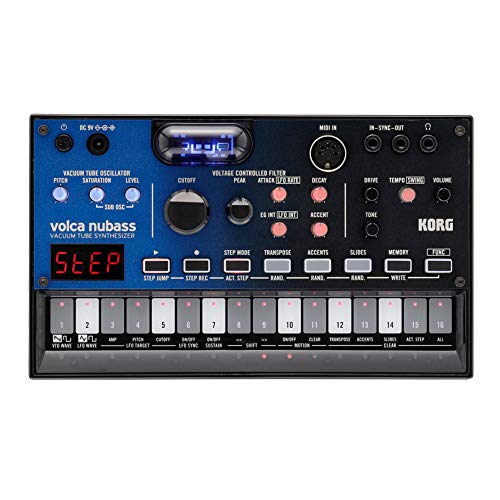
Korg Volca Nubass Vacuum Tube Synthesizer Oscillator Circuit
- ✓ Warm, harmonic tones
- ✓ Portable and lightweight
- ✓ Easy to integrate
- ✕ Limited polyphony
- ✕ No built-in effects
| Oscillator Type | Vacuum tube oscillator for warm, thick bass sounds |
| Filter Type | Classic transistor ladder filter |
| Polyphony | Monophonic |
| Sequencer Steps | 16-step sequencer with transpose, glide, and accent functions |
| Connectivity | Sync I/O and MIDI input |
| Power Options | Battery-operated or AC adapter |
Last weekend, I had my Korg Volca Nubass set up on my desk, ready to layer some basslines for a new track. As I turned it on, the warm glow of the Nutube immediately caught my eye, promising rich, harmonic tones.
I started tweaking the knobs, and that thick, vintage vibe instantly filled my studio space.
The vacuum tube oscillator really delivers on that warm, thick bass sound that’s perfect for future bass and bass-heavy genres. You can dial in everything from smooth, deep lows to aggressive, distorted growls, thanks to the built-in overdrive.
The classic transistor ladder filter adds a nice touch, giving you dynamic sound shaping without fuss.
What surprised me was how portable and lightweight it is—perfect for gigs or quick studio sessions. The built-in speaker is handy when I want immediate feedback or to jam without setting up external gear.
Connecting it via MIDI or sync I/O is straightforward, making it easy to integrate into my existing setup or DAW.
The 16-step sequencer is a blast to experiment with, especially when adding glide, transpose, or accents for that classic acid-style bass line. It’s intuitive and inspires creativity, even on a quick demo.
Plus, the option to run on batteries or AC means I never have to worry about power issues during a gig.
Overall, the Nubass strikes a great balance between vintage warmth and modern flexibility. It’s a perfect tool for those looking to add rich, powerful bass to their productions or live sets without lugging around heavy gear.
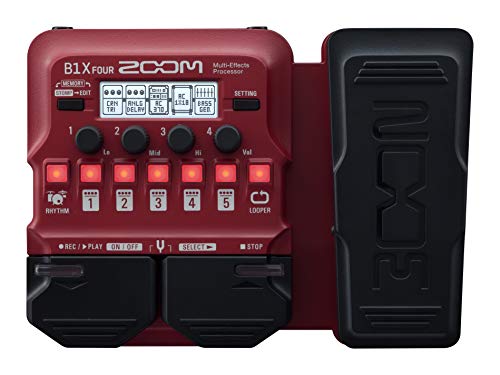
Zoom B1X Four Bass Multi-Effects with Pedal & 70+ Effects
- ✓ Wide range of effects
- ✓ Built-in looper and rhythm patterns
- ✓ Real-time sound shaping with pedal
- ✕ Slight learning curve
- ✕ Limited to bass instruments
| Effects | Over 70 effects including compression, fuzz, synth, modulation, and more |
| Amp Models | 9 classic bass amp simulations |
| Rhythm Patterns | 68 built-in drum and rhythm patterns |
| Looper | Integrated looper with unlimited layers |
| Expression Pedal | Assignable for real-time control of volume, wah, delay, pitch, etc. |
| Effects Simultaneity | Up to 5 effects can be used simultaneously in any order |
While fiddling around with the Zoom B1X Four, I accidentally discovered a pretty wild synth-like texture that I wasn’t expecting from a pedal mainly designed for bass effects. I was messing with the synth mode, and suddenly my bass sounded like a futuristic sci-fi soundtrack—totally blew my mind.
This pedal feels surprisingly versatile for its price. The 70+ effects cover everything from classic bass tones to wild modulation and fuzz, which means you can craft something totally unique for future bass or experimental tracks.
The nine amp models are handy too—they give your sound that stage-ready punch, whether you’re jamming at home or performing live.
The built-in looper and 68 rhythm patterns are game changers. You can layer your bass ideas and practice timing without needing extra gear cluttering your space.
I found myself building intricate loops quickly, which really helps when you’re trying to develop new ideas fast.
The expression pedal is another highlight. You can tweak volume, wah, pitch, or delay in real time, adding a dynamic touch that elevates your performance.
Plus, being able to run five effects at once and arrange their order lets you create some seriously signature sounds—a huge plus for experimentation.
And, of course, the chromatic tuner is always a welcome feature. It’s solid and accurate, so your bass stays perfectly in tune wherever you play.
Honestly, this pedal surprised me with how much it packs into such a compact, budget-friendly package.
What Makes a Synth Perfect for Future Bass Production?
A synth with an intuitive layout and clear controls helps producers easily navigate through presets and settings, making it quicker to find and tweak the desired sounds. A user-friendly interface is crucial for maintaining creativity without getting bogged down in technical details.
A library of high-quality presets tailored for future bass can serve as a great starting point for producers, aiding in the creative process and inspiring new ideas. These presets often reflect the latest trends and sounds in the genre.
Advanced modulation capabilities, such as LFOs and envelopes, provide the ability to create unique rhythmic patterns and textures that are essential for the genre’s dynamic soundscapes. This flexibility allows producers to add movement and interest to their synth lines, making them more engaging.
How Do Key Features Enhance Future Bass Sounds?
Key features that enhance future bass sounds include:
- Fat Oscillators: These oscillators create rich and thick sounds, crucial for the lush textures characteristic of future bass. By using multiple waveforms and detuning them, synths can produce a fuller sound that fills the frequency spectrum.
- Advanced Modulation Options: Modulation capabilities, such as LFOs and envelopes, allow for dynamic sound shaping. This feature enables producers to create evolving sounds that change over time, adding movement and interest to drops and chords.
- High-Quality Effects Processing: Integrated effects like reverb, chorus, and distortion enhance the overall sound quality. These effects help in creating atmospheric and spatial qualities, which are essential for achieving that immersive future bass vibe.
- Sample Integration: The ability to integrate samples into the synth allows for unique sound design. Producers can layer samples with synthetic sounds to create hybrid textures that are distinctive and engaging.
- User-Friendly Interface: A well-designed interface makes it easy to navigate and tweak parameters. This accessibility enables producers to focus on creativity rather than struggling with complex settings, facilitating quicker workflows and experimentation.
- Polyphony and Chord Features: High polyphony allows for playing complex chords without voice stealing. This is particularly important in future bass, where lush chords and layered melodies are essential for creating that signature sound.
Why Are Oscillators Crucial for Crafting Future Bass?
Oscillators are crucial for crafting future bass because they generate the fundamental waveforms that form the backbone of the genre’s rich and dynamic sounds.
According to a study published in the Journal of Electronic Music, oscillators can produce various waveforms—such as sawtooth, square, and sine—that are essential for creating the lush synth chords and basslines characteristic of future bass. These waveforms can be manipulated in real-time, allowing producers to shape their sound in ways that resonate with the emotional and energetic qualities of the genre.
The underlying mechanism involves the modulation of pitch, amplitude, and filter characteristics provided by oscillators. For instance, when multiple oscillators are layered together, they can create complex harmonics and textures, which are pivotal in achieving the rich, full sound that defines future bass. Furthermore, using techniques like pulse-width modulation and frequency modulation, producers can introduce movement and variation, leading to evolving soundscapes that maintain listener engagement throughout a track.
Additive and subtractive synthesis techniques also rely heavily on oscillators to craft unique timbres. By combining different waveforms or filtering them, sound designers can create signature sounds that are both distinctive and versatile, making oscillators a fundamental tool in the production of future bass music. The interplay of these elements contributes significantly to the genre’s characteristic sound, making the choice of the best synth for future bass heavily reliant on the capabilities of its oscillators.
How Does Modulation Impact Future Bass Sound Design?
Modulation plays a crucial role in shaping the sound design of future bass music by adding movement and complexity to synth sounds.
- Filter Modulation: This involves altering the cutoff frequency of a filter over time, which can create dynamic tonal shifts in a sound. By using an LFO or an envelope to modulate the filter, producers can achieve a “swooping” effect that enhances the lushness of chords and leads, giving them a more organic feel.
- Amplitude Modulation: Amplitude modulation changes the volume of a sound at varying rates, adding rhythmic interest. This technique can create sidechain effects that are essential in future bass, allowing the kick drum to punch through the mix while still maintaining a full-bodied synth sound.
- Pitch Modulation: This technique involves altering the pitch of a sound to introduce vibrato or glide effects. In future bass, pitch modulation can add expressiveness to synth stabs or leads, making them sound more dynamic and alive, often used to evoke an emotional response in listeners.
- Effects Modulation: Modulating effects such as reverb and delay can significantly enhance the spatial qualities of a sound. By automating parameters like feedback or reverb size, producers can create evolving textures that complement the rhythmic and melodic elements of future bass tracks.
- Wavetable Modulation: Utilizing wavetable synthesis allows for complex waveforms to be modulated, leading to rich harmonic content. This is particularly effective in future bass, where evolving sounds can be created by sweeping through different waveforms, providing a wide sonic palette for producers to explore.
Which Synths Are Most Popular Among Future Bass Producers?
The most popular synths among future bass producers include:
- Serum: Widely regarded as one of the best synths for future bass, Serum offers a powerful wavetable synthesis engine that allows for intricate sound design. Its intuitive interface makes it easy to create rich, lush sounds typical of future bass, and the extensive modulation options enable producers to add movement and complexity to their tracks.
- Massive: Native Instruments’ Massive is a staple in the electronic music scene and is renowned for its deep bass sounds and sharp leads. Its subtractive synthesis approach, combined with a variety of filters and modulation sources, allows producers to craft unique sounds that fit perfectly within the future bass genre.
- Spire: Spire combines a powerful sound engine with a user-friendly interface, making it a favorite among future bass producers. It features multiple synthesis types, including subtractive, FM, and wavetable synthesis, providing a broad palette of sounds that can be easily tailored to create everything from smooth pads to punchy basslines.
- Diva: Known for its analog-style sound, Diva by u-he excels in creating warm and rich tones that are ideal for future bass. It emulates classic synths and offers a variety of modules, making it a versatile choice for producers looking to add depth and character to their tracks.
- Omnisphere: As a flagship synth from Spectrasonics, Omnisphere is packed with a vast library of high-quality sounds, including pads and textures that work beautifully in future bass. Its extensive sound engine and innovative features like the granular synthesis make it a go-to for producers who want to explore complex sonic landscapes.
What Characteristics Do These Top Synths Share?
The best synths for future bass share several key characteristics that make them ideal for creating rich, textured sounds.
- Powerful Oscillators: High-quality oscillators are crucial as they provide the foundational waveforms that can be manipulated to create unique sounds. Many of the top synths feature multiple oscillators that can stack or detune to produce a fuller, more complex tone, which is essential for the lush soundscapes typical in future bass music.
- Advanced Modulation Capabilities: These synths often include extensive modulation options, allowing for dynamic sound evolution throughout a track. Features like LFOs, envelopes, and step sequencers enable producers to add movement and variation to their sounds, which is vital for the energetic and evolving nature of future bass.
- High-Quality Filters: A variety of filter types and settings are important for shaping sounds and adding character. Synths that offer resonant low-pass, high-pass, and band-pass filters allow users to sculpt their patches intricately, helping to create the distinct warmth and depth that future bass relies on.
- Intuitive User Interface: The best synths have user-friendly interfaces that make it easy to navigate and tweak sounds. This is especially important for producers who want to quickly experiment and iterate on their ideas without getting bogged down in complex menus or difficult-to-understand controls.
- Rich Effects Processing: Integrated effects like reverb, delay, chorus, and distortion can greatly enhance the sound design capabilities of a synth. Synths that include these effects allow for immediate sound shaping and experimentation, making it easier to achieve the atmospheric and spatial qualities often found in future bass tracks.
- Wide Sound Palette: Versatility in sound design is essential, as future bass incorporates a range of styles and influences. Top synths typically offer a diverse array of presets and sound design options, catering to various aspects of the genre from melodic leads to deep basses and lush pads.
How Does the Choice Between Hardware and Software Synths Affect Future Bass?
The choice between hardware and software synthesizers can significantly influence the production of future bass music.
- Hardware Synths: Hardware synthesizers offer a tactile experience and often unique sound characteristics that can enhance creativity.
- Software Synths: Software synthesizers provide flexibility, affordability, and an extensive range of features that can streamline the production process.
- Sound Quality: The sound quality produced by hardware synths is often considered richer and warmer, while software synths can achieve high fidelity but may lack the same character.
- Workflow and Integration: Hardware synths can provide a hands-on approach that inspires creativity, while software synths can integrate seamlessly into digital audio workstations (DAWs) for ease of use.
- Cost Considerations: Hardware synths typically require a larger upfront investment, whereas software options can be more budget-friendly, especially for beginners.
Hardware synthesizers, such as the Moog Sub 37 or Access Virus, offer a tactile experience that many producers find inspirational. Their unique circuitry and analog components contribute to a distinctive warmth and character in the sound, which can be particularly appealing in the context of future bass music, where rich textures are essential.
On the other hand, software synthesizers like Serum or Massive provide an array of features that allow for extensive sound design possibilities. They often come with a variety of presets and modulation options, making them accessible for beginners while still being powerful enough for advanced users looking to craft unique future bass sounds.
When it comes to sound quality, hardware synths are frequently praised for their analog warmth and depth, which can give future bass tracks a fuller and more organic feel. In contrast, while software synths can achieve impressive clarity and fidelity, they might lack the inherent character that some hardware models provide, making it essential to choose based on the desired aesthetic of the track.
The workflow is also a crucial factor; many producers prefer the hands-on interaction of hardware synths, which can lead to spontaneous creativity and experimentation. However, software synths excel in their ability to integrate within DAWs, allowing for efficient layering and editing of sounds, which can be particularly advantageous in the fast-paced world of music production.
Cost is another important consideration, as hardware synths often come with a higher price tag, making them less accessible for beginners. In contrast, software synths often have a lower entry cost and can provide a more extensive library of sounds and effects, making them appealing for those just starting in future bass production.
What Sound Design Techniques Elevate Future Bass Production?
Several sound design techniques can significantly elevate future bass production.
- Layering Synths: Combining multiple synthesizers can create a rich and full sound characteristic of future bass. By layering different synths, producers can achieve a unique texture, blending various timbres and frequencies for a more complex and engaging sound.
- Sidechain Compression: This technique creates a pumping effect that is essential in future bass tracks. By applying sidechain compression to the synths and bass, the sound ducking occurs in sync with the kick drum, adding a rhythmic pulse that enhances the groove of the track.
- Vocal Chops: Integrating vocal samples or chops adds a human element to future bass tracks. These chopped vocals can be processed with effects like reverb and pitch shifting to create melodic hooks that captivate listeners and add emotional depth.
- Creative FX Processing: Utilizing effects such as reverb, delay, and distortion can transform standard synth sounds into something unique. By experimenting with different effect chains, producers can create lush atmospheres or gritty textures that contribute to the overall vibe of the track.
- Glide and Portamento: Implementing glide or portamento settings allows for smooth transitions between notes, which is a signature sound in future bass. This technique can add a fluidity to melodies and basslines, making them feel more organic and dynamic.
- Sound Selection: Choosing the right synth presets or designing unique sounds is crucial for achieving the future bass aesthetic. Synths with rich harmonics and wide stereo imaging, like Serum or Massive, are often favored for their ability to create the lush, expansive sounds that define the genre.
How Do Different Genres Influence the Selection of Synths for Future Bass?
Different genres influence the selection of synths for future bass by shaping the sound design elements and aesthetic preferences within the music.
- Wavetable Synths: Wavetable synthesizers are essential for their ability to create complex, evolving sounds that are characteristic of future bass. They allow producers to manipulate waveforms in real-time, enabling the creation of rich textures and dynamic soundscapes that fit well with the genre’s lush chords and melodic hooks.
- FM Synths: Frequency modulation synthesizers are known for producing bright and metallic sounds, which can add a unique edge to future bass tracks. Their ability to create intricate bell-like tones and harmonically rich sounds makes them a favorite among producers looking to add depth and character to their music.
- Analog Synths: Analog synthesizers provide a warm, organic sound that can complement the digital elements of future bass. The inherent imperfections and rich harmonics of analog synths lend a nostalgic feel, which can enhance emotional resonance in the genre’s melodic and rhythmic structures.
- Sample-based Synths: Sample-based synthesizers allow for the incorporation of unique sounds and textures, which are vital for creating the layered compositions typical in future bass. They enable producers to manipulate samples in creative ways, adding an extra dimension to the sound that can make tracks stand out.
- Modular Synths: Modular synthesizers offer unparalleled flexibility and customization, allowing producers to craft sounds that are entirely unique. Their patch cable system encourages experimentation, leading to innovative sound design that can push the boundaries of future bass production.