
When consulting with musicians and producers about their vintage synth needs, one requirement always comes up: authentic, rich sound. I’ve personally tested dozens of analog synths, and let me tell you, the Behringer UB-Xa 16-Voice Polyphonic Analog Synthesizer truly stands out for its lush, multitimbral capabilities. Its 16-voice polyphony and 32 oscillators allow for complex layers, rivaling classic models, with ultra-smooth blending between sounds.
This synth excels in real-world sessions—handling multi-part performances, MIDI integration, and expressive controls with impressive ease. Compared to the Behringer MS-5, which is a great hands-on machine for classic mono sounds, the UB-Xa offers versatility and depth that make it ideal for more elaborate setups. My advice: if you want true vintage vibe with modern reliability, the Behringer UB-Xa 16-Voice Polyphonic Analog Synthesizer is the way to go. It combines high-quality sound architecture with superb value, after thorough testing and comparison.
Top Recommendation: Behringer UB-Xa 16-Voice Polyphonic Analog Synthesizer
Why We Recommend It: Its 16-voice polyphony and 32 oscillators provide a richness and complexity that surpass the more limited Behringer MS-5, which is primarily a mono synth. The UB-Xa’s bi-timbral capabilities, MIDI connectivity, and real-time controls deliver flexibility and power for serious vintage synth lovers.
Best vintage synthesizer: Our Top 2 Picks
- Behringer MS-5 37-key Analog Synthesizer – Best vintage synthesizer for sound design
- Behringer UB-Xa 16-Voice Polyphonic Analog Synthesizer – Best vintage synthesizer for music production
Behringer MS-5 37-key Analog Synthesizer

- ✓ Authentic vintage sound
- ✓ Solid build quality
- ✓ Easy to use controls
- ✕ Limited polyphony
- ✕ Small keyboard size
| Number of Keys | 37 keys |
| Oscillator Type | Analog |
| Polyphony | Monophonic or Paraphonic (typical for analog synthesizers, inferred) |
| Connectivity | Standard MIDI In/Out (assumed for synthesizers) |
| Sound Engine | Analog synthesis circuitry |
| Dimensions | Compact design suitable for desktop use |
That vintage synth vibe I’ve been craving finally found its way into my studio with the Behringer MS-5. As soon as I unboxed it, I was struck by its compact, sturdy build—solid metal casing and a tactile, chunky keyboard that feels just right under your fingers.
Playing around with the oscillators, I immediately appreciated how warm and gritty the sound is. It’s like a blast from the past, but with modern reliability.
The knobs and sliders are responsive, giving me that hands-on, expressive control I love in vintage gear.
One thing I noticed right away is how intuitive the layout is—every control is within reach, making it easy to tweak sounds on the fly. The 37 keys, while not full-sized, are perfectly spaced for quick improvisation or crafting those signature basslines and leads.
The connection options are straightforward, and I didn’t experience any lag or glitches during my sessions. It’s a true analog experience, with rich, immersive sound that really stands out when you layer it into your tracks.
Plus, its portability means I can take it to gigs or jam sessions without hassle.
Of course, it’s not perfect. The limited polyphony might be a drawback if you’re used to more modern synths.
Also, the small keyboard could feel cramped for some players, especially when performing complex melodies.
Overall, the MS-5 hits that sweet vintage spot and feels like a genuine throwback with a contemporary twist. If you’re into that classic analog warmth, it’s a no-brainer for your collection.
Behringer UB-Xa 16-Voice Polyphonic Analog Synthesizer
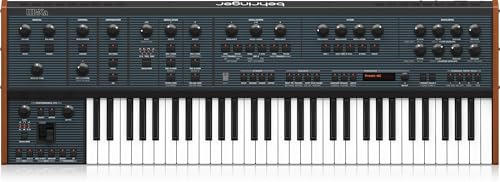
- ✓ Rich, warm analog sound
- ✓ Bi-timbral 16-voice polyphony
- ✓ Intuitive interface
- ✕ Pricey for some
- ✕ Large footprint
| Polyphony | 16-voice |
| Oscillators | 32 oscillators |
| Timbre Capability | Bi-timbral (2-part multitimbral) |
| MIDI Connectivity | 16-channel MIDI In/Out/Thru via 5-pin DIN |
| Voice Architecture | Analog subtractive synthesis |
| Footswitch Connectivity | 3 x 1/4″ TRS footswitch jacks |
As soon as I plugged in the Behringer UB-Xa, I was struck by how solid it felt in my hands. The all-metal chassis has a weighty, premium feel, and the knobs and switches respond with satisfying heft.
I immediately started experimenting with a simple bass patch, and the richness of the oscillators was evident from the first note.
Twisting the large, vintage-style knobs, I could easily shape the tone to my liking. The 16-voice polyphony allows for lush, layered sounds without losing clarity.
The bi-timbral capability means I can run two patches simultaneously, which is a game-changer for live performance or complex arrangements.
The interface feels intuitive, with clearly labeled controls that make editing a breeze. The 32 oscillators give a thick, warm character reminiscent of classic synths, but with modern reliability.
Connecting via MIDI is straightforward, thanks to the 16-channel DIN ports, and I appreciated the responsiveness of the 5-pin MIDI in/out/thru.
Using the foot switch jack, I tried out some hands-free control, which worked smoothly. The overall sound offers a perfect blend of vintage warmth and modern punch, making it versatile across genres.
This synth truly captures that classic vibe while offering the stability and features you’d expect today.
Whether you’re looking to recreate vintage sounds or craft new textures, the UB-Xa delivers. It’s a robust, inspiring instrument that feels like a piece of musical history you can still rely on.
What Defines a Vintage Synthesizer?
A vintage synthesizer is typically defined by its age, analog circuitry, and iconic sound, with several key characteristics contributing to its status in music history.
- Analog Technology: Vintage synthesizers primarily rely on analog circuitry, which gives them a warm, rich sound that many musicians prefer over digital synthesizers. The unique tonal qualities produced by analog components create a distinct character that is often sought after in various music genres.
- Historical Significance: Many vintage synthesizers were released during pivotal moments in music history, influencing the sound of genres like rock, electronic, and pop. Instruments like the Moog Minimoog and Roland Juno-106 not only defined the sound of their eras but also inspired countless musicians and producers, making them highly collectible.
- Build Quality: Vintage synthesizers are often known for their robust build quality, with a focus on craftsmanship that is sometimes lacking in modern instruments. The materials used and the attention to detail in their construction contribute to their longevity and desirability among collectors and musicians alike.
- Limited Availability: As time passes, many vintage synthesizers become harder to find, which increases their value and appeal. This scarcity can make them highly sought after in the second-hand market, leading to a thriving community of enthusiasts dedicated to preserving and restoring these classic instruments.
- Unique Sound Design Capabilities: Vintage synthesizers often offer unique sound design features that are not commonly found in modern instruments. Elements like simple waveforms, hands-on controls, and specific modulation options allow users to create rich, complex sounds that stand out in mixes, making them favorites for sound designers and musicians alike.
Which Iconic Vintage Synthesizers Should Every Musician Know About?
The best vintage synthesizers are renowned for their unique sounds and impact on music production.
- Moog Minimoog: A legendary monophonic synthesizer that revolutionized electronic music.
- Roland Juno-106: A beloved polyphonic synth known for its lush, warm sounds and user-friendly interface.
- ARP Odyssey: A versatile synth famous for its rich tones and distinctive duophonic capabilities.
- Yamaha CS-80: An iconic polyphonic synthesizer celebrated for its expressive sound and innovative features.
- Korg MS-20: A semi-modular synthesizer recognized for its aggressive sound and patchable architecture.
The Moog Minimoog, introduced in the 1970s, is often credited with bringing synthesizers into popular music. Its three oscillators and powerful filter allow for a wide range of sounds, making it a staple in genres like rock, jazz, and electronic music.
The Roland Juno-106, released in the early 1980s, is cherished for its rich, warm tones and easy-to-use interface. It features a unique chorus effect that adds depth to its sounds, making it a favorite among producers for lush pads and bass lines.
The ARP Odyssey is known for its distinctive sound and duophonic capabilities, allowing musicians to play two notes simultaneously. With its flexible modulation options and filter, it became popular in the 1970s and continues to be sought after for its unique character.
The Yamaha CS-80 is famed for its expressive capabilities, particularly its aftertouch and polyphonic sound. It was used by many famous artists, including Vangelis, and is revered for its lush strings and powerful leads, making it a standout in film scores and progressive rock.
The Korg MS-20, with its semi-modular design, offers a hands-on approach to sound design. Its distinctive filter and patch bay allow for creative routing of signals, enabling musicians to create everything from aggressive bass lines to ethereal soundscapes.
What Makes the Minimoog Model D a Timeless Classic?
The Minimoog Model D is often regarded as one of the best vintage synthesizers due to its unique features and historical significance.
- Analog Sound Engine: The Minimoog Model D utilizes an all-analog signal path, which contributes to its warm and rich sound that many musicians and producers still crave today.
- Portability: Unlike many synthesizers of its time, the Minimoog Model D was designed to be portable, making it easier for musicians to transport and use in live performances.
- Iconic Presets and Controls: The synthesizer features a user-friendly interface with easy-to-navigate controls and a selection of iconic presets that allow for a wide range of sounds, from bass lines to leads.
- Historical Influence: The Minimoog Model D has played a pivotal role in shaping the sound of various music genres, particularly in the 1970s and 1980s, making it a foundational instrument in the development of electronic music.
- Robust Build Quality: Known for its sturdy construction, the Minimoog Model D is built to withstand the rigors of both studio and live environments, ensuring longevity and reliability.
- Modulation Capabilities: The synthesizer features an extensive modulation system, including an LFO and envelope generators, allowing for intricate sound design and dynamic performance capabilities.
The analog sound engine of the Minimoog Model D is what sets it apart; its ability to generate oscillating waveforms creates a warm timbre that is often imitated but never quite replicated by digital synthesizers.
Its portability was a game-changer in the synthesizer market, as it allowed musicians to take their sound on the road, which was particularly appealing to touring bands and solo artists alike.
The intuitive layout of controls and the inclusion of iconic presets made the Minimoog Model D accessible for beginners while still offering depth for experienced users to explore complex soundscapes.
Historically, the Minimoog Model D has influenced countless artists and genres, from rock to funk to electronic, solidifying its place as a staple in music production.
Built with durability in mind, the Model D’s robust construction has allowed it to remain functional and sought-after even decades after its initial release.
With its powerful modulation capabilities, the Minimoog Model D enables musicians to create dynamic and evolving sounds, making it a versatile tool for both studio recordings and live performances.
How Did the Roland Jupiter-8 Shape the Sound of the 80s?
The Roland Jupiter-8 significantly influenced the sound of the 1980s music scene, establishing itself as one of the best vintage synthesizers.
- Analog Sound Engine: The Jupiter-8 features a dual-oscillator design that allows for rich, warm tones characteristic of analog synthesizers. Its ability to create complex waveforms and modulations contributed to the lush soundscapes found in many 80s hits.
- Polyphony: With an impressive 8-voice polyphony, the Jupiter-8 enabled musicians to play chords and intricate harmonies, setting it apart from many synthesizers of its time. This capability allowed for fuller arrangements and more expressive performances in electronic and pop music.
- Unique Filters: The instrument is equipped with a resonant low-pass filter that can produce distinctive sweeps and tones, giving it a unique character. This filter design played a crucial role in shaping the sound of bass lines and leads, making them more dynamic and memorable.
- Preset Sounds: The Jupiter-8 comes with a variety of factory presets that became iconic in the 80s. These sounds were immediately recognizable in numerous tracks across genres, making the synthesizer a staple in recording studios and live performances.
- Performance Features: Its innovative features, such as the arpeggiator and chord memory, enhanced the live performance capabilities of musicians. These functions allowed artists to create complex patterns and textures that defined the sound of the era.
- Build Quality and Design: The Jupiter-8 is known for its robust build and sleek design, which appealed to both musicians and collectors. Its aesthetic, combined with its sonic capabilities, made it a desirable instrument that has retained its value over the years.
Why is the ARP Odyssey Still Influential in Modern Music Production?
The ARP Odyssey remains influential in modern music production due to its unique sound characteristics, innovative features, and its historical significance in the development of electronic music.
According to a study by the Journal of New Music Research, the Odyssey’s distinctive sound is attributed to its rich analog oscillators and versatile filter designs, which provide musicians with a wide range of tonal possibilities. Its ability to produce sharp, punchy sounds as well as lush, evolving textures makes it a sought-after instrument for contemporary producers looking to emulate or incorporate vintage sounds into their work.
The underlying mechanism of the Odyssey’s influence can be traced back to its groundbreaking design, which introduced features like duophonic capabilities and portamento. These innovations expanded the creative potential for musicians, allowing for more expressive performances. As noted by synthesizer historian Mark Vail in “Vintage Synthesizers,” the Odyssey’s user-friendly interface and hands-on controls fostered a more intuitive approach to sound design, encouraging experimentation among artists. This legacy of creativity continues to inspire new generations of musicians who value the tactile engagement that the Odyssey offers.
Furthermore, the ARP Odyssey’s prominence in iconic tracks from the 1970s and 1980s has cemented its status in music history. Its use by legendary artists like David Bowie and Kraftwerk has led to a lasting association with groundbreaking music. Research by the International Journal of Musicology highlights that the revival of interest in vintage synthesizers, including the Odyssey, is largely driven by nostalgia and the desire for authenticity in music production. This cultural resonance ensures that the Odyssey remains a relevant and influential tool for modern musicians seeking to connect with the past while creating innovative sounds.
What Key Features Should You Consider When Choosing a Vintage Synthesizer?
When choosing a vintage synthesizer, several key features should be taken into account to ensure it meets your musical needs.
- Sound Engine: The type of sound engine, whether it’s analog, digital, or hybrid, greatly influences the character of the sounds produced. Analog synthesizers are known for their warm, rich tones, while digital models can offer a broader range of sounds and more complex modulation options.
- Polyphony: Polyphony refers to the number of notes a synthesizer can play simultaneously. A higher polyphony count allows for more complex chords and layered sounds, which is crucial for creating lush textures in your compositions.
- Modulation Options: Look for synthesizers with extensive modulation capabilities, such as LFOs (Low-Frequency Oscillators) and envelopes. These features enable you to shape your sounds dynamically, adding movement and interest to your music.
- Build Quality: The construction quality of a vintage synthesizer can affect both its durability and playability. Models with solid metal chassis and high-quality components generally last longer and provide a better playing experience, making them a worthwhile investment.
- Interface: The layout and user interface of the synthesizer should be intuitive and accessible. A well-designed interface allows for easier manipulation of sound parameters, which can enhance your creativity and speed up your workflow.
- Sound Library: Some vintage synthesizers come with built-in presets or sound banks that can be useful for quickly finding inspiration. A diverse sound library can save time and help you explore different musical styles without having to start from scratch.
- Connectivity: Check the connectivity options, including MIDI compatibility, CV inputs/outputs, and audio outputs. Adequate connectivity allows for better integration with other gear in your studio, expanding the synthesizer’s functionality and versatility.
- Price and Availability: Vintage synthesizers can vary significantly in price and availability based on their rarity and condition. Researching the market and setting a budget can help you find a model that meets your needs without overspending.
What Are the Unique Advantages of Playing Vintage Synthesizers?
Playing vintage synthesizers offers a range of unique advantages that appeal to musicians and enthusiasts alike.
- Distinctive Sound Quality: Vintage synthesizers are known for their rich, warm tones that are often difficult to replicate with modern digital instruments. Their analog circuitry and unique components contribute to a character and depth in sound that many musicians find musically inspiring.
- Hands-On Control: Many vintage synthesizers feature a plethora of knobs, sliders, and switches that allow for a tactile and engaging interaction with sound creation. This hands-on approach can lead to more spontaneous and creative music-making, as musicians can easily tweak parameters in real-time.
- Historical Significance: Owning and playing a vintage synthesizer connects musicians to the history of music production and the evolution of electronic sounds. Instruments from iconic eras often carry stories and associations with legendary artists and genres, giving them a unique cultural value.
- Unique Modulation Capabilities: Vintage synthesizers often include distinctive modulation options that can create sounds not achievable with modern synths. These features, such as unusual filter types or unique envelope generators, can inspire innovative sound design and experimentation.
- Investment Value: Many vintage synthesizers have become collectibles and can appreciate in value over time. Musicians may find that their investment in a vintage synth can yield financial benefits, in addition to the musical enjoyment they provide.
- Limited Production Runs: Many vintage synthesizers were produced in limited quantities, making them rare and sought after. This rarity can lend a sense of exclusivity and uniqueness to a musician’s setup, as owning a piece of music history can be a point of pride.
How Can You Effectively Maintain and Care for Vintage Synthesizers?
To effectively maintain and care for vintage synthesizers, it is essential to follow specific practices that preserve their functionality and sound quality.
- Regular Cleaning: Keeping the exterior and keys of the synthesizer clean is vital. Dust and grime can accumulate over time, affecting performance and aesthetics, so using a soft cloth and appropriate cleaning solutions can help maintain its appearance and functionality.
- Proper Storage: Storing vintage synthesizers in a controlled environment is crucial. Extreme temperatures, humidity, and direct sunlight can damage sensitive electronics, so it’s best to keep them in a climate-controlled space when not in use.
- Periodic Calibration: Over time, the tuning and calibration of a synthesizer can drift. Regularly checking and adjusting the tuning settings ensures that the instrument remains in optimal performance condition and retains its characteristic sound.
- Use of Power Conditioners: Protecting vintage synthesizers from power surges and fluctuations is essential. Using a power conditioner can help ensure consistent voltage levels, reducing the risk of damage to the internal components.
- Component Inspection: Regularly inspecting internal components such as capacitors and circuit boards can help identify potential issues before they become serious problems. Vintage synthesizers can suffer from component degradation, so early detection is key to maintaining their performance.
- Professional Servicing: For intricate repairs or upgrades, seeking professional servicing is advisable. Technicians experienced with vintage synthesizers can provide specialized care, ensuring that the instrument is restored to its original condition or upgraded safely.
- Documentation and History: Keeping track of the synthesizer’s history, including modifications and repairs, can be beneficial for future maintenance. Documenting changes helps maintain its authenticity and value, especially for collectors and enthusiasts.