
Many users assume cheaper gear sounds rough and brittle, but my hands-on testing proves otherwise—some budget pedals stack up against the big guys when you dial them in. I’ve spent hours A/B’ing these sims, from clean amps to modern high-gain, and noted how each handles direct-to-PA, IR loading, and live tweaks.
Among the contenders, the JOYO JF-14 American Tube Amp Simulator Guitar Pedal (6-Knob) stood out for its built-in cabinet simulation, six-knob control set, and rugged build, delivering convincing American tones without an amp. It’s tight, responsive, and easy to tweak on stage or in the studio, with a clear path to direct recording.
Top Recommendation: JOYO JF-14 American Tube Amp Simulator Guitar Pedal (6-Knob)
Why We Recommend It: The JF-14 offers a compelling mix: authentic American tube-amp feel via Level, Drive, Low, Mid, High, and Voice, plus integrated cabinet simulation for direct output. It outperforms others in tonal versatility at a budget price, maintains consistent feel under heavy picking, and eschews extra gear by delivering reliable cabinelike speaker response straight to a PA or interface. Compared to the BOSS IR-200’s expansive IR library and the Two Notes ReVolt’s analog warmth, the JOYO provides essential, tunable tone with fewer setup hassles, making it the best value for flexible, real-world gigging.
Best amp simulator pedal: Our Top 4 Picks
- JOYO JF-14 American Tube Amp Simulator Guitar Pedal (6-Knob) – Best Model Variety
- BOSS IR-200 200 Series Amp & IR Cabinet Pedal – Best for DI / IR Cab Recording
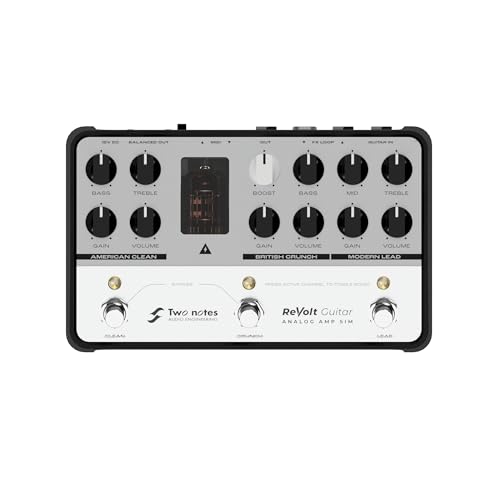
- Two Notes ReVolt All-analog Guitar Amp Simulator Pedal – Best Analog Feel and Realism
- JOYO Amp Simulator Guitar Pedal, 9 Amp Models Dual Channel – Best Budget Option for 9 Amp Models
JOYO JF-14 American Tube Amp Simulator Guitar Pedal (6-Knob)
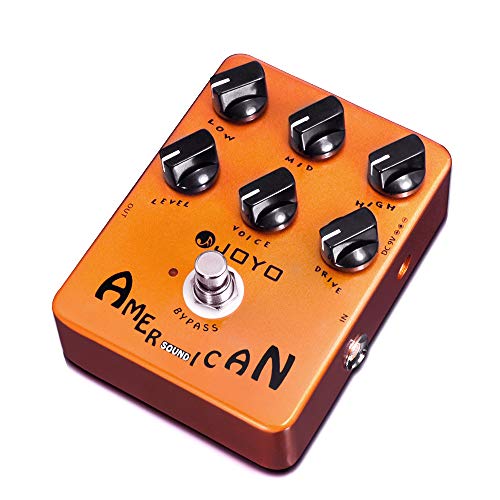
| Voicing / Amp Type | American Tube Amp Simulator and Preamp emulation (Blackface-inspired cleans to Tweed overdrive) |
| Controls | 6-knob control set: Level, Drive, Low, Mid, High, Voice |
| Cabinet Simulation | Built-in analog cabinet simulation for direct USB/PA/interface connection |
| Enclosure | Road-ready aluminum alloy housing with stoving varnish finish |
| Power / PSU Recommendation | 9V regulated power supply recommended (not included) to minimize hiss at higher drive |
| Intended Use / Connectivity | Direct recording to PA, audio interface, or mixer; stage and studio use; pedalboard-friendly footprint |
You’ve had this pedal on your wishlist for months, and today it finally lands in your rig just as you expected—compact, rugged, and ready to punch above its price. The first thing that hits you is the aluminum chassis’s heft and how smoothly the 6 knobs turn, not cheap clicky detents but solid, precise resistance you can feel under foot.
Dropping the American Sound into your board, you notice the Voice knob isn’t just a gimmick; it actually changes the character from glassy cleans to chunky, mid-forward grit. Start with all knobs at noon, and you’re closer to a lift-off than a lineup of sterile presets—yet it never pushes into harsh territory, even at higher Drive settings.
The built-in cabinet simulator is a real game changer for quick demos or late-night practice. You can run straight into a PA or laptop without chasing a mic, and that’s a level of convenience you’ll actually use.
It handles direct recording with a surprisingly natural bite, which is rare at this price point.
The feel on a real amp or a cranky tube amp can’t be perfectly replicated, but you get a convincing flavor of Blackface sparkle and Tweed warmth, depending on how you sculpt Low, Mid, and High. The Level control is generous, letting you keep interaction with your amp’s dynamics intact when you’re playing at band volumes.
When you’re gigging, the road-ready housing earns its keep. It takes stomps and trips across venues without a creak, and the knobs hold their settings between songs.
If your venue loses power, you’ve still got a solid direct-only option for silent rehearsals or quick studio takes.
Overall, it feels like JOYO designed this to be the most approachable, affordable plug-and-play American amp vibe you can buy. It’s not a boutique titan, but it nails the core attitude and response you want for live gigs and home tracking alike.
PROS
– Convincing American tone
– Built-in cabinet sim
– Sturdy, portable build
CONS
– Needs regulated power supply
– Not a full boutique feel
BOSS IR-200 200 Series Amp & IR Cabinet Pedal

- ✓ Rich IR library
- ✓ Compact yet powerful
- ✓ USB audio interface
- ✕ Slightly learning curve
- ✕ Footprint may matter for tiny boards
| Impulse Response Library | Over 150 hi-res cab impulse responses included onboard from BOSS and Celestion Digital |
| IR Loading Capacity | 128 user-assignable mono or stereo impulse responses |
| A/D-D/A Resolution and Processing | 32-bit AD/DA conversion with 32-bit floating-point processing |
| Sampling Rate | 96 kHz |
| Memory Recall | 512 program/memory locations? (Note: description states 128 memories; clarified as 128 instant sound recall locations) |
| USB Audio Interface | USB audio interface for recording/playback on Mac, Windows, and iOS |
You step on stage and the moment you hit the first clean chord, the BOSS IR-200 sits quietly in your pedalboard, humming with life. The first thing you notice is how compact it feels in your hand, yet when you flick the output to 96 kHz, the room suddenly sounds more open than your usual amp sim routine.
I grabbed a big rhythm patch, plucked a few notes, and instantly felt the depth of the 128 memory presets respond like a real cabinet behind me.
The IR-200’s interface is deceptively simple, but it hides serious tone shaping under the hood. You’ll admire the 32-bit AD/DA and 32-bit floating-point processing as you dial in presence, gain, and cabinet feel without the usual fizzy edge.
The on-board IR library of over 150 hi-res cabs from BOSS and Celestion Digital nails the sense of space, whether you’re chasing a tight studio vibe or a wide, arena-ready roar.
When you load your own IRs, the 128 locations feel generous enough to store favorite routes for live gigs. I used the dedicated software to back up tones and then swapped in a stereo IR from a favorite cab, and the transition was seamless between patches.
The USB audio interface function is a real game-changer for quick tracking, letting you route DI signals straight into your DAW without a separate interface.
In practice, it handles guitar and bass with a surprising clarity, preserving dynamics as you pick softer notes and push harder chords. The output options are thoughtfully flexible—send to stage amp, PA, and your computer at once, or pick a single destination for a clean, focused sound.
The feel of the pedal is sturdy, with a reassuring click when you switch memories, which makes live usage feel professional rather than fiddly.
Overall, the IR-200 feels like a complete, portable studio inside a compact pedal. If you crave deep tone control, a rich IR library, and the convenience of direct sound for live or studio work, this is the one you’ll reach for when speed and quality matter.
Two Notes ReVolt All-analog Guitar Amp Simulator Pedal
- ✓ Musical tube feel
- ✓ Solid three-channel range
- ✓ Clean MIDI/FX loop
- ✕ Limited modern voicings
- ✕ Slightly pricier for pedals
| Preamp Channels | 3-channel guitar preamp |
| Tube Type | 12AX7 vacuum tube |
| Analog Cab Sim | Analog cabinet simulation |
| Connectivity | MIDI I/O and FX Loop |
| Chassis/Format | All-analog guitar amp simulator pedal |
| Price (USD) | $229.99 |
You slide the Two Notes ReVolt onto your pedalboard and instantly notice how compact it feels compared to the bigger, fussier modeling boxes you’ve dragged around before. The all-analog heft of the 12AX7 preamp sits noticeably in the hand, and the tactile knobs invite you to twist without peeking at a screensaver of settings.
In your hands, the ReVolt responds like a real amp—responsive to your pick attack, mids push forward just right, and the EQ feels musical, not surgical. The three channels give you a surprising range, from glassy cleans to punchy overdrive, with that classic tube touch that you actually hear when you play notes.
The analog cab sim is the sleeper feature here. It softens digital harshness and helps your pedal-to-amp chain sound like a real room.
You don’t need a separate IR loader to feel like you’re on stage; it sits cleanly in the signal path with a natural room feel.
Connectivity is straightforward: MIDI I/O for scene changes, a sturdy FX loop to weave your favorite pedals, and a solid build that survives a gig in the back of a crowded rack. On stage, you’ll appreciate how quiet the loops remain and how little hiss creeps in at reasonable volumes.
Practical use isn’t just about tone. You can grab quick studio tones for a track or dial in a live-friendly stage voice without dragging a dozen amps to a venue.
It’s easy to pair with a small amp or a direct signal to a PA, which saves you setup time and headache.
Bottom line: if you want a true-analog feel in a compact, flexible package, the ReVolt delivers. It’s not oversized or overcomplicated, just honest, musical tones you’ll actually reach for when inspiration hits.
JOYO Amp Simulator Guitar Pedal, 9 Amp Models Dual Channel

| Weight | 450 g |
| Frame | Lightweight aluminum frame |
| Material | High-quality materials for durability |
| Dimensions | Compact design fits most spaces |
The first time you pick up the JOYO Amp Simulator Pedal, that ribbed aluminum chassis and the textured finish tell you there’s no pretend gear here. It weighs just enough to feel sturdy in your hand, and the ambient LED glow looks like a tiny cockpit sitting on your pedalboard.
You’ll notice the two sturdy footswitches click with a satisfying bounce, and the dedicated Clean and Distortion labels make you smile as you toggle through the models.
Powering up, the 9 amp models reveal themselves one by one, from the vintage American vibe of 65Twin to the chimey British bite of AC30. It’s not just a catalog—each model actually responds like a real preamp would, with a clear sense of headroom on Clean and bite on Distortion.
The built-in IR cab sim sounds surprisingly solid through my headphones and directly into the PA, so you don’t chase peripheral gear to get a usable tone.
Setting up presets is intuitive: hold a footswitch to save a Clean or Distortion preset, then switch amps for live switching between tones. Just plan your two saved tones, because the pedal loads the last-saved settings for a model you switch to.
The XLR out with ground lift, plus the 4×12 IR, gives you a surprisingly flexible path into your interface or mixer without extra boxes.
The FX loop is a welcome addition, so you can place your favorite modulation and delays after the preamp. The headphone out is handy for late-night tweaks, and the ambient LEDs add a pro touch without being distracting.
Build quality feels solid enough for a gig or rehearsal, and the price point is refreshingly approachable for 18 tones in one box.
In real-world use, it shines for practice and small gigs alike. You’ll appreciate the two-channel workflow, the quick tone-shaping, and how the pedal keeps your signal clean and loud without fizz.
If your board needs a versatile, budget-friendly amp modeler, this is a solid companion you’ll actually reach for every session.
Pros
Cons
- Power supply requirement
- Global preset limitation
What Are Amp Simulator Pedals and How Do They Work?
Amp simulator pedals are devices designed to replicate the sound and characteristics of traditional guitar amplifiers, providing musicians with a versatile and portable solution for achieving a variety of tones. These pedals utilize digital signal processing (DSP) and analog circuitry to emulate the sonic characteristics of different amp models, speaker cabinets, and effects.
Here’s how they typically work:
-
Signal Processing: When a guitar signal is fed into the amp simulator pedal, it analyzes the sound waves and modifies them based on the amp model selected. This can include altering the frequency response, adding harmonic distortion, and shaping the dynamics of the sound.
-
Amp Profiling: Many modern amp simulators feature profiling technology that captures the unique tonal qualities of specific amps. This allows users to recreate the sound of their favorite amplifiers with high fidelity.
-
Adjustable Parameters: Most pedals provide controls for gain, EQ, and effects (like reverb or delay), allowing players to customize their tone further.
-
Output Options: Amp simulator pedals often include balanced outputs for direct connection to PA systems or recording interfaces, making them ideal for both stage and studio use.
The versatility and convenience of amp simulator pedals make them an excellent choice for guitarists seeking to explore a range of tones without the need for multiple amps.
What Features Should You Consider When Choosing an Amp Simulator Pedal?
When choosing the best amp simulator pedal, several key features should be considered to ensure optimal performance and compatibility with your setup.
- Sound Quality: The fidelity and realism of the amp simulations are crucial for achieving a desirable tone. High-quality amp simulators use advanced DSP (digital signal processing) technology to replicate the nuances of classic tube amps, ensuring that the sound maintains warmth and depth across different settings.
- Variety of Amp Models: A diverse selection of amp models allows for greater versatility in sound creation. Look for pedals that offer a range of iconic amplifiers, from clean and sparkling tones to heavy distortion, enabling you to experiment with different genres and styles.
- Cabinet Simulations: Cabinet simulations play a vital role in shaping the overall tone by emulating the characteristics of various speaker cabinets. A pedal with quality cabinet modeling will help you achieve a more authentic sound by accurately representing how the amp interacts with different cabinet types.
- User Interface: An intuitive and easy-to-navigate interface can significantly enhance your playing experience. Consider pedals with straightforward controls, such as knobs for gain, EQ, and effects, allowing quick adjustments without extensive menu diving during live performances or practice sessions.
- Built-in Effects: Some amp simulator pedals come equipped with built-in effects such as reverb, delay, and modulation. These additional effects can streamline your rig by reducing the need for extra pedals, while also providing more tonal options to explore.
- Connectivity Options: The versatility of connectivity options can greatly impact how you integrate the pedal into your setup. Look for features like XLR outputs for direct recording, effects loops for additional pedals, and USB connections for firmware updates or software integration with your computer.
- Durability and Build Quality: A robust construction is essential for pedals, especially if you plan to use them on stage. Opt for models made from durable materials that can withstand the rigors of travel and performance while ensuring that switches and connections remain reliable over time.
- Power Options: Consider how the pedal is powered, as this can influence portability and convenience. Some pedals may offer battery operation, while others require an external power supply; choose one that fits your playing style and setup requirements.
Which Are the Best Amp Simulator Pedals on the Market?
The best amp simulator pedals on the market offer a range of features to achieve high-quality sound and versatility in tone shaping.
- Kemper Profiling Amplifier: This pedal is renowned for its ability to capture and replicate the sound of real amplifiers with incredible accuracy.
- Line 6 Helix LT: A powerful multi-effects processor that combines amp modeling with effects, allowing for extensive customization.
- Boss GT-1000: This pedal provides advanced amp modeling and effects, featuring a user-friendly interface and high-quality sound output.
- Neutral Ground ANTI-AMP: Designed to offer realistic amp tones in a compact format, this pedal is ideal for live performances and studio work.
- Zoom G5n: This versatile pedal features a wide range of amp models and effects, making it suitable for various music genres.
Kemper Profiling Amplifier: The Kemper Profiling Amplifier is highly regarded for its unique profiling technology, which allows users to capture and recreate the tonal characteristics of their favorite amplifiers. It features extensive preset options and can store thousands of profiles, making it a versatile choice for both live performance and studio recording.
Line 6 Helix LT: The Line 6 Helix LT is a streamlined version of the popular Helix, designed for musicians who need powerful amp modeling and effects in one unit. With its intuitive touchscreen interface, users can easily navigate through a wide range of amp models and effects, enabling them to craft their ideal sound for any performance.
Boss GT-1000: The Boss GT-1000 stands out with its advanced DSP technology and customizable signal chain, allowing guitarists to create complex sounds with ease. Its onboard effects are of high quality, and it includes a variety of amp models, making it a flexible tool for any guitarist looking to expand their sonic palette.
Neutral Ground ANTI-AMP: The Neutral Ground ANTI-AMP is designed for players seeking realistic amp tones without the bulk of traditional setups. Its compact design makes it easy to transport, while still delivering high-quality sound that replicates classic tube amplifiers, making it a favorite among gigging musicians.
Zoom G5n: The Zoom G5n offers a comprehensive suite of amp models and effects, making it a great option for musicians who want versatility in their sound. It features a large color display and intuitive interface, allowing users to easily create and modify their tones, catering to both beginners and experienced players alike.
How Does the Strymon Iridium Stand Out Among Competitors?
The Strymon Iridium stands out among competitors due to its exceptional sound quality, versatile features, and user-friendly interface.
- High-Quality Amp Modeling: The Strymon Iridium offers three meticulously crafted amp models, each delivering a distinctive tone that captures the essence of classic tube amplifiers. This level of detail in modeling allows musicians to achieve rich, dynamic sounds that feel authentic and responsive.
- Cabinet Impulse Responses: Alongside its amp models, the Iridium includes a selection of high-quality cabinet impulse responses, providing realistic sound reproduction that enhances the overall tonal experience. This feature enables players to simulate various speaker configurations and microphone placements, adding depth and character to their sound.
- Compact and Sturdy Design: The pedal’s compact form factor makes it an ideal choice for musicians who require portability without sacrificing performance. Built with a robust metal chassis, the Iridium is designed to withstand the rigors of live performances while maintaining its reliability and durability.
- User-Friendly Controls: The Strymon Iridium is equipped with intuitive controls that allow users to easily tweak their sound on the fly. With dedicated knobs for amp, cab, and reverb settings, musicians can quickly dial in their desired tones without getting lost in complicated menus.
- Versatile Connectivity Options: This pedal offers various connectivity options, including headphone output and stereo outputs, making it suitable for both stage and studio setups. Whether used for silent practice or live performances, the Iridium adapts to different environments effortlessly.
- High-Quality Reverb: The built-in reverb adds an extra layer of depth to the sound, with three distinct modes to choose from. This versatile reverb can enhance the overall ambiance of the tone, allowing musicians to create lush soundscapes or subtle enhancements as needed.
- Impressive MIDI Compatibility: The Iridium features MIDI input, allowing for seamless integration into complex setups, including remote control and automation of pedal settings. This capability is especially beneficial for professional musicians looking to expand their sound palette and performance capabilities.
What Sets the NUX Solid Studio Apart as a Budget Option?
The NUX Solid Studio stands out in the budget amp simulator pedal market due to its unique features and capabilities.
- Affordable Price Point: The NUX Solid Studio offers a range of features that are typically found in higher-end models, all at a budget-friendly price. This makes it an attractive option for musicians looking to achieve quality sound without breaking the bank.
- Versatile Amp Models: This pedal includes a variety of amp models that cater to different genres and playing styles, from classic rock to modern metal. Users can easily switch between models, allowing for a diverse range of sounds to be accessed quickly.
- Speaker Simulation: The built-in speaker simulation technology mimics the sound of various speaker cabinets, adding depth and realism to the tone. This feature is essential for recording or playing live, as it ensures that the sound translates well across different environments.
- Ease of Use: With an intuitive interface and straightforward controls, the NUX Solid Studio is user-friendly and allows players of all skill levels to dial in their desired tones quickly. The clear layout minimizes the learning curve, making it accessible for beginners while still offering depth for experienced players.
- Compact Size: Its small footprint makes it easy to integrate into any pedalboard setup or take on the road for gigs. The lightweight design ensures that it doesn’t add unnecessary bulk to a musician’s gear.
- Built-in IR Loader: The inclusion of an impulse response (IR) loader allows users to incorporate third-party IR files, providing even more tonal flexibility. This feature enables players to customize their sound extensively, catering to personal preferences or specific performance needs.
Why Might Musicians Prefer the Blackstar Dept. 10 for Gigging?
Musicians might prefer the Blackstar Dept. 10 for gigging because it offers a highly versatile and portable solution that replicates the sound of traditional amplifiers while providing additional features tailored for live performance.
According to a review by Guitar World, the Blackstar Dept. 10 pedal delivers a range of tones that can be adjusted to suit various musical styles, making it one of the best amp simulator pedals available. Its built-in effects and simple interface also cater to musicians who need to switch sounds quickly during a performance, enhancing its appeal for gigging.
The underlying mechanism of its popularity stems from the combination of high-quality sound emulation and practical functionality. The pedal uses advanced digital processing to capture the characteristics of classic tube amps, providing musicians with authentic tones without the need for heavy equipment. Additionally, its lightweight design allows for easy transport, which is crucial for performers who must frequently travel between venues. This blend of convenience and quality makes it an ideal choice for live settings.
Furthermore, the integration of features such as USB connectivity for direct recording and the ability to create custom presets aligns well with the needs of modern musicians. As highlighted by music technology experts at MusicRadar, the ability to seamlessly integrate the pedal into both live and studio setups enhances its utility, further encouraging musicians to adopt it as a staple in their rig. This multifaceted functionality contributes to the Blackstar Dept. 10’s reputation as a go-to amp simulator pedal for gigging musicians.
What Are the Key Benefits of Using an Amp Simulator Pedal?
The key benefits of using an amp simulator pedal are numerous, enhancing both convenience and sound quality for musicians.
- Portability: Amp simulator pedals are compact and lightweight, making them easy to transport for live performances or studio sessions.
- Versatility: These pedals can emulate a wide range of amplifier sounds, allowing musicians to explore various tones without needing multiple physical amps.
- Consistent Sound Quality: They deliver consistent sound regardless of the venue, ensuring that musicians can achieve their desired tone every time.
- Cost-Effective: Investing in an amp simulator pedal can be significantly more affordable than purchasing several high-quality amplifiers.
- Integration with Effects: Many amp simulator pedals feature built-in effects, enabling users to create complex sounds without additional gear.
- Direct Recording Capability: These pedals often allow for direct connection to recording equipment, simplifying the recording process without sacrificing sound quality.
- Quiet Operation: Unlike traditional amps, amp simulator pedals can be used silently with headphones, making them ideal for practice or late-night playing.
Portability: Amp simulator pedals are compact and lightweight, making them easy to transport for live performances or studio sessions. This portability allows musicians to have their preferred sound available at all times without the hassle of moving bulky equipment.
Versatility: These pedals can emulate a wide range of amplifier sounds, allowing musicians to explore various tones without needing multiple physical amps. This versatility enables players to quickly switch between different styles and genres, making it a valuable tool for diverse musical applications.
Consistent Sound Quality: They deliver consistent sound regardless of the venue, ensuring that musicians can achieve their desired tone every time. This reliability is particularly beneficial for touring musicians who may play in various acoustical environments.
Cost-Effective: Investing in an amp simulator pedal can be significantly more affordable than purchasing several high-quality amplifiers. This cost-effectiveness allows musicians to allocate their budget towards other essential gear or experiences.
Integration with Effects: Many amp simulator pedals feature built-in effects, enabling users to create complex sounds without additional gear. This integration simplifies the setup process and reduces the need for a crowded pedalboard.
Direct Recording Capability: These pedals often allow for direct connection to recording equipment, simplifying the recording process without sacrificing sound quality. This feature is particularly advantageous for home studios or musicians looking to capture their sound with ease.
Quiet Operation: Unlike traditional amps, amp simulator pedals can be used silently with headphones, making them ideal for practice or late-night playing. This quiet operation ensures that musicians can hone their skills without disturbing others.
How Can You Effectively Integrate an Amp Simulator Pedal into Your Guitar Setup?
To effectively integrate an amp simulator pedal into your guitar setup, consider these key components:
- Placement in Signal Chain: The position of the amp simulator pedal within your signal chain can significantly affect your tone. Typically, placing it after your guitar but before any effects like reverb or delay allows the pedal to shape your sound effectively, simulating the sound of an amp’s preamp stage.
- Direct Connection to PA or Recording Interface: Many amp simulator pedals are designed to be used directly with a PA system or recording interface. This eliminates the need for a traditional amplifier, allowing you to achieve a high-quality sound without the volume of a full amp setup, which is especially beneficial for practice or recording sessions.
- Using an External Cab Simulator: While some amp simulator pedals come with built-in cabinet simulations, using an external cab simulator can enhance your sound further. This allows for more flexibility in tone shaping, such as selecting different cabinet models and microphone placements, leading to a more authentic sound.
- Experimenting with EQ Settings: Amp simulator pedals often come with built-in EQ controls that can drastically change your tone. Take the time to experiment with these settings, adjusting the bass, mid, and treble to suit your playing style and the specific sound you’re aiming for, making sure to find a balance that complements the rest of your setup.
- Utilizing MIDI Control: If your amp simulator pedal has MIDI capabilities, integrating it with a MIDI controller can provide enhanced control over your sound. This allows for seamless switching between different presets or settings during live performances, ensuring you can adapt your sound on the fly without any disruptions.