
Standing in pouring rain, you clutch gear and realize a tweak can save your set. I’ve strapped on every boutique wah here and tested sweep, tone, and reliability, not just hype. The moment the pedal nails a vocal, expressive cry without hiss, you notice the difference—your riffs breathe with you, not against you.
From classic inductor punch to modern optical steadiness, you want a pedal that sweeps smoothly, stays quiet, and survives gigging. After comparing 5 options, one stands out for real-world use and value—and it deserves a closer look in this guide.
Top Recommendation: Dunlop Cry Baby GCB-95 Classic Wah Pedal Bundle 2 Patch
Why We Recommend It: This model uses the iconic 100K Hot Potz potentiometer for sharp, abrupt wah responses and a rugged diecast housing built for years on the road. It delivers the classic Cry Baby voice prized by legends, with reliable tone consistency and included patch cables and picks for immediate testing. Compared to the SonicaKe and Donner 2-in-1s, it offers the most focused, authentic wah tone and durability, without compromising pedal feel or noise. Behringer’s optical design trades simplicity for shifting ranges; while flexible, it isn’t as time-tested for classic wah voicing as the GCB-95. The Tonebird bundle echoes the iconic sound but lacks the proven reliability of the original in a live setting.
Best boutique wah pedal: Our Top 5 Picks
- Dunlop Crybaby GCB-95 Classic Wah Pedal Bundle 2 Patch – Best Premium Wah Pedal
- SonicaKe Wah Active Volume Pedal 2-in-1 for Electric Guitar – Best for Hybrid Wah/Volume Use
- Donner Wah Pedal — 2-in-1 Wah/Volume Guitar Pedal – Best Value 2-in-1
- Behringer HB01 Optical Wah Pedal for Electric Guitar – Best Budget Optical Wah
- Dunlop Cry Baby GCB95 Wah Pedal Bundle (Tonebird) – Best Boutique Guitar Wah
Dunlop Crybaby GCB-95 Classic Wah Pedal Bundle 2 Patch
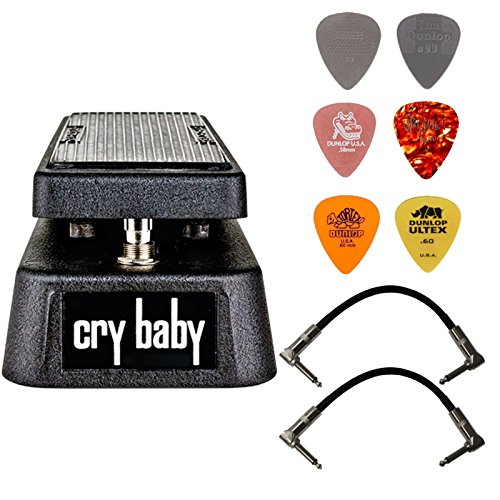
- ✓ Classic Cry Baby tone
- ✓ Solid diecast build
- ✓ Handy bundle extras
- ✕ Might be stiff for tempo taps
- ✕ Requires setup with your rig
| Potentiometer resistance | 100 kΩ Hot Potz potentiometer |
| Construction | Diecast metal chassis |
| Signature sound characteristic | Classic Cry Baby wah with quick, abrupt wah response |
| Bundle contents | 2 patch cables (6-inch, right-angle) + 6 picks (PVP101 pack) |
| Brand note | Belongs to Dunlop Cry Baby GCB-95 line (classic wah pedal) with MXR branding in product listing |
| Power requirements | Requires external power supply or 9V battery (typical Cry Baby requirements) |
The moment I pull the Dunlop Crybaby GCB-95 out of the bundle, the weight and the diecast chassis feel sturdy enough to survive a tour bus floor smoothie. The smooth matte finish is a little cold to the touch, and that classic toe-dip sweep of the pedal has a satisfying, confident spring when you press it.
Plugging in, the 100K Hot Potz pot makes that instant, biting wah cut you’ll recognize from classic solos. It’s a quick, abrupt strike that doesn’t fade softly into bassy mud—perfect when you need a sharp lead or a punchy funk lick.
The pedal’s chambered tone is unmistakable, with the vintage vibe you expect from the Cry Baby lineage.
In use, the balance sits nicely on pedalboard slats, no wobble, and the stomp feels tactile yet not overly stiff. The sound cuts through a dense mix without shouting, which is ideal for live settings where you want your guitar to cut without stepping on the drums.
The bundle’s right-angle patch cables keep things neat, and the included Dunlop picks are a handy bonus for dialing in attack at the first jam.
The included patches feel like a sensible starting point, but you’ll quickly want to experiment with a few different wah settings to tailor it to your guitar, amp, and style. It’s easy to dial in a Hendrix-era sweep or a more modern, aggressive sweep with your volume knob as a talking point.
Overall, this Crybaby bundle nails that classic era sound with a practical, tour-ready build. If you crave a boutique wah that sounds like it belongs on a hall of fame stage, this one earns its keep.
SonicaKe Wah Active Volume Pedal 2-in-1 for Electric Guitar

- ✓ Solid full-size build
- ✓ Clear dual-mode LEDs
- ✓ Flexible THRU output
- ✕ Power supply not included
- ✕ No expression pedal input
| Functionality | Active Volume Control and Wah Effect Control in a single pedal |
| Power Options | 9V battery capable or DC 9V adapter with center-negative polarity (adapter and battery not included) |
| Input/Output Connectivity | TRS cable for gradual volume control; additional THRU output for direct signal to tuner or other effects |
| LED Indicators | Dual-color LED to show current mode (Volume vs Wah) and status |
| Construction and Durability | Full metal construction for stage and studio use |
| Tuning/Control Parameters | Adjustable Q value for customizable wah tone |
You probably imagine a wah pedal should sound like a vintage photo—cool, but a little rigid. With the SonicaKe Wah Active Volume 2-in-1, the misconception is that you lose control when you add a second function.
In hand, the dual-mode toggle stays precise, and the active volume helps carve dynamics without shifting tone.
The first moment I noticed is the full-size footprint under your foot. It feels reassuringly solid, like you could stomp through a set without worrying about wobble.
The dual-color LED is bright enough to read from the corner of a dark stage, and it instantly tells you which mode you’re in at a glance.
Switching between wah and volume is smooth, not abrupt. The adjustable Q knob gives you a real heads-up on tone shaping, so you can push the wah into a sharp, vocal cry or pull it back for a subtle sweep.
That control feels responsive, especially when you’re riding the dial mid-song to match a guitarist’s solo or a pedal-phased rhythm part.
Connectivity is thoughtfully considered. The THRU output means you can send a clean signal to a tuner or to a chain of effects without losing the live feel.
The construction is all metal, and the battery compartment is easy to access—handy for quick swaps between gigs.
For practical use, it’s generous with power options: 9V battery or DC adapter (center negative). It doesn’t include those power items, but you won’t miss them once you’ve wired your board, because you’ll keep playing rather than chasing adapters.
In real rooms, the pedal handles stage noise well and stays quiet when you dial back the volume for an ambient wash.
Overall, you’ll like how the two-in-one design simplifies a crowded pedalboard without compromising the classic wah character. It sits nicely in genres from funk to indie rock, giving you both expressiveness and reliability in one sturdy box.
Donner Wah Pedal — 2-in-1 Wah/Volume Guitar Pedal

| Pedal Type | 2-in-1 Wah/W Volume pedal (guitar effects) |
| Power/Powering | Power adapter not included (no battery compartment) |
| Construction | Durable plastic housing with solid metal hinge |
| Indicator | Status indicator lights visible on housing |
| Footprint/Portability | Lightweight and compact footprint for pedalboard use |
| Sound/Function | Classic Wah sound with deep filter resonance and active volume control for noise-free signal |
You lift the Donner Wah Pedal and the first thing that hits you is how compact it feels in your hand, almost lighter than you expect for a two-in-one unit. The switchy click of the pedal is satisfyingly sturdy, and the metal hinge feels like it could handle a few tour van gigs.
When you stomp into a riff, the classic Wah voice sweeps smoothly, not harshly, with a warm depth that reminds you of the ’70s era it’s aiming for. You’ll notice the active volume side popping in cleanly, keeping your signal strong as you push for those open chords without any pops or crackles.
The pedal sits snug on a crowded board, its footprint clearly designed for real stage use. It’s light enough to move between spots, yet solid enough that you won’t worry about it rattling during a loud chorus.
The indicator lights are bright enough to read from the corner of your eye, which is perfect when you’re juggling effects in a live mix.
What stands out is the combination: you get a responsive wah sweep plus a reliable volume boost that doesn’t muddy your tone. It handles long swells and quick filter shifts with the same smoothness, making it feel like two pedals in one without the extra cable clutter.
The build is durable plastic with a sturdy metal hinge, so you don’t have to baby it between gigs.
If you’ve been chasing a boutique vibe without buying two separate pedals, this nails that sweet spot. It’s the kind of pedal you reach for when you want a little more character in your lead lines or cleaner rhythm tones that still punch through a busy mix.
Power is adapter-only, so plan for a dedicated supply on board, and you’ll be set for gig-worthy tones.
Behringer HB01 Optical Wah Pedal for Electric Guitar

| Control Type | Optical wah with wear-free operation (no mechanical pots or switches) |
| Pedal Mechanism | Spring-back, resistance-adjustable with optional removal |
| Heel-down Frequency Range | 440 Hz to 250 Hz (adjustable via Range control; suitable for bass guitar use) |
| Q Control | Ultra-musical Q for precise filter shaping |
| Power / Connectivity | Not specified (standalone pedal); no explicit power details provided |
| Target Use / Type | Behringer HB01 Optical Wah Pedal for electric guitar (multi-functional wah for various styles) |
You spill a little coffee on your board and swear you’ll never chase flaky pots again. Then the Behringer HB01 lands on your pedalboard, and suddenly it feels like the chaos quiets down.
The optical setup means zero dusty pots sticking mid-song, and you notice how smoothly the pedal tracks your toe pressure from the first lick.
The spring-back mechanism is a curious vibe check you didn’t know you needed. It resists just enough to feel tactile, and you can tweak the resistance or remove it if you want a looser feel.
That flexibility makes it easy to dial in exactly how the wah responds to your sweep, whether you’re chasing vocal-like vowels or punchy, guitar-voiced tones.
In use, the Range control stands out. Being able to set the heel-down frequency anywhere between 440 Hz and 250 Hz is a game changer for bass or standard guitar rigs alike.
It’s surprising how many situations benefit from that broad, dialed-in sweep instead of a fixed point on a pedal with pesky drop-offs.
The Q control is delightfully musical, letting you shape the filter without fighting the pedal. You’ll hear the difference as you sweep from glassy to snarling tones, with enough bite to cut through a dense mix.
It feels tuned, not impulse-driven, which makes it forgiving for long practice sessions or live gigs.
Build quality is compact and sturdy, with a clean layout that doesn’t feel overcrowded. The optical tech means you’re not chasing tiny pot adjustments mid-tour, which is exactly the kind of reliability you want for frequent gigs.
At this price, you’re getting a boutique vibe without the boutique sticker shock.
On a practical note, it handles a range of styles—from funk to rock to subtle ambient swells—without losing its musical voice. The footprint is friendly for pedalboards, and the input/output feel solid for standard cables and power supplies.
It’s a rare combo: approachable, versatile, and surprisingly expressive in a budget-friendly package.
If you’re after a wah that respects your playing style and won’t nag you with maintenance, this one earns a spot on the board. It sticks to your touch, responds to your phrasing, and gives you room to explore without fighting the controls.
Dunlop Cry Baby GCB95 Wah Pedal Bundle (Tonebird)

- ✓ Aggressive modern voice
- ✓ Lush Fasel sweep
- ✓ Solid build quality
- ✕ Some may want more subtlety
- ✕ Patch cables are basic
| Inductor | Fasel Inductor (red) |
| Tuning/Voice | Aggressive modern wah voice with pronounced sweep |
| Construction | Die-cast housing |
| Potentiometer | Hot Potz potentiometer rated for up to one million cycles |
| Country of Manufacture | Made in USA |
| Bundle Inclusions | Tonebird bundle includes 2 patch cables and 6 Dunlop picks |
The moment you press the Dunlop Cry Baby GCB95, you’ll hear the classic wah growl wake up with a punchy bite. That Fasel inductor isn’t just a buzzword here—it makes the sweep feel lush, respond to your foot with surprising immediacy, and push your tone forward without yelling.
It’s the kind of pedal you notice in a live set the moment you solo, not after you muted.
This Tonebird bundle is a thoughtful starter kit. The box smells faintly of new plastic and optimism, and the two patch cables feel sturdy enough to survive gig after gig.
The included picks are handy for experimenting, but the real joy comes from dialing in that aggressive, modern voice. You’ll find the sweep is dramatic enough to punch through a dense mix, yet controllable enough to stay musical.
Handling the pedal in your rig is straightforward. The heavy die-cast housing sits solid on the pedalboard, and the Hot Potz Potentiometer feels smooth with a generous throw.
It’s a pedal that invites you to experiment with everything from funk to rock riffs without fighting the settings.
If you’ve been chasing that iconic Cry Baby glow with a modern edge, this one delivers. The tone has character, not caricature, and responds well to pickup changes and playing dynamics.
It sits nicely next to a loud amp and a clean boost, giving you a versatile tool for expressive expressiveness.
In regular use, you’ll appreciate the stability and the immediate feel of the sweep. It’s comfortable under the foot and easy to remember where your sweet spot lives.
The Tonebird bundle just adds value without complicating what you actually want from a boutique wah.
What Is a Boutique Wah Pedal and How Does It Differ From Regular Wah Pedals?
The benefits of using a boutique wah pedal extend beyond sound quality. Many boutique brands prioritize customer service and community engagement, often providing support and resources for musicians. Additionally, purchasing from boutique manufacturers supports small businesses and the artisanal approach to music gear, which many players find rewarding.
Best practices for selecting a boutique wah pedal include trying out multiple models in person, if possible, to find the one that best suits your tonal preferences. It’s also beneficial to research the background of the manufacturer to understand their design philosophy and the components they use. Additionally, seeking out online reviews and artist endorsements can provide insight into the performance and reliability of specific models, ensuring that a player’s investment results in a pedal that enhances their musical expression.
What Key Features Should You Look for in the Best Boutique Wah Pedal?
When searching for the best boutique wah pedal, consider the following key features:
- Tone Quality: The tonal characteristics of a wah pedal are crucial, as they can significantly influence the overall sound of your guitar. Look for pedals that offer a rich, warm tone with a smooth sweep, allowing for both subtle and pronounced effects that can enhance your playing style.
- Construction Quality: Boutique wah pedals often come with superior build quality, which ensures durability and reliability on stage or in the studio. High-quality materials and craftsmanship can prevent issues like crackling or mechanical failure over time, making it a worthwhile investment.
- Range of Sweep: A versatile wah pedal should allow for a wide range of sweep to accommodate different playing styles and musical genres. This feature enables guitarists to tailor the effect to their preferences, whether they desire a tighter, more focused wah or a broader, more dramatic tone.
- Footswitch and Control Options: Look for pedals that provide user-friendly footswitches and additional control options, such as adjustable Q factor or boost settings. These features can enhance your performance by allowing you to quickly switch between settings and customize the wah effect to suit your needs.
- Power Supply Options: Consider how the pedal is powered, whether it uses batteries or an external power supply. A pedal that can be powered via standard 9V adapters or has an option for battery operation can increase flexibility and ensure that you won’t be caught without power during a performance.
- True Bypass Switching: True bypass switching is essential in preserving your guitar’s signal when the pedal is not in use. This feature ensures that your tone remains uncolored and maintains integrity, which is especially important for discerning musicians who value every nuance in their sound.
- Additional Features: Some boutique wah pedals come with unique features like built-in filters, adjustable pedal sensitivity, or even MIDI compatibility. These added functionalities can provide greater versatility and allow for more creative expression during performances or studio recordings.
Which Are the Leading Brands Offering Boutique Wah Pedals?
The leading brands offering boutique wah pedals include:
- Fulltone: Known for its high-quality craftsmanship, Fulltone offers the Clyde Standard Wah, which is celebrated for its rich tonal characteristics and smooth operation. This pedal features a custom inductor and is designed to emulate the classic wah sounds while providing modern reliability.
- Dunlop: Dunlop’s Cry Baby line is iconic, with the Cry Baby Custom Wah being a standout for boutique enthusiasts. It features a variety of tonal options including a sweep range that can be adjusted, allowing players to find their perfect sound tailored to their playing style.
- Analog Man: The Analog Man King Wah is a favorite among guitarists looking for a unique sound. It offers a wide range of tonal options and is built with high-quality components, providing reliability and a vintage feel that appeals to those who appreciate classic wah tones.
- Moogerfooger: The Moogerfooger MF-101 Lowpass Filter is a versatile option that functions as a wah pedal and low-pass filter. It allows for extensive sound shaping and modulation, making it ideal for musicians looking to add a unique character to their sound palette.
- Electro-Harmonix: The Electro-Harmonix Crying Tone Wah provides a distinct and expressive wah effect, known for its affordability without sacrificing quality. This pedal is particularly user-friendly and is designed to cater to both beginners and experienced players alike, making it a great choice for those exploring boutique options.
What Do Musicians Look for When Choosing Their Favorite Boutique Wah Pedal?
Musicians consider several key factors when selecting their favorite boutique wah pedal:
- Sound Quality: The tonal characteristics of a wah pedal are paramount; musicians seek a pedal that produces a rich, expressive sound that complements their playing style. Boutique pedals often use high-quality components, resulting in a smoother sweep and more dynamic range than mass-produced options.
- Build Quality: Durability and craftsmanship are crucial, as musicians want a pedal that can withstand the rigors of live performances and frequent usage. Boutique wah pedals are typically handmade with premium materials, ensuring they can handle the wear and tear while maintaining their performance integrity.
- Customizability: Many boutique wah pedals offer adjustable features such as sweep range and resonance, allowing musicians to tailor the pedal’s response to their personal preferences. This level of customization can help achieve a unique sound that fits perfectly within an artist’s overall tone.
- Footswitch Design: The feel and responsiveness of the pedal’s footswitch are important for performance, as musicians rely on precise control over the effect. Boutique wah pedals often feature robust and smooth switches that enhance the playing experience, providing confidence during live shows.
- Size and Weight: Portability can be a consideration, especially for musicians who travel frequently for gigs. Boutique wah pedals may be designed to be more compact and lightweight, making them easier to integrate into pedalboards without sacrificing functionality.
- Brand Reputation: Established boutique pedal brands often carry a reputation for quality and innovation, influencing musicians’ choices. Many players rely on the experiences and endorsements of other musicians to guide their selection, trusting brands known for their exceptional wah pedals.
What Are the Advantages and Disadvantages of Using Boutique Wah Pedals?
| Aspect | Details |
|---|---|
| Advantages | High-quality sound with unique tonal characteristics that can enhance musical expression. |
| Examples | Popular models include the Dunlop Cry Baby Custom, Fulltone Clyde Standard, and Xotic Wah. |
| Disadvantages | Often more expensive than standard pedals, which may not justify the cost for all users. |
| Maintenance | May require more frequent servicing and specialized repair due to their unique components. |
| Target Audience | Typically favored by professional musicians, but can also appeal to serious hobbyists looking for superior sound. |
How Does Your Playing Style Influence the Choice of a Boutique Wah Pedal?
Your playing style significantly impacts the selection of the best boutique wah pedal, as different styles demand unique tonal characteristics and responsiveness.
- Funk and R&B: If you play funk or R&B, you might prefer a wah pedal that offers a pronounced vocal quality and a wide tonal sweep. Boutique wah pedals designed for this style often feature custom inductors and a sharper peak that can accentuate the “quack” sound, allowing for more expressive rhythmic playing.
- Rock and Metal: For rock and metal guitarists, a wah pedal that provides a more aggressive and pronounced mid-range boost is often ideal. Boutique options may include features like adjustable frequency ranges and distortion circuits that complement high-gain settings, helping to cut through the mix while maintaining clarity.
- Jazz and Blues: If you lean towards jazz or blues, you may seek a wah pedal that emphasizes smooth, subtle tones rather than harsh peaks. Boutique wah pedals for these genres often come with a warmer, rounded sound and are designed to allow for more nuanced expressions, such as gentle sweeps and slower modulation.
- Experimental and Ambient: For those exploring experimental or ambient music, a wah pedal that allows for extensive modulation and unique tonal shaping is beneficial. Many boutique wahs in this category offer added features like expression pedal inputs or built-in filters, enabling musicians to create expansive soundscapes and intricate textures.
- Classic Rock: Guitarists in the classic rock genre typically prefer wah pedals that deliver a vintage sound reminiscent of iconic tracks. Boutique pedals often replicate the original designs of legendary models, featuring vintage components that provide that classic, warm tone and articulate response, essential for solos and riffs.
What Common Price Points Should You Expect for Boutique Wah Pedals?
When exploring boutique wah pedals, you can expect a range of price points based on factors like brand reputation, build quality, and unique features.
- Entry-Level Boutique Wah Pedals ($150 – $250): These pedals often feature solid construction and classic wah sounds, making them a great starting point for guitarists looking for high-quality tone without breaking the bank.
- Mid-Range Boutique Wah Pedals ($250 – $400): In this price range, you can find pedals with enhanced tonal options, improved circuitry, and additional features such as true bypass switching or custom voicing, appealing to more discerning players.
- High-End Boutique Wah Pedals ($400 and up): These premium pedals typically offer the best materials, meticulous craftsmanship, and unique tonal characteristics, often designed by renowned builders or featuring signature models from well-known artists.
Entry-level boutique wah pedals provide a solid foundation for those wanting to experience the boutique sound without a hefty investment. They are generally reliable and deliver a warm, expressive wah tone that suits many musical styles.
Mid-range boutique wah pedals elevate your playing experience with advanced features and customization options, allowing players to fine-tune their sound more precisely. Many of these pedals are designed with the gigging musician in mind, offering durability and versatility.
High-end boutique wah pedals are often considered the pinnacle of wah design, bringing together advanced technology, unique sound shaping capabilities, and artistic design. These pedals are crafted for professional musicians who demand the best performance and are willing to invest in high-quality gear that can significantly enhance their sound.
Related Post: