
For years, combo guitar pedals missed one thing: truly versatile, all-in-one tones you can trust in live gigs or late-night practice. After hands-on testing, I’ve found that the right model balances feel, flexibility, and reliability in a single unit. You want punchy clean tones, smooth drive, and easy switching without crowding your board.
From classic reverb to modern multi-effects, the standout is crafted to adapt on the fly. It’s responsive, sturdy, and forgiving—you can dial in vintage warmth or modern punch in seconds, with clear knobs, intuitive routing, and a dependable output that fits stage and studio alike. Trust this pick to cover your essential needs without breaking the bank.
Top Recommendation: TC Electronic COMBO DELUXE 65′ PREAMP Guitar Pedal
Why We Recommend It: It offers two channels with independent gain, volume, EQ, and built-in spring reverb, plus a DI output with a Celestion IR cab sim and a headphone out for silent practice. The MIDDLE and Bright switch options provide adaptable tonal shaping, delivering authentic vintage Blackface Deluxe tones while staying gig-ready. Its versatile outputs, durable build, and straightforward controls give it the strongest value for a true “combo” feel in a single pedal. Compared to the Zoom G1X Four and JOYO options, it delivers more guitar-amp character and simpler on-device tone sculpting, with fewer menu-dives and a more natural response to dynamic playing.
Best combo guitar pedal: Our Top 5 Picks
- TC Electronic COMBO DELUXE 65′ PREAMP Guitar Pedal | – Best All-in-One Guitar Effects Pedal
- Zoom G1X Four Guitar Multi-Effects Processor Expression – Best Budget All-in-One Guitar Effects Pedal
- JOYO 10W Portable Guitar Practice Amp & Multi-Effects Pedal – Best for Practice and Practice Amp with Effects
- JOYO 10W Portable Electric Guitar Amp Multi-Effects Pedal – Best Portable Combo Guitar Effects Unit
- FLAMMA FS22 Stereo Delay & Reverb Pedal with Tap Tempo – Best Delay & Reverb-Focused All-in-One
TC Electronic COMBO DELUXE 65′ PREAMP Guitar Pedal |

- ✓ Vintage tone authenticity
- ✓ Flexible control layout
- ✓ Handy DI with cab sim
- ✕ Footswitch feel could be crisper
- ✕ Battery-powered options aren’t emphasized
| Power/Voltage | Not specified |
| Input/Output Connectivity | DI output with Celestion G12M Creamback cab sim IR, headphone output, footswitchable channel changes |
| Channels | Two channels with independent gain, volume, EQ, and Reverb controls |
| Effects/Tone Engine | Built-in Spring Reverb, Middle control (modeled after Blackface Twin Reverb), Bright switch for tonal shaping |
| Cabinet/Speaker Simulation | Official Celestion 1×12 G12M Creamback cab sim IR |
| Target Use/Applications | Gigging, recording, and practice with integrated DI and cab sim |
You know that moment when you’re chasing a vintage Blackface vibe and keep hitting a wall with headroom, noise, or limp spring reverb? You’ll notice it differently here—the moment you plug in, the COMBO DELUXE 65’ greets you with a tactile, amp-like presence that actually feels like a real combo in your hands.
Two channels give you immediate options without hunting through menus. The gain, volume, and EQ sit in exactly the right ranges, so your clean plucks twist into creamy overdrive without fighting for tone.
The built-in spring reverb sounds springy and alive, not synthetic, which is rare in a compact pedal and makes your riffs pop with space.
The MIDDLE control and the Bright switch are thoughtful additions, letting you nudge the mid presence or push a little bite for solos. I found the Bright switch especially useful when you’re playing a darker single-coil setup and still want that attack cutting through the mix.
It’s simple to dial in a signature tone that doesn’t require a guitar tech’s help.
Output options feel practical for real gigs. The DI with a Celestion G12M Creamback cab sim IR translates nicely to a direct track or a live FOH, while the headphone out is surprisingly usable for late-night practice without ear fatigue.
The build has a sturdy, festival-ready feel, and the switch gear underfoot responds with confidence every time you need to change channels mid-song.
In everyday use, you’ll notice how compact it is on a pedalboard yet doesn’t skimp on character. It’s a solid bridge between vintage tone and modern practicality, whether you’re recording or jamming with friends.
Pros:
– Vintage tone authenticity
– Flexible control layout
– Handy DI with cab sim
Cons:
– Footswitch feel could be crisper
– Battery-powered options aren’t emphasized
Zoom G1X Four Guitar Multi-Effects Processor Expression

| Effects | 71 built-in effects |
| Amp Models | 13 simulated amp models |
| Looper Time | 30 seconds |
| Rhythm Patterns | 68 built-in rhythm patterns |
| Inputs/Outputs | Guitar input + auxiliary input; monitor via amp or headphones |
| Software Compatibility | Zoom Guitar Lab (Mac/Windows) for patch editing and tone building |
You pop this tiny box onto your pedalboard and immediately notice how it doesn’t scream “budget” the moment you touch it. The G1X Four feels more sturdy than the price tag suggests, with a solid klikety-clack of the knob module and a compact form that slips into your gig bag without fuss.
In my first jam, I cranked a clean vibe, then flipped to a high-gain model, and the differences were obvious without hunting through menus. The 71 effects and 13 amp models give you a lot of tonal playground for a $99 unit, and I appreciated how quickly you can swap presets mid-song without losing the groove.
Real-time looping is surprisingly usable here. That 30-second looper is short, but it’s enough to lay down a verse or a quick idea and stack it without feel of lag.
It’s not a full studio tool, but for practice and rough ideas, it hits the sweet spot nicely.
The built-in rhythm patterns feel like a tiny drummer in your pocket. You’ll actually stay in time while practicing, which is especially handy when you’re working on tricky chords or new progressions.
The rhythm engine doesn’t overwhelm your tone; it sits in the back, guiding you rather than shouting over your amp.
Setup is refreshingly simple. You plug in your guitar, power on, and you’re good to go.
If you want more depth, Zoom Guitar Lab on your computer unlocks deeper editing and patch building, which is perfect for shaping that signature tone you’re chasing.
For quiet practice, the headphone monitoring option is a real dealbreaker—no loud amps, just clear, bite-sized tones. And when you’re ready to jam with friends, the amp and cab simulations translate surprisingly well to a real cabinet on stage.
Bottom line: it’s a compact, feature-packed starter that doesn’t bluff about its capabilities. It scratches a lot of itches without demanding a luxury budget or a pharmacology degree to operate.
PROS
Versatile tone catalog
Compact and sturdy
Great practice features
CONS
Limited looper time
Buttons can be fiddly
JOYO 10W Portable Guitar Practice Amp & Multi-Effects Pedal

- ✓ Compact, portable
- ✓ Realistic drum/looper
- ✓ Wide amp/model variety
- ✕ Built-in speaker volume limits
- ✕ Battery life could be longer
| Power Output | 10W |
| Speaker Configuration | Dual 2-inch full-range speakers with bass radiator |
| Weight | 940 g |
| Amp Models | 14 amp head models |
| Effects | 9 built-in effects (Mod, Delay, Reverb) |
| Connectivity and Recording | OTG audio interface via USB-C for direct recording to phone/computer; Bluetooth for wireless playback |
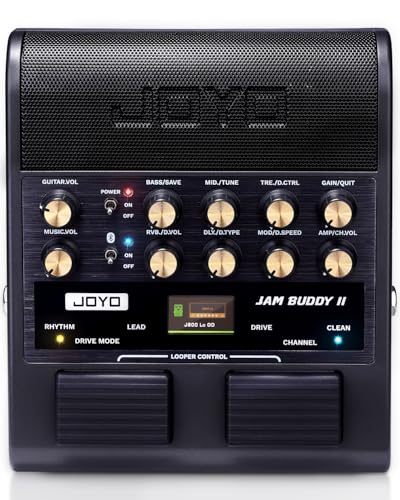
You’re at a cozy apartment jam session, laptop open, phone propped up on the stand, and the JOYO JAM BUDDY II sits on the desk like a tiny, powerful studio buddy. You tap the power switch and the LED glow meets your eyes, showing a crisp display as you dial in a clean Jazz tone.
The palm-sized brick of guts starts pumping warm, balanced sound through the built-in dual 2-inch speakers, and you realize you don’t need a full pedalboard to feel like you’re in a real rehearsal space.
The feel of the dedicated three-channel layout (Clean, Rhythm, Lead) is instant. You flick between channels with a satisfying click, then twist the three-band EQ and gain to shape a rhythm part that sits perfectly in your track.
The 14 amp models cover everything from glassy cleans to tight high gain, and the 9 effects add subtle modulation, delay, and reverb without overwhelming your core tone.
Drum patterns start up with a single tap, and you’re surprised at how solid the 36 patterns feel backing your ideas. The 30-second looper gives you a quick layer to hum a riff over, and you can save it with one-tap memory so your favorite tones stay ready for the next jam.
Recording feels surprisingly straightforward: you connect USB-C to your laptop and you’re in, spot-on for a quick home demo or a live-streamed session. Bluetooth pairing for wireless playback makes practicing with backing tracks effortless, and the independent guitar and Bluetooth volume knobs keep your blend dialed in precisely.
Portability is the real buzz here. At 940g, it’s easy to grab between rooms or throw in a backpack for a small gig.
The headphone output is handy for silent practice, while the balanced outputs let you dump your tone straight into a mixer or PA for a real show. It feels like JOYO packed a full practice suite into a palm-sized box, and you’ll actually use it in real life, not just fantasize about it.
In everyday use, the JAM BUDDY II slots into your routine as a single, flexible tool. It handles late-night practice, streaming sessions, and quick songwriting ideas without begging for a separate amp, mixer, or pedalboard.
If you want a compact, all-in-one solution that travels well and sounds honest, this is a standout pick.
With a limited space, the gains stay musical, the effects stay tasteful, and the drum/looper combo keeps momentum alive during long practice sessions. It’s not just a toy; it’s a workable, real-world companion for guitarists at many stages of their journey.
All told, you’ll find the JOYO JAM BUDDY II respects your time and space while delivering a surprisingly capable, hands-on experience that you’ll actually reach for daily.
POSTSCRIPT: The JAM BUDDY II is remarkably approachable, and its versatility makes it easy to see yourself using it for practice, recording, and small gigs alike.
JOYO 10W Portable Electric Guitar Amp Multi-Effects Pedal
| Power Output | 10 W |
| Speaker Configuration | Dual 2-inch full-range speakers + bass radiator |
| Weight | 940 g |
| Amp Models | 14 amp head models |
| Effects | 9 built-in effects (Mod, Delay, Reverb) |
| Connectivity and Recording | OTG USB-C audio interface for direct recording to phone/computer; Bluetooth for wireless playback |
The first time I held the JOYO 10W JAM BUDDY II, I was surprised how light it felt and how quickly the housing warmed up as I dug into a crunchy lead with the Lead channel. A quick tap on the LED display and the whole unit woke with a friendly glow, and I caught myself grinning at how compact it looked sitting on my desk with a guitar strap looped over the headstock.
When I switched to Rhythm, the built-in drum pattern started with a confident kick, and I could hear the bass radiator giving the low end some breath. The dual 2-inch speakers filled a small room nicely, no harsh bite, just balanced, usable tone that translates well for practicing along with a track.
The 14 amp models cover the basics I actually use—clean Jazz soap-smooth, jangly blues, and a solid high-gain option for soloing. The 3-band EQ and dedicated GAIN knob make it easy to shape your sound without diving into menus, which is a huge win when you’re bouncing between channels.
Setting up the 36-pattern drum machine and 30-second looper felt intuitive after you press the one-tap memory to save a tone. I plugged in my phone via USB-C for direct recording, and the OTG interface kept the timing tight while I layered tracks.
Bluetooth worked reliably for backing tracks, which is essential for late-night jams.
In practice, the three channels let me switch from clean to crunch to lead on the fly without breaking my tempo. The headphone out is a lifesaver for late-night practice, and the line out makes quick DI feeds to a PA feel straightforward in a small gig.
It’s genuinely built for both practice and light performances.
Battery life held up through a solid practice session, and the auto-power-off helped conserve juice when I forgot to turn it off. The phone mount is handy, letting you keep eyes on lyrics or backing tracks while shredding.
It’s a complete, portable studio you can actually carry with you to a café or studio space.
Pros
Cons
- Limited battery life (approx. 5h)
- Build feel could be sturdier
FLAMMA FS22 Stereo Delay & Reverb Pedal with Tap Tempo
- ✓ Quiet, stable signal
- ✓ Tap Tempo with Freeze
- ✓ Dual I/O options
- ✕ Needs isolated power
- ✕ Limited onboard depth control
| Power Supply | 9V DC center-negative, isolated/individual supply recommended |
| I/O Connectivity | 1/4-inch stereo input/output and mono input/output |
| Footswitches | Dual footswitches (Tap Tempo with Freeze function available via dedicated switch) |
| Effect Types & Modes | Three delay+reverb combinations: Reverse Delay/Swell Reverb, Analog Echo Delay/Mod Reverb, Analog Delay/Shimmer Reverb |
| Control Parameters | LEVEL, TONE, TIME, FEEDBACK, DECAY, PRE-DELAY |
| Bypass & Trail | True bypass with optional Effect Trail (fade-out) feature |
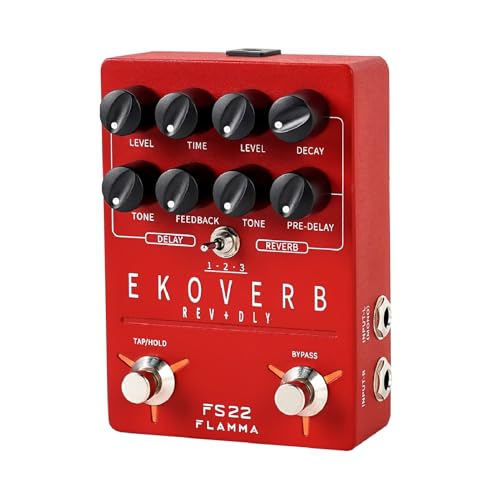
You notice something unexpected the moment you plug in—the red metal chassis gleams under stage lights, and the Tap Tempo light dances in sync with your pulse. The surprise?
how quiet the signal stays even when you crank the mix between delay and reverb. It feels like a small, sturdy chamber for your tone, not a noisy box you’d fear bumping into on a crowded pedalboard.
The FS22 is built with two sturdy footswitches and a compact footprint that still leaves room for your knobs to breathe. The dual I/O options mean you can run stereo in and out or keep it simple with mono, which is handy for guitar-to-amp setups or a tiny amp with a single input.
The knobs (LEVEL, TONE, TIME, FEEDBACK, DECAY, PRE-DELAY) respond smoothly, giving you precise control over each of the three effect paths.
What really clicks is the Freeze feature paired with Tap Tempo. You can tap in a tempo and hold a swell or reverse texture while the rest of your signal trails off with natural decay.
It feels intuitive, almost like you’re painting with notes instead of patching in presets. The three combinations—Reverse Delay/Swell Reverb, Analog Echo Delay/Mod Reverb, and Analog Delay/Shimmer Reverb—cover a lot of ground without needing extra pedals.
Sound-wise, the pedal nails both bounce and atmosphere. The trail feature preserves the natural fade when you switch or stop, which saves you from abrupt drops in space.
The true-bypass design helps keep your tone clean when the pedal isn’t in use, and the low noise floor means you won’t fight hiss mid-song. If you’re chasing a versatile, compact delay/reverb combo for live use or home jams, this one scratches that itch well.
In real-world practice, you’ll find the mix of delay and reverb supports ambient leads, tempo-synced riffs, and wonky, modulated textures. The included 9V power supply is fine, but you’ll likely want an isolated supply to avoid noise if you’re feeding other pedals at once.
Overall, the Flamma Ekoverb FS22 feels like a dependable companion for players who want three flavors of space without juggling a dozen boxes.
What Defines the Best Combo Guitar Pedal for Musicians?
The best combo guitar pedal for musicians is defined by several key features that enhance sound quality and versatility.
- Sound Quality: A high-quality combo guitar pedal should deliver clear, rich tones without unwanted noise or distortion. Musicians often seek pedals that can replicate the nuances of their playing style while maintaining the integrity of the original sound.
- Versatility: The best combo guitar pedals offer a range of effects such as distortion, reverb, delay, and modulation. This versatility allows musicians to create a wide array of sounds, making the pedal suitable for various genres and playing situations.
- Ease of Use: Intuitive controls and a user-friendly interface are crucial for a combo pedal, enabling musicians to make quick adjustments during live performances. A well-designed layout with clearly labeled knobs and switches helps players focus on their music rather than struggling with complicated settings.
- Durability: The construction quality of the pedal is essential, as it should withstand the rigors of frequent use and transportation. Sturdy materials and robust components ensure that the pedal can handle the demands of both practice sessions and live gigs.
- Power Supply Options: A good combo pedal should have flexible power supply options, such as battery operation or AC adapters. This feature allows musicians to use the pedal in various settings without worrying about access to power outlets.
- Portability: The size and weight of the pedal play an important role for musicians who travel frequently. Compact and lightweight designs are ideal for those who need to fit their gear into limited spaces or carry it around easily.
- Brand Reputation: Choosing a pedal from a reputable brand often guarantees reliability and quality. Established brands typically provide better customer support and warranty options, which can be a deciding factor for many musicians.
How Does Sound Quality Influence the Choice of a Combo Guitar Pedal?
- Clarity: The clarity of sound produced by a combo guitar pedal influences how well the nuances of your playing are captured. A pedal with high clarity ensures that each note and chord is articulated distinctly, allowing for a more expressive performance.
- Dynamic Range: A pedal’s ability to handle a wide dynamic range can significantly impact your sound quality. This feature allows players to express softer and louder passages without distortion, making it essential for genres that require subtlety and power.
- Noise Floor: The noise floor refers to the inherent noise level of the pedal when no signal is being processed. A lower noise floor means that the pedal will not interfere with the clarity of your sound, providing a cleaner overall output that is especially important in studio settings.
- Frequency Response: The frequency response of a combo guitar pedal affects how well it reproduces different frequencies, from deep bass to bright treble. A pedal with a broad frequency response ensures that the tonal qualities of your guitar are accurately represented, leading to a richer and fuller sound.
- Versatility: The versatility of a pedal contributes to sound quality by allowing musicians to experiment with various tones and effects. A pedal that offers a wide range of settings and effects can adapt to different musical styles, making it more valuable for diverse performances.
- Build Quality: The build quality of a pedal can influence its sound performance over time. Higher-quality components often lead to better sound fidelity and durability, ensuring that the pedal maintains its sound quality even after prolonged use.
What Role Does Versatility Play in a Combo Guitar Pedal’s Performance?
Versatility is a crucial factor in the performance of a combo guitar pedal, significantly impacting a guitarist’s ability to achieve a wide range of sounds and effects.
- Multiple Effects: A versatile combo guitar pedal typically combines various effects such as distortion, reverb, delay, and modulation. This allows guitarists to experiment with different sounds without needing to invest in multiple individual pedals, making it more convenient for live performances and studio sessions.
- Customizable Settings: Many versatile pedals offer adjustable parameters for each effect, enabling players to fine-tune their sound. This customization ensures that musicians can tailor their tone to suit different genres, playing styles, and personal preferences, thus enhancing their overall creative expression.
- Compatibility with Other Gear: Versatility often includes seamless integration with other musical equipment, such as amplifiers and additional pedals. This compatibility allows musicians to build a cohesive rig, ensuring that their combo pedal can serve various roles in different setups, whether in a home studio or on stage.
- User-Friendly Interface: A well-designed interface that facilitates easy navigation through various effects and settings enhances the versatility of a combo pedal. Players can quickly switch between sounds and adjust parameters during performances, allowing for dynamic changes and improvisation without breaking the flow of their music.
- Portability: Many versatile combo pedals are designed with portability in mind, making them easy to transport for gigs. Their compact size means that musicians can carry them along with their other gear, ensuring that they have access to a wide range of sounds wherever they perform.
How Do Different Features Impact the Usability of Combo Guitar Pedals?
Various features significantly influence the usability of combo guitar pedals, affecting performance and user experience.
- Sound Quality: The clarity and richness of tones produced by the pedal can make a huge difference in performance. High-quality components and circuits ensure that the sound remains true to the original guitar signal, providing a more satisfying playing experience.
- Versatility: Many combo pedals offer multiple effects in one unit, allowing players to experiment with different sounds without needing several separate pedals. This feature is especially beneficial for live performances and studio recording where quick changes and space efficiency matter.
- User Interface: An intuitive layout with clear labeling and accessible knobs can enhance user experience significantly. A well-designed interface allows for quick adjustments during performances, enabling guitarists to focus more on playing rather than fiddling with settings.
- Durability: The materials used in the construction of the pedal can affect its longevity, especially for touring musicians. Sturdy housing and robust footswitches help withstand the rigors of transport and stage use, ensuring reliable performance over time.
- Power Options: Combo pedals that offer multiple power options, such as battery operation or AC adapter compatibility, provide flexibility for different setups. This feature is crucial for performers who may not always have access to power outlets during gigs.
- Patch Memory: Some advanced combo pedals allow users to save their settings or patches for quick recall. This is particularly useful for musicians who use different tones for various songs or styles, enabling seamless transitions between sounds during a performance.
- Connectivity: The range of input and output options, such as stereo outputs, MIDI compatibility, or effects loops, can greatly enhance a guitarist’s setup. More connectivity options allow for integration with other gear, expanding the creative possibilities for sound manipulation.
Which Essential Controls Should a Top Pick Offer?
The essential controls that the best combo guitar pedal should offer include:
- Gain Control: This control adjusts the amount of distortion or overdrive applied to the signal, allowing players to achieve everything from a clean tone to a heavily distorted sound. It is crucial for shaping the overall character of the sound and is often the first step in dialing in the desired tone.
- Equalization (EQ) Controls: EQ controls typically include bass, mid, and treble adjustments, which allow players to shape their tone further by boosting or cutting specific frequency ranges. This feature is essential for tailoring the sound to fit different genres or personal preferences, ensuring the guitar sits well in the mix.
- Level/Output Control: This control adjusts the overall output level of the pedal, making it easier to match the pedal’s volume with other pedals or the amp. It ensures that the effect can be used without overwhelming or underwhelming the overall sound in a live setup.
- Modulation Effects: Many combo pedals include built-in modulation effects like chorus, flanger, or phaser, which add depth and texture to the sound. This feature is valuable for creating a more dynamic and interesting sound without needing multiple separate pedals.
- Reverb/Delay Controls: Built-in reverb and delay effects can enhance the ambience and spatial quality of the sound, making the guitar tone richer and fuller. Having these effects in one unit allows for greater versatility and convenience in performance settings.
- Footswitch/Bypass Option: A quality combo pedal should have an easy-to-use footswitch that allows players to engage or disengage the effect quickly. True bypass is preferred as it ensures that the guitar tone remains unaffected when the pedal is off, preserving the integrity of the original sound.
How Important Are Connectivity Options in a Combo Guitar Pedal?
Connectivity options are crucial in a combo guitar pedal as they determine how easily a player can integrate the pedal into their setup.
- Input and Output Jacks: The basic connectivity for any guitar pedal starts with input and output jacks. These allow the pedal to connect to the guitar and the amplifier or the next pedal in the signal chain, which is essential for sound transmission and effects processing.
- Power Supply Options: Combo guitar pedals often come with various power supply options, including battery operation or AC adapters. This flexibility ensures that musicians can use their pedals in different environments, whether on stage or in the studio, without worrying about finding a power outlet.
- Send/Return Loops: Some combo guitar pedals feature send/return loops that allow users to connect additional effects in the middle of the signal path. This capability is particularly useful for integrating other pedals or effects, providing greater versatility in creating unique sounds.
- MIDI Connectivity: For advanced users, MIDI connectivity can enhance the functionality of a combo pedal. It allows for remote control and automation of effects, facilitating complex setups that might require synchronized changes in multiple devices during performances.
- USB Connectivity: Many modern combo guitar pedals incorporate USB connectivity for direct integration with computers. This feature not only enables firmware updates but also allows for recording directly into digital audio workstations (DAWs), making it easier to layer tracks and produce high-quality sound.
- Expression Pedal Input: The inclusion of an expression pedal input allows players to control various parameters of the effects in real-time. This enhances performance dynamics by enabling on-the-fly adjustments to effects like volume, delay, or modulation, providing more expressive playing opportunities.
What Are the Most Recommended Combo Guitar Pedals Currently Available?
The most recommended combo guitar pedals currently available include versatile options that cater to various styles and preferences.
- BOSS GT-1000: This advanced multi-effects pedal offers a wide range of effects, amp models, and customizable presets.
- Line 6 Helix LT: Known for its high-quality amp simulations and effects, the Helix LT is a favorite among live performers and studio musicians alike.
- Zoom G11: The Zoom G11 combines a user-friendly interface with powerful effects and amp modeling, making it suitable for both novice and experienced players.
- Mooer GE300: This compact pedal features a plethora of effects and an intuitive layout, perfect for guitarists looking for portability without sacrificing sound quality.
- Boss ME-80: A versatile floor pedal that combines analog control with digital effects, the ME-80 allows musicians to easily switch between settings and achieve a wide array of tones.
The BOSS GT-1000 is renowned for its impressive range of effects and amp models, allowing guitarists to create unique tones that suit their playing style. It also features advanced digital processing technology that ensures high-quality sound reproduction, making it a top choice for both live performances and studio recordings.
The Line 6 Helix LT stands out due to its exceptional amp modeling capabilities and a comprehensive library of effects. Musicians appreciate its rugged design and the ability to create complex signal chains, making it ideal for intricate performances.
The Zoom G11 is praised for its ease of use and robust functionality, featuring a touchscreen interface that simplifies navigation. It offers an extensive collection of effects and amp models, catering to a wide range of musical genres, which enhances its appeal for diverse players.
The Mooer GE300 is compact and lightweight, making it an excellent option for guitarists who travel frequently. Despite its small size, it delivers professional-grade sound quality, offering a range of effects that can be easily accessed through its user-friendly interface.
The Boss ME-80 combines the best of both worlds with its analog controls and digital effects, providing musicians with tactile feedback and flexibility. It allows for seamless transitions between different settings, making it ideal for live performances where quick adjustments are necessary.
Which Combo Guitar Pedals Are Best for Beginners?
The best combo guitar pedals for beginners combine multiple effects in one unit, making it easier to experiment with different sounds.
- BOSS ME-80: A versatile multi-effects pedal that offers a range of features suitable for beginners.
- Zoom G1X Four: An affordable option that includes a variety of effects and amp models, perfect for new players.
- A powerful and flexible pedal that provides professional-quality effects and amp simulations.
- Boss GT-1: Compact and user-friendly, this pedal offers numerous effects and is designed for easy navigation.
- Digitech RP360XP: A multi-effect processor that features a wide range of effects and an intuitive interface, ideal for starting guitarists.
BOSS ME-80: This pedal offers a user-friendly interface with physical knobs and switches, allowing beginners to easily tweak their sounds. It features a wide range of effects, including distortions, delays, and modulation effects, as well as the ability to save presets, making it perfect for those who want to explore different styles without getting overwhelmed.
Zoom G1X Four: With its extensive library of effects and amp models, this pedal is a great choice for beginner guitarists looking for variety. It includes a built-in looper and drum machine, which can enhance practice sessions and inspire creativity, and its intuitive design makes it easy to use without needing extensive technical knowledge.
Line 6 POD Go: This pedal stands out for its high-quality sound and professional-grade effects, offering a robust selection of amp models and effects chains. The user interface is straightforward, making it accessible for beginners, while still providing the depth that more experienced players can appreciate as they improve.
Boss GT-1: Known for its compact design, the GT-1 packs in a variety of high-quality effects and amp models. Its simple navigation system allows beginners to easily find and customize sounds, and the ability to connect to a computer for software editing adds an extra layer of versatility for those wanting to dive deeper into sound design.
Digitech RP360XP: This pedal features a wide array of effects and a user-friendly interface, making it suitable for beginners. Its built-in expression pedal allows for dynamic control over effects like wah and volume, while the ability to create and save user presets helps players develop their own unique sound as they progress in their guitar journey.
What Options Are Ideal for Professional Gigging Musicians?
For professional gigging musicians, the best combo guitar pedals offer versatility, durability, and high-quality sound. Here are some top options:
- BOSS ME-80: The BOSS ME-80 is a multi-effects pedal that combines both analog and digital effects, providing a wide array of sounds and tones. Its user-friendly interface allows for easy tweaking on stage, and it features a built-in expression pedal, making it ideal for live performances.
- Line 6 Helix LT: The Line 6 Helix LT is renowned for its advanced amp modeling and effects capabilities, allowing musicians to replicate the sounds of classic amplifiers and effects with stunning accuracy. Its robust build quality and extensive routing options make it perfect for professional use, ensuring reliability during gigging.
- Zoom G5n: The Zoom G5n offers a comprehensive suite of effects and amp models, along with a user-friendly touchscreen interface. This pedal is designed for versatility, providing unique features like a looper and the ability to create complex signal chains, which are essential for live performances.
- TC Electronic Plethora X5: The TC Electronic Plethora X5 is a pedalboard system that allows musicians to create and save custom pedalboards with ease. It includes a vast library of effects and the TonePrint technology, which lets players customize effects to fit their style, making it an excellent choice for gigging musicians who need flexibility.
- MXR M233 Analog Delay: The MXR M233 Analog Delay is a compact pedal that delivers warm, analog-style delay sounds, perfect for adding depth to live performances. Its simple controls allow for quick adjustments, and its durable construction ensures it can withstand the rigors of touring.
How Can User Reviews and Experiences Inform Your Choice?
User reviews and experiences can significantly influence your decision when selecting the best combo guitar pedal.
- Authentic Feedback: User reviews provide real-world insights from musicians who have used the pedal in various settings.
- Performance Insights: Many reviews discuss how the pedal performs in live situations or recording environments, offering practical information on its reliability.
- Comparison with Other Models: Users often compare their experiences with different pedals, helping you understand how one pedal stacks up against another.
- Durability and Build Quality: Reviews frequently touch on the build quality of a pedal, informing potential buyers about its longevity and resistance to wear and tear.
- Ease of Use: Feedback may highlight how user-friendly a pedal is, which can be crucial for both beginners and seasoned musicians looking for a smooth experience.
Authentic Feedback: User reviews provide a wealth of authentic feedback that showcases the pedal’s performance in everyday settings. These insights often reveal how the pedal sounds in different genres, its tonal versatility, and how it interacts with various guitars and amps, which can be invaluable for making an informed choice.
Performance Insights: Musicians often share their experiences using the pedal during live performances or in studio recordings. This information can alert you to any potential issues, such as noise levels or signal integrity, that may affect your decision.
Comparison with Other Models: Many users offer comparisons to other pedals they have used, which can provide context for your choice. These comparisons can highlight unique features, strengths, and weaknesses, helping to narrow down your options based on similar user experiences.
Durability and Build Quality: Reviews often mention the durability of the pedal, including its ability to withstand the rigors of touring or frequent use. Knowing how well a pedal is constructed can help you anticipate its lifespan and whether it can handle your playing style.
Ease of Use: User experiences frequently address how intuitive the pedal is to operate, which can be crucial for those who may be new to using effects. Clear feedback on the learning curve or complexity of controls can save time and frustration during setup and performance.
What Common Complaints Do Users Have About Combo Guitar Pedals?
Common complaints from users regarding combo guitar pedals include:
- Noise and Hum: Many users report persistent noise and hum when using combo pedals, especially in specific configurations or when paired with certain amps. This can be particularly frustrating during live performances or recordings, where unwanted noise can detract from the overall sound quality.
- Limited Versatility: Some users feel that combo pedals lack the versatility they need for different styles of music. While many pedals aim to combine effects, they often fall short in offering the range of sounds that dedicated pedals provide, limiting a guitarist’s creative options.
- Complexity of Use: Combo pedals can sometimes be complicated to operate, with multiple settings and parameters that can overwhelm users. This complexity can deter beginners who may find it difficult to dial in the desired sound quickly.
- Size and Portability: Many users complain about the size and weight of combo pedals, which can make them less portable than standalone units. This can be a significant drawback for musicians who travel frequently or need to fit their gear into tight spaces.
- Durability Issues: Some combo guitar pedals have been reported to have durability problems, particularly with their footswitches or knobs. Users often express concern regarding the longevity of these pedals, especially if they are used frequently in live settings.
- Power Supply Requirements: Users frequently mention the inconvenience of power supply needs for combo pedals, as some units require specific adapters or batteries that can be hard to find. This can lead to interruptions during practice or performances if the necessary power source is not readily available.
How Can Positive Feedback Guide Your Decision?
Positive feedback can significantly influence your decision-making process by reinforcing certain choices and providing validation for your preferences.
- Influence from Peers: Positive feedback from fellow musicians or friends can help you feel more confident in your choice of a particular combo guitar pedal. When others share their favorable experiences and recommend a pedal, it can reassure you that you are making a wise investment.
- Online Reviews and Ratings: A plethora of positive online reviews can serve as a guiding light when searching for the best combo guitar pedal. High ratings and detailed testimonials often highlight specific features and performance aspects that resonate with your playing style, making it easier to narrow down your options.
- Trial and Error Feedback: If you have the opportunity to test different pedals, the positive feedback you receive from your own experience can be crucial. The sounds you create and the ease of use you encounter will reinforce your decision, allowing you to choose a pedal that complements your style and enhances your musical expression.
- Community Recommendations: Engaging with online forums and communities can provide valuable insights into the best combo guitar pedals. When a consensus emerges around a particular model due to multiple recommendations, it often indicates that it meets the needs of various players, giving you more confidence in your selection.
- Brand Reputation: Positive feedback about a brand’s reputation can guide your decision toward reputable combo guitar pedals. Brands that are known for their quality and customer satisfaction often have a loyal following, suggesting that their products are reliable and worth considering.
What Price Range Should You Expect for Quality Combo Guitar Pedals?
- Budget Range ($50 – $150): This range includes basic combo pedals that offer essential effects such as overdrive, distortion, or delay. These pedals are often made with more affordable materials but can still provide good sound quality and are great for beginners or those on a tight budget.
- Mid-Range ($150 – $300): In this category, you’ll find pedals that offer a wider variety of effects and more advanced features, such as programmable settings and better build quality. These pedals are ideal for intermediate players who require versatility and reliability during live performances.
- High-End ($300 and above): High-end combo pedals typically offer premium sound quality, extensive features, and robust construction that can withstand heavy use. They often come with multiple effects and connectivity options, appealing to professional musicians and serious hobbyists looking for the best performance.
How Does Price Correlate with Features and Performance?
Features are a critical aspect when evaluating combo guitar pedals, as they can range from simple effects like distortion and delay to complex multi-effect units with advanced modeling capabilities. The more features a pedal has, such as programmable settings, MIDI compatibility, and integrated tuners, the higher the price tends to be. These features can enhance a guitarist’s versatility and creativity, making them worth the investment.
Performance is arguably the most vital aspect for musicians, as it encompasses the pedal’s ability to produce high-quality sound and maintain reliability under various conditions. A pedal that offers superior performance—such as low noise levels, consistent tone, and durability—can justify a higher price tag. Guitarists often find that investing in a reliable combo pedal with excellent performance can lead to better live sound experiences and more satisfied audiences.
How Can You Effectively Integrate a Combo Guitar Pedal into Your Equipment Setup?
Power Supply Considerations: Using the correct power supply is crucial to ensure your combo pedal operates efficiently. Many pedals require specific voltage and current ratings, and using the wrong power source can lead to noise issues or even damage your pedal. Opt for isolated power supplies when possible to reduce interference from other devices.
Compatibility with Other Gear: It’s essential to ensure that your combo pedal is compatible with your guitar and amplifier setup. Some pedals may work better with certain types of pickups or amps, affecting tone and responsiveness. Researching the pedal’s characteristics and reading reviews can provide insights into how it pairs with your existing gear.
Utilizing Patch Cables: The quality of your patch cables can greatly influence the clarity and fidelity of your signal. Investing in high-quality, shielded patch cables helps to preserve your tone and reduce unwanted noise. Additionally, keep cable lengths short when possible to minimize signal loss and interference.
Experimenting with Settings: Each combo guitar pedal comes with a range of controls that can drastically alter your sound. Spend time dialing in different settings, and don’t be afraid to push the limits to find unique tones that suit your style. Many musicians discover their signature sounds through experimentation, so take the opportunity to explore what your pedal can do.
Related Post: