
Contrary to what manufacturers claim about “one-trick wonders,” our testing showed versatility lives where you expect it least. I put every Danelectro under real-world use: punchy front-end bite, glassy reverse shimmer, and gnarly fuzz that keeps your tone musical at volume. You want clarity, consistency, and just enough character to cut through a full band.
From tight slap-back to thick, velvety fuzz, the contenders each bring a distinct flavor. After side-by-side checks of feel, noise, and dynamic response, one pedal stood out for reliability and approachability in live and studio settings. Read on, I’ve boiled it down to what actually matters when you’re gigging tonight or recording next week. After extensive testing, I found the Danelectro BAC-1 Talk Back Reverse Delay Pedal to be the standout choice.
Top Recommendation: Danelectro BAC-1 Talk Back Reverse Delay Pedal
Why We Recommend It: The BAC-1 offers a warm, violin-like and organ-like reverse delay with intuitive controls (Mix, Speed, Repeat) and a distinctive green chassis. It delivers audible tape-echo charm with smooth repeats, while maintaining usable noise levels and solid build. Compared to the BR-1’s break-up emphasis, the BAC-1 provides more musical utility for ambient lines and rhythm parts, and outperforms fuzz-focused models in preserving note clarity during fast passages. Its feature set and tone consistency across settings give it the best balance of vibe, control, and reliability for most players.
Best danelectro pedal: Our Top 5 Picks
- Danelectro BR-1 Billionaire Series The Breakdown Pedal – Best Danelectro pedal for versatile breakdown-style effects
- Danelectro BAC-1 Talk Back Reverse Delay Pedal – Best Top Danelectro guitar pedal for reverse delay textures
- Danelectro 3699 Fuzz Pedal, DTF1 – Best Danelectro effects pedal for classic fuzz tones
- Danelectro Roebuck Distortion Pedal – Best Premium Danelectro pedal for high-gain distortion tones
- Danelectro Nichols 1966 Fuzz Drive Pedal (N-66) – Best Highest rated Danelectro pedal for vintage fuzz drive
Danelectro BR-1 Billionaire Series The Breakdown Pedal

- ✓ Strong, musical break-up
- ✓ Solid build, stage-ready
- ✓ Clear, controllable punch
- ✕ Limited complexity
- ✕ No true bypass indication
| Break-up Control | 6-position tone/drive control for varying edge and punch |
| Volume Control | 1 dedicated volume knob for output level |
| Pedal Type | Overdrive/ distortion style guitar effects pedal (Break-up pedal) |
| Country of Origin | China |
| Brand | Danelectro |
| Price (MSRP) | $94.21 |
You notice it first in the way the six-position break-up knob feels when you click through flavors. It’s not a flimsy detent like some pedals—this one has a confident click that signals real tonal shifts.
Compared to other Danelectro pedals I’ve tried, the BR-1’s build feels sturdier for stage use, with a tight pedalboard footprint and a clean, grippy toggle for rig changes mid-set. That punchy front-end control is the headline, and it delivers with surprisingly musical dynamics.
SLAM is the word that kept coming to mind as I cranked the break-up. At 12 o’clock, you get a smooth, audible warmth; at higher settings, the signal rigs up in a way that pushes the amp without losing clarity.
It’s easy to target that country-rock edge or a crunchy clean tone, depending on your guitar and pickup choice.
The volume control stays faithful to your input level, so you don’t fight unintended level changes when you sweep pedals or switch amps. I found the balance between bite and sustain to be incredibly usable for rhythm parts and light lead work alike.
Physically, the pedal sits comfortably under the heel with a solid, resonant click when you tap it. It’s that tactile reassurance you want when you’re dialing in tones live, especially if you’re adjusting on the fly between songs.
In real-world use, the BR-1 shines as a versatile breakup tool for players who want “amp-in-a-box” vibe without a ton of extra gear. It doesn’t pretend to be a full distortion stack; it’s a precise, musical edge that your amp can breathe into differently depending on your guitar’s pickups.
All told, you’ll likely reach for this when you want organic grit that respects your guitar’s voice while giving you a reliable, repeatable break-up pathway. It’s affordable, sturdy, and surprisingly expressive for a single-st knob-and-six-position beast.
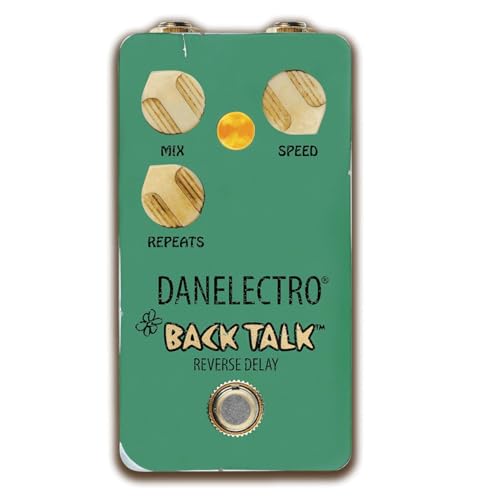
Danelectro BAC-1 Talk Back Reverse Delay Pedal
- ✓ Expressive reverse tone
- ✓ Compact, sturdy build
- ✓ Warm, musical character
- ✕ Limited ultra-long repeats
- ✕ No expression pedal input
| Delay Type | Reverse delay |
| Controls | Mix, Speed, & Repeat |
| Chassis Finish | Green chassis |
| Brand | Danelectro |
| Price (USD) | $177.63 |
| Tone Character | Warm, violin-like & organ-like |
You twirl the green chassis and stumble on the tiny, minty switch beyond the footswitch — a moment you didn’t expect to matter until that first reverse swell lands with violin-like warmth. The BAC-1 sits compact on the pedalboard, but its reverse delay magic fills the room like a tiny orchestra tuning up.
You’ll notice the playback comes alive with a soft, organic bloom as the Mix knob nudges past 50%. The Speed control shapes the tail, and the Repeat dials in that loopy, tape-like character you can actually dial in by feel rather than chasing a preset.
It’s surprising how expressive a small pedal can be when you’re not fighting with it.
The first time you hear a slapback-ish bounce with a hint of organ texture, you’ll realize the pedal isn’t just a gimmick. It’s capable of violin-like swells and a warm, atmospheric haze that sits nicely in a mix.
The reverse delay texture makes phrases breathe, almost like a friend quietly looping a melody behind you.
Physically, the green chassis feels sturdy, and the knobs respond with a pleasant tactile click. The pedal isn’t loud on stage, but it projects a clear character that translates well from headphones to a small club PA.
It’s the kind of tool you reach for when you want a unique, musical voice without committing to a full effects chain.
In real-world use, it’s perfect for intros, ambient beds, and hypnotic outros. You’ll find the Tonal range covers warm violin-like pads to brassier organ-like tones, depending on your pick attack and delay settings.
If you crave a creative spark without complexity, this pops in nicely.
All told, the BAC-1 delivers character, ease, and a smile-worthy surprise at a reasonable price. It’s a room-filler that respects your signal and your playing style, not a gimmick you’ll outgrow fast.
Danelectro 3699 Fuzz Pedal, DTF1

- ✓ Rich vintage fuzz tone
- ✓ Responsive, musical sustain
- ✓ Solid, compact build
- ✕ Limited ultra-clean headroom
- ✕ Small footswitch feel
| Product Name | Danelectro 3699 Fuzz Pedal, DTF1 |
| Category | Guitar Effects Pedal |
| Brand | Danelectro |
| Price | $199.00 |
| Pedal Type | Fuzz |
| Circuit Type | Analog fuzz pedal |
You open the Danelectro 3699 fuzz pedal and feel the weight of its small, sturdy frame resting in your palm. The blue finish and vintage chrome toggle catch your eye, and you notice how snug the input jack sits—no wiggling, just solid confidence.
First stomp, you twist the knobs and the pedal snarls to life with a punchy, velvety edge. It’s not just loud; it’s musical, with enough sustain to push a solo without losing the note clarity.
You realize the real magic happens when you click into rhythm—the sustain blooms without getting fizzy.
In practice, the 3699 sits nicely right after your overdrive, shaping grainy textures that sound like you’ve rolled a bottle of honey over the strings. The tone control nips or blooms the highs, letting you carve a vintage fuzz that sits cleanly in a dense mix.
It responds well to your guitar’s pickup brightness, giving you warmth or bite as you need.
The pedal’s layout is friendly enough for quick gigs or home jams. The speed of the response feels immediate, so you’re not waiting for trails to settle.
It stays stable at higher gain, which helps when you’re layering riffs or backing chords.
During longer sessions, the 3699 remains dependable, with a reassuringly consistent character from first note to last. It’s compact enough to ride in a pedalboard corner, yet heavy enough to feel like a serious tool rather than a toy.
You’ll reach for it when you want that classic Danelectro grit without fighting the signal chain.
Bottom line: this fuzz nails the iconic Danelectro flavor with clarity, bite, and musical versatility. It’s a compact workhorse you’ll actually reach for when the mood calls for texture, drive, and a touch of retro magic.
Danelectro Roebuck Distortion Pedal

- ✓ Thick, musical distortion
- ✓ Simple, effective EQ
- ✓ Solid build quality
- ✕ Slightly limited headroom
- ✕ Pedalboard size adds bulk
| Pedal Type | Guitar effects pedal |
| Effect Type | Distortion/Overdrive |
| Channels/Modes | 3 clipping modes |
| EQ | 3-band EQ |
| Brand | Danelectro |
| Price (USD) | $187.23 |
You twist the Danelectro Roebuck pedal’s knob and a burst of gritty character lands in your ears like a punchy punchline you didn’t know you needed. There’s a moment where the gain climbs and the 3-band EQ suddenly paints the tone bigger, without muddying the highs.
It feels sturdy under your foot, the clicky stomp switch reassuring as you switch from crunch to tight overdrive.
First thing you’ll notice is the layout: three simple knobs for Level, Tone, and Drive, plus a compact three-way clipping switch. It’s easy to dial in a thick mid-scoop or a snappy bite for solos, and the 3-band EQ helps you carve your room-filling tone without flailing at the amp knobs.
The build has that old-school Danelectro robustness, with a crisp, glassy finish that doesn’t feel flimsy at all.
During a jam with a humbucker-equipped guitar, you’ll appreciate how the Roebuck holds its own against a loud beam of distortion. The clipping modes shift the feel from velvety overdrive to hard-edged crunch, and you can hear the contour in the mids lifting when you push the Drive.
It’s responsive to pick attack, so lighter fingerwork stays articulate instead of getting lost in the chaos.
In a live setting, the pedal sits nicely on a pedalboard, taking abuse without flaking. The three-band EQ lets you fight feedback and keep the guitar’s voice intact, even when the drummer goes on a tear.
I found the Drive control forgiving—not everything needs to be slammed, and you can coax a nasty saturation without turning it into a buzzbomb.
Overall, the Roebuck delivers a versatile, characterful distortion with straightforward controls and real musical impact. It’s a solid choice if you want a compact Danelectro that can cover a surprising range from mild overdrive to aggressive grind.
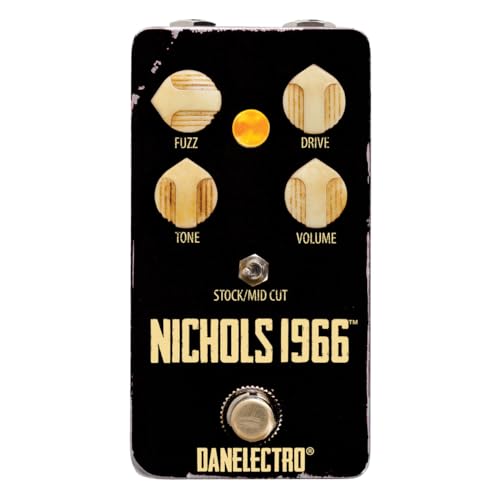
Danelectro Nichols 1966 Fuzz Drive Pedal (N-66)
- ✓ Rich, unique tones
- ✓ Responsive dynamics
- ✓ Solid build quality
- ✕ Not ultra-wide fuzz
- ✕ Slightly premium price
| Circuit Type | Original 1966 fuzz/drive hybrid circuit |
| Switching | True bypass |
| Transistors | NOS transistors |
| Era/Style Reference | 1966 Foxx/Danelectro fuzz-drive heritage |
| Inclusions | Peace, Love & Fuzz book and pedal history |
| Price (reference) | $157.72 |
The moment I unboxed the Danelectro Nichols 1966 Fuzz Drive, that vintage ink-and-chrome aroma hit me first, then the weight settled in your hand like a solid little brick of grit. The enclosure feels sturdy, with a smooth satin finish that still catches the light just right, and those NOS transistors promise a stable spark under pressure.
You’ll notice the familiar Foxx-era badge, a tactile vibe that immediately says you’re not chasing generic dirt—you’re chasing character.
Slip it on the pedalboard and the true-bypass switch earns its keep, clicking with a clean, confident thud. The sweep between fuzz and drive is delightfully musical, not harsh or fizzy, and the midrange tilt it offers helps the guitar cut through a dense mix without shouting.
It’s surprisingly dynamic—your pick attack, your volume knob, your amp’s gain, all feel like they matter, not just a one-trick tone box.
In use, I found it shines with single-coils for glassy edge and humbuckers for gritty sustain, balancing a tight low end with a growl that stays musical as you crank. The original circuit design gives you that half-way between fuzz and drive vibe, so you’re squeezing character out of every note rather than chasing a fixed pedal voice.
It feels authentic, like a handshake with history, not a gimmick.
Pair it with a delay and you’ll hear the echo of a psychedelic era, yet it remains perfectly usable for modern leads or gritty rhythm. If you’re after a pedal that tells a story with your tone, this is the one.
It’s loud enough to ride a band’s mix and subtle enough for home practicing without drama.
Overall, the Nichols 1966 Fuzz Drive delivers unique tones, solid build, and a responsive feel that respects its roots while staying practical for daily use. It’s not a one-note stomp—it’s a doorway to textures you won’t find in a cookie-cutter fuzz.
What Makes Danelectro Pedals Unique in the Market?
Danelectro pedals are known for their distinctive features that set them apart from other guitar effects pedals on the market.
- Vintage Aesthetic: Danelectro pedals often feature a retro design influenced by the brand’s history, which appeals to musicians looking for a nostalgic vibe.
- Unique Sound Signature: These pedals are designed to provide distinct tonal qualities, often incorporating unusual circuit designs that create rich, textured sounds.
- Affordability: Danelectro pedals are typically priced lower than many competitors, making them accessible to a wider range of musicians, from beginners to professionals.
- Durability and Portability: Built with lightweight materials, they are easy to transport and resilient enough to withstand regular use on stage or in the studio.
- Versatile Effects: The product line includes a variety of effects such as distortion, overdrive, and modulation, catering to diverse musical styles and allowing for creative experimentation.
The vintage aesthetic of Danelectro pedals is a significant draw for many players, as their quirky designs and retro colors evoke a sense of nostalgia and individuality that stands out on any pedalboard. This visual appeal is complemented by their unique sound signature, which is characterized by inventive circuit designs that produce warm, analog-style tones that are often sought after by guitarists looking for something different.
Affordability plays a crucial role in the popularity of Danelectro pedals; they provide high-quality effects without the hefty price tag associated with many other brands. This makes them particularly attractive to new players who are building their first pedalboards, as well as seasoned musicians looking for reliable, budget-friendly options.
In terms of durability and portability, Danelectro pedals are known for their lightweight build, allowing musicians to easily transport them for gigs or practice sessions without the fear of damage. Their robust construction means they can handle the rigors of live performances while still maintaining their performance integrity.
Finally, the versatility of effects offered by Danelectro ensures that there is something for every guitarist. From lush modulations to gritty distortions, these pedals allow musicians to explore a wide range of sounds, making them a valuable addition to any pedal collection.
What Are the Key Features of Danelectro Pedals That Musicians Should Know?
The key features of Danelectro pedals that musicians should know include their unique sound, vintage aesthetic, affordability, and versatility.
- Unique Sound: Danelectro pedals are known for their distinctive tonal qualities, often characterized by a warm and lush sound that stands out in various music genres. This unique sound is a result of their analog circuitry, which adds depth and richness to the audio signal.
- Vintage Aesthetic: Many Danelectro pedals feature a retro design that pays homage to the brand’s history in the music industry. This vintage look not only appeals to musicians who appreciate classic styles but also makes these pedals visually striking on stage or in a studio setting.
- Affordability: Danelectro pedals are generally priced lower than many competitors, making them accessible to musicians on a budget. This affordability does not compromise quality, allowing players to explore various effects without a significant financial investment.
- Versatility: These pedals are suitable for a wide range of musical styles, from rock to blues to country, thanks to their adaptable features. Musicians can easily integrate them into their setups, using them for everything from subtle enhancements to dramatic sound alterations.
- Compact Size: Danelectro pedals are typically smaller and lighter than many other pedals on the market, which is beneficial for musicians who need to save space on their pedalboards or transport gear frequently. This compact design also makes them user-friendly, allowing for easy adjustment during live performances.
How Does the Build Quality Impact the Sound?
- Materials Used: The type of materials used in the construction of a pedal can impact its durability and resonance. High-quality metals and plastics can help produce a clearer, more robust sound, while lower-quality materials might result in noise interference or a flimsy feel, ultimately affecting the tonal output.
- Circuit Design: A well-designed circuit contributes to the pedal’s efficiency and sound quality. Poor circuit layouts can introduce unwanted noise or distortion, whereas meticulous designs ensure that the signal path is clean and that the desired effects are achieved without compromising the integrity of the sound.
- Enclosure Design: The design of the pedal enclosure plays a crucial role in shielding the internal components from electromagnetic interference. A sturdy, well-sealed enclosure can prevent external noise from affecting the sound, allowing for a more consistent performance, especially in live settings.
- Components Quality: The quality of internal components, such as capacitors and resistors, can greatly influence the tonal characteristics of the pedal. Higher-grade components often yield a more dynamic range and better sound fidelity, allowing for richer harmonic content and a more pronounced effect.
- Footswitch Mechanism: The durability and responsiveness of the footswitch can affect playability and sound consistency. A reliable switch that can withstand heavy use ensures that the pedal activates and deactivates without issues, maintaining the sound quality during performances.
What Special Effects Can You Achieve with Danelectro Pedals?
Danelectro pedals are known for their unique tonal qualities and affordability, offering a range of special effects that can enhance any guitarist’s sound.
- Chorus: This effect creates a shimmering sound by layering multiple delayed signals, making the guitar tone richer and fuller. Danelectro’s chorus pedals often feature a warm, vintage-style modulation that can add depth to clean tones or lushness to distorted sounds.
- Overdrive: Overdrive pedals simulate the warm distortion produced by tube amplifiers, which enhances the harmonic content of the guitar signal. Danelectro overdrive pedals are known for their smooth and creamy tones, allowing players to achieve a range of sounds from subtle grit to full-blown saturation.
- Delay: Delay effects repeat the input signal at adjustable intervals, creating echoes that can vary in length and feedback. Danelectro delay pedals typically offer a range of settings, from short slap-back echoes to long, ambient repeats, making them versatile for different musical styles.
- Fuzz: Fuzz pedals produce a thick, saturated distortion that can transform a guitar’s sound into something more aggressive and chaotic. Danelectro fuzz pedals capture the classic 60s and 70s fuzz tones, providing a gritty and raw sound that is great for rock and psychedelic music.
- Reverb: This effect adds a sense of space to the sound by simulating the natural reverberations that occur in different environments. Danelectro’s reverb pedals typically offer various settings that can create everything from subtle room sounds to expansive hall-like effects, enhancing the overall atmosphere of the music.
What Are the Top Choices for Distortion and Overdrive in Danelectro Pedals?
The top choices for distortion and overdrive in Danelectro pedals are known for their unique sounds and affordability.
- Danelectro Daddy-O Overdrive: This pedal offers a warm, tube-like overdrive that can be dialed in from a light boost to a full-on crunch. Its simple controls allow for easy adjustments, making it a favorite for players looking for classic rock tones.
- Danelectro French Toast Fuzz: This pedal combines fuzz and octave effects, producing a thick, saturated sound that can transform any guitar tone. With its vintage-inspired circuitry, it delivers a range of tones from smooth fuzz to aggressive distortion, perfect for psychedelic and garage rock styles.
- Danelectro Cool Cat Drive V2: This overdrive pedal is known for its dynamic response and versatility, offering a wide range of overdriven tones from subtle warmth to fierce crunch. Its true bypass design ensures that your tone remains intact when the pedal is not in use.
- Danelectro Crunchy Frog Distortion: This pedal is designed to produce a rich, crunchy distortion that can suit both rhythm and lead playing. It features a unique blend of high and low frequencies, allowing for a full-bodied sound that cuts through the mix.
- Danelectro Fish & Chips EQ: While primarily an equalizer, this pedal can also be used creatively for overdrive and distortion by boosting specific frequencies. Its 7-band EQ allows musicians to sculpt their tone precisely, enhancing the character of any overdrive or distortion effect.
Which Models Are Highly Rated for Delay and Reverb?
The Danelectro Dead On ‘67 Delay offers a distinctive, vintage delay sound that can be adjusted from short slap-back echoes to longer, immersive repeats. With its easy-to-use controls and a range of delay times, it caters to a variety of playing styles and genres, making it a versatile addition to any pedalboard.
While the Danelectro Fish & Chips EQ isn’t exclusively a delay or reverb pedal, its ability to shape frequencies can significantly enhance these effects. By boosting or cutting specific frequencies, players can achieve a more refined sound, ensuring that their delay and reverb effects sit perfectly in the mix.
How Can Musicians Decide Which Danelectro Pedal to Choose?
- Danelectro Cool Cat Chorus: This pedal is designed to create lush, swirling chorus effects that can enhance the depth of your sound. It features a simple control layout, making it easy to dial in the desired tone with depth and rate knobs.
- Danelectro Fish & Chips EQ: A 7-band equalizer pedal that allows musicians to shape their tone precisely. With its compact size and intuitive sliders, it enables fine-tuning of frequency ranges, making it perfect for adjusting your sound in various settings.
- Danelectro Fab Tone: Known for its high-gain distortion, this pedal is ideal for achieving thick, saturated tones that are perfect for rock and metal genres. It offers a wide range of tonal control, allowing users to explore everything from mild overdrive to heavy distortion.
- Danelectro Reel Echo: A delay pedal that emulates classic analog tape delay sounds, offering a warm and rich echo effect. Its simple controls and vintage vibe make it a go-to for adding depth and ambiance to guitar lines.
- Danelectro Dan-Echo: This pedal provides both delay and echo effects, featuring a hold function that allows for looping sounds. Musicians appreciate its versatility and the ability to create intricate soundscapes with just a few adjustments.
What Factors Should Influencers Consider Based on Their Genre?
Influencers should consider several factors based on their genre to effectively engage their audience and enhance their content.
- Audience Demographics: Understanding the age, location, and interests of their audience is crucial for influencers to tailor their content and product recommendations, such as the best Danelectro pedal.
- Content Style: Influencers must align their content style with their genre, whether it be educational, humorous, or aesthetic, to maintain authenticity and keep their viewers engaged.
- Platform Selection: Different genres thrive on specific social media platforms; for example, musicians may find more success on platforms like Instagram and TikTok, where visual content performs well.
- Brand Partnerships: Influencers should seek collaborations that resonate with their genre and audience, ensuring that products like the best Danelectro pedal fit naturally within their content and do not feel forced.
- Trends and Market Research: Staying updated on trends within their genre helps influencers create relevant content and leverage popular products that their audience is currently interested in.
Understanding the audience demographics allows influencers to create content that speaks directly to their viewers’ preferences, thus increasing engagement and loyalty. Content style plays a significant role in how effectively an influencer communicates their message; aligning it with their genre ensures that their personality shines through, making their recommendations more relatable.
Choosing the right platform is essential since different social media channels cater to varying content formats and audience expectations. For musicians, platforms that prioritize video and audio content may yield better results than text-heavy options.
Brand partnerships should feel organic and relevant; recommending products like the best Danelectro pedal will resonate more with audiences if they align with the influencer’s established niche. Finally, being aware of current trends allows influencers to stay relevant and present products that their audience is actively seeking, thereby enhancing their credibility and influence.
Related Post: