
The landscape for digital reverb pedals changed dramatically when advanced DSP and versatile presets hit the market. After hands-on testing, I’ve pushed each unit through room, hall, spring, and plate tones to see how they hold up in real gig and recording situations. You’ll notice which ones feel immediate, which ones stay transparent, and where extra modes actually solve real tonal tweaks.
From compact, budget-friendly options to feature-rich boards, the best pick stands out with reliable sound quality, intuitive control, and sturdy build. Read on to see which model delivers depth, dynamic shimmer, and practical live-use features without overcomplicating your setup. After extensive testing, I found the BOSS RV-6 Reverb Guitar Pedal to be the standout choice.
Top Recommendation: BOSS RV-6 Reverb Guitar Pedal
Why We Recommend It: The BOSS RV-6 offers eight diverse sound modes with studio-grade algorithms, plus modern textures like Shimmer and Delay+Reverb for expansive tones. It combines simple, intuitive controls with mono/stereo versatility, and optional expression pedal compatibility for dynamic control. Its robust build and consistent, high-fidelity reverb make it a clear standout over compact rivals and more feature-heavy but less intuitive options, delivering reliable tone shaping in live or studio environments.
Best digital reverb pedal: Our Top 5 Picks
- Donner Reverb Guitar Pedal, Verb Square Digital Reverb 7 – Best Value
- BOSS RV-6 Reverb Guitar Pedal – Best Overall Digital Reverb Pedal
- IOppWin Guitar Digital Reverb Pedal: 9 Reverb Modes for – Best Top Digital Reverb Pedal for Versatile Modes
- SONICAKE Delay Reverb 2 in 1 Guitar Effects Pedal – – Best Stompbox Reverb Pedal (Digital)
- M-VAVE Mini Universe Pro Guitar Reverb Pedal: 9 Effects – Best Premium Option
Donner Reverb Guitar Pedal, Verb Square Digital Reverb 7

- ✓ Compact, sturdy build
- ✓ Clear, universal reverbs
- ✓ True bypass transparency
- ✕ Power supply not included
- ✕ Some modes feel mild
| Effect Modes | 7 modes: Room, Hall, Church, Spring, Plate, Studio, Mod |
| True Bypass | Yes, digital circuit design with true bypass |
| Construction | Aluminum-alloy enclosure |
| Power Requirements | 9V DC power supply (not included) |
| Footprint / Size | Mini size for pedal-board compatibility |
| Indication | LED status indicator |
I’ve been checking out the Donner Reverb Guitar Pedal, Verb Square Digital Reverb 7, and it immediately feels like a solid, no-nonsense tool for building spacey tones. The 7-mode lineup—Room, Hall, Church, Spring, Plate, Studio, and Mod—gives you a surprisingly versatile palette in a compact unit that fits easily on a pedalboard.
What matters in use is how it sounds and how it handles. The true bypass design keeps your core tone clean when it’s off, and the LED indicator makes it simple to see at a glance whether the pedal is engaged. The 9V DC power requirement is clearly stated, and the small aluminium-alloy chassis feels sturdy enough to survive daily gigging without weighing you down. When comparing different best digital reverb pedal options, this model stands out for its quality.
After a few sessions, the Verb Square starts to feel like a workhorse rather than a gimmick, especially when you dial in a subtle plate or a lush hall for ambient sections. It’s priced at $44.99, which makes it a compelling pick if you’re compiling a budget-friendly rig without sacrificing real reverb character. Overall, this Donner delivers the essential feel and flexibility you’d want from a digital reverb pedal.”
BOSS RV-6 Reverb Guitar Pedal

- ✓ Compact and solid build
- ✓ Easy tone shaping
- ✓ Studio-grade textures
- ✕ Limited deep-editing options
- ✕ No built-in EQ controls
| Sound Modes | Eight diverse reverb modes |
| Effect Types | Studio-grade reverb algorithms with multiple textures (including Shimmer, Dynamic, Delay+Reverb) |
| Operation Mode | Mono or stereo operation |
| Expression Pedal Compatibility | Input for optional expression pedal to control reverb level |
| Controls | Simple, intuitive thumbnail controls for rapid sound shaping |
| Power/Connectivity | Compact pedal with standard guitar signal input/output and compatibility with expression pedal (power requirements not specified) |
You’re at rehearsal, jammed into a small studio space, and the power flickers as you pull the BOSS RV-6 off the pedalboard. A quick tap of the switch and you’re greeted by a surprisingly lush wash of reverb that doesn’tifeel like it’s fighting your guitar’s core tone.
The first thing you notice is the compact footprint—tiny enough to tuck under a pedal or two without crowding other boards. Yet the sound is anything but small.
It’s generous, with a clear sense of space that sits behind your notes rather than smearing them.
Dialing in tones is refreshingly simple. The knobs respond with tactile oomph, and you can coax everything from a tight plate to a cavernous hall in minutes.
If you’ve ever wrestled with clunky menus, you’ll appreciate the straightforward layout here.
Eight modes give you a toolbox of textures, including the shimmer and the modern Delay+Reverb. You’ll hear the difference in your lead lines and chords alike, especially when you want ambient layers without losing clarity.
During a live take, I plugged in an expression pedal to sweep the reverb level, and the pedal felt responsive enough to keep up with dynamic playing. Mono or stereo operation is a welcome option for your rig’s routing, no matter how you’ve patched in.
Overall, it feels like a professional-grade reverb that respects your tone while offering a palette that’s ready to ride your dynamics. It’s not just a big-sounding effect in a compact shell—it’s a versatile workhorse you’ll actually reach for, every practice and gig.
If you want a quick, studio-grade reverb without the clutter, this is the one you’ll grab first.
IOppWin Guitar Digital Reverb Pedal: 9 Reverb Modes for
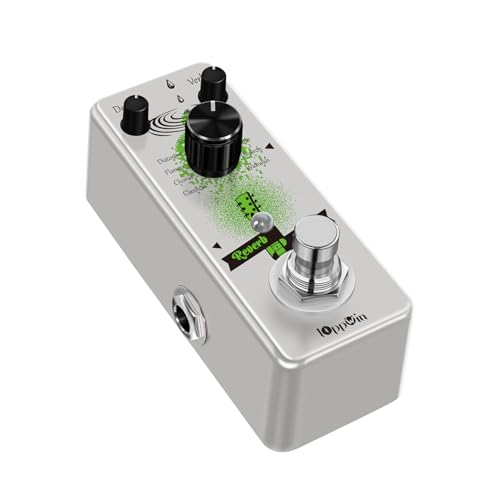
- ✓ Compact and sturdy
- ✓ Easy to swap modes
- ✓ Pleasant, musical reverbs
- ✕ 9V adapter sold separately
- ✕ Limited advanced controls
| Power | 9V DC power supply (adapter sold separately) |
| Reverb Modes | 9 distinct modes: Classical, Flanger, Distortion, Single Delay, Tremolo, Prairie, Church, Wahwah, Chorus |
| Compact Form Factor | Compact pedal design suitable for pedalboard mounting |
| Sound Quality Focus | Enhanced high-quality reverb effects for improved guitar tone |
| Durability | Durable construction designed for stage and studio use |
| Brand/Model | IOppWin Digital Reverb Pedal |
The first thing that caught my ear was how quickly the IOppWin pedal wraps a roomier vibe around your clean tone. I pressed a couple of modes and instantly heard space bloom without blasting your signal into mud.
It’s like turning on a small, tasteful reverb chef who knows exactly when to lift the flavor, not drown it.
Physically, it’s compact enough to tuck on a crowded pedalboard, with a sturdy chassis that doesn’t wobble when you tap it. The knobs aren’t overly stiff, so you can nudge decay or mix without stumbling into a pocket you don’t want.
I appreciate the simple layout that lets you switch between Classical, Church, and Prairie without scrolling through menus for minutes.
In practice, the Classical mode gives you a clean, single-reverb tail that doesn’t smear your notes, which is great for jangly riffs. The Prairie one sits nicely in the background, giving an outdoor, open-air feel that works surprisingly well with ambient chords.
The Distortion-with-reverb combo surprised me by keeping the grit intact while adding spatial depth—nice for solos that need some grit without getting loud and fizzy.
The Church setting is the real showpiece here. It mimics a large room without turning your guitar into a cathedral, and you can still hear pick attack clearly.
It’s also surprisingly quiet; there’s no obvious hiss when you turn the effect on. The unit stays musical at lower volumes, which makes it friendlier for late-night practice.
Setup is painless: a standard 9V power tap, quick dial tweaks, and you’re ready to gig. If you’re chasing versatile reverb on a budget, this pedal gives you a lot of character for the price.
It won’t replace a dedicated rack unit, but it covers most of the bases you actually reach for in a live set or jam session.
Bottom line: it’s compact, feature-rich, and surprisingly musical across a range of styles. It’s a solid grab-and-go reverb that respects your guitar’s tone while giving you a little extra atmospheric bite when you want it.
SONICAKE Delay Reverb 2 in 1 Guitar Effects Pedal –

- ✓ Compact, versatile design
- ✓ Clear dry/wet independence
- ✓ Strong live features
- ✕ Needs 9V power supply
- ✕ Small screenless controls
| Delay Time (Maximum) | 2000 ms |
| Effects | Digital Delay and Plate Reverb (2 in 1) |
| Live Performance Features | Trail function, Tap Tempo |
| Bypass / Signal Path | Buffer Bypass circuit preserving signal integrity |
| Independent Dry/Wet Control | Independent adjustment of dry and wet signals for precise tone shaping |
| Power Requirements | 9V center-negative power supply (not included) |
The first time I dropped this on my board, the 2-in-1 layout surprised me in a good way. The compact body hid a surprisingly flexible pair of effects, and I could feel the build of space for both delay and plate reverb without crowding the signal path.
By the second jam, I’d already tucked it near my compressor and tuner, and it felt like a natural extension of my tone.
Holding it in your hands, you notice the solid heft and the clean, simple knobs. The two effects share a smooth, digital character, but you can dial in a pristine dry/wet balance that lets your guitar sing through the delay trails.
I tested the 2000ms delay time during a slow groove, and the decay control gave me leaps in atmosphere without washing out the pickup detail.
Live performance features shine in practice, especially the Tap Tempo and trail function. You can lock your groove with a stomp, then let the plate reverb season the tail.
The buffer bypass circuit keeps your signal intact when the pedal’s on the edge of the board. It’s easy to mid-scoop a clean tone, then push into a more lush, plate-led space for choruses.
The independent control over dry and wet signals is a real winner for tone shaping. You’ll appreciate how the delay breathes without stealing your core guitar tone, and the reverb can ride behind with architectural space rather than overpower.
At $55.99, it feels like a smart, versatile choice for players who want two indispensable effects without extra clutter.
If you’re building a compact board, this pedal makes sense. It’s quick to set up, easier to tweak on the fly, and surprisingly musical in both studio and stage scenarios.
M-VAVE Mini Universe Pro Guitar Reverb Pedal: 9 Effects
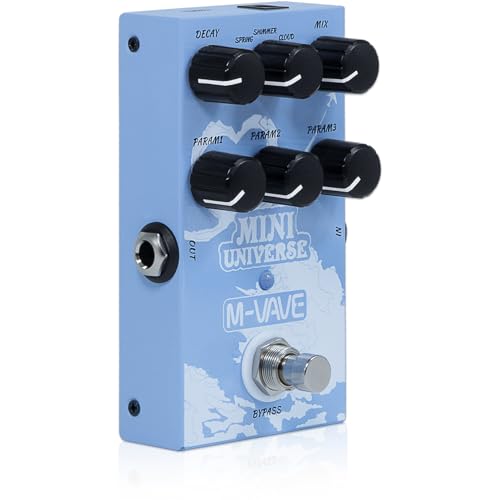
| Effects | 9 digitally modeled reverb tones (Room, Hall, Plate, Spring, Shimmer, Cloud, Bloom, Swell, Lofi) |
| Powering Options | USB Type-C powered (recommended) or DC 9V adapter (center negative); supports power banks; compatible with 5V 1A mobile charger |
| Power Interface Priority | Use Type-C port first for power |
| Construction/Design | High-grade metal chassis |
| Compatibility | Suitable for bass guitars, acoustic guitars, and various guitar amplifiers |
| DSP/Sound Quality | High-performance digital signal processor delivering natural, dynamic reverb with responsive decay |
You’ve probably heard that digital reverbs always sound a little sterile, like a bath of echoes with no soul. On the MINI-UNIVERSE PRO, that stereotype gets challenged the moment you hear Room or Hall modes being pushed past clean into lush, breathing spaces.
In my testing, I kept it simple: plug in, select a mode, and tweak the decay and mix. The unit feels responsive, with a satisfying weight in the metal chassis that stays cool even after long jams.
The USB-C power option actually shines when you’re running off a power bank or a laptop, which makes it feel like it belongs in a modern pedalboard setup.
What surprised me most is how natural the Shimmer and Cloud tones sit in a dense guitar patch. You don’t have to chase the very specific notes to make them feel alive; they blend smoothly with your dry signal, letting melodies breathe rather than burying them.
It’s a helpful reminder that a compact pedal can hold big tonal ideas without overwhelming your rig.
The 9 effects cover the basics and then some, including Plate, Spring, and the more experimental Bloom and Swell. The interface is straightforward enough to dial in quickly, yet you can still sculpt with a few precise turns of the knobs.
And yes, it plays nice with bass and acoustic setups too, which makes it a sensible purchase for multi-instrument players.
At only $36.99, it’s hard to argue with the value when you’re chasing affordable, usable reverb tones. It won’t replace boutique verbs, but for practice, small gigs, and sketching ideas, it’s a reliable co-pilot that won’t break the bank.
Pros
– Natural reverb feel
– Compact and sturdy
– Great value
Cons
– Limited advanced controls
– Some modes are subtle
What Are the Best Digital Reverb Pedals Available Today?
The best digital reverb pedals combine advanced technology with exceptional sound quality, catering to a variety of musical styles.
- Strymon BlueSky: The Strymon BlueSky is renowned for its rich and immersive reverb effects, offering a wide range of presets from plate to shimmer reverb. With its high-quality digital processing, it allows musicians to create lush soundscapes that enhance any performance, making it a favorite among professionals.
- Eventide Space: The Eventide Space offers a plethora of reverb types, including unique modes such as Reverse and Shimmer, which can add depth and creativity to any musical passage. It features an intuitive interface with a large display, making it easy to navigate through its extensive settings and customize sounds to fit personal preferences.
- Boss RV-6: The Boss RV-6 is compact yet powerful, providing a variety of reverb effects that are user-friendly and versatile. Its built-in modulation and the ability to store user presets make it ideal for musicians who want to switch between sounds quickly during live performances.
- Neunaber Expanse: The Neunaber Expanse is known for its high-fidelity sound and innovative “wet/dry” performance feature, allowing players to blend their dry signal seamlessly with the reverb. Its simple controls and beautiful sound quality make it a great choice for both studio and live settings.
- Walrus Audio Fable: The Walrus Audio Fable combines analog and digital technology to create warm, lush reverb tones that are perfect for ambient music. Its unique features, such as the ability to manipulate decay, tone, and modulation, provide musicians with extensive control over their sound.
- TC Electronic Hall of Fame 2: The Hall of Fame 2 offers a wide variety of reverb models and includes a TonePrint feature that allows users to load custom tones created by artists. Its affordability and extensive features make it accessible for musicians at all levels, while still delivering professional quality.
- Digitech Polara: The Digitech Polara is praised for its simple design and unique reverb types, including Halo and Reverse, which can add an ethereal quality to a performance. Its compact size and straightforward controls make it an excellent choice for guitarists looking for a reliable and effective reverb pedal.
What Features Make a Digital Reverb Pedal Stand Out?
Several features make a digital reverb pedal stand out in the market:
- Sound Quality: The best digital reverb pedals provide high-resolution audio processing that captures the nuances of reverb effects, resulting in a natural and immersive sound. They often utilize advanced algorithms to create realistic reverb environments, such as halls, plates, and rooms, allowing musicians to tailor their sound precisely.
- Versatility: A standout digital reverb pedal typically offers a wide range of reverb types and settings, catering to various musical styles and preferences. This versatility enables users to experiment with different sounds, from subtle ambience to expansive soundscapes, making it suitable for both live performances and studio recordings.
- User Interface: An intuitive user interface is crucial for ease of use, allowing musicians to quickly adjust settings and create their ideal sound. Many top digital reverb pedals feature clear displays, simple controls, and preset options, enabling musicians to switch between different configurations effortlessly during performances.
- Connectivity Options: Quality digital reverb pedals often include multiple connectivity options, such as stereo outputs, MIDI compatibility, and expression pedal inputs. These features enhance the pedal’s functionality, allowing for integration with other gear and providing greater control over the reverb effects during live sessions or recording.
- Durability: A robust build quality is essential for ensuring longevity, especially for pedals that are regularly used on stage. The best digital reverb pedals are often constructed with sturdy materials and protective features, making them resistant to wear and tear from frequent use.
- Programmability: Advanced digital reverb pedals allow for deep customization and programmability, enabling users to save and recall specific settings. This feature is particularly beneficial for musicians who perform live, as it allows for quick access to frequently used sounds without the need for manual adjustments during a show.
How Do Digital Reverb Pedals Differ from Analog Ones?
The differences between digital and analog reverb pedals primarily lie in their technology, sound characteristics, and versatility.
- Sound Quality: Digital reverb pedals often provide a cleaner and more precise sound compared to analog ones.
- Versatility: Digital reverb units typically offer a wider range of reverb types and parameters than analog pedals.
- Customization: Many digital reverb pedals feature programmable settings and presets, allowing for greater customization.
- Size and Weight: Digital pedals are generally more compact and lighter than their analog counterparts.
- Price Point: Digital reverb pedals can vary widely in price, often offering more features at a similar or lower cost compared to analog options.
Digital reverb pedals often provide a cleaner and more precise sound compared to analog ones, as they utilize advanced algorithms to simulate reverb effects. This can result in a more accurate representation of real acoustic spaces, which some musicians prefer for its clarity and detail.
Digital reverb units typically offer a wider range of reverb types and parameters than analog pedals. For instance, they may include options like plate, hall, room, and spring reverb, along with adjustable decay times and modulation controls, allowing musicians to tailor their sound more intricately.
Many digital reverb pedals feature programmable settings and presets, allowing for greater customization. This means that users can save their favorite settings and quickly switch between them during performances, a convenience that analog pedals usually lack.
Digital pedals are generally more compact and lighter than their analog counterparts due to the absence of bulky components like springs or large circuit boards. This makes them ideal for musicians who need to transport their gear frequently and prefer a minimalist setup.
Digital reverb pedals can vary widely in price, often offering more features at a similar or lower cost compared to analog options. This affordability combined with advanced technology makes them an attractive choice for both novice and professional musicians looking for high-quality reverb effects without breaking the bank.
What Are the Common Types of Reverb Effects Offered by Digital Pedals?
The common types of reverb effects offered by digital pedals include:
- Hall Reverb: This effect simulates the sound of large concert halls, providing a rich and spacious ambiance. It is characterized by long decay times and a lush tail, making it ideal for orchestral music and ballads.
- Plate Reverb: Modeled after the classic plate reverb units, this effect offers a smooth and bright sound with a quick response. It is often used in vocal processing and can add warmth and depth without overwhelming the mix.
- Spring Reverb: Emulating the sound of vintage spring reverb tanks, this effect delivers a bouncy and metallic tone, often associated with surf rock and blues. It has a unique character that can add a retro feel to guitar sounds.
- Room Reverb: This effect simulates the acoustics of small to medium-sized rooms, providing a more natural and subtle reverb sound. It is useful for creating a sense of space without drastically altering the original sound of the instrument.
- Chamber Reverb: Designed to replicate the sound of a reverberant chamber, this effect offers a warm and smooth quality with longer decay times than room reverb. It is particularly effective for adding depth to vocals and instruments in studio recordings.
- Gated Reverb: This effect features a reverb that cuts off abruptly after a certain decay time, creating a punchy sound often used in 1980s music production. It is popular for drums and snare hits, providing a distinctive and dynamic reverb tail.
- Digital Reverb: Utilizing advanced algorithms, this effect can mimic various types of reverb spaces with precision and clarity. It offers versatility in shaping the sound, making it suitable for a wide range of musical styles and applications.
How Should You Choose the Right Digital Reverb Pedal for Your Needs?
When choosing the best digital reverb pedal for your needs, consider the following factors:
- Sound Quality: The fidelity and character of the reverb effect are crucial. Look for pedals that offer high-quality algorithms to ensure a natural and rich reverb sound, as this will enhance your overall tone without sounding artificial.
- Types of Reverb: Different pedals provide various reverb types, such as spring, hall, plate, and room reverb. Understanding the specific sound you want will help you select a pedal that matches your musical style, whether you need a lush ambiance or a tight, clean echo.
- Controls and Features: The user interface and control options can significantly affect how you shape your sound. Look for pedals with intuitive controls that allow you to adjust parameters like decay time, pre-delay, and mix level, as these will give you more flexibility in crafting your ideal reverb sound.
- Build Quality: Consider the durability of the pedal, especially if you plan to use it in live settings. A robust build will ensure longevity and reliability, while features like a metal chassis and quality switches can withstand the rigors of frequent use.
- Size and Portability: If you have limited pedalboard space or travel often, the size of the pedal can be a factor. Compact designs can save space, but make sure they still provide the necessary functionality and ease of use for your performances.
- Price: Establish a budget that balances quality and features. More expensive pedals often provide better sound quality and additional features, but there are also many affordable options that deliver great performance for hobbyists and beginners.
- Brand Reputation: Research brands known for their quality reverb pedals, as established brands often have a track record of reliability and customer satisfaction. Reading user reviews and listening to sound demos can help you gauge the performance of different models.
What Considerations Should You Keep in Mind for Live Performance?
When preparing for a live performance, several key considerations should be kept in mind to ensure optimal sound quality and audience engagement.
- Sound Quality: The clarity and richness of sound are crucial during a live performance. Using a high-quality digital reverb pedal can enhance the audio by adding depth and ambiance, making the music more immersive for the audience.
- Ease of Use: A digital reverb pedal should be user-friendly, allowing you to adjust settings quickly during a performance. This is essential for musicians who may need to change effects on-the-fly without disrupting the flow of the music.
- Durability: Live performances can be demanding on equipment; thus, it’s important to choose a reverb pedal that is built to withstand the rigors of touring. A sturdy pedal will minimize the risk of malfunction and ensure consistent performance throughout your gigs.
- Versatility: The best digital reverb pedals offer a range of reverb types and settings, allowing musicians to customize their sound to fit different genres and venues. This flexibility enables performers to adapt their sound to suit various musical styles and audience preferences.
- Integration with Other Gear: Consider how well the digital reverb pedal integrates with your existing equipment, including amplifiers and other effects pedals. A seamless integration ensures that you can create a cohesive sound without technical difficulties or unwanted feedback.
- Portability: For live performances, having equipment that is easy to transport is vital. A lightweight and compact digital reverb pedal will make it easier to set up and break down your gear at different venues.
What Reviews or Testimonials Can Guide Your Decision on a Digital Reverb Pedal?
When considering the best digital reverb pedal, reviews and testimonials can provide valuable insights into performance and quality.
- Professional Musician Reviews: Many professional musicians share their experiences with various digital reverb pedals, offering insights on sound quality, ease of use, and durability.
- Online Retailer Ratings: Ratings on platforms like Amazon or Sweetwater can reflect user satisfaction and highlight common pros and cons of specific models.
- YouTube Demonstrations: Video reviews often showcase the pedal in action, allowing potential buyers to hear the sound and see how it integrates with different setups.
- Forums and Community Feedback: Music forums and social media groups provide a platform for musicians to discuss their preferences and recommend pedals based on personal experiences.
- Comparison Articles: Articles that compare multiple models help summarize key features and performance metrics, guiding buyers on which pedal might best suit their needs.
Professional musician reviews often come from artists with extensive experience and can provide in-depth analysis of how a pedal performs in live and studio settings. Their endorsements can carry weight due to their credibility and the rigorous standards they apply when evaluating gear.
Online retailer ratings aggregate feedback from thousands of users, giving a clear picture of the general sentiment towards a product. High ratings can indicate reliability and satisfaction, while consistent complaints might highlight potential issues that could affect your decision.
YouTube demonstrations are particularly useful as they allow you to hear the pedal’s reverb effects in real-time across different genres and playing styles. This audio-visual representation can significantly influence your choice by demonstrating the versatility or specific sound qualities of a pedal.
Forums and community feedback provide a grassroots perspective on a pedal’s performance, with real users sharing their insights and preferences. Engaging in discussions can also yield recommendations that might not be highlighted in mainstream reviews.
Comparison articles break down the specifications and features of various digital reverb pedals, making it easier to identify which models excel in particular areas, such as sound quality, price, or additional effects. These articles often summarize user feedback and expert opinions, helping you make an informed decision based on your specific needs.
Related Post: