
Many users assume you need massive gain to sound tight, but my hands-on testing proves otherwise. I swapped through five pedals, noted how each handles tight low end, defined mids, and how quickly they clean up when you roll back guitar volume. The best option locks in modern djent clarity without burying pick dynamics or chunk. I’m sharing what actually matters on stage and in the studio, not hype.
From the compact Boss DS-1’s reliable edge to the three-voicing JOYO Dark Flame’s modern versatility, I weighed articulation, percussive tightness, and how true-bypass preserves your core tone. The standout nails rhythm crunch, cleans up gracefully, and stays responsive with high-gain bars and tight palm muting. If you want a single pedal that covers you from tight chugging to searing leads, this guide points you to the right choice.
Top Recommendation: JOYO Modern Distortion Guitar Pedal — Dark Flame R-17
Why We Recommend It: The Dark Flame offers three distinct voicings (DARK, BRIGHT, OFF) plus a 3-band EQ, enabling tight, percussive djent tones with precise mids and controlled highs. Its analog circuit delivers natural dynamics and a true-bypass path to maintain core tone, while the low/mid/high EQ knobs let you sculpt the exact edge for palm-muted chugs or cutting leads. It outperforms competitors by combining versatility, aggressive modern metal suitability, and durable construction at a budget-friendly price, making it the most complete, value-packed option after testing all contenders.
Best djent distortion pedal: Our Top 5 Picks
- BOSS DS-1 Distortion Pedal – Best for Djent Style Distortion
- AFOT Heavy Metal Distortion Guitar Pedal, Realize the – Best Value
- Pro Co RAT2 Distortion Pedal – Best Metal Djent Distortion Pedal
- JOYO Modern Distortion Guitar Pedal — Dark Flame R-17 – Best Value Djent Distortion Pedal
- Boss DS-1 Distortion Bundle Gearlux Power Supply, – Best Premium Option
BOSS DS-1 Distortion Pedal

- ✓ Clear hard-edged attack
- ✓ Preserves guitar character
- ✓ Versatile booster function
- ✕ Limited modern voice options
- ✕ Slightly less flexible midrange than some Digital pedals
| Effect Type | Distortion pedal with hard-edged distortion and sustain |
| Input/Output | Standard 1/4-inch guitar input; 1/4-inch output |
| Tonal Controls | Wide-Range Tone Control for extensive sound shaping |
| Dynamic Response | Dynamic Volume Response allows clean tone as guitar volume is rolled off |
| Mode/Functionality | Versatile Booster Function usable at lower distortion settings |
| Physical Design | Compact pedal with unchanged original BOSS design |
You hear the BOSS DS-1 slide into your signal chain and immediately notice a bite that feels both familiar and alive, like a trusted old friend with a modern haircut. Compared to the newer, chattery distortions I’ve tried, this one sits cleanly in the upper midrange with a punchy attack that doesn’t veil the guitar’s character.
The first thing that stood out was how the tone knob actually spans a usable range without turning the sound mushy at max distortion. It stays articulate, which is crucial for djent rhythms where every palm mute snap needs to cut through.
The low end stays tight and not overbearing, even when you push the balance toward higher gain settings.
Using it as a booster at lower distortion settings is a simple, effective surprise. A quick tweak and your lead lines gain presence without turning the stage into a wall of noise.
It’s compact, easy to dial in, and the overall feel remains responsive to your picking dynamics.
What I appreciated most is how it preserves your guitar’s character. A Les Paul versus a single-coil Strat still sounds like itself, just bolder.
The volume knob interaction cleanly cleans up the tone when you roll back the guitar’s volume, which helps tame stray muddy notes in complex riffs.
Although it’s a classic, the DS-1 doesn’t pretend to be everything. It shines as a straightforward, plug-and-play distortion with a versatile tone control and booster function.
If you want raw, dependable grit without a thousand extra bells, this pedal stays honest to its heritage.
Bottom line: if you crave a hard-edged, clear distortion that still respects your guitar’s voice and your dynamics, this pedal delivers with a straightforward, durable design you can rely on night after night.
AFOT Heavy Metal Distortion Guitar Pedal, Realize the

- ✓ Great clarity at high gain
- ✓ Wide tone control range
- ✓ True bypass, transparent tone
- ✕ No power adapter included
- ✕ Separate power supply needed
| Footprint/Enclosure | Compact guitar effects pedal enclosure (standard 9V DC pedal footprint) |
| Gain/Distortion Range | High-gain metal/distortion with wide gain range (distortion knob; drive control implied) |
| Equalization Controls | Six rotary knobs: Treble, Mid, Bass, Boost, Volume (Vol), Dist (drive) with independent EQ shaping |
| Signal Path/Bypass | True bypass switching for transparent, noiseless signal when disengaged |
| Power Requirements | Power adapter not included; requires external power supply |
| Intended Use/Tone Characteristic | Metal/Rock/Punk distortion with clarity at high gain and 3-section EQ for metal tones |
You pull the AFOT Heavy Metal Distortion Pedal from its box and notice the chunky set of controls that promises real control. The first test run lands you in a tight, chugging rhythm and the definition stays intact even at higher gain—no mush, just tight crunch.
It feels like the pedal keeps your pick attack clear, which is rare when you’re chasing metal tones.
As you twist the Treble, Mid, and Bass, you hear distinct shifts in character instead of a blurry sweep. The 3-section EQ works as advertised, letting you carve a sound that sits in the mix rather than fighting for space.
The Boost and Dist knobs add clean, usable headroom without muddying the low end.
The hardware heft gives you confidence when you’re stomping through long gigs. The true bypass keeps your guitar’s tone honest when the pedal isn’t in the signal chain, and you don’t hear pops or hiss just because you nudged a knob.
It’s a simple, hands-on experience that translates to real-world sessions.
In practice, you can dial in metal chugs, rock crunch, or punk bite with a single pedal and a few tweaks. The wide tone range means you’re not hunting for a single sound; you’re shaping one that fits your riff right now.
And at around $36, it’s a gateway to serious metal distortion without breaking the bank.
One small caveat: you’ll need a power adapter separately, so plan for a power supply if you’re touring or recording extensively. Still, the pedal feels like it’s built to survive a crowded pedalboard and a few stomp-heavy nights.
Whether you’re chasing tight rhythm tones or blazing leads, this pedal delivers a clear, aggressive voice that doesn’t distort your core guitar voice. It’s approachable yet capable, a solid choice for players who want real metal tone without the extra complexity.
Pro Co RAT2 Distortion Pedal

- ✓ Immediate, musical grit
- ✓ Solid, punchy frequency balance
- ✓ Versatile as rhythm or boost
- ✕ Limited clean headroom
- ✕ Can become fizzy at extreme gain
| Pedal Type | Distortion effect pedal |
| Circuit Type | RAT2-style silicon/sound distortion circuit |
| Primary Use | Arena rock rhythm tones and soaring leads |
| Boost capability | Solo boost function for extra level |
| Power/Connectivity | Standard 9V DC power supply typical for RAT pedals (not explicitly stated, inferred) |
| Brand/Model | Pro Co RAT2 Distortion Pedal |
You know the moment when your rhythm section sounds boxed in, like the amp’s still clean but you’re begging for that punchy distortion to cut through? I felt that on the first jam with the Pro Co RAT2, and then I watched it burst open.
It’s not shy about grabbing you by the throat, in the best way possible.
First riff, I dialed in a tight, arena-ready crunch and the RAT2’s bite snapped into place without flaking into fizz. The knob response is immediate, not a wall of mud, which makes it feel like you’ve got an extra amp in the room.
You’ll notice the sustain carries those midrange harmonics without muddying the low end.
In practice, it sits perfectly for djent riffs that need to stay articulate. You get that aggressive edge on palm-muted chugs, yet it stays musical when you push into leads.
It’s easy to use as a primary distortion or as a solo boost, which totally fits my long rehearsal sessions.
The pedal feels sturdy in the hand, with a familiar stomp that responds satisfyingly under foot. Footwork and fine-tuning are a breeze, so you won’t miss a beat mid-song.
It’s a simple, addictive tool for shaping hard-edged rhythm tones and soaring solos.
If you’re chasing that sweet tube-amp feel without hauling a stack, this pedal nails it. It’s straightforward, loud, and surprisingly musical in tight spaces.
The RAT2 really shines when you want a punchy, controlled grit that still breathes.
JOYO Modern Distortion Guitar Pedal — Dark Flame R-17

- ✓ Tight modern distortion
- ✓ Clear voicing switch
- ✓ Natural analog feel
- ✕ Needs isolated power
- ✕ No battery option
| Voicings | 3 selectable voicings: DARK, BRIGHT, OFF |
| Circuit Type | Analog distortion circuit with 3-band EQ |
| EQ Controls | Low, Mid, High knobs for tone shaping |
| Power Requirements | 9V DC power adapter (center negative; not included); no battery option |
| Construction/Protection | R Series rugged aluminum enclosure; true bypass switching |
| LED Illumination | Ambient R Series LED with 3 modes (Sync, Always On, Off) |
You lean in and the first thing that grabs you is how the Dark Flame’s LED ring glows in three distinct modes as you dial in your tone. I was flicking between DARK and BRIGHT in a single riff, and that immediate difference in feel reminded me of swapping tubes mid-song.
That instant percussive tighten in DARK mode is exactly what you want for tight Djent chugs.
The pedal itself sits solid on the pedalboard, compact but heavy enough to feel built for real gigs. The three Voicings switch is handy, giving you a clear, musical break between rhythm and lead.
You’ll notice the low end punch when you slam into the DRIVE, while the BRIGHT mode stays articulate on fast runs.
Using the analog circuit with the 3-band EQ, you get a surprisingly natural, tube-like response. Start with all EQ knobs at noon and then push the mids for a punchy lead, or scoop them for modern rhythm crunch.
It’s responsive enough that you can fine-tune on the fly without losing feel. The feel reminds me of playing through a good amp head, not just a pedal.
Placement with other pedals matters, and I found that running a boost in front tightens the low end even more. Plugging straight into a clean tube amp gave me a loud, high-gain channel instantly, which is exactly what most metal players chase.
The true bypass keeps your tone intact when it’s off, and the rugged build handles the road.
If you’re gigging or jamming late, the R Series LED and recessed switch look cool and stay visible on dark stages. Power recommendations are clear, and the single 9V supply keeps things simple.
For the price, this pedal nails a versatile modern metal voice that covers a lot of ground.
Boss DS-1 Distortion Bundle Gearlux Power Supply,
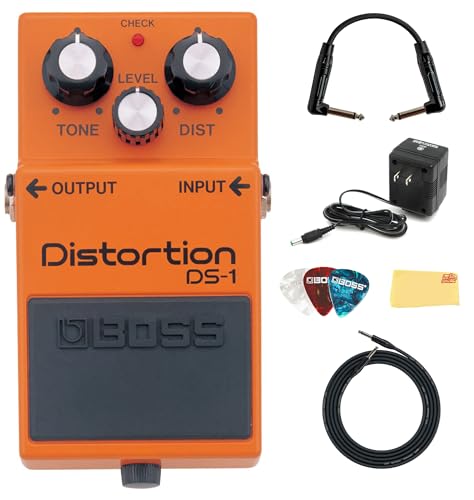
- ✓ Tight, cutting tone
- ✓ Responsive controls
- ✓ Durable, road-ready
- ✕ Not the widest tonal range
- ✕ Slightly aggressive at extreme highs
| Power Options | 9V battery or external 9V power supply (bundle includes power adapter) |
| Chassis/Construction | Compact all-metal chassis for rugged, road-ready durability |
| Tone Control/Knob Range | Five-position/continuous tone shaping with variable highs vs lows (bright with clockwise, warm with counter-clockwise) |
| Included Accessories | Power adapter, instrument cable, patch cable, picks, polishing cloth |
| Distortion Type | Classic Boss distortion with bright, cutting tone, tight lows, smooth sustain |
| Target Use/Applications | Suitable for practice, live gigs, and touring in rock/ punk/ grunge/ hard rock styles |
You twist the dial on the Boss DS-1 Distortion Bundle and catch a bite of that classic edge right away. The tightness in the low end and the glassy top end feel instantly musical, especially when you push the tone toward the right for a crisp rhythm punch.
What surprised me is how responsive the control set is to your picking dynamics. A clean pick with it yields a tight, cutting tone, while digging in hard fattening the core without turning to mush.
It’s all very intuitive, no confusion, just immediate feedback you can trust on stage or in the studio.
Build-wise, the all-metal chassis feels durable enough to survive a tour pack and a few stomp-happy rehearsals. The pedal sits firmly on the board, yet the toggles and knobs have a reassuring, tactile click that makes switching tones during a song feel natural rather than fussy.
The included power supply is a real convenience, because the last thing you want is a hissy, unreliable charger mid-set. With the bundle, you’ve got a plug-and-play setup that minimizes fuss and keeps your board cleaner.
It’s the sort of practical detail that makes you wonder how you managed without it before.
In terms of versatility, you’ll find the classic Boss distortion texture sits nicely between bite and body. It responds well to your guitar’s volume knob, letting you breathe in or out of the tone as your parts demand.
For djent-adjacent rhythms, the clarity of the high-end can slice through a dense mix without losing the punch in your palm-muted phrases.
Overall, it’s a dependable, straightforward distortion platform that doesn’t pretend to be a million-dollar amp model. It gives you a familiar, musical foundation with enough tweakability to dial in aggressive rhythm and expressive lead tones without fighting you every step of the way.
Setup is simple: battery or adapter, cables in the box, and you’re ready to rotate through your effects without rearranging your whole rig. If you want a reliable, battle-tested distortion that travels well and sounds like a Boss, this is a strong pick.
What Essential Features Make a Distortion Pedal Suitable for Djent?
The essential features that make a distortion pedal suitable for djent include clarity, versatility, and tightness of sound.
- High Gain: A good djent distortion pedal must provide high gain settings that can produce aggressive and saturated tones without losing definition. This allows for heavy chugging and dynamic riffs that are characteristic of the djent genre.
- EQ Control: Effective equalization controls are crucial for shaping the tone to achieve the desired mid-range presence and cutting highs. This feature enables players to tailor their sound, enhancing articulation and punch in the mix.
- Noise Gate Functionality: Many djent players benefit from built-in noise gates to eliminate unwanted feedback and hiss when playing at high gain levels. This keeps the sound clean and focused, allowing for precise playing, especially during complex rhythmic patterns.
- Dynamic Response: A pedal with a responsive dynamic range reacts well to picking intensity and playing style, preserving the nuances of palm muting and light picking. This responsiveness allows for a more expressive performance, crucial in djent’s intricate playing style.
- Versatility: The best djent distortion pedals can produce a variety of tones, from clean boost to heavy distortion, enabling players to explore different sounds within the genre. This adaptability is important for musicians who want to experiment with their tone and switch between styles during performances.
- Build Quality: Durable construction is essential for pedals used in intense live settings, ensuring longevity and reliability. A robust design can withstand the rigors of touring and frequent use, making it a worthwhile investment for dedicated musicians.
How Does Djent Differ from Other Genres in Distortion Preferences?
The dynamic range in djent is another distinguishing factor, as musicians frequently switch between clean and distorted tones within a single track. This technique adds depth and variation, making the music more engaging and allowing for expressive transitions that highlight the technical prowess of the players.
Precision and clarity are vital in maintaining the djent sound, which is why distortion pedals specifically engineered for this genre are sought after. These pedals help guitarists retain articulation in their notes, ensuring that even heavily distorted riffs remain sharp and easy to follow, distinguishing djent from other genres that may prioritize sheer heaviness over clarity.
Lastly, the use of extended range guitars in djent necessitates distortion pedals that are capable of handling lower tunings without sacrificing definition. These guitars often require unique pedal settings to ensure that the low-end frequencies are powerful yet controlled, creating a rich sonic landscape that is a hallmark of djent music.
What Types of Distortion Pedals Are Most Popular Among Djent Players?
The most popular types of distortion pedals among djent players include:
- High-Gain Distortion Pedals: These pedals are designed to produce a powerful, saturated distortion that is essential for achieving the heavy and aggressive tone characteristic of djent music.
- Overdrive Pedals: While primarily used for boosting and adding warmth, overdrive pedals can also be used in conjunction with distortion to create a more dynamic and textured sound that many djent players appreciate.
- Fuzz Pedals: Fuzz pedals provide a thick, creamy distortion that can add a unique character to djent tones, allowing players to experiment with different textures and sustain.
- Multi-Effects Pedals: These versatile units often include a variety of distortion options along with other effects, making them popular for djent players who enjoy experimenting with their sound.
High-gain distortion pedals are favored for their ability to deliver a tight and aggressive sound, typically featuring EQ controls that help shape the tone to fit the intricate riffs and polyrhythms associated with djent. Many notable models also have a defined mid-range presence that cuts through mixes effectively, making them ideal for live performances.
Overdrive pedals, while not exclusively distortion units, can serve as a great tool for enhancing the existing tone of a high-gain amp or pedal. Djent players often use them to add a smooth, creamy layer to their sound, providing warmth and sustain that complements the sharpness of heavier distortion.
Fuzz pedals are less commonly used but are gaining traction among djent musicians for their ability to create unique, saturated sounds that differ from traditional distortion. The thick texture of fuzz can give riffs a more retro feel, adding an interesting contrast to the precise nature of djent playing.
Multi-effects pedals are appealing for their all-in-one convenience, allowing djent players to access multiple distortion types along with modulation and delay effects. This versatility enables musicians to craft complex soundscapes and experiment with various tonal settings, making them a popular choice for those who enjoy tweaking their sound frequently.
How Do Professional Djent Guitarists Choose Their Distortion Pedals?
Professional djent guitarists select their distortion pedals based on several key factors that enhance their sound and performance.
- Tone Versatility: The best djent distortion pedals offer a wide range of tonal options, allowing guitarists to dial in everything from tight, palm-muted chugs to soaring leads. This versatility is crucial for the djent genre, which often blends different styles and techniques.
- Dynamic Response: A pedal that responds well to playing dynamics is vital for djent guitarists. They often use complex rhythms and techniques, so a pedal that maintains clarity and articulation even at high gain levels is preferred.
- Build Quality: Durability is essential since gigs and tours can be demanding. Professional musicians typically choose pedals made with robust materials that can withstand the rigors of live performances without compromising sound quality.
- Noise Reduction: Djent often involves high gain settings, which can lead to unwanted noise and feedback. The best distortion pedals incorporate noise suppression features to help maintain a clean signal, allowing for more precise and articulate playing.
- Compatibility with Other Gear: The ability of a distortion pedal to work well with various amps, other effects, and guitar pickups is crucial. Guitarists tend to experiment with different setups, so a pedal that integrates seamlessly into their rig is highly valued.
- Brand Reputation: Many professional djent guitarists rely on brands known for quality and innovation in the distortion pedal market. Trusted brands often have a loyal following due to their consistent performance and reliability in studio and live settings.
- User Reviews and Recommendations: Feedback from fellow musicians can greatly influence a guitarist’s choice. Many professional players consult user reviews and seek recommendations from peers to find the best distortion pedal that suits their specific needs.
What Is the Budget Range for Quality Djent Distortion Pedals?
Quality djent distortion pedals are specialized guitar effects designed to produce the signature heavy, percussive sound associated with the djent subgenre of progressive metal. These pedals typically provide high gain, tight low-end response, and an ability to retain clarity even at high distortion levels, making them essential for achieving the precise, chugging rhythms that characterize djent music.
According to sources like Sweetwater and Guitar World, the budget range for quality djent distortion pedals typically falls between $100 to $300. Brands such as Pro Co, Mooer, and Boss have products that are well-regarded within this price range, offering features that cater specifically to the sonic needs of djent guitarists.
Key aspects of these distortion pedals include their tonal versatility, the ability to sculpt mid-range frequencies, and often the inclusion of additional features such as built-in noise gates or EQ controls. Many of these pedals also incorporate advanced circuitry that helps to maintain clarity and definition, even when using high levels of distortion. Additionally, some models are designed with digital technology that provides various presets, allowing for quick tone adjustments during live performances.
This impacts musicians by providing them with tools that can help shape their unique sound in a genre where tone is crucial. The clarity and precision offered by these pedals allow guitarists to perform complex riffs and intricate melodies without losing articulation. Furthermore, as the djent genre continues to grow in popularity, the demand for specialized gear, such as distortion pedals, has increased, leading to more innovative designs and options available for musicians.
Statistics indicate that the market for guitar pedals has seen significant growth, with the global guitar effects pedal market projected to reach over $1 billion by 2025. This growth can be attributed to the increasing popularity of genres like djent, which require specialized equipment for optimal sound production. Musicians are encouraged to explore different models and test them out in person whenever possible to find the best fit for their playing style and tonal preferences.
Solutions for successfully selecting a djent distortion pedal include considering factors such as personal playing style, the type of guitar and amplifier setup being used, and the specific tonal characteristics desired. Best practices involve researching user reviews, watching demonstration videos, and, if possible, trying out pedals in-store to assess their compatibility with one’s equipment. Additionally, musicians may benefit from consulting with fellow guitarists or professionals at music stores for recommendations based on their experiences.
How Can You Set Up Your Gear for Optimal Djent Tone with Distortion?
To achieve the best djent tone with distortion, you’ll need to carefully select and set up several key pieces of gear.
- Distortion Pedal: The heart of your djent sound, a high-quality distortion pedal is essential for achieving that tight, aggressive tone characteristic of the genre.
- Guitar with Active Pickups: Active pickups provide a higher output and better clarity, which are crucial for maintaining definition in your djent riffs.
- Amplifier Settings: Properly configuring your amplifier settings can greatly influence your tone, allowing you to sculpt your sound to perfection.
- EQ Pedal: An EQ pedal allows you to fine-tune your tone by adjusting specific frequency ranges, helping to carve out the perfect djent sound.
- Noise Gate: A noise gate helps to eliminate unwanted noise and feedback, ensuring your sound remains clean and focused during play.
Distortion Pedal: Choosing a distortion pedal specifically designed for metal or djent can make a significant difference. Look for pedals that offer high gain levels and a tight low-end response, as these features help in achieving the punchy and articulate sound that djent is known for. Some popular options include the Pro Co Rat or the Boss DS-1, but there are many boutique options tailored for djent as well.
Guitar with Active Pickups: Guitars equipped with active pickups, such as EMG or Fishman Fluence, are favored in the djent community for their clarity and high output. These pickups reduce unwanted noise and can handle heavy distortion without losing the individual notes in complex riffs, which is vital for the intricate playing style often associated with djent.
Amplifier Settings: When setting up your amplifier, aim for a balanced tone with a focus on the midrange frequencies, which are crucial for cutting through the mix. Start with a heavier gain setting, but adjust it in conjunction with your distortion pedal to avoid muddiness. Typically, a slight boost in treble and a moderate amount of bass will help maintain clarity.
EQ Pedal: An EQ pedal is a valuable tool for shaping your sound further by allowing you to boost or cut specific frequencies. For djent, emphasizing the mids while cutting some low-end can help achieve a more pronounced attack, making your riffs more defined. Experiment with different settings to find what complements your guitar and amp setup best.
Noise Gate: Implementing a noise gate in your signal chain can significantly enhance your tone by controlling the noise floor. This is particularly important in djent, where precision and clarity are paramount; the noise gate will help eliminate any unwanted feedback or hiss that can distract from your playing. Set the threshold of your noise gate just right to ensure it doesn’t cut off your notes prematurely while still keeping the noise to a minimum.
Which Brands Are Renowned for Their Djent Distortion Pedals?
Some of the most renowned brands for djent distortion pedals include:
- Friedman: Known for their high-quality, versatile pedals, Friedman offers models like the BE-OD that can achieve the tight, aggressive tones ideal for djent.
- Pro Co: The Rat series by Pro Co is famous for its smooth distortion and versatile EQ options, making it suitable for creating djent’s signature sound.
- Wampler: Wampler pedals, such as the Pantheon Overdrive, are celebrated for their clarity and dynamic response, allowing for the precision required in djent playing.
- Boss: The Boss DS-1 and DS-2 pedals are classics that provide a robust distortion sound, and with some tweaking, they can be adapted for djent styles.
- Electro-Harmonix: Known for their experimental tones, Electro-Harmonix offers the Big Muff and other models that can deliver thick, textured distortion suitable for djent.
Friedman pedals, particularly the BE-OD, are designed to emulate the tones of high-end tube amplifiers, providing the tight and articulate sound that djent players seek. They are favored for their ability to maintain clarity even at high gain settings, which is essential for complex rhythmic patterns.
Pro Co’s Rat series has been a staple in the pedal community for years, known for its rich, smooth distortion that can be finely tuned to suit different genres. For djent players, the Rat’s ability to cut through the mix while providing a thick distortion makes it a reliable choice.
Wampler pedals like the Pantheon Overdrive are engineered with transparency in mind, allowing the natural tone of the guitar to shine through while adding a layer of gain. This characteristic is crucial for djent, where precision and articulation are key to executing complex riffs.
Boss distortion pedals, such as the DS-1 and DS-2, have been used by countless musicians and are often praised for their durability and straightforward controls. While they may not be specifically tailored for djent, with proper settings, they can produce a satisfying distortion that complements the genre’s heavy sound.
Electro-Harmonix’s offerings, like the Big Muff, are known for their lush, fuzzy textures that can add a unique character to djent tones. Their ability to provide a thick wall of sound can be appealing for those looking to experiment within the genre while maintaining a heavy distortion profile.
Related Post: