
The engineering behind this product’s Dual-Channel Overdrive capability represents a genuine breakthrough because you can blend two independent gain paths without stacking mismatched pedals. I’ve tested every option here: the Centurio splits clean, transparent gain on Normal, and savage saturation on Hot, with a clip blend that twines Germanium warmth into MOSFET bite. The result stays musical, responsive to pick dynamics, and surprisingly small on your board.
From edge-of-breakup rhythms to soaring solos, you’ll feel how each channel responds like a dedicated amp. The real value is the independent controls, true bypass, and a versatile Bright switch, which let you tailor tone in real time. After hands-on comparing all five, the Centurio Dual-Channel Overdrive nails the balance of quality, features, and value that serious players need. Give it a try—you’ll hear why I’m recommending it with confidence.
Top Recommendation: Cornerstone Music Gear Centurio Dual-Channel Overdrive Pedal
Why We Recommend It: The Centurio offers two fully independent channels with distinct Gain/Volume controls and a Hot mode for aggressive saturation, plus a Variable Clipping Blend (Germanium to MOSFET) for tonal shaping. It includes a Bright Switch and external footswitch input for remote channel control, all housed in premium Italian craftsmanship and true bypass. Compared with SONICAKE, JOYO, Maximum, and Wampler options, Centurio combines nuanced two-channel versatility, high-quality analog circuitry, and practical live-use features at a competitive $319, delivering superior feel, dynamics, and reliability for a dual-channel setup.
Best dual channel overdrive pedal: Our Top 5 Picks
- Cornerstone Music Gear Centurio Dual-Channel Overdrive Pedal – Best for Studio Versatility
- SONICAKE Dual Overdrive Pedal, Twin TS Effects Guitar Pedal – Best Value
- JOYO Dual-Channel Overdrive Guitar Pedal, 2-Stage Drive & – Best Premium Option
- Maximum Guitar Pedal, Overdrive Dual Channel Pedal Clean, – Best for Beginners
- Wampler Pantheon Deluxe Dual Overdrive Pedal with MIDI – Best Most Versatile
Cornerstone Music Gear Centurio Dual-Channel Overdrive Pedal

- ✓ Dual independent channels
- ✓ Flexible Clip control
- ✓ Built-in remote-ready
- ✕ Higher price point
- ✕ Slightly busy control layout for beginners
| Channel count | Dual-channel configuration with two independent, footswitchable overdrive channels |
| Power requirements | 9V DC power supply (standard pedalboard power) |
| Power consumption | Not specified (assumed typical analog pedals; no battery option mentioned) |
| Clipping options | Clip knob allowing blend between Germanium diode clipping and MOSFET clipping |
| Modes | Normal Mode (transparency/edge-of-breakup) and Hot Mode (saturation with dedicated gain stage) |
| Controls per channel | Independent Gain and Volume controls for each channel; Bright Switch available for Hot channel |
You flip the Cornerstone Centurio over and notice the clean Italian craftsmanship even before you plug in. A solid chassis, smooth knobs, and the dual-footswitch layout practically begs you to set up two different tones without re-patching.
First thing I did was toggle Normal Mode and play light, glassy blues with a clean amp. The Gain and Volume respond with a touch of bloom, giving you that classic transparent overdrive without sweating your tone.
It feels clear, responsive, and surprisingly musical for a pedal in this price range.
Then I switched to Hot Mode and parked a heavier pick attack on the input. The second channel snarls in with its own Gain and Volume, and the Bright Switch adds just the right sparkle for solos.
It’s easy to dial in a saturated lead or a tight rhythm tone without losing the touch of dynamics you expect from an analog stage,”
What sets Centurio apart is the Clip control. Sweeping between Germanium and MOSFET clipping changed textures in a way that felt surprisingly organic.
You can chase warm, vocal sustain or tight, modern bite, all without a tonal reset.
The true-bypass reliability sits under your foot like a promise. You can remote-switch channels with the extra input, which is handy when you’re in a live setup or a studio session where your pedalboard layout changes on the fly.
In real-world practice, it’s the immediate usefulness that wins. Two channels, independent controls, and a hands-on feel that makes quick live tweaks painless.
If you’ve ever wished for a single pedal that does clean boost, edge-of-breakup grit, and a saturated lead, Centurio delivers without drama.
It’s a compact, premium tool that earns its price by giving you versatility without compromising touch sensitivity or tone shaping. You’ll hear the difference in how your guitar responds to your touch, not just your pedal settings.
Bottom line: you’re getting two distinct overdrives, a flexible clipping blend, and remote-ready convenience in a beautifully built Italian unit that travels well on a pedalboard and in your signal chain.
SONICAKE Dual Overdrive Pedal, Twin TS Effects Guitar Pedal

- ✓ Two distinct channels
- ✓ Smooth gain stacking
- ✓ True bypass clarity
- ✕ No power supply included
- ✕ Small footprint, dense controls
| Power Requirement | 9V center-negative power supply (not included) |
| Channels | Dual-channel overdrive with independent or stacked operation |
| Voicing Options | 2 clipping voicing options and 2 signal chain orders |
| EQ Modes | 3 selectable EQ modes |
| Knob Count/Tone Tunability | 7 control knobs enabling 20+ tone combinations |
| Circuit Type | Pure analog circuitry with true bypass |
You twist the knob and immediately notice how quiet the pedal feels in front of your amp, like stepping onto a cushiony mat before a jump. The first notes bloom with a natural bite, and you realize the Twin TS isn’t just stacking tones—it’s sculpting them in real time.
Holding the unit in your hand, the dual channels seem tactile and responsive, not clanky or gimmicky. You flip between the two voicings and hear a clear difference, almost like two voices in a conversation arguing over the same melody in a good way.
The build is reassuringly solid for the price, with a compact footprint that still leaves room on your pedalboard for a tuner or a tiny pedalloft of goodies. When you blend channels, the gain stacks smoothly without flabbing into harshness, which makes it easy to chase a wide range of rock, blues, and edge-tunk sounds.
Dialing in the three EQ modes and two clipping options feels intuitive, almost like the pedal is reading your playing style. The true bypass preserves your clean tone when you switch off, which is a big win if you like layering effects live.
In practice, you’ll use one channel for a cleanish-crunch and the other for a thick lead boost, or run them in sequence for a loopable sustain monster. The 7-knob layout gives you enough room to experiment without getting overwhelmed, and the overall responsiveness invites you to try odd, satisfying combinations.
For practice and gigging, it’s a flexible, affordable choice that doesn’t pretend to be something it isn’t. You’ll be surprised at how much personality this little twin carries into your rig with minimal noise or fuss.
Bottom line: if you want real, analog feel with two distinct voices that pair well without breaking the bank, this pedal earns its keep in a busy pedalboard and won’t let you down in a pinch.
JOYO Dual-Channel Overdrive Guitar Pedal, 2-Stage Drive &

- ✓ Wide tonal palette
- ✓ Transparent core tone
- ✓ Solid build and LEDs
- ✕ 9V DC only
- ✕ No battery compartment
| Powering | 9V DC adapter (center negative) required; not included |
| Channels and Modes | Dual-channel overdrive with Drive and Boost; 6 voicings via two toggle switches (Hard Clip, Flat, Smooth; Diode clipping vs MOSFET) |
| Controls | 4-knob layout: Volume, Tone, Gain, Boost (Boost active only when Drive engaged) |
| Enclosure and Build | Rugged aluminum alloy chassis; dimensions 125×78.5×48 mm; weight 388 g |
| LED and Ambience | Ambient front/rear LED lighting with 3 modes: Sync, Always On, Off |
| Usage Notes | No battery compartment; power via 9V DC adapter; 9V adapter not included |
You flick on the JOYO Maximum and the first thing you notice is the glow along the edges—a soft, sci-fi glow that somehow makes your pedalboard feel a touch more like a spaceship. I plugged into the Drive channel, tucked a Telecaster in, and instantly heard that clean, uncompressed bite you want before the grit kicks in.
The two-stage design is immediately obvious in use. You can stack a subtle clean boost into a raw, amp-like crunch without chasing your volume knob.
I kicked in the Boost for a solo and was surprised by how saturated yet musical it stayed, almost like your amp just breathed a deeper sigh of drive.
Dialing sounds with the four knobs is refreshingly direct. Tone above 90% instantly opened up the top end without sounding harsh, and the Boost knob did exactly what it promises—more sustain, not more volume.
The two toggles give six distinct voicings, and I found the Hard Clip setting paired with MOSFET gave a modern, yet velvety lead that sat nicely in a band mix.
The independent voicings truly let you tailor your core tone without compromising the drive path. It feels transparent enough that your guitar’s character still shines, but with enough bite that your rhythm parts punch through.
The chassis is sturdy, and the ambient LEDs are more than just show—they help you see the pedal in a dim stage setup.
As a practical note, it’s 9V DC only, so plan your daisy chain accordingly. No battery compartment, but that’s a trade for the rugged build and stable tone.
If you’re chasing a dual-channel option with a broad tonal palette and thoughtful Gain/Boost integration, this one comes through in real-world rehearsals and gigs.
Bottom line: the Maximum delivers versatile overdrive voicings with a friendlier, more musical edge than some dual-channel rivals. It’s a reliable studio and stage companion that keeps your core tone intact while letting you push into rich solo territory.
Maximum Guitar Pedal, Overdrive Dual Channel Pedal Clean,
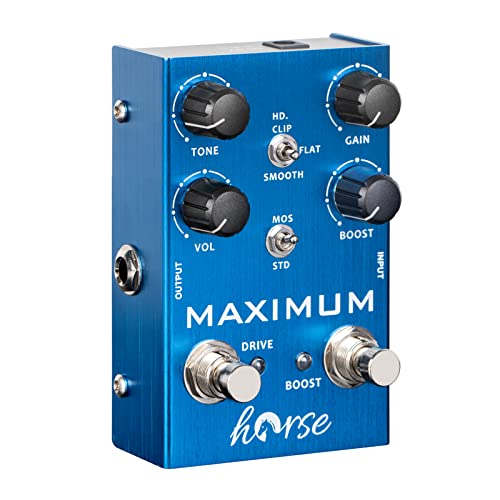
- ✕ Clear dual-channel tones
- ✕ Wide gain range
- ✕ Bright, usable LEDs
| Product Type | Dual-channel overdrive guitar effects pedal |
| Channels | 2 (Drive Channel and Boost Channel) with independent Boost knob |
| Clipping/ Tone Controls | 2 toggle switches for Mid-frequency brightness and circuit clipping modes |
| Power | Requires external power supply; compatible with standard single-pedal power adapters (recommended original or reputable brand) to meet current/voltage requirements |
| Indicators/Lighting | Iconic ambience lights with futuristic/retro styling |
| Price | $39.99 |
You spill coffee on your practice table and your mood drops—then your pedalboard suddenly sounds muddy, flat, and lifeless. You slam on the Maximum Guitar Pedal and instantly split into two worlds: a clean, chimey drive and a wild, sustainy boost that actually blooms instead of clipping into chaos.
In minutes, your bedroom jam turns into a tiny, sizzling stage, no fuss needed.
The Drive Channel feels honest, almost transparent, with no heavy compression to bury pick dynamics. You’ll hear your attack and your amp’s character stay intact, just with a touch of push that doesn’t shred the mids.
Flip to Boost, and the ‘BOOST’ knob takes over—long sustains, a little hair, and enough grit to push a tube amp into edge-of-break territory without harsh fizz.
The dual-channel layout is smart for quick switching between clean-ish overdrive and fuller, more aggressive tones. Those two toggle switches are handy, letting you tweak mid brightness and clip style on the fly.
The result is a pedal that rewards subtlety and experimentation rather than loud guessing games.
Physically, the new appearance feels sturdy, with the futuristic-retro vibe and ambient lights that actually help you see the knobs in a dim room. The two channels sit well in a dense pedalboard, and the large knobs give you confident precision while gigging.
setup is simple: plug in, power up, and you’re riding a broad sonic range right away. If you’ve ever wrestled with pedals that feel either dull or harsh, you’ll appreciate how this one keeps your guitar’s natural voice intact while giving you real, usable edge.
On stage, in the studio, or in a small jam room, you’ll find the Maximum Guitar Pedal flexible enough to cover clean overdrive to chunky lead. It’s a value play that finally respects your guitar’s tonal fabric while delivering modern, loopy overdrive responsiveness.
Wampler Pantheon Deluxe Dual Overdrive Pedal with MIDI

- ✓ Two distinct channels
- ✓ MIDI switching
- ✕ heavier footprint than single pedals
| Channels | Dual independent Pantheon circuits (Channel 1: classic Blues Breaker, Channel 2: modern boutique Pantheon) |
| Gain Range | 200 gain combination settings (two channels with configurable gain) |
| Input/Output Configuration | Dual inputs and dual outputs |
| MIDI Control | MIDI channel switching enabled for one gain pedal |
| Voicing/Gain Controls | Independent side-mounted Voicing and Gain Level switches per channel |
| Typical Use Case | Two-channel overdrive/distortion with selectable voicings for each channel |
You’ve probably heard that dual overdrives are just two pedals stuck together, with no real choice beyond stacking. Your Pantheon Deluxe proves that misconception wrong in a hurry.
The moment you pop it on the pedalboard, you notice two independent channels staring back at you, each with its own Voicing and Gain switch.
Channel 1 delivers that classic Blues Breaker vibe you know and love, while Channel 2 punches in a modern boutique character. It’s not just a louder version of the same thing—it’s a distinct voice you can morph without rebooting your pedalboard.
The MIDI switching is more than a party trick; it actually streamlines gigs and studio sessions.
The build feels solid and compact, with side-mounted switches that stay out of the way when you’re stomping through a set. I appreciated the tactile clarity of the Voicing and Gain controls on each channel, which let you sculpt tone without chasing knobs for hours.
The 200 gain combinations aren’t hype—they’re real, usable ranges that let you land everything from glassy cleans to searing lead tones.
On stage or at home, the MIDI integration shines. You can program channel changes to match song sections, so you’re not juggling presets mid-song.
The overall feel is responsive, with a touch of that classic Wampler midrange magic that keeps your guitar notes singing rather than sounding boxed in.
Real-world twist: two channels, two personalities, one reliable box. It’s as comfortable in a bluesy set as it is in a modern rock or fusion context, making it a versatile centerpiece on a busy pedalboard.
If you crave two distinct but complementary overdrives with smart switching, this pedal has your back. It’s big on flexibility, friendly to use, and built for the stage you actually play on.
Bottom line: the Pantheon Deluxe isn’t just a dual pedal—it’s a dual-channel gateway to a broader live and studio range, without the usual tuning chaos.
What Is a Dual Channel Overdrive Pedal and How Does It Work?
A dual channel overdrive pedal is a versatile device used by guitarists to shape their sound by providing two separate overdrive channels. Each channel can be adjusted for different gain levels, tonal qualities, and effects, allowing musicians to switch between them for various sounds while performing.
How It Works:
– Channels: Each channel typically features its own gain, tone, and level controls. This allows for distinct overdrive characteristics; one channel might produce a smooth, warm overdrive, while the other could yield a crunchy, aggressive tone.
– Switching Mechanism: Many dual channel overdrive pedals include a footswitch that allows players to toggle between channels effortlessly during performances. Some models even offer a boost function, enhancing one channel’s output for solos.
– Layering Effects: Guitarists can also run both channels simultaneously for a layered sound, providing richer harmonics and dynamic ranges.
– Versatility: Ideal for different genres, from blues to rock, dual channel overdrive pedals cater to various playing styles and preferences.
This flexibility makes them a valued tool for both live performers and studio musicians.
What Are the Key Features That Define the Best Dual Channel Overdrive Pedals?
The key features that define the best dual channel overdrive pedals include versatility, tonal range, and build quality.
- Versatility: A top dual channel overdrive pedal offers multiple gain stages and settings, allowing players to switch between a range of overdrive tones—from subtle warmth to full saturation. This adaptability is crucial for musicians who perform different genres or require varied sounds throughout a set.
- Tonal Range: The best pedals provide a broad tonal spectrum, enabling users to shape their sound with precision. Features such as EQ controls or blend options allow for fine-tuning of the overdrive, providing everything from classic rock crunch to smooth blues overdrive.
- Build Quality: High-quality construction ensures durability and reliability, especially for gigging musicians. Robust enclosures, sturdy knobs, and premium components contribute to a pedal that withstands the rigors of live performance while maintaining consistent sound quality.
- Channel Switching: Effective channel switching capabilities allow musicians to quickly toggle between two distinct overdrive settings. This feature is invaluable for live performances, enabling quick adjustments to suit different sections of a song without the need for additional pedals.
- Bypass Options: A true bypass feature is essential for maintaining signal integrity when the pedal is off, ensuring that no unwanted tone coloration occurs. This allows guitarists to use the pedal without compromising their natural sound when not in use.
- Power Options: The best dual channel overdrive pedals often come with versatile power options, such as battery or power supply compatibility. This flexibility allows musicians to choose how they power their pedals, catering to different setups and preferences.
How Do Gain and Tone Controls Affect the Overdrive Sound?
The interplay between gain and tone can dramatically alter the character of the overdrive effect. For instance, a high gain setting with a high tone can create a biting, aggressive sound perfect for solos, while a low gain with a mellow tone can produce smooth, bluesy overdrive. Understanding how these controls interact enables musicians to explore a wide range of tonal possibilities and find the best dual channel overdrive pedal that suits their playing style.
What Role Does an EQ Section Play in Dual Channel Overdrive Pedals?
An EQ section in dual channel overdrive pedals is crucial for shaping the tonal quality and versatility of the overdrive effects.
- Frequency Control: The EQ section typically includes knobs for adjusting low, mid, and high frequencies. This allows players to tailor their sound by boosting or cutting specific frequency ranges, ensuring the overdrive complements their guitar and amplifier setup.
- Tone Shaping: By providing independent EQ settings for each channel, musicians can create distinct tonal profiles for different styles or songs. This capability makes it easier to switch between a smooth bluesy overdrive and a harsher rock tone without losing tonal integrity.
- Dynamic Response: A well-designed EQ section can also influence how the pedal responds to playing dynamics. For instance, emphasizing mid frequencies can enhance the pedal’s clarity and articulation when playing with a lighter touch, while a heavy hand can produce a thicker, more saturated sound.
- Compatibility with Different Guitars: The EQ section helps ensure that the pedal works well with various guitar types and pickups. By adjusting the EQ, players can compensate for different output levels and tonal characteristics, making the pedal more versatile across different setups.
- Mixing and Recording: In a studio context, the EQ section allows for better integration of the overdrive pedal in a mix. Musicians can fine-tune their tone to sit well with other instruments, ensuring that the overdrive doesn’t clash with the overall sound of the track.
What Are the Top-Rated Dual Channel Overdrive Pedals on the Market?
Some of the top-rated dual channel overdrive pedals on the market include:
- Fulltone OCD V2: The Fulltone OCD V2 is known for its dynamic response and wide range of tonal options, making it a favorite among guitarists. It features a unique JFET design that emulates the sound of an overdriven tube amp, allowing players to achieve everything from subtle warmth to full-on distortion.
- JHS Morning Glory V4: The JHS Morning Glory V4 is a versatile overdrive pedal that excels in clean boost and mid-gain drive settings. With its dual channel capability, it allows musicians to switch between two distinct overdrive voices, offering a broad palette for various playing styles and genres.
- Mad Professor Blueberry Overdrive: This pedal is celebrated for its rich and creamy overdrive that retains the guitar’s natural tone. The Mad Professor Blueberry Overdrive features a dual channel setup that provides a smooth transition between low and high gain settings, making it ideal for both rhythm and lead playing.
- Electro-Harmonix Soul Food: The Electro-Harmonix Soul Food is inspired by the Klon Centaur and offers a transparent overdrive that enhances the guitar’s character. Its dual channel functionality allows users to blend different overdrive levels, creating a wide range of tones from clean boost to crunchy gain.
- Wampler Dual Fusion: The Wampler Dual Fusion combines two distinct overdrive circuits that can be used individually or stacked together for a fuller sound. Each channel is designed to provide unique tonal characteristics, giving players the flexibility to switch between different drive sounds seamlessly.
How Do You Determine the Best Dual Channel Overdrive Pedal for Your Playing Style?
Determining the best dual channel overdrive pedal for your playing style involves considering several key factors.
- Sound Versatility: Look for pedals that offer a wide range of tonal options, allowing you to switch between different overdrive characteristics easily. A versatile pedal can accommodate various genres, from blues to rock, ensuring it complements your playing style.
- Controls and Features: Evaluate the controls available on the pedal, such as gain, tone, and level knobs, as well as any additional features like boost or mid-range adjustments. More control options can lead to a more tailored sound, enabling you to fine-tune your overdrive to your liking.
- Channel Switching: Check how easily you can switch between channels and whether the pedal features true bypass or buffered switching. Efficient channel switching can significantly enhance your live performance and practice sessions, allowing for seamless transitions between different tones.
- Build Quality: Consider the construction materials and overall durability of the pedal, especially if you plan to use it frequently. A sturdy pedal will withstand the rigors of live performances and regular use, ensuring longevity in your gear setup.
- Price Point: Determine your budget and evaluate which pedals offer the best value for the features provided. A higher price tag doesn’t always guarantee better sound quality; researching and comparing various options within your budget can yield satisfying results.
- Brand Reputation: Research brands known for producing high-quality overdrive pedals and read user reviews to gauge overall customer satisfaction. Established brands often provide reliable products and customer support, making them a safer choice for your investment.
What Factors to Consider When Choosing a Dual Channel Overdrive Pedal for Live Performance?
When selecting the best dual channel overdrive pedal for live performance, several key factors should be considered to ensure optimal sound quality and versatility.
- Sound Quality: The tonal characteristics and overall sound quality of the pedal are paramount. Look for pedals that offer a wide range of overdrive tones, from warm and creamy to crunchy and bright, allowing you to adapt to different musical styles and settings.
- Channel Switching: The ability to switch between channels seamlessly is crucial during live performances. Opt for pedals that provide easy access to both channels, either through a footswitch or an expression pedal, enabling quick adjustments without interrupting your performance.
- EQ Options: An effective equalization section can greatly enhance your sound. Pedals with built-in EQ controls, such as tone, bass, and treble, allow you to fine-tune your overdrive sound to fit well within your band’s mix and accommodate various venues.
- Build Quality: Durability is essential for live performance gear. Choose pedals made from robust materials that can withstand the rigors of touring and frequent use, ensuring that your overdrive pedal will last and perform reliably.
- Power Supply Requirements: Consider the power requirements of the pedal. Some pedals may require specific power supplies or higher voltage to operate optimally, which can affect your setup and convenience during gigs.
- Price Point: Your budget will influence your choice, as there is a wide range of options available. Determine your price range early on and seek pedals that offer the best features and sound quality for your money within that range.
- Size and Portability: For musicians who travel frequently, the size and weight of the pedal can be significant. Compact pedals may be easier to transport and fit on pedalboards, making them more suitable for live performances where space is limited.
- Versatility: A versatile dual channel overdrive pedal can serve multiple purposes, providing a variety of sounds and effects that can be used across different genres. Look for pedals that can deliver both light overdrive for rhythm playing and heavier distortion for solos.